Listen to this issue
Historical Profile

Winston Churchill: Walking with Destiny

The aristocrat who failed his entrance exams, the soldier who charged into battle, the politician who crossed the floor, the writer who won the Nobel Prize—and the leader who refused to surrender when surrender seemed the only option.

Winston Churchill in his wartime study, cigar in hand, surrounded by maps and papers
01

The Making of a Legend

Here's what you need to know about young Winston Churchill: he was terrible at school. Not "charmingly mediocre"—genuinely bad. He failed the Sandhurst entrance exam twice. His father, Lord Randolph Churchill, wrote him off as a disappointment.
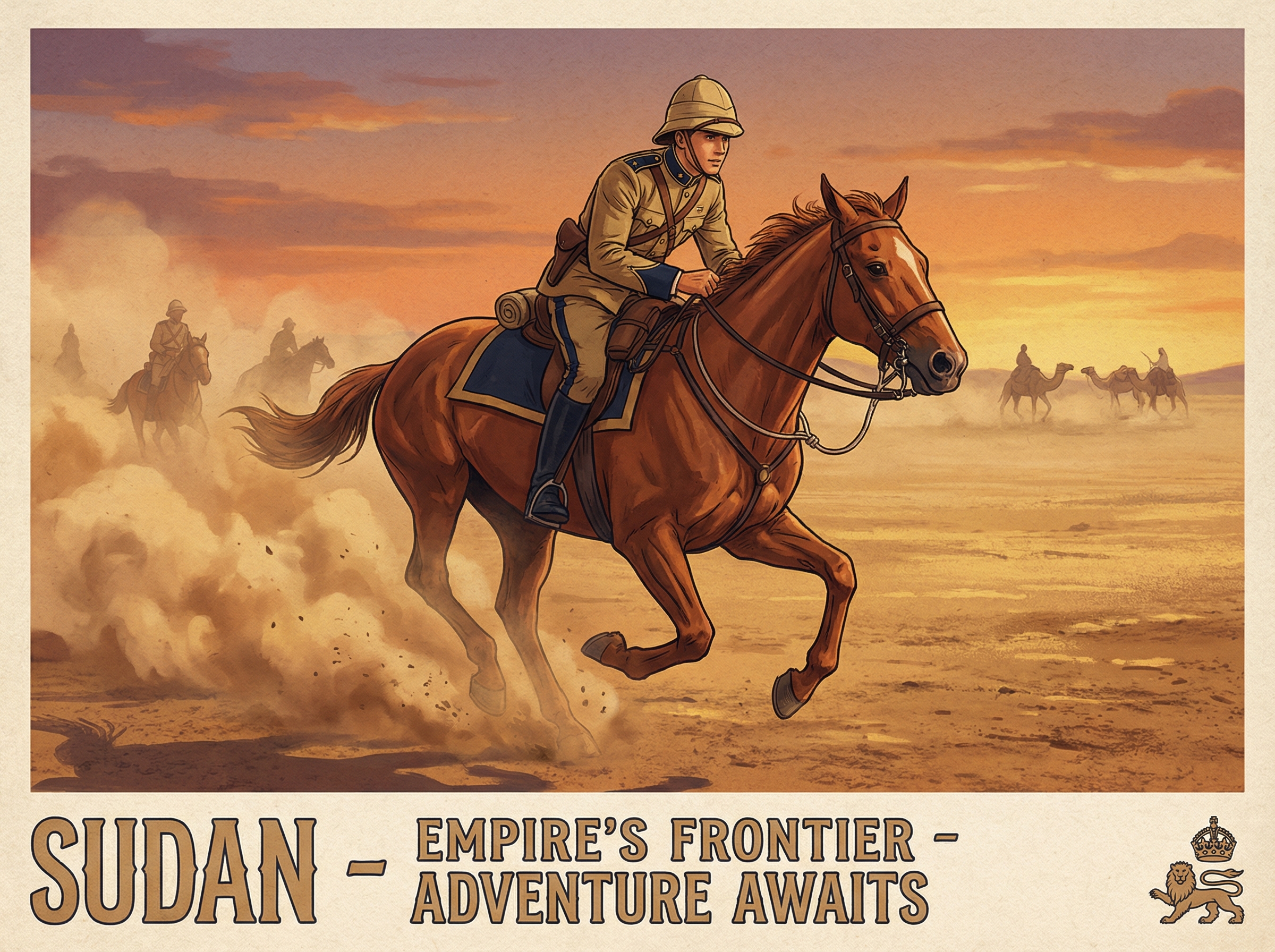
Young Churchill as a cavalry officer in India, circa 1896

And yet. Born at Blenheim Palace on November 30, 1874, Churchill responded to academic failure by becoming, essentially, his own university. Stationed in India with the 4th Queen's Own Hussars, a bored 22-year-old devoured Plato, Gibbon, Darwin, and Macaulay—giving himself the education Harrow and Sandhurst never provided. He also played polo obsessively, even with a chronically dislocated shoulder.

The adventures came fast. In 1898, he participated in the Battle of Omdurman—the last major British cavalry charge in history. In 1899, captured during the Boer War, he escaped from a POW camp in Pretoria and traveled 300 miles through enemy territory to safety in Portuguese East Africa. The escape made him a national celebrity overnight.

"I am all for the public schools but I do not want to go there one moment longer than is necessary."

— Winston Churchill, on his unhappy schooldays at Harrow

By age 25, he was an MP. By 30, he had defected from the Conservatives to the Liberals—a move that earned him a reputation as an opportunistic turncoat that would shadow him for decades. The pattern was set: Churchill would always be brilliant, always be controversial, and never be trusted by his own side.
02

Voice in the Wilderness

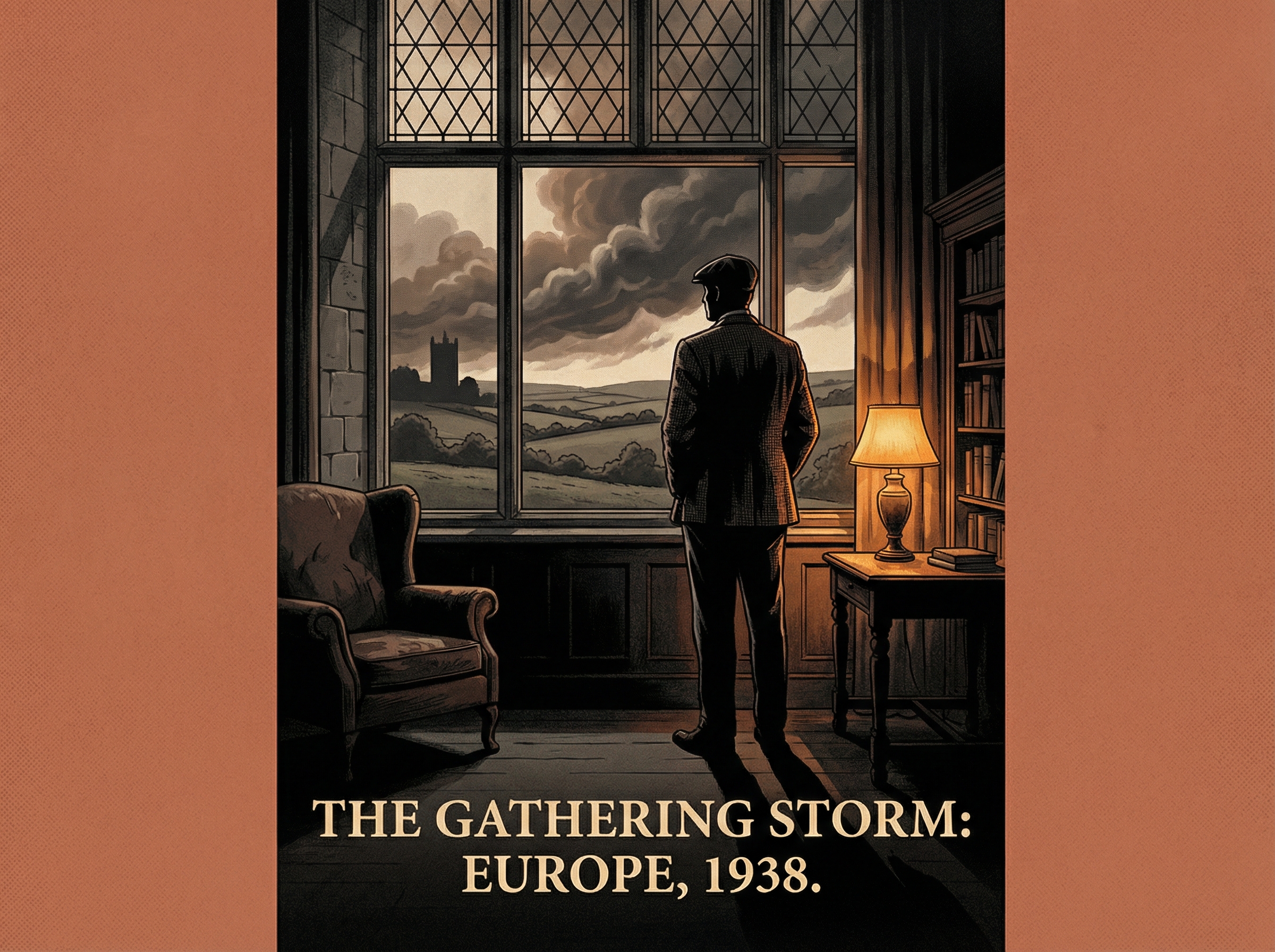
The 1930s should have been the end. After the Conservatives lost power in 1929, Churchill spent a decade in political exile—mocked as a warmonger, dismissed as a relic, shouted down in Parliament.

Churchill at Chartwell during the wilderness years, writing at his standing desk

Three issues destroyed his credibility with his own party. First: he opposed Indian independence, attacking Gandhi in terms that alienated moderates. Second: he backed King Edward VIII during the Abdication Crisis of 1936—a catastrophic miscalculation that nearly ended his career when the House shouted him into silence. Third: he warned about Hitler.

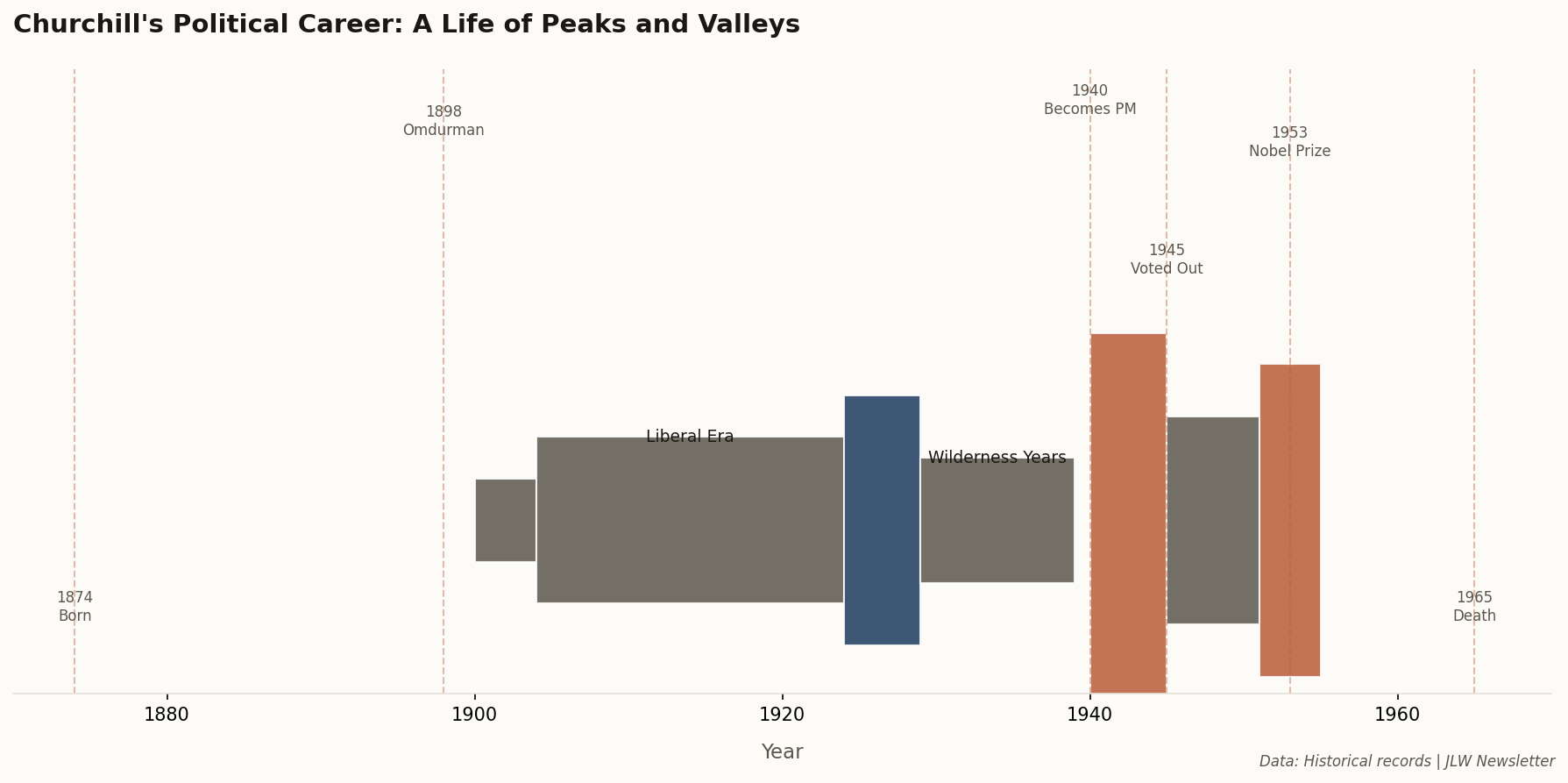
Timeline showing Churchill's political career phases from 1900-1955
Churchill's political trajectory—from Liberal reformer to Conservative outcast to wartime savior

From October 1930 onward, Churchill delivered speech after speech about the Nazi threat. In November 1934, he gave a pivotal radio broadcast urging rearmament. The political establishment ignored him. Chamberlain pursued appeasement. Churchill was the madman shouting at clouds.

"The government simply cannot make up their minds, or they cannot get the Prime Minister to make up his mind. So they go on in strange paradox, decided only to be undecided, resolved to be irresolute..."

— Winston Churchill, 1936

Historians now understand this "exile" differently. Churchill wrote constantly—including the massive Marlborough: His Life and Times—honing the historical perspective he would later use to frame World War II not as chaos but as narrative. The wilderness made the war leader.

03

Their Finest Hour

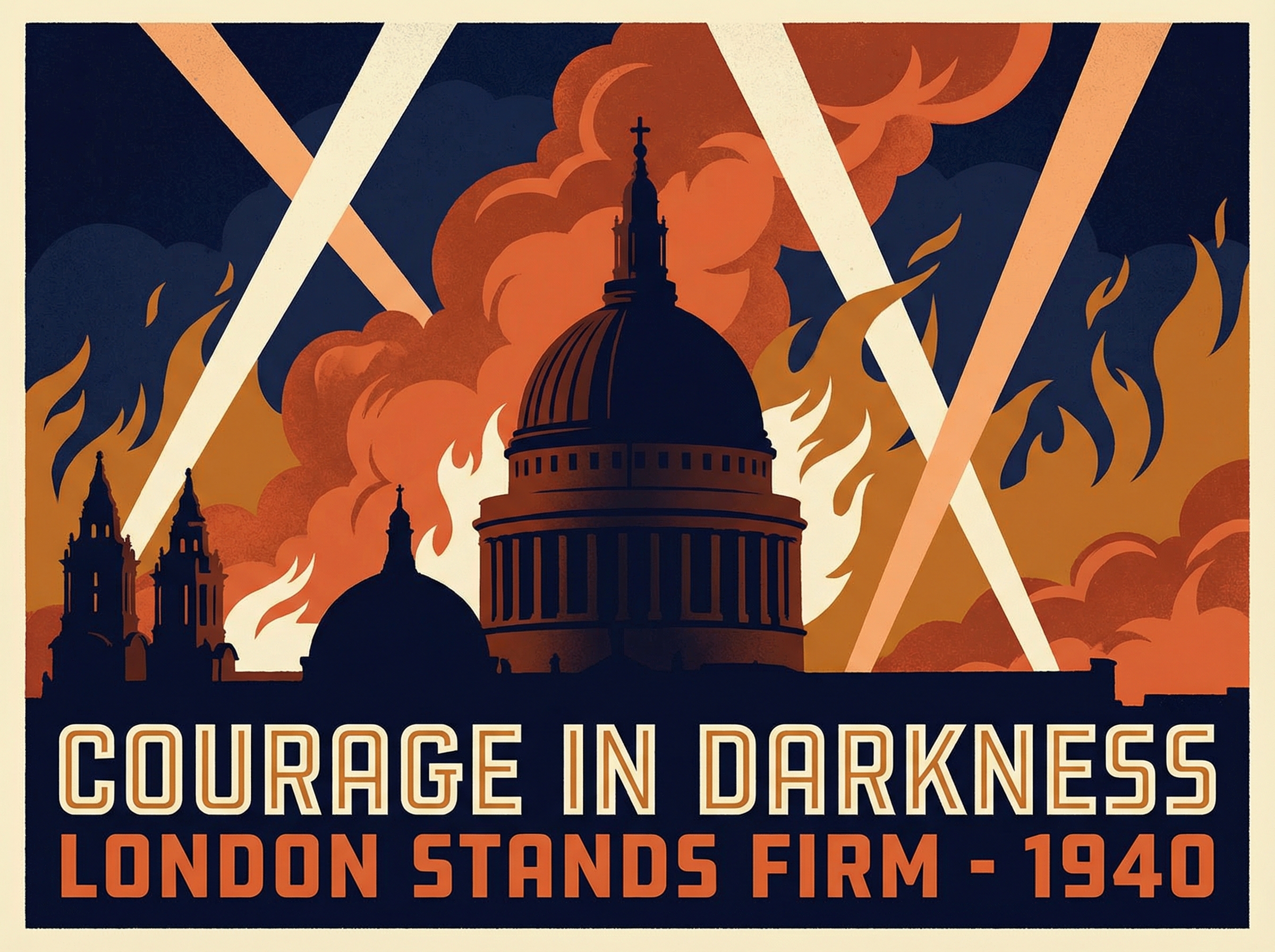
On May 10, 1940, two things happened. Adolf Hitler invaded France. And Winston Churchill became Prime Minister of Great Britain. He was 65 years old.

Churchill giving the V for Victory sign during the Blitz

What followed was the moment for which his entire erratic, controversial, brilliant life had been preparation. Britain stood alone. The Cabinet—especially Lord Halifax—urged negotiation with Hitler. Churchill refused.

"I have nothing to offer but blood, toil, tears and sweat."

— Winston Churchill, first speech as Prime Minister, May 13, 1940

The speeches are remembered because they worked. Churchill didn't just manage a war; he weaponized the English language. "We shall fight on the beaches." "Never in the field of human conflict was so much owed by so many to so few." These weren't just words—they were actions, shaping British resolve when military reality offered little hope.

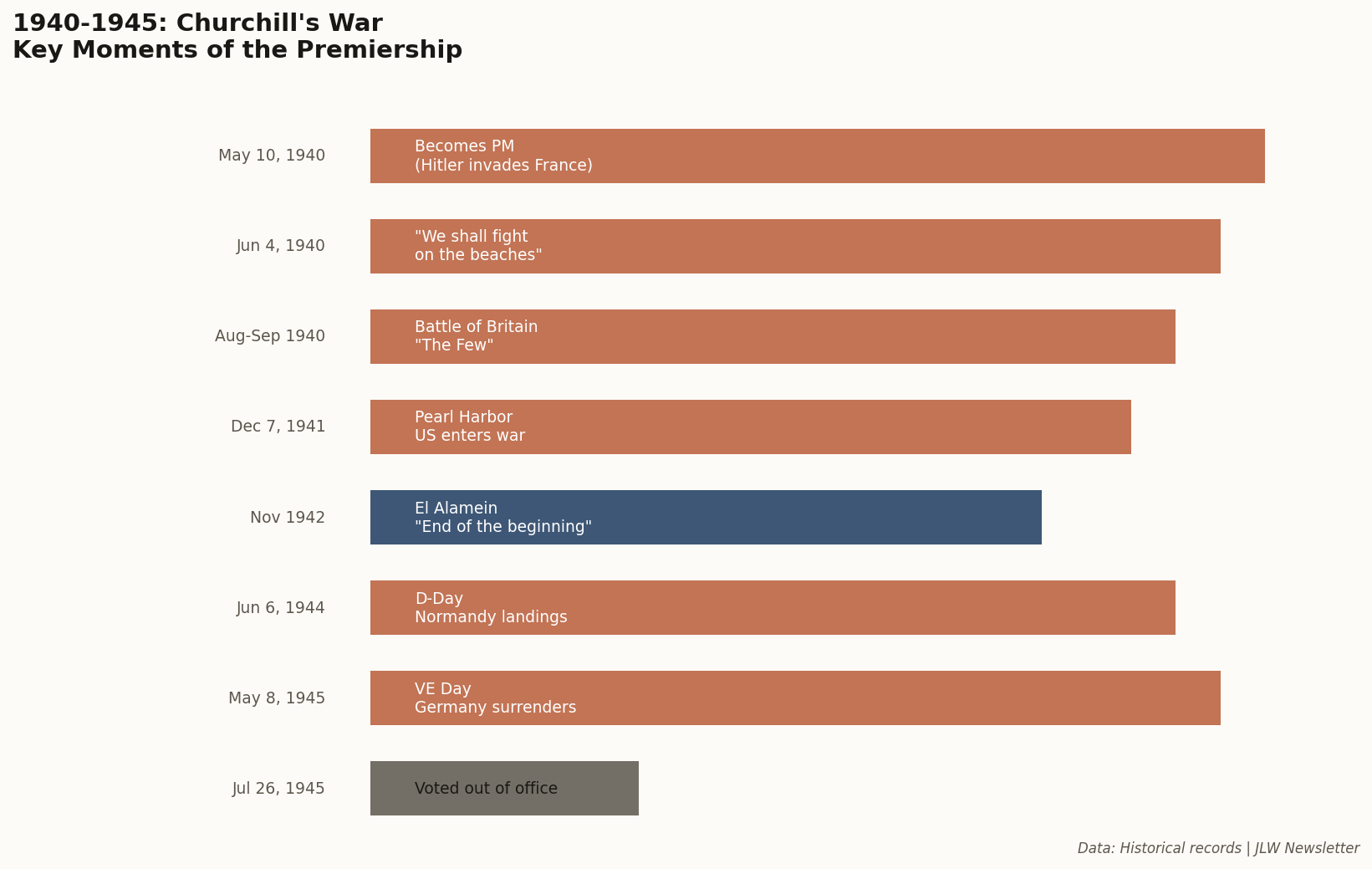
Timeline of key WWII events from May 1940 to September 1945
The arc of the war—from the fall of France to unconditional surrender

Behind the speeches: strategic decisions that shaped the war's outcome. Churchill cultivated FDR relentlessly, securing Lend-Lease supplies before America entered the conflict. He maintained an "uneasy alliance" with Stalin, meeting him in Moscow (1942) and Yalta (1945). He pushed the Mediterranean strategy—North Africa, Sicily, Italy—to delay the cross-channel invasion until 1944, when the Allies were actually ready.

The working style: Churchill often worked from bed in the morning, dictating speeches while wearing a silk dressing gown and sipping watered-down whiskey. His staff called the late-night Cabinet meetings "midnight follies."

And then, in July 1945, with the war in Europe won but Japan still fighting, British voters turned him out of office. The war leader was not wanted for peace.

04

The Iron Curtain Falls

The most consequential speech of the Cold War wasn't delivered by a head of state. It was delivered by a man who had just been voted out of office, speaking at a small college in Missouri.

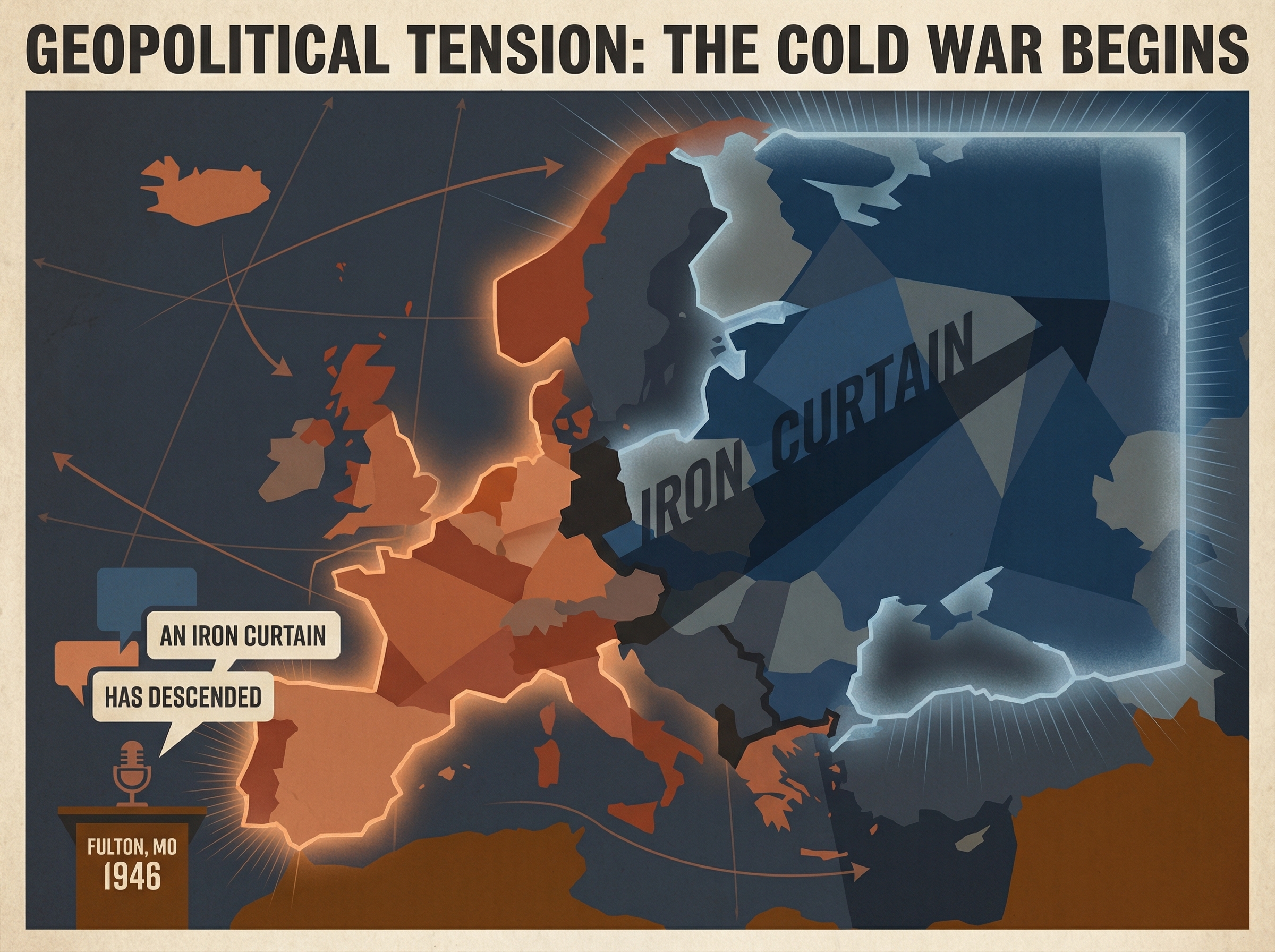
Churchill delivering the Iron Curtain speech at Westminster College, Fulton, Missouri, 1946

On March 5, 1946, at Westminster College in Fulton, Missouri, Churchill spoke the words that would define a generation's understanding of geopolitics:

"From Stettin in the Baltic to Trieste in the Adriatic, an iron curtain has descended across the Continent."

— Winston Churchill, "Sinews of Peace" speech, March 5, 1946

The phrase "Iron Curtain" hadn't originated with Churchill—but he made it stick. The speech was controversial at the time; the wartime alliance with the Soviet Union was barely cold. But Churchill saw what was coming. Again.

He returned to power in 1951 for a quieter second term as Prime Minister, focused on housing policy and the nuclear deterrent. His health was failing—he'd suffered strokes that the public didn't know about. He resigned in 1955, age 80.

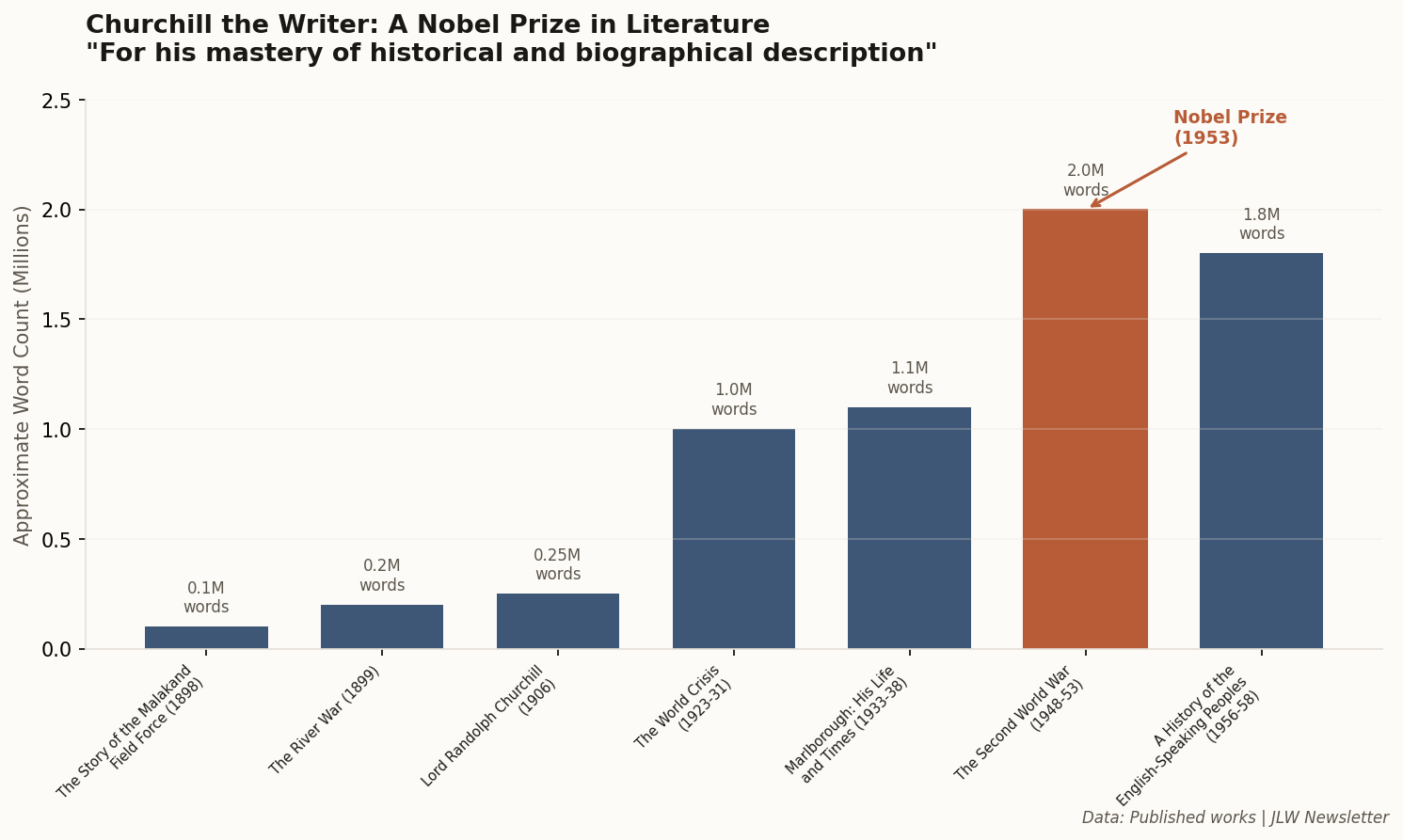
In 1953, he won the Nobel Prize in Literature—not Peace, but Literature—for his oratory and historical writings. The Swedish Academy recognized what Churchill had always understood: words were his weapons.

Chart showing Churchill's major literary works and word counts
Churchill's literary output—millions of words that won him the Nobel Prize
05

The Black Dog and the Brush

Churchill called his depression the "Black Dog." It followed him throughout his life. He never hid from it—he managed it.

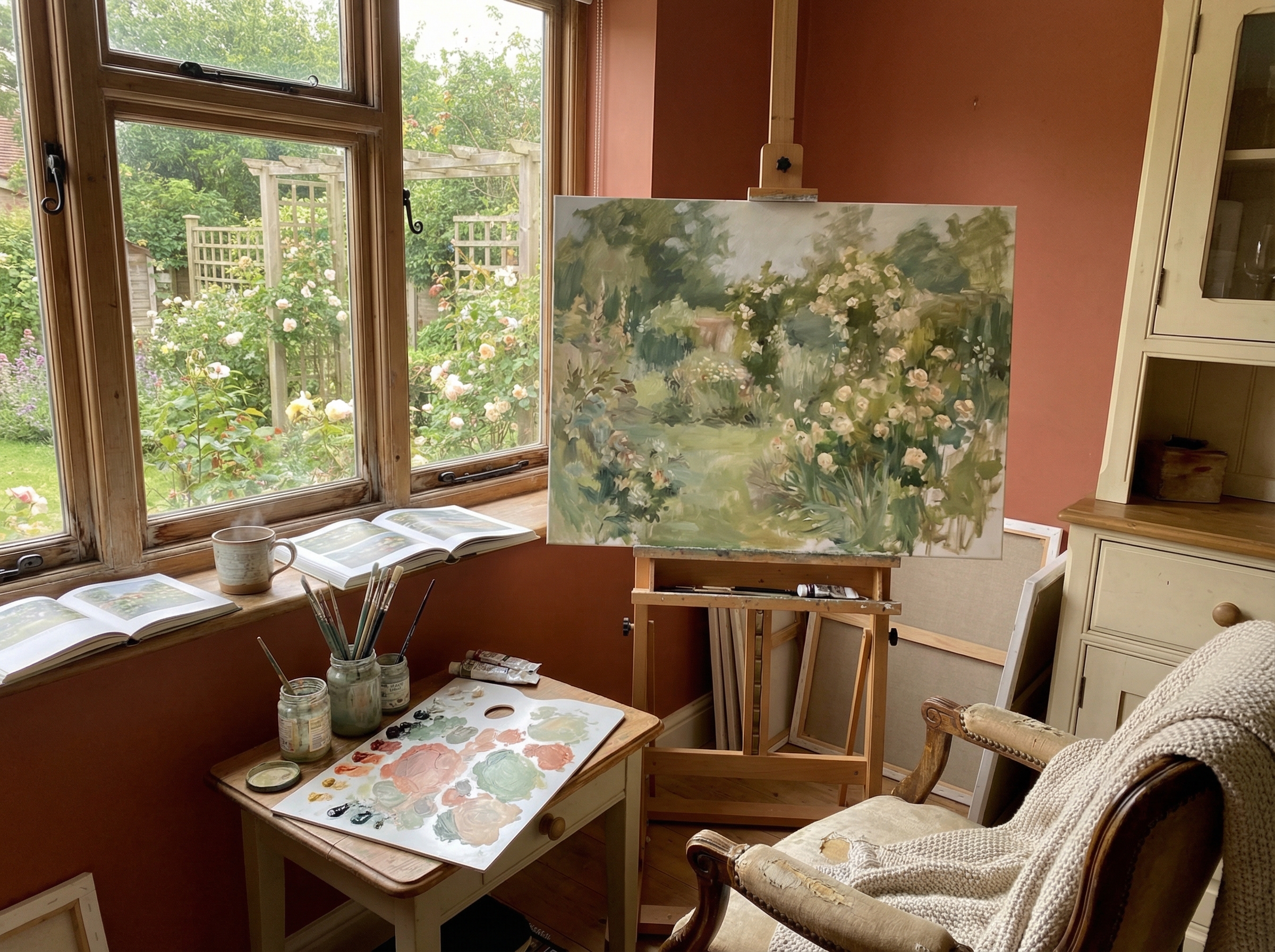
Churchill painting at his easel in the gardens of Chartwell

His primary coping mechanism was painting. He produced over 500 canvases in his lifetime, mostly landscapes and still lifes, working in an impressionist style he'd taught himself. The studio at Chartwell, his family home in Kent, remains filled with his work.

His marriage to Clementine Hozier in 1908 provided the stability his turbulent career required. She was often the only person who could scold him—and the only person whose opinion he truly feared. Their letters reveal a partnership that survived five decades of political upheaval, financial worry, and personal tragedy.

"I am ready to meet my Maker. Whether my Maker is prepared for the great ordeal of meeting me is another matter."

— Winston Churchill, on his 75th birthday

The public image—the champagne, the cigars, the witticisms—was partially performance. Churchill cultivated his own legend carefully. His "drunkenness" was largely exaggerated, often by himself, for effect. He was a night owl, famous for holding Cabinet meetings late into the evening. His daily intake did include Pol Roger champagne and brandy, but spread across long hours.

Curious fact: The first known written use of "OMG" appears in a 1917 letter sent to Churchill by Admiral John Fisher: "I hear that a new order of Knighthood is on the tapis—O.M.G. (Oh! My God!)—Shower it on the Admiralty!!"

He died on January 24, 1965—exactly 70 years to the day after his father. He was 90 years old.

06

Walking with Destiny

Churchill's reputation has never been settled. Hero worship gave way to revisionist critique; the critique has sparked counter-revisions. The debate is not finished.

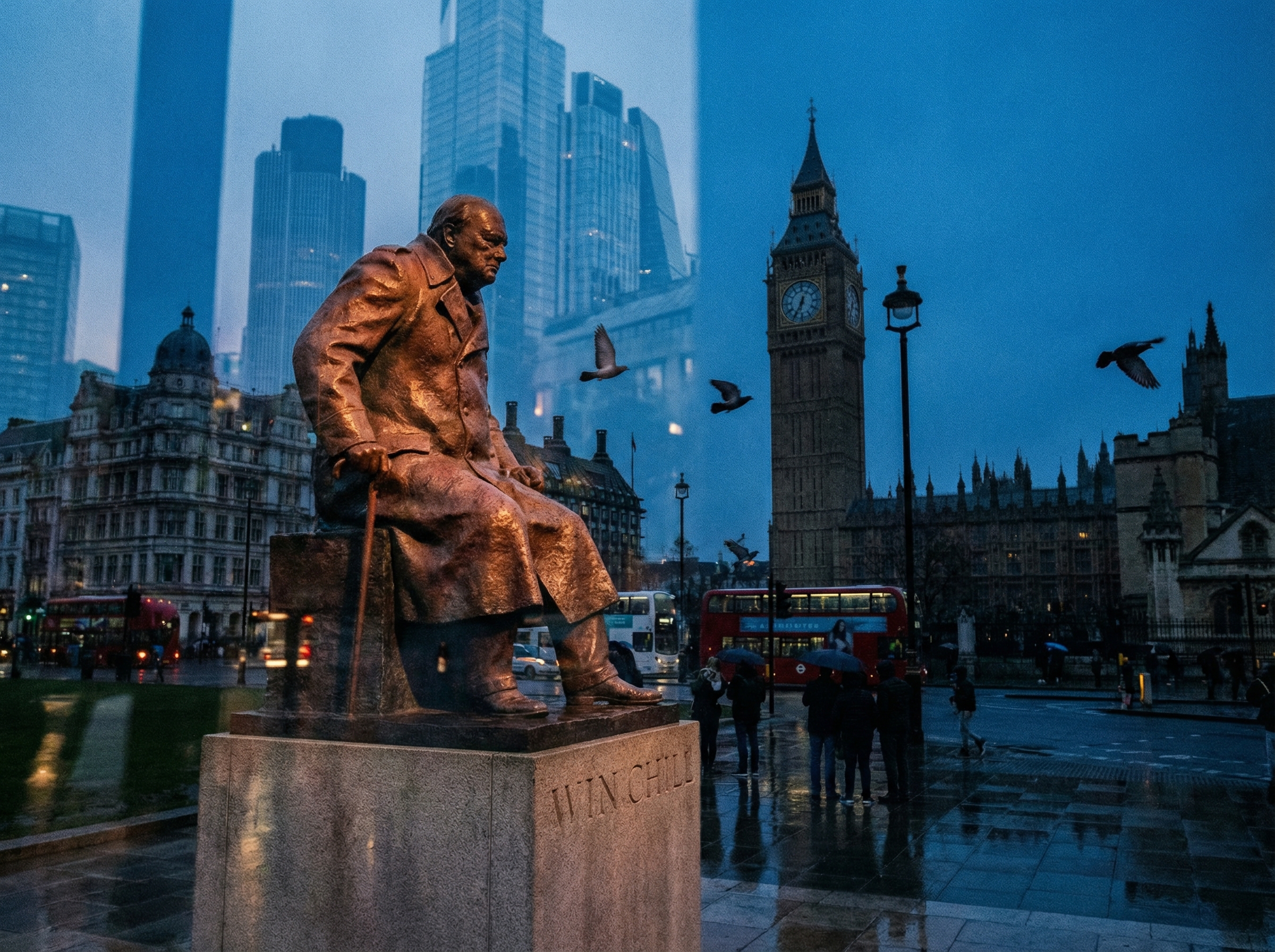
The Churchill statue in Parliament Square, London, against a stormy sky

Modern critics focus on his imperialism—his views on race, his handling of the Bengal Famine of 1943, his opposition to Indian independence. These critiques are not new (his contemporaries made them), but they carry different weight in a postcolonial era.

The definitive modern biography is Andrew Roberts' Churchill: Walking with Destiny (2018), which drew on new sources including King George VI's diary to reveal Churchill's careful management of the monarch during the war. Erik Larson's The Splendid and the Vile offers a narrative non-fiction portrait of his family life during the Blitz.

His advocacy for a "United States of Europe" makes him a contested figure in modern Brexit debates—both Remainers and Leavers claim his legacy. This is fitting. Churchill was never simple, never consistent, never belonging entirely to any faction.

Visit in person: Chartwell in Kent preserves his studio and gardens. The Cabinet War Rooms in London remain exactly as they were in 1945, down to the sugar cubes left on the tables. He is buried in the churchyard at Bladon, near his birthplace at Blenheim Palace.

The leadership lesson endures. In crisis, communication is action. Churchill didn't just manage the war; he told the story of it. He understood that before you can fight, people must believe the fight is worth having—and that belief is built with words.

Until Next Week

History isn't just what happened—it's the stories we choose to tell about it. Churchill understood this better than anyone. He wrote history, made history, and shaped how we remember it.