Physics Education

The Feynman Lectures on Physics

Sixty years after Richard Feynman stood at a Caltech chalkboard, his revolutionary approach to teaching physics remains the gold standard for understanding how the universe actually works.

Listen
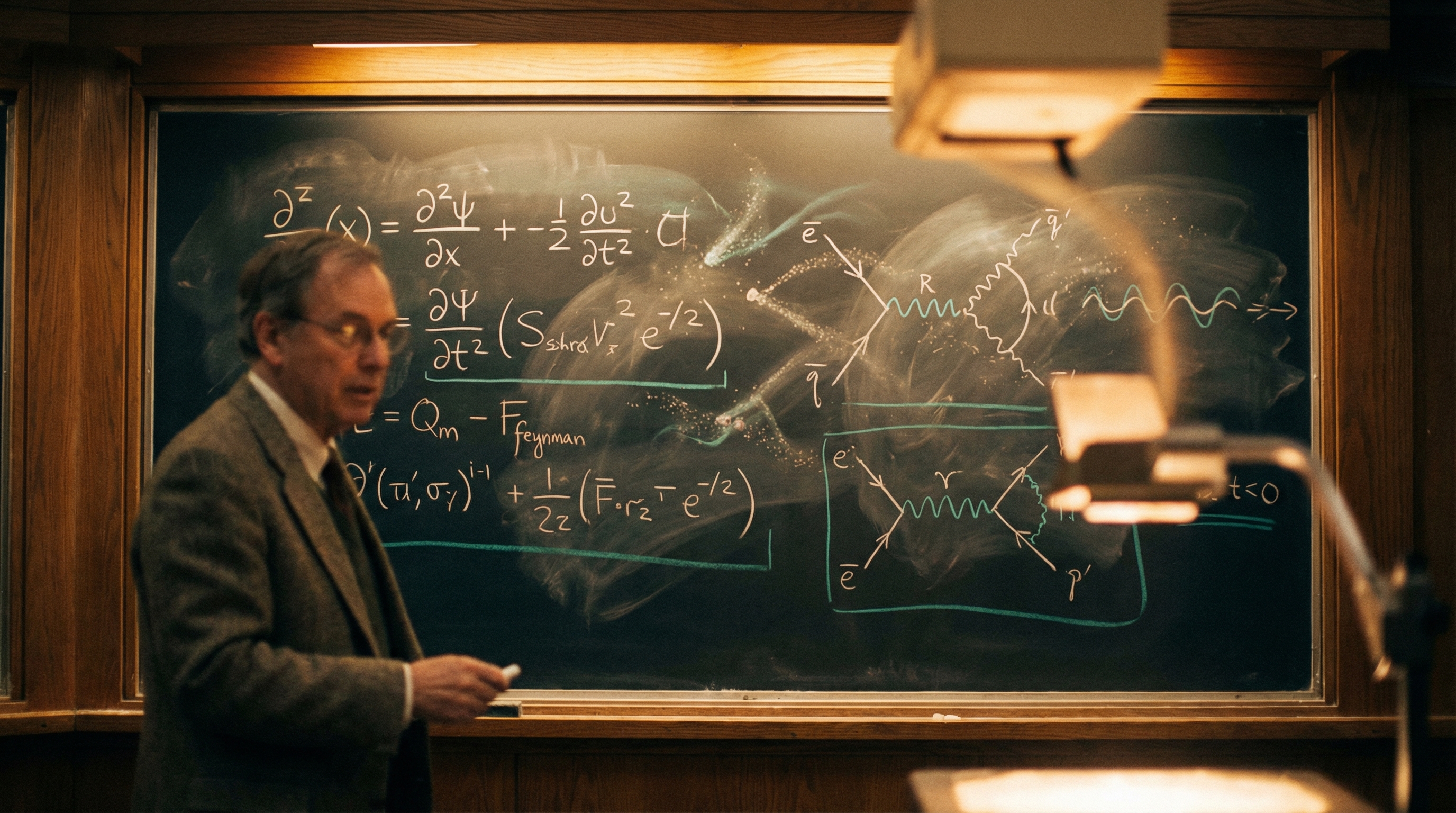
Chalkboard with Feynman diagrams and physics equations in teal and amber tones
Laptop displaying physics equations and diagrams
01

The Greatest Physics Textbook Is Free Online

Here's something that should change how you spend your evenings: the complete Feynman Lectures on Physics are available online, for free, in beautiful HTML5 with scalable vector graphics. Every equation renders perfectly at any zoom level. Every diagram is crisp.

This isn't some scanned PDF. In 2013, Caltech partnered with Michael Gottlieb to publish the "New Millennium Edition"—a version that corrects hundreds of minor errors accumulated over decades and converts everything to LaTeX for future-proofing. The result is arguably the most accurate physics textbook ever published.

Why this matters: A generation of physics students paid $150+ for the red hardcovers. Now anyone with an internet connection can access the same content, in a format that's actually better than print.

The audio recordings of Feynman delivering these lectures are still sold separately (Audible has them), and they're worth it for his timing and humor alone. But the core intellectual content? Completely free.

1960s lecture hall with chalkboard
02

Why Feynman Rewrote Physics Education

In 1961, Caltech had a problem. Their introductory physics curriculum was boring students to death. The standard approach—mechanics, then thermodynamics, then electromagnetism—felt disconnected from the actual practice of physics. Students were memorizing formulas without understanding why the universe behaved this way.

Matthew Sands proposed a radical solution: bring in Richard Feynman, their Nobel laureate who had a reputation for explaining quantum electrodynamics to his barber. Feynman agreed, on one condition—he would teach it his way.

Timeline of The Feynman Lectures from 1961 to 2026
From Caltech lectures (1961) to free online edition (2013) to AI-era relevance (2026)

His way meant starting with atoms. Most physics courses save atomic theory for later. Feynman opened with it. "If all of scientific knowledge were destroyed," he told students, "the one sentence I would preserve is: all things are made of atoms." Everything else follows from there.

Robert Leighton transcribed every lecture. The resulting "red books" became instant classics—though ironically, the freshmen they were designed for often struggled with them. The lectures turned out to be better suited for faculty and graduate students who already had the mathematical background to appreciate Feynman's insights.

Artistic representation of atoms and wave mechanics
03

Volume I: The Physical World from Atoms to Waves

Volume I establishes the "atoms first" approach. Feynman spends the opening chapters building intuition about what matter actually is before introducing F=ma. By the time you reach Newton's laws, you understand why they work at the atomic level.

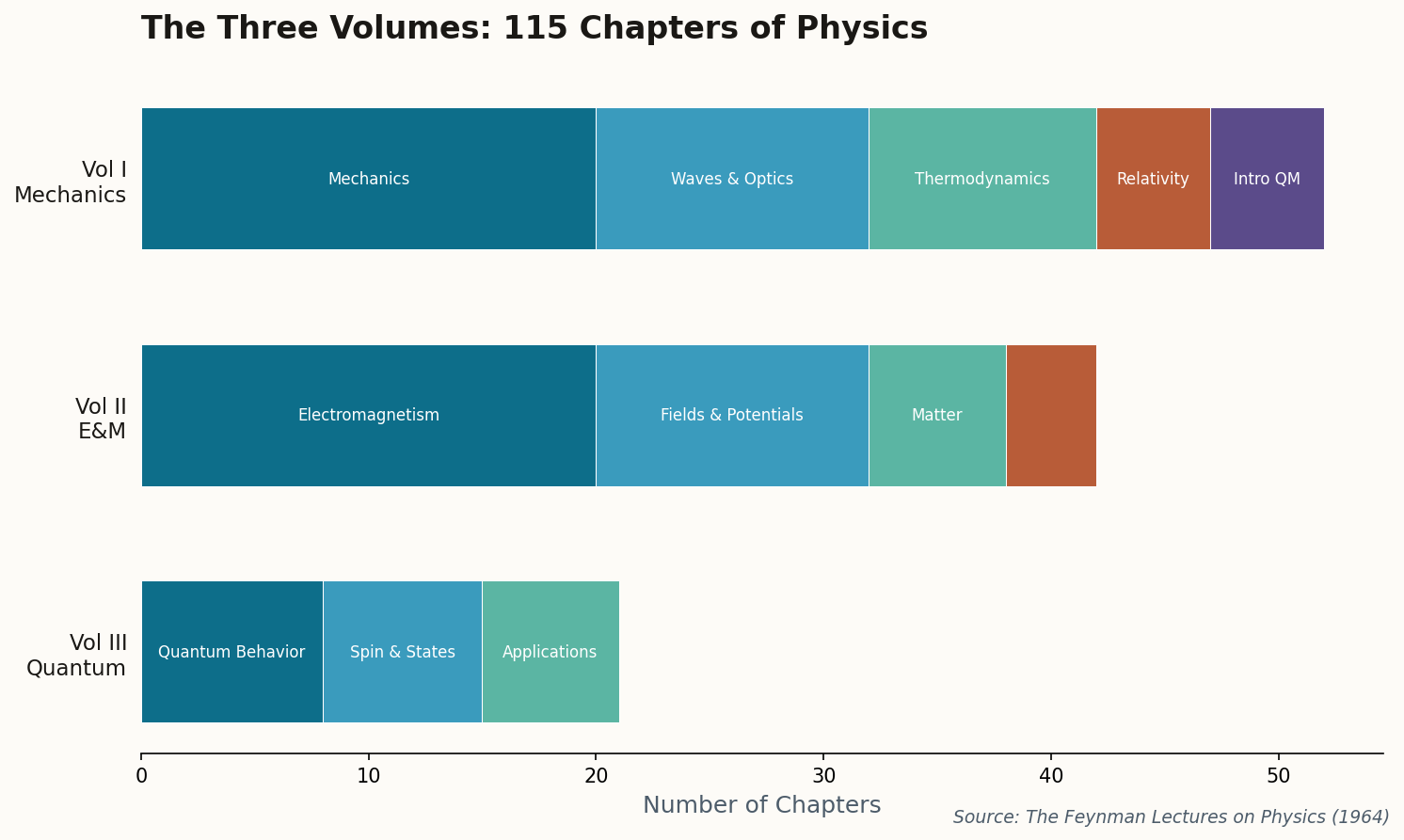
Breakdown of the three volumes and their topics
What each volume covers: mechanics and heat, electromagnetism, and quantum mechanics

The most audacious move comes in Chapter 37: "Quantum Behavior." Most introductory physics courses save quantum mechanics for advanced study. Feynman introduces the double-slit experiment to freshmen, letting them confront the strangeness of reality before they've built up classical prejudices.

Feynman's principle: "I think I can safely say that nobody understands quantum mechanics." But he could explain why, which is more than most could do.

The volume also covers special relativity, treating it not as Einstein's strange theory but as the inevitable consequence of taking Maxwell's equations seriously. Time dilation and length contraction emerge naturally when you stop privileging any particular reference frame.

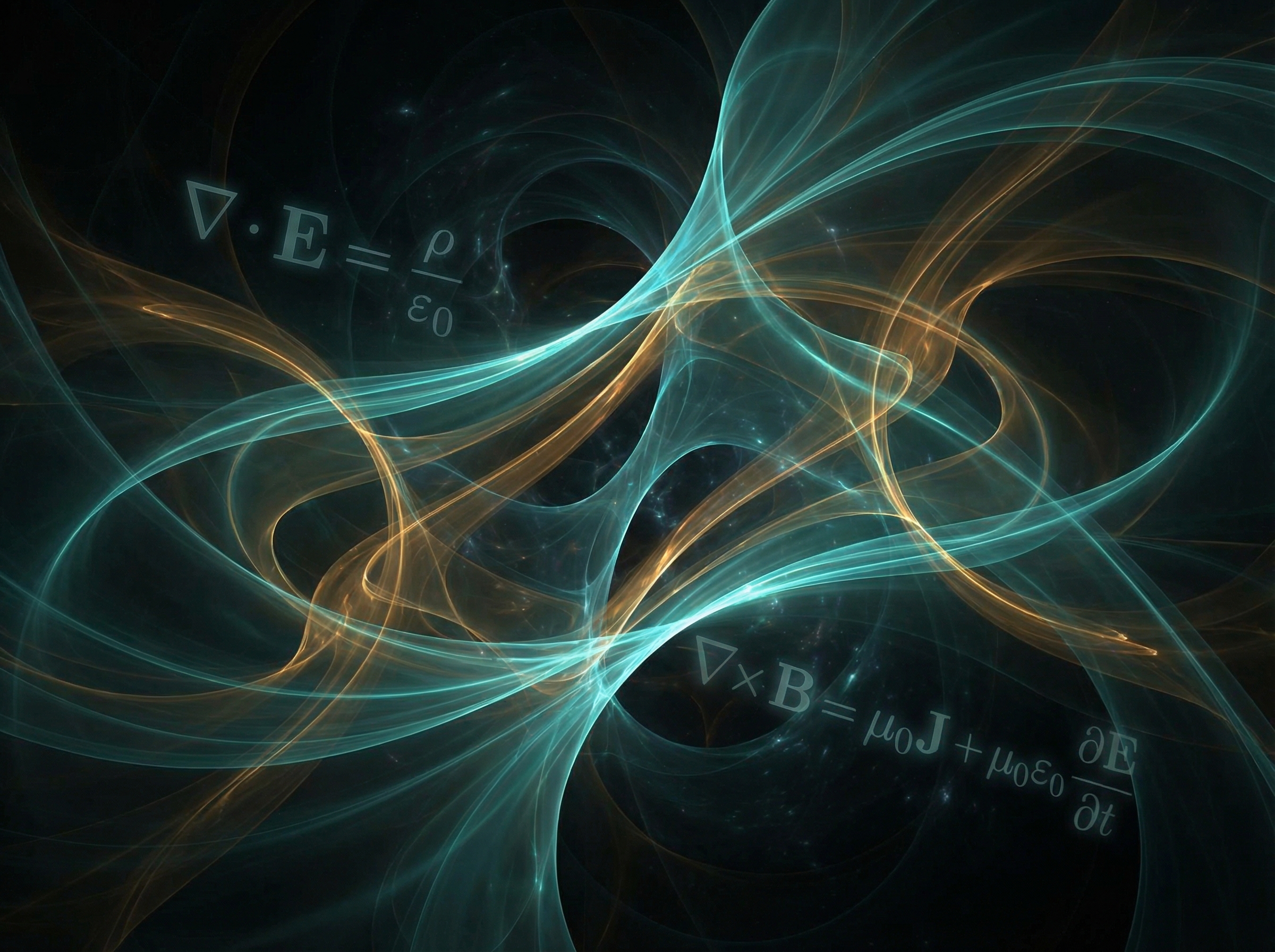
Electromagnetic field visualization with flowing lines
04

Volume II: The Invisible Forces

Volume II is where most physics students either fall in love with the subject or realize they should have majored in biology. Electromagnetism—the unified theory of electricity, magnetism, and light—demands genuine mathematical sophistication.

Feynman's key insight: magnetism is a relativistic effect of electricity. Move a charged particle past a wire carrying current, and special relativity explains why it feels a magnetic force. This isn't just a clever observation—it's the conceptual foundation that makes Maxwell's equations make sense.

The volume builds to a complete exposition of Maxwell's equations in differential form. By the final chapters, you understand how these four equations describe everything from radio waves to why the sky is blue to how your phone's GPS works.

The payoff: "From a long view of the history of mankind, seen from, say, ten thousand years from now, there can be little doubt that the most significant event of the 19th century will be judged as Maxwell's discovery of the laws of electrodynamics."

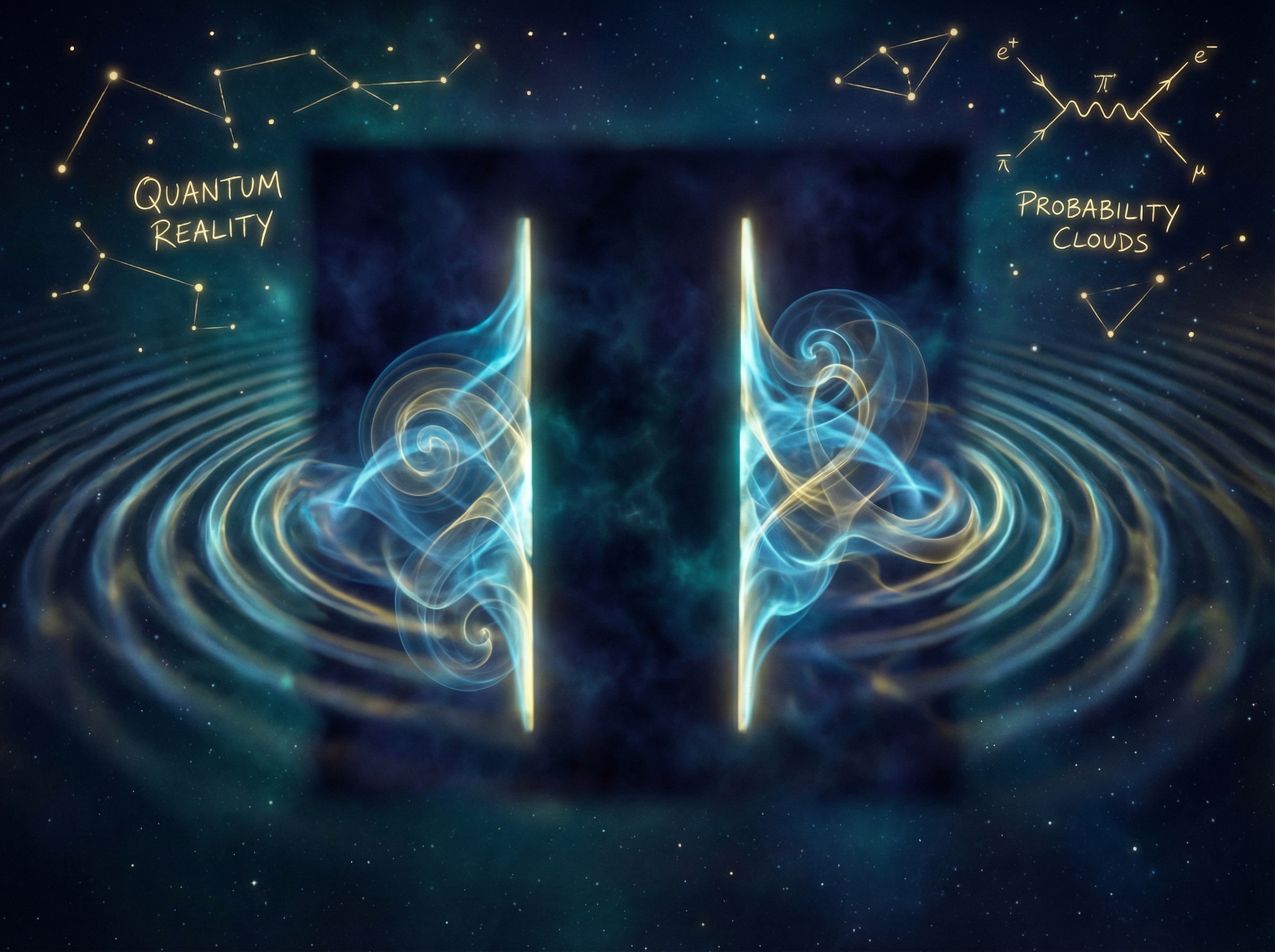
Double-slit quantum interference pattern visualization
05

Volume III: Quantum Strangeness Made Clear

Here's where Feynman does something no other introductory textbook attempts: he starts quantum mechanics with Dirac bracket notation instead of the Schrödinger equation. Most courses spend months building up to the mathematical formalism. Feynman begins with it.

The approach sounds backwards but works beautifully. By focusing on two-state systems like electron spin, students grasp superposition and uncertainty immediately. The wave function comes later, as a specific representation of something they already understand.

The famous two-slit experiment runs as a thread through the entire volume. Feynman returns to it repeatedly, each time revealing new implications. By the final chapters, you understand why "the observation of an electron changes everything"—not as mysticism, but as mathematics.

The real lesson: Quantum mechanics isn't weird because the universe is weird. It's weird because our intuitions evolved on the African savanna, not at the atomic scale. The math makes perfect sense once you stop expecting particles to behave like tiny billiard balls.

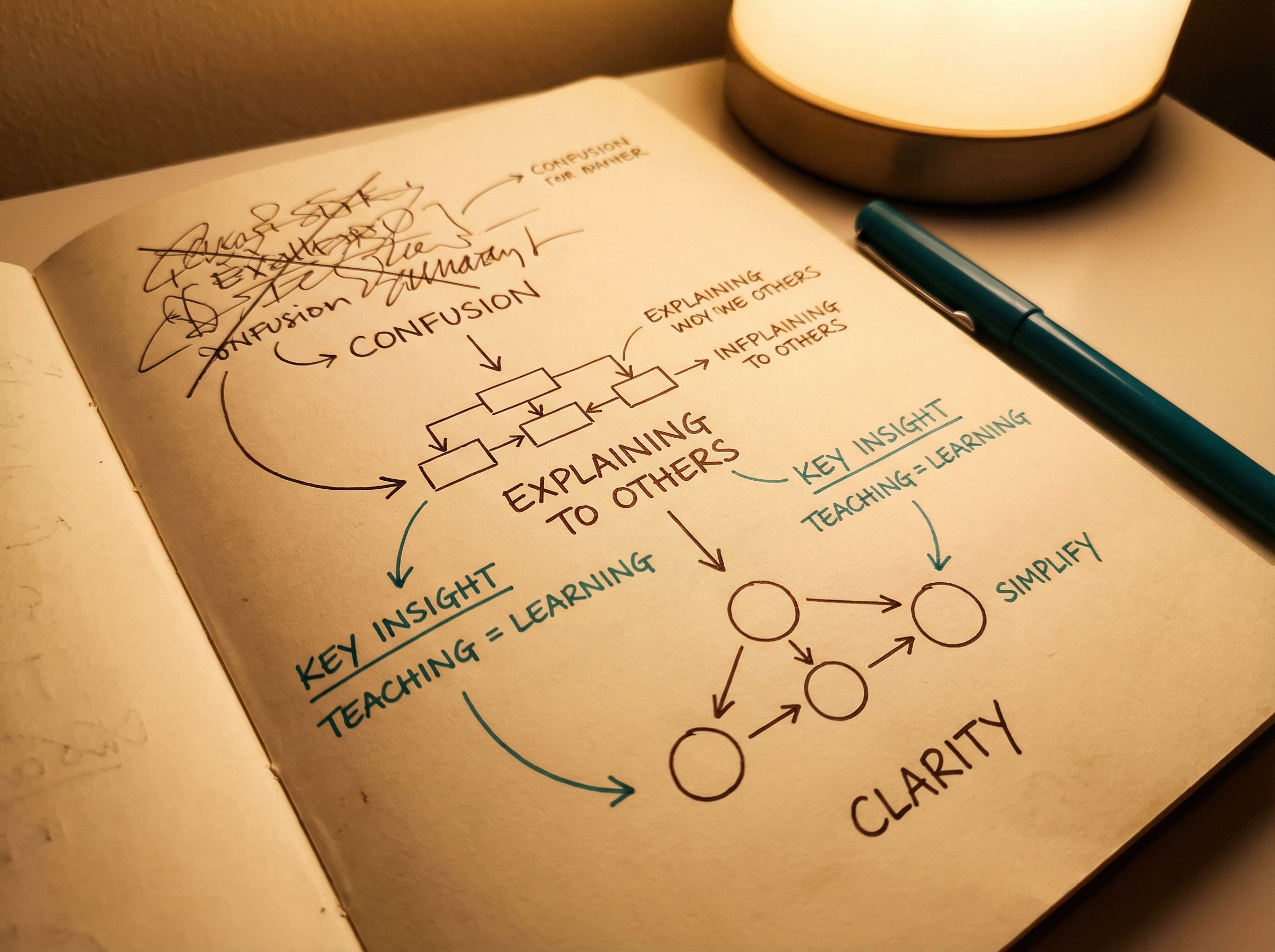
Notebook with handwritten annotations and diagrams
06

The Feynman Technique: Learning by Teaching

Feynman's lectures succeeded because he practiced what he preached: "If you can't explain it simply, you don't understand it." This wasn't false modesty. He genuinely believed that jargon was a warning sign—a symptom of fuzzy thinking, not evidence of sophistication.

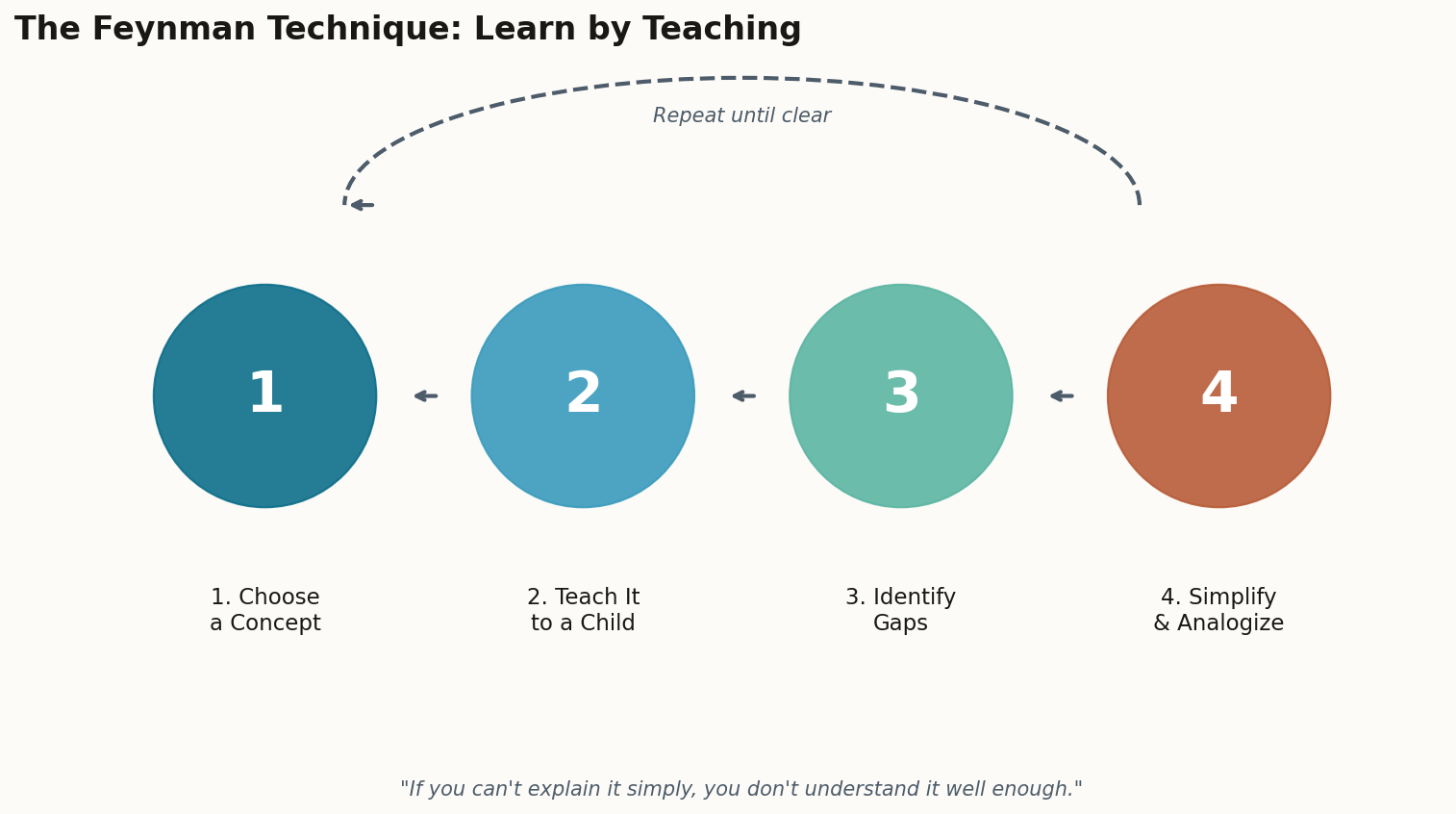
The four steps of the Feynman Technique
Choose a concept, teach it simply, identify gaps, then simplify further

Author Scott Young formalized this into the "Feynman Technique" around 2011:

1. Choose a concept you want to understand.
2. Teach it to a child (or rubber duck). Use plain language, no jargon.
3. Identify gaps in your explanation—places where you wave your hands.
4. Return to the source material, then simplify and use analogies.

The technique works because it forces you to confront what you actually know versus what you merely recognize. Feynman famously said there's a difference between "knowing the name of something" and "knowing something." The Feynman Technique is a tool for telling the difference.

2026 relevance: In the AI era, this distinction matters more than ever. GPT can recite definitions and generate proofs. What it struggles with is the physical intuition Feynman spent his career cultivating—understanding why nature behaves this way, not just what it does.

"Nature cannot be fooled."

Richard Feynman wrote that line in his appendix to the Challenger disaster report. It applies equally to physics education: you either understand how the universe works, or you don't. The Feynman Lectures remain the clearest path to genuine understanding we have.