45% of Vibe-Coded Apps Fail Security Benchmarks. The Reckoning Is Here.
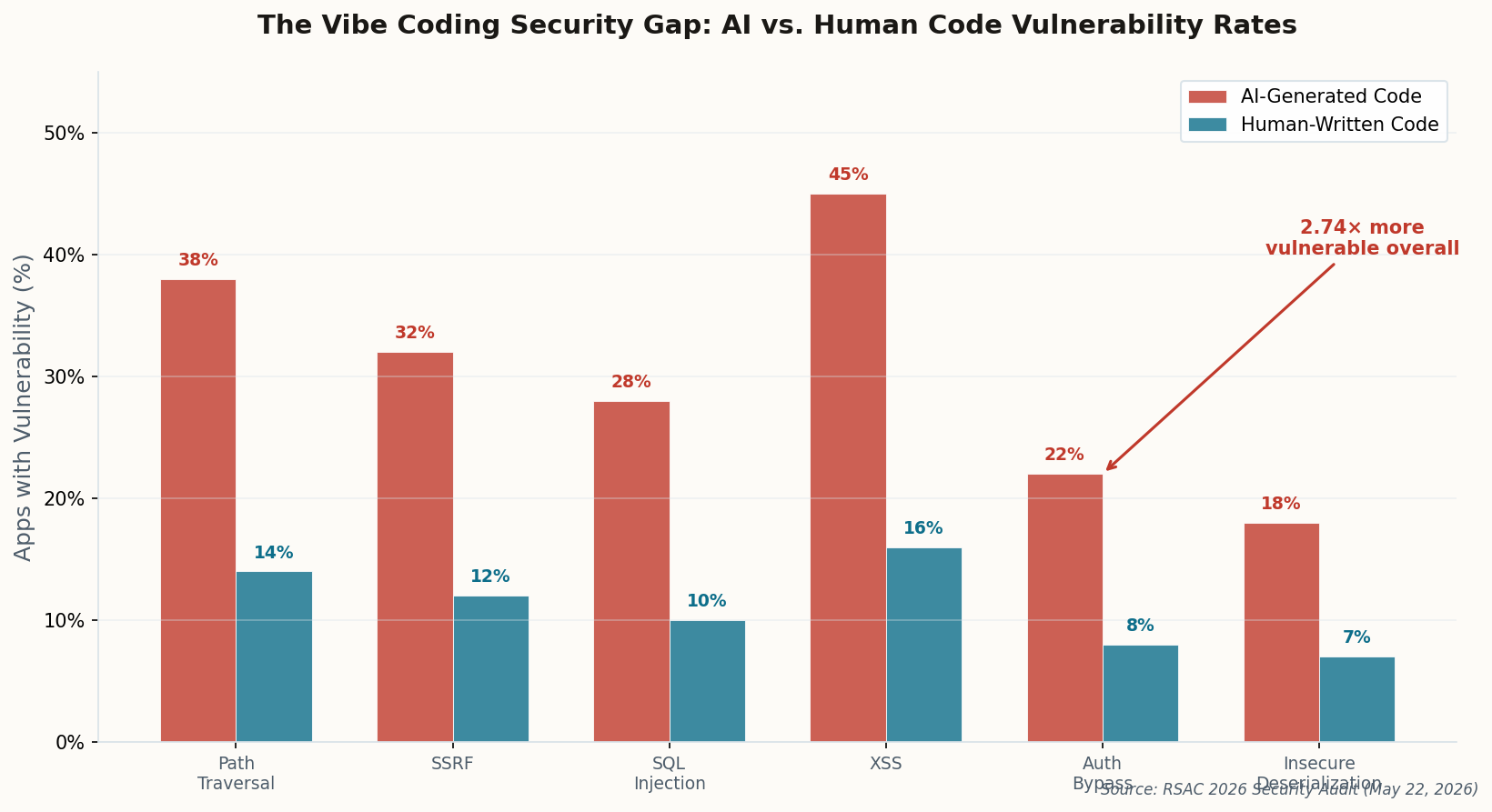
Here's the uncomfortable truth that arrived at RSAC 2026 like a fire alarm during a champagne toast: nearly half of all applications built primarily through vibe coding fail basic security benchmarks. Path traversal. SSRF. The kind of vulnerabilities that make a pen tester's morning commute worthwhile.
The numbers are stark. AI-generated code is 2.74 times more likely to contain vulnerabilities than code written by experienced human engineers. And it gets worse: researchers coined "Slopageddon" to describe the flood of AI-generated pull requests overwhelming open-source maintainers—PRs that compile, pass lint, look reasonable in review, and contain security holes you could drive a truck through.
This isn't an indictment of the tools themselves. It's an indictment of the workflow. When a developer vibes their way through a feature without understanding the security implications of what the model just generated, they're not pair-programming—they're rubber-stamping. The models are getting better at writing correct code. They're not getting better at writing safe code. Those are different problems, and the gap between them is where the next generation of "AI-native" security tools—think Snyk, Semgrep, and their successors—will live.
The takeaway: Vibe coding has won the adoption war. It's currently losing the quality war. Expect compliance frameworks and automated security verification layers to become table stakes for any agentic IDE by year's end.