Drone Delivery

The Last Mile Is Vertical

Walmart's 30-minute revolution, Zipline's observer-free skies, and the week drone delivery stopped being a novelty.

Listen
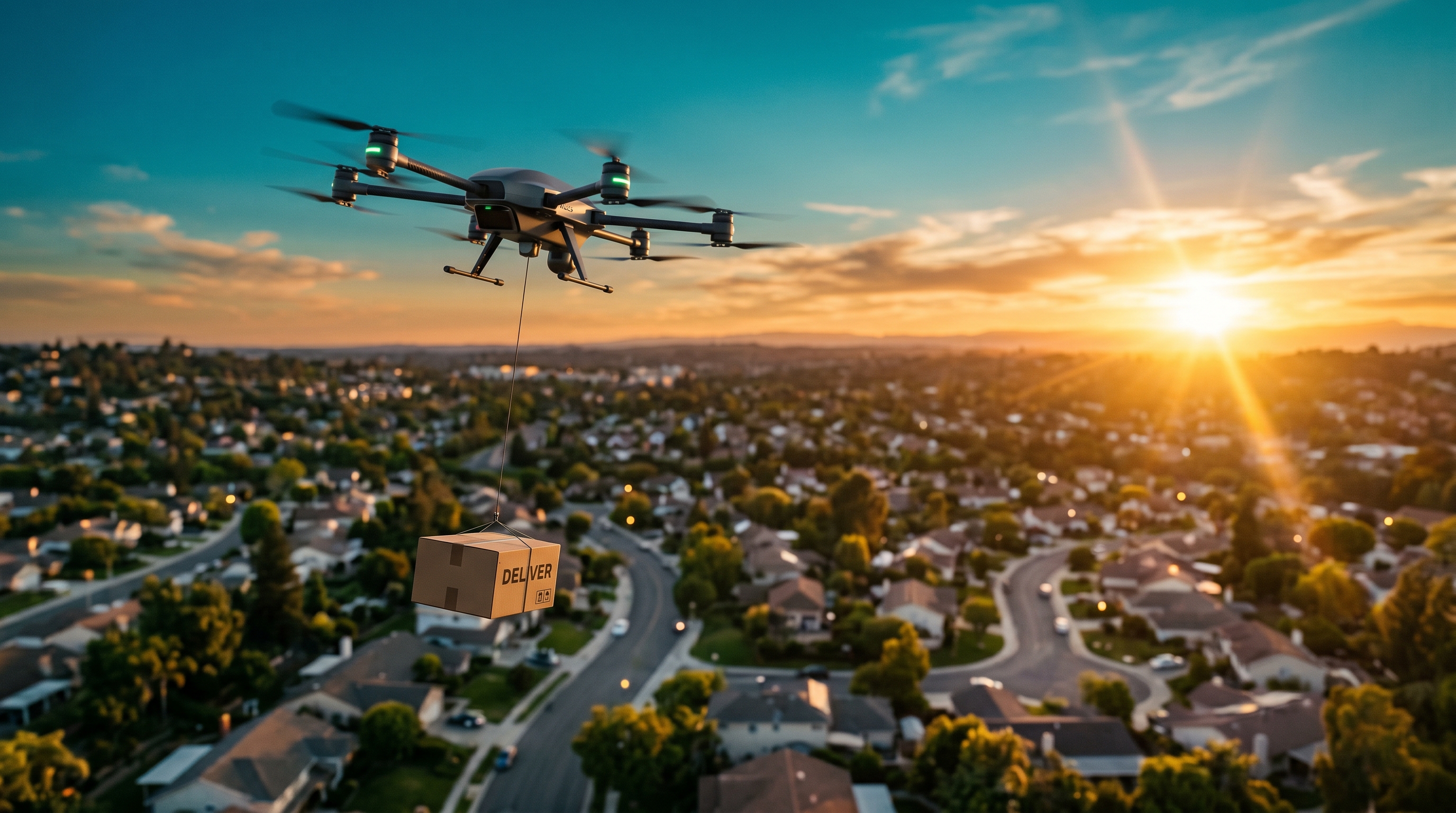
A delivery drone descending through golden hour light toward a suburban neighborhood, package suspended on a tether line
01

Walmart Just Proved the Economics Work
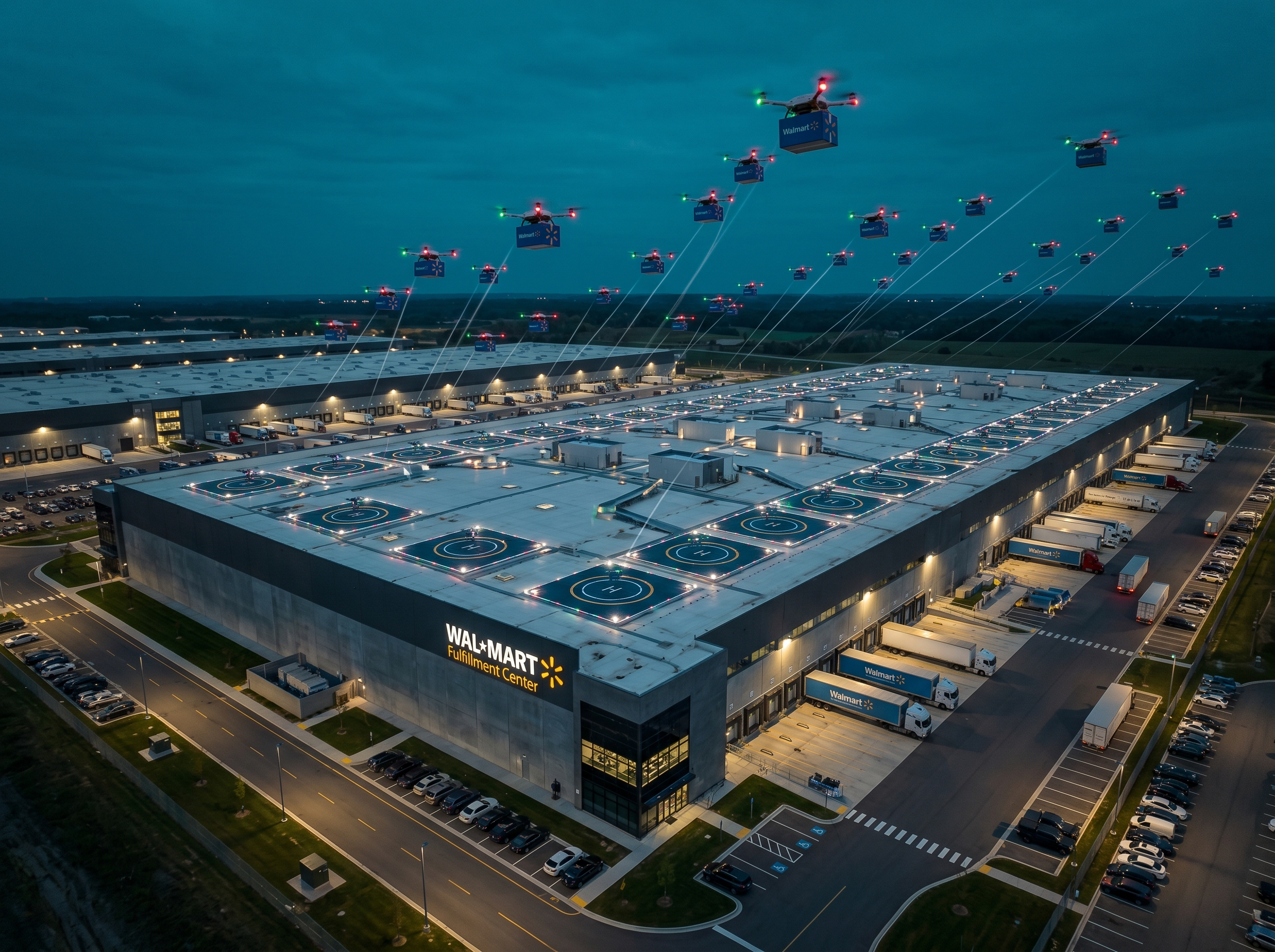
Aerial view of a Walmart fulfillment center with delivery drones launching from rooftop pads

Here's a number that should make every logistics executive lose sleep: 60% of Walmart's U.S. online orders now arrive in 30 minutes or less. Not same-day. Not next-hour. Thirty minutes. That's not a pilot program statistic from a single zip code in Arkansas—it's a company-wide metric from their Q1 2026 earnings report, and it's rewriting the rules of retail fulfillment.

The secret weapon? A "multi-operator" drone network built on partnerships with both Zipline and Wing. In dense suburban markets like Dallas-Fort Worth, drones handle the speed-critical deliveries that would otherwise require an army of gig drivers navigating rush-hour traffic. CEO Doug McMillon was characteristically blunt: the integrated drone and fulfillment network has "fundamentally changed customer expectations for speed."
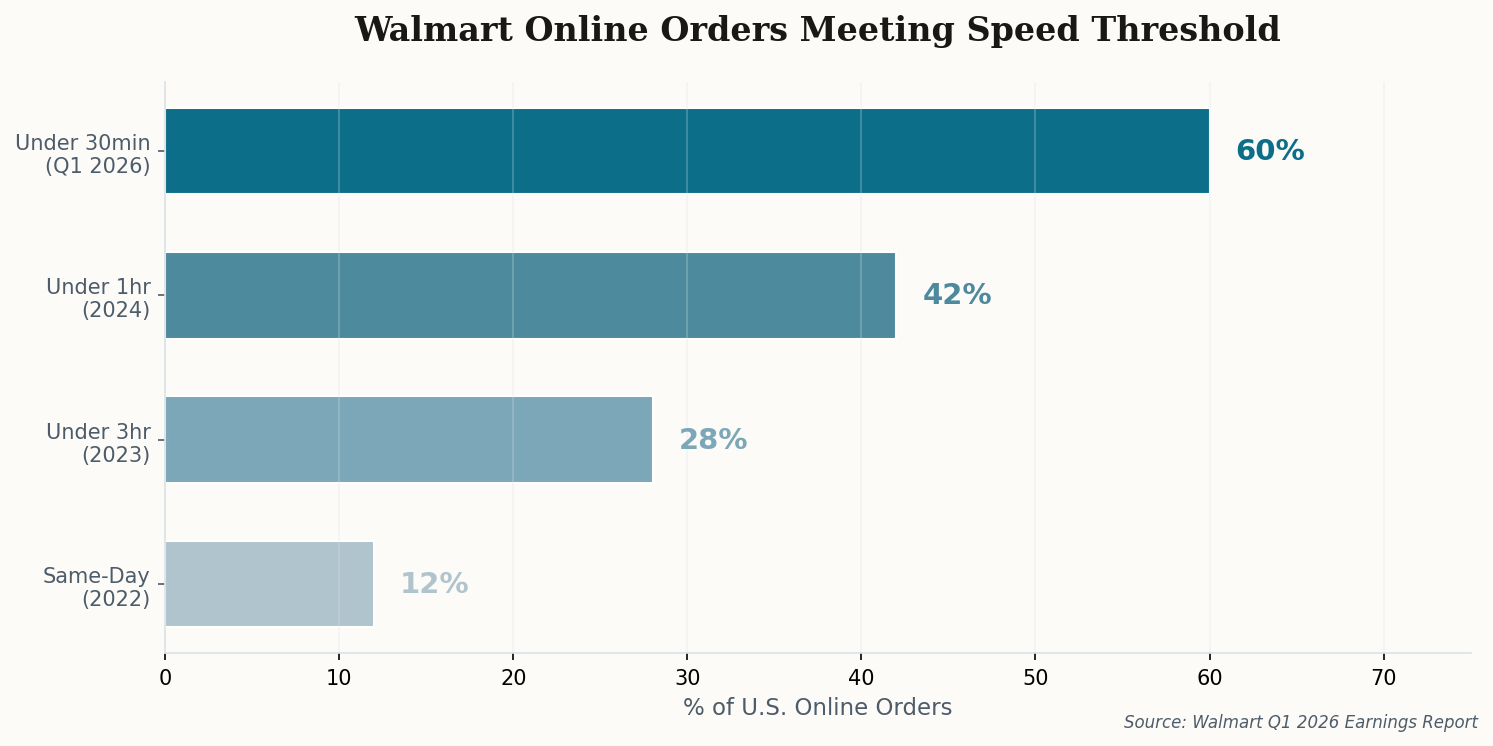
Chart showing Walmart online orders meeting speed thresholds from 2022 to 2026, reaching 60% under 30 minutes
Walmart's delivery speed has improved dramatically as drone networks expanded. 60% of online orders now arrive in under 30 minutes. Source: Walmart Q1 2026 Earnings.

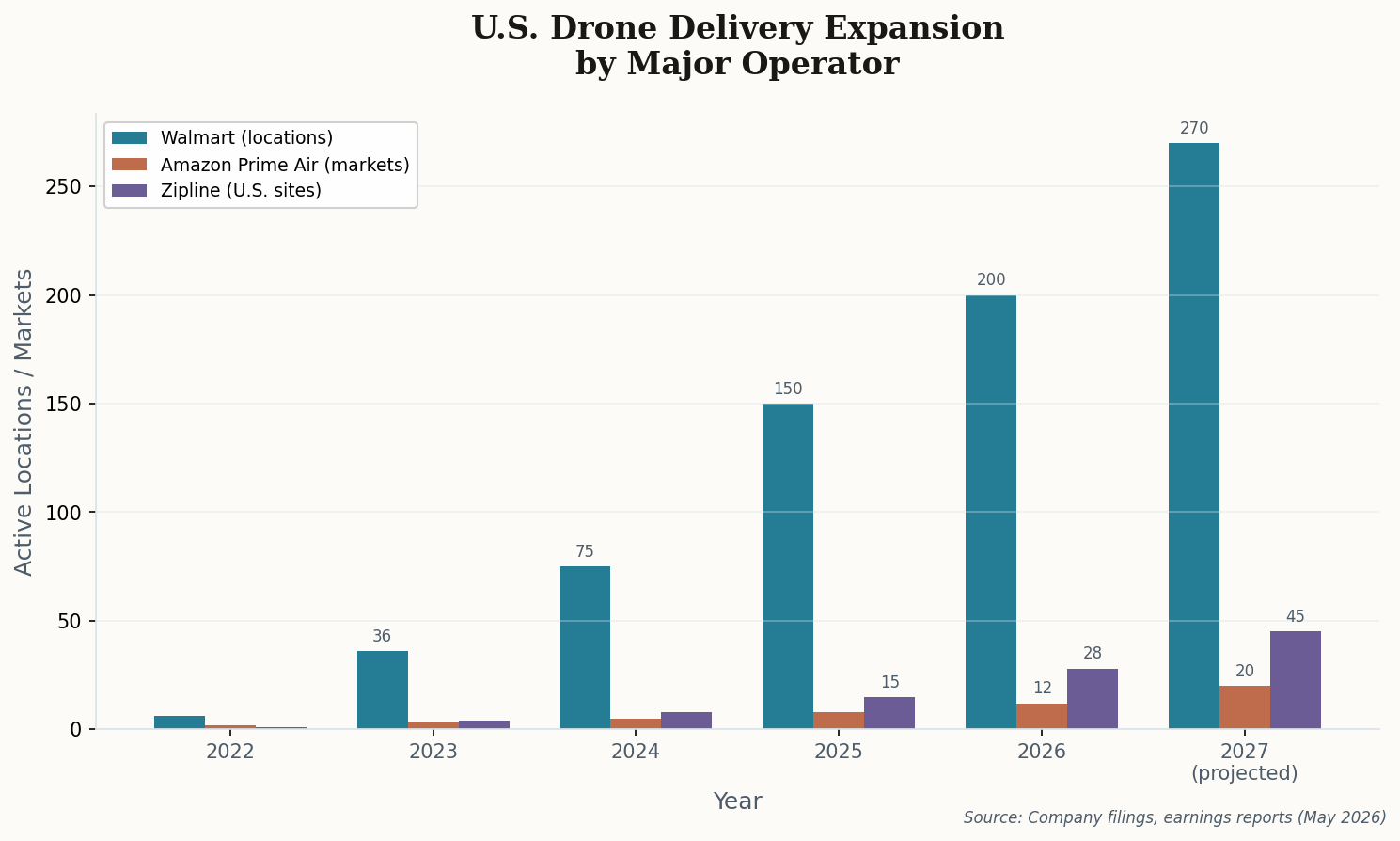
The trajectory here is what matters. In 2022, only 12% of orders hit same-day windows. Three years and a drone fleet later, the majority of orders beat your average pizza delivery. Walmart confirmed it's on track to expand drone service to 270 U.S. locations by end of 2027. The question is no longer whether drone delivery works at scale—it's whether competitors can catch up before the gap becomes permanent.
02

Amazon's Quiet Drone Is Headed to Your Neighborhood

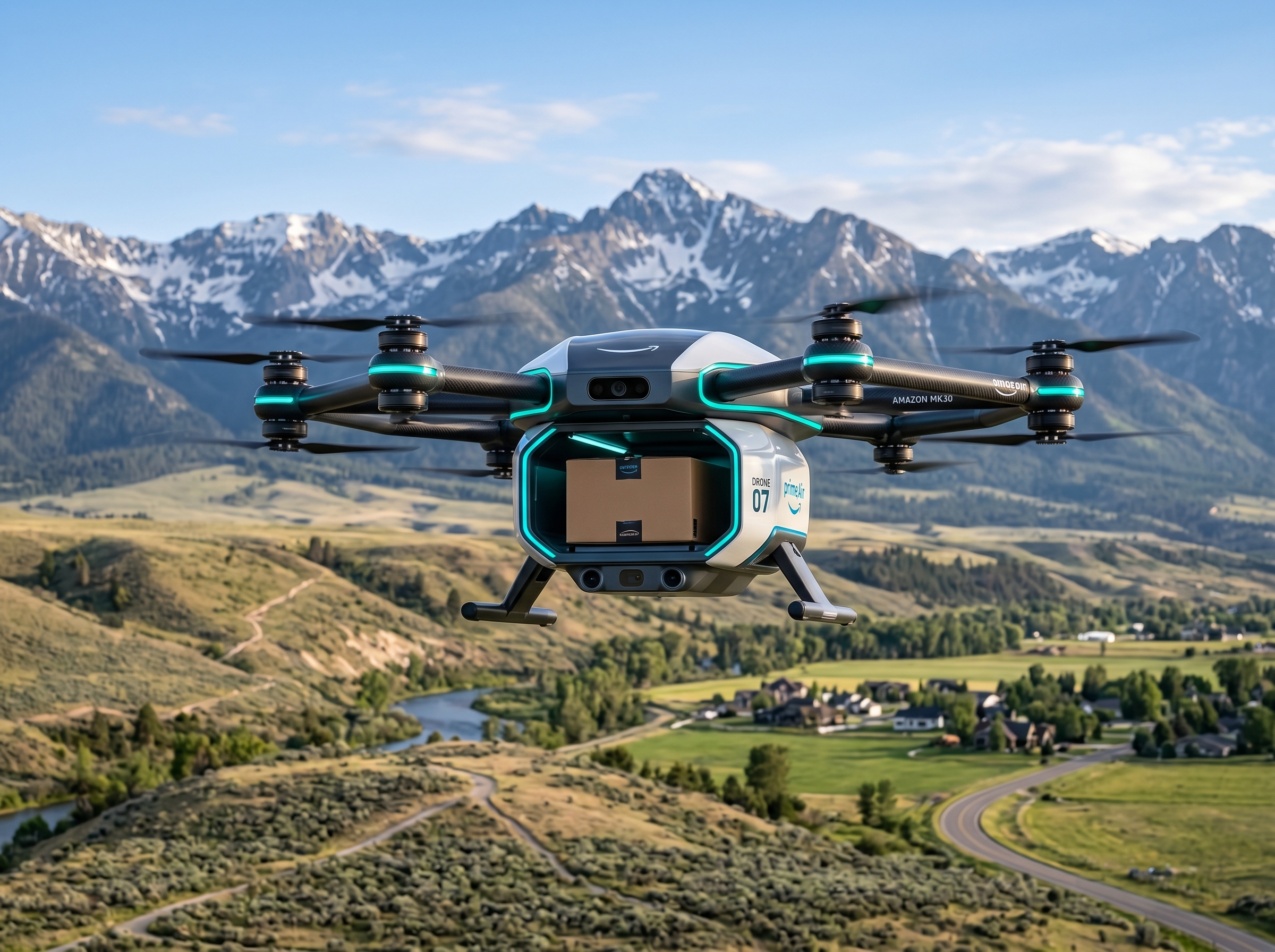
Amazon MK30 delivery drone hovering over an Idaho landscape with mountains in the background

Amazon Prime Air just filed for new delivery hubs in Nampa, Idaho (serving the Boise metro) and North Haven, Connecticut—and the geographic ambition here is the real story. These aren't cautious extensions of existing Texas and California test zones. They're deliberate expansions into the Mountain West and New England, two regions with dramatically different weather, terrain, and regulatory environments.

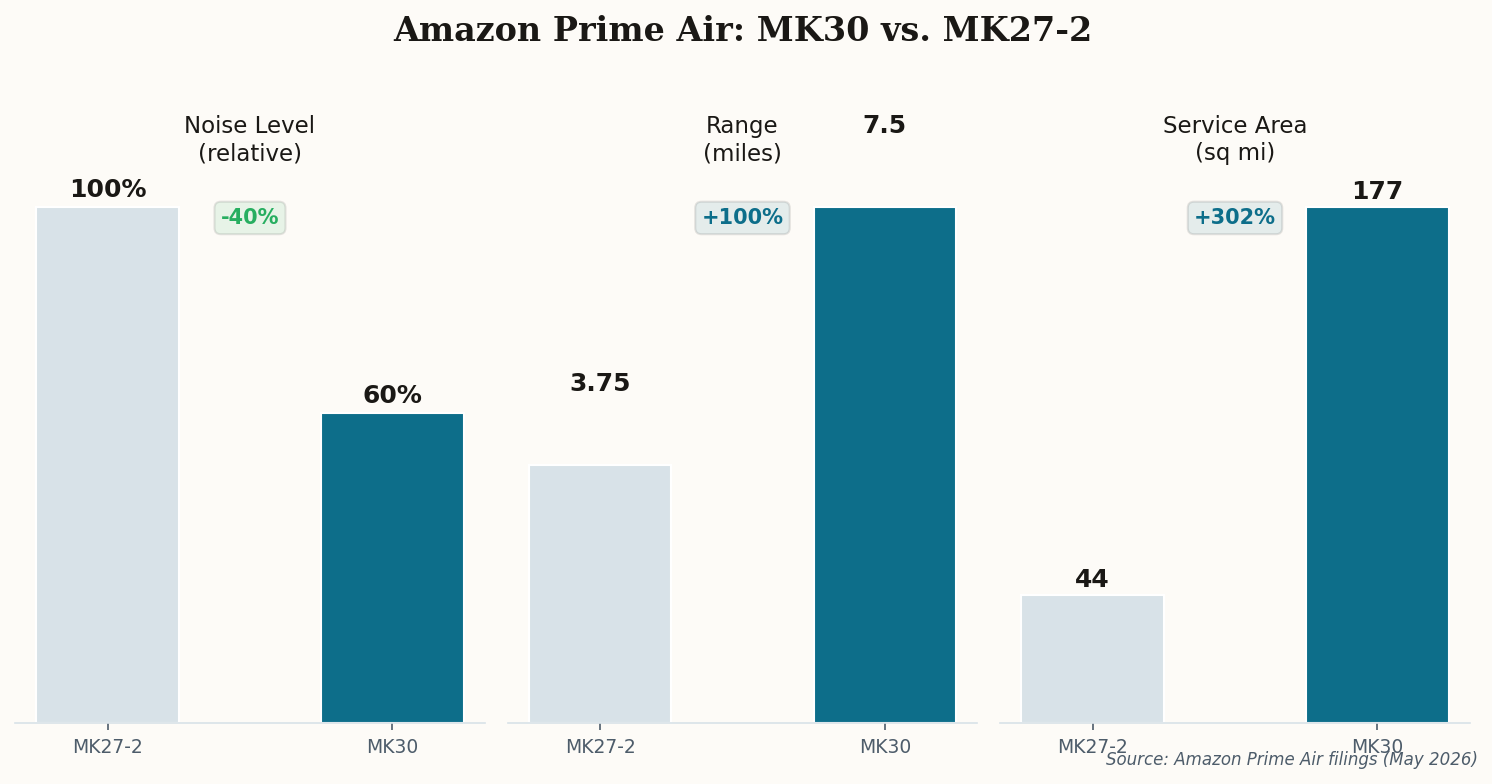
The hardware making this possible is the MK30, Amazon's next-generation drone that's 40% quieter than its predecessor and covers double the range. The Nampa hub alone will serve a 7.5-mile radius—one of the largest proposed service areas for a single Amazon drone site to date. That's roughly 177 square miles of coverage from a single location, compared to the MK27-2's 44 square miles.

Comparison chart showing MK30 vs MK27-2 drone specifications: 40% quieter, double the range, 4x the service area
Amazon's MK30 represents a generational leap in delivery drone capability. The noise reduction alone may prove decisive for residential adoption. Source: Amazon Prime Air filings.

The noise angle deserves more attention than it's getting. NIMBYism has been the biggest non-regulatory barrier to drone delivery scaling into suburbs. A drone that's 40% quieter isn't just an engineering achievement—it's a political one. Amazon is betting that if you can't hear it, you won't fight it. Smart move.

03

Ireland's Drone Darling Plants Its Flag in Oklahoma

A white delivery drone with green accents flying over the Tulsa skyline at dawn

Manna, the Irish drone delivery company that proved the model works in small European towns, is going big in America—but CEO Bobby Healy wants you to know they're not abandoning Dublin for Dallas. After industry rumors suggested a full pivot to the U.S., Healy set the record straight: the company's Tulsa, Oklahoma hub is a "manufacturing and operational blueprint," not a headquarters relocation.

The dual-continent strategy is interesting. In Europe, Manna is scaling through a partnership with Uber Eats, targeting seven new markets by year-end. In America, Tulsa serves as the proving ground for a production-ready operational playbook that can be replicated city by city. It's the franchise model applied to drone infrastructure.

What makes Manna worth watching is their approach to density. While Zipline and Wing optimize for suburban sprawl, Manna has spent years perfecting delivery in compact European neighborhoods where a missed GPS coordinate means a package on somebody's roof. That experience translates well to older American cities with tighter layouts—the kind of places where Amazon's 7.5-mile radius model doesn't quite fit.

04

Your Burrito Now Arrives by Parachute (Sort Of)

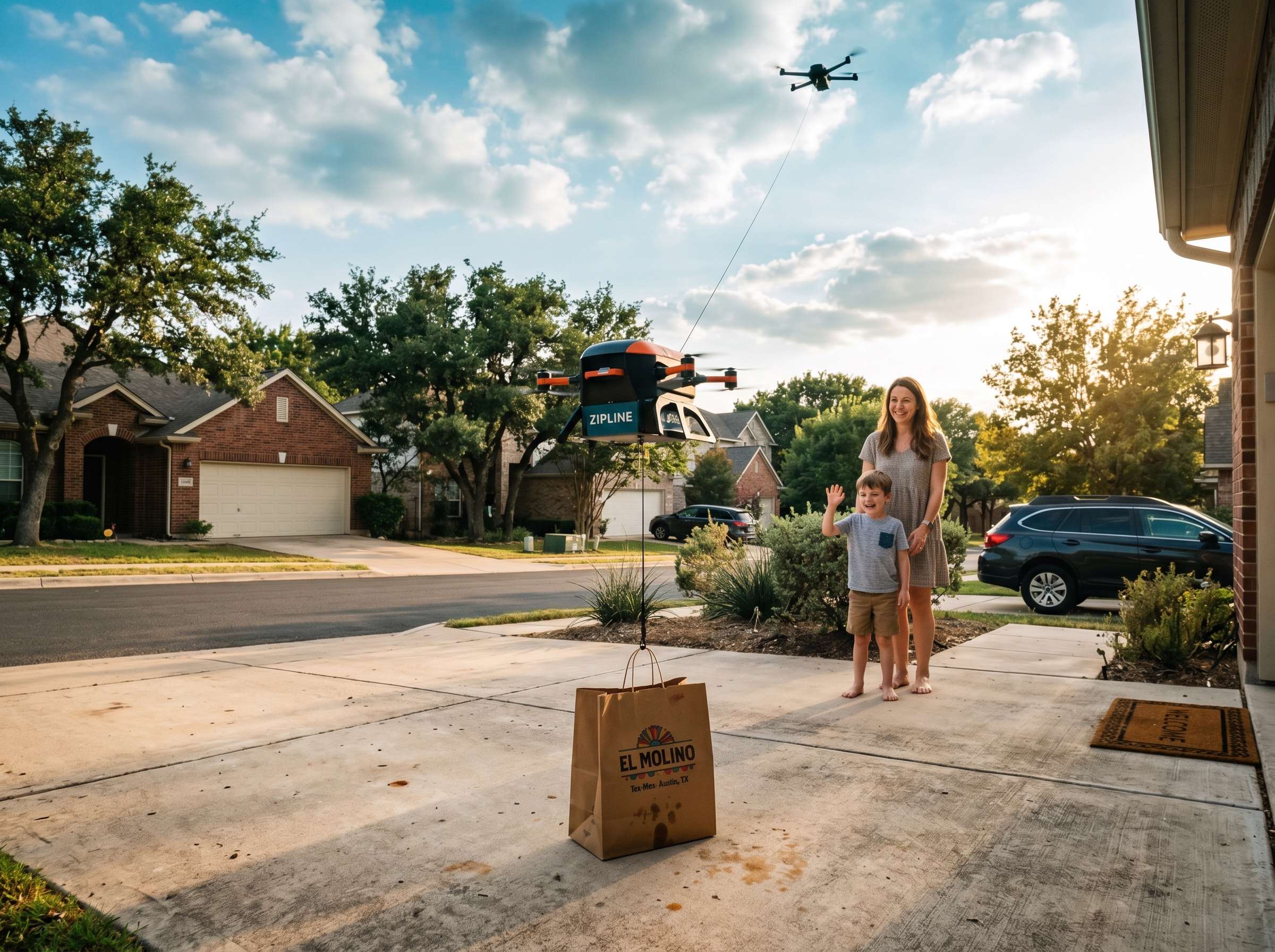
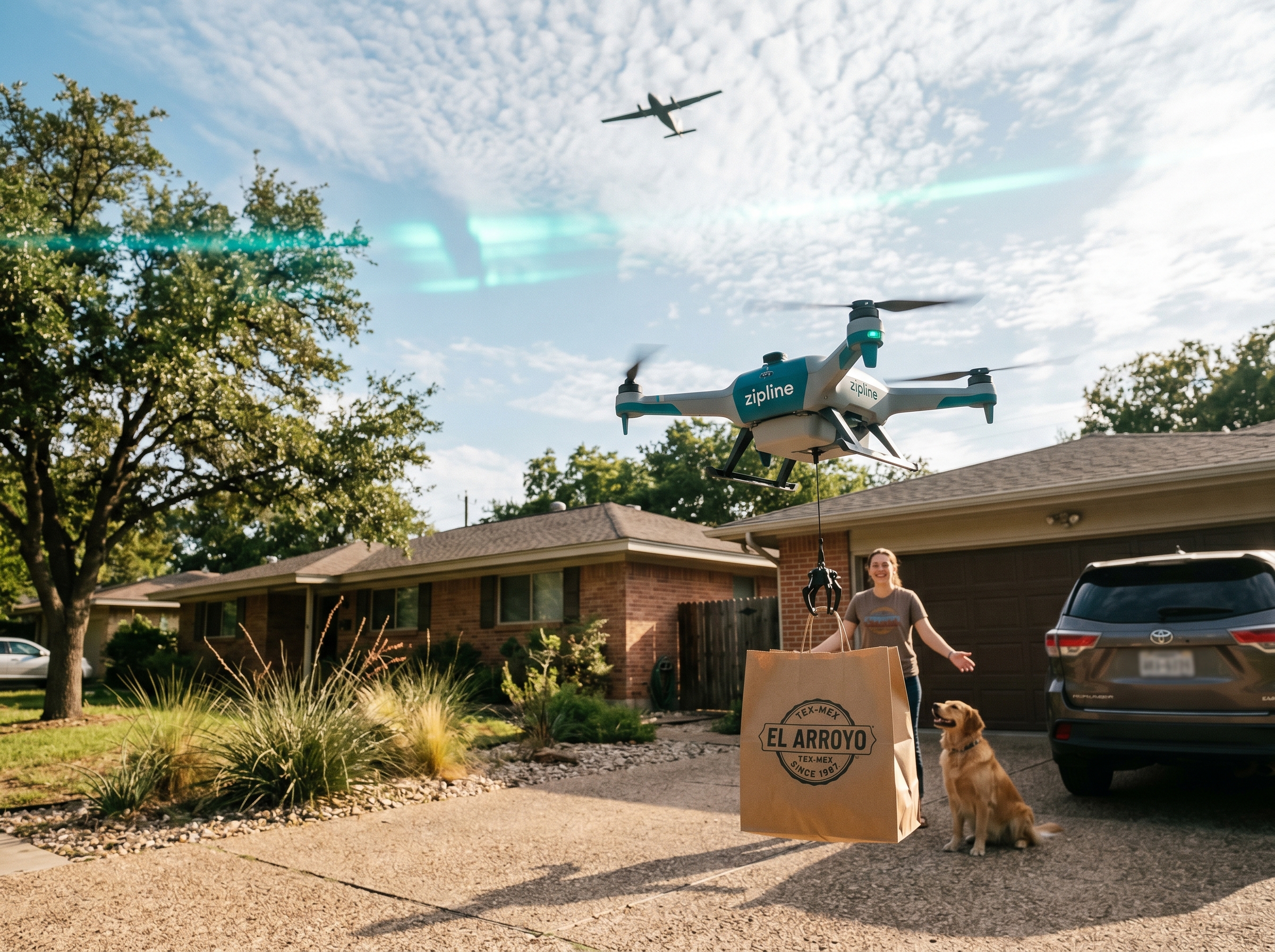
A Zipline tethered droid lowering a food bag onto a suburban Texas driveway

Zipline just launched commercial drone delivery for Taco Bueno in Watauga, Texas, and if you think the headline sounds like a joke, consider this: a North Texas resident described receiving a burrito from the sky via precision-guided droid as "the preferred way to get lunch." We have officially crossed from novelty to normalized behavior.

The mechanics here are worth understanding. Zipline's Platform 2 operates as a two-stage system: a high-altitude "mother drone" flies the route at elevation, then lowers a tethered droid to the customer's driveway or patio for precision delivery. It's like an aircraft carrier and its fighters, except the payload is Tex-Mex. The company plans to expand to Frisco and Mesquite by end of May.

The bigger narrative is Zipline's transformation. This is a company that built its reputation delivering blood transfusions in Rwanda. The pivot from medical logistics in sub-Saharan Africa to fast-food delivery in suburban Texas isn't a betrayal of mission—it's the same operational DNA applied to a different market. The precision that keeps blood viable during a 20-minute flight is the same precision that delivers a burrito still hot.

05

The FAA Just Removed Drone Delivery's Biggest Bottleneck

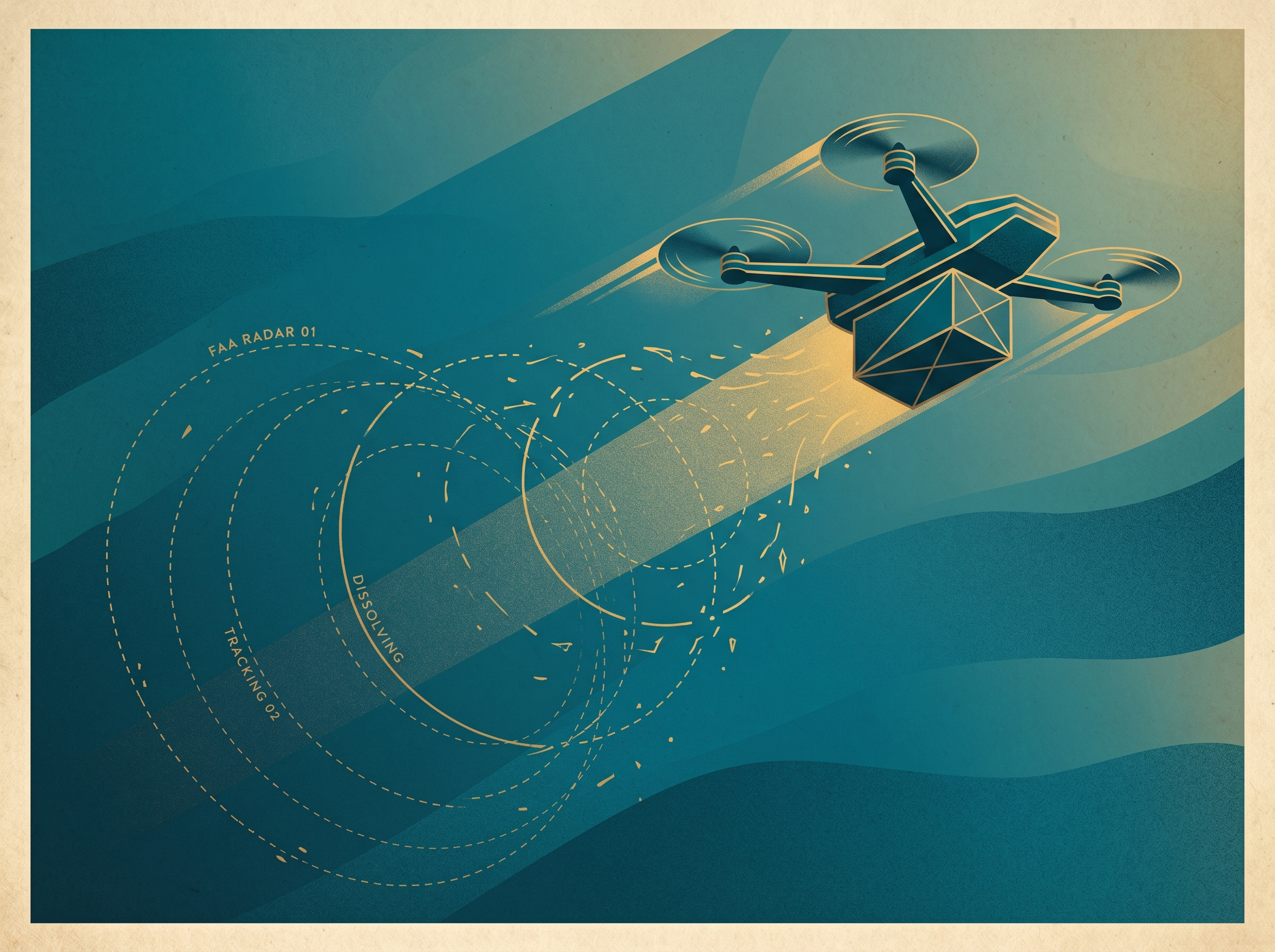
Abstract illustration of a delivery drone flying freely through open airspace without ground observers

If there's a single regulatory moment that will define the drone delivery industry's inflection point, this is it. The FAA granted Zipline authorization to conduct commercial deliveries Beyond Visual Line of Sight (BVLOS) without ground-based visual observers. Read that again. No humans on the ground required to watch the drone fly.

Until now, every commercial drone delivery in the U.S. required a chain of human observers positioned along the flight path—essentially people standing in fields, staring at the sky. This made drone delivery technically possible but economically absurd for any route longer than a couple of miles. The labor cost of the ground observer network often exceeded the cost of just putting the package in a van.

The approval specifically covers Zipline's Platform 2 operations and validates their onboard detect-and-avoid technology as a substitute for human eyeballs. This is the same regulatory pattern that eventually unlocked autonomous vehicles: prove the machine is safer than the human, then remove the human requirement. Every other drone operator will now be racing to achieve the same certification, and the competitive dynamics of the entire industry shift overnight.

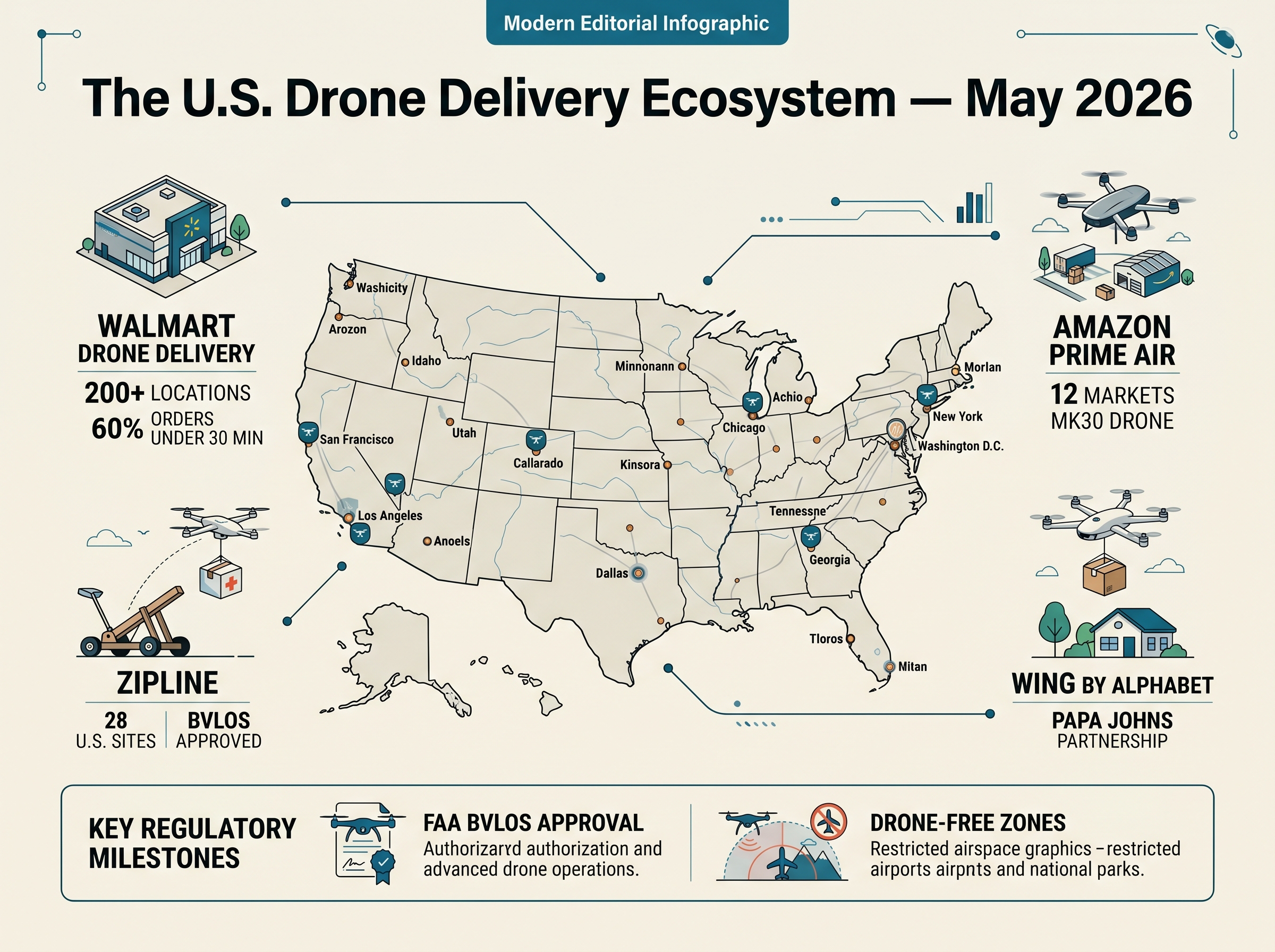
Infographic showing the U.S. drone delivery ecosystem as of May 2026, with key players, their coverage areas, and regulatory milestones
The U.S. Drone Delivery Ecosystem, May 2026 — Generated with Nano Banana 2.0
06

Papa Johns Cuts Out the Middleman (It's DoorDash)

A Wing delivery drone hovering at a suburban doorstep with a pizza-sized package

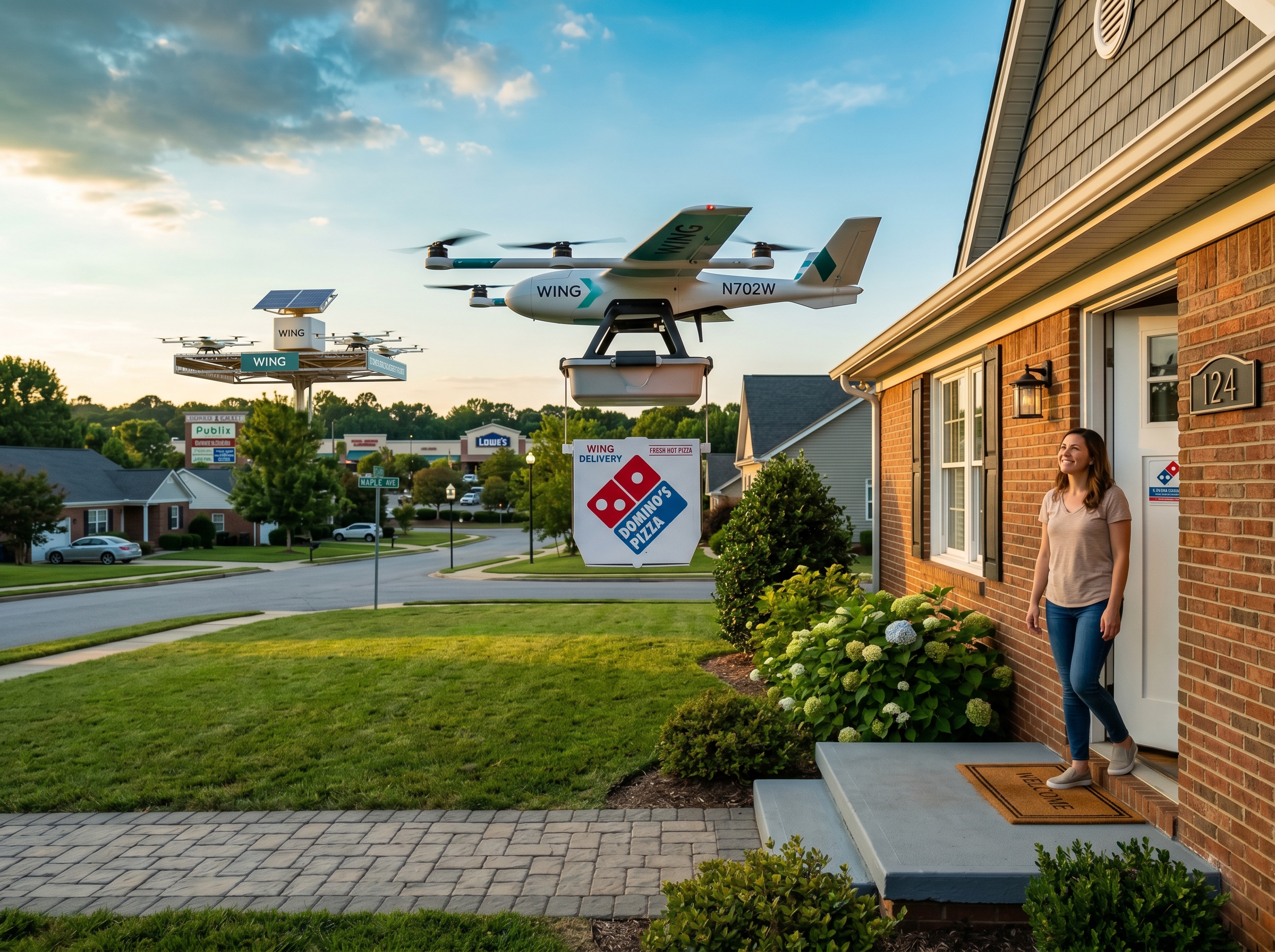
Alphabet's Wing just launched its first partnership with a national restaurant chain, and the choice of Papa Johns in Indian Trail, North Carolina tells you exactly where this industry is headed. This isn't a third-party delivery app model. It's a direct-to-consumer partnership where drones operate from a Wing "nest" at a local shopping center, and future integration with Papa Johns' "Lou AI" assistant will let customers track their drone delivery inside the brand's own app.

The disintermediation angle is the one that should keep DoorDash and Uber Eats up at night. When a restaurant can deliver via drone without a gig driver or a third-party platform, the economics change completely. No 30% platform commission. No surge pricing. No driver who takes three other orders before yours. The delivery cost approaches the cost of the drone flight itself—which is dropping fast.

The strategic implication: if Wing can prove this model with Papa Johns, every major restaurant chain will want the same deal. Direct drone delivery becomes a competitive advantage against platform-dependent competitors, and the aggregator model that built DoorDash into a $60B company starts looking a lot more vulnerable.

07

The Sky Has Borders Now

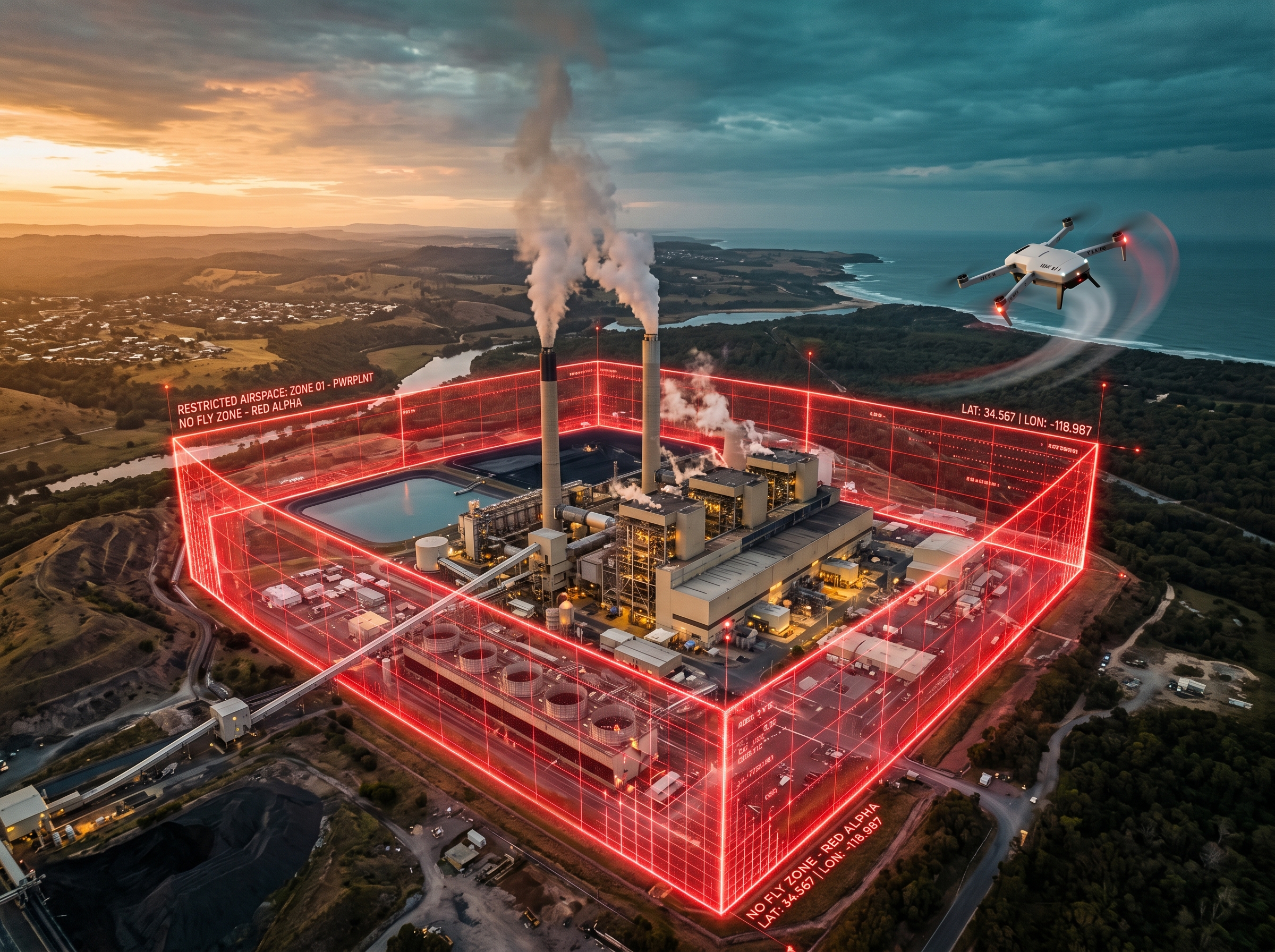
Aerial view of a power plant with digital red exclusion zone boundaries, a delivery drone banking away to avoid the restricted area

For every regulatory door that opens, another one narrows. The FAA published a Notice of Proposed Rulemaking this week to establish permanent "Unmanned Aircraft Flight Restrictions" (UAFRs) over critical infrastructure—power plants, water treatment facilities, refineries, and similar sites. The goal is straightforward national security. The complication is that these are exactly the kinds of facilities that commercial operators currently use drones to inspect.

The irony is thick. The same week the FAA gave Zipline observer-free flight approval, it proposed new no-fly zones that could complicate flight paths for delivery companies operating near industrial corridors. A drone delivering packages to a neighborhood adjacent to a power plant might need to route around the restriction, adding distance, battery drain, and delivery time.

Bar chart showing U.S. drone delivery expansion by major operator from 2022 to 2027, with Walmart leading at 270 projected locations
U.S. drone delivery is scaling rapidly across all major operators, but new airspace restrictions may complicate flight routing in industrial areas. Source: Company filings and earnings reports.

This is the tension that will define the next phase of drone regulation: the government simultaneously accelerating commercial drone adoption while erecting new barriers around sensitive sites. Both impulses are rational. The challenge is building an airspace management system flexible enough to handle both—and doing it before the network of operators and routes becomes too complex to retrofit. The companies that master geofencing and dynamic route planning will have a structural advantage when these restrictions inevitably expand.

The Vertical Frontier

A year ago, drone delivery was a collection of scattered pilot programs and press releases. This week told a different story: a major retailer citing drones in its earnings call, a landmark regulatory approval removing the human bottleneck, and food chains bypassing platform aggregators entirely. The infrastructure is scaling, the economics are proving out, and the regulatory framework—messy, contradictory, and evolving—is inching toward a world where the sky is just another delivery route. The last mile isn't horizontal anymore. Look up.

Share X LinkedIn