Drone Delivery

The Sky Opens Up

The FAA just handed drone delivery its pilot's license. Here's who's ready to fly — and who isn't.

Listen
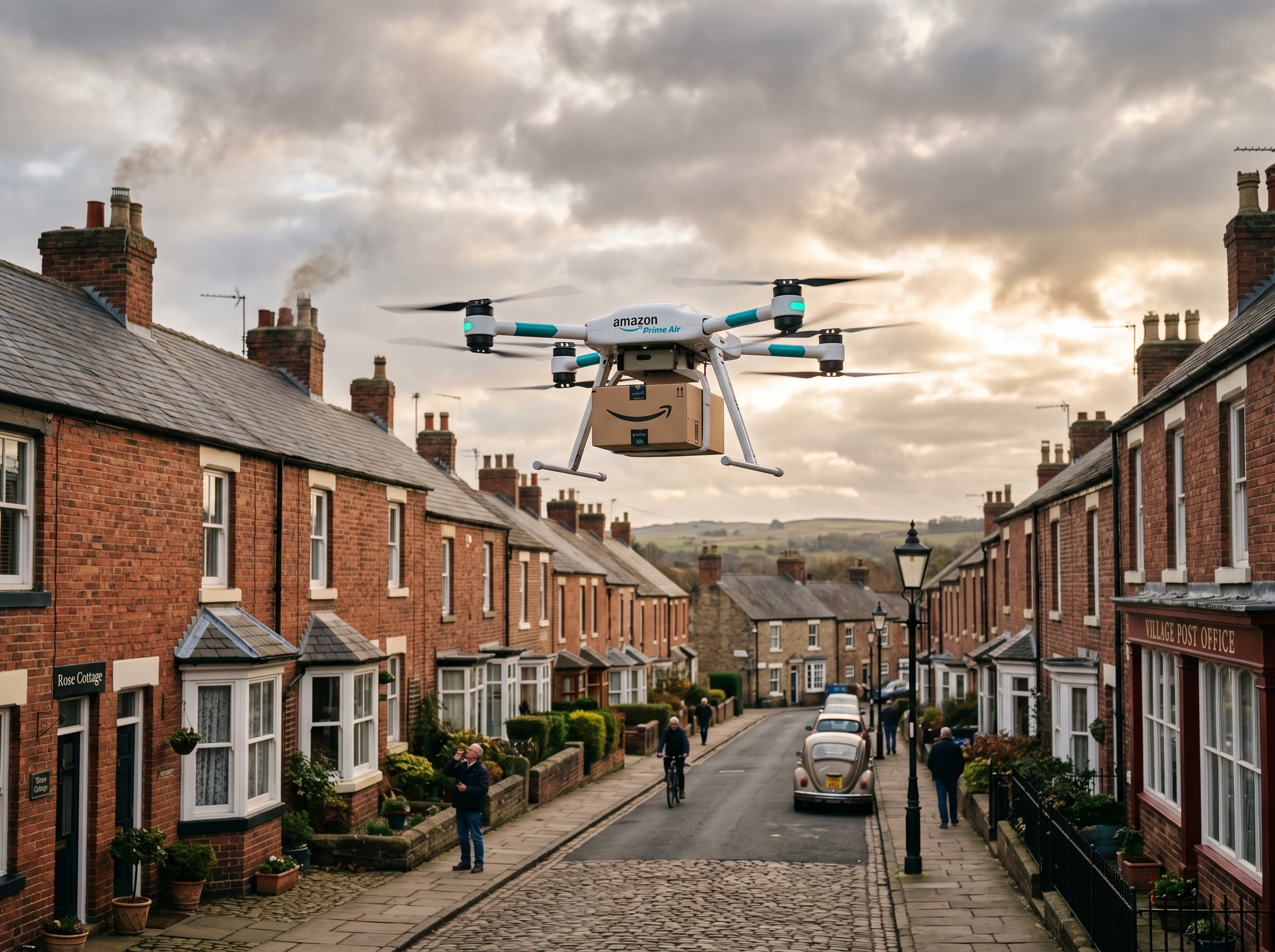
Amazon MK30 drone delivering packages over an English village
01

Amazon Crosses the Atlantic — And Brings the MK30 With It

For years, Amazon Prime Air was the drone delivery program that existed primarily in press releases and pilot-town photo ops. That changed this week when Amazon launched sustained commercial drone deliveries in Darlington, UK — its first real footprint outside the United States.

The star of the show is the MK30 drone, a machine purpose-built for the "quiet neighbor" problem that killed earlier drone delivery attempts. Amazon claims a 40% noise reduction over the previous MK27-2, and the "sense and avoid" system is entirely proprietary — no reliance on third-party detect-and-avoid providers. The service radius? Items up to 2.2 kg delivered in under 30 minutes from click to doorstep.

Why Darlington? Proximity to a major fulfillment center, a cooperative local council, and — crucially — the UK's CAA regulatory framework that's arguably more mature than the FAA's was until this week. VP David Carbon called it the "blueprint for European expansion," which is corporate-speak for "this is the template we'll copy-paste into Germany, France, and Spain."

"The Darlington launch is our blueprint for European expansion. We are proving that high-cadence drone delivery can coexist with dense residential environments safely and quietly." — David Carbon, VP of Amazon Prime Air

The strategic move here is unmistakable: while competitors slug it out for DFW supremacy, Amazon is quietly building a global network. College Station, Lockeford, Baton Rouge, and now Darlington. The question isn't whether Prime Air works — it's whether Amazon can scale hardware production fast enough to matter.
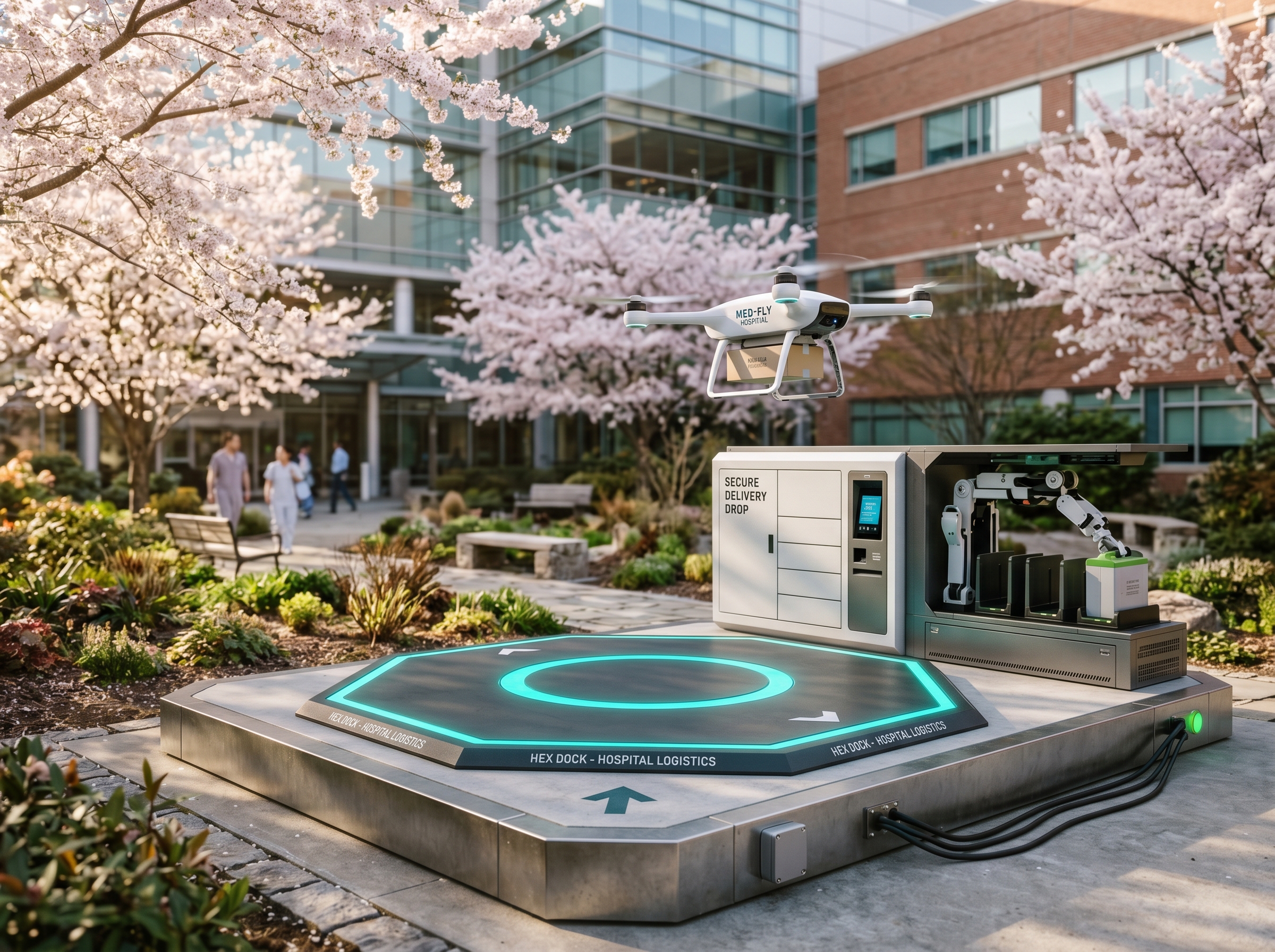
Automated drone micro hub with charging station in a hospital courtyard
02

The Ground Game Nobody's Talking About

Everyone obsesses over the drones. Matternet just made a bet that the real bottleneck is what happens when they land.

The company announced a partnership with SoftBank Robotics to manufacture "Micro Hubs" — automated docking and charging stations roughly the size of a single parking space. A drone lands, swaps its battery, drops its package into a secure locker, and either a ground robot or a human picks up from there. Zero human intervention on the airside.

CEO Andreas Raptopoulos put it bluntly: "The drone is only half the battle. Without automated ground infrastructure, you still have a human-bottleneck problem." He's right. Every other operator in this space has been solving the flight problem while leaving the landing problem to interns with clipboards. Matternet is attacking the full stack.

The initial rollout targets hospital campuses and dense urban centers in Tokyo and Los Angeles — environments where a parking-space-sized landing pad is a feature, not a limitation. If this works, it's the missing piece that lets drone delivery scale into cities where building a full-size drone port is politically and physically impossible.

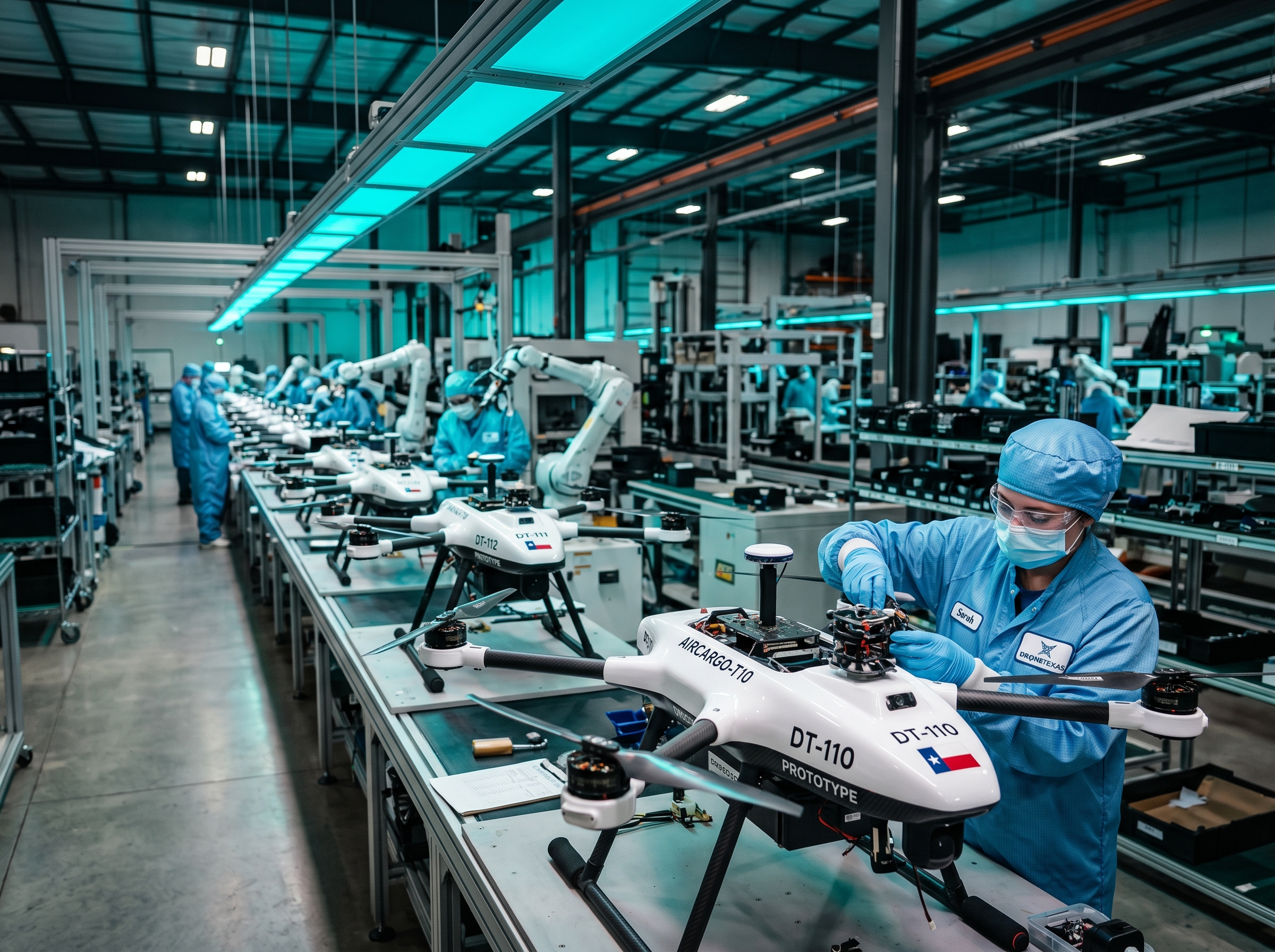
Inside Flytrex's new drone manufacturing facility in Pilot Point, Texas
03

Flytrex Bets the Farm — Literally — on Vertical Integration

Flytrex just opened an 8,000-square-foot manufacturing facility in Pilot Point, Texas, and the move tells you everything about where this industry is headed: from buying drones to building them.

The facility produces the new "Sky2" platform, which ups payload capacity to 8.8 lbs (4 kg) — enough for two large pizzas and drinks, what the company calls "family meal" orders. That's not a vanity spec. It's the difference between a novelty ("look, a drone brought me a burrito") and a real logistics alternative ("the drone handles our dinner order every Tuesday"). CEO Yariv Bash is targeting 2,500 units annually, feeding a goal of 60 active delivery sites across DFW by 2027.

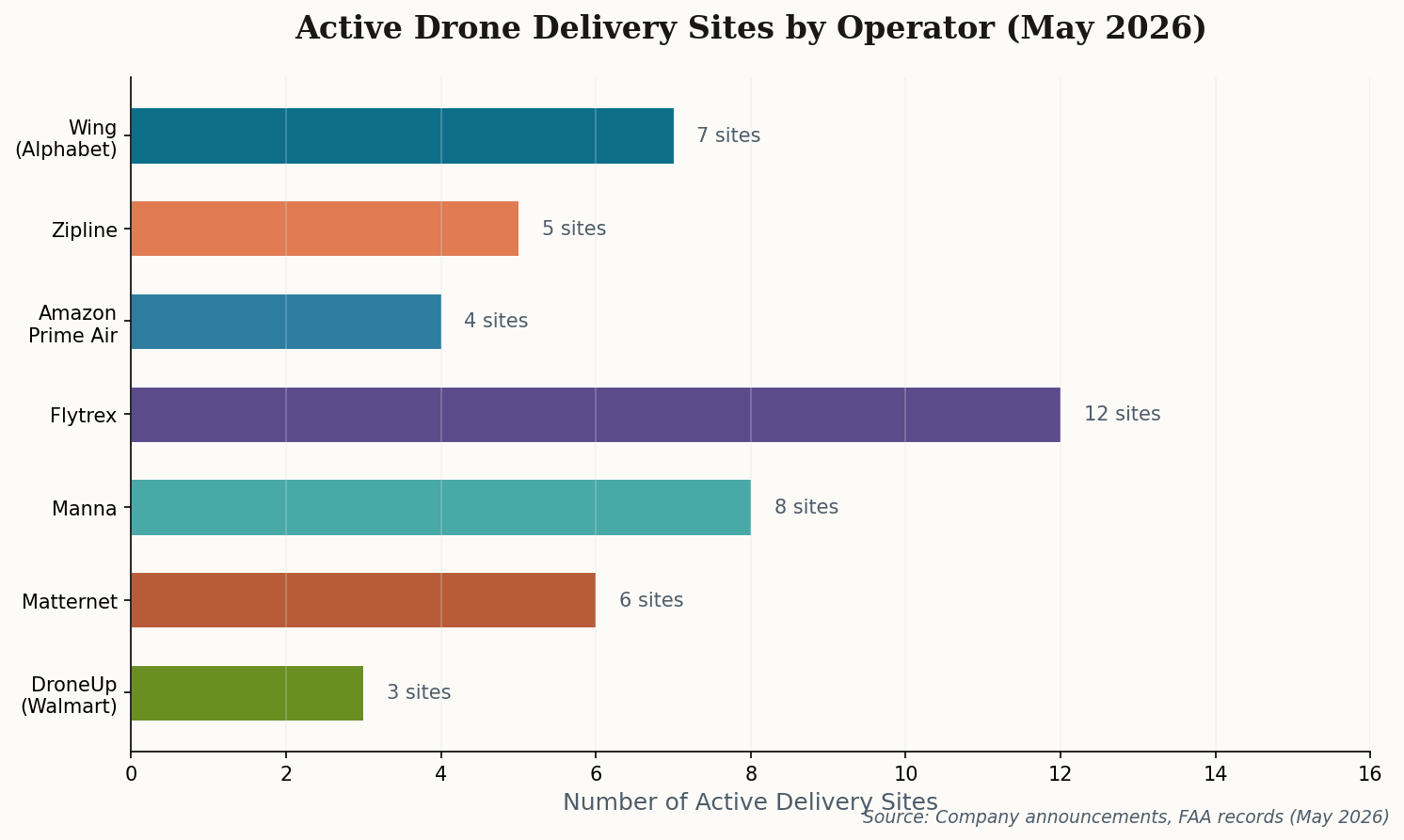
Bar chart comparing active drone delivery sites by operator, May 2026
Active delivery sites by operator — Flytrex leads in DFW density while Amazon and Wing pursue geographic breadth

"To reach profitability, you have to control the hardware," Bash said. He's making the same argument Tesla made about batteries and Apple made about chips: when margins are thin and iteration speed matters, vertical integration wins. The question is whether an 8,000-square-foot facility in rural Texas is a factory or a prototype shop with ambitions.

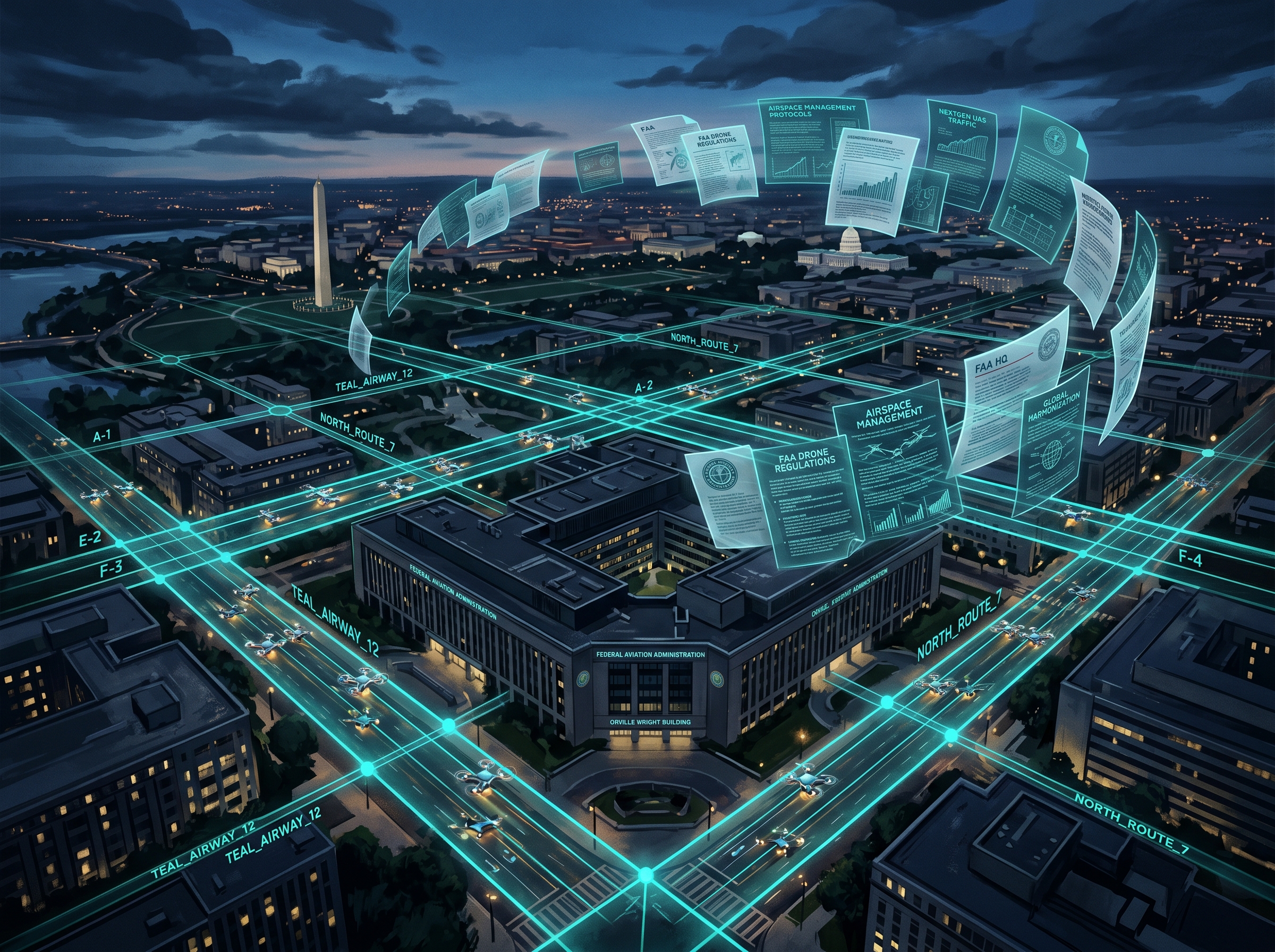
FAA building with stylized drone flight corridors in the airspace above
04

Part 108 Is Here. The Waiver Era Is Over.

This is the one. The FAA officially finalized Part 108, the regulatory framework that moves commercial drone operations from case-by-case BVLOS waivers to a standardized, nationwide system. If you've followed this industry for any length of time, you know how monumental that sentence is.

Until this week, every commercial drone delivery flight in America required its own waiver — a brittle, site-specific permission slip that could take months to obtain and applied to exactly one location. Part 108 replaces that with clear airworthiness standards for drones under 55 lbs, two new certified roles ("Operations Supervisors" and "Flight Coordinators"), and — critically — an end to the 1:1 pilot-to-drone ratio that made the economics of drone delivery essentially impossible at scale.

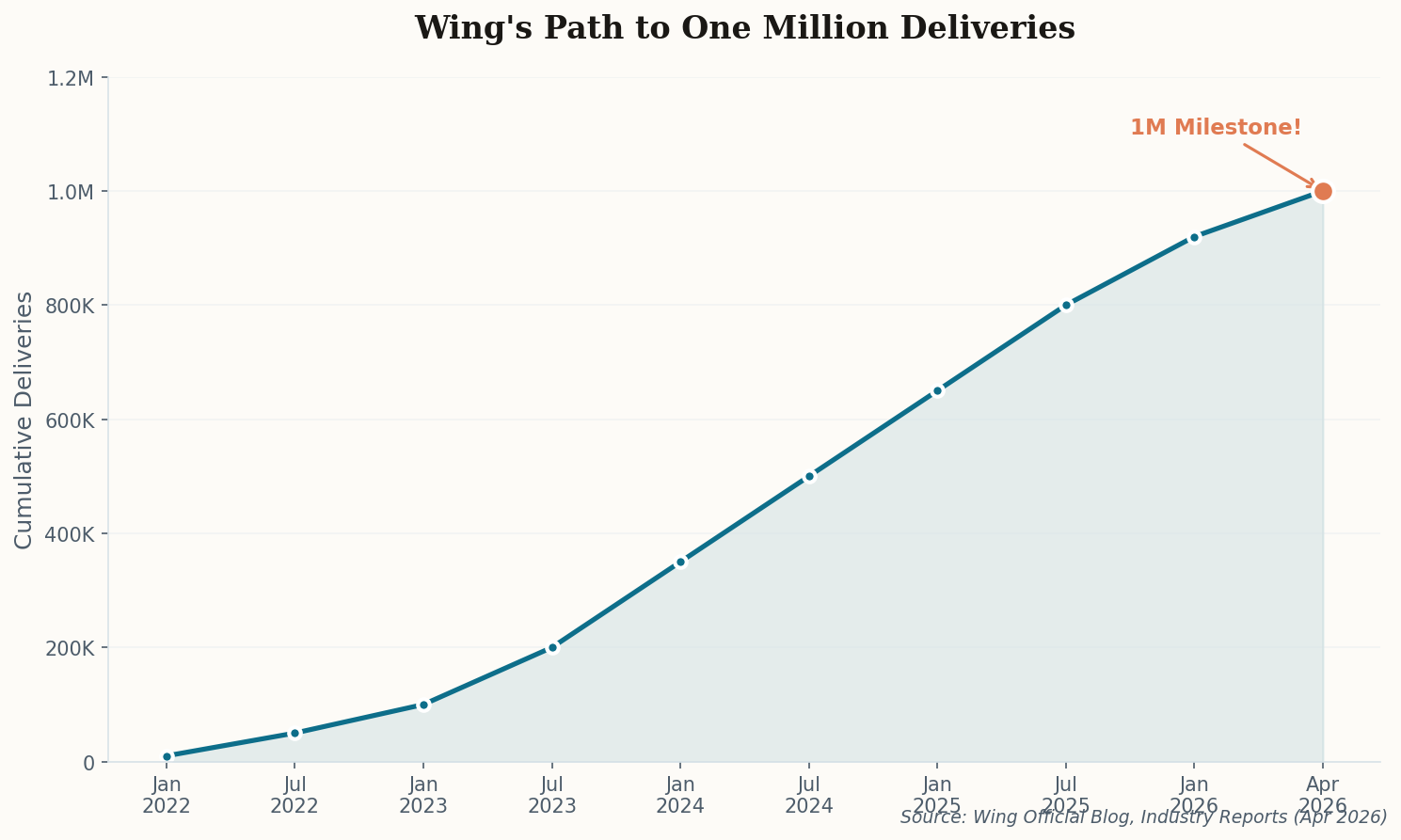
Line chart showing exponential growth in commercial drone deliveries from 2020 to 2026
The hockey stick is here — estimated commercial drone deliveries have gone from 5,000 in 2020 to a projected 12 million in 2026

The FAA Administrator compared it to the "Section 333 moment" — the 2014 rule that first legalized commercial drone use. But Part 108 is bigger. Section 333 said "you can fly." Part 108 says "you can fly everywhere, autonomously, with a scalable workforce model." It's the difference between a pilot program and an industry.

"Part 108 is the 'Section 333' moment for BVLOS. We are moving from a world of brittle, site-specific exceptions to a scalable, nationwide reality for autonomous logistics." — FAA Administrator

Watch for the second-order effects: insurance products for drone corridors, municipal zoning battles over flight paths, and — inevitably — the first lawsuit when a Part 108-certified flight goes wrong. The legal scaffolding is being built in real time.

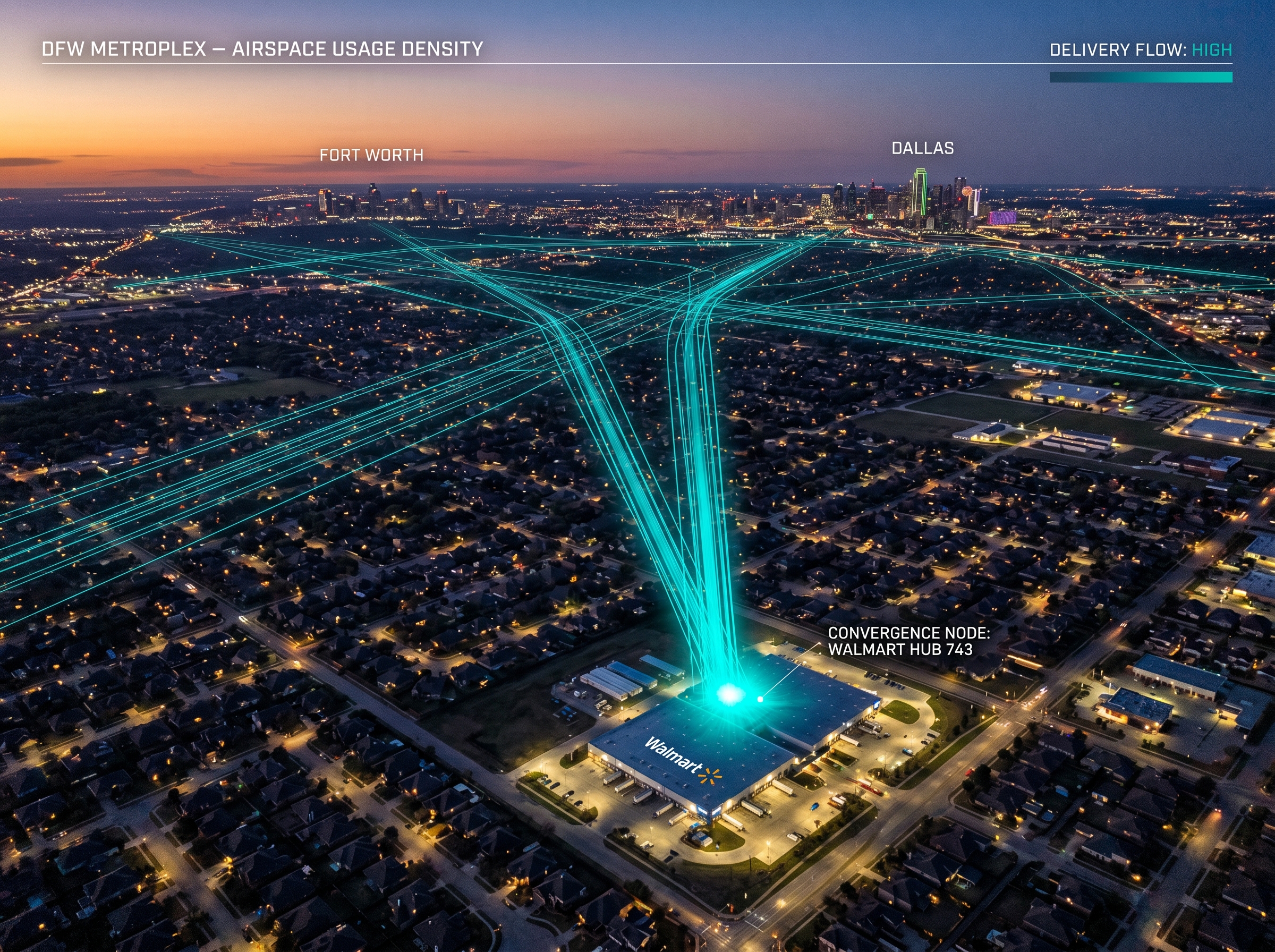
Aerial view of Dallas-Fort Worth with drone delivery corridors overlaid
05

Walmart Kills the Map, Bets Everything on Dallas

Walmart just did something no one in drone delivery has done before: retreated. The company is shutting down drone hubs in Phoenix, Salt Lake City, and Tampa to concentrate entirely on the Dallas-Fort Worth metroplex.

The official line is "density-driven profitability" — the idea that running multiple drone partners (Wing, Zipline, DroneUp) in a single metro area creates the order volume needed to make unit economics work. With over 30,000 deliveries completed in Q1 2026 alone, Walmart remains the largest commercial drone delivery partner on the planet. But the strategy shift is telling.

This is the industry's first major consolidation signal. For three years, the playbook was "dots on a map" — launch in as many cities as possible, show geographic reach to investors, worry about profits later. Walmart just flipped the script. The new playbook is saturation: own one market completely before expanding to the next.

The DFW bet makes strategic sense. The metro has flat terrain, cooperative regulators, a massive suburban population that orders delivery constantly, and — now — three competing drone operators creating a kind of airborne logistics lab. If drone delivery can't be profitable in DFW, it can't be profitable anywhere.

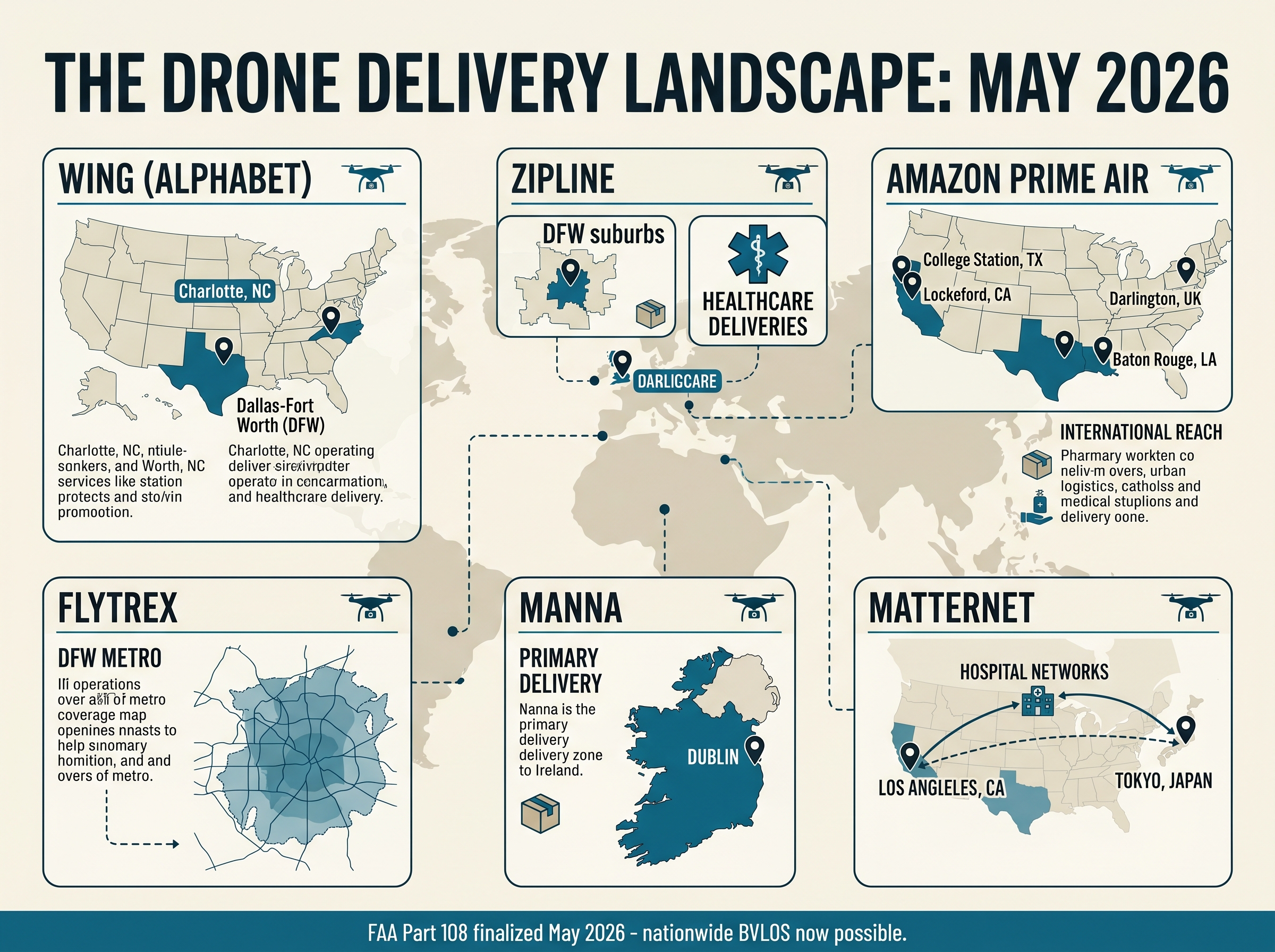
Infographic showing the drone delivery operator landscape as of May 2026, including Wing, Zipline, Amazon, Flytrex, Manna, and Matternet with their active markets
The Drone Delivery Landscape: May 2026 — operators, markets, and the regulatory milestone that changes everything
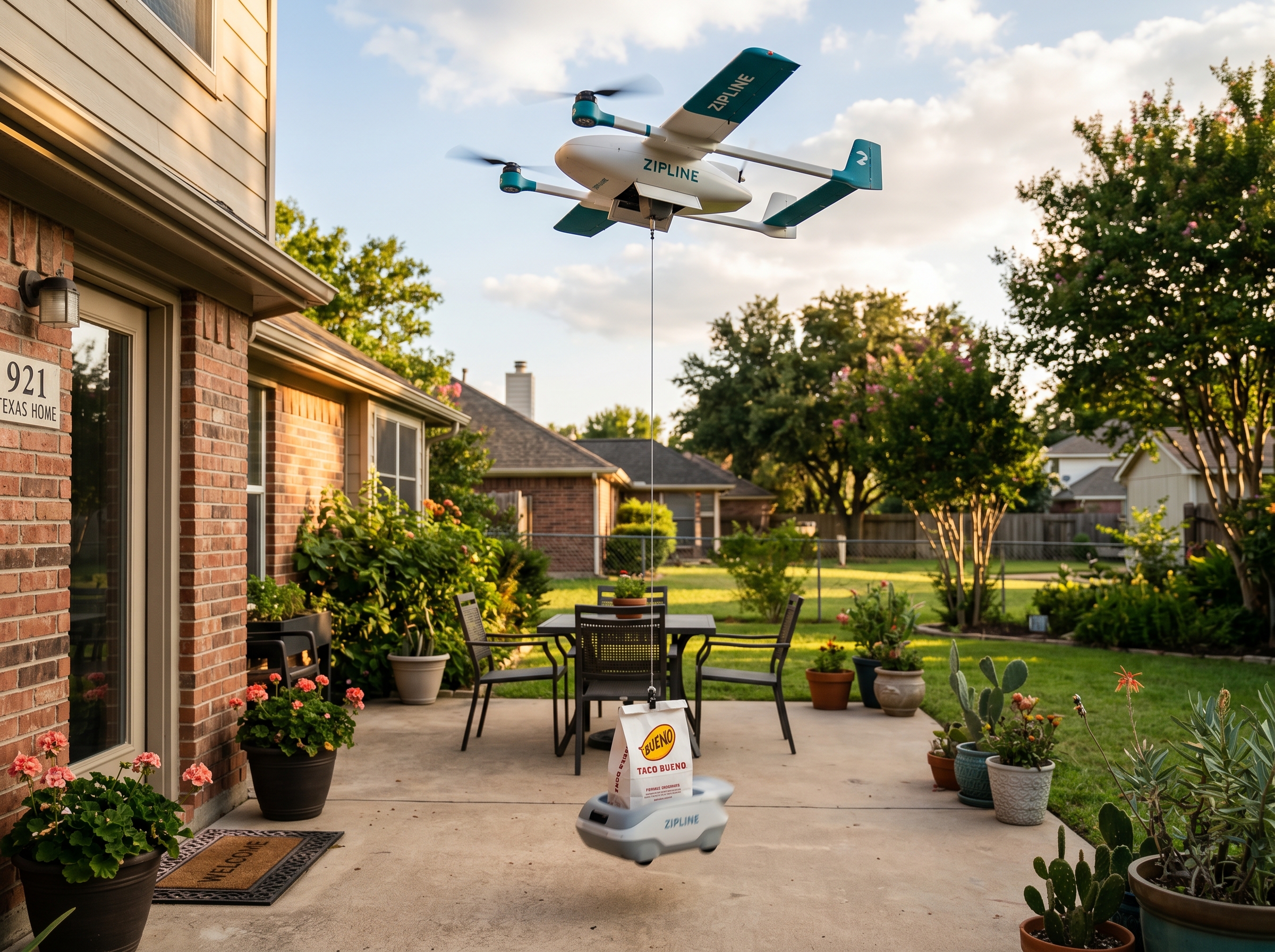
Zipline P2 drone deploying its tethered droid to a suburban patio
06

Zipline's Secret Weapon Drops Tacos on Driveways

While competitors lower packages on parachutes or require customers to stand in their yards waving at the sky, Zipline has quietly built the most elegant delivery mechanism in the business: the P2 "Zip" system with its tethered droid.

Here's how it works: the Zip drone flies to your house, hovers at altitude, and lowers a small autonomous droid on a tether. The droid descends precisely onto your patio or driveway, releases the package, and retracts. No parachute drift. No "please clear a 20-foot landing zone" instructions. No human on the ground. Just a robot on a string that knows exactly where your front door is.

The latest partner is Taco Bueno, launching in Watauga, TX, with expansion to Frisco and Mesquite by month's end. The numbers are compelling: a 35% increase in lunch-time delivery volume and a guaranteed 12-minute delivery window. That's not a drone novelty — that's a faster, more reliable service than any human driver can offer.

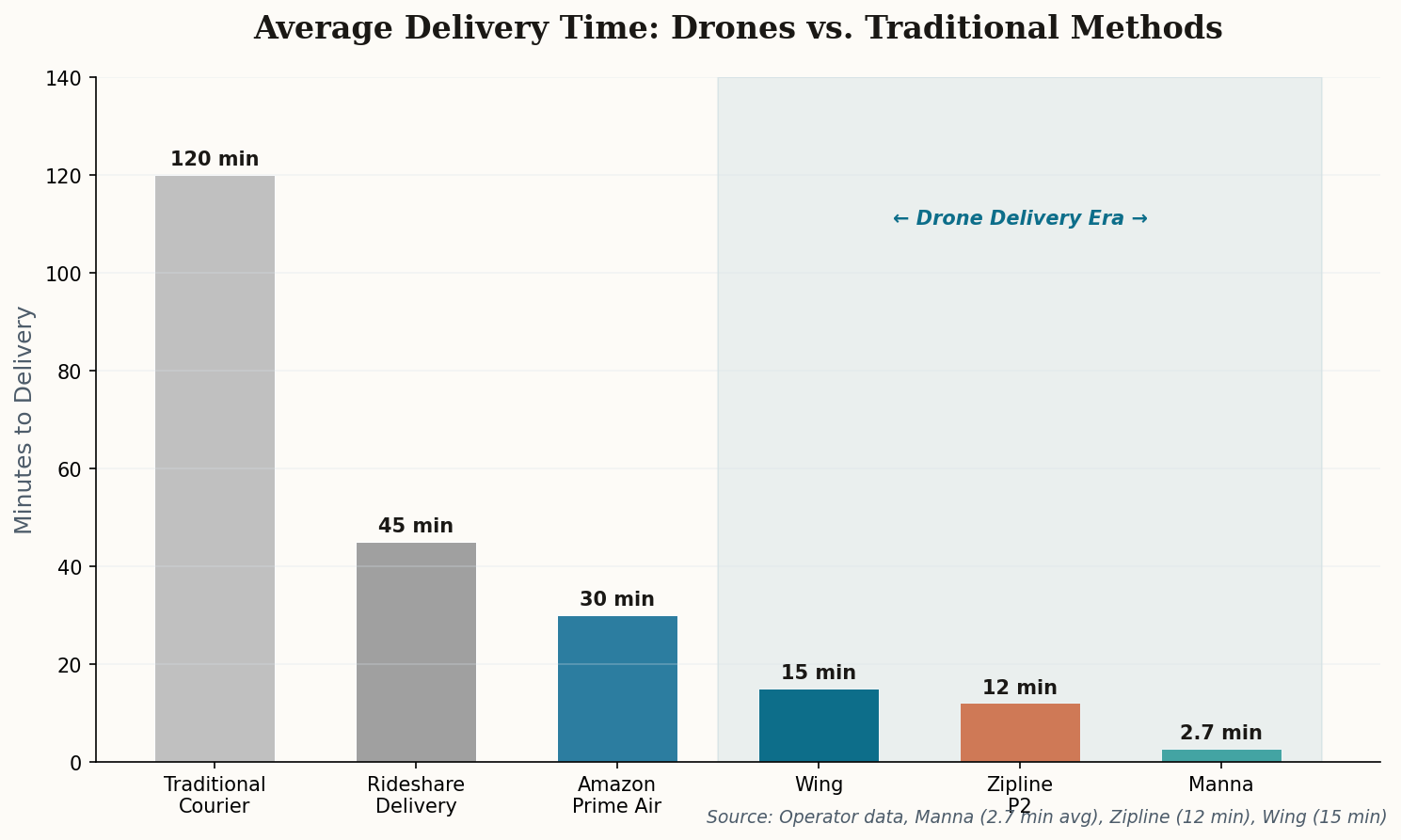
Bar chart comparing average delivery times across methods, from traditional courier to Manna's 2.7-minute drone delivery
The speed gap is staggering — drone operators are delivering in minutes what traditional couriers take hours to complete

Zipline's P2 system is becoming the industry benchmark for suburban precision delivery, and the DFW expansion puts them directly in Walmart's saturation zone. The taco wars are about to go vertical.

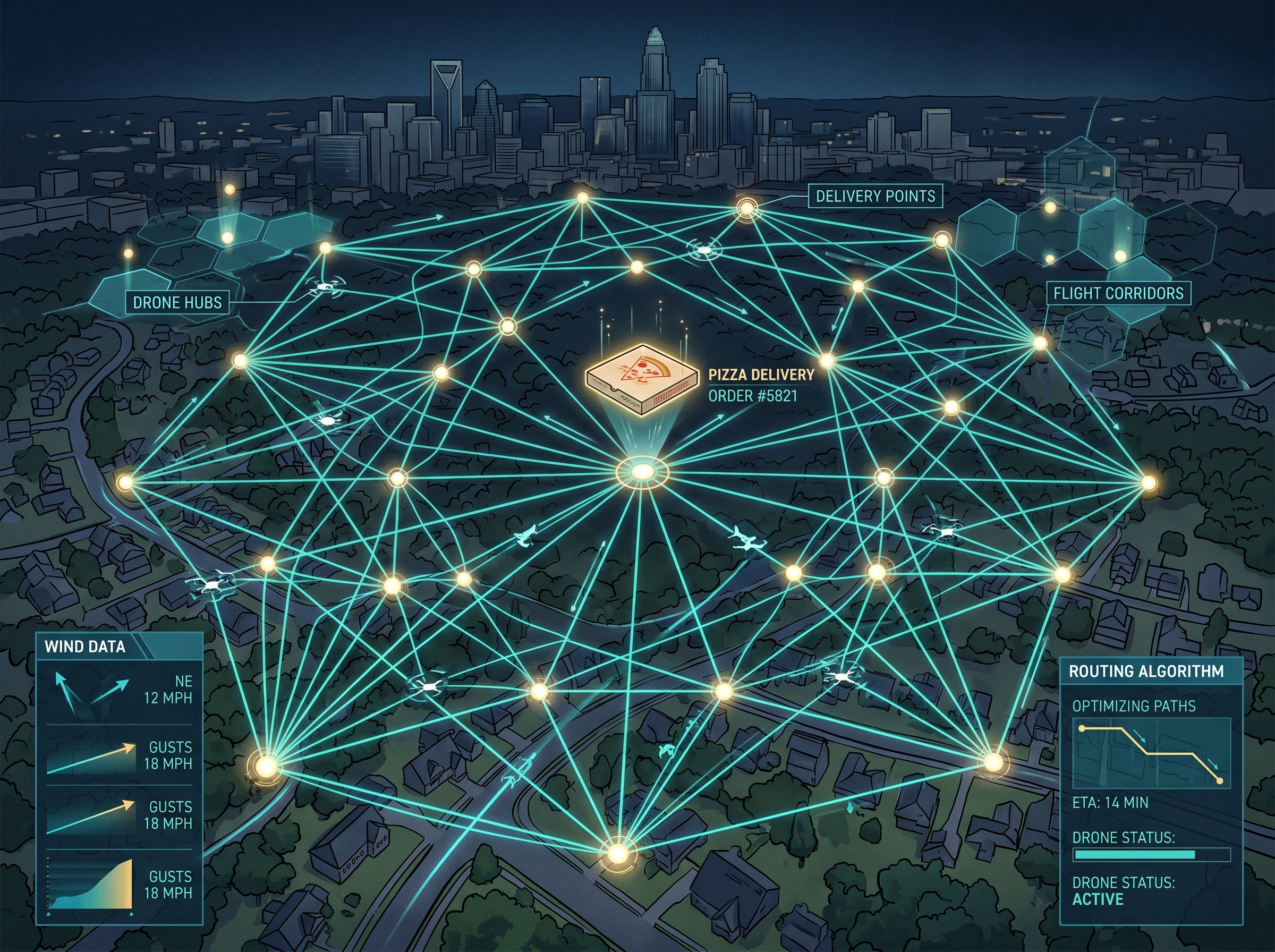
Abstract visualization of AI agent network managing drone deliveries over Charlotte, NC
07

Wing Hands the Keys to an AI Agent Named Lou

Alphabet's Wing just did something that should make every last-mile logistics company pay attention: it integrated directly into Papa Johns's consumer app in Charlotte, NC, and handed fleet management to an AI agent called "Lou."

Lou isn't a chatbot. It's an agentic system that manages the entire delivery pipeline — choosing which drone launch site to use based on real-time wind and traffic data, optimizing fleet allocation across orders, and communicating ETAs to customers. At the store level, employees just place the pizza in a designated bin. The "Auto-Loader" system handles the rest. Zero human intervention from bin to doorstep.

CEO Adam Woodworth called it "the first time we've handed the keys of our delivery network over to an agentic AI system." That's a significant claim. Other operators use AI for route optimization or weather analysis, but Wing is letting an AI agent make real-time operational decisions about physical infrastructure — which drones fly, when, and where.

The bigger story is the integration model. This isn't a third-party delivery app (no DoorDash or Uber Eats middleman). It's brand-to-consumer, with the drone network embedded invisibly into the ordering experience. If this model scales, it threatens every delivery marketplace that takes a 25-30% cut for the privilege of dispatching a human in a Honda Civic.

The View From Above

Part 108 is the starting gun, not the finish line. The companies that win the drone delivery race won't be the ones with the best press releases — they'll be the ones that solve the boring problems: ground infrastructure, battery swaps, noise abatement, and the unit economics of delivering a $12 burrito by air. Dallas-Fort Worth is the lab. The next 12 months will tell us whether autonomous last-mile delivery is a real business or an expensive hobby. Place your bets accordingly.

Share X LinkedIn