Commercial Drone Delivery

The Sky Is Not the Limit

Drone delivery crossed the chasm this week. Walmart's earnings prove it, the FAA is clearing the runway, and your next burrito might arrive on a tether.

Listen
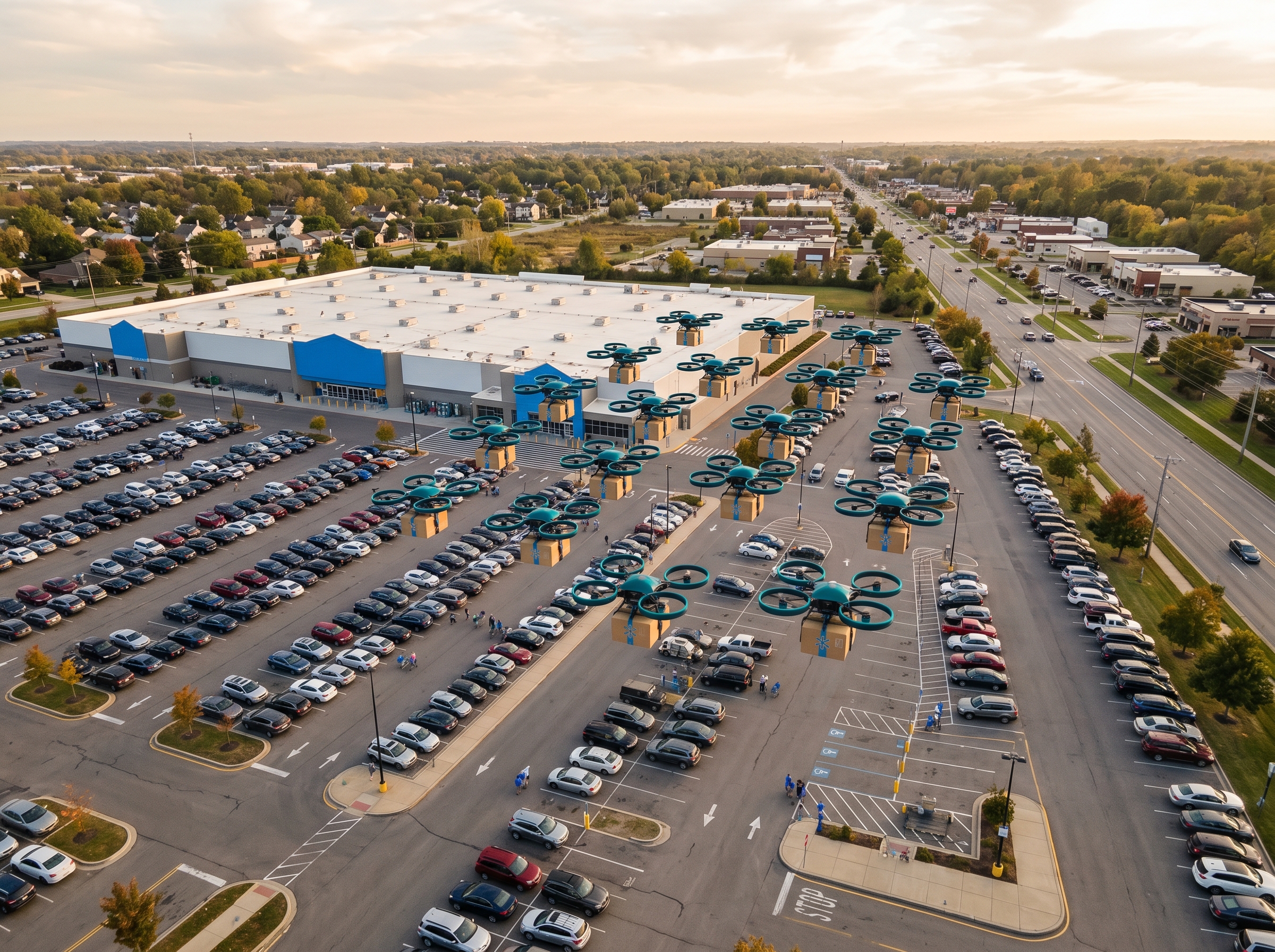
Multiple delivery drones launching from a Walmart Supercenter
01

Walmart Just Proved Drone Delivery Isn't a Science Project Anymore

Here's the number that should make every logistics executive recalibrate their roadmap: 60% of Walmart's U.S. online orders now arrive in 30 minutes or less. Not "same day." Not "next hour." Thirty minutes. And Doug McMillon specifically credited the retailer's multi-operator drone network—powered by Wing and Zipline—for making this possible in dense suburban markets like Dallas-Fort Worth.

What's striking isn't the speed itself. It's the language McMillon used: "standard operational efficiency," not "premium service" or "pilot program." This is the rhetoric of infrastructure, not innovation theater. Walmart is treating drones the way it treated e-commerce in 2018—as a cost-reduction lever disguised as a customer benefit.
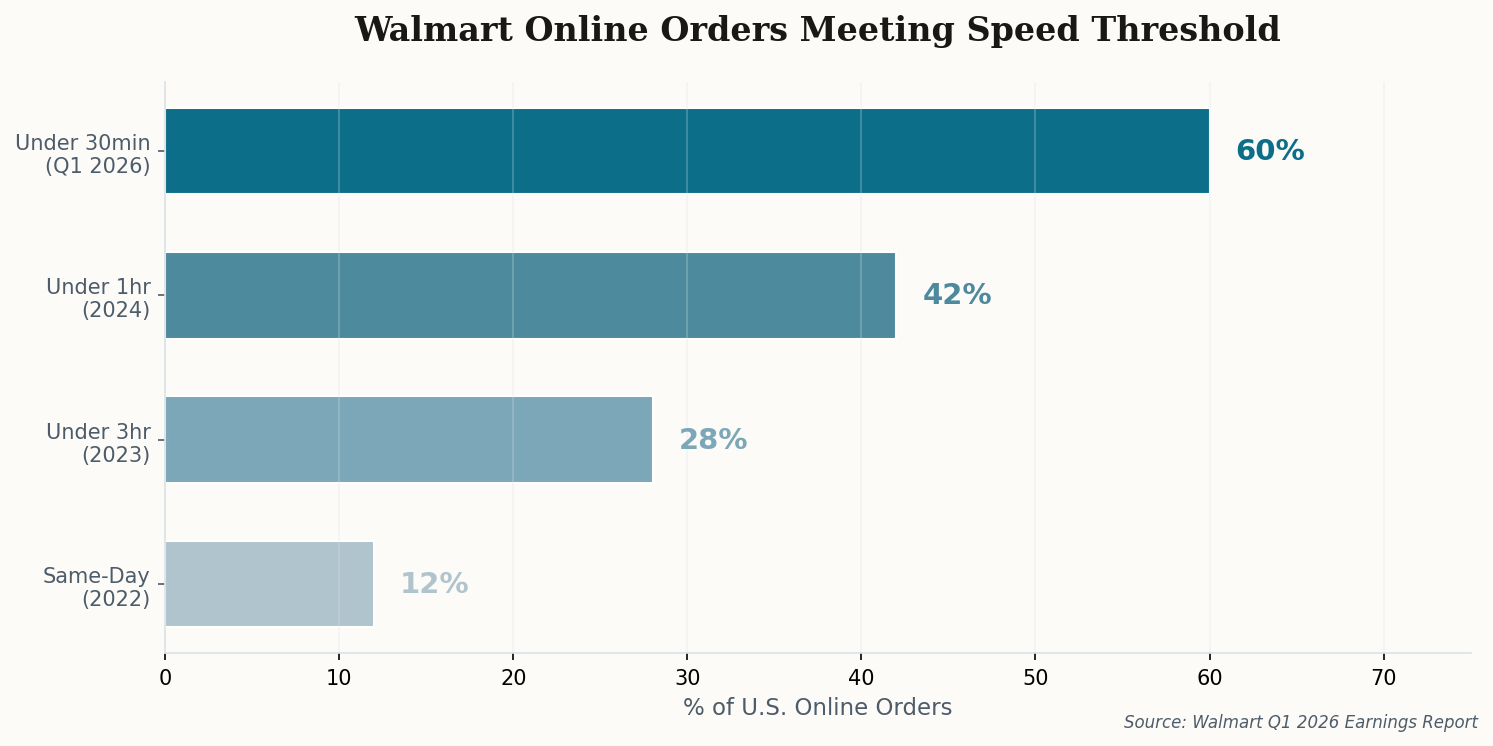
Line chart showing Walmart orders delivered under 30 minutes reaching 60% in Q1 2026
The trajectory is unmistakable: Walmart's sub-30-minute delivery rate has accelerated sharply, and the curve is steepening, not flattening.

The 270-location expansion target for 2027 underscores the bet. That's not incremental growth—it's a commitment to making drone delivery available to over half of Walmart's U.S. customer base within 18 months. The question isn't whether drone delivery works for Walmart. It's how long before Target, Costco, and Kroger feel compelled to answer.
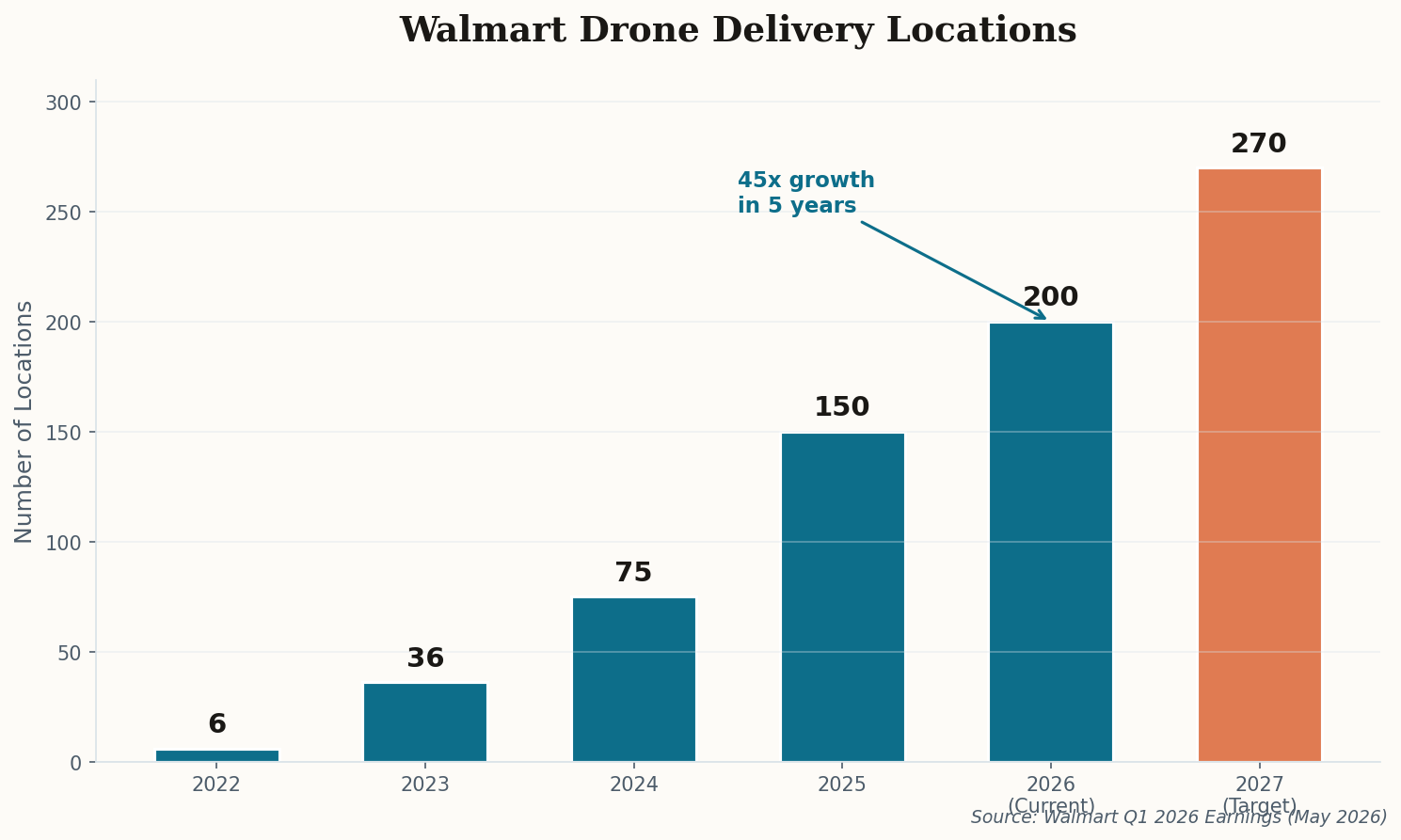
Bar chart showing Walmart drone delivery locations growing from 6 in 2022 to a projected 270 in 2027
From 6 locations to 270: Walmart's drone delivery rollout is following the same exponential curve that its grocery pickup network traced from 2015 to 2020.
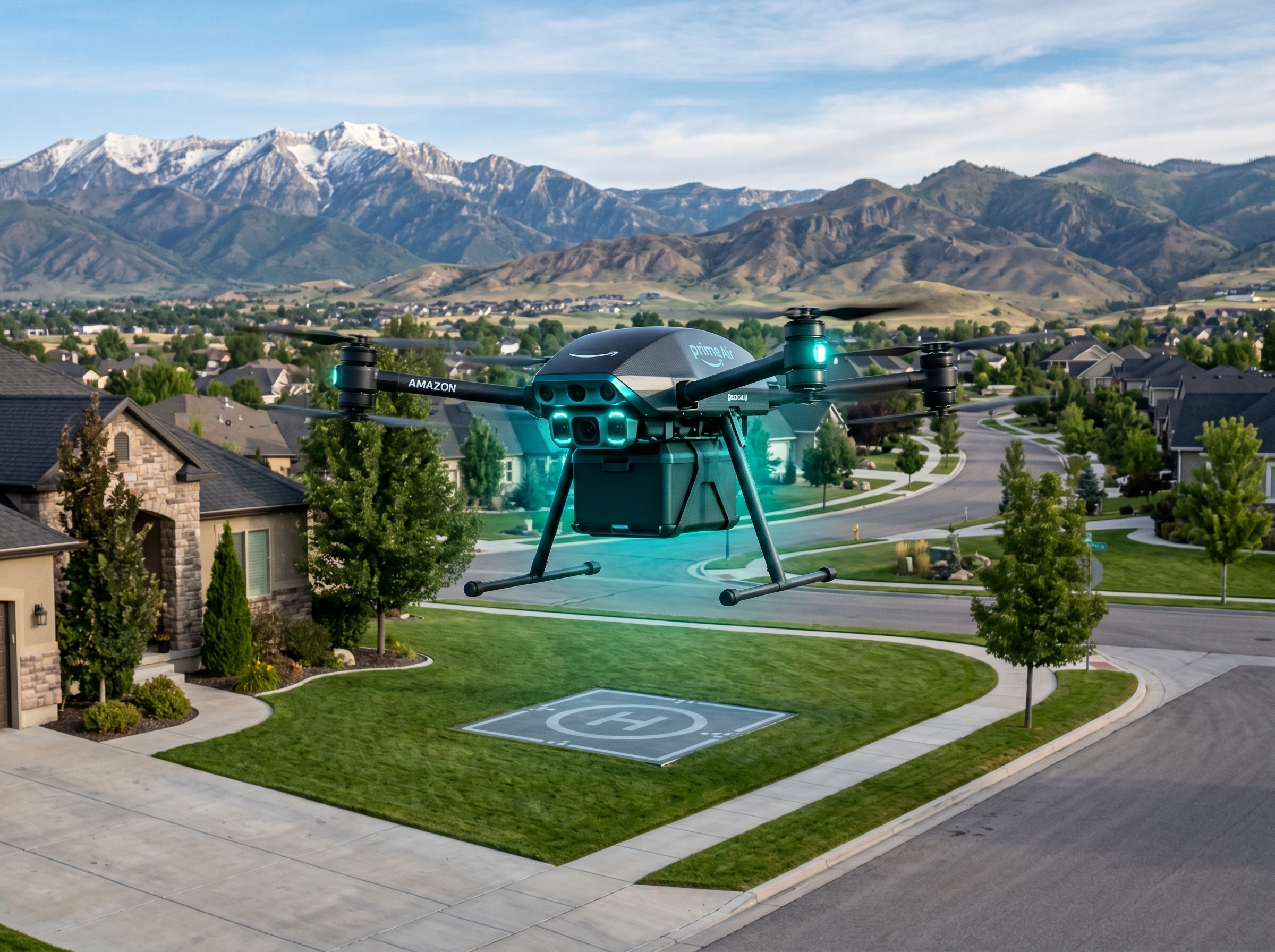
Amazon MK30 drone hovering over an Idaho suburban landscape
02

Amazon Bets the MK30 Can Conquer Mountains and Skeptics

Amazon Prime Air filed regulatory applications for new drone delivery hubs in Nampa, Idaho, and North Haven, Connecticut—and the geography tells the real story. This isn't more warm-weather test markets. This is Amazon pushing into the inland West and the Northeast corridor, daring to prove that the MK30 drone works in winter wind and mountain terrain, not just the polite skies of suburban Texas.

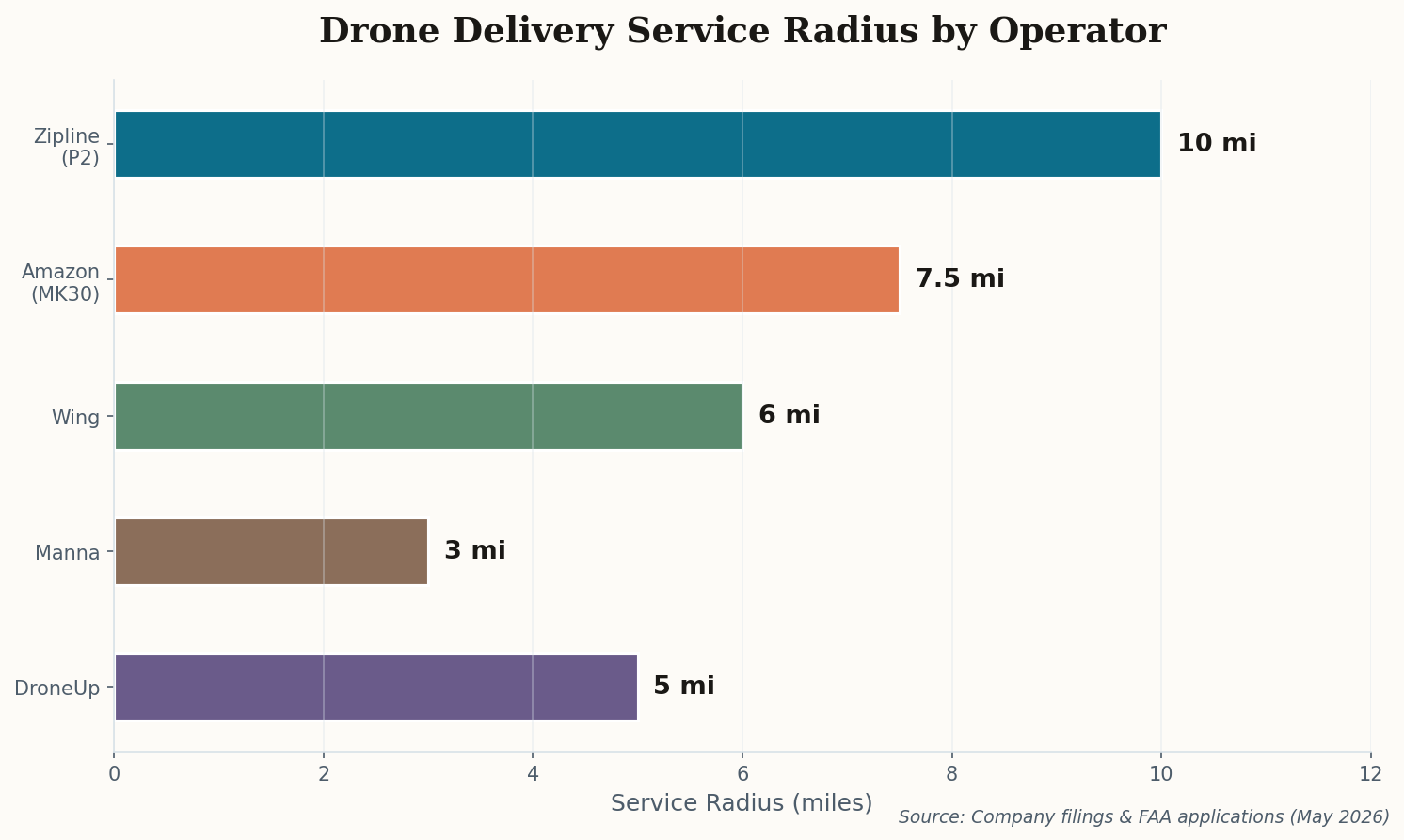
The MK30's specs tell the story: 40% quieter than the MK27-2 and double the range. That 7.5-mile service radius from the Nampa hub—one of the largest proposed for any single Amazon drone site—means a single facility could plausibly cover most of the Boise metro area. Quiet and long-range aren't features; they're prerequisites for operating in neighborhoods where people already complain about leaf blowers.

Horizontal bar chart comparing delivery radius: Zipline P2 at 10 miles, Amazon MK30 at 7.5, Wing at 6, DroneUp at 5, Manna at 3
Service radius matters because it determines unit economics: every extra mile of range reduces the number of hubs needed to cover a metro area.

Amazon's drone ambitions have been the butt of industry jokes since Jeff Bezos first teased the idea in 2013. Thirteen years later, they're filing permits in Idaho. The pace is glacial by Amazon standards—but the MK30 is the first aircraft that actually addresses the reasons previous attempts stalled. Whether Amazon can execute at Walmart's speed is another question entirely.

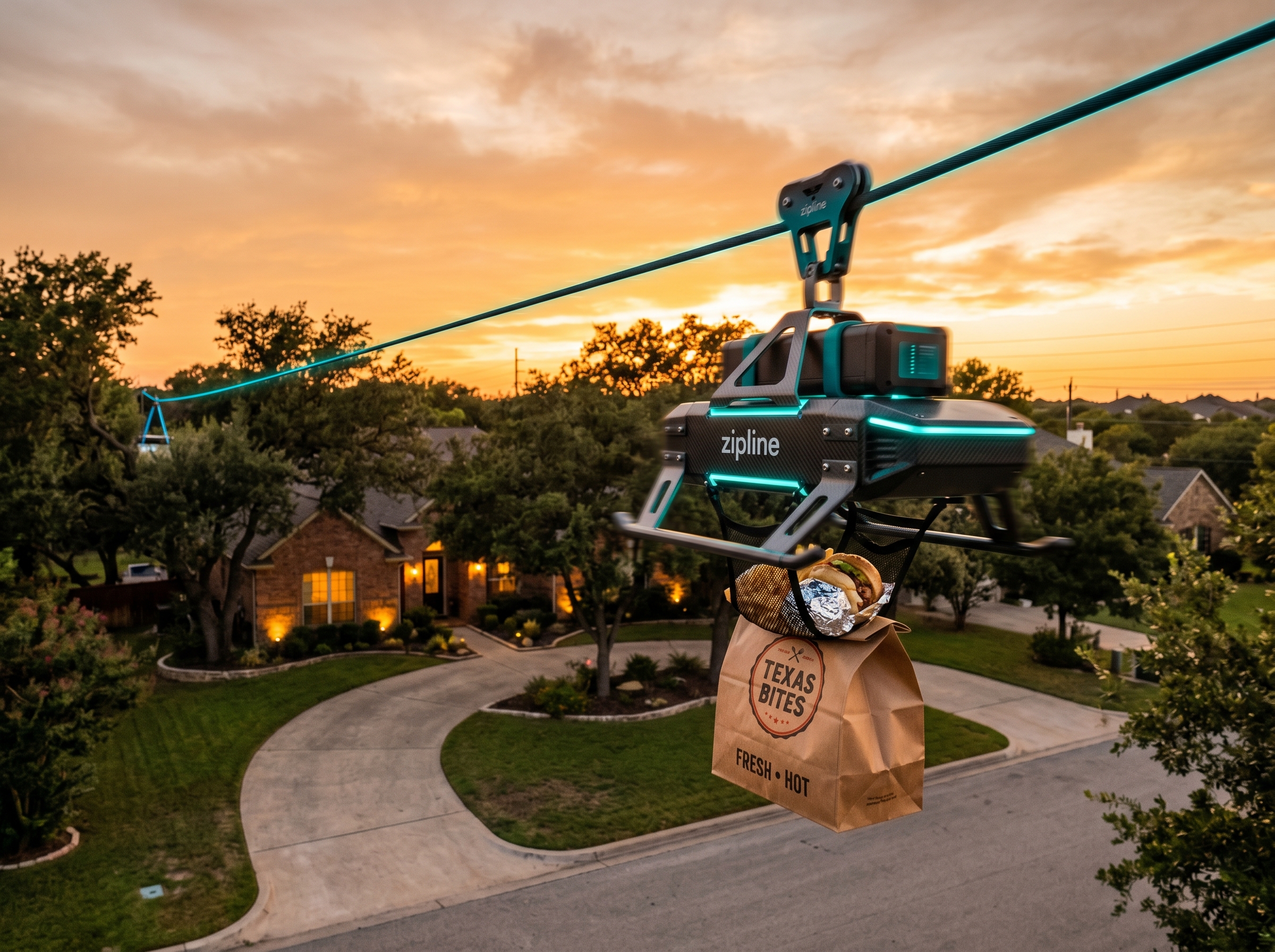
Zipline droid descending with a takeout bag toward a Texas driveway at sunset
03

Zipline Is Delivering Burritos Now, and That's the Whole Point

Zipline officially launched commercial drone delivery for Taco Bueno in Watauga, Texas, with plans to expand to Frisco and Mesquite by month's end. If this feels like a jarring pivot for a company that built its reputation delivering blood to remote Rwandan clinics, it shouldn't. This is the business model crystallizing.

The economics are straightforward: medical delivery in Africa proved the technology. Food delivery in Texas proves the business. A three-mile radius in North Texas's "delivery alley" generates far more revenue per drone-hour than medical supplies in sub-Saharan Africa, and Zipline's tethered droid system—where a high-altitude drone lowers a small delivery robot on a cable for precision drops—is perfectly suited to suburban driveways and patios.

The pivot in one sentence: Zipline spent a decade proving drones could save lives. Now it's proving they can save dinner. Same technology, wildly different TAM.

The dedicated app model is notable too. Customers order through Zipline's own app, not DoorDash or Uber Eats. That's a bet on owning the customer relationship rather than becoming another logistics layer under an aggregator. Whether restaurants will tolerate yet another ordering platform is the tension to watch.

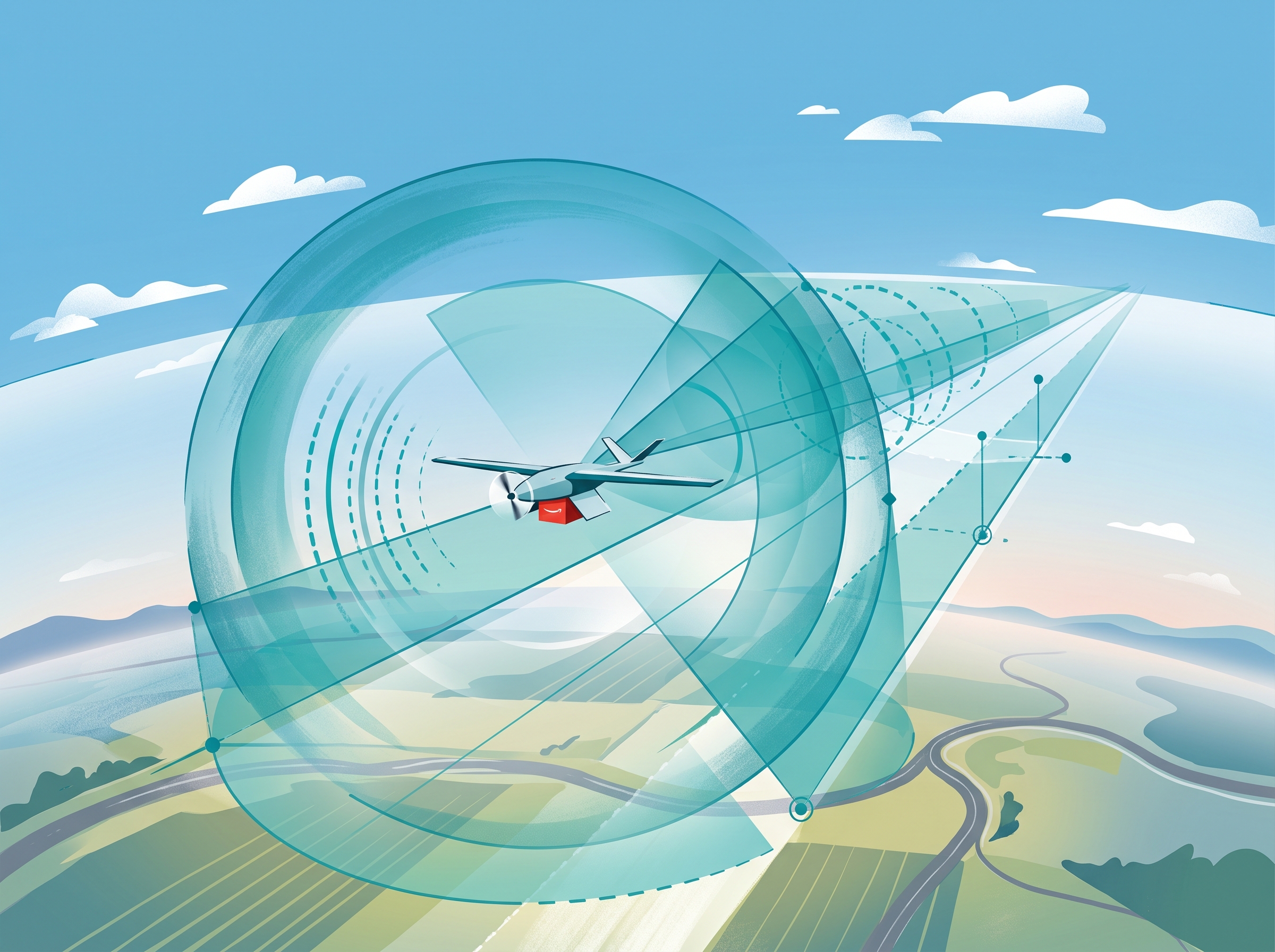
Abstract visualization of a drone flight corridor with radar beams extending beyond the horizon
04

The Observer Bottleneck Just Broke

If one headline this week deserves a spotlight, it's this: the FAA granted Zipline authorization for observer-free beyond-visual-line-of-sight (BVLOS) commercial deliveries. That sentence is dense with jargon, so let's decode what it actually means for the industry.

Until this ruling, every commercial drone delivery flight in the U.S. required human visual observers stationed along the route—people standing in fields and parking lots, watching the sky. This is the single biggest cost driver that has prevented drone delivery from being economically viable at scale. Each flight might need two or three observers on the payroll. The math doesn't work for a $7 burrito.

Zipline's Platform 2 detect-and-avoid system—onboard sensors that can identify and evade other aircraft, birds, and obstacles autonomously—passed the FAA's safety bar. This is the regulatory equivalent of the automobile getting permission to drive without a person walking in front waving a red flag. It unlocks unit economics that were previously impossible.

The math: Removing visual observers eliminates the largest single line item in per-delivery cost. At scale, observer-free drone delivery becomes competitive with—and potentially cheaper than—a human driver for short-range trips.

Other operators—Wing, Amazon, DroneUp—are watching this closely. Zipline's approval sets the precedent, but each company will need its own certification based on its specific aircraft and sensor suite. The door is open. Now it's a race to walk through it.

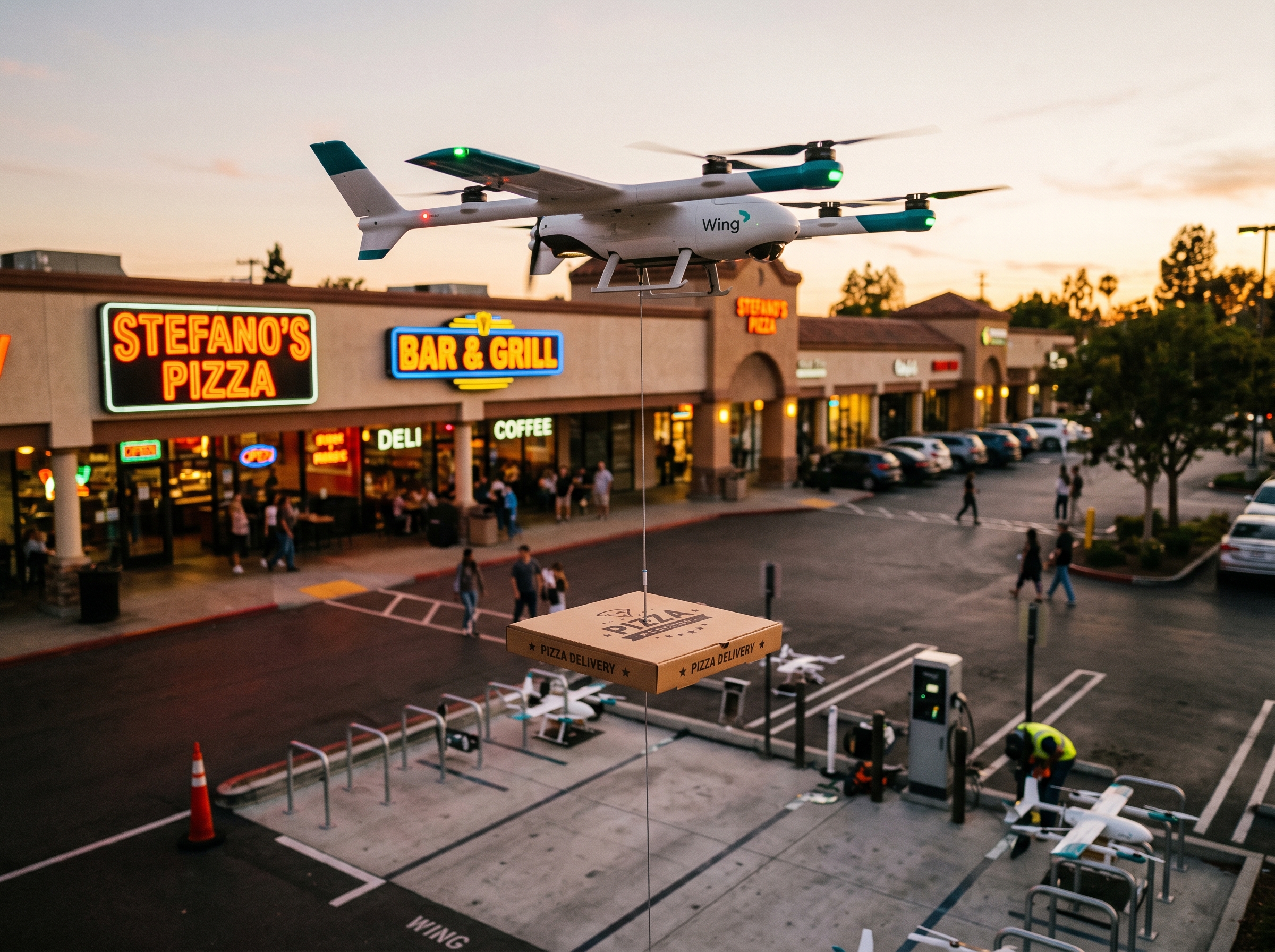
Wing drone hovering above a shopping center, lowering a pizza delivery box on a tether
05

Wing and Papa Johns Just Changed Who Owns the Last Mile

Wing (Alphabet's drone delivery unit) and Papa Johns launched the first direct partnership between a drone operator and a national restaurant brand, starting in Indian Trail, North Carolina. The sandwiches fly from a drone "nest" at a local shopping center. The integration plan includes Papa Johns' AI assistant "Lou AI" for in-app drone tracking.

This matters because it's a structural shift in how drone delivery reaches consumers. Until now, most drone food delivery has been mediated by third-party apps. Wing delivering directly for Papa Johns means the restaurant brand controls the customer experience end-to-end—from order to sky to doorstep. That's a very different power dynamic than handing your food to DoorDash and hoping for the best.

The AI integration angle is smart positioning too. If Papa Johns customers can track their drone delivery in real-time through the brand's own AI assistant, it creates a moat around customer loyalty that aggregators can't easily replicate. Whether "your pizza is airborne" notifications become the next "your driver is 3 minutes away" remains to be seen—but the infrastructure play is clear.

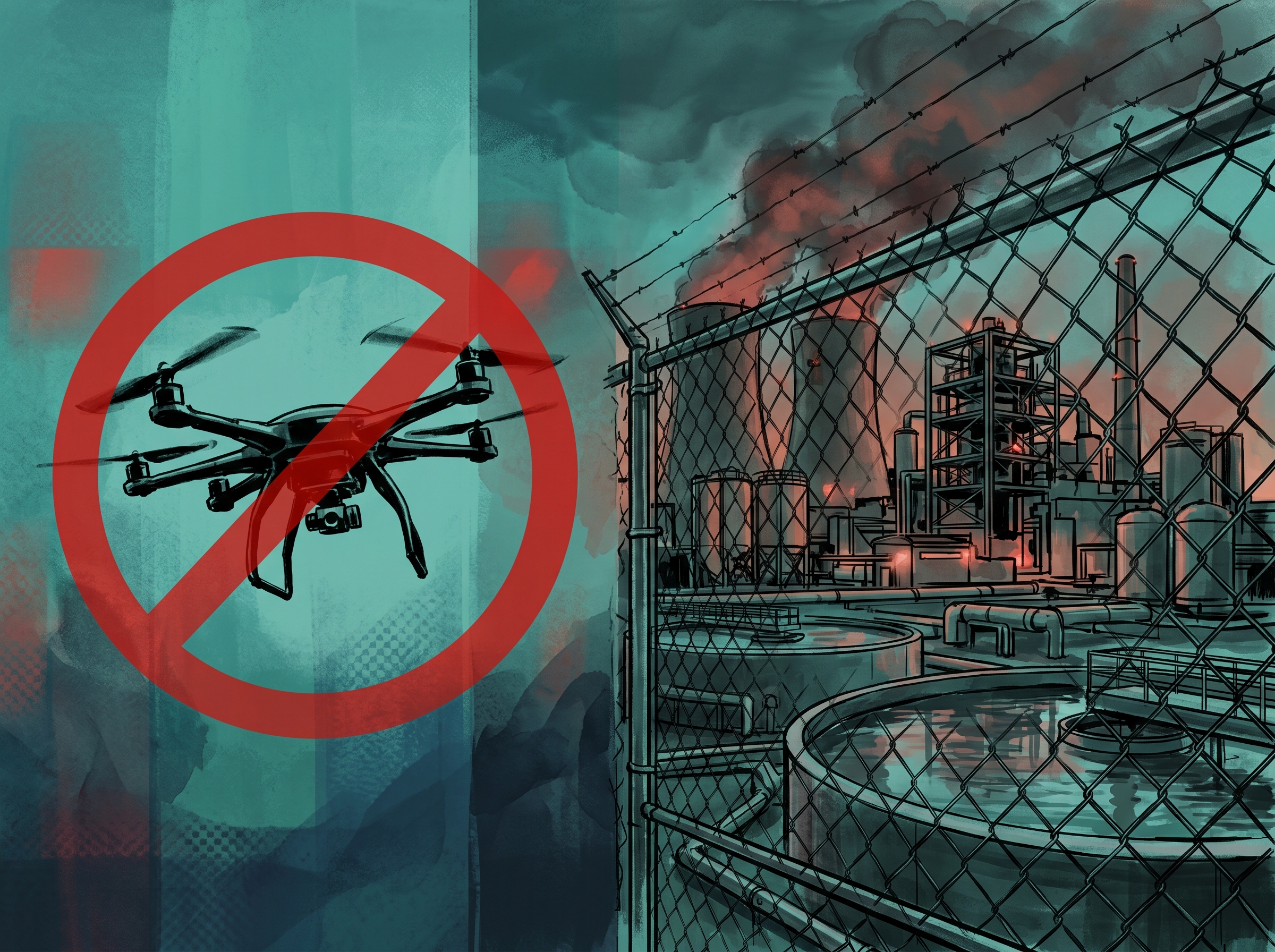
Split image of a drone with prohibition symbol and critical infrastructure behind a fence
06

The FAA Giveth, and the FAA Draweth Boundaries

In the same week the FAA cleared Zipline for observer-free BVLOS flights, the agency published a Notice of Proposed Rulemaking to create permanent "Unmanned Aircraft Flight Restrictions" over critical infrastructure—power plants, water treatment facilities, refineries. The timing is not coincidental.

This is regulatory push-pull in real time. As commercial drones get freer to fly longer distances without human babysitters, the government is simultaneously drawing hard boundaries around places they absolutely cannot go. The security logic is sound: a drone carrying a burrito uses the same airspace as a drone carrying a camera—or worse. But the devil is in the geometry.

Commercial operators who use drones for automated industrial inspections are sounding alarms. These are often the same companies that inspect the pipelines, cooling towers, and transmission lines the FAA wants to protect. If the no-fly zones are drawn too broadly, you could end up in a situation where drones can deliver tacos to your house but can't inspect the refinery down the road for cracks. That irony won't be lost on the industry.

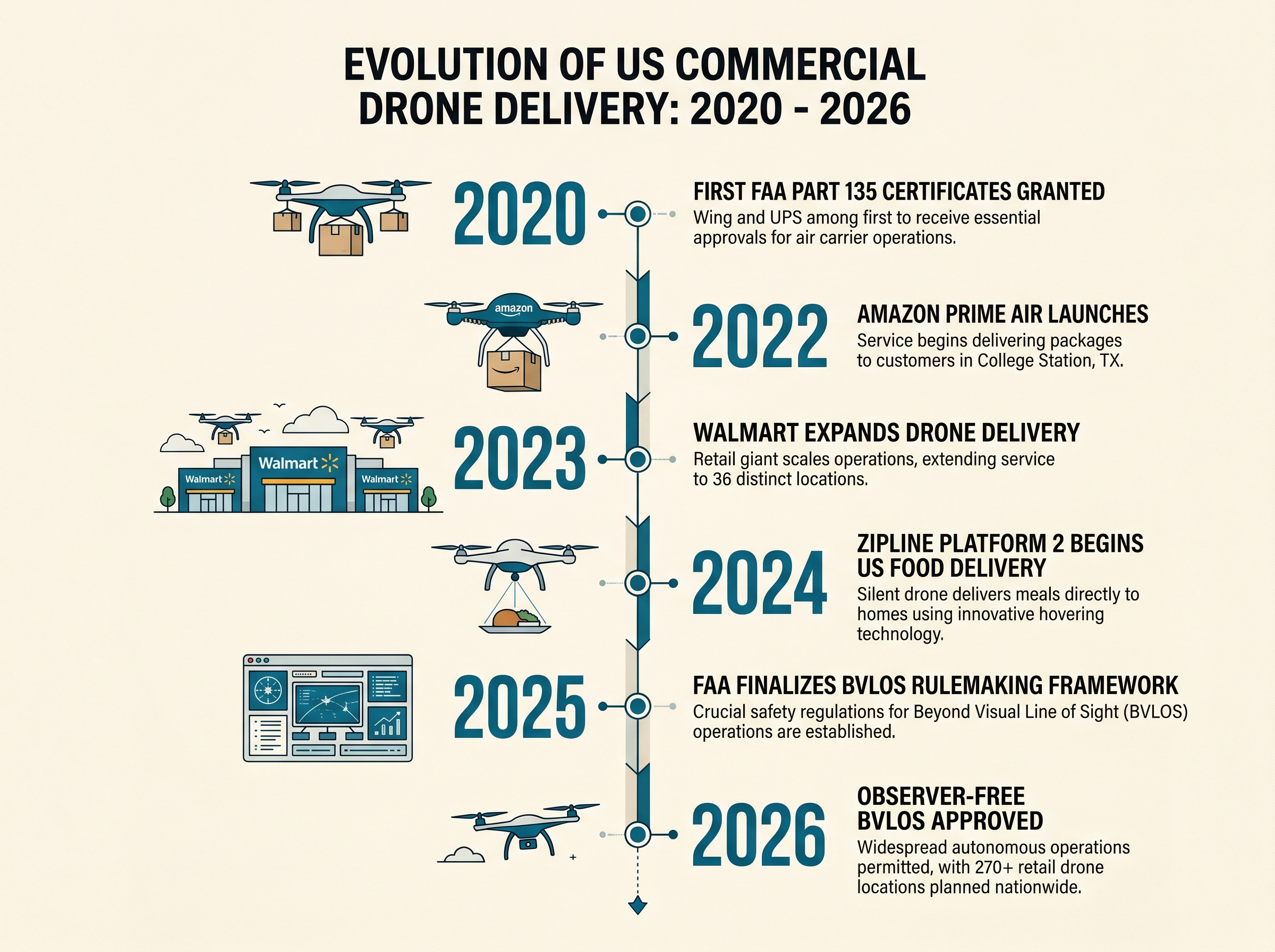
Timeline infographic showing the evolution of US commercial drone delivery from 2020 to 2026, including key milestones like FAA Part 135 certificates, Amazon launches, Walmart expansion, and BVLOS approvals
The road to routine drone delivery: six years of regulatory and commercial milestones that brought us to this week's inflection point.

The comment period on this NPRM runs through August. Expect intense lobbying from delivery companies, inspection firms, and security hawks. The final rule will shape the literal map of where drone delivery can and cannot operate—and with it, which neighborhoods get 30-minute burritos and which get traditional traffic.

The Sky Has an Address Now

This week's cluster of news isn't a collection of one-offs. It's the unmistakable sound of an industry crossing from "promising" to "operational." Walmart's earnings prove the business case. Zipline's BVLOS approval removes the cost bottleneck. Wing and Papa Johns are rewriting who owns the customer relationship. And the FAA is doing what regulators do when something gets real: drawing lines. The question for the next twelve months isn't whether drone delivery works. It's who captures the value—and whose sky it actually is.

Share X LinkedIn