Cardboard & Packaging

The Humble Box Fights Back

Cardboard prices are surging, AI is killing void fill, and bio-coatings just solved the pizza-box problem. The corrugated industry's most consequential week in years.

Listen
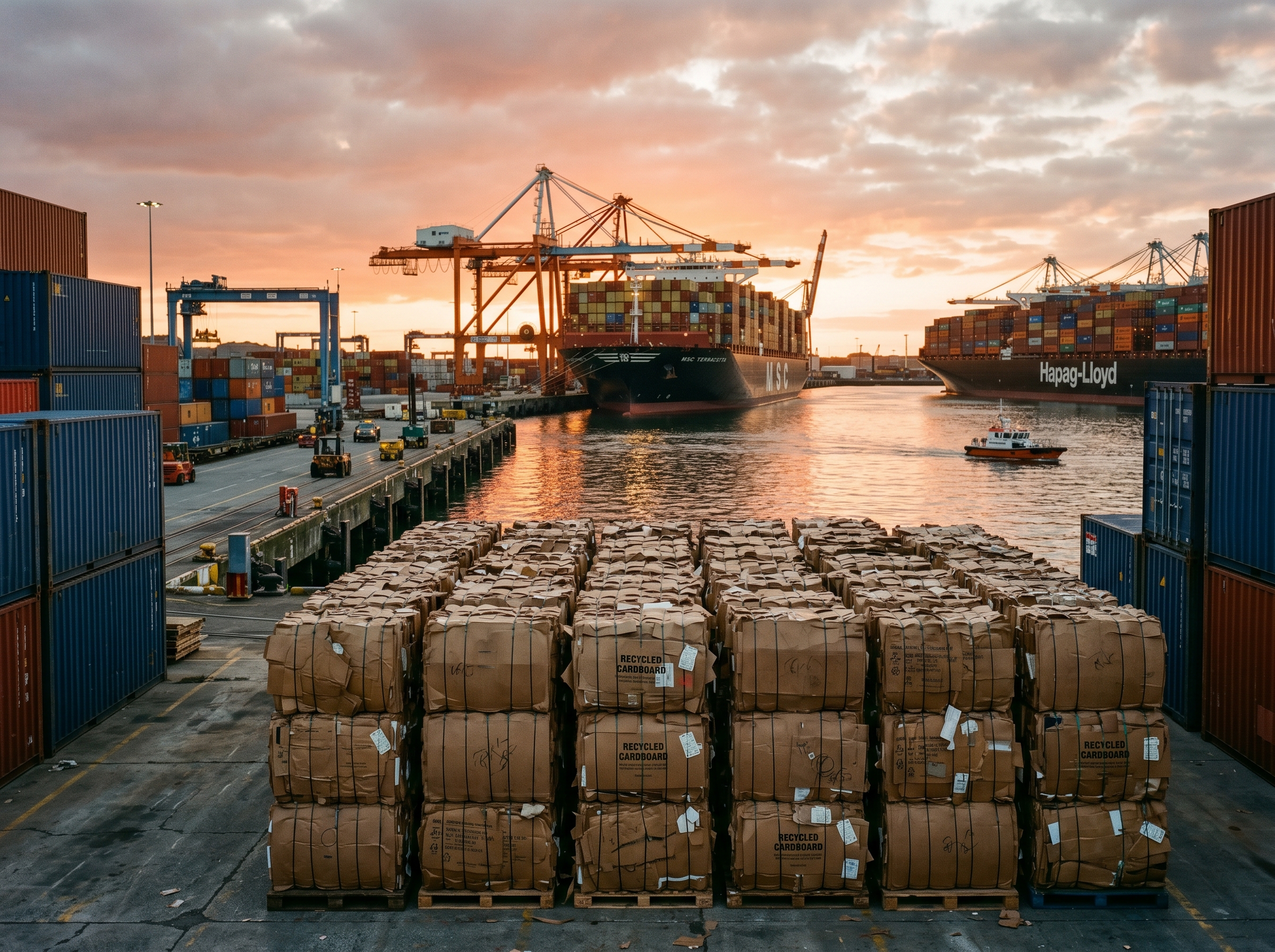
Bales of recycled cardboard at a shipping port with container ships in the background
01

Your Recycling Bin Is Worth More Overseas Than at Home

Here's a number that should make every U.S. mill executive nervous: $175 per ton. That's the price export OCC (Old Corrugated Containers) commands at New York and New Jersey ports right now—a $130-per-ton premium over the $45 domestic rate. Recycled cardboard leaving the country is worth nearly four times what it fetches staying here.

The culprit is a wave of new containerboard mills opening across Vietnam, Thailand, and Mexico this quarter, all hungry for clean fiber feedstock. Grade 12 Double Sorted OCC is the gold standard—lower contamination rates mean these modern high-speed machines can actually process it without choking. Scrap collectors on the coasts are suddenly sitting on an arbitrage gold mine.
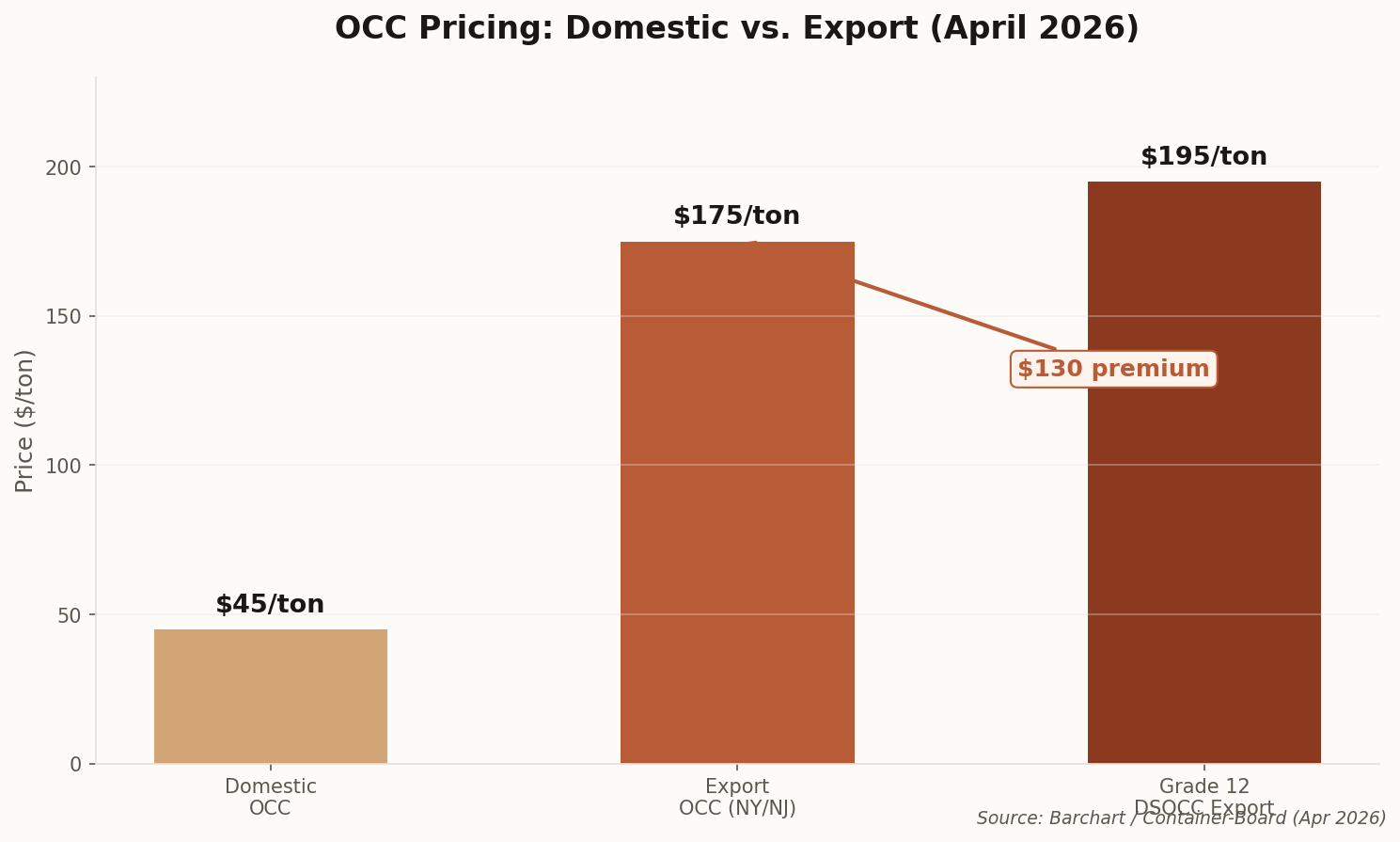
Bar chart showing OCC domestic price at $45/ton versus export prices at $175-195/ton
The domestic-export price gap has created a massive arbitrage opportunity for coastal scrap collectors. Grade 12 DSOCC commands the highest premium due to lower contamination.

The knock-on is inevitable: if enough recycled fiber flows overseas, domestic mills will be forced to raise their own purchase prices or face shortages. That cost gets passed straight to box makers, then to brands, then to you. The circular economy, it turns out, is also a global one—and right now the circle is spinning faster abroad.
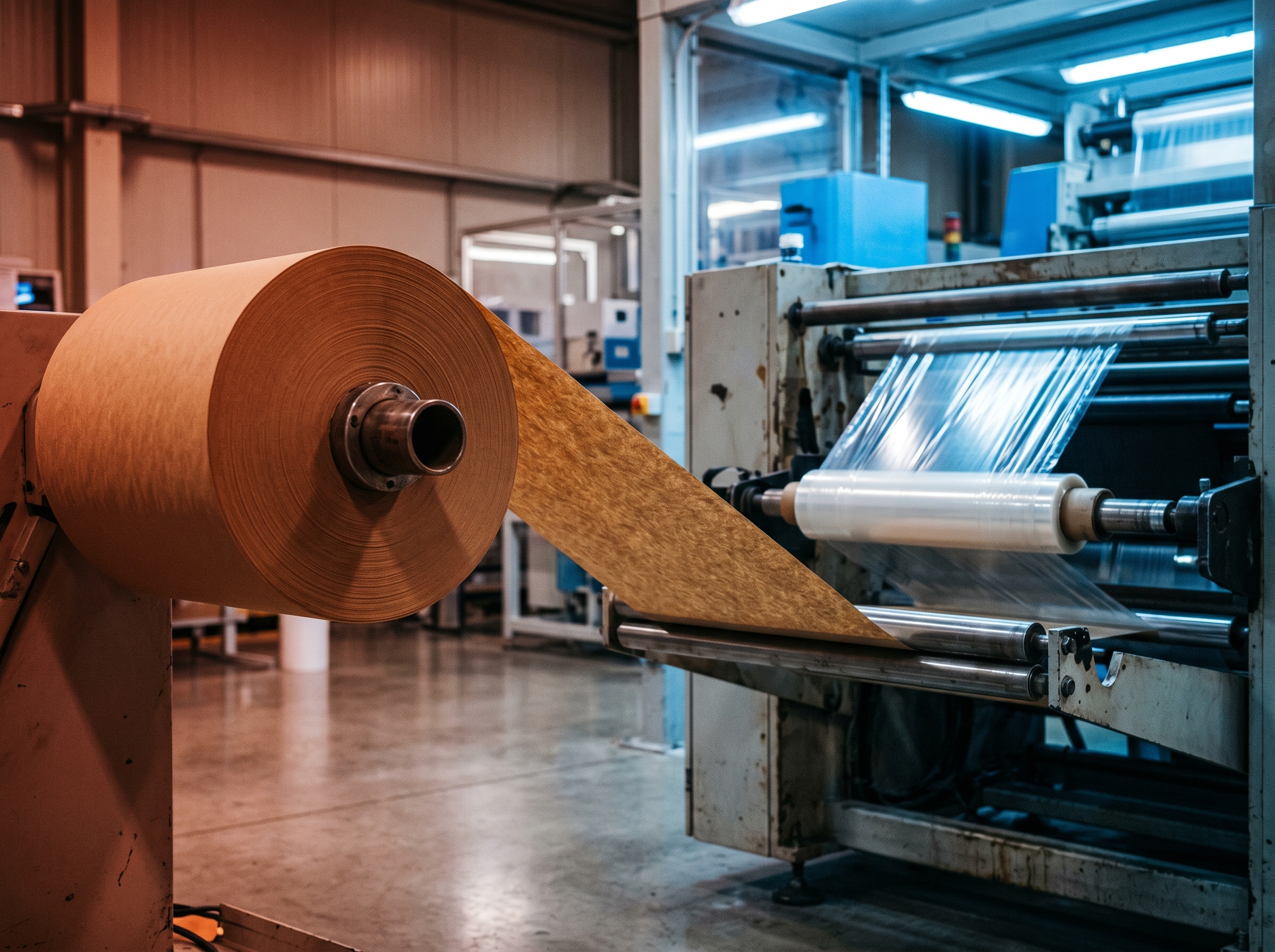

Brown kraft paper being unwound on an industrial wrapping machine, replacing plastic shrink film
02

Mondi's Paper Wrap Just Made Plastic Shrink Film Obsolete

Mondi just partnered with 15 OEMs to roll out something the packaging world has been chasing for a decade: a kraft paper bundling solution that genuinely replaces plastic shrink film in high-stress pallet logistics. The product, called Ad/Vantage StretchWrap, is a 70 g/m² recyclable paper that can handle the same tension, moisture, and handling abuse that polyethylene film shrugs off.

The key breakthrough isn't the paper itself—it's the compatibility. Standard wrapping machinery needs only a paper-wrapping module retrofit, not a full equipment replacement. That's the difference between a nice pilot project and actual industry adoption. When you lower the switching cost to a bolt-on upgrade, procurement departments stop treating sustainability as a line item and start treating it as a no-brainer.

If the 15-OEM coalition delivers on scale, we're talking about removing millions of tons of single-use plastic film from global supply chains. Not in theory. Not in a 2030 roadmap. Now. The "paperization" of logistics packaging may finally have its tipping point moment.

Corrugated food container with bio-based coating, with seaweed and starch ingredients nearby
03

The Pizza-Box Problem Is Officially Solved

For decades, the corrugated food-service sector had an embarrassing secret: grease-stained cardboard was a contaminant in the recycling stream. The polyethylene coatings that made boxes water-and-grease-resistant also made them impossible to repulp. Recycling plants rejected them. Consumers tossed greasy pizza boxes in the bin feeling virtuous, and they ended up in landfill anyway.

That era just ended. Bio-based barrier coatings derived from seaweed and potato starch have reached price parity with traditional polyethylene coatings this week. The performance is equivalent—water resistance, grease resistance, structural integrity under refrigeration—but the boxes are now 100% repulpable and home-compostable.

Major quick-service restaurants have already started European trials. The implications ripple far beyond fast food: any corrugated container that currently ships with a plastic barrier—frozen foods, produce trays, pharmaceutical packaging—can now switch to bio-coatings at the same cost. When "sustainable" stops being more expensive, the adoption curve goes vertical.

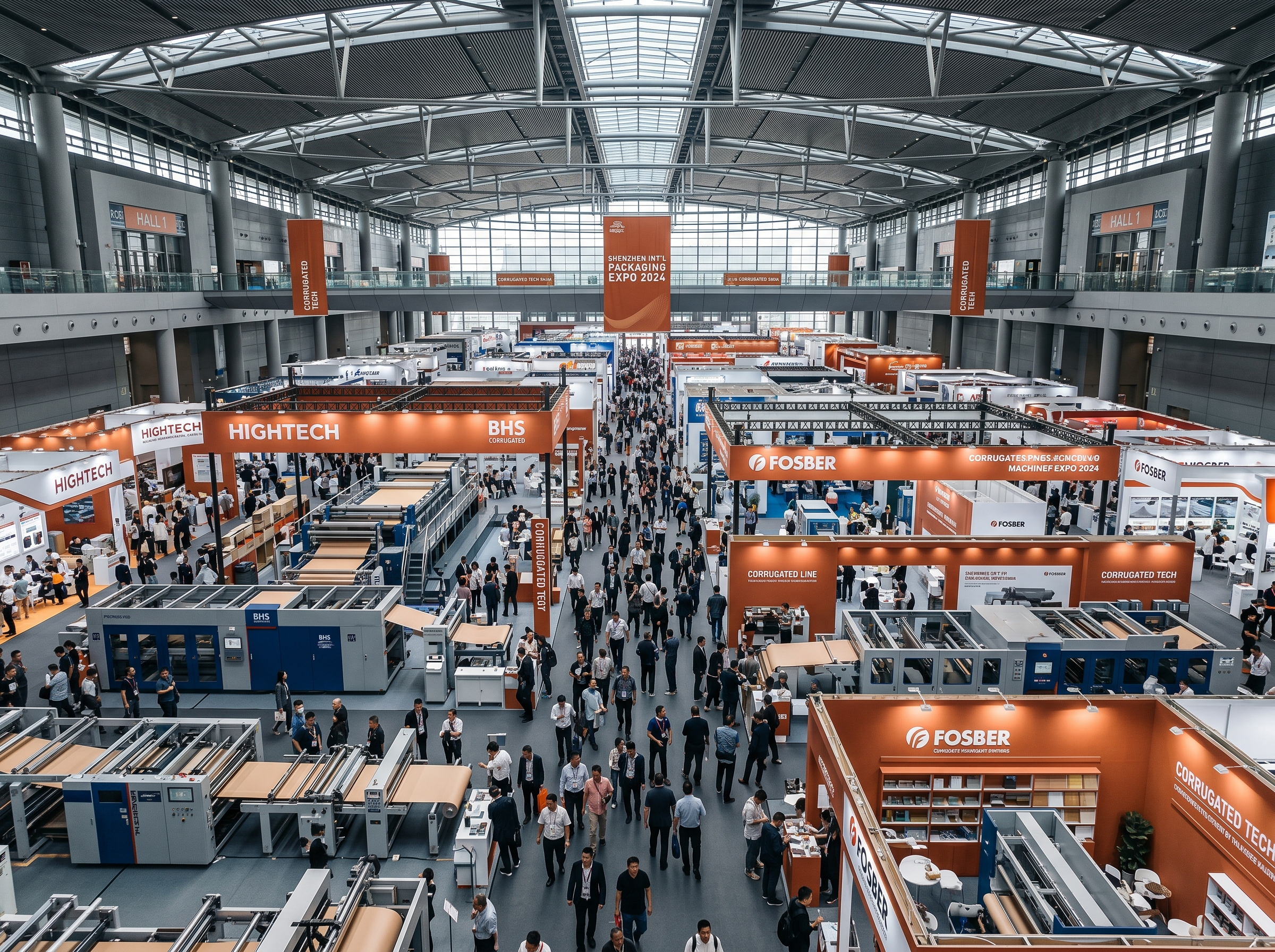
Vast exhibition hall in Shenzhen filled with corrugated packaging machinery and attendees
04

137,000 People Just Went to a Cardboard Convention (And It Mattered)

WEPACK 2026 wrapped up in Shenzhen this week with 137,157 unique visitors from 130 countries—a record that makes it the world's largest corrugated exhibition by a comfortable margin. If you think that sounds like a niche trade show, you're underestimating the industry that literally moves everything you buy.

The headline takeaway was the release of the "Red Book"—the 2026 Packaging Market Demand Evolution Report—which effectively declared that 100% circular design is no longer aspirational but mandatory. A strategic agreement with the World Packaging Organization to standardize global carbon footprint metrics for corrugated boxes gives that mandate teeth.

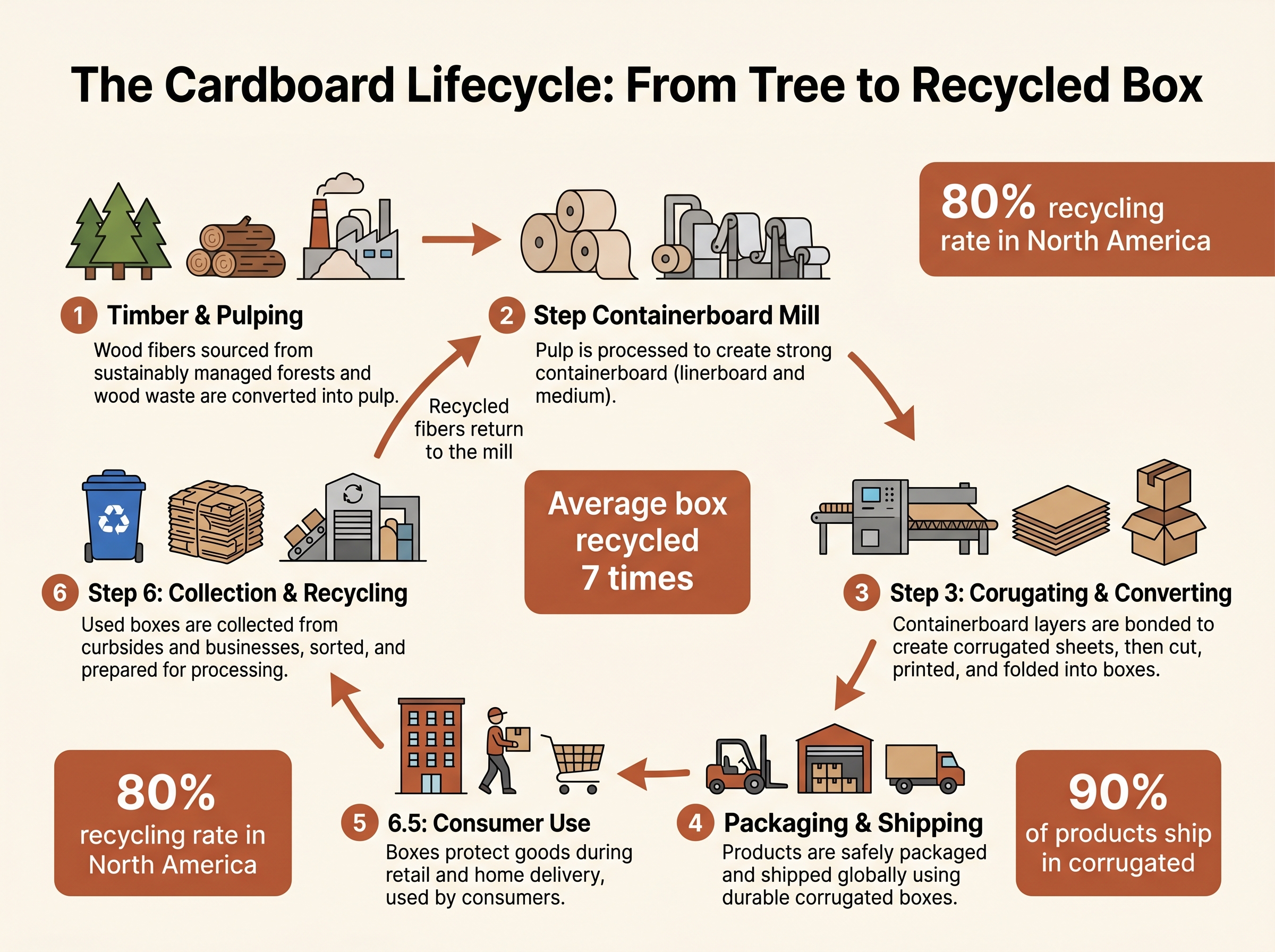
Infographic showing the circular lifecycle of corrugated cardboard from timber to recycling
The Cardboard Lifecycle: From Tree to Recycled Box — Generated with Nano Banana 2.0

The signal from Shenzhen is unmistakable: digital printing and carbon-neutral manufacturing aren't competitive differentiators anymore. They're table stakes. Companies still running analog corrugating lines without emissions tracking aren't just behind—they're heading toward irrelevance.

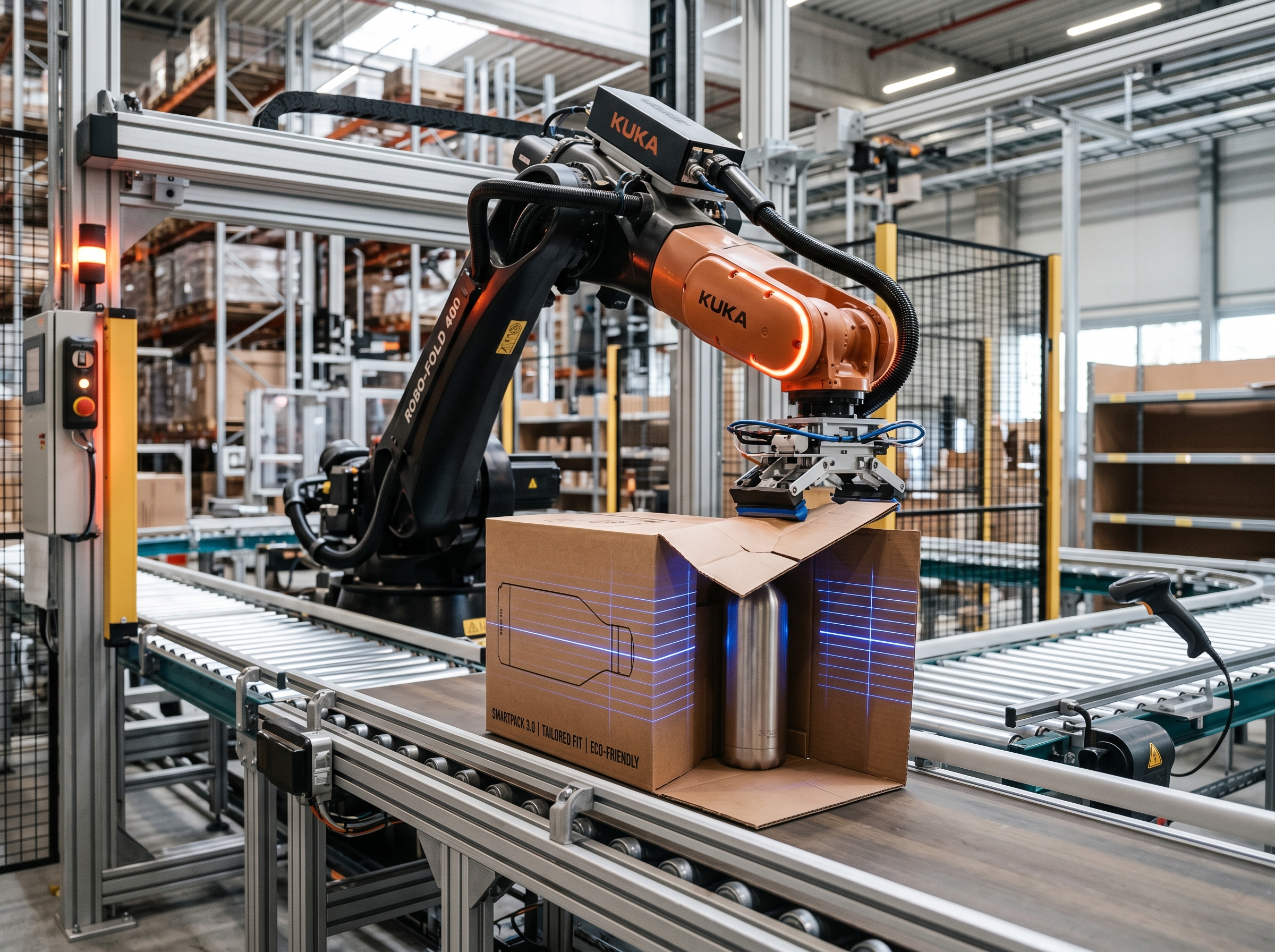
Robotic arm folding a custom-sized corrugated box around a product with laser scanning
05

AI Killed the Oversized Box (And 400,000 Tons of Plastic With It)

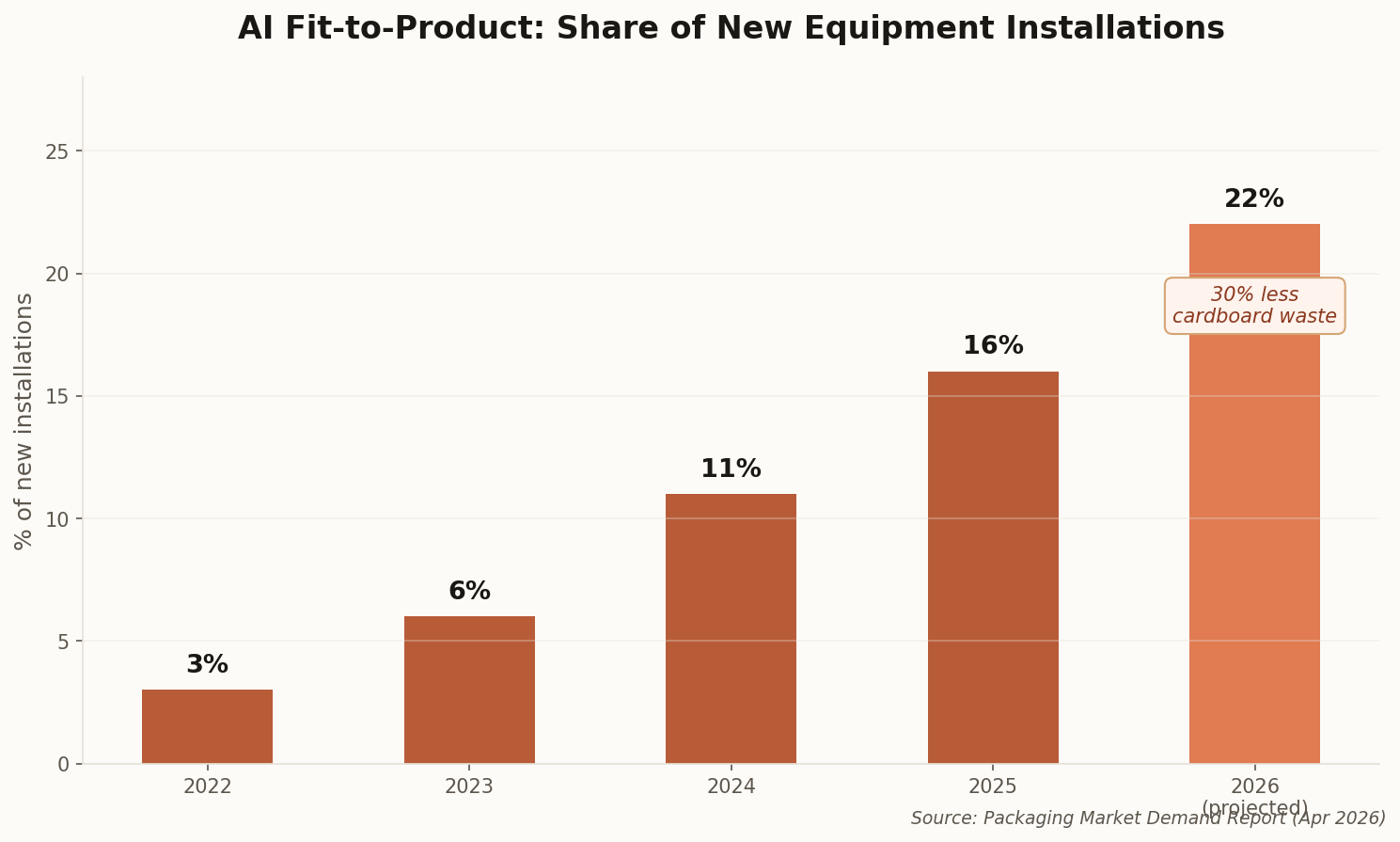
You know the feeling: a small USB cable arrives in a box big enough for a toaster, cushioned by a pillow of air bags and crumpled kraft paper. That ritual of waste is dying. AI-powered Fit-to-Product machines now account for 22% of all new packaging equipment installations in 2026, up from just 3% four years ago.

Bar chart showing AI Fit-to-Product equipment adoption growing from 3% in 2022 to 22% in 2026
Fit-to-Product adoption has followed a steep growth curve since 2022, driven by both cost savings and sustainability mandates.

These systems scan each item in real time, then construct a custom-sized corrugated box on the fly—no void fill needed. The result is up to 30% less cardboard per shipment, and the elimination of plastic bubble wrap, packing peanuts, and air pillows entirely. The industry estimates 400,000 tons of plastic void fill has been displaced so far this year alone.

The economics are irresistible. Less cardboard means lower material costs. Smaller boxes mean more packages per truck, cutting freight spend. And customers stop posting unboxing videos mocking your wasteful packaging. When cost savings and sustainability pull in the same direction, adoption isn't a question of "if" but "how fast the production line can be retrofitted."

Corrugated cardboard sheets arranged like ascending bar chart columns in dramatic lighting
06

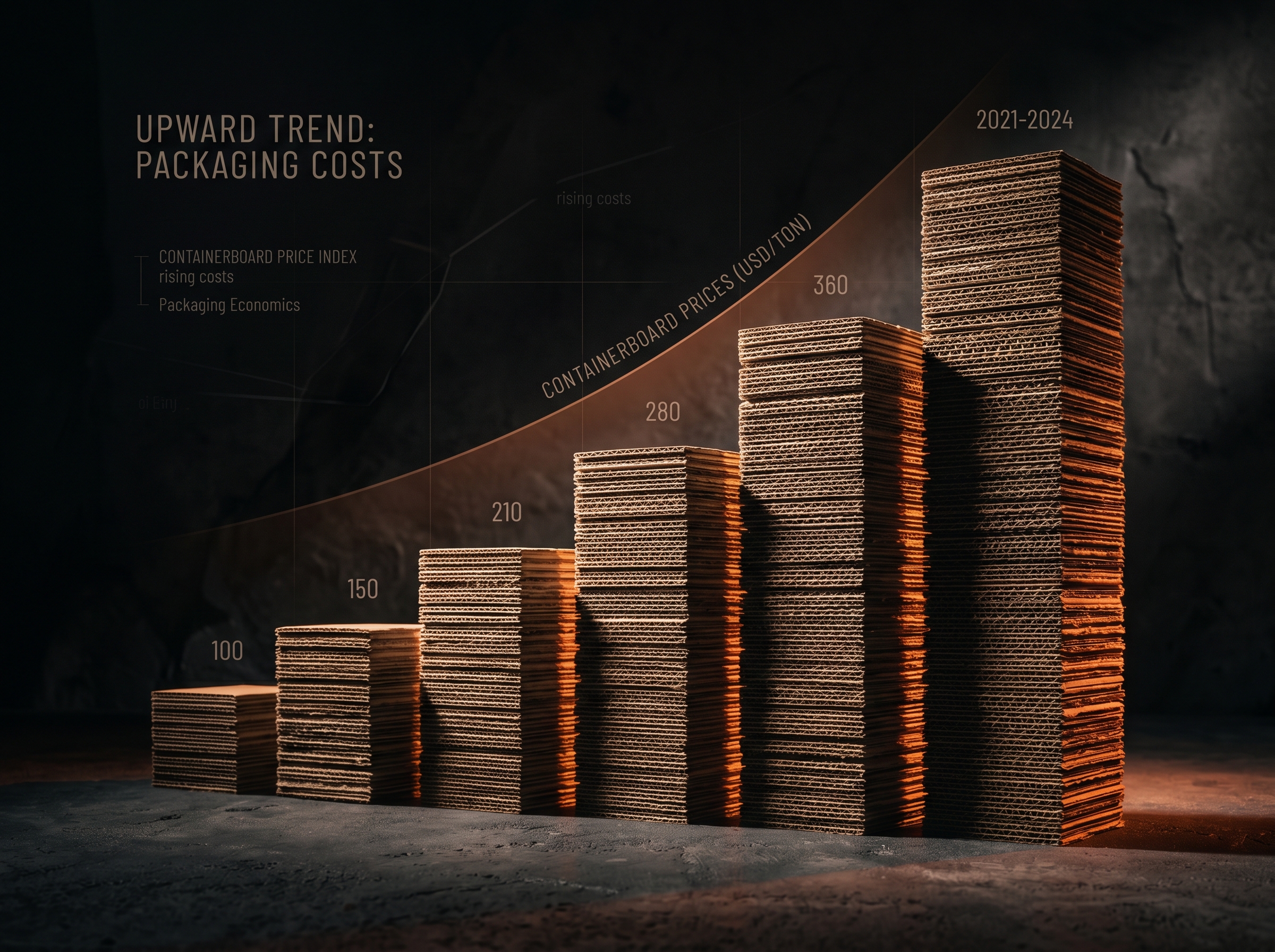
$50 a Ton and Climbing: Containerboard's Relentless Price March

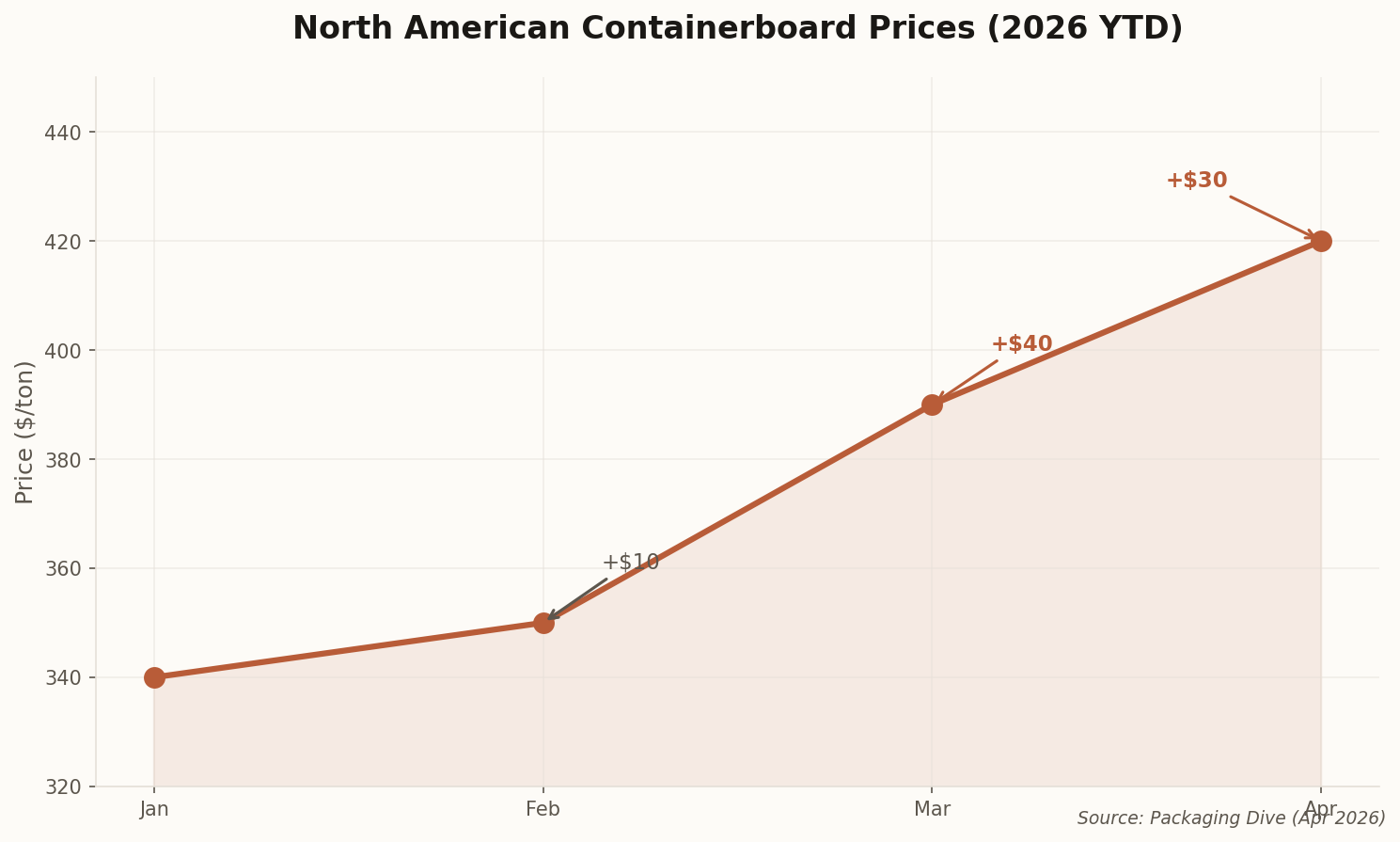
North American containerboard prices climbed another $30 per ton this week, the latest move in a turbulent year that included March's sharp $40 hike and earlier pullbacks during February's volatility. The net result: a year-to-date increase of $50 per ton. Major producers like PCA and International Paper have successfully implemented price floors that the market, for once, is absorbing without flinching.

Line chart showing containerboard prices rising from $340/ton in January to $420/ton in April 2026
Containerboard prices have climbed steadily in 2026, with the sharpest increases in March (+$40) and April (+$30).

The drivers are structural, not speculative. E-commerce demand remains insatiable—every percentage point of retail shifting online means more corrugated boxes, period. Energy costs at mills haven't relented. And logistics inflation makes it more expensive to move the finished board to converters. The producers' bet is that Q3 will be when these gradual hikes compound into real margin recovery, especially after February's volatility knocked confidence.

For brands and retailers, the message is simple: your packaging line item is going up. The question isn't whether to absorb the cost—it's whether to invest in right-sizing (see Section 05) and material optimization now, or keep paying the premium on oversized, inefficient boxes.

The Box Is the Platform

Cardboard doesn't get keynote speeches or venture capital rounds. But this week crystallized something the industry has been building toward for years: the corrugated box is becoming a technology product. AI-sized, bio-coated, carbon-tracked, and priced like the strategic commodity it always was. The next time you break down an Amazon box for the recycling bin, remember—that fiber might end up in a Vietnamese mill by month's end, reborn as someone else's delivery. The humble box has never been less humble.

Share X LinkedIn