Dishwashers

Stop Rinsing, Start Thinking

EuroCucina 2026 just rewired the dishwasher industry. AI sensors, tariff shocks, and the viral death of pre-rinsing.

Listen
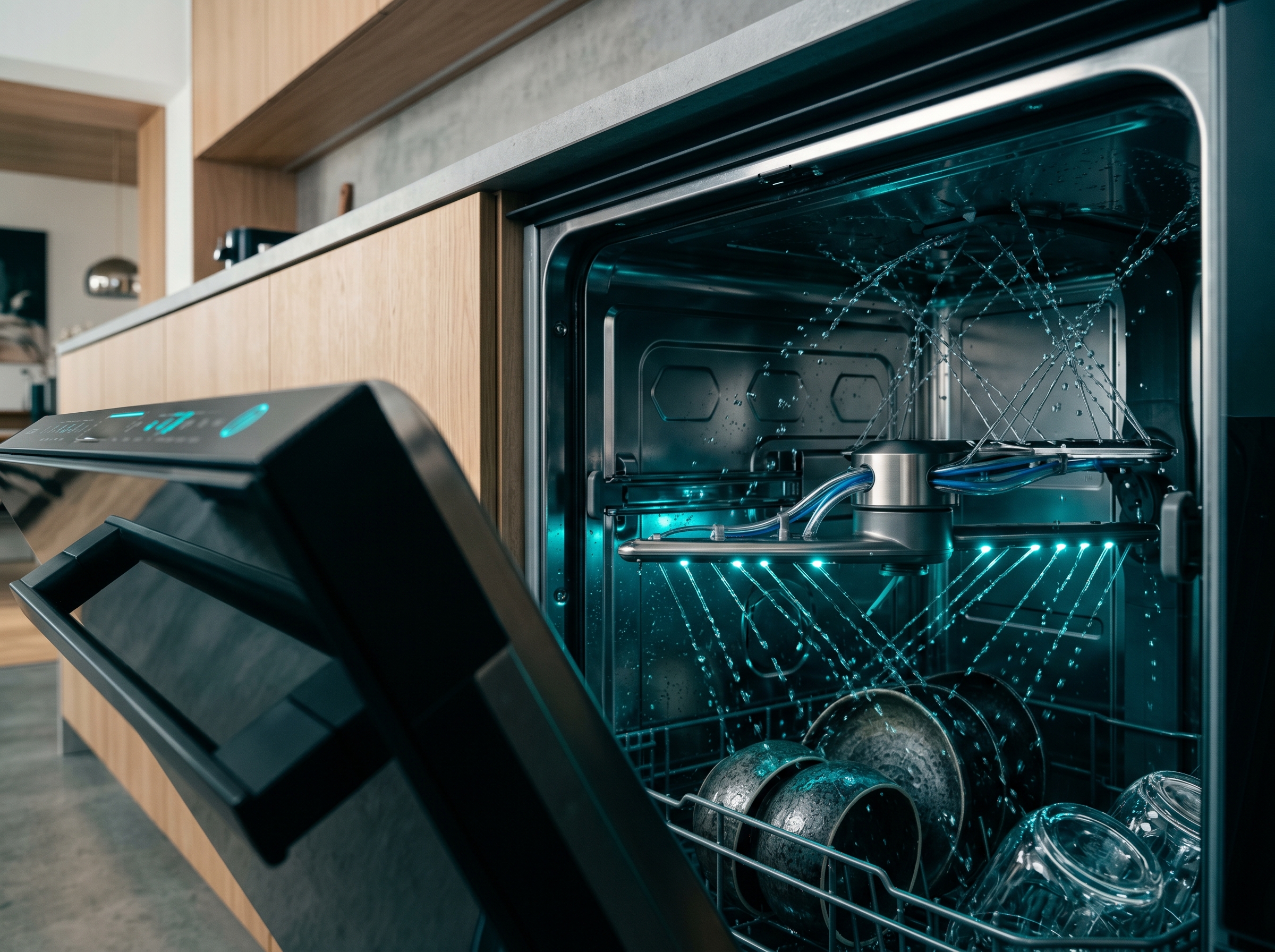
Futuristic built-in dishwasher with illuminated high-pressure water jets
01

The Robot Vacuum Company That Wants to Wash Your Dishes

Here's something that should make Bosch and Whirlpool nervous: Dreame Technology, the Chinese company you probably know for robot vacuums, just launched a full-blown premium built-in dishwasher. The DZ601 Pro isn't a tentative market test—it's a statement.

The headline feature is a "StormWing" spray arm that blasts water at 70°C, specifically targeting baked-on grease that traditional spray patterns miss. Dreame's dual-path drying system—combining hot air circulation with a desiccant material—claims 99.9% bacteria removal. That's not a dishwasher spec; that's a medical device talking point.

The real story isn't the product. It's the pattern. Companies built on sensors, motors, and machine learning are discovering that a dishwasher is just another optimization problem. Dreame has spent years perfecting LIDAR navigation and suction algorithms for floors. Translating that sensor expertise to water pressure and soil detection? That's not a stretch—it's a lateral move. The incumbents should be watching their flanks.
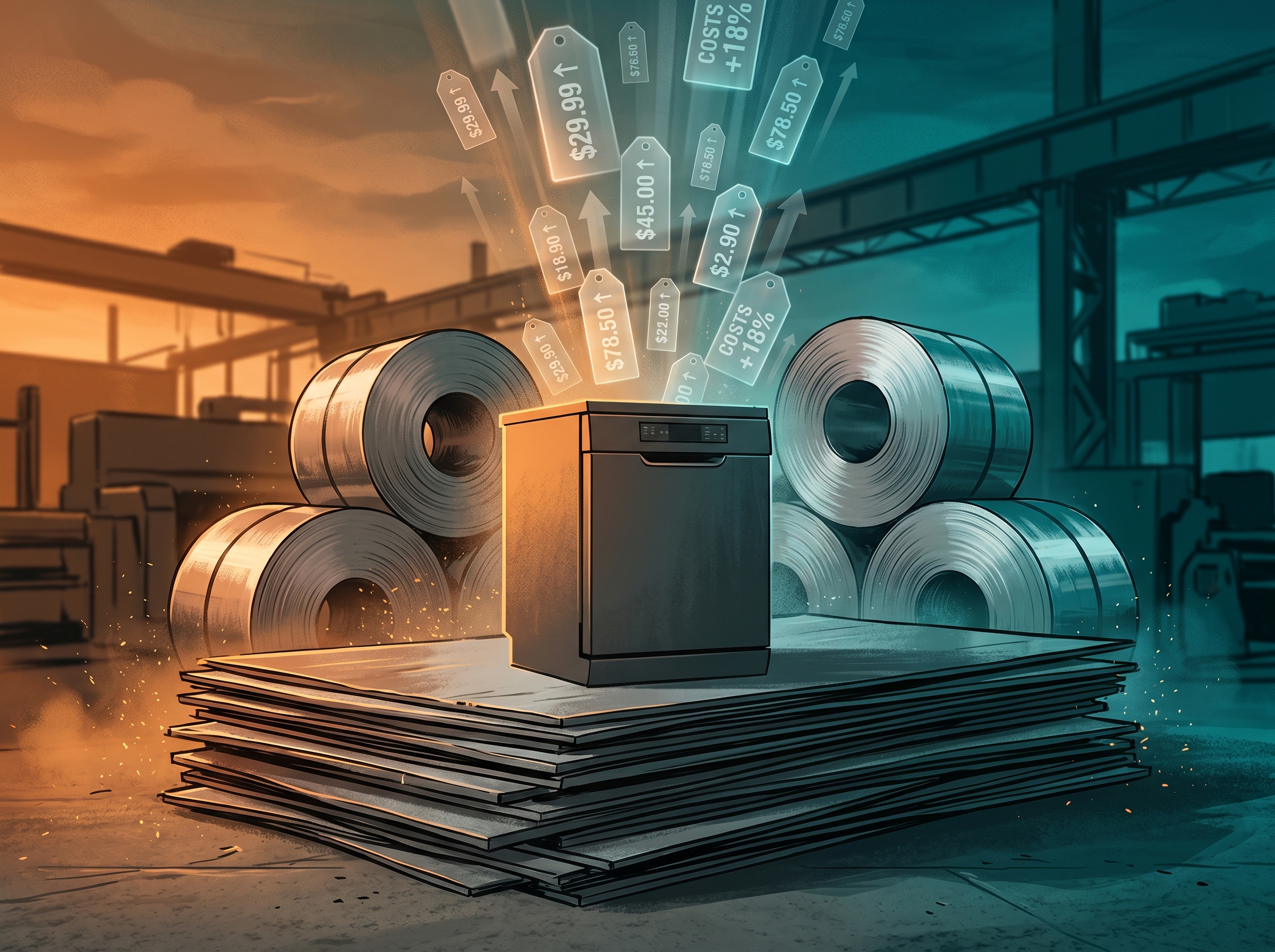
Steel sheets with floating price tags representing rising tariff costs on appliances
02

Steel Tariffs Are About to Make Your Next Dishwasher More Expensive

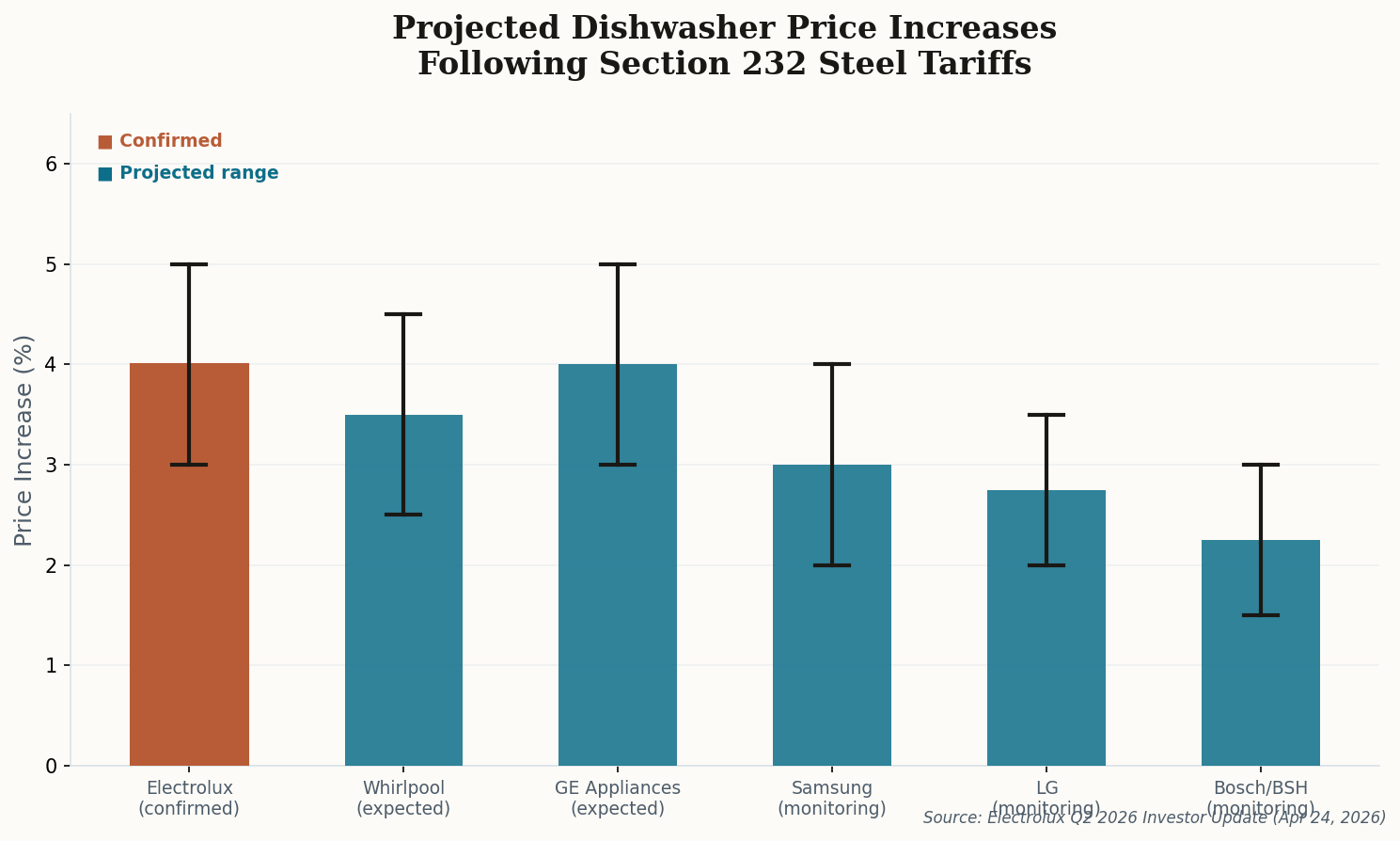
Electrolux said the quiet part out loud this week: the new Section 232 tariffs on imported steel and aluminum, effective April 6, are coming for your kitchen. Expect 3-5% price increases on dishwashers by June. That's $30-50 on a $1,000 machine—not catastrophic, but not nothing either.

What makes this interesting isn't the number. It's the cascade. GE Appliances and Samsung are "monitoring the situation," which is corporate-speak for "we're hiking prices too, we just haven't announced it yet." When Electrolux moves first, everyone else gets political cover to follow.

Bar chart showing projected 3-5% dishwasher price increases across manufacturers following Section 232 steel tariffs
Projected price increases by manufacturer. Electrolux confirmed; others expected to follow by Q3 2026.

The bigger implication: this shifts the repair-vs-replace math for millions of households. If your current dishwasher is limping along, the calculus just tilted toward fixing it. For manufacturers pushing premium AI-powered models, the timing is brutal—you're asking consumers to spend more on innovation while also paying a tariff tax on the raw materials.

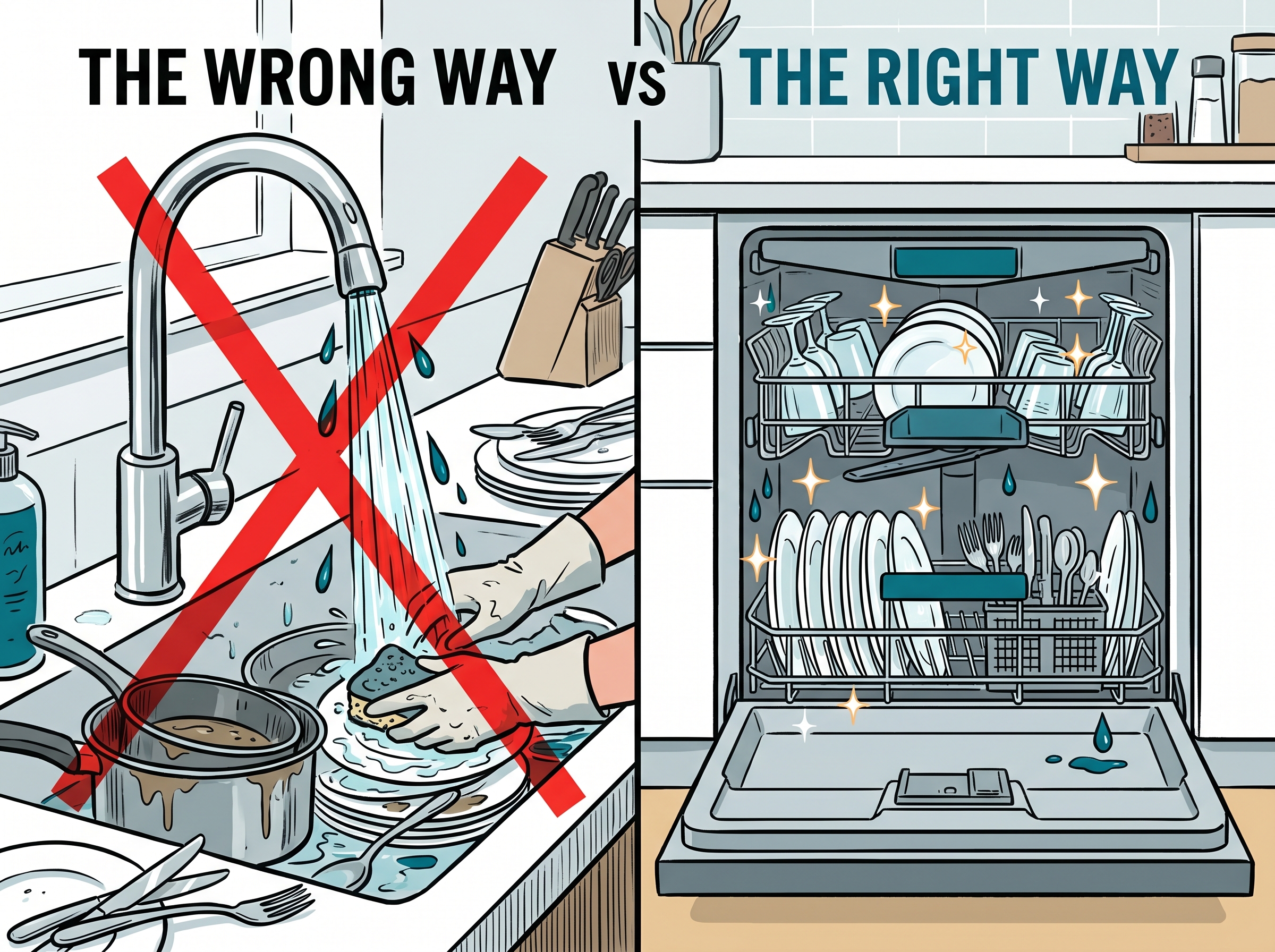
Split composition showing a crossed-out faucet versus sparkling clean dishes in a dishwasher
03

You're Outsmarting Your Dishwasher (And It's Making Things Worse)

The pre-rinse debate has been simmering for years, but this week it boiled over. A viral report from cleaning experts delivered the most counterintuitive kitchen advice you'll hear all year: rinsing your dishes before loading them makes them dirtier.

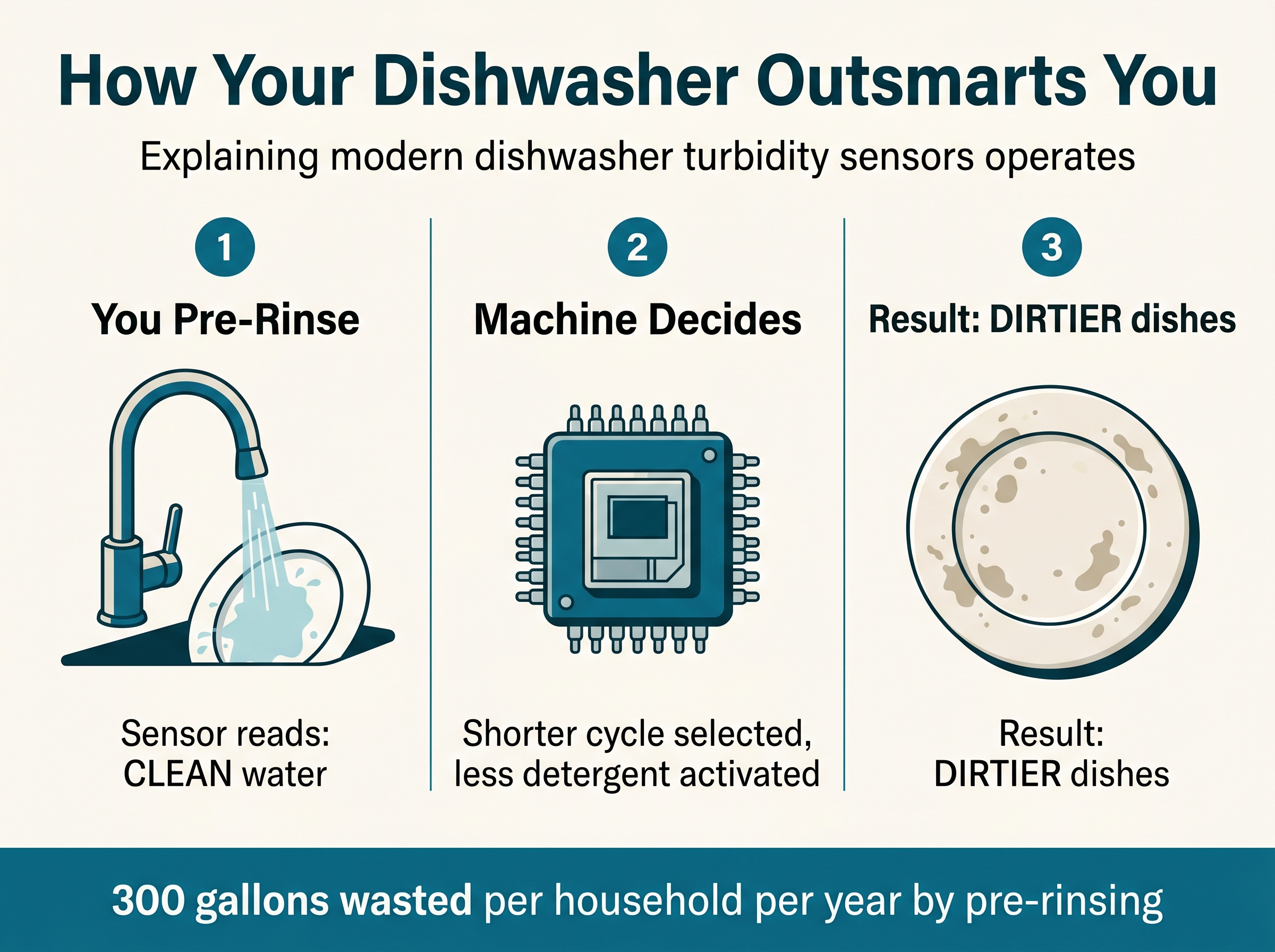
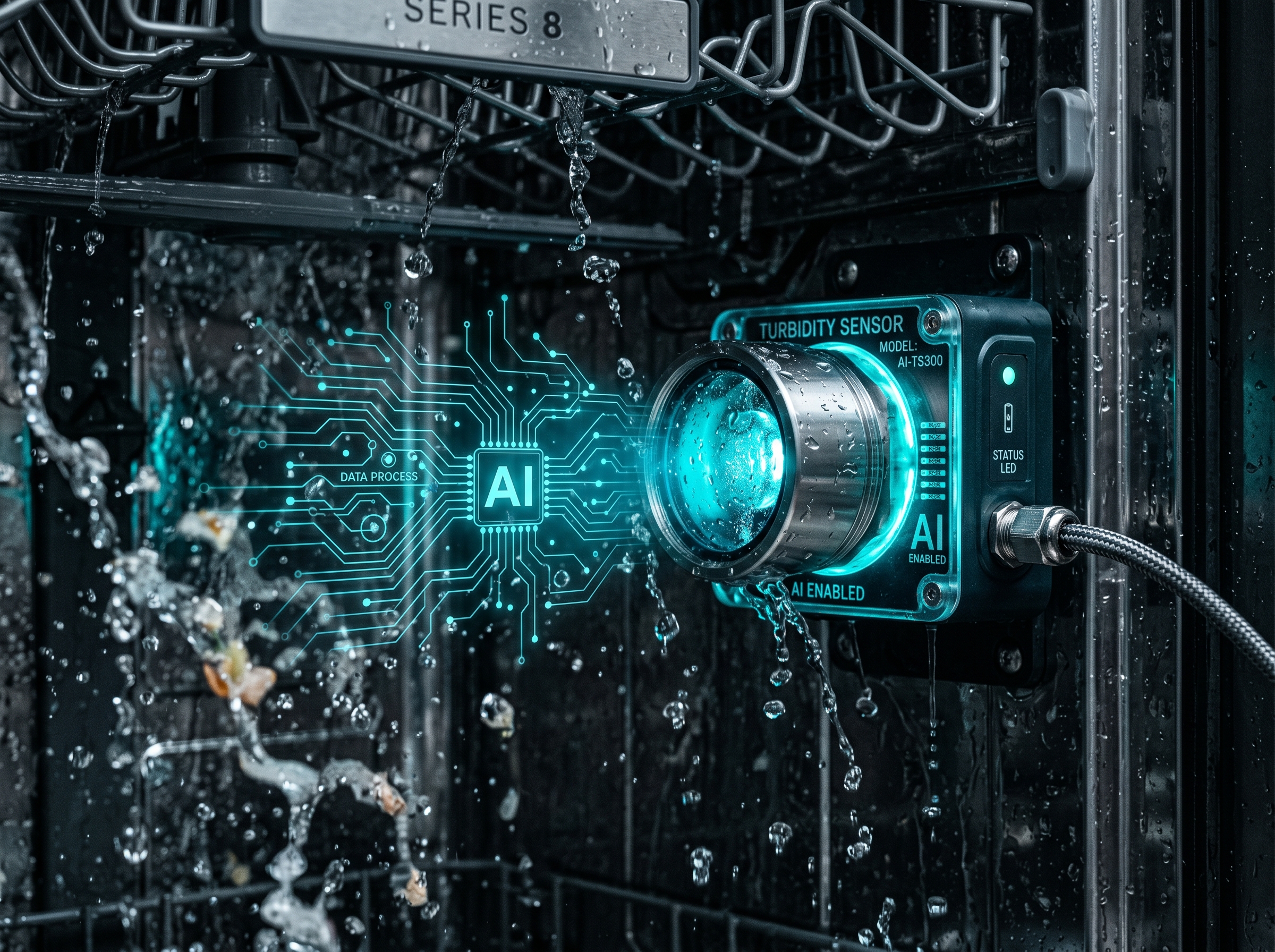
Here's the mechanism. Modern dishwashers use turbidity sensors to measure how dirty the wash water is. When you pre-rinse, the sensor reads clean water and responds logically—it shortens the cycle and reduces water temperature. The result? Dried-on residue that a full cycle would have obliterated gets a gentle bath instead. You tried to help. You made it worse.

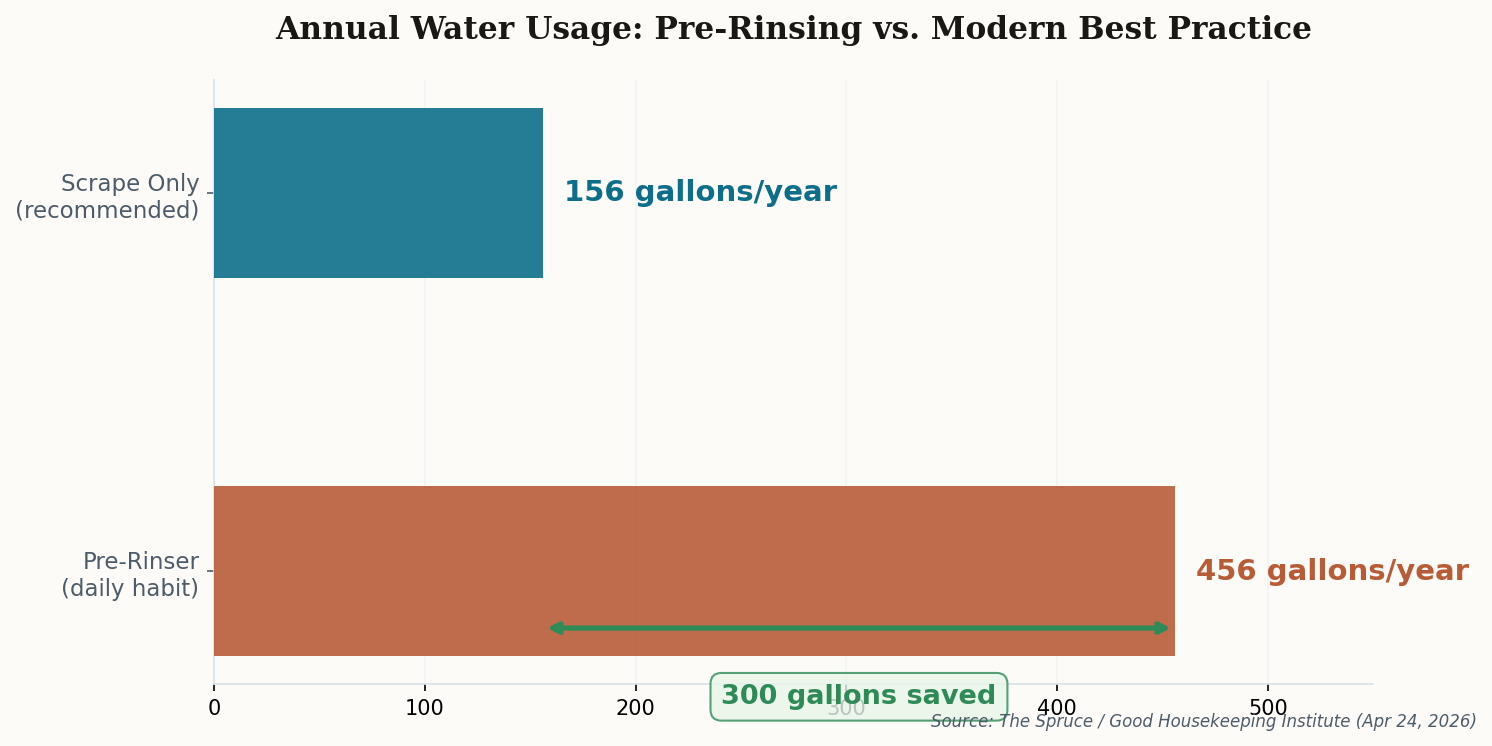
It gets better. The enzymes in modern detergent pods—from Cascade and Finish—are literally designed to latch onto food particles. Without food, those enzymes become mildly abrasive to glassware. You're not just wasting the estimated 300 gallons of water per year. You're actively degrading your wine glasses.

Horizontal bar chart comparing annual water usage between pre-rinsers (456 gallons) and scrape-only method (156 gallons), showing 300 gallons saved
Annual household water usage comparison: pre-rinsing vs. the expert-recommended scrape-only approach.
Infographic showing how pre-rinsing tricks modern dishwasher turbidity sensors into running shorter, less effective cycles
How your dishwasher's turbidity sensors respond to pre-rinsed vs. unrinsed dishes. Sometimes the machine knows best.

The cultural shift is real. This isn't just appliance trivia—it's a case study in how technology outpaces human habits. The dishwasher evolved. We didn't. Time to catch up.

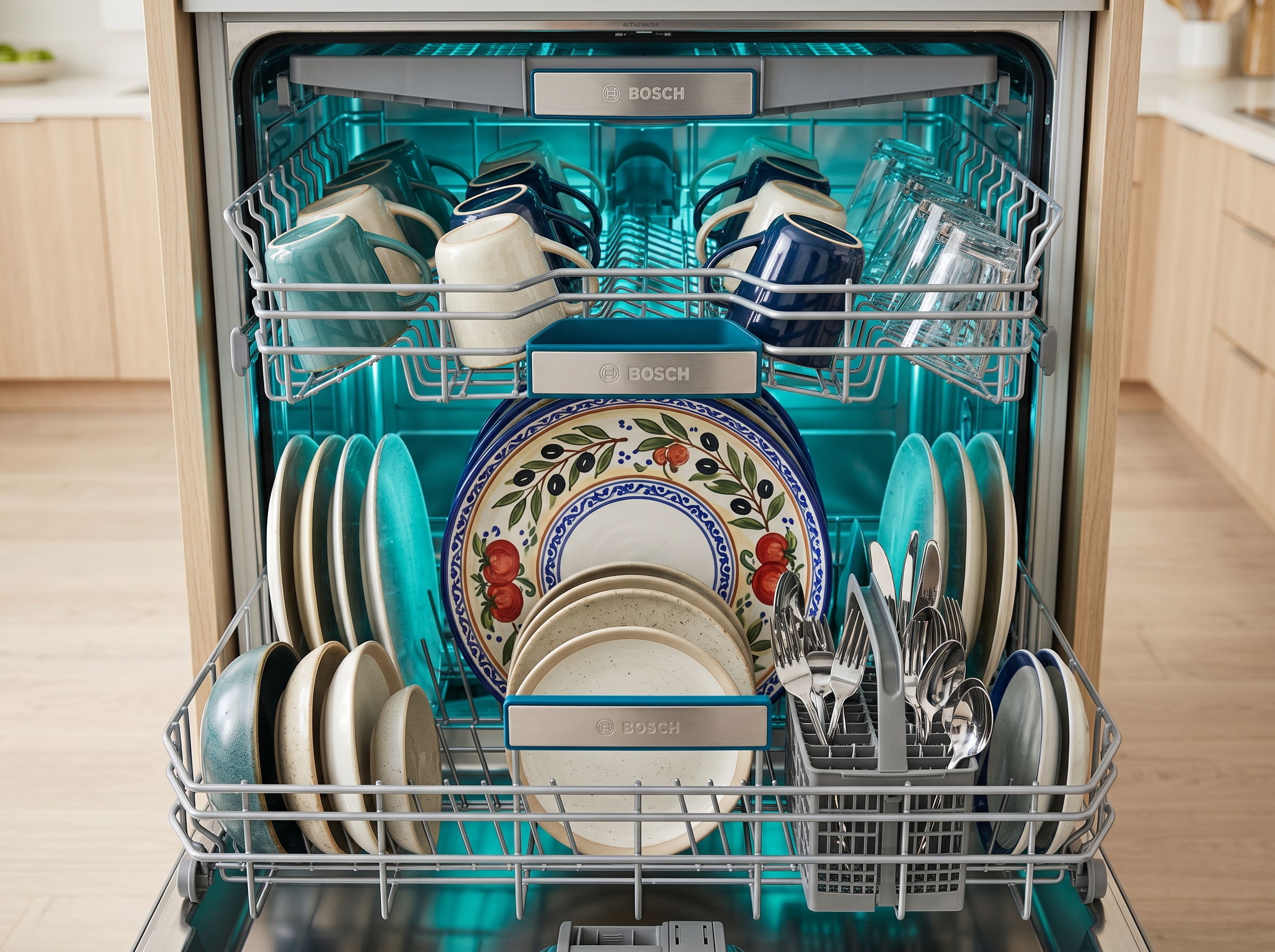
An oversized pizza plate fitting perfectly inside a gleaming dishwasher rack
04

Whirlpool Finally Solved the Pizza Plate Problem

While everyone else at EuroCucina was talking about AI, Whirlpool went refreshingly practical. The new MaxiSpace tub delivers 10% more internal capacity without changing the external dimensions. The headline number: it fits 32cm plates. That's 12.5 inches—your large pizza plates, your serving platters, the things currently living in your sink because they "don't fit."

The SpaceClean Third Rack is the detail that matters. Most third racks are glorified cutlery trays. Whirlpool's version has its own dedicated water jets, meaning mugs and small bowls actually get cleaned up there instead of just getting a mist rinse while the lower racks do the real work.

This is the kind of innovation that doesn't make keynote sizzle reels but actually changes daily life. Nobody's posting TikToks about 10% more rack space. But the person who's been hand-washing oversized dishes for years? They're buying this machine.

Abstract energy efficiency visualization with flowing green and teal waves around a dishwasher form
05

Samsung's Efficiency Play Is a Bet on European Energy Anxiety

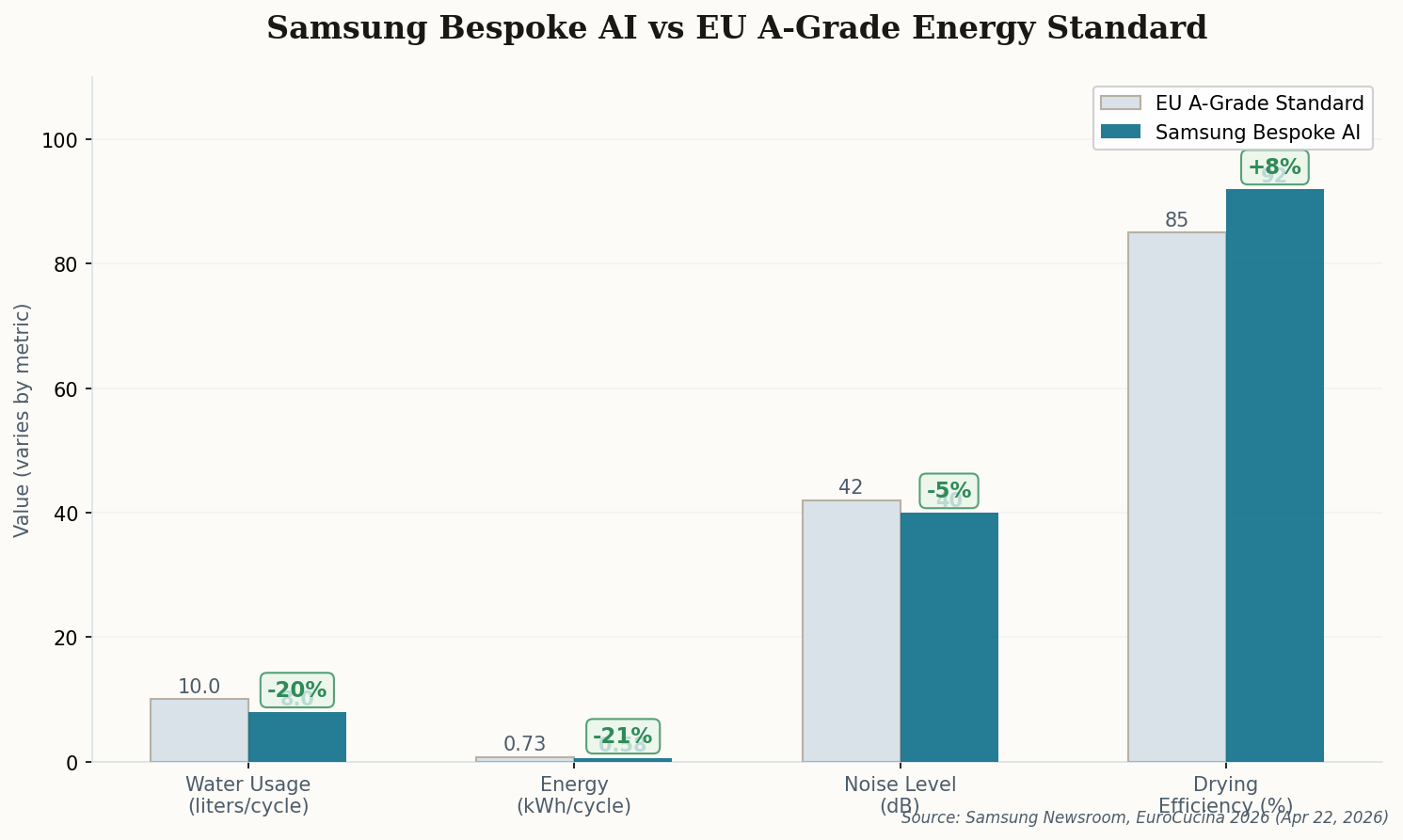
Samsung's new Bespoke AI dishwasher doesn't just meet the European A-grade energy standard—it beats it by 20%. In a continent where energy bills have been a kitchen-table political issue since 2022, that's not a spec. It's a sales pitch.

The AI Wash system measures both the weight and soil level of each load, then optimizes water volume, temperature, and detergent activation in real time. The Auto Open Door feature—cracking the door automatically post-cycle to vent steam—is being standardized across their premium line. It's a small mechanical touch that eliminates the most common complaint about dishwashers: opening the door to a cloud of wet heat and still-damp plates.

Bar chart comparing Samsung Bespoke AI dishwasher performance against EU A-Grade standards across water usage, energy consumption, noise level, and drying efficiency
Samsung Bespoke AI vs. EU A-Grade Energy Standard across four key metrics. Lower is better for water, energy, and noise; higher is better for drying.

Samsung is reading the room. In a market where tariffs are pushing prices up and consumers are scrutinizing every purchase, "this machine pays for itself in energy savings" is the most compelling argument you can make. The efficiency arms race isn't about saving the planet—it's about surviving the showroom floor.

Macro photography of a turbidity sensor with AI neural network patterns overlaid on water droplets
06

LG Spent Nine Years Rebuilding the Dishwasher From Scratch

LG's first complete dishwasher platform redesign since 2017 debuted at EuroCucina, and it's built around one core bet: AI should do the thinking. The AI SenseClean system uses turbidity sensors and machine learning to select from 32 possible cycle combinations, matching cleaning intensity to actual soil levels in real time.

The one-hour wash-and-dry cycle is the consumer-facing headline, but the engineering story is Dynamic Heat Dry+. Instead of a traditional heating element that blasts energy, it uses a humidity-absorbing system that generates heat as a byproduct of moisture removal. The result: bone-dry dishes faster, with less energy. It's thermodynamics doing double duty.

Nine years is a long development cycle by consumer electronics standards. LG is clearly betting that the AI-powered dishwasher isn't a gimmick—it's the new baseline. When your turbidity sensor can read a casserole dish differently from a wine glass and adjust in real time, the pre-rinse debate isn't a debate anymore. The machine just handles it.

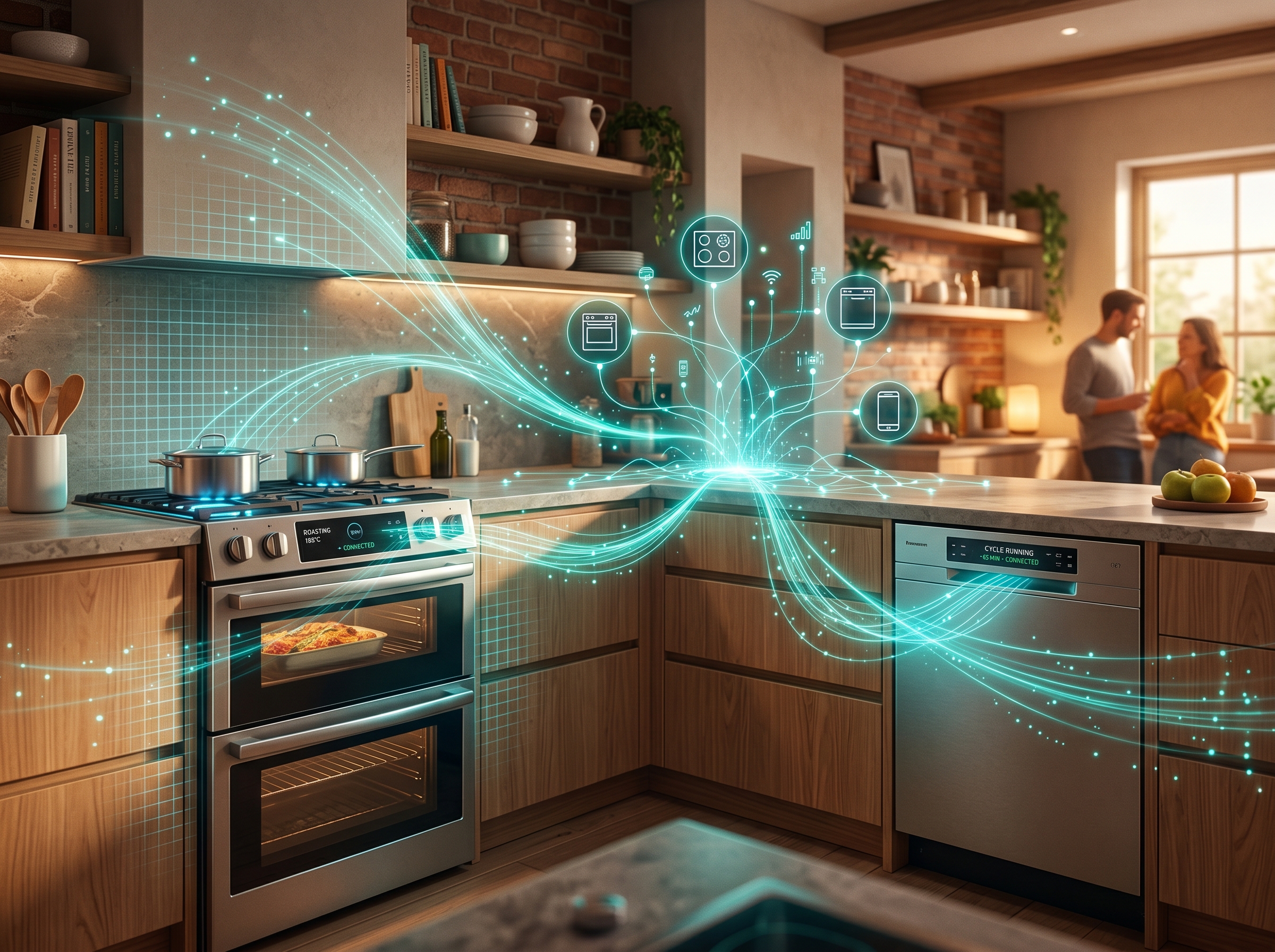
Connected kitchen ecosystem with oven, cooktop, and dishwasher linked by flowing digital light streams
07

Miele Thinks Your Dishwasher Should Know What You Cooked

Miele introduced something genuinely novel at EuroCucina: the CulinaryCoach AI, which connects the dishwasher to the oven and cooktop. Cook a roast at 200°C? The dishwasher knows, and it preselects the heavy-soil cycle before you even load the pan. Sauté some vegetables? Light cycle, lower temperature. The appliance ecosystem is making decisions based on your cooking, not your guesses.

The updated Auto​Dos system with its integrated PowerDisk now uses 15% more concentrated detergent, which means fewer refills and more precise dosing. The new designer finishes—Pearl Beige and Obsidian Black Matt—signal that Miele sees the dishwasher panel as a design element, not a utility slab.

"The dishwasher is no longer a standalone box; it is the final step in a digital culinary journey." That quote from Miele's press team is doing a lot of work, but it's not wrong. The vision of a kitchen where every appliance talks to every other appliance has been promised for a decade. Miele's execution—linking the actual cooking activity to the actual cleaning requirement—is the first version that makes practical sense.

The Quiet Revolution in Your Kitchen

This week in Milan made one thing clear: the dishwasher isn't a dumb box anymore. It's an AI-powered, sensor-laden, ecosystem-connected appliance that—if you let it—is actually better at washing dishes than you are at preparing them for washing. The irony is rich. Meanwhile, tariffs are pushing prices up just as manufacturers are pushing capability forward. If you're in the market, the window before June price hikes is narrowing. And for the love of your glassware, stop rinsing.

Share X LinkedIn