Pet Care · Beamer Edition

The Nail That Holds It All Together

Your dog's nails aren't cosmetic. They're load-bearing infrastructure. Here's what the latest veterinary science says you're probably getting wrong—and the surprisingly gentle fixes that actually work.

Listen
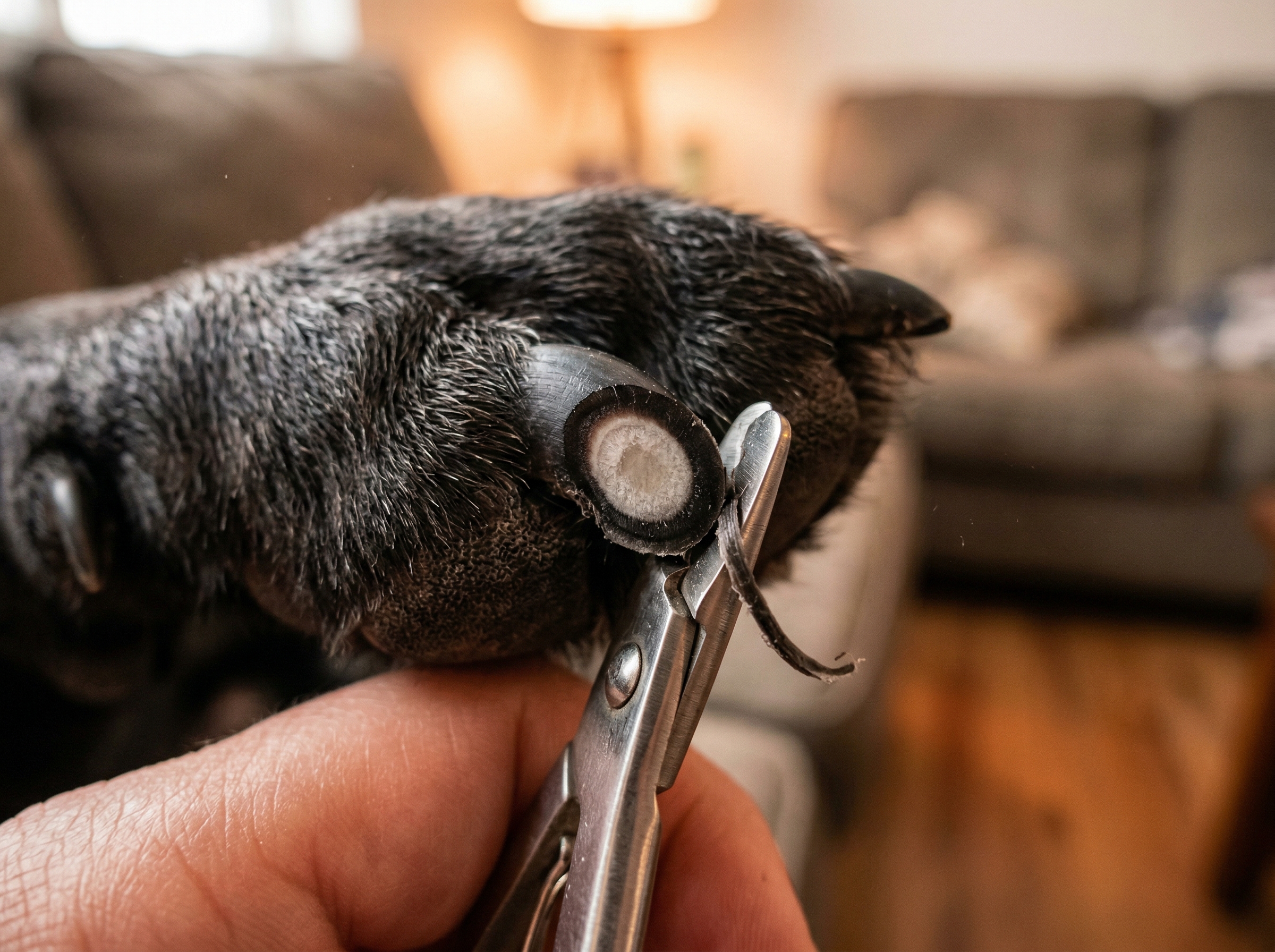
Close-up of a dark dog nail being carefully trimmed, showing the chalky cross-section
01

The Chalky Circle That Ends the Guessing Game

If you've ever stared at your dog's black nails and thought "I have absolutely no idea where the quick is," you're not alone—and you're not wrong to be nervous. Dark nails are the single biggest reason owners skip home trims entirely. But PetMD's latest guide lays out a technique so simple it should have been standard advice a decade ago.

The method: trim in tiny 1mm slices at a 45-degree angle. After each cut, inspect the cross-section. You're looking for a small, chalky white circle to appear in the center of the nail. That's your early warning system. Once the center turns from chalky to moist—a dark, wet-looking dot—you're within 1-2mm of the quick. Stop there.
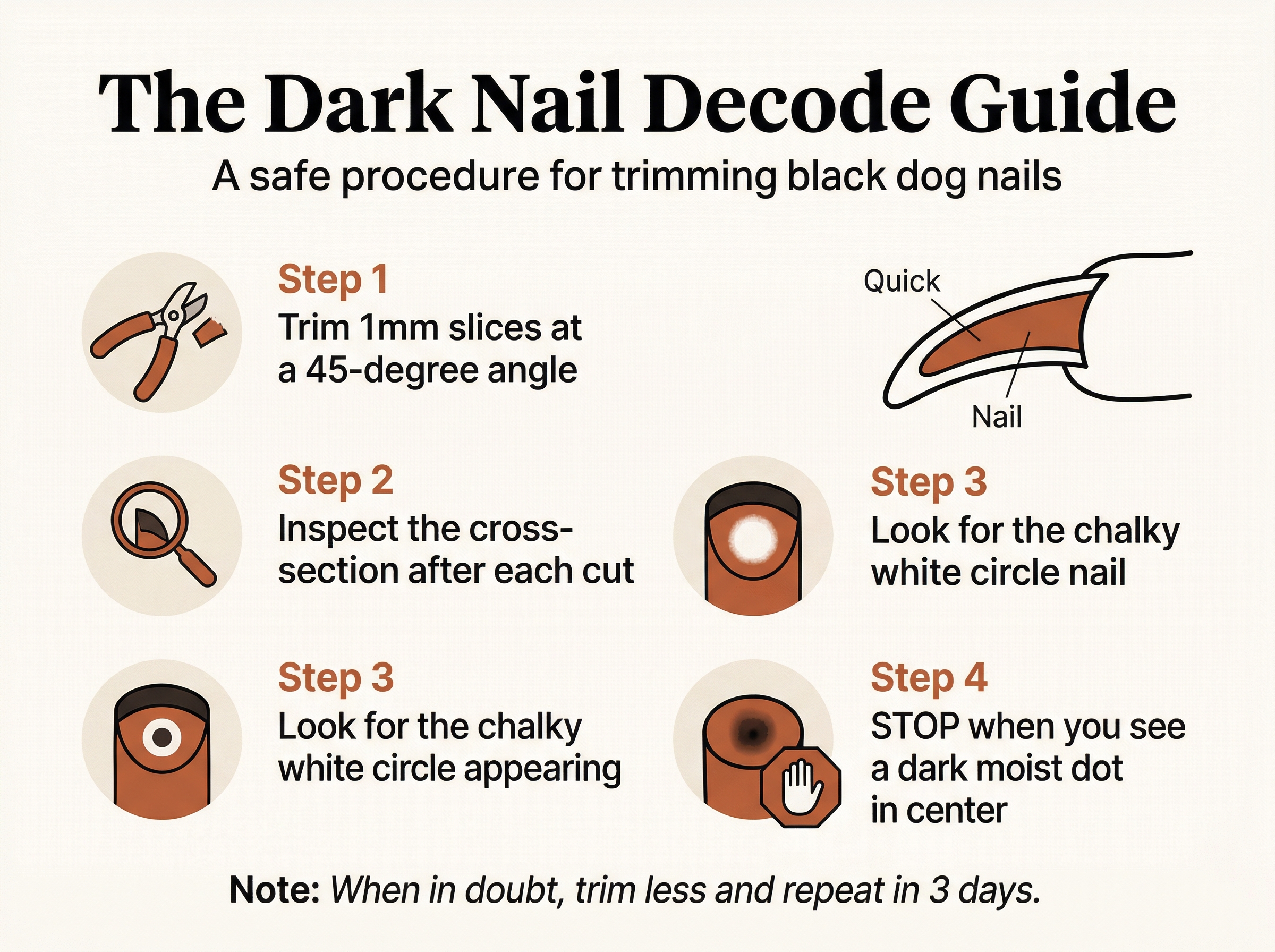
Infographic: The Dark Nail Decode Guide showing 4 steps for safely trimming black dog nails
The Dark Nail Decode Guide — A step-by-step visual for the chalky circle technique. Generated with Nano Banana 2.0

This isn't some theoretical veterinary advice. It's a physical signal built right into the nail's anatomy. The chalky appearance comes from the dry, keratinized layers giving way to the living tissue underneath. Once you've seen it once, the fear evaporates. And for Beamer's dark nails specifically? This is the difference between a confident trim and a $200 emergency vet visit for a nail that wouldn't stop bleeding.

The rule: "Shave, don't clip." Think of it as whittling, not cutting. Each thin slice gives you a new cross-section to read.

A happy dog resting its chin on a padded platform during a cooperative nail trimming session
02

Consent-Based Grooming: Your Dog Gets a Vote Now

The old way: pin the dog down, clip fast, hope for the best. The new way, according to Fear Free Pets' 2026 cooperative care guidelines: let the dog tell you when they're ready. It sounds soft. It's actually faster.

The framework centers on techniques like the "Chin Rest" and the "Bucket Game." In the chin rest, your dog places their chin on a padded surface—voluntarily. As long as the chin stays down, you trim. The moment they lift it, you stop. No struggle, no restraint, no cortisol spike that makes next time even harder. The Bucket Game works similarly: the dog stares at a bucket of treats to signal consent. Look away? Session's over.

Here's the part that sells it: Fear Free is also pushing "micro-sessions"—trimming just one nail per day. That's it. One nail, one treat, done. Over a two-week cycle, all nails get done, and the dog never crosses their stress threshold. For Beamer, who has 18 nails (don't forget the dewclaws), that's a pretty gentle rotation.

Key quote: "If the dog moves their paw away, we stop. This building of trust actually makes the process faster in the long run than forced restraint."

The counterintuitive truth: going slower eliminates the problem that makes everything slow in the first place—fear. Forced trims create dogs who fight harder next time. Consent-based trims create dogs who offer their paw.

Illustration showing how the quick recedes with consistent weekly trimming
03

The Quick Is Not Fixed—And That Changes Everything

Most owners treat the quick like a fixed boundary—a line you dare not cross. WSU's College of Veterinary Medicine wants you to know it's not a wall. It's a river. And it flows in whichever direction you encourage it.

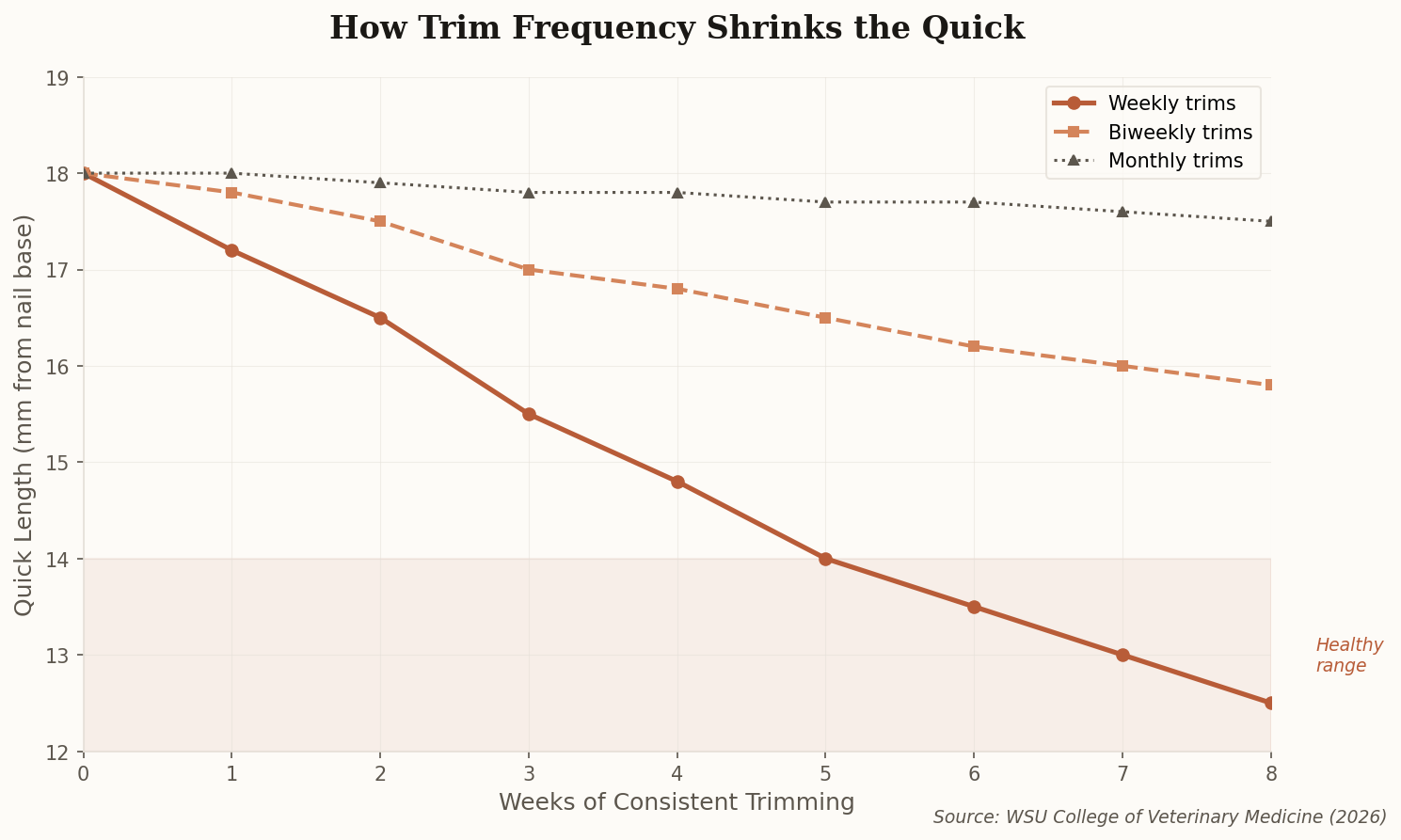
The quick—the blood vessel inside the nail—grows with the nail. Let nails get long, and the quick extends right along with them, making it impossible to trim back to a healthy length without causing bleeding. But here's the critical insight from WSU's 2026 guidance: trimming small amounts every 7 days forces the quick to retreat toward the paw. Consistency, not depth, is what matters.

Line chart illustrating how weekly trimming causes the quick to recede over 8 weeks, compared to biweekly and monthly trimming
Weekly trims drive the quickest recession. Consistent weekly trimming can transform talons into healthy nails over roughly 8 weeks. Illustrative model based on WSU veterinary guidelines.

This is huge for rescue dogs or any dog whose nails have been neglected. You don't need to solve the problem in one terrifying session. You solve it over 8 weeks of gentle, tiny trims. The biology does the rest. WSU's protocol: trim just enough to avoid the quick each week, and the quick will slowly pull back on its own.

Bottom line: "Frequency is more important than depth. Weekly trims are the only way to fix a long-term overgrowth issue."

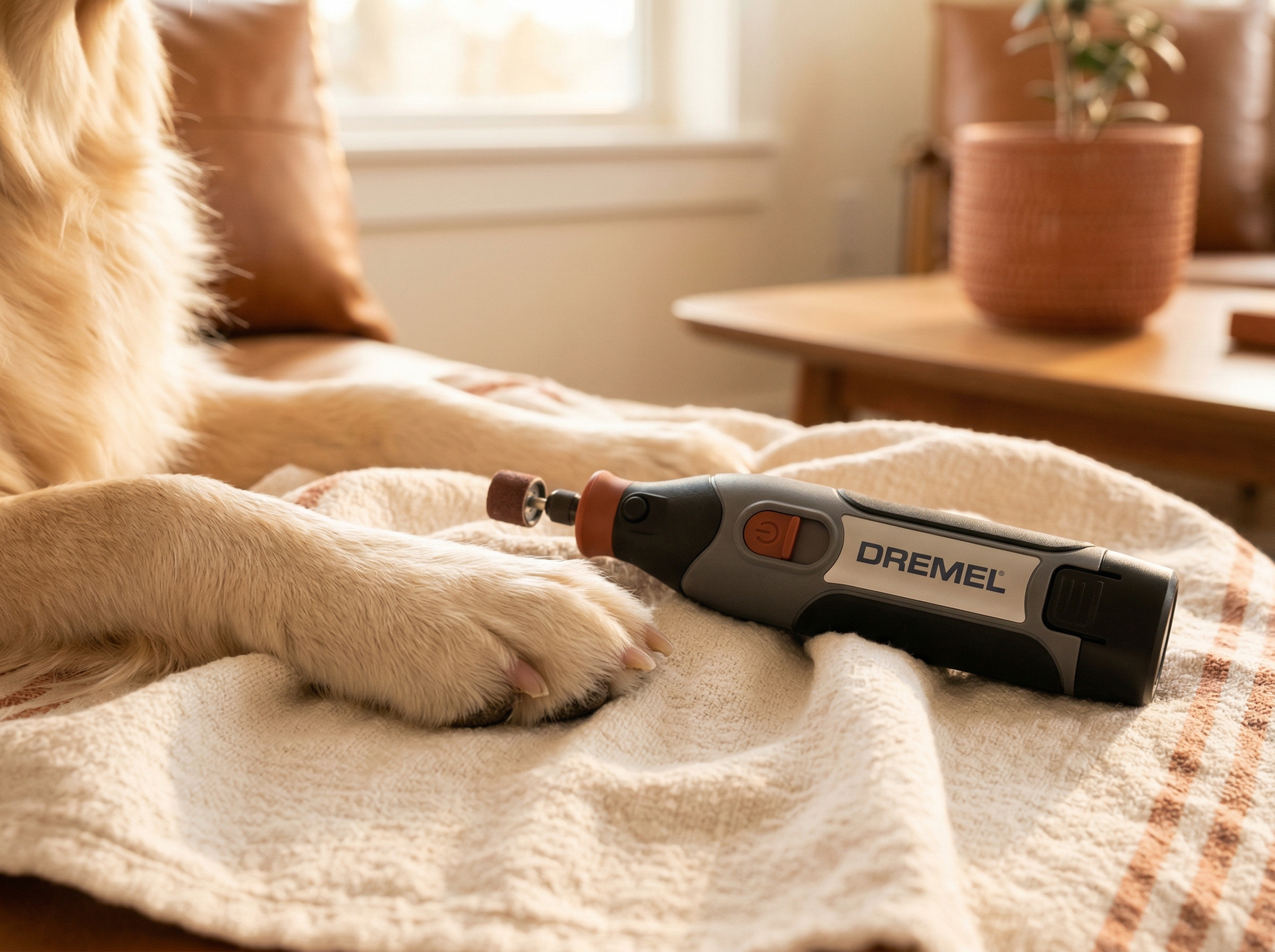
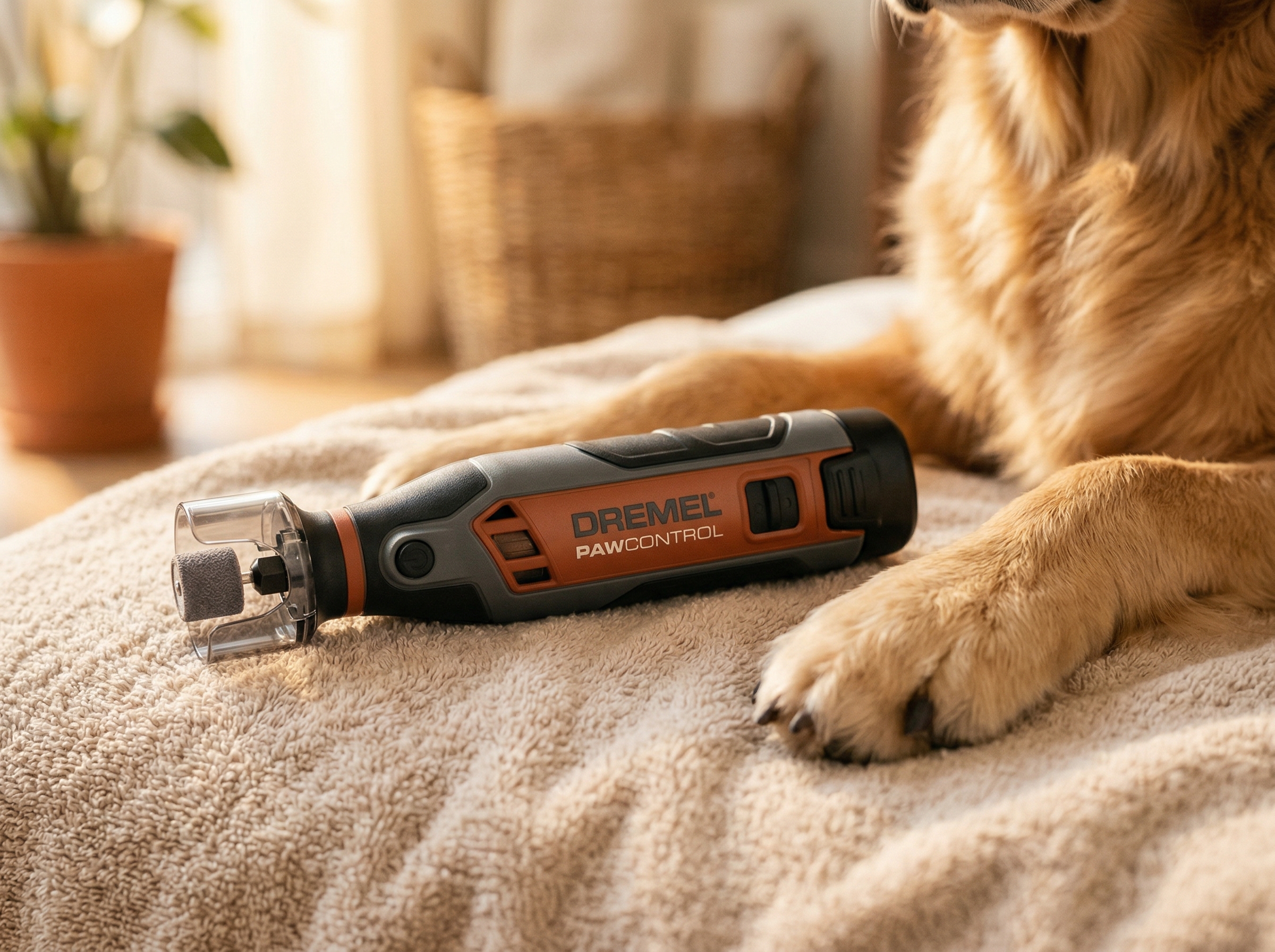
A cordless Dremel nail grinder resting on a soft towel next to a relaxed dog paw
04

The Dremel Grinder Won the Tool War—Here's Why

The Dremel 7760-PGK PawControl keeps its crown as the tool reviewers recommend most. The Spruce Pets and Wirecutter both point to the same three reasons: the 45-degree nail guard that prevents hair catches, the new ultra-quiet motor, and the cordless USB-rechargeable design that lets you groom wherever your dog is most comfortable.

The noise issue is worth dwelling on. Many dogs who seem to fear clippers are actually reacting to the high-pitched whine of older grinders. Dremel's 2025 motor redesign specifically targeted that frequency range. Quieter tool, calmer dog, smoother session.

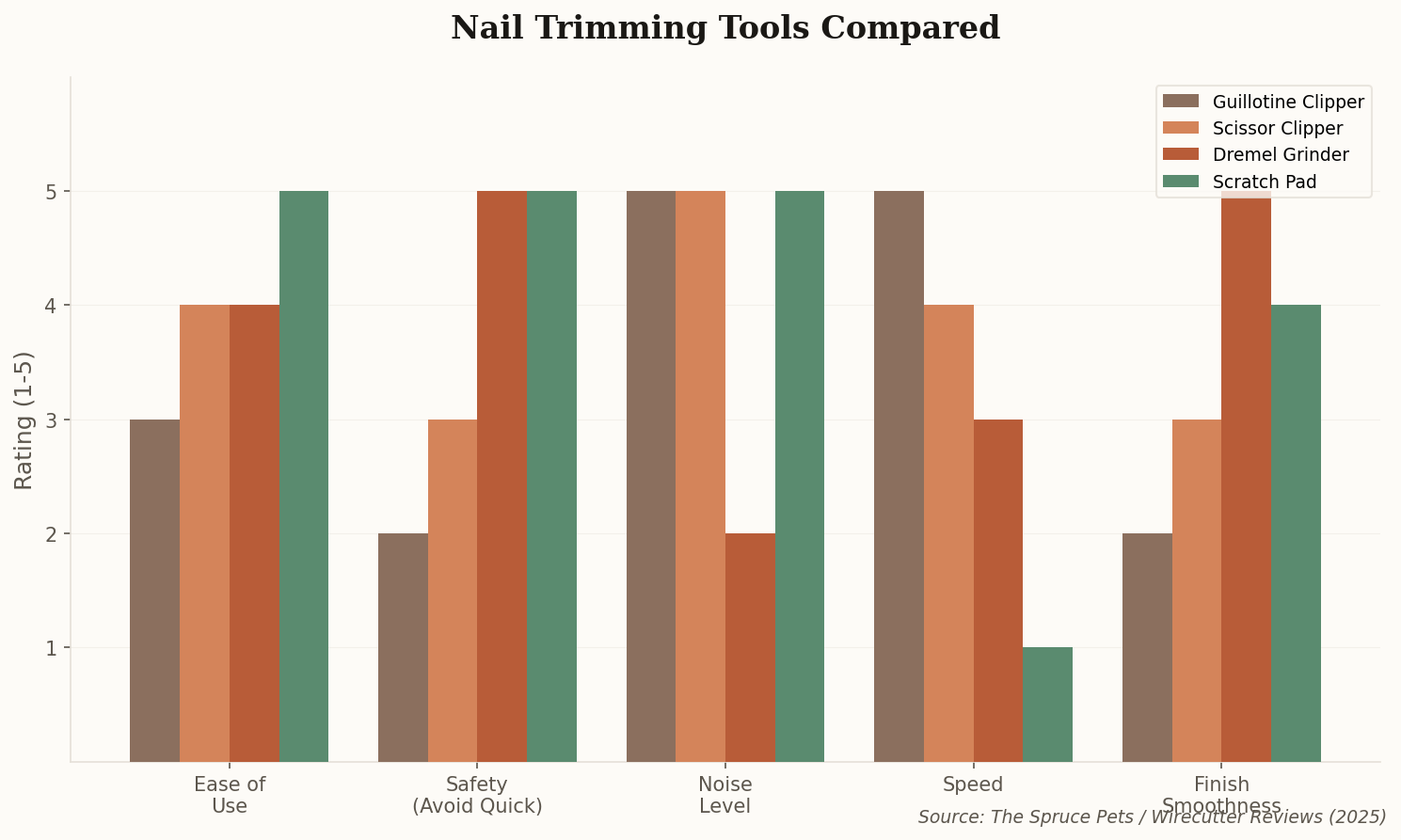
Grouped bar chart comparing four nail trimming tools across ease of use, safety, noise level, speed, and finish smoothness
Grinders excel at safety and finish quality. Scratch pads win on ease and noise but sacrifice speed. There is no perfect tool—choose based on your dog's temperament.

But the real insight from the reviews isn't about which tool is "best"—it's about matching the tool to the dog. Anxious dogs may do better starting with a scratch pad (zero noise, feels like play). Confident dogs can handle a grinder right away. And guillotine clippers? They're fast, but they're unforgiving if your angle is off. For Beamer, the grinder's gradual approach pairs perfectly with the chalky-circle technique from Section 01.

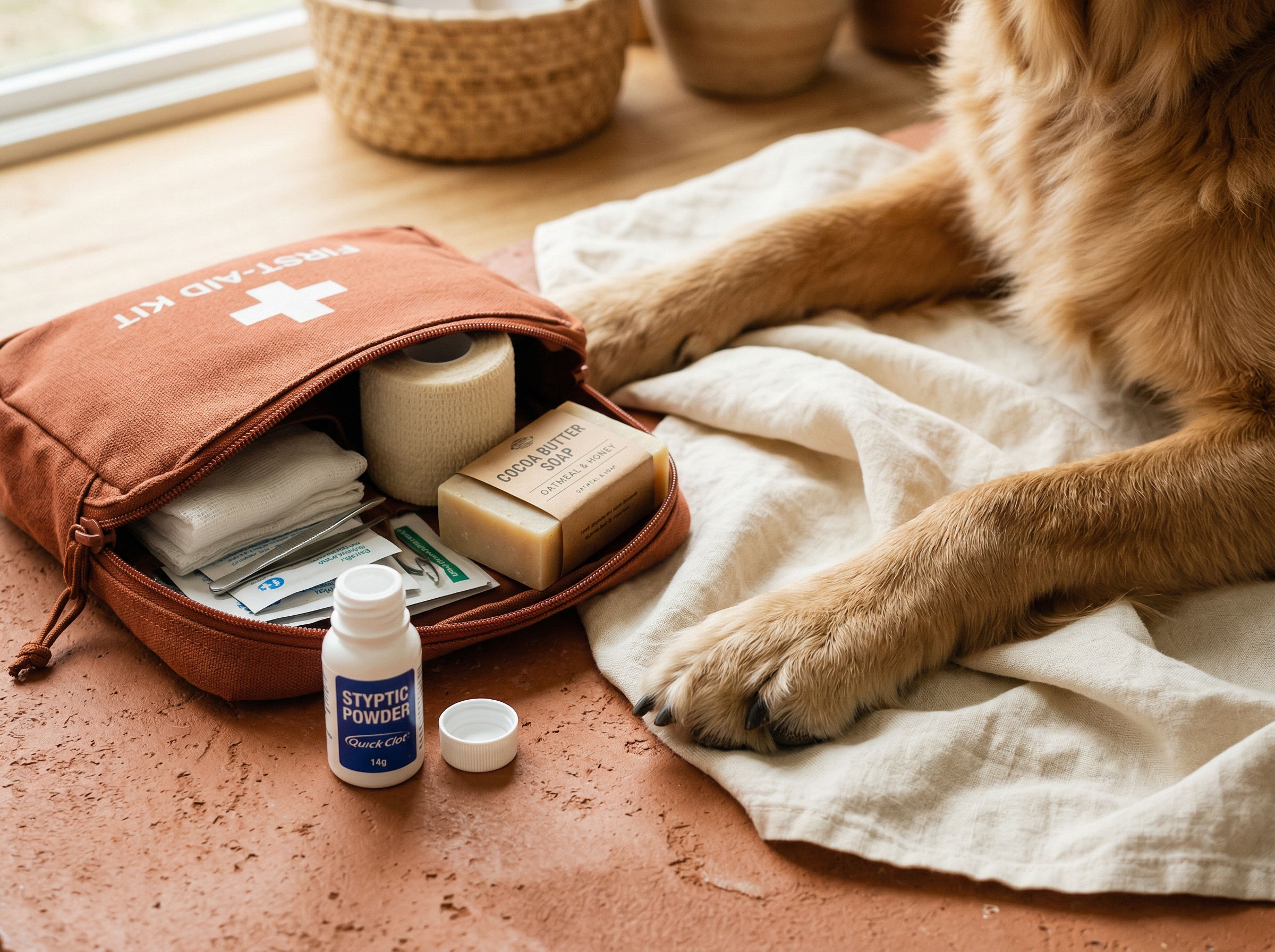
A small first-aid kit with styptic powder and soap, arranged next to a dog's paw
05

You Hit the Quick. Now What? (Don't Panic.)

It happens. You clipped one millimeter too far, and now there's blood on the towel. The Veterinary Emergency Group (VEG) wants you to know one thing first: your panic is more dangerous than the bleed.

The protocol is deceptively simple. First, do not wipe away the blood—it's forming a clot, and wiping resets the clock. Apply styptic powder (like Kwik Stop) by pressing, not dabbing. No styptic powder? Push the bleeding nail gently into a dry bar of Ivory soap. The soap creates a physical plug that stops the flow immediately. Kitchen alternatives: cornstarch or baking soda packed directly onto the nail tip.

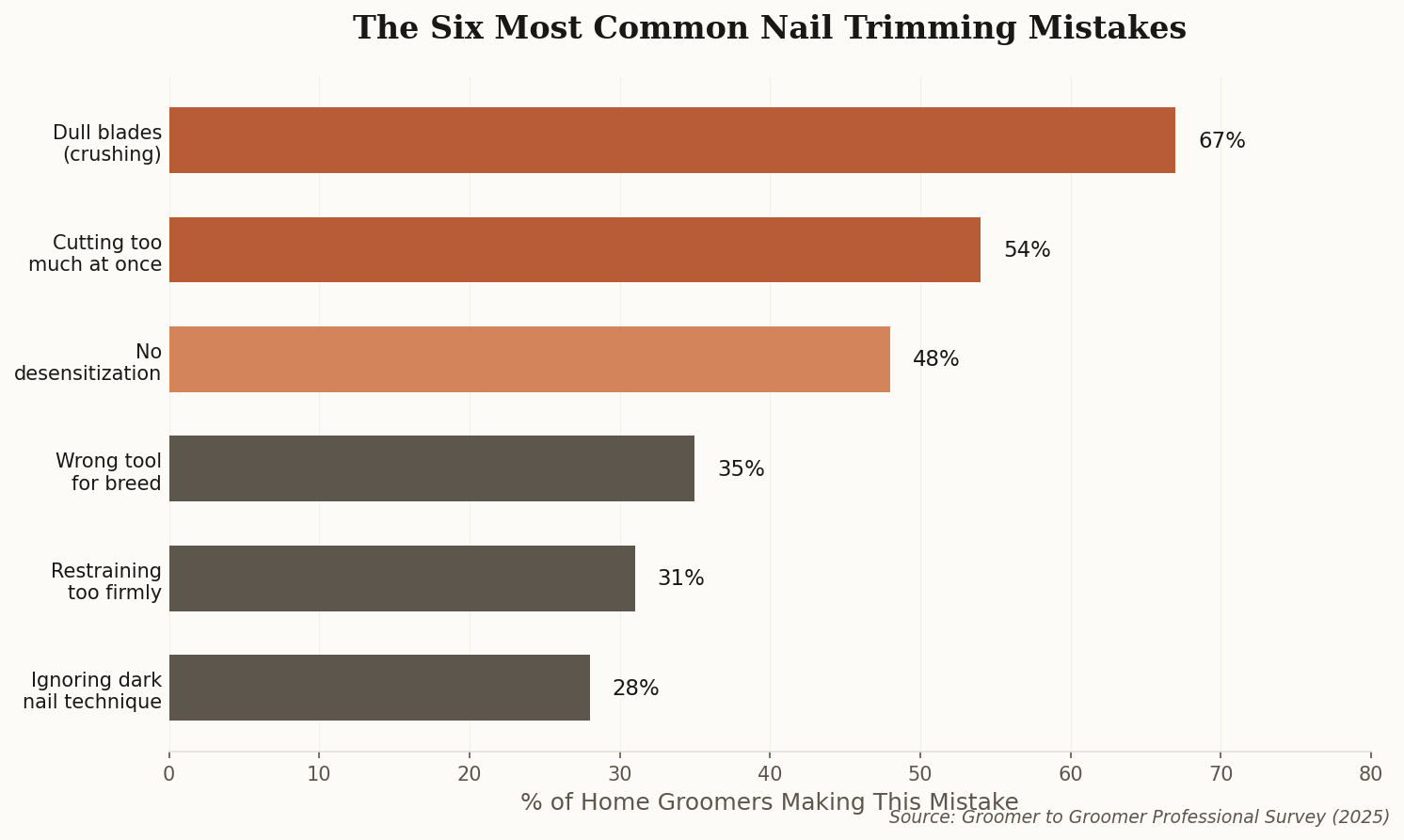
Horizontal bar chart showing the six most common nail trimming mistakes, with dull blades being the most frequent
Dull blades are the leading cause of nail splitting and the "pinch" sensation dogs learn to fear. A simple paper test can tell you if your clippers need replacing.

But here's what VEG emphasizes most: the emotional aftercare. Give a "jackpot" treat immediately. Three or four high-value rewards in rapid succession. You're not rewarding the accident—you're resetting the dog's emotional memory of the session. If the last thing Beamer remembers is a handful of chicken, next trim goes easier. If the last thing he remembers is your panicked voice? Next trim becomes a wrestling match.

VEG's golden rule: "Panic is contagious. If you nick the quick, stay silent, apply the powder, and give a jackpot treat to reset the dog's mood."

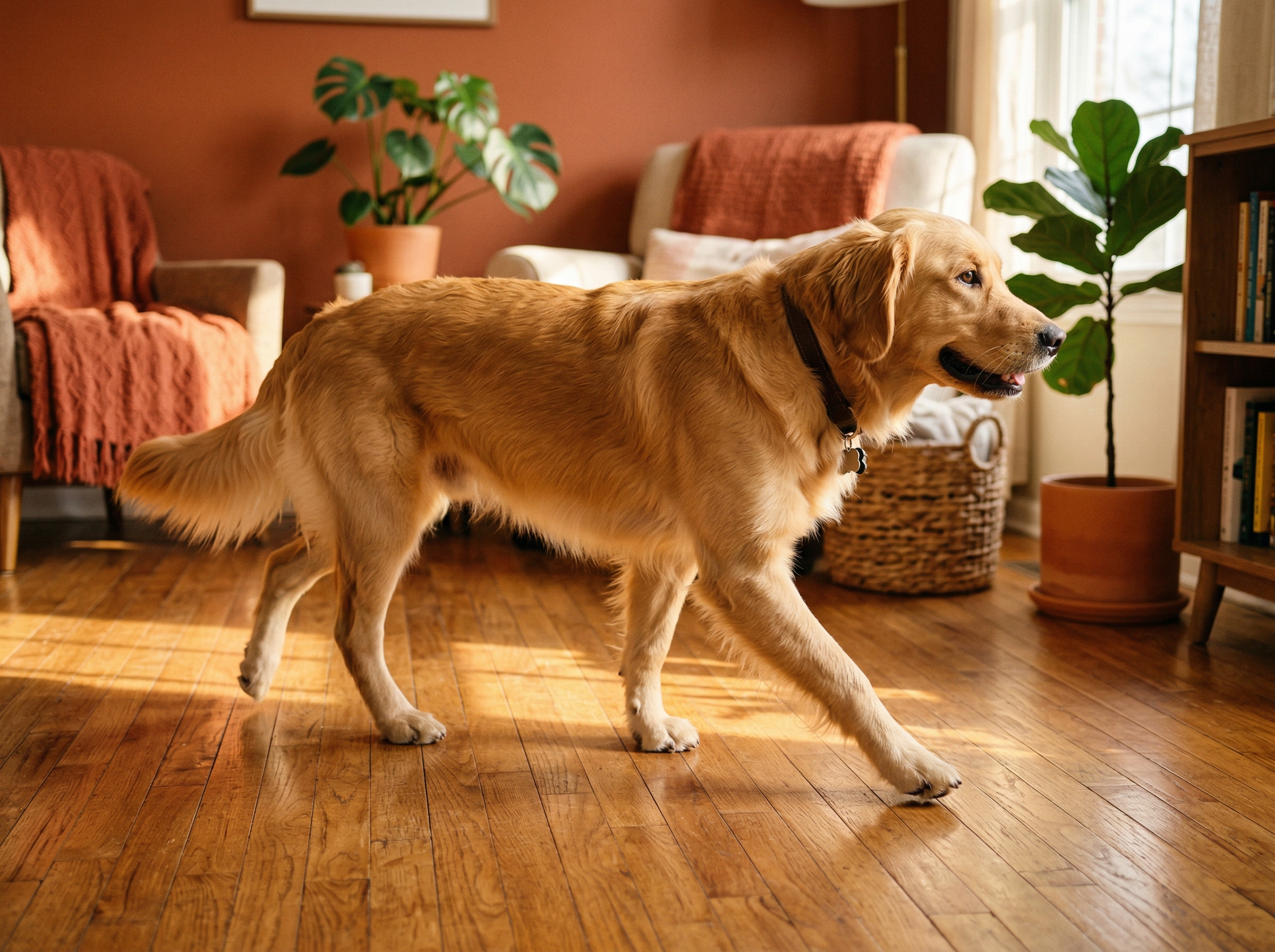
A dog walking confidently on a hardwood floor with well-trimmed nails visible
06

Click, Click, Click: Your Dog's Nails Are Wrecking Their Joints

This is the one that reframes the entire conversation. Long nails aren't just ugly. They're an orthopedic problem. The AVMA and VCA Animal Hospitals published 2025 guidelines confirming what biomechanics researchers have been saying for years: overgrown nails are a leading contributor to early-onset osteoarthritis in senior dogs.

The mechanics are straightforward. When nails touch the ground before the paw pad does, they push the toes upward. This shifts the dog's weight backward onto the metacarpals—think of it like being forced to walk on your heels all day. Over months and years, this chronic misalignment strains the hocks, the stifles, and eventually the hips. By the time you notice a limp, the damage is structural.

VCA's recommendation is the simplest diagnostic you'll ever perform: the floor test. Walk your dog across a hard surface. If you hear clicking, the nails are already long enough to alter their gait. That sound isn't just annoying—it's the sound of skeletal stress accumulating, one step at a time.

The reframe: "Trimming nails is no longer just hygiene; it is a primary preventative measure for long-term orthopedic health." This isn't grooming. It's medicine.

The Quiet Kind of Care

The best thing about all of this? None of it is hard. One nail a day. A thin slice at a time. A treat that says "you did great." The hardest part of trimming Beamer's nails was never the technique—it was believing that going slower could actually get you there faster. The science is in. Trust the process. And if you hear clicking on the kitchen floor tonight, you know what to do.

Share X LinkedIn