Photography History

The Red Dot Century

How a wheezing engineer's prototype became the most revered camera on Earth — and the century-long gamble that made it possible.

Listen
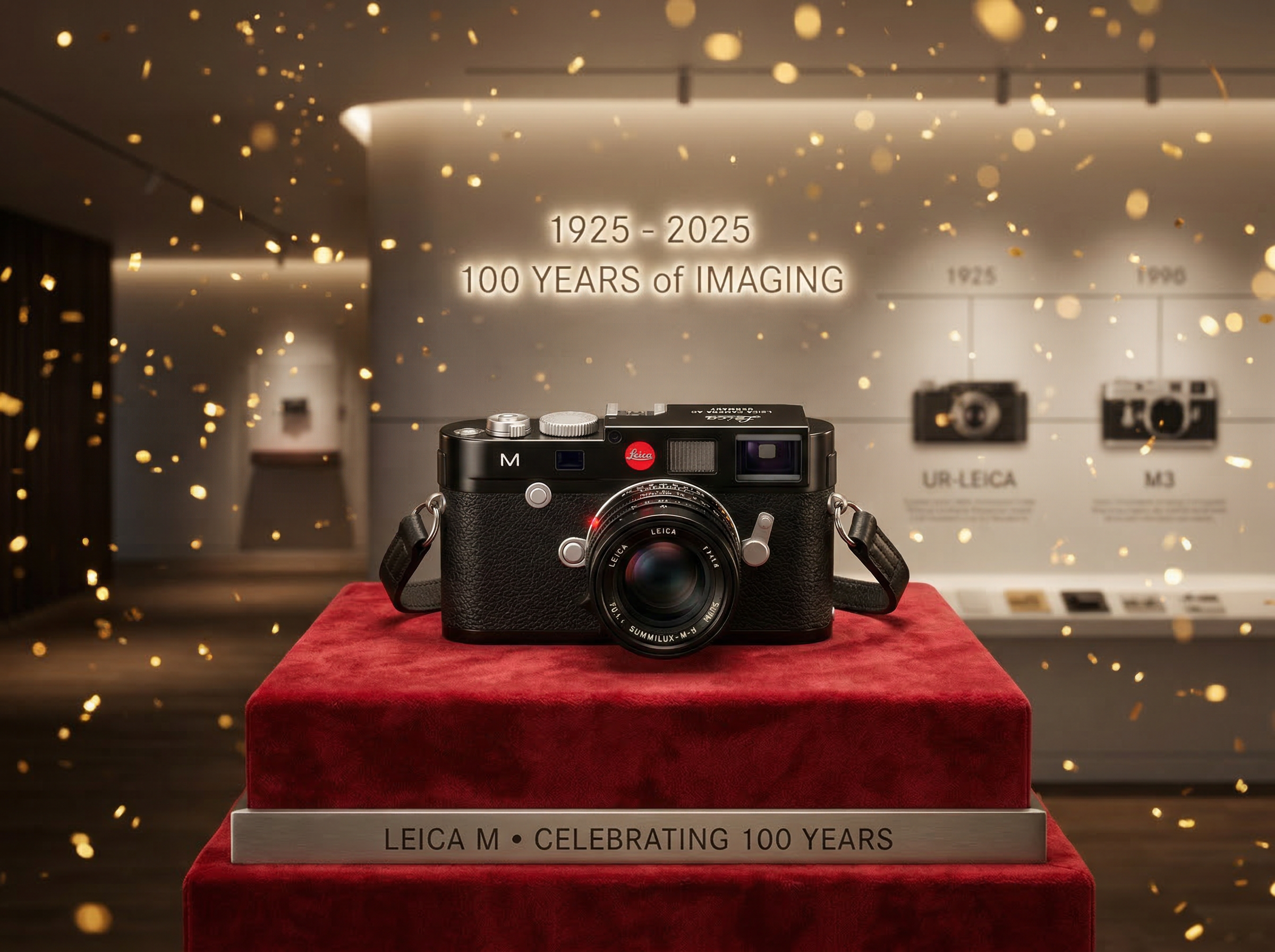
A celebratory display of the millionth Leica M camera on a red velvet pedestal
01

One Million Ms and Counting

In June 2025, a machinist in Leitz-Park, Wetzlar engraved serial number 6,000,000 onto a top plate. The one-millionth M-system camera rolled off the line exactly 71 years after the M3 inaugurated the bayonet-mount rangefinder. That's roughly 14,000 cameras per year, each hand-assembled with tolerances of 0.01mm. In an industry that ships millions of units monthly, Leica treats every body like a numbered print.

The centenary wasn't just ceremonial. Leica Camera AG reported record revenue of €596 million for fiscal year 2024/25 — up 7.6% year-over-year and the fourth consecutive record. The company that nearly died in 2005 now operates as the camera industry's most profitable brand per unit. The "Centenary Set," a limited-edition kit pairing the M11 with a specially coated Summilux 35mm, sold out within hours at €22,000 a pop.

Meanwhile, Leica quietly ended its partnership with Sharp and launched the Leitz Phone powered by Xiaomi hardware in February 2026. It's a signal: Leica's color science and brand aren't confined to brass and glass anymore. They're a platform.
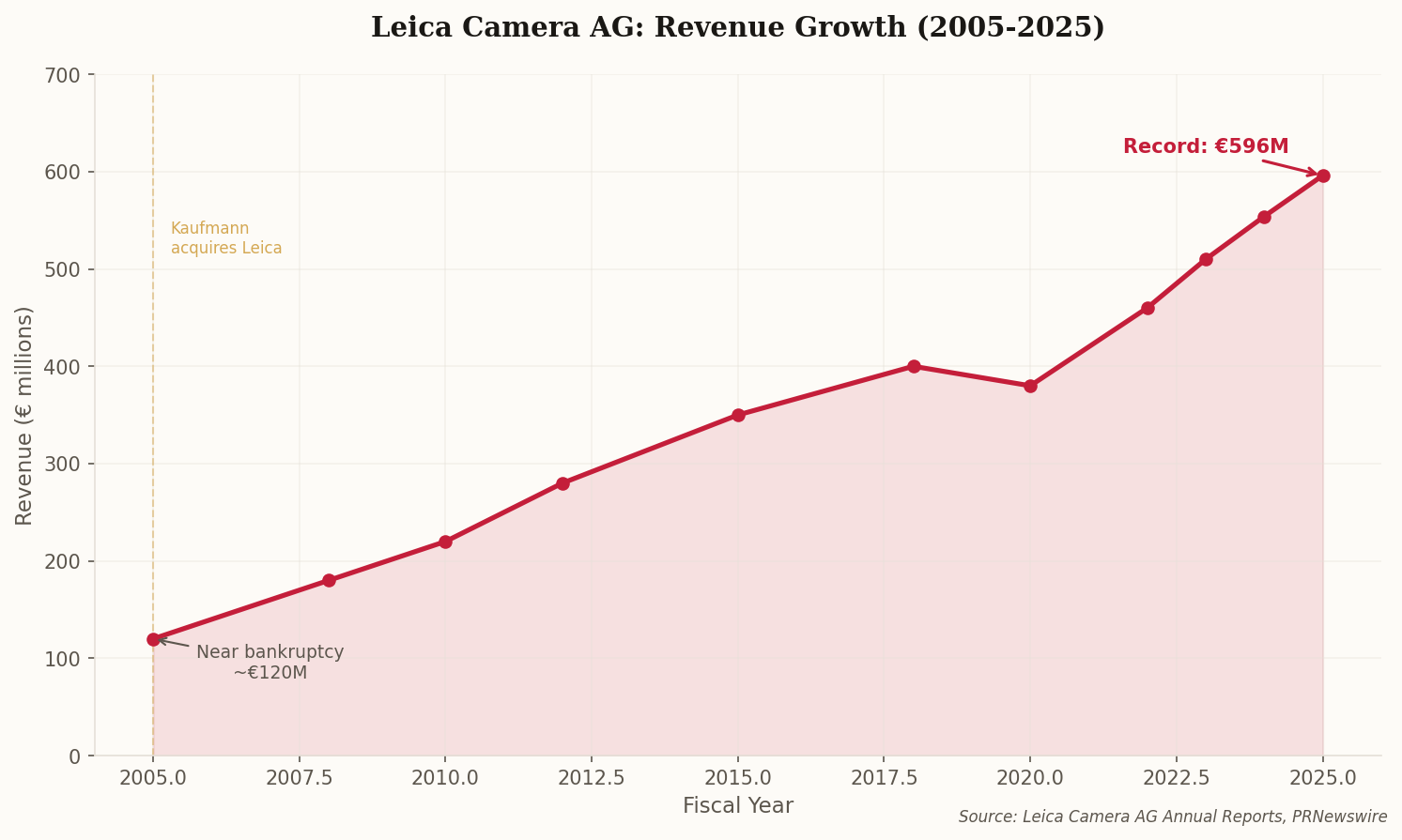
Line chart showing Leica Camera AG revenue growth from approximately 120 million euros in 2005 to a record 596 million euros in 2025
From near-bankruptcy to record revenue: Leica's financial trajectory under Dr. Andreas Kaufmann's leadership, 2005-2025.
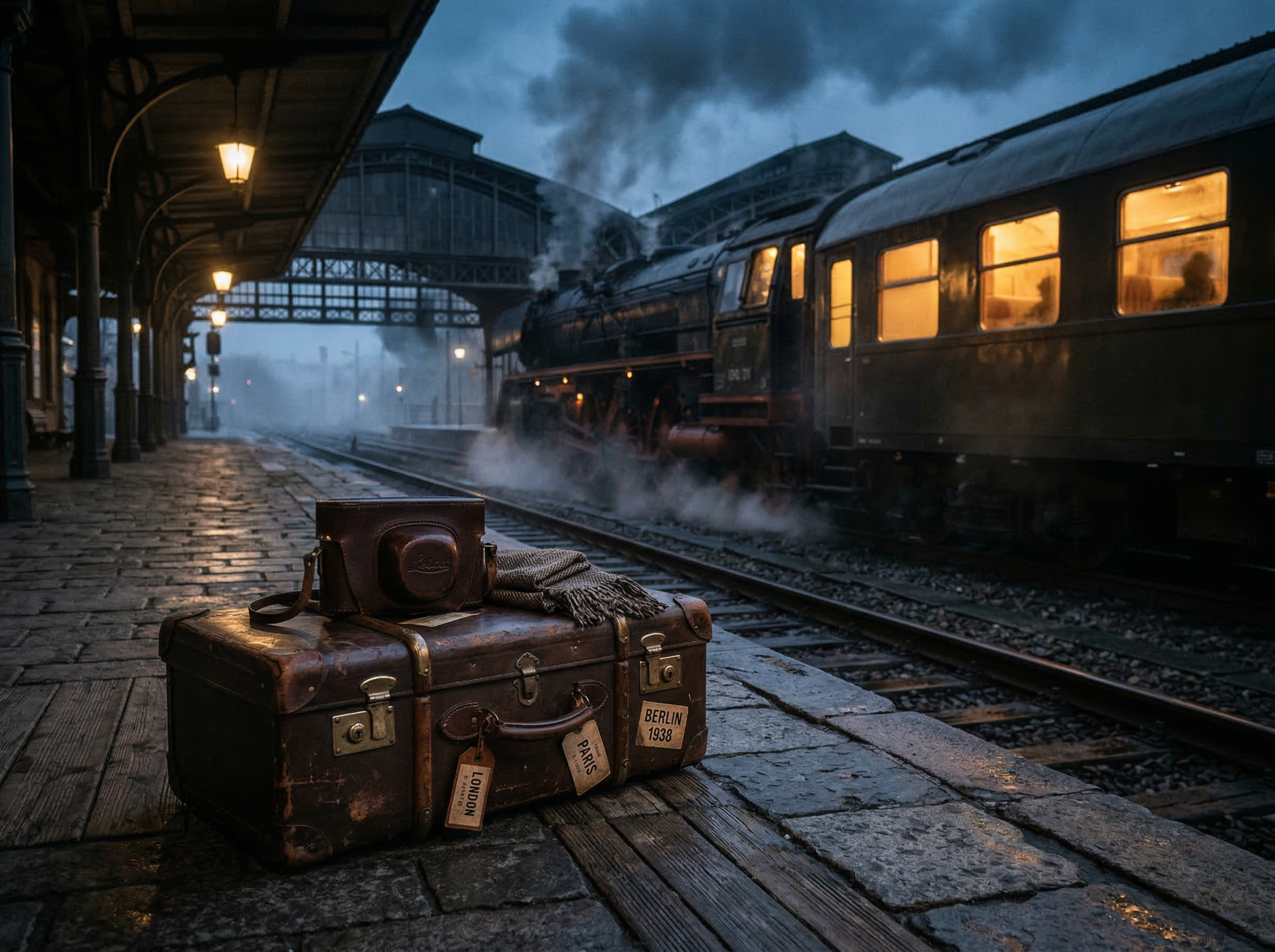
A moody 1930s train platform at dusk with a leather suitcase and Leica camera case
02

The Leica Freedom Train

Before Leica was a luxury brand, it was a lifeline. Beginning in 1933, Ernst Leitz II quietly orchestrated one of the most remarkable corporate rescue operations of the Nazi era. He "assigned" Jewish employees and their families to Leica's overseas offices in New York, London, and Hong Kong — fabricating business justifications for transfers that were, in reality, escapes from the Holocaust.

Between 200 and 300 people made it out through what historians later called the "Leica Freedom Train." Many arrived in New York with a parting gift: a Leica camera. It wasn't sentimental — it was practical. A Leica was a liquid asset, worth enough to fund a fresh start, or a tool to build a new career in photography.

The cost of courage: Leitz's daughter, Elsie Kuehn-Leitz, was imprisoned by the Gestapo for helping Jewish women cross into Switzerland. The family kept the entire operation secret until the late 1990s, when historian Frank Dabba Smith uncovered the story.

The Freedom Train reframes everything we think about Leica. This isn't just a company that makes beautiful objects. It's a company whose founding family risked everything — imprisonment, execution, the destruction of their business — because they decided that making cameras didn't exempt them from being human. That moral seriousness is baked into the brand's DNA, whether today's luxury buyers know it or not.

Precision brass mechanical parts and gears on a workbench evoking early 20th century optical craftsmanship
03

Barnack's Gamble: The Asthmatic Who Invented 35mm

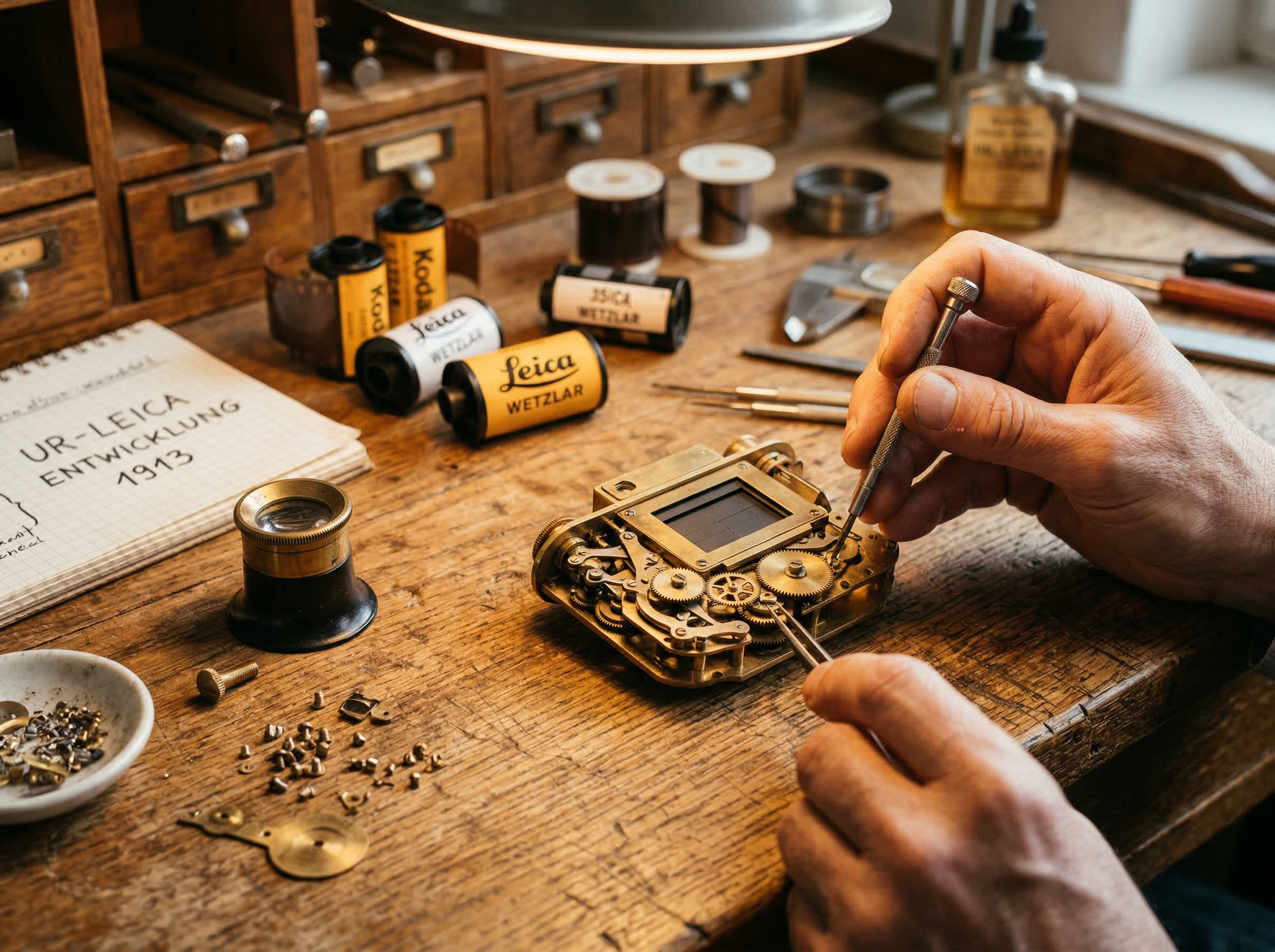
The entire history of modern photography hinges on one man's inability to breathe. Oskar Barnack suffered from severe asthma that made carrying the era's heavy glass-plate cameras physically impossible. So he did what engineers do: he built something smaller.

In 1913, working at the Ernst Leitz Optische Werke in Wetzlar, Barnack constructed the Ur-Leica — a pocket-sized prototype that used 35mm cinema film. His crucial insight was rotating the film horizontally and doubling the frame size from 18×24mm to 24×36mm. That 2:3 aspect ratio became "full frame." Every modern camera sensor that claims the label is paying homage to an asthmatic mechanic's workaround.

World War I shelved the project. When Barnack revived it in the early 1920s, Germany's economy was in ruins. Ernst Leitz II's advisors told him producing a consumer camera was suicidal. His response: "I hereby decide: we will take the risk." The Leica I debuted at the Leipzig Spring Fair in 1925 and sold out immediately.

Barnack didn't live to see what his camera became. He died of pneumonia in January 1936, complications from the asthma that started everything. He was 56. The last model he worked on, the Leica IIIa, pushed the shutter to 1/1000s — a benchmark for portable cameras of the era.

A classic chrome Leica M3 rangefinder camera on a stack of black-and-white photojournalism prints
04

The M3: The Camera That Made History Visible

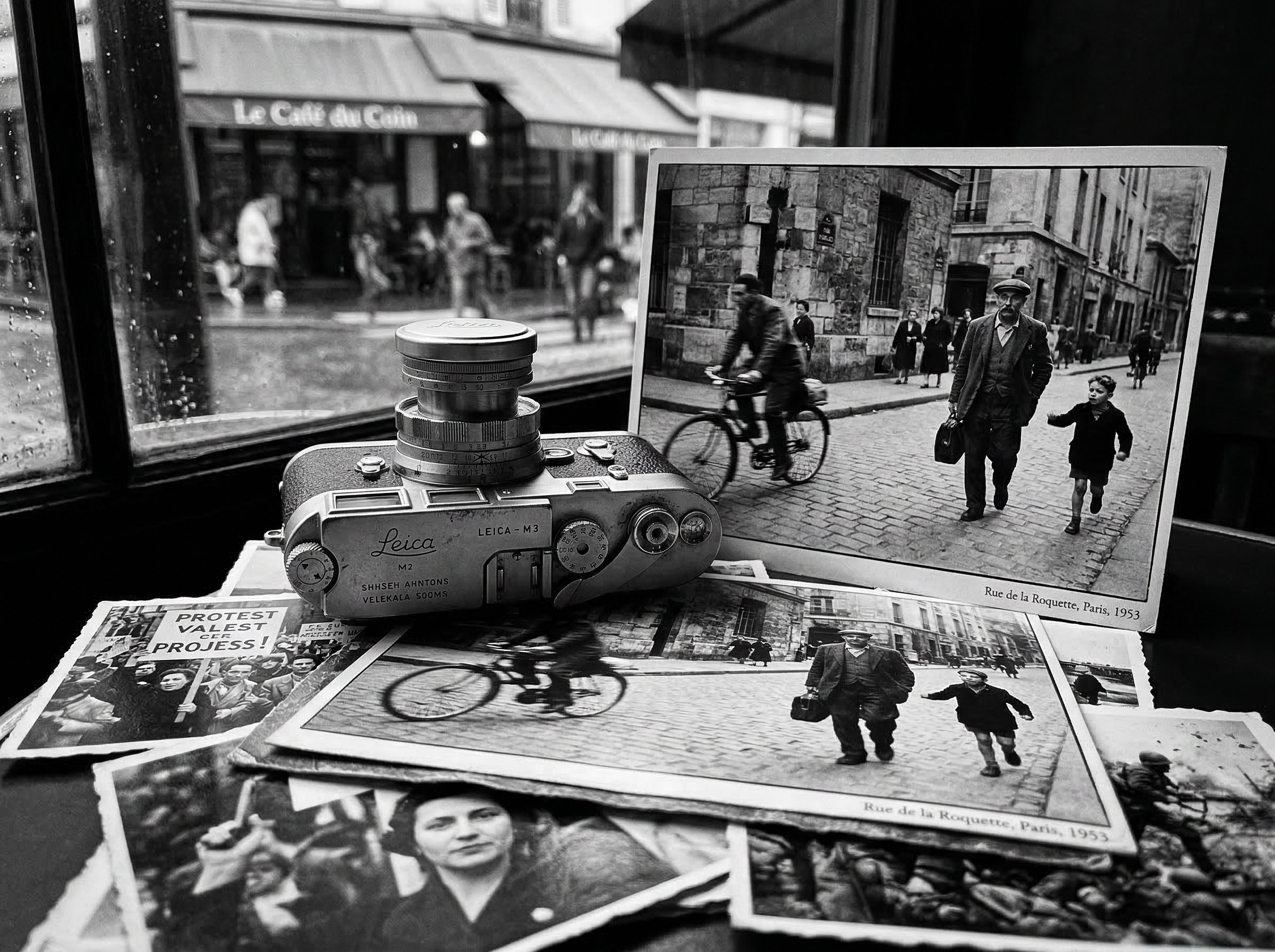
If Barnack invented 35mm photography, the Leica M3 perfected it. Launched in 1954, the M3 introduced the M-bayonet mount (instant lens changes), a combined rangefinder/viewfinder with bright-line frames, and a 0.91x magnification that made focusing feel like looking through a window. It was, and arguably remains, the greatest rangefinder camera ever built.

The M3 didn't just define a product category — it defined how the 20th century saw itself. Henri Cartier-Bresson used its whisper-quiet shutter to become invisible on the streets of Paris. Robert Capa had already proven what a Leica rangefinder could do in a war zone — from the Spanish Civil War to D-Day with his screw-mount Leica II, coining the photographer's creed: "If your pictures aren't good enough, you aren't close enough." The M3 and its successors carried that legacy forward, and from the jungles of Vietnam to the back alleys of New York, the M-system became the tool that turned photojournalism into an art form.

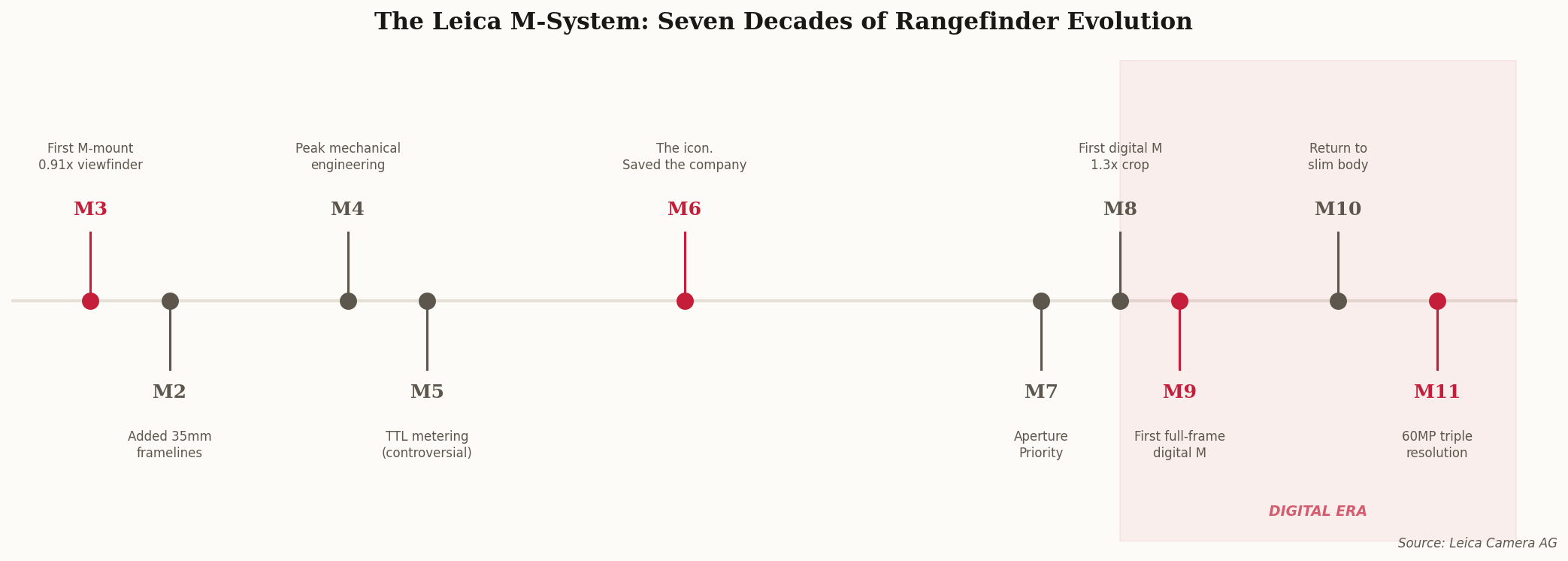
Timeline showing the evolution of the Leica M-series cameras from the M3 in 1954 through the M11 in 2022
Seven decades of M: From the mechanical perfection of the M3 to the 60-megapixel digital M11, the system has never broken continuity. An M-mount lens from 1954 still works on a camera made today.

The real miracle of the M-system isn't any single camera — it's the mount. Every lens made for the M3 in 1954 fits the M11 in 2022. That's 70 years of backward compatibility, a feat no other camera system can match. When you buy a Leica lens, you're buying a tool your grandchildren can use.

A Leica camera split-lit between cold shadow and warm golden light representing crisis and revival
05

Fifteen Million Euros from Oblivion

The M5 nearly killed the company. Launched in 1971 with a bloated body and TTL metering that nobody asked for, it was the first M-camera that Leica photographers actively rejected. Sales cratered. The M5 became shorthand for what happens when an engineering company tries to be clever instead of faithful.

The 1980s brought a reprieve: the M6, launched in 1984, stuffed a TTL meter into the classic slim body and became an instant icon. It saved the M-system from extinction. But the larger war was already lost. Nikon and Canon had won the SLR battle. Autofocus — a technology Leica famously dismissed — had become standard. The R-series SLRs, built in a desperate partnership with Minolta, couldn't compete.

By 2005, Leica posted a €15.5 million loss and was days from bankruptcy. The company that invented 35mm photography had dismissed digital as a "fad" and was hemorrhaging cash. Enter Dr. Andreas Kaufmann, an Austrian investor who acquired the company and executed one of the great corporate turnarounds of the century.

Kaufmann's insight was counterintuitive: instead of trying to compete on features, he repositioned Leica as a luxury lifestyle brand. He moved headquarters back to a stunning new campus in Wetzlar called Leitz-Park. He launched the L-Mount Alliance with Panasonic and Sigma. He greenlit the Leica Q — a full-frame compact with autofocus that became their best-selling camera. Revenue climbed from roughly €120 million to €596 million in 20 years.

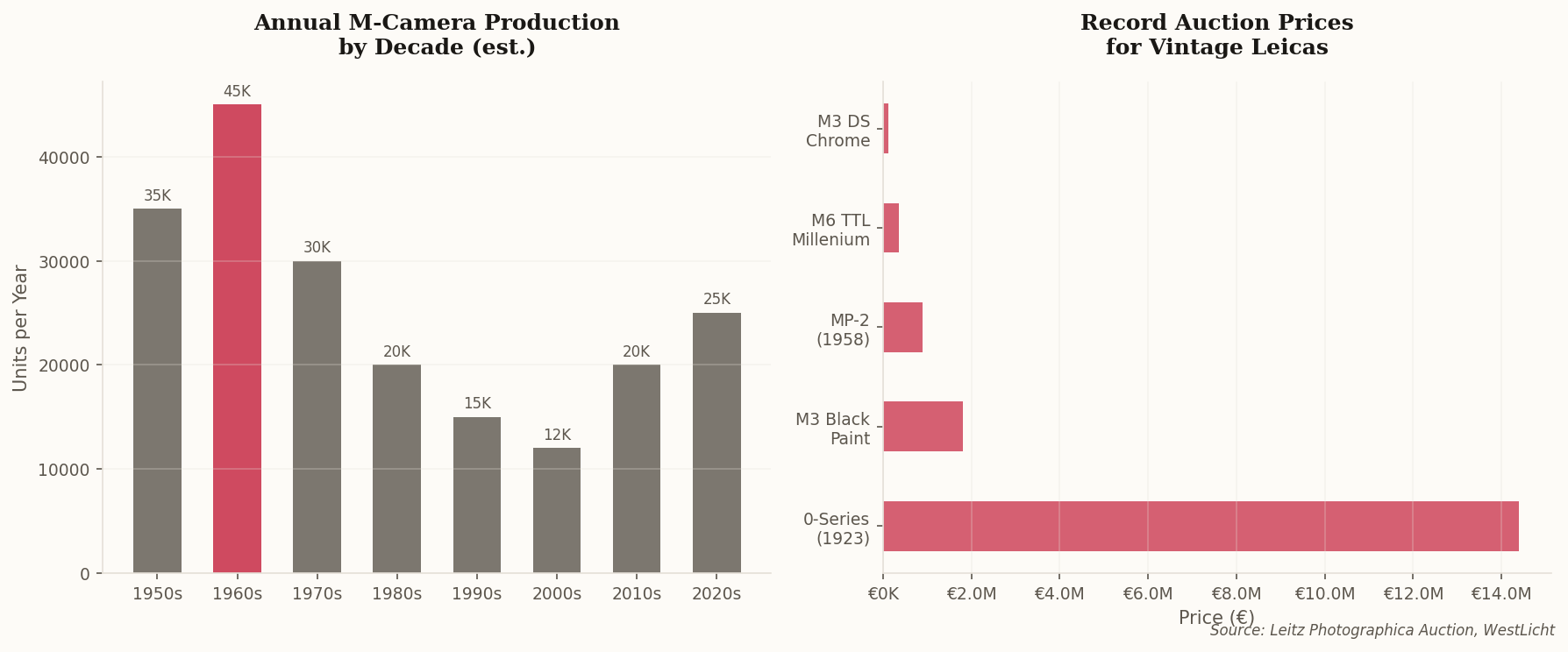
Dual chart showing annual M-camera production by decade and record auction prices for vintage Leicas
Left: M-camera production peaked in the 1960s golden age, collapsed during the crisis years, and has rebounded under Kaufmann. Right: The collector market treats vintage Leicas like fine art — a 1923 0-Series sold for €14.4 million.
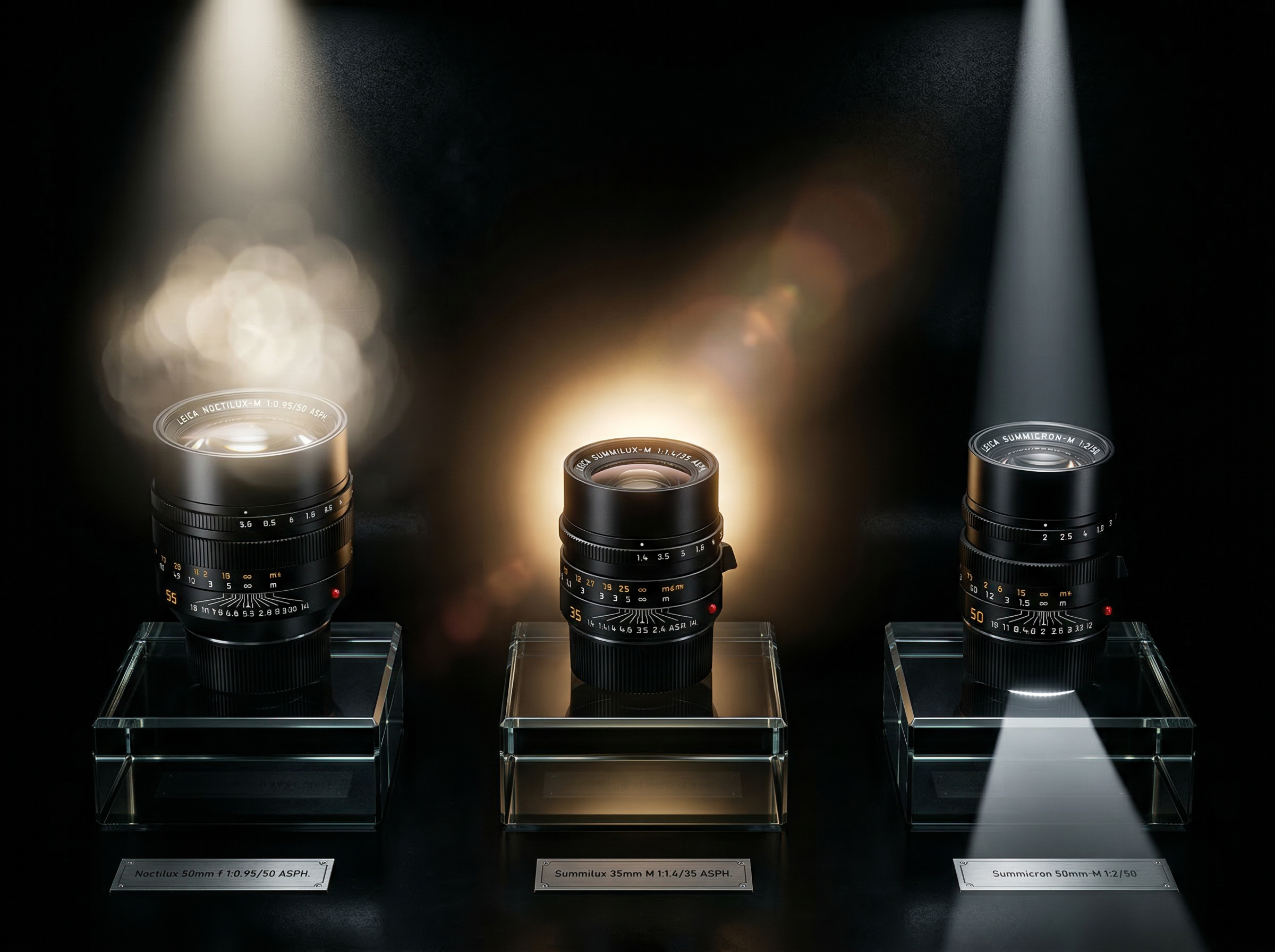
An array of legendary Leica lenses on glass pedestals with different qualities of light passing through each
06

The Leica Look: Why the Glass Is the Legend

Ask a photographer why they shoot Leica and they'll say "the rendering." Push them and they'll struggle to explain it. The "Leica look" isn't about sharpness — plenty of cheaper lenses resolve more detail. It's about micro-contrast: the tonal separation between adjacent areas of light and shadow that gives Leica images a three-dimensional quality, a "pop" that makes subjects lift off the background.

This started with Max Berek, who designed the original Elmar lens in 1925 and established the optical philosophy that Leica still follows. It was perfected by Walter Mandler at ELCAN (Leica's Canadian optical lab), who pioneered computer-aided lens design in the 1960s to create the Summilux 35mm f/1.4 and the legendary Noctilux 50mm f/1.0.

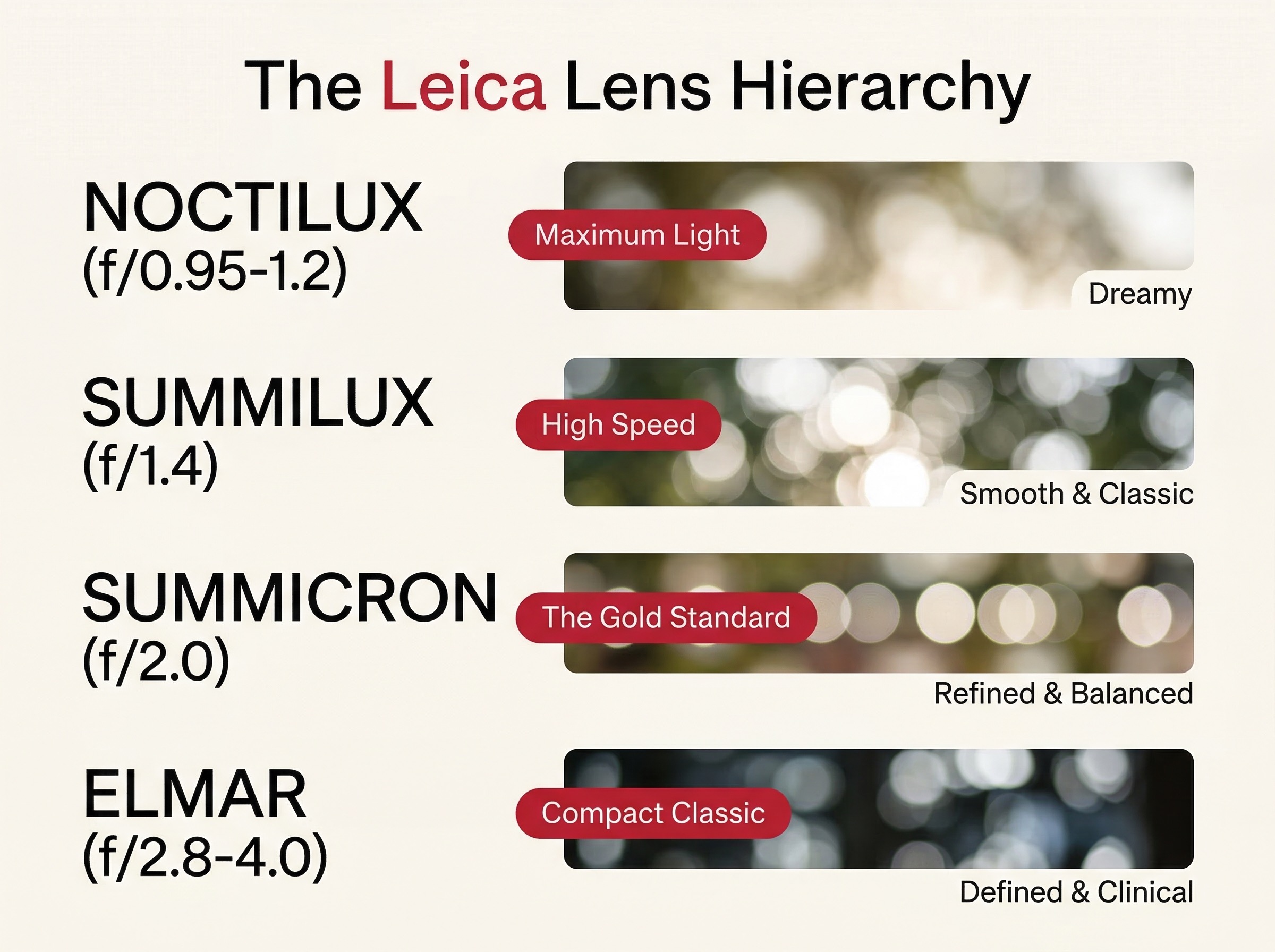
Infographic showing the Leica lens hierarchy: Noctilux, Summilux, Summicron, and Elmar families with their characteristics
The Leica Lens Hierarchy: From the dream-like Noctilux to the clinical Summicron, each family serves a different creative purpose.

The hierarchy is precise. The Noctilux (f/0.95) gathers impossible amounts of light with a signature swirly bokeh that looks like oil on water. The Summilux (f/1.4) trades a stop for a warm, glowing character wide open. The Summicron (f/2.0) is the gold standard — clinically sharp with perfect micro-contrast. And the Elmar (f/2.8-4.0) is the compact classic, the spiritual descendant of Barnack's original.

Today, a Leica Noctilux 50mm f/0.95 costs €12,500. A vintage Mandler-era Summicron can fetch €3,000 on the used market. A 1923 0-Series camera sold at auction for €14.4 million. These aren't prices — they're valuations. Leica has become the Rolex of cameras: a functional object that transcends function, where the brand itself carries meaning. Whether that meaning is "I care about craft" or "I can afford to care about craft" is the tension at the heart of every luxury brand. What makes Leica different is that the glass actually delivers.

Small Negative, Large Picture

Barnack's motto was prophetic. A century later, the small camera he built to ease his breathing has produced the largest body of consequential photographs in history. From the Freedom Train to the streets of Paris to a €596 million balance sheet, the red dot endures — not because Leica makes the best cameras, but because they make cameras that make people care about seeing.

Share X LinkedIn