The Constitutional Crucible
Here's a fact that should unsettle anyone who thinks the American system was inevitable: the Constitution almost didn't happen. By 1787, the Articles of Confederation had created a national government so feeble it couldn't collect taxes, regulate trade between states, or field a credible army. The "United States" was united in name only — thirteen squabbling republics drifting toward irrelevance.
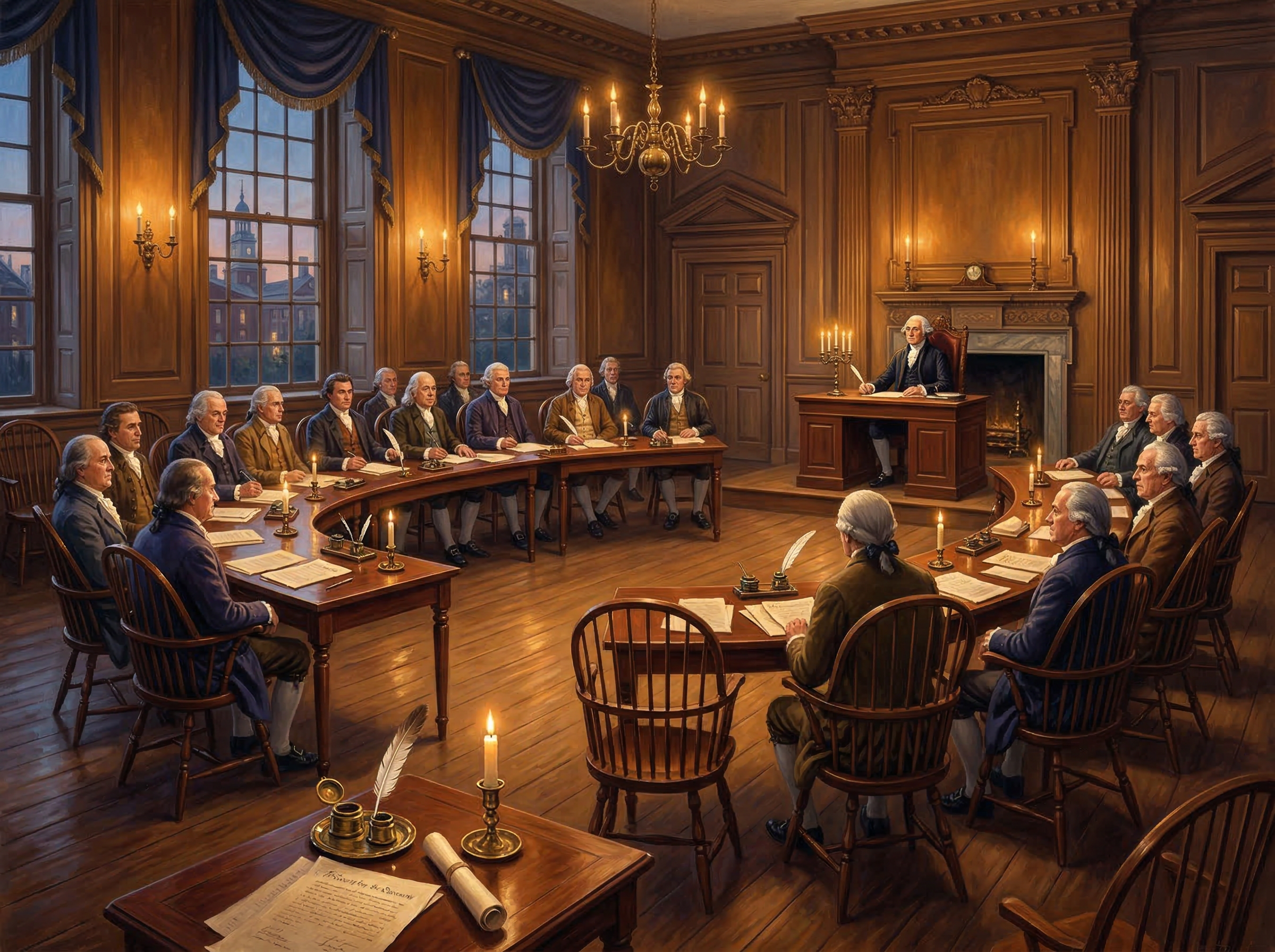
The 55 delegates who gathered in Philadelphia's Independence Hall that sweltering summer were supposed to patch the Articles. Instead, led by a core of young, impatient nationalists — Alexander Hamilton was 30, James Madison was 36 — they threw the whole thing out and started over. This wasn't evolution. It was a coup d'état conducted with quill pens.
Madison arrived with a fully formed blueprint (the "Virginia Plan") that established the architecture we still live under: a strong executive, a bicameral legislature, and an independent judiciary. The term "Federalist" was itself a brilliant act of political branding — it implied continuity and reassurance, when what they were actually proposing was a radical centralization of power. The Anti-Federalists, stuck with a name that sounded oppositional rather than principled, never recovered from the framing disadvantage.
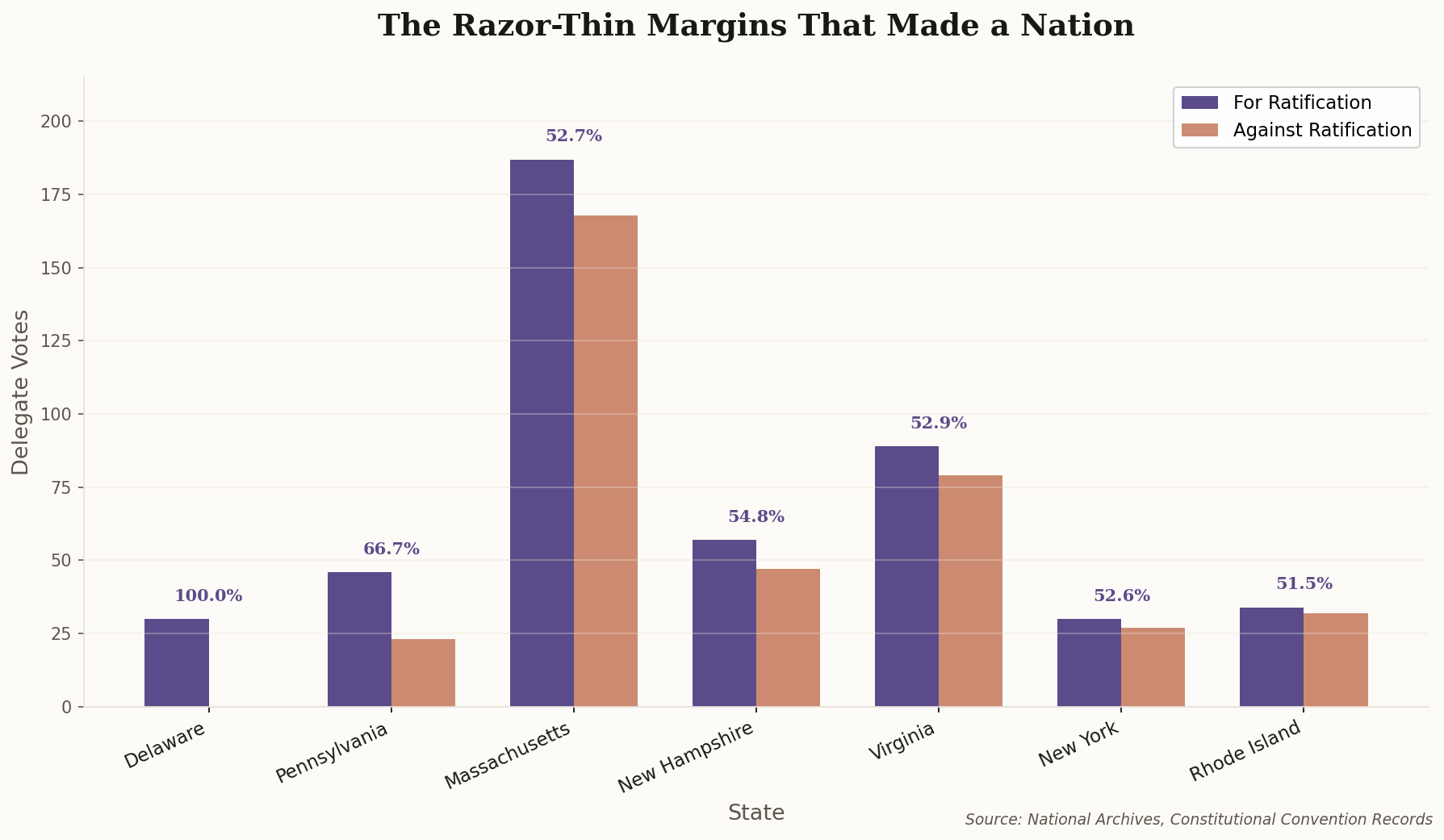
The result? A document ratified by margins so thin they'd make a modern election lawyer weep. New York approved it 30–27. Virginia scraped by 89–79. Three votes in New York. Ten in Virginia. That's how close we came to a very different country.