American History

The Republic's First Argument

How a handful of ambitious men invented American governance — and why the argument they started never ended.

Listen
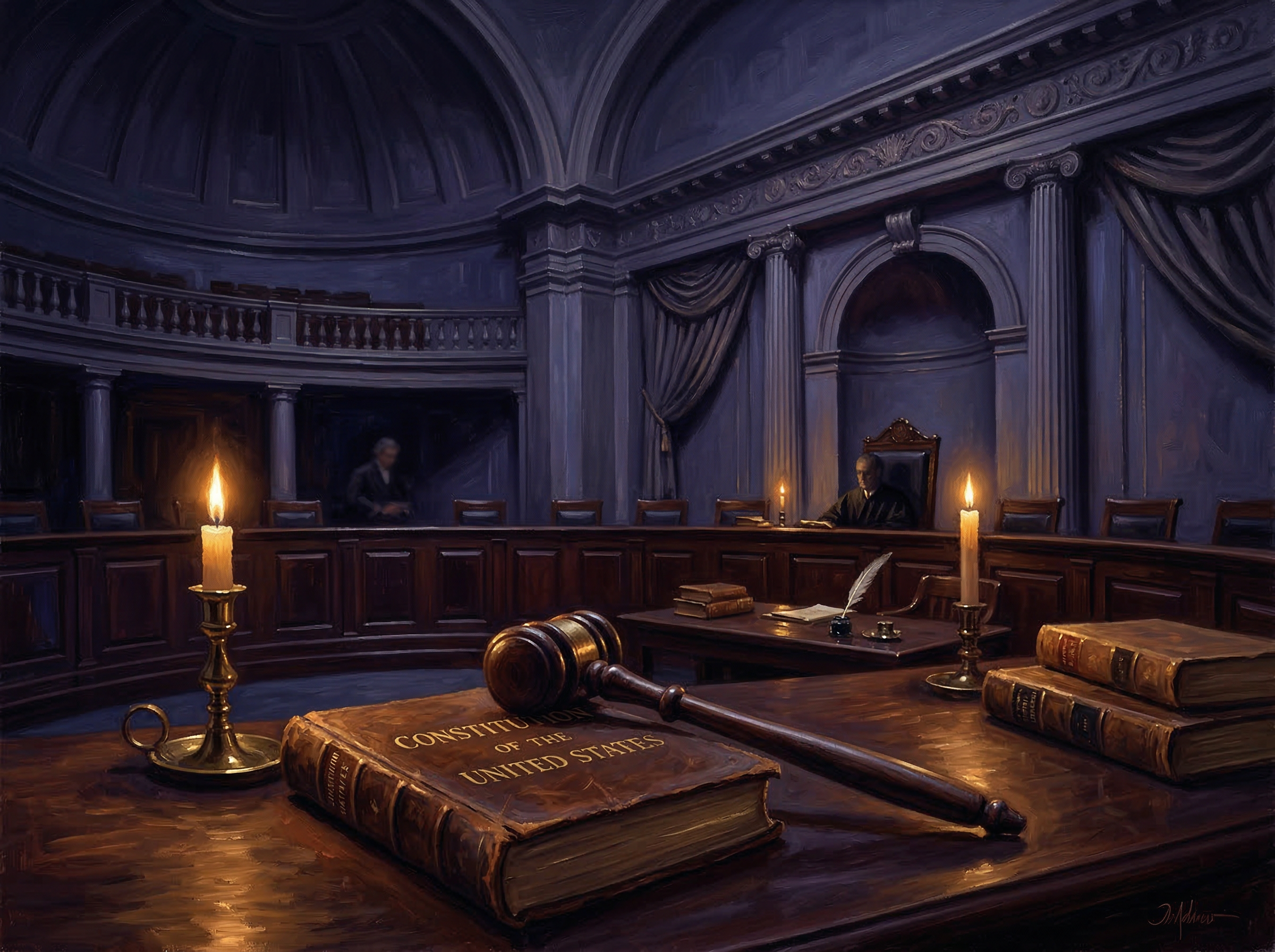
The early Supreme Court chamber, gavel resting on the Constitution
01

The Dead Party That Still Runs America

Here's the thing about the Federalist Party: it died in 1824. No successor organization, no merger, no rebrand. Just extinction. And yet its fingerprints are on virtually every constitutional argument you've ever heard.

The reason is John Marshall. Adams's midnight appointment as Chief Justice in 1801 — one of the most consequential personnel decisions in American history — gave the Federalists a 34-year posthumous reign over the judiciary. Marshall's landmark ruling in Marbury v. Madison (1803) didn't just settle a dispute over undelivered commissions. It established judicial review — the principle that courts can strike down laws that violate the Constitution. "It is emphatically the province and duty of the judicial department to say what the law is," Marshall wrote. That single sentence restructured American government permanently.

Then came McCulloch v. Maryland (1819), which upheld the constitutionality of the national bank and affirmed federal supremacy over the states. Pure Hamilton, delivered from the bench sixteen years after the Federalist Party stopped winning elections.

Fast forward to 1982: a group of Yale and University of Chicago law students founded the Federalist Society, explicitly invoking the Federalist Papers as their intellectual foundation. Today, six of the nine sitting Supreme Court justices have ties to the organization. The party is dead. The project is thriving.
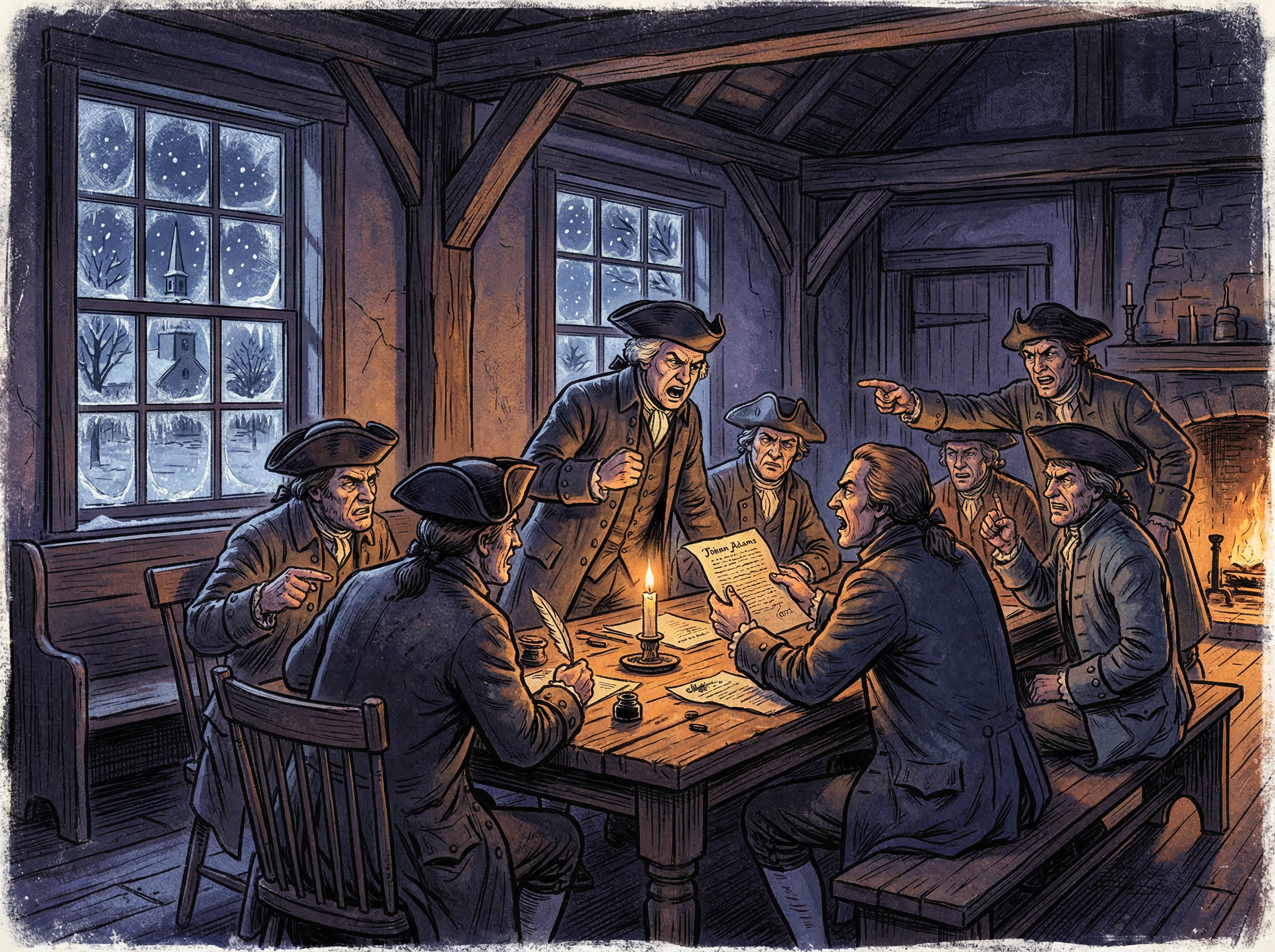
New England delegates in heated debate at the Hartford Convention, winter 1814
02

How to Kill a Political Party: A Case Study in Self-Destruction

The Election of 1800 wasn't just a loss for the Federalists — it was the first peaceful transfer of power between rival parties in modern history. Jefferson called it a "revolution." Adams called it humiliation. But the real killing blow was still fourteen years away.

By 1812, the Federalist Party had retreated into a New England bunker. They opposed the War of 1812 — not unreasonably, given that American trade was being devastated — but their opposition hardened into something darker. In December 1814, delegates from five New England states convened in Hartford, Connecticut, to air grievances. The Hartford Convention officially discussed constitutional amendments. Unofficially, the word "secession" hung in the air like gunpowder.

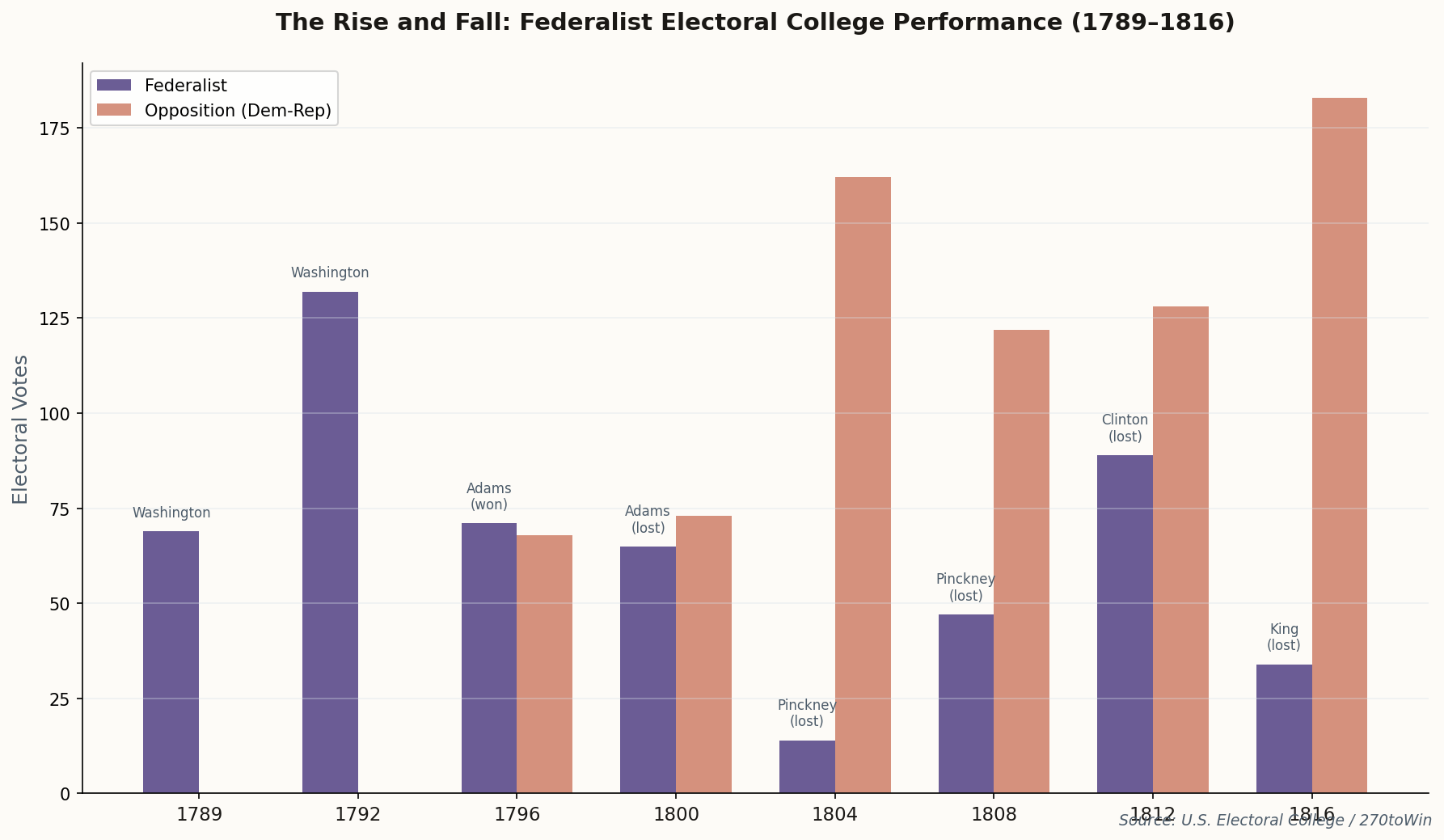
Then Andrew Jackson won the Battle of New Orleans. The timing was catastrophic. News of the convention's resolutions arrived in Washington alongside news of a spectacular military victory, making the Federalists look simultaneously treasonous and irrelevant. The party never recovered. Rufus King ran as its last presidential candidate in 1816, collecting just 34 electoral votes against Monroe's 183.

Bar chart showing Federalist electoral college performance declining from 71 votes in 1796 to 34 votes in 1816
The trajectory tells the story: from competitive party to irrelevance in two decades. Source: U.S. Electoral College / 270toWin

A contemporary observer nailed the epitaph: "The Federalist Party is like a tree that has been girdled; it may still look green for a season, but its roots are dead." What followed was the so-called "Era of Good Feelings" — which was really just the era of no opposition.

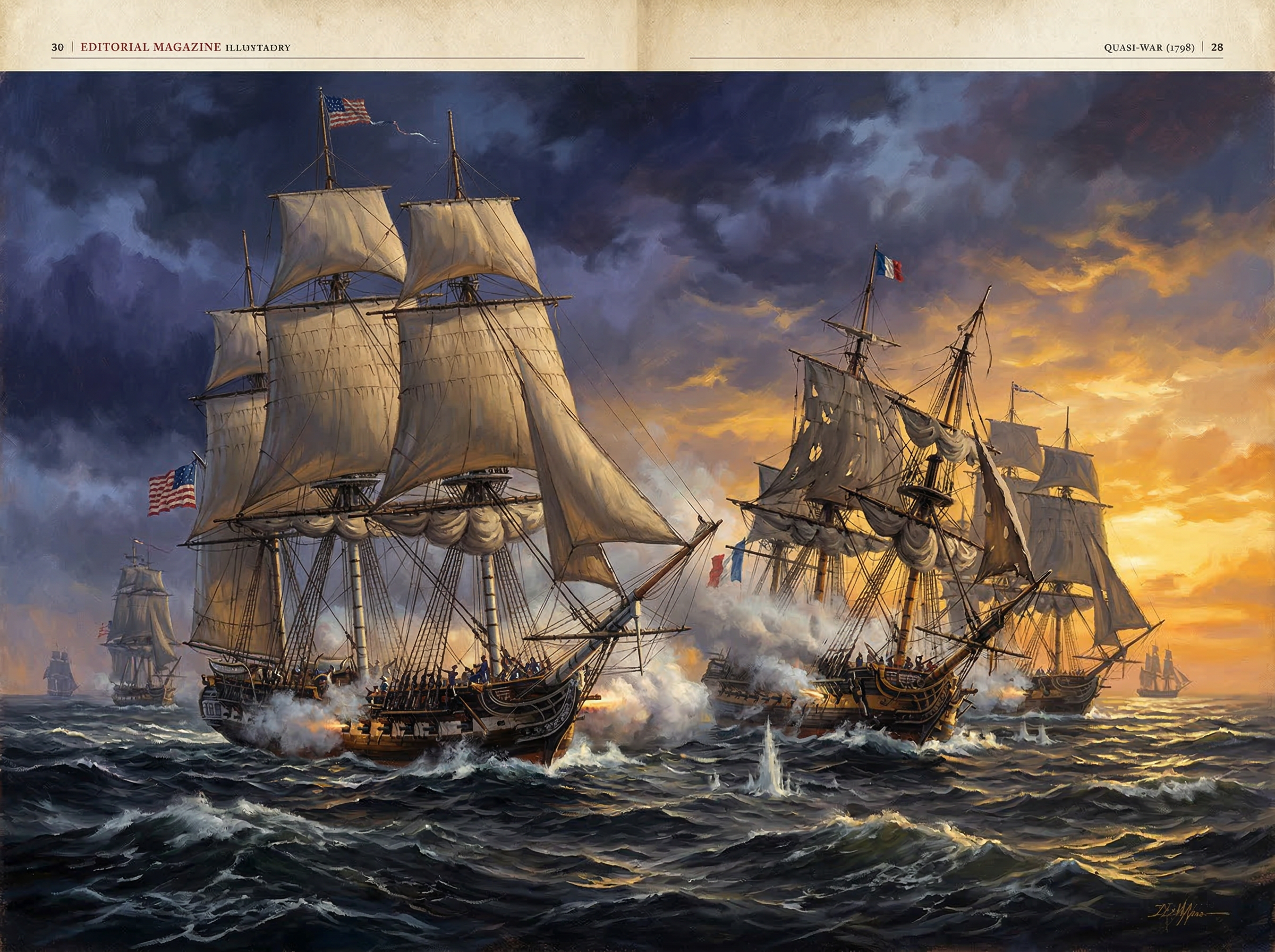
American warships in the Atlantic during the Quasi-War with France, cannons blazing
03

When Federalists Went Too Far: Adams, the Sedition Acts, and a Party's Undoing

John Adams had the worst job in early American politics: following George Washington. Every decision he made was measured against an impossible standard, and he was temperamentally incapable of the kind of above-the-fray performance Washington had mastered.

The XYZ Affair of 1797 handed him a genuine crisis. French agents — identified in dispatches only as "X," "Y," and "Z" — demanded bribes from American diplomats before they'd even negotiate. The public outrage was real. "Millions for defense, but not one cent for tribute!" became the rallying cry. Adams responded by building a navy and fighting an undeclared naval war with France that lasted two years.

So far, so defensible. But then the Federalist Congress passed the Alien and Sedition Acts of 1798 — and this is where the story turns. The Sedition Act made it a crime to publish "false, scandalous, and malicious writing" against the government. Fourteen people were prosecuted, almost all of them newspaper editors aligned with Jefferson's Democratic-Republicans. It was, quite plainly, the criminalization of political opposition.

The backlash was devastating. Jefferson and Madison secretly authored the Kentucky and Virginia Resolutions, arguing that states could "nullify" unconstitutional federal laws — a doctrine that would echo ominously through the next six decades of American history. Adams won a war but lost his party's moral authority. He and Hamilton split bitterly. The Federalists entered the 1800 election divided, and they never united again.

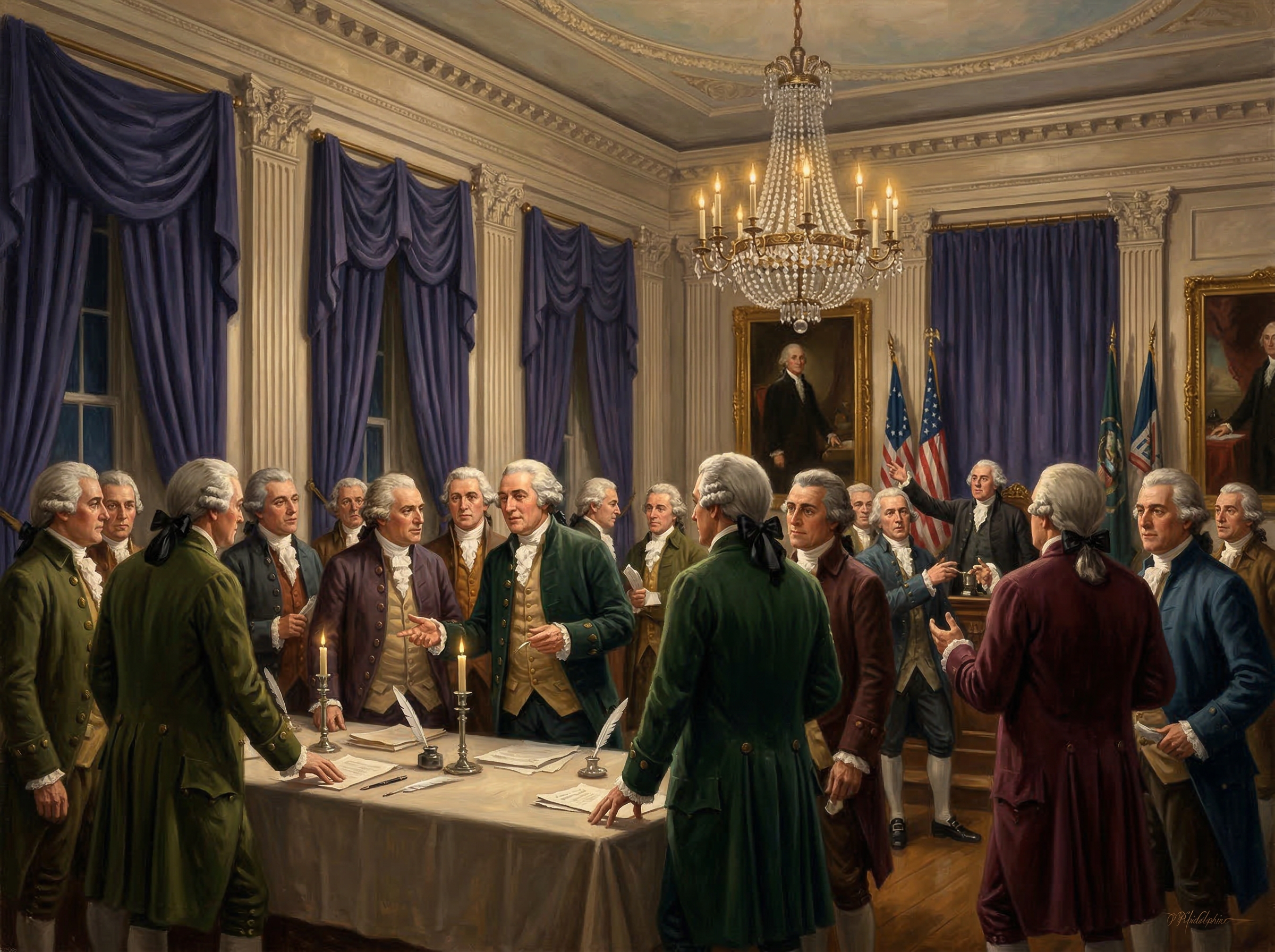
An elegant 18th century political gathering in a Philadelphia ballroom
04

America's First Political Machine: How the Federalists Built a Government

The Federalist Party wasn't supposed to exist. The Founders despised "factions." Washington himself warned against them in his Farewell Address. But by his second term, the people who agreed with Hamilton about strong central government and the people who agreed with Jefferson about states' rights had crystallized into opposing camps — America's first party system, born from exactly the kind of factional conflict the Constitution was designed to manage.

The Federalist coalition was specific: New England merchants, urban bankers, large landowners, and professionals who benefited from trade stability and centralized finance. Their policy agenda was coherent — a national bank, federal taxation (including the controversial whiskey tax), and a pro-British foreign policy to protect commercial relationships. The Jay Treaty of 1795 secured peace with Britain but infuriated the Jeffersonians, who saw it as capitulation.

John Jay, the party's first Chief Justice, captured its philosophy bluntly: "Those who own the country ought to govern it." This wasn't a gaffe — it was a sincere belief that governance required property, education, and a stake in commercial society. It made them effective administrators and terrible populists.

The Federalists built the actual machinery of federal government — the Treasury, the judiciary, the diplomatic corps. They just couldn't convince ordinary Americans that an elite-run republic was what they wanted.

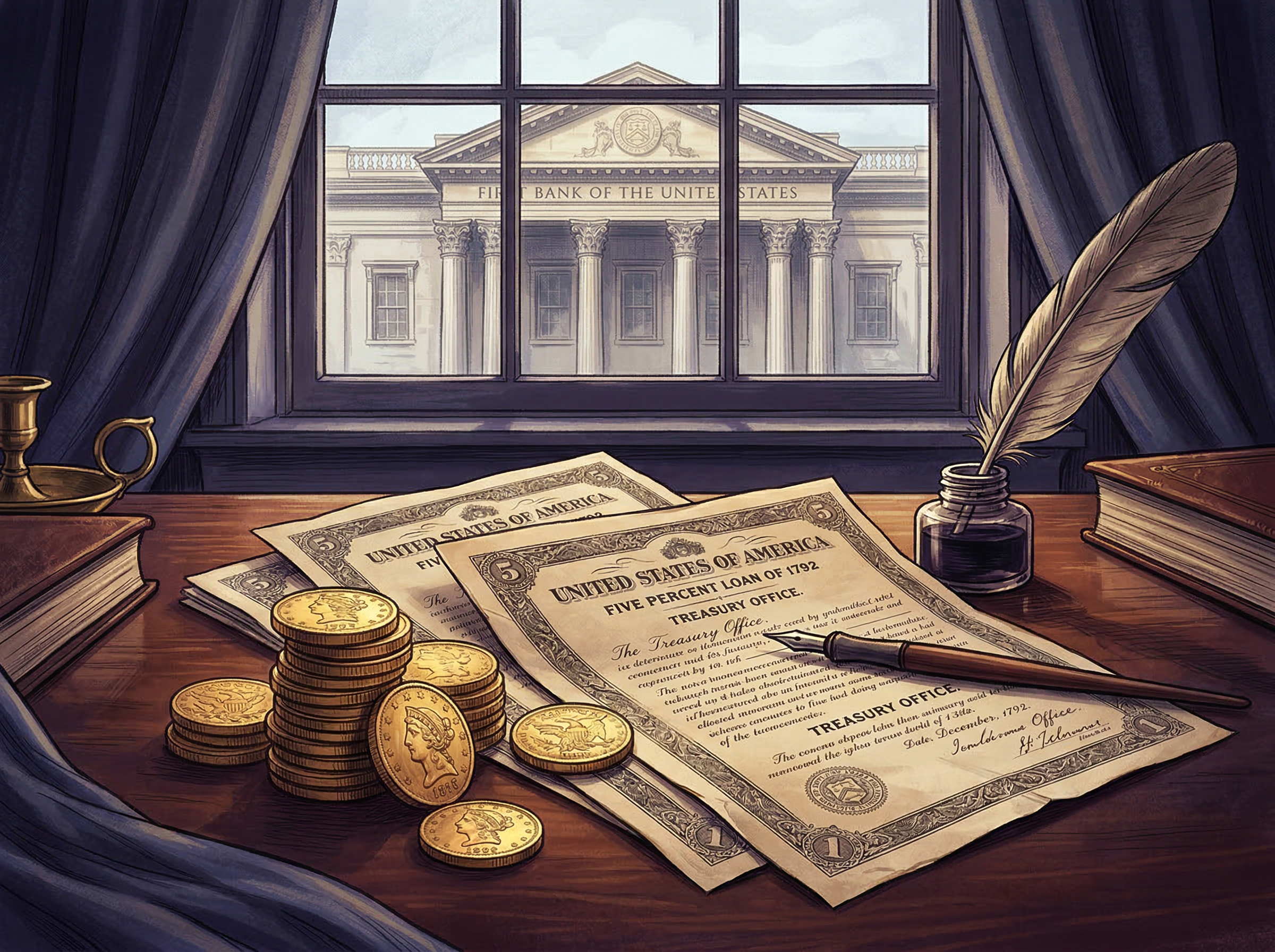
Treasury bonds, gold coins, and quill pen on a mahogany desk with the First Bank of the United States visible through a window
05

The Deal That Made America Creditworthy: Hamilton's Financial Revolution

In 1790, the United States was effectively bankrupt. The national government owed $54 million. The states collectively owed another $25 million in Revolutionary War debts. Foreign creditors had written the country off. Alexander Hamilton, the nation's first Treasury Secretary, proposed something audacious: the federal government would assume all of it.

The logic was pure Federalist: if the national government backed the debts, creditors would have a stake in the government's survival. National credit would attract foreign investment. A national bank would manage the currency and smooth out the chaotic state-by-state financial patchwork. "A national debt, if it is not excessive, will be to us a national blessing," Hamilton argued — a line that still gets quoted in Treasury policy debates today.

Jefferson and Madison were horrified. Southern states had already paid down much of their war debt; they saw assumption as a bailout for profligate northern states. The impasse broke over dinner. In what's now called the Compromise of 1790, Hamilton traded the location of the permanent national capital — a site on the Potomac River, which became Washington, D.C. — for Madison's grudging support on debt assumption.

It worked. Within a decade, U.S. government bonds were trading at par in European markets. The country had gone from junk credit to investment grade. Hamilton's system — central banking, federal taxation, managed debt — is still the basic architecture of American public finance.

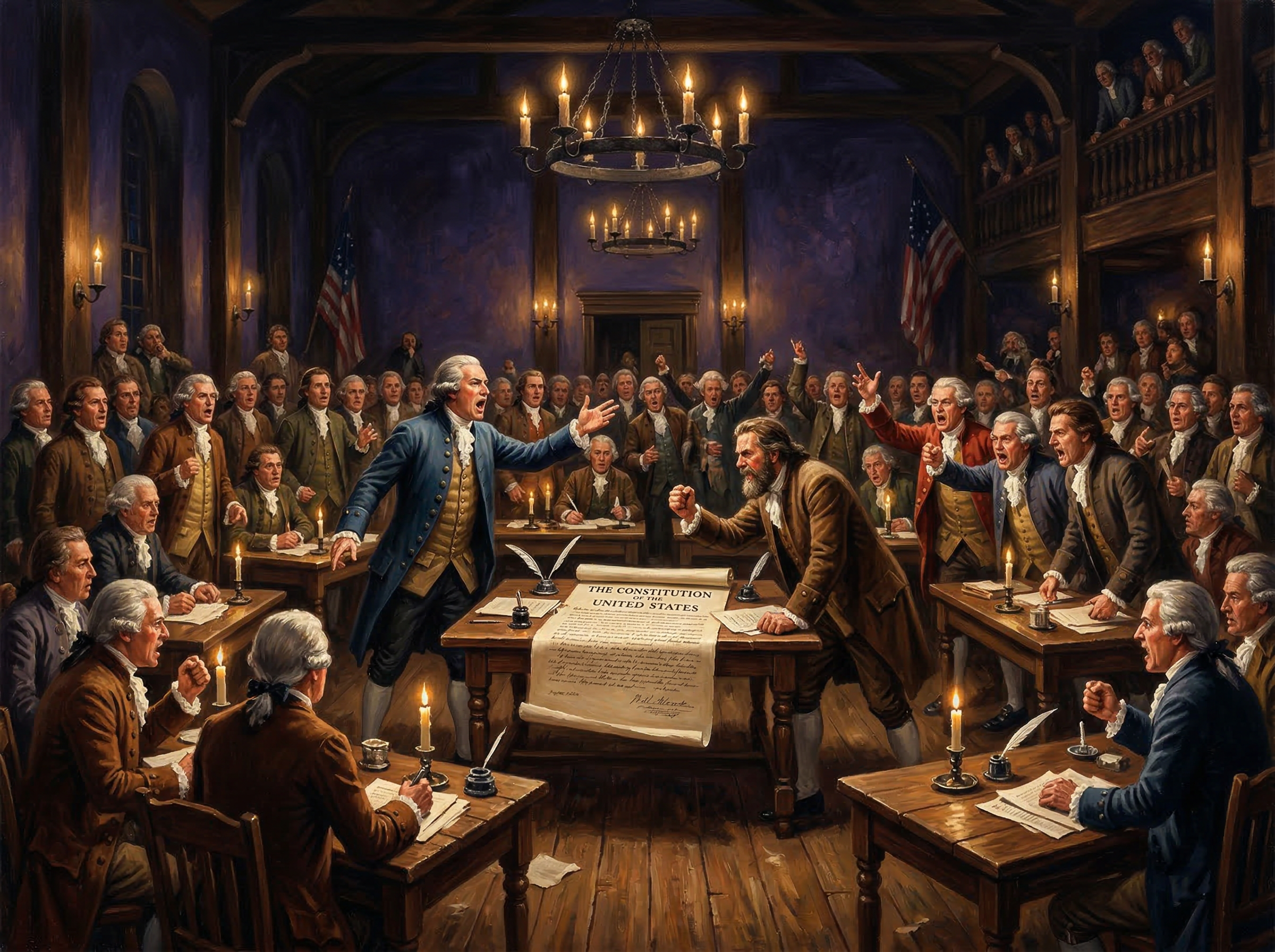
Delegates debating passionately in a colonial American convention hall
06

30 Votes in New York: How Close the Constitution Came to Failing

We teach the Constitution as if it were inevitable. It wasn't. Ratification required nine of thirteen states, and the opposition — the Anti-Federalists — had legitimate fears. Patrick Henry put it memorably: "I smell a rat... Your President may easily become king." George Mason refused to sign because it lacked a bill of rights. Samuel Adams — the man who'd helped start a revolution — was skeptical that this document wouldn't end one.

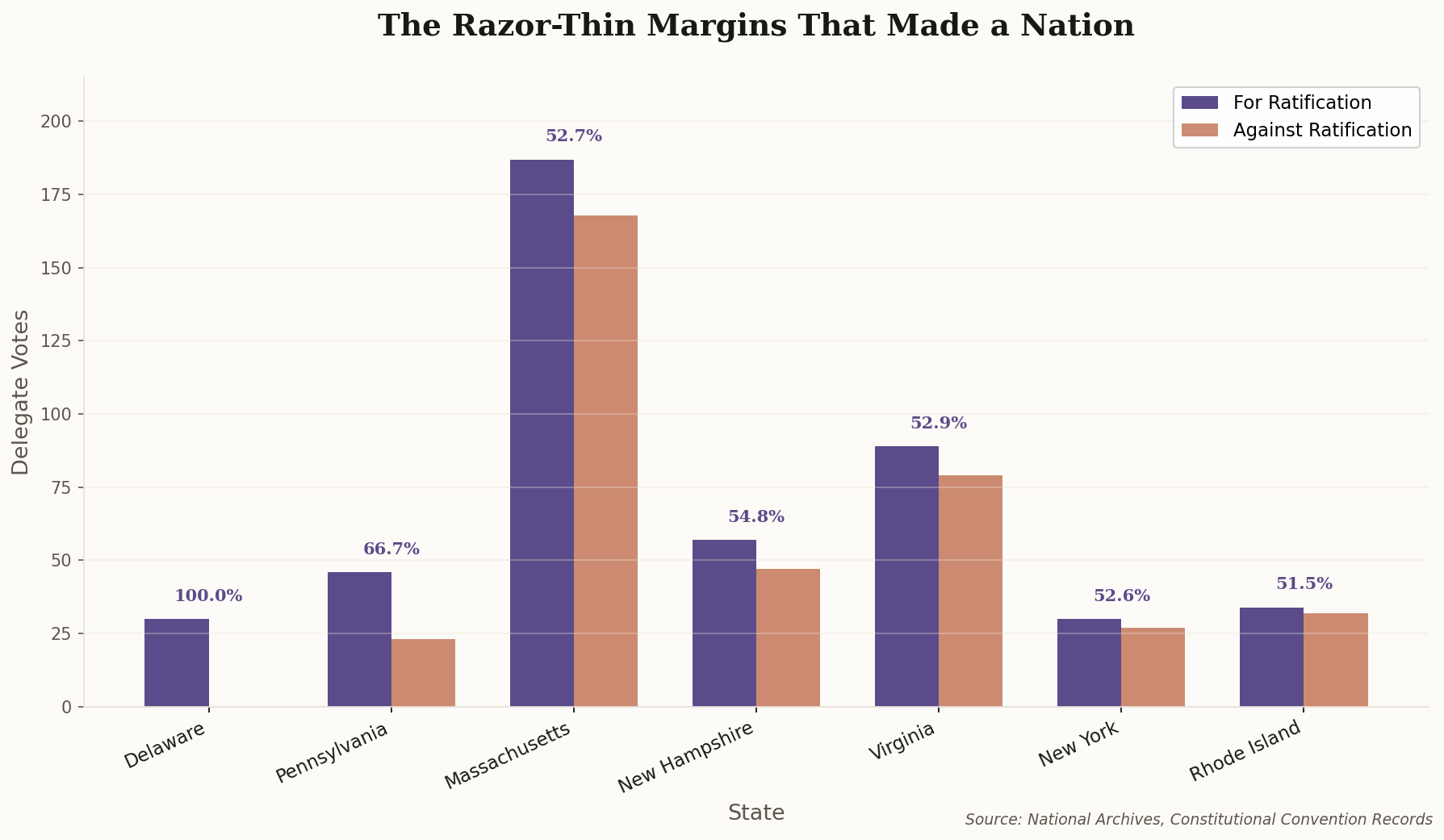
Horizontal bar chart showing state-by-state ratification vote tallies, with razor-thin margins in Virginia, New York, and Rhode Island
The margins tell the story: Virginia passed by 10 votes, New York by 3, Rhode Island by 2. The Constitution was far less popular than we remember. Source: National Archives

The Federalists had three advantages: better organization, more newspapers, and a relentless focus on the "imbecility" of the Articles of Confederation. They also had the single most effective piece of political writing in American history — the Federalist Papers — but more on that in a moment.

The critical breakthrough was a compromise: Federalists in Massachusetts, Virginia, and New York promised to support a Bill of Rights after ratification. It was a calculated concession that neutralized the Anti-Federalists' strongest argument. New Hampshire became the ninth state to ratify on June 21, 1788, with a vote of 57–47. Virginia followed four days later, 89–79. New York squeaked through 30–27. Those three-vote and ten-vote margins are the thread on which the entire constitutional order hangs.

And the compromise? The first ten amendments — the Bill of Rights — were ratified in 1791. The Anti-Federalists lost the war but won the peace: the protections they demanded became the most cited provisions in American constitutional law.

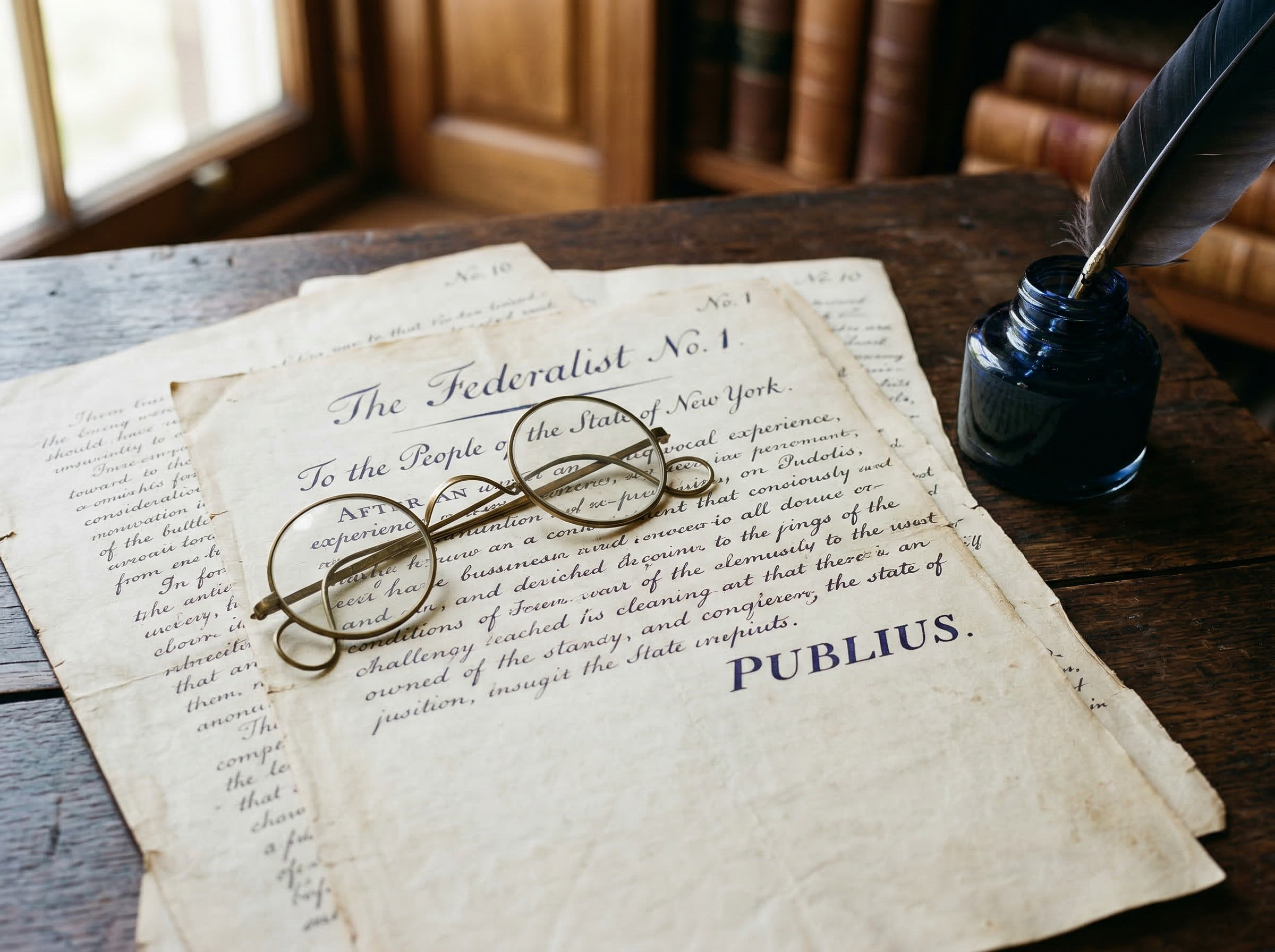
Handwritten Federalist Papers manuscript with Publius pseudonym visible, quill pen and inkwell
07

85 Essays That Still Win Arguments: The Federalist Papers as Living Law

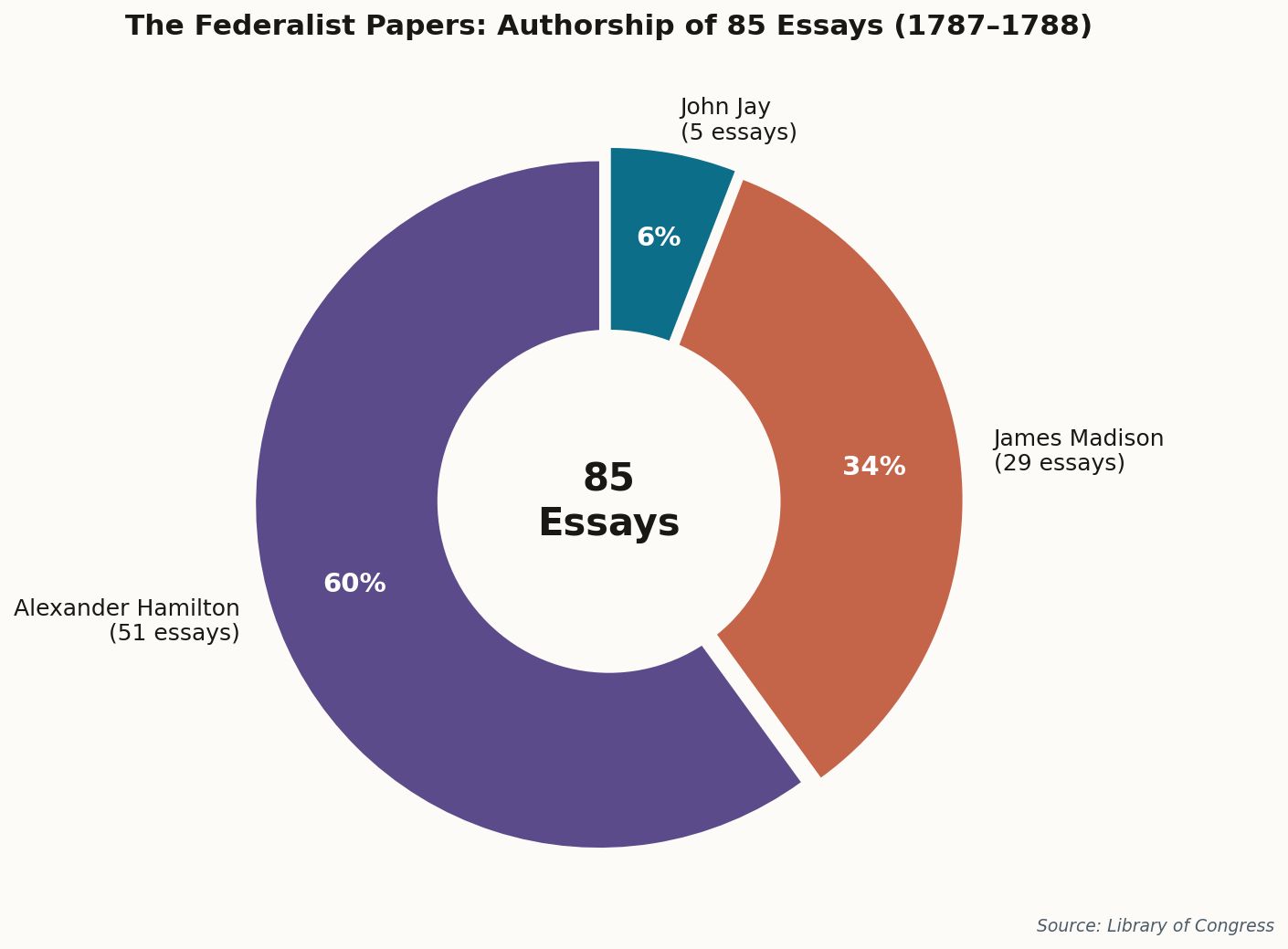
Between October 1787 and August 1788, three men — Hamilton, Madison, and Jay — published 85 essays in New York newspapers under the pseudonym "Publius." The pace was staggering: Hamilton alone wrote 51 of them, sometimes producing multiple essays per week while simultaneously running a law practice. Madison contributed 29 (including the two most consequential). Jay, slowed by illness, wrote five.

Donut chart showing Hamilton wrote 51 essays (60%), Madison 29 (34%), and Jay 5 (6%)
Hamilton's output was extraordinary — 60% of all Federalist Papers, written at a pace of roughly one every 4 days for 10 months. Source: Library of Congress

The two essays that matter most were both Madison's. Federalist No. 10 made the counterintuitive argument that a large republic is better at controlling factions than a small one — because competing interests cancel each other out, preventing any single faction from dominating. It was the intellectual foundation for the entire constitutional project: size isn't a bug, it's a feature.

Federalist No. 51 went further, laying out the architecture of checks and balances with a famous observation about human nature: "If men were angels, no government would be necessary. If angels were to govern men, neither external nor internal controls on government would be necessary." It's the most quoted line in American constitutional thought, and it's essentially a design specification: build the system to handle the worst case, not the best.

Hamilton's Federalist No. 78 described the judiciary as the "least dangerous branch" — possessing "neither force nor will, but merely judgment." That characterization became the basis for judicial review, the single most powerful tool in the federal system. The Supreme Court cites the Federalist Papers more than any other historical source. Two centuries later, lawyers on both sides of every major constitutional case still open with "Publius wrote..."

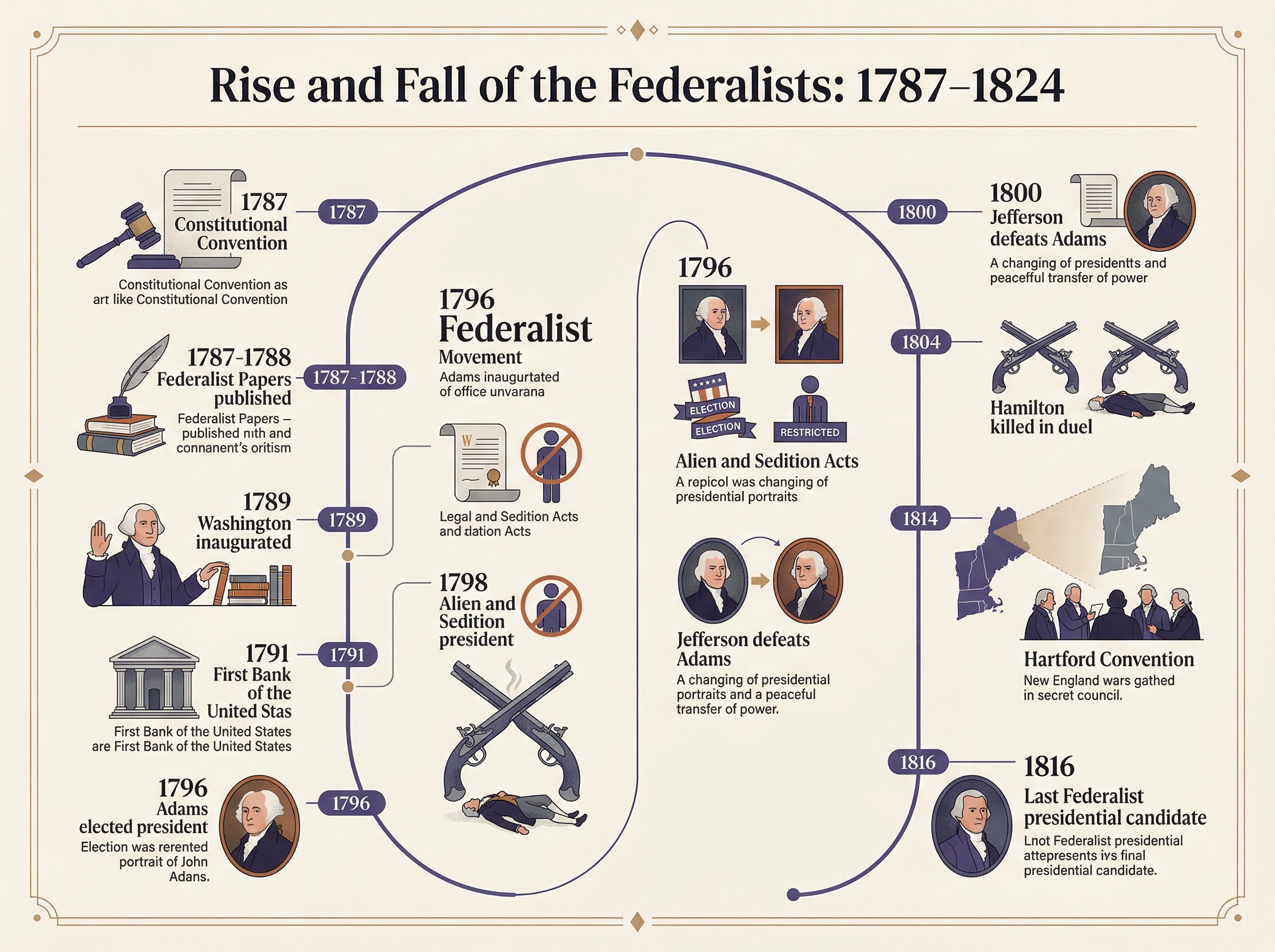
Timeline infographic showing key Federalist milestones from the Constitutional Convention in 1787 to the founding of the Federalist Society in 1982
The Federalist Legacy: From Founding to Today — Generated with Nano Banana 2.0

The Argument That Never Ended

The Federalists lost elections but won the structural argument. Every time a court strikes down a law, every time Congress invokes implied powers, every time a Treasury bond trades at par — that's the Federalist inheritance. They built a government strong enough to survive its own creators' disagreements. The question they posed in 1787 — how much centralized power is too much? — remains the central question of American politics. Two hundred and thirty-nine years later, we're still debating their answer.

Share X LinkedIn