The Asthmatic Who Changed Everything
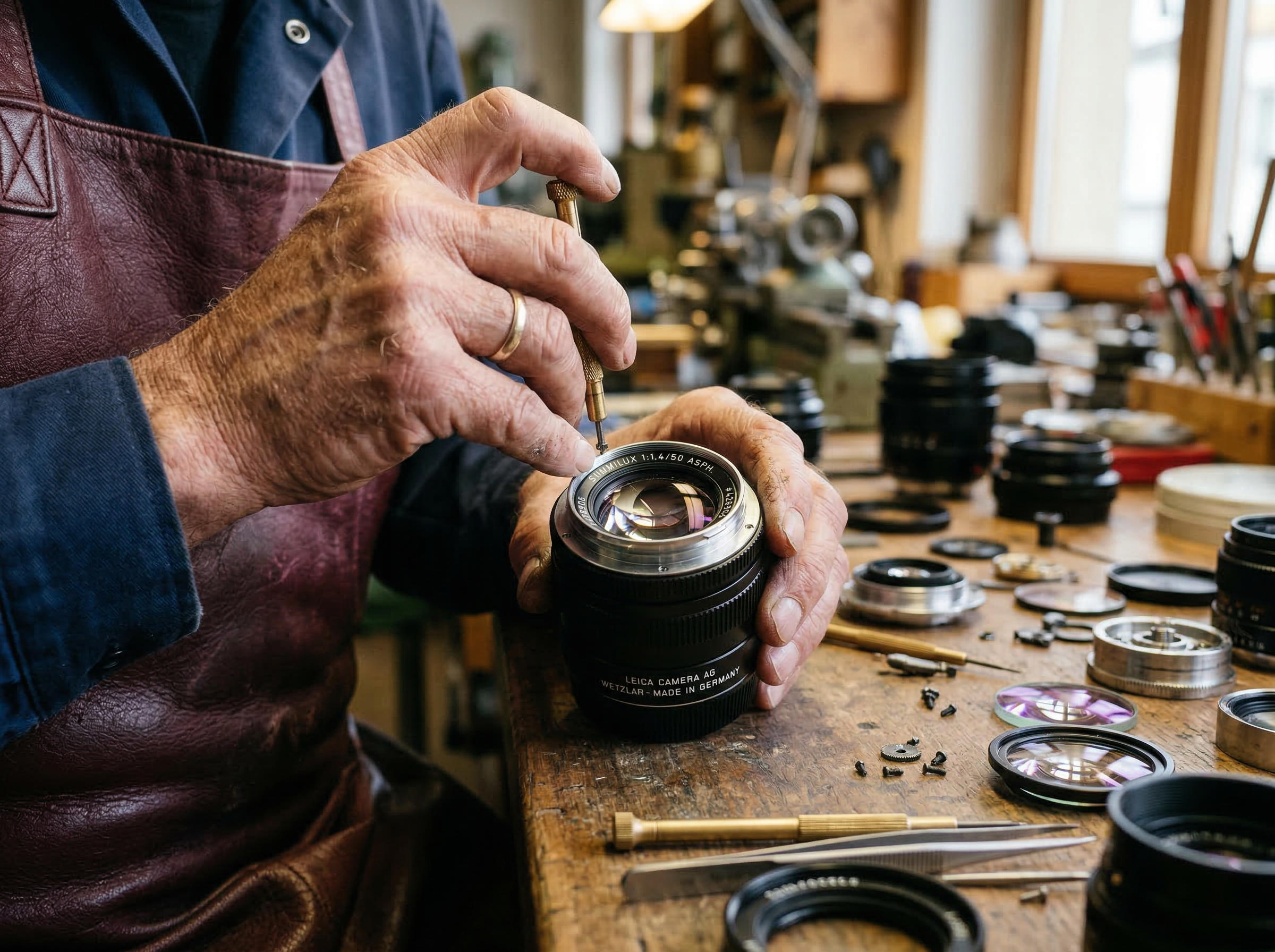
Before there was a camera company, there was a microscope empire. The Optisches Institut in Wetzlar, Germany—founded in 1849 by Carl Kellner and later taken over by Ernst Leitz I—was producing 9,000 microscopes a year by 1910. Precision optics was the family business. Photography was an accident.
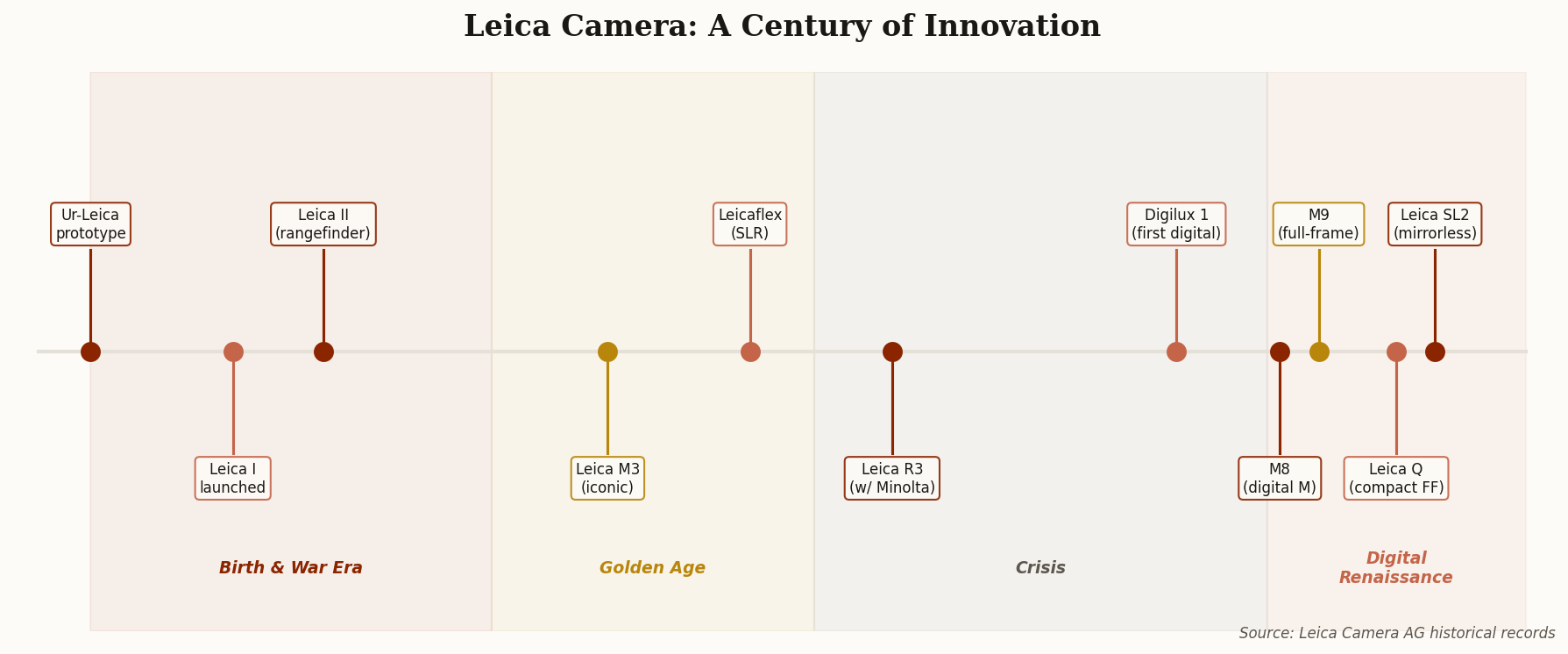
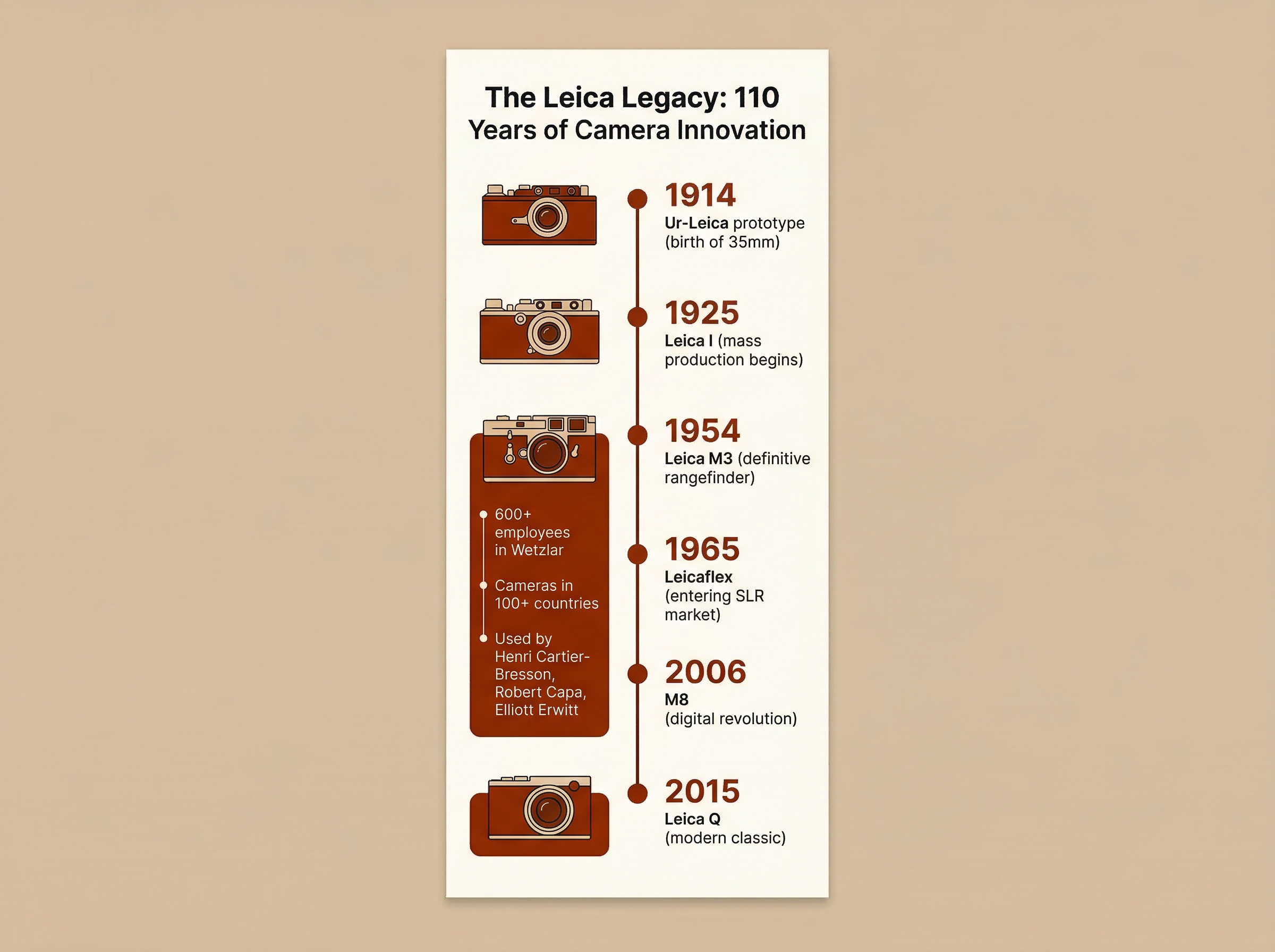
That accident had a name: Oskar Barnack. A master mechanic who suffered from debilitating asthma, Barnack found the heavy glass-plate cameras of the era physically unbearable. So in 1913, he did what great engineers do—he built something better. The Ur-Leica was tiny, almost toylike: a brass-and-leather rectangle that used 35mm cinema film but doubled the frame to 24×36mm. That frame size—"full frame"—remains the industry standard 112 years later. Barnack didn't just build a camera. He built a format.
Post-WWI Germany was an economic catastrophe. Betting the company on a radical miniature camera was, by any rational measure, insane. In June 1924, Ernst Leitz II gathered his board for hours of heated debate. He ended it with five words that would echo through a century of photography: "My decision is final. We will take the risk."
By the numbers: The Leica I debuted at the 1925 Leipzig Spring Fair. Only ~1,000 units were produced in the first year, priced at 400 Reichsmarks—several months' salary for a professional. The name? Simply Leitz + Camera.