History

The Town That Kept Its Secrets

How a closed Moravian commune in Lancaster County became America's pretzel capital, out-chocolated Hershey, and landed Taylor Swift rehearsals.

Listen
01

A Bohemian Count's Utopia in Lancaster County
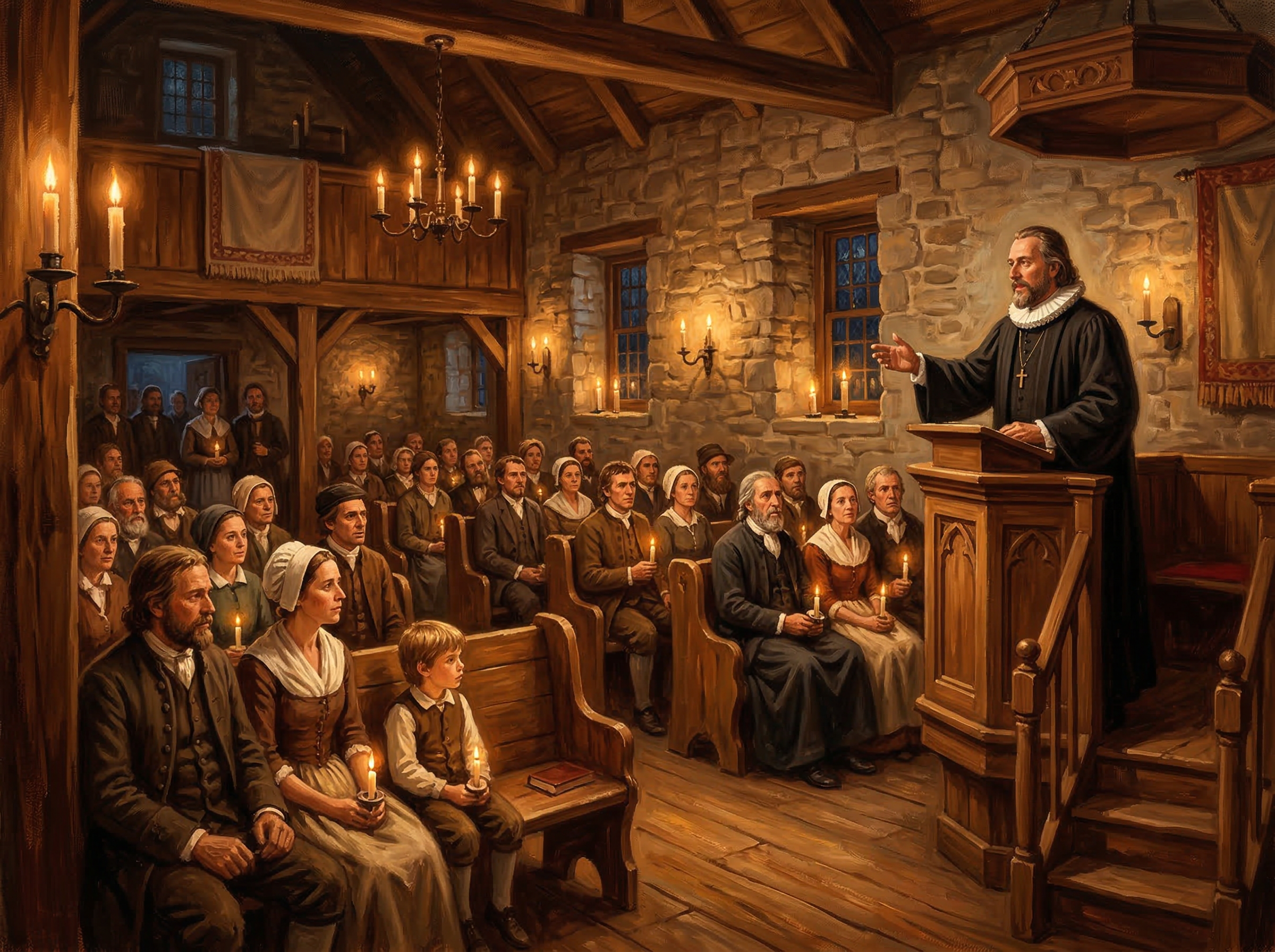
Candlelit Moravian congregation gathered in a stone chapel in colonial Pennsylvania

In December 1742, a German aristocrat named Count Nicholas Ludwig von Zinzendorf rode into Warwick Township and preached a sermon in a farmer's parlor that would reshape 280 years of American history. The farmer, John George Klein, was so moved that he deeded his entire 491-acre farm to the Moravian Church twelve years later. That's not a typo. The man gave away his livelihood because of a single sermon.

What Zinzendorf built was no ordinary town. Lititz — named in 1756 to honor Litice Castle in Bohemia, where followers of Jan Hus found refuge three centuries earlier — was a Gemeinort, a closed religious settlement. Under the Brotherly Agreement, only Moravian Church members could live or own businesses. The church owned all the land. Residents leased their lots. Social life was organized into "Choirs" based on age, gender, and marital status: the Single Sisters' House, the Single Brothers' House, each a self-contained world of spiritual focus and communal labor.

Think of it as the most disciplined HOA in colonial America, except the board of directors answered to God. This arrangement would persist for nearly a century — and its dissolution would trigger everything that makes Lititz interesting today.
02

When the Revolution Came Knocking

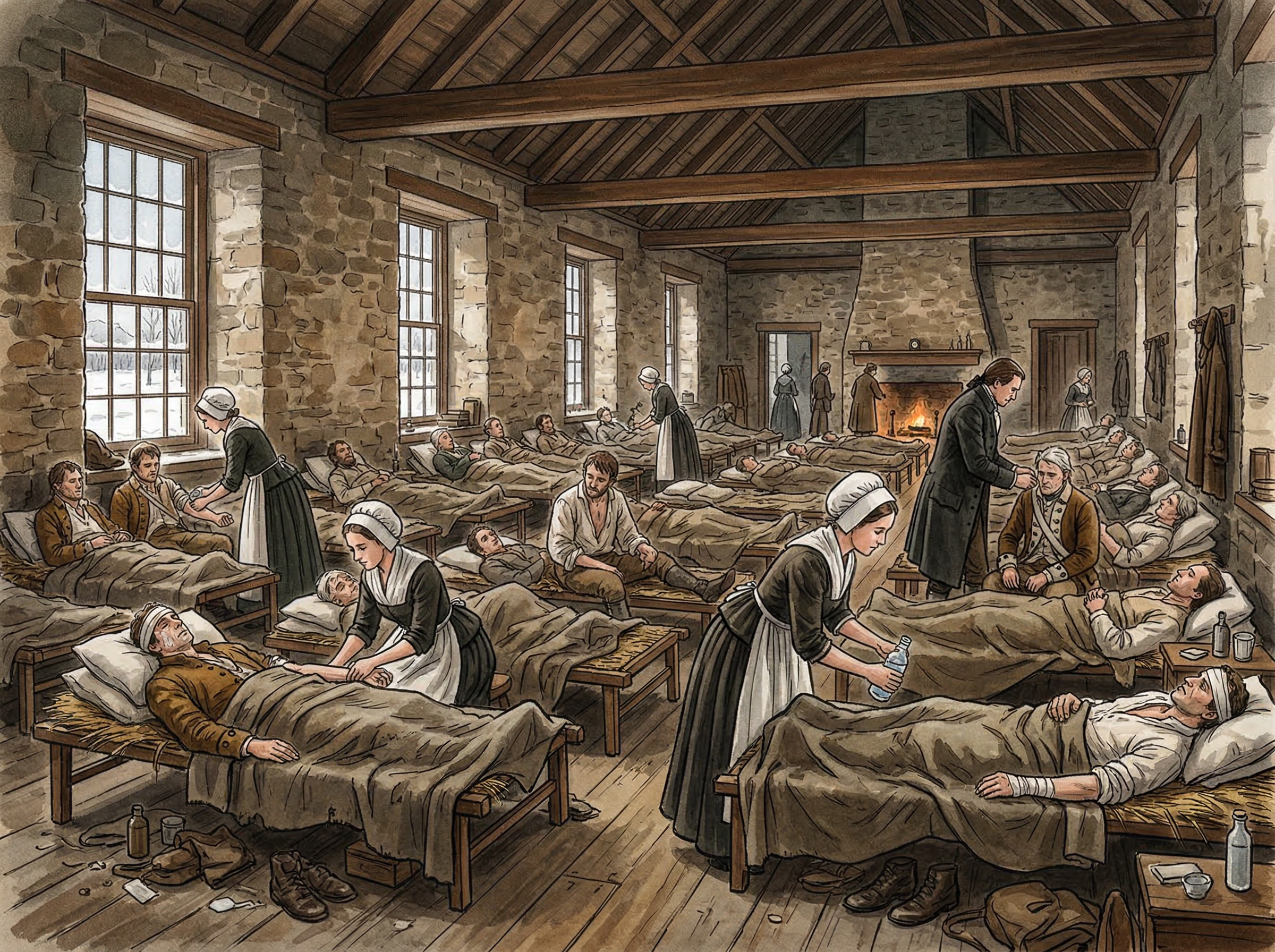
Continental Army hospital in a Moravian Brethren's House, wounded soldiers on cots tended by Moravian women

The Moravians were pacifists. They didn't fight wars — they built organs, baked bread, and prayed in three-part harmony. But the Continental Army didn't ask permission. On December 19, 1777, the army commandeered the Brethren's House — a substantial stone building constructed in 1759 — and converted it into a military hospital. Between 500 and 1,000 wounded soldiers, many fresh from the horrors of Valley Forge, were treated within its walls over the next eight months.

Approximately 110 of those soldiers never left. They're buried in a mass grave on the outskirts of town, marked today by a monument on East Main Street. The Moravians, who had wanted nothing to do with the war, ended up running one of its most consequential hospitals.

The irony deepened on July 4, 1791, when President George Washington himself visited Lititz during a regional tour. He was entertained by the famous Moravian Trombone Choir and visited the springs, noting the town's "order and industry." A pacifist commune impressing the commanding general of the war they tried to avoid — that's a very Lititz kind of contradiction.

03

The Hobo, the Baker, and America's First Pretzel

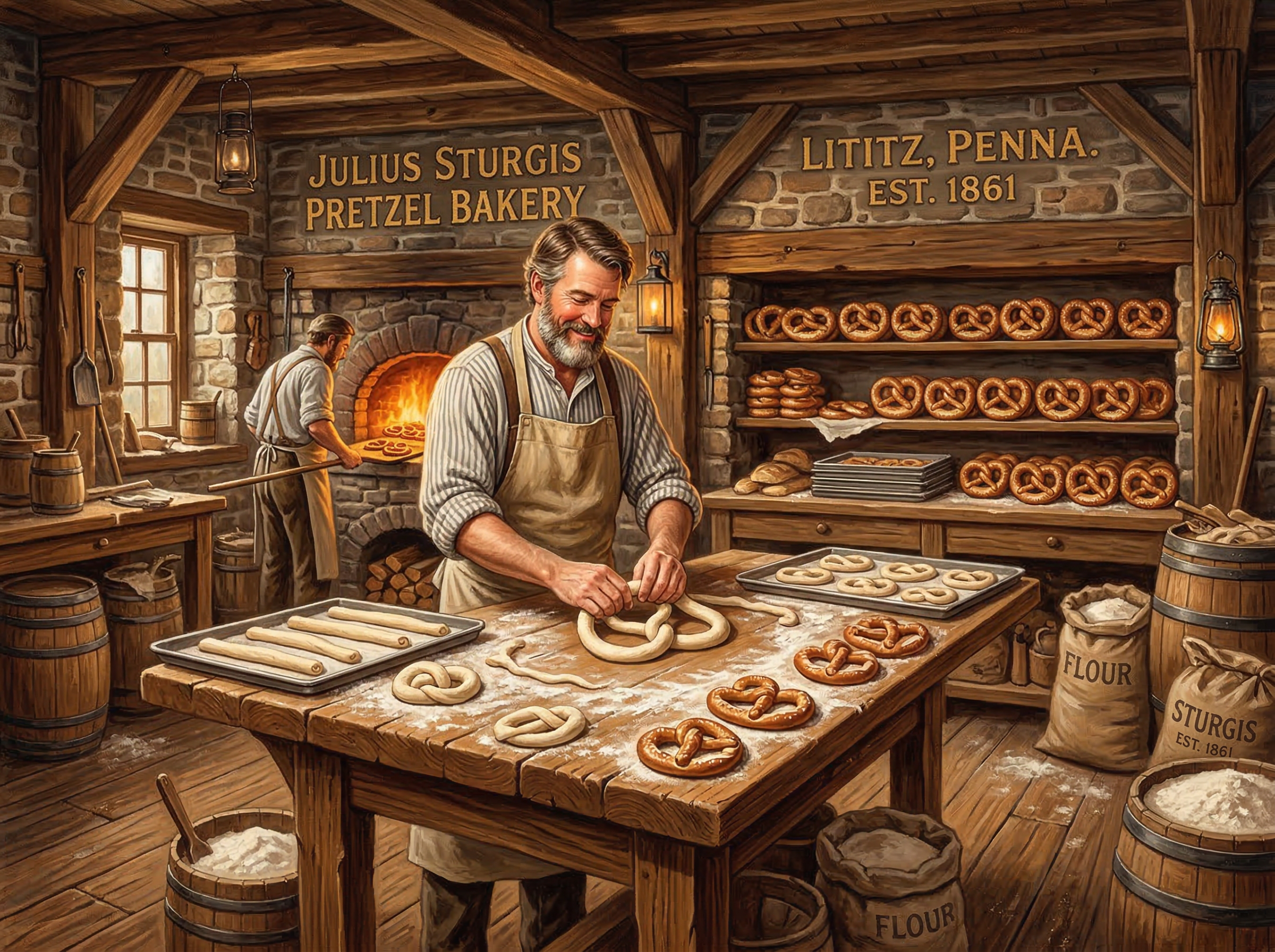
19th-century stone pretzel bakery interior with a baker hand-twisting golden pretzels on a flour-dusted table

Here's a founding myth worthy of its own Netflix special. Sometime in the 1850s, a wandering traveler — politely termed a "hobo" in local lore — showed up at the door of baker Julius Sturgis and offered a secret recipe in exchange for a meal. The recipe was for a hard, shelf-stable pretzel that could survive shipping across the country without turning into a salt-crusted doorstop.

In 1861, Sturgis opened America's first commercial pretzel bakery at 219 East Main Street, in a stone building that had been standing since 1784. The timing was absurdly perfect: the Civil War was creating massive demand for portable, non-perishable food. The hard pretzel shipped. And shipped. And shipped some more.

The Sturgis family remains the oldest pretzel-baking dynasty in the United States, with descendants still operating the historic site. What started as a vagabond's barter became the backbone of a $5 billion American snack industry. Lancaster County would eventually produce 80% of the nation's pretzels — and it all traces back to one stone bakery on Main Street in Lititz.

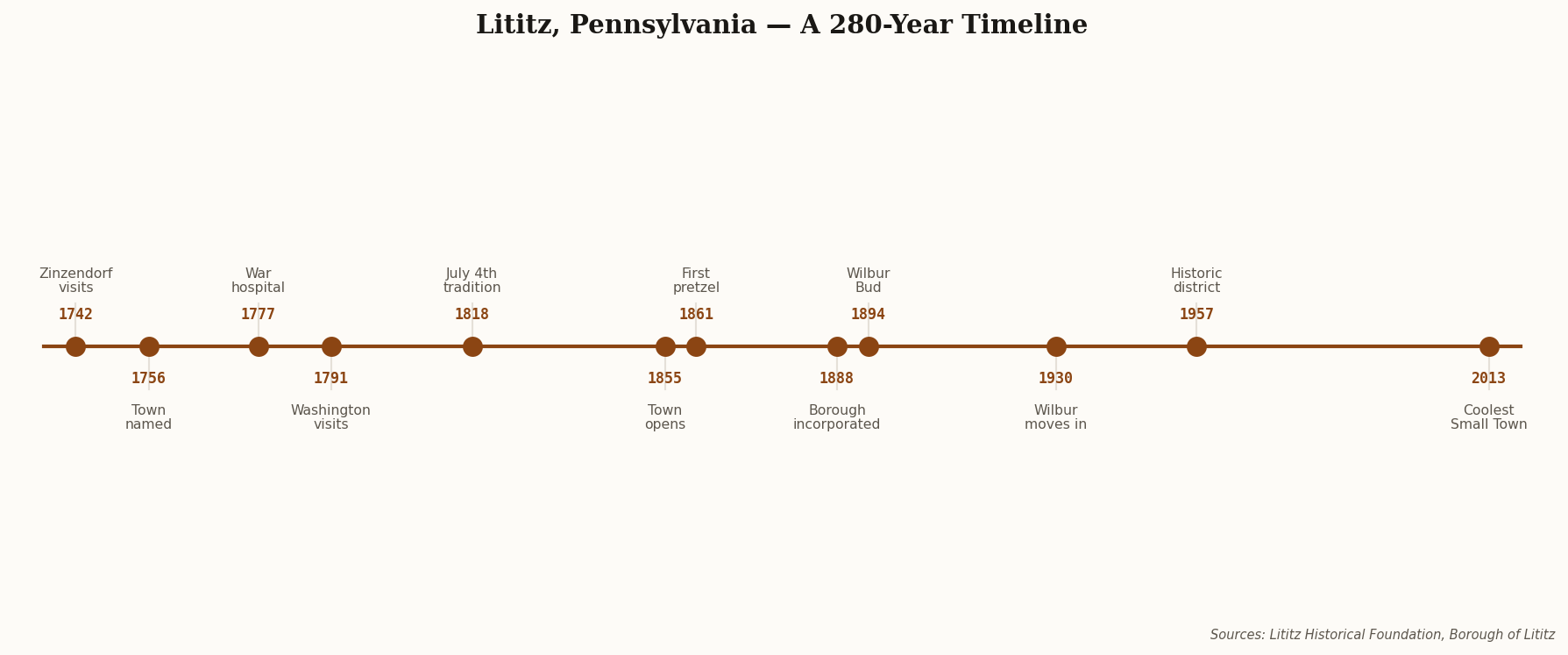
Timeline chart showing 12 major events in Lititz history from Zinzendorf's 1742 visit through the 2013 Coolest Small Town designation
A 280-year sweep: from Zinzendorf's first sermon to Budget Travel's crown. Every major inflection point happened on or near Main Street.
04

The Chocolate Town That Hershey Forgot

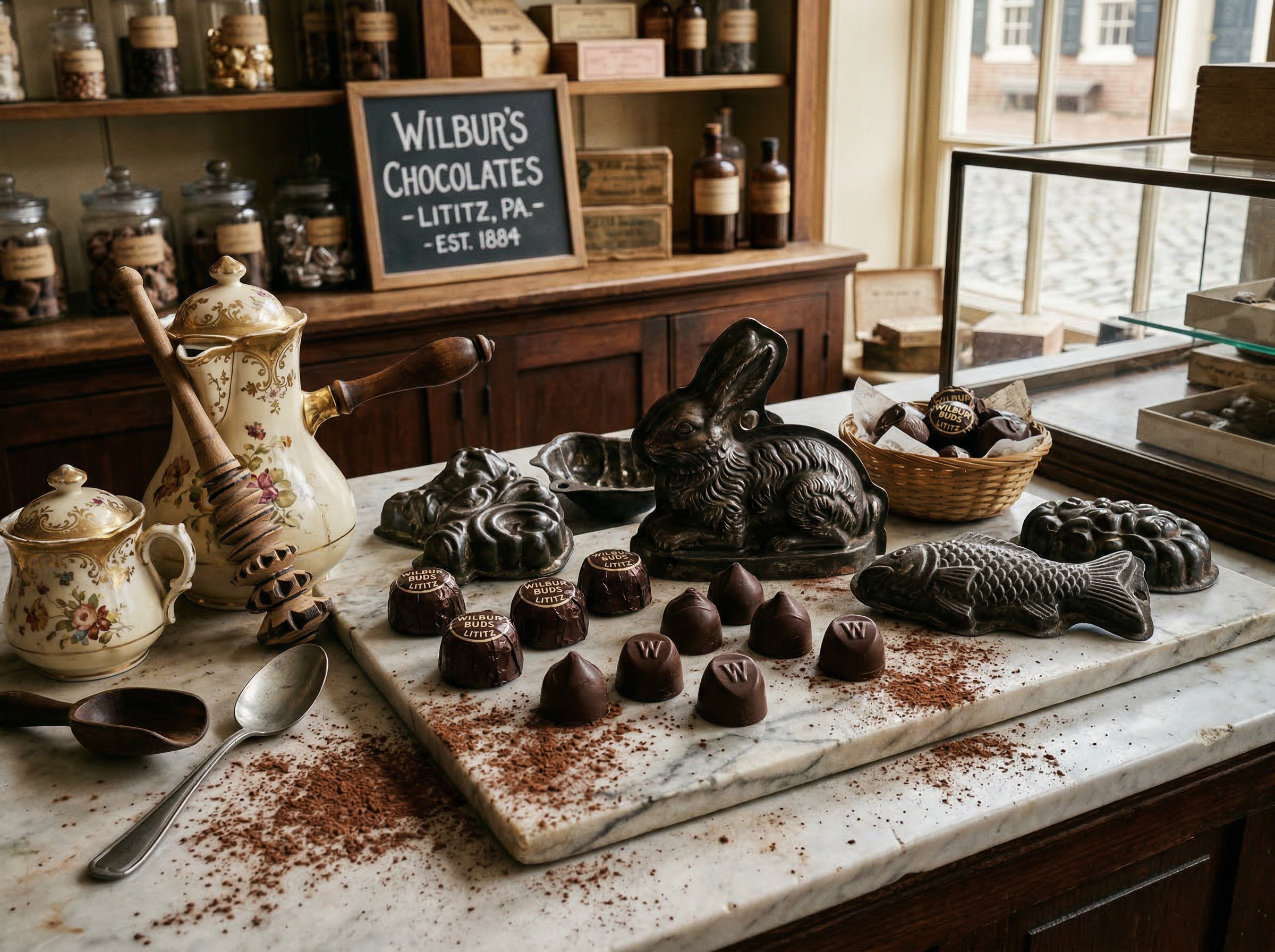
Elegant antique chocolate molds and rich dark Wilbur Buds on a marble counter in a vintage confectionery

Ask most Americans to name a Pennsylvania chocolate town and they'll say Hershey. They'd be wrong — or at least, late. The Wilbur Chocolate Company, founded in Philadelphia in 1865, introduced the Wilbur Bud in 1894 — a full thirteen years before Milton Hershey debuted the Hershey's Kiss in 1907. Lititz locals will tell you the Kiss is a copycat. They're not entirely wrong.

Wilbur moved its operations to Lititz in 1930, and the rivalry became geographic. Hershey had its theme park and its street lamps shaped like Kisses. Lititz had something arguably more valuable: a richer, more European-style chocolate recipe and a Wilbur Chocolate Museum housing one of the world's largest collections of antique chocolate molds and porcelain pots.

The framing locals use is "Quality vs. Quantity." Hershey won the marketing war. Wilbur won the taste test. Whether that's true or wishful thinking depends on which side of Route 501 you're standing on — but the fact that Lititz was making signature chocolates while Hershey was still learning to milk cows is the kind of historical flex that never gets old.

05

Seven Thousand Candles and the Oldest Fourth of July

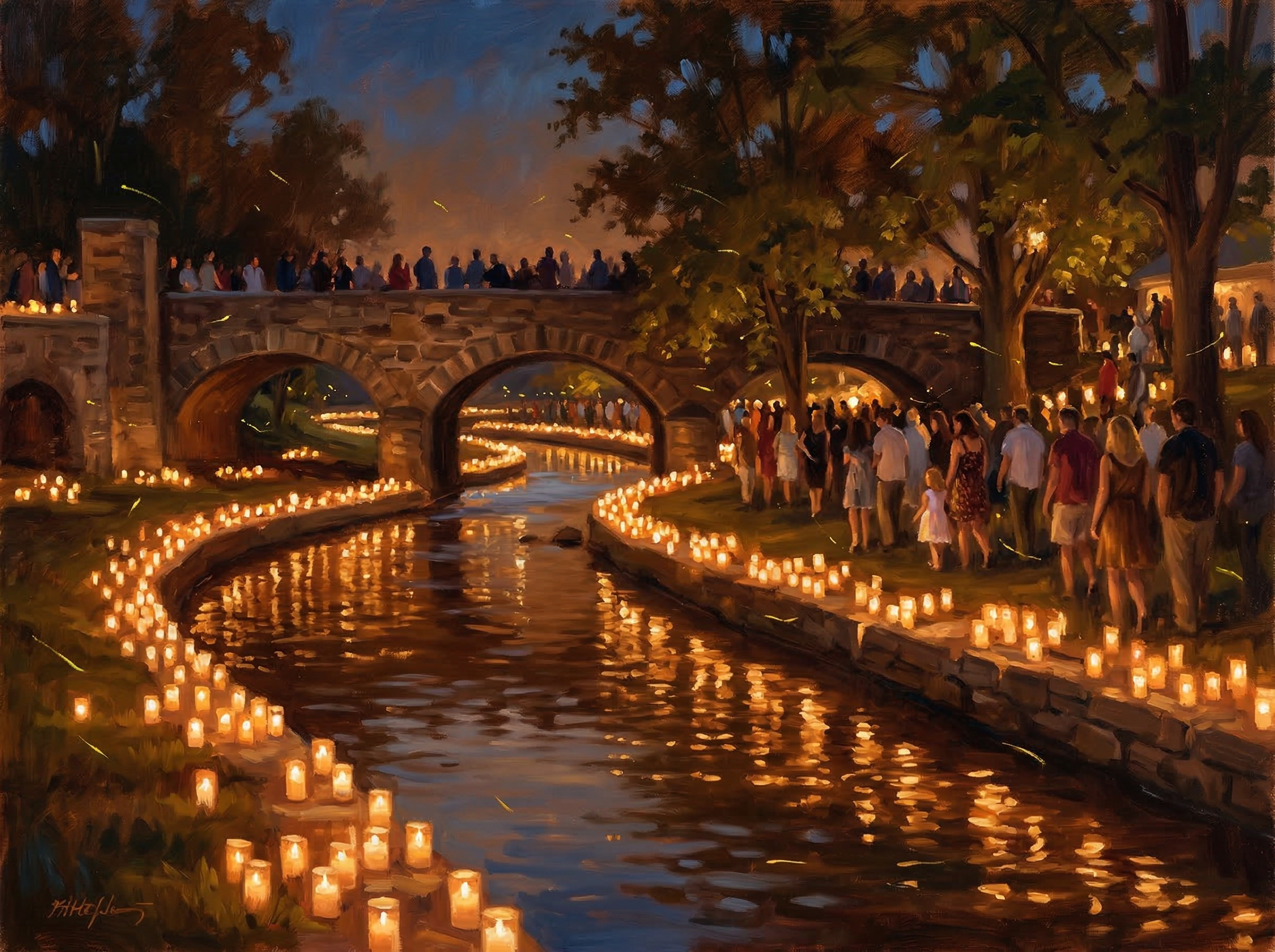
Thousands of glowing candles lining both banks of a gentle creek at twilight in Lititz Springs Park

Every July 4th, more than 10,000 people descend on a town of 9,370 to watch something that sounds impossible in the age of LED spectacles: 7,000 hand-lit candles placed along the banks of Lititz Run in Lititz Springs Park. The "Queen of Candles" pageant has been running since 1843, but the July 4th celebration itself dates to 1818 — making it one of the oldest continuous Independence Day observances in the United States.

The springs themselves are the literal heart of the community. Limestone aquifers pump roughly 2 million gallons of water daily through the park, and in the 1800s, people traveled from across the East Coast believing the water had medicinal properties. They weren't entirely wrong — clean, cold spring water in an era of cholera was practically miraculous.

What makes the Grand Illumination remarkable isn't the spectacle itself — it's the stubbornness. In 2026, when every small town in America can rent a drone light show for a fraction of the cost, Lititz still has volunteers hand-placing thousands of candles along a creek. That's not nostalgia. That's a statement about what tradition actually costs when you mean it.

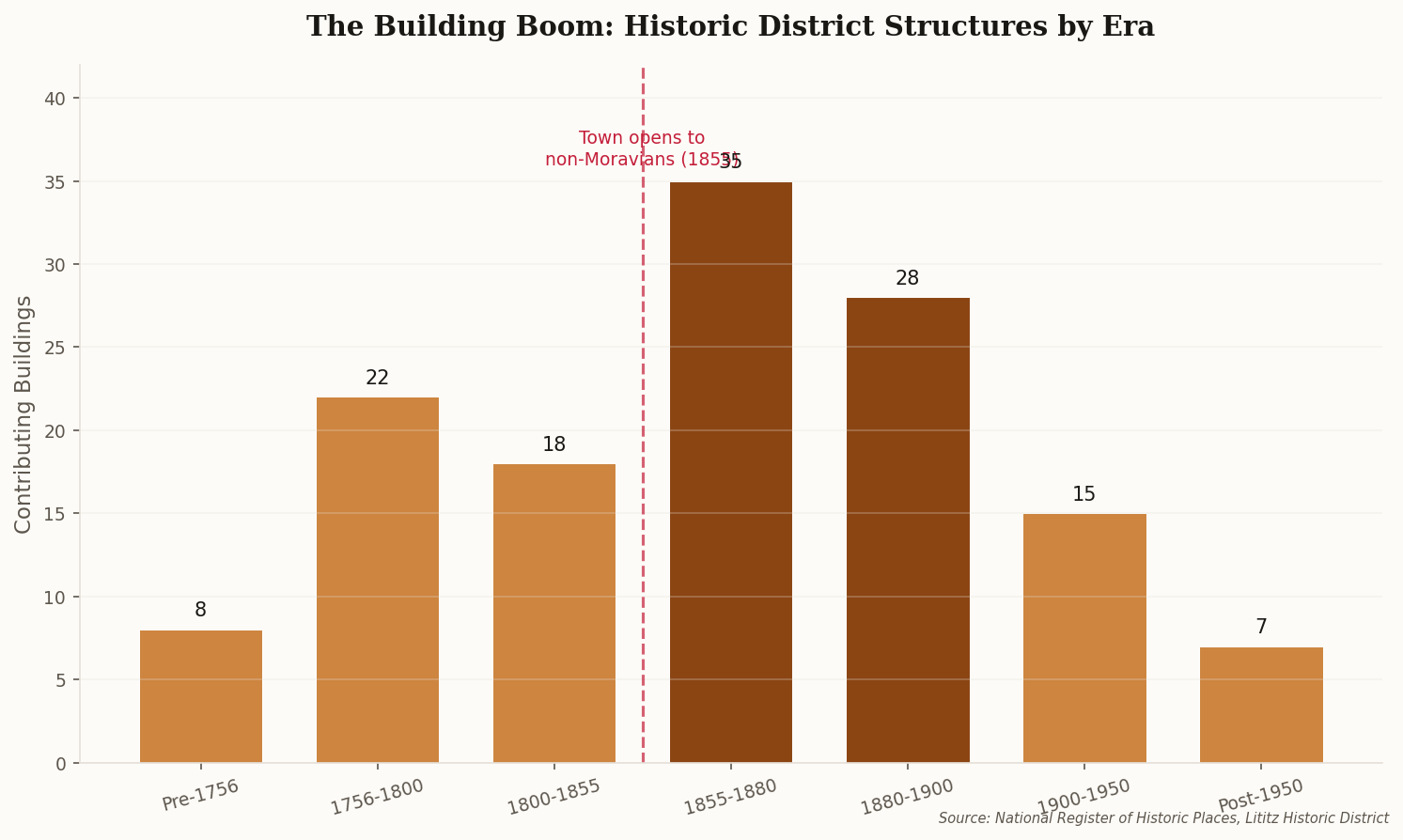
Bar chart showing the surge in historic building construction after Lititz opened to non-Moravians in 1855
When the gates opened: three-quarters of Lititz's 113 historic district buildings went up in the 45 years after the Moravian Church ended its exclusivity in 1855.
06

From Trombone Choirs to Taylor Swift

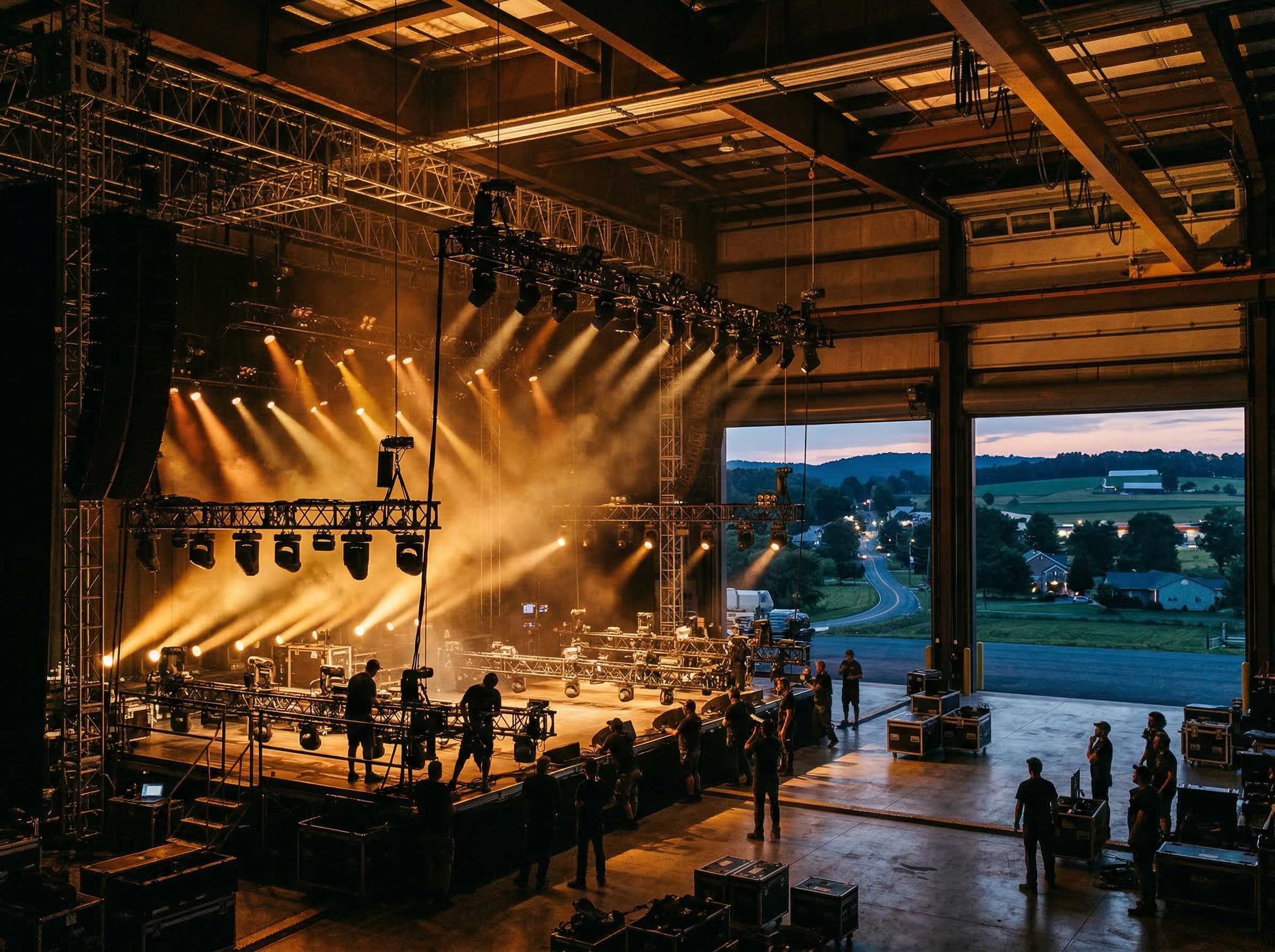
Massive modern concert production facility at dusk with dramatic stage lighting trusses inside a rehearsal warehouse

In 2013, Budget Travel named Lititz the "Coolest Small Town in America." It was the kind of designation that usually fades within a news cycle. Instead, Lititz treated it like a dare.

The most improbable addition to the town's résumé is Rock Lititz, a 96-acre production campus that is, no exaggeration, the world's premier facility for major touring acts to rehearse their shows. U2 has rehearsed here. Taylor Swift has rehearsed here. The same town where Moravian trombonists once serenaded George Washington now hosts the technical dress rehearsals for $500 million concert tours. The connection isn't ironic — it's direct. Lititz had a cluster of entertainment production companies (Tait Towers, Clair Global) that grew out of the region's long musical heritage.

Then there's the craft scene. Bulls Head Public House has been repeatedly named "Best Beer Bar in America" by USA Today. Stoll & Wolfe distillery is reviving heritage Pennsylvania rye whiskey. The pretzel bakery still operates. The springs still flow. And 113 historic buildings still line Main Street, protected by the first local historic district ordinance in Pennsylvania history (1957).

A Moravian commune that closed its doors in 1756 now draws tourists, rock stars, and craft beer pilgrims from around the world. The doors are open. The secrets aren't secrets anymore. But the town still knows exactly who it is.

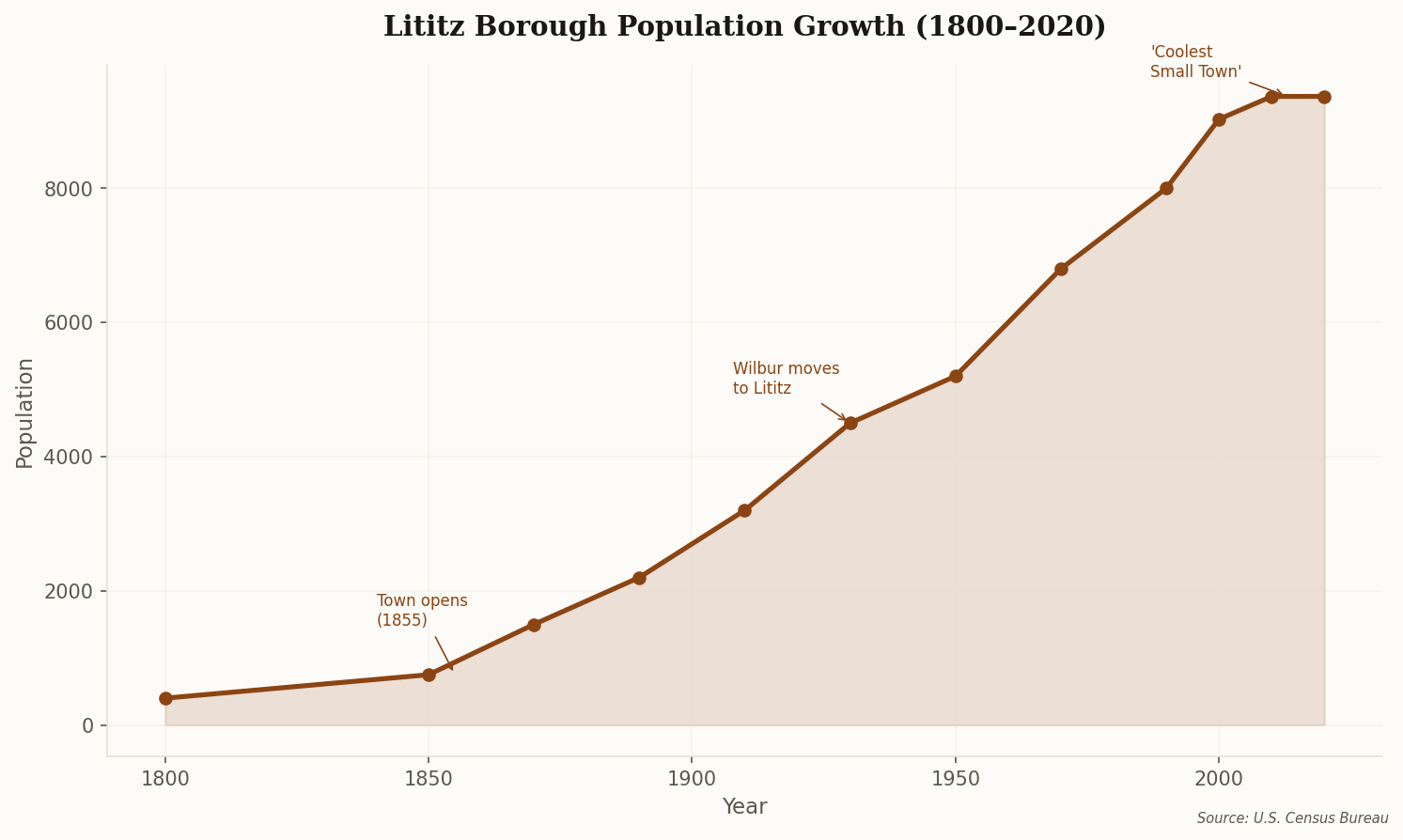
Line chart showing Lititz Borough population growing from 400 in 1800 to 9,370 in 2020, with key events annotated
From 400 souls in a closed commune to nearly 10,000 — and the growth curve steepened every time Lititz opened a new chapter.
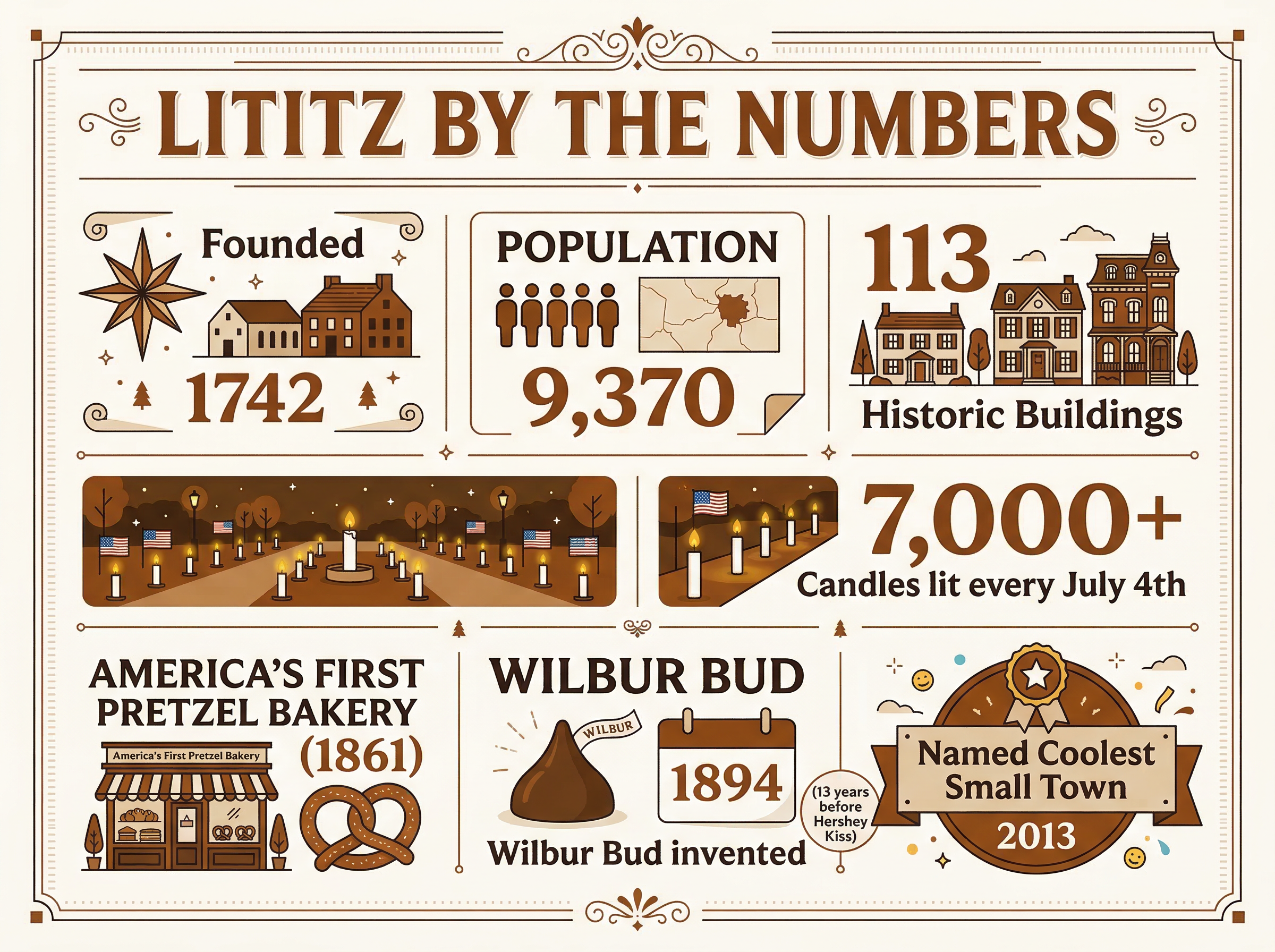
Infographic showing key Lititz statistics: Founded 1742, Population 9,370, 113 Historic Buildings, 7,000+ Candles every July 4th, America's First Pretzel Bakery 1861, Wilbur Bud invented 1894, Named Coolest Small Town 2013
Lititz by the Numbers — 280 years of quiet accumulation. Generated with Nano Banana 2.0

Still Waters, Deep Roots

Lititz teaches a lesson that most American towns never learn: reinvention doesn't require demolition. The Moravians built something austere and beautiful. The industrialists added pretzels and chocolate. The modern stewards added rock concerts and craft whiskey. Each layer preserved the last. The springs still flow at 2 million gallons a day. The candles still get lit by hand. And somewhere on East Main Street, someone is still twisting dough the way Julius Sturgis learned from a stranger in exchange for a meal. Some towns chase the future. Lititz just keeps earning it.

Share X LinkedIn