
Tokyo Is Disappearing. Forty Photographers Showed Up to Say Goodbye.
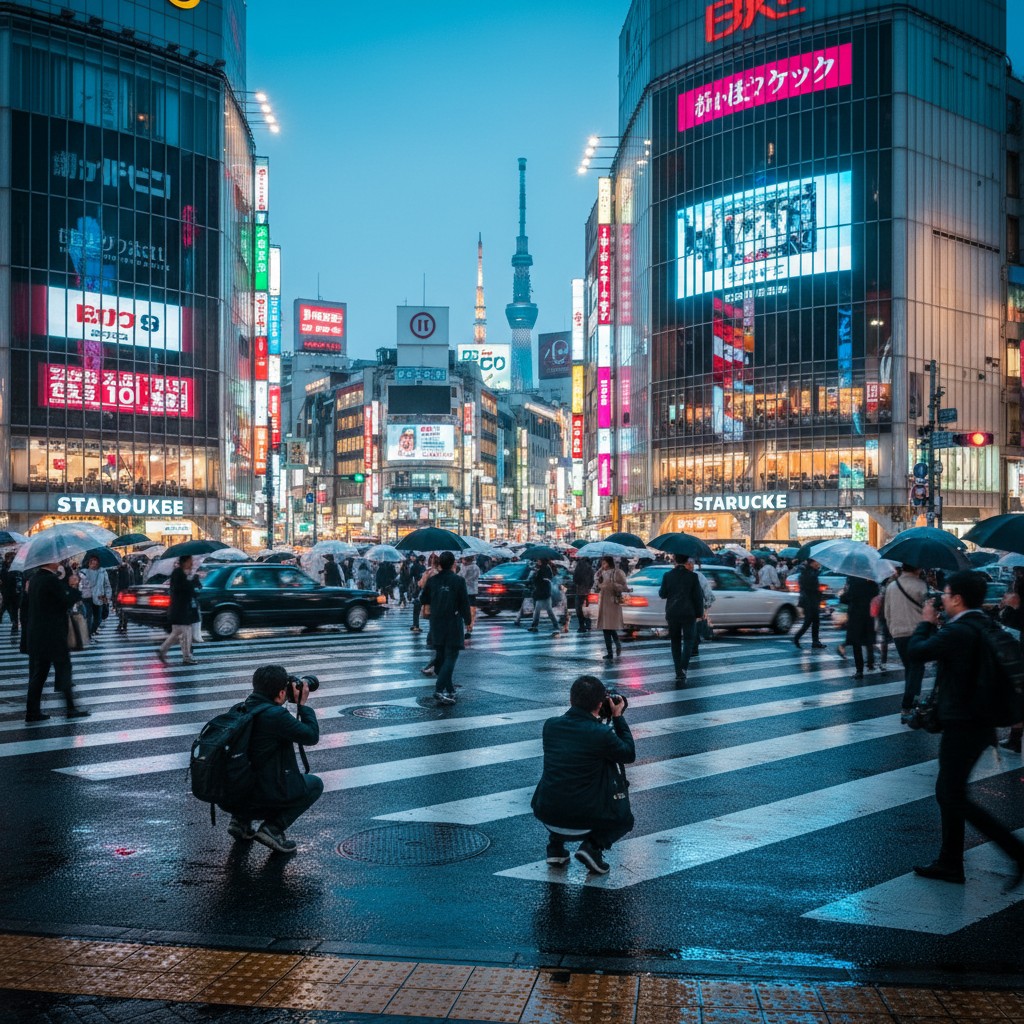
Here's the uncomfortable truth about the world's best street photography city: the version of Tokyo you fell in love with through Daido Moriyama's grainy black-and-whites is being bulldozed. The "In Focus" exhibition that closed today at Gallery Conceal Shibuya featured 40 photographers from 15 countries, all documenting what the exhibition director bluntly called "a version of Shibuya that won't exist by 2030."
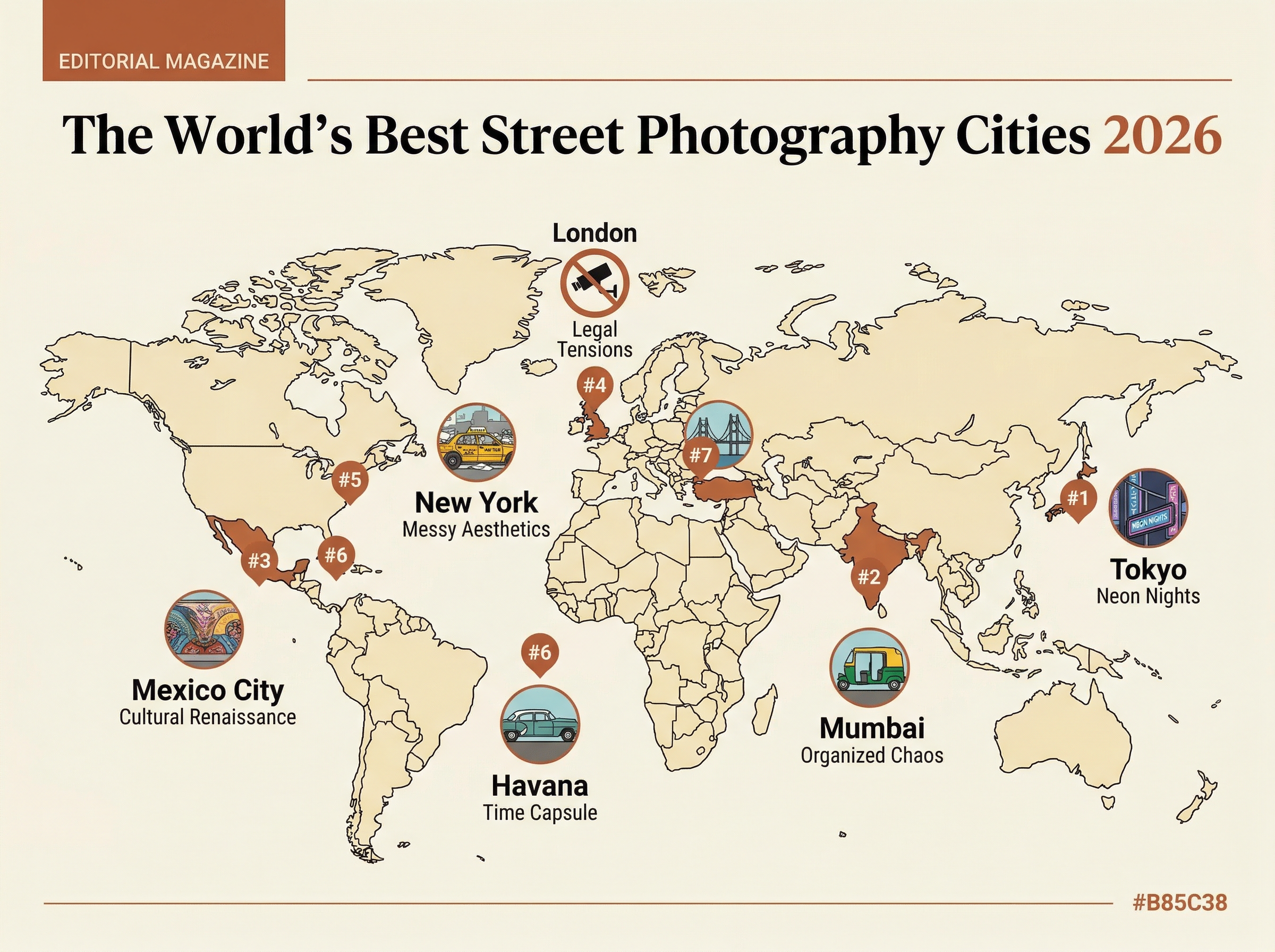
This isn't just nostalgia tourism. Tokyo's 2026 urban redevelopment projects are systematically replacing the neon-soaked back alleys and cramped izakayas that made it the undisputed #1 ranked city for street photography. The exhibition focused on "Hidden Layers" — the ramen stalls beneath the train tracks, the hand-painted signage that AI-generated alternatives will soon replace, the human-scale chaos that no amount of urban planning can reproduce.
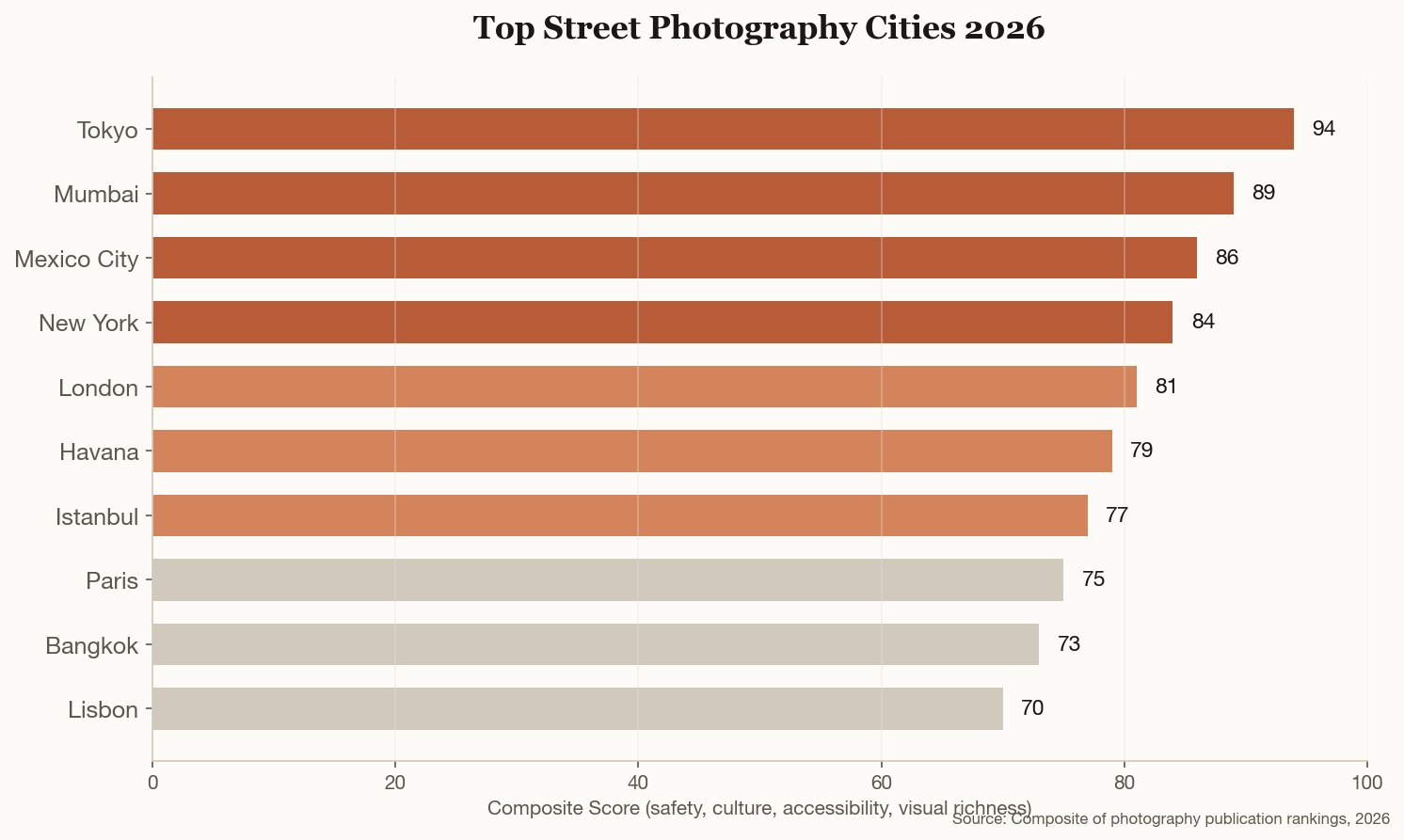
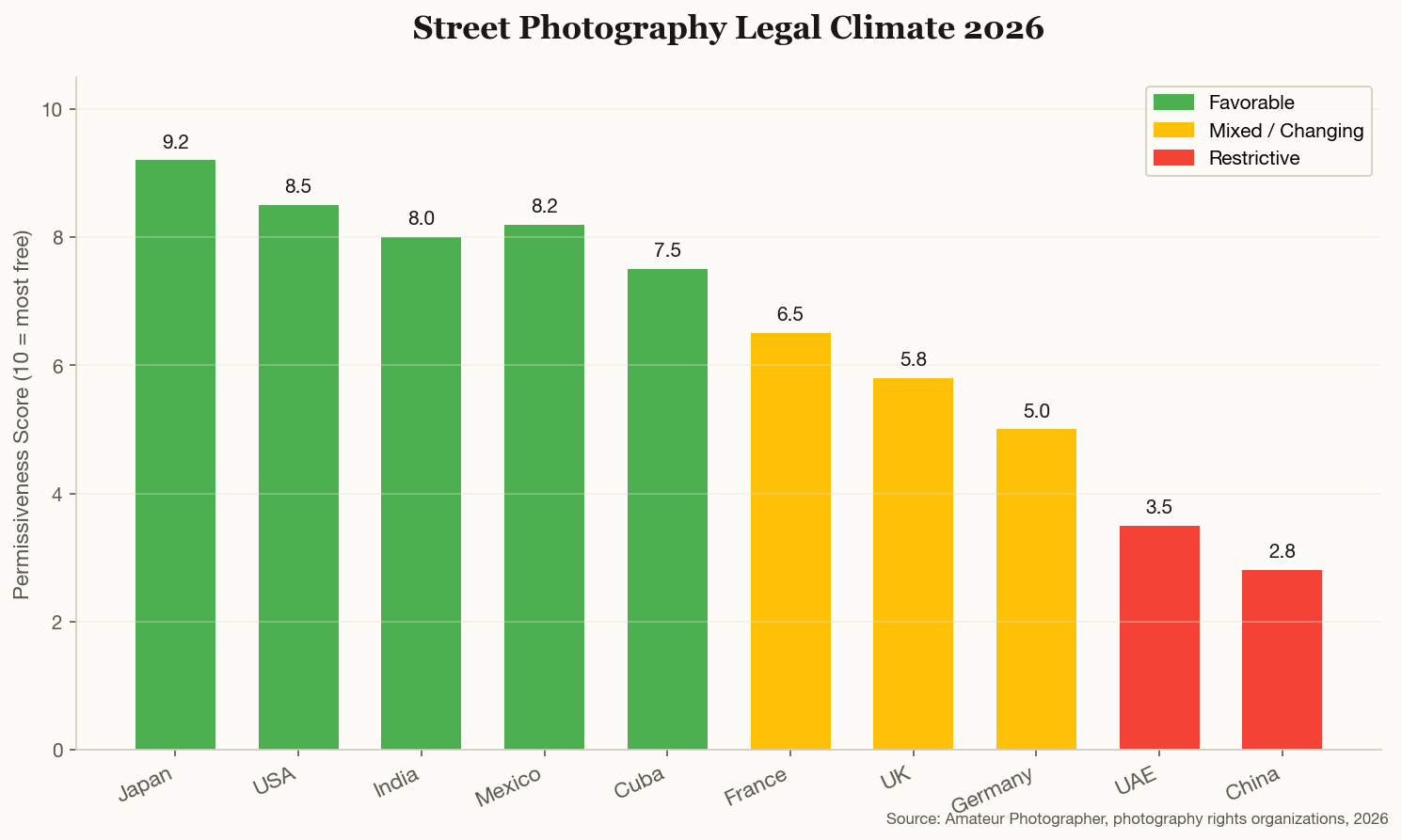
What makes Tokyo's situation uniquely urgent is the city's paradox: it remains the safest major city for night shooting, the most visually dense per square meter, and the most respectful of photographers. But those very qualities made it irresistible to developers who want to "modernize" what was already perfect. If you've been planning that Tokyo street photography trip, your window is narrowing by the quarter.
Mexico City's Women Photographers Are Reclaiming the Streets They Were Told to Avoid
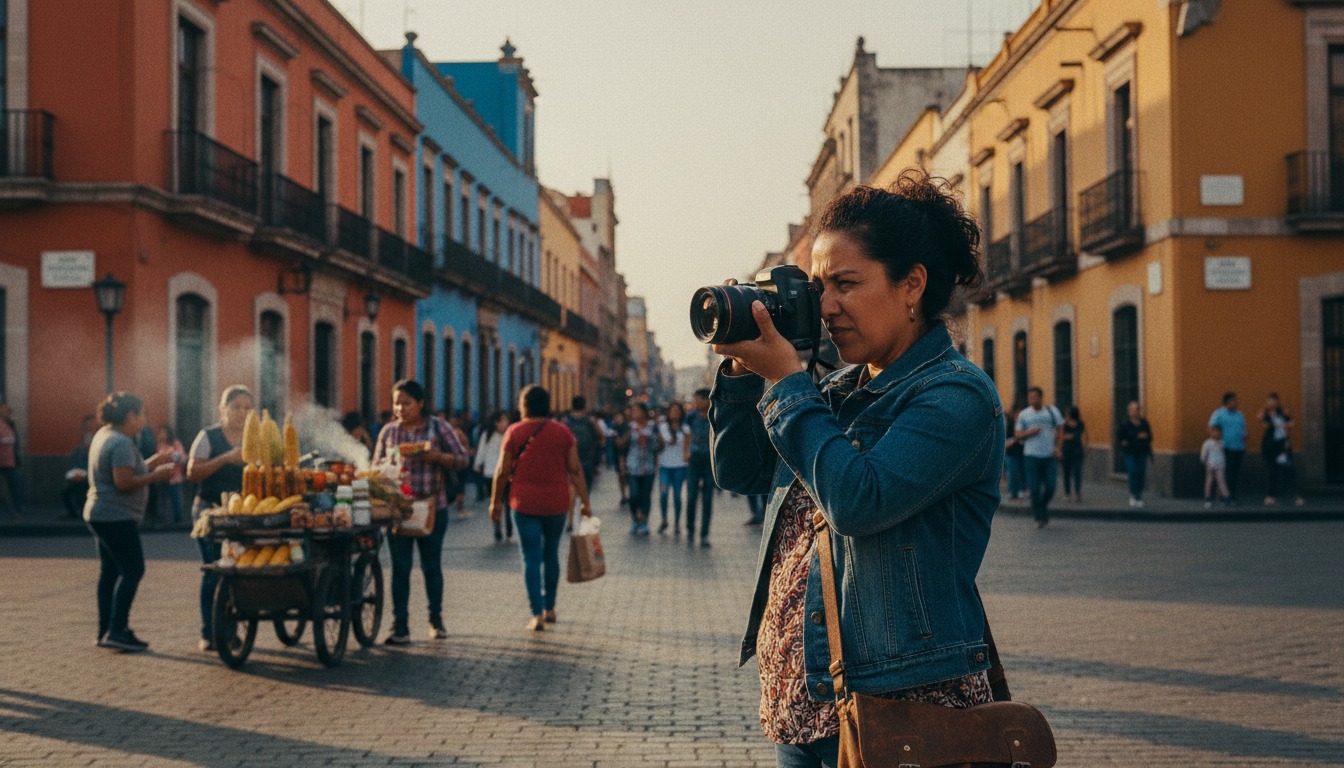
Street photography has always had a gender problem. The genre's mythology — the lone male flâneur wandering dangerous streets with a Leica — wasn't just an aesthetic choice. It was an access barrier. The IV edition of "Mexican Women Photographers" at CENART in Mexico City is the most significant challenge to that mythology in the genre's history.
Featuring 100 photographers from Mexico and guest country Colombia, the exhibition focuses on what curator Sunny Quintero calls "the female gaze" in street photography. "This exhibition is not just about photos," Quintero told attendees at yesterday's opening. "It's about reclaiming the streets where women have often felt like subjects rather than observers." That's not a soft curatorial statement — it's a manifesto.
The timing is deliberate. CDMX has emerged as the 2026 hub for Latin American street art, with an "Art Week" movement that's transforming entire neighborhoods into open-air galleries. The city has become the undeniable hub for Latin American street art, with entire neighborhoods transforming into open-air galleries. The women driving this surge aren't just participating — they're redefining what the genre can see.
The King of Street Returns — And It's Proudly, Defiantly Analog
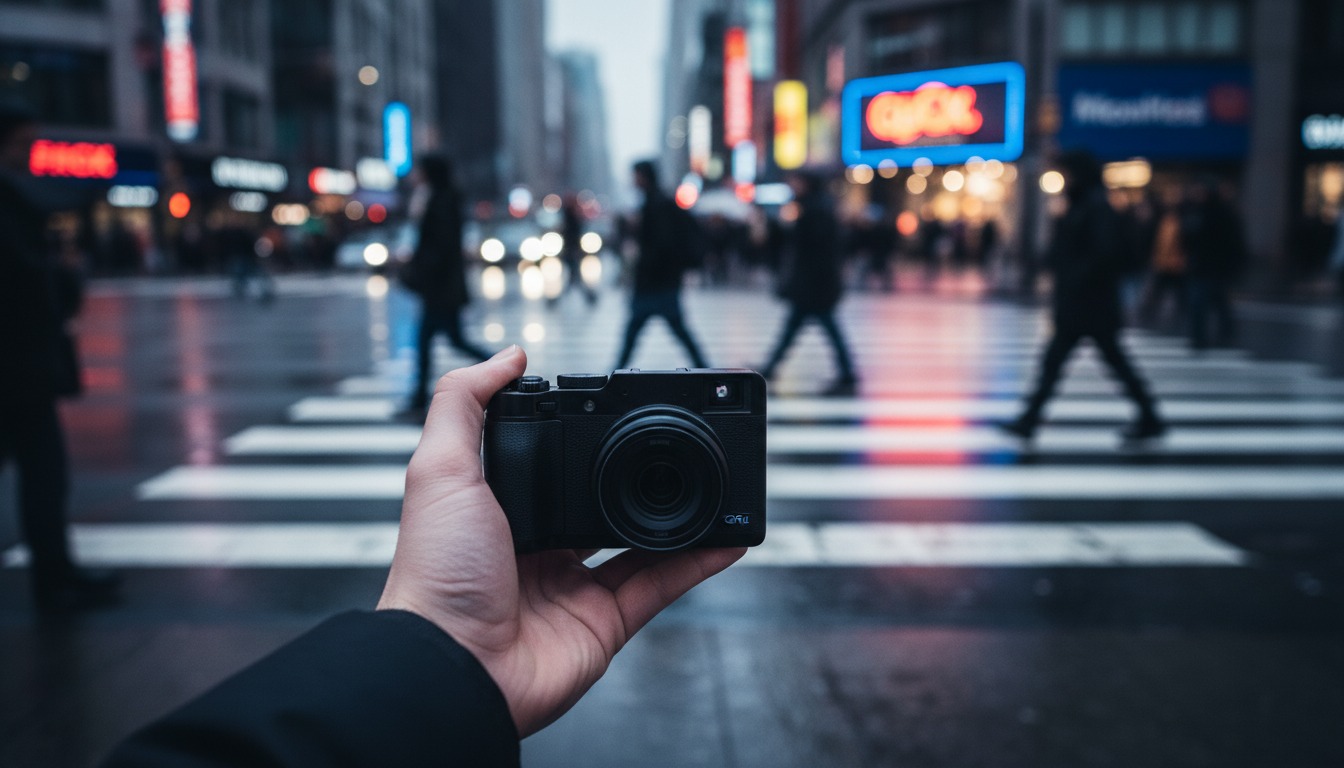
In a market drowning in AI-enhanced computational photography, Ricoh just did something radical: they released a camera that's intentionally, almost aggressively, simple. The GR IV and its "GR IV Monochrome" variant debuted as the centerpiece of the Birmingham Photography Show this week, and the 25.7MP sensor is almost beside the point.
What matters is the new "Street Mode" autofocus enhancement — a system designed to nail focus at 2-3 meters without the camera hunting, because the best street shots happen before your subject knows you exist. The improved low-light sensor acknowledges that the best street photography happens after dark, when cities shed their daytime composure. And the "AI-Free" hardware tag Ricoh is leaning into? That's not a marketing gimmick. It's a philosophical statement.
The GR series has defined the technical template of street photography for two decades — discreet body, wide-angle lens, high-contrast rendering. Every generation of this camera shifts how an entire genre looks. The fact that the GR IV's biggest innovation is not adding AI processing tells you everything about where serious photographers stand on the authenticity question. This is a camera built for people who believe the imperfections are the point.
The Messy Revolution: Why "Bad" Photography Is the New Good
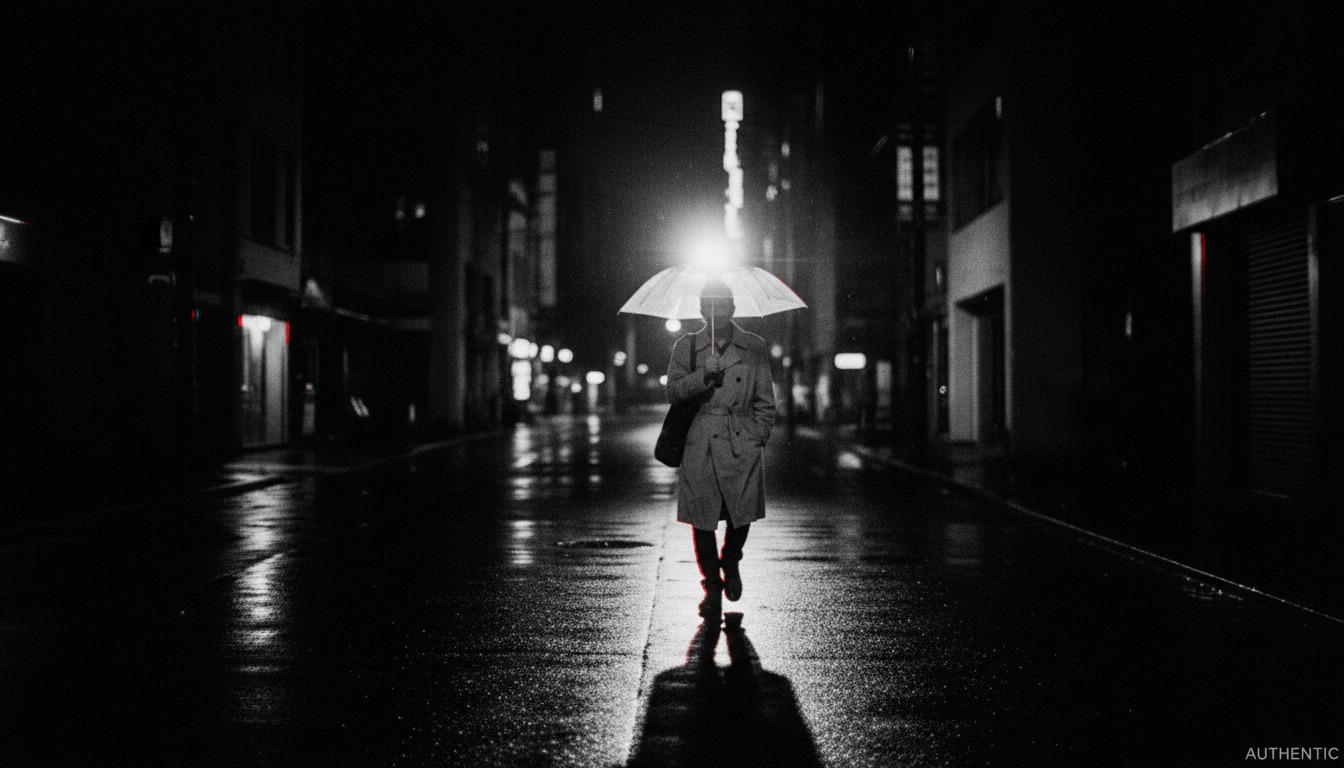
The #RealStreets2026 movement tearing through Instagram and TikTok isn't just a hashtag — it's a full-scale rebellion against the AI-generated perfection that's flooding visual culture. Photographers in NYC and Paris are now deliberately posting their "unedited RAW bursts" alongside final shots, proving to followers that a human hand — shaky, imperfect, alive — made the image.
The aesthetic implications are profound. The "clean" look that dominated street photography through the 2010s — tack-sharp, beautifully exposed, geometrically composed — is being actively rejected. In its place: "Messy Aesthetics." Purposeful blur. Aggressive grain. Tilted horizons that would've gotten you laughed out of a critique group five years ago. The logic is brutal and elegant: if AI can generate a technically perfect street photo, then technical perfection is no longer proof of humanity. Only the flaws are.
Major platforms are taking notice. Both Instagram and TikTok are testing "Verified Human" badges specifically for photography portfolios — a concept that would've seemed absurd in 2023 but feels inevitable in 2026. The question isn't whether this trend will last. It's whether the definition of "good" photography has permanently shifted from technical mastery to emotional authenticity.
Mumbai Just Became the New Center of Gravity for Street Photography
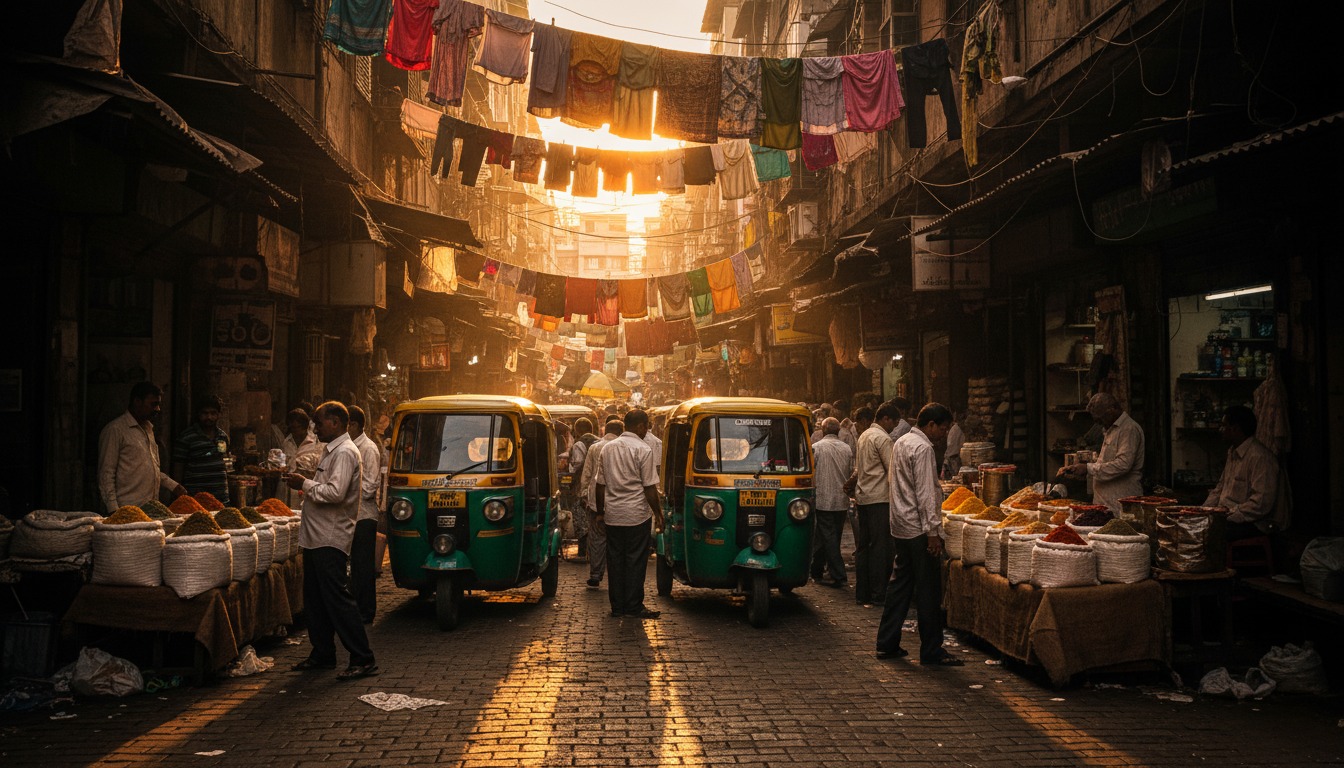
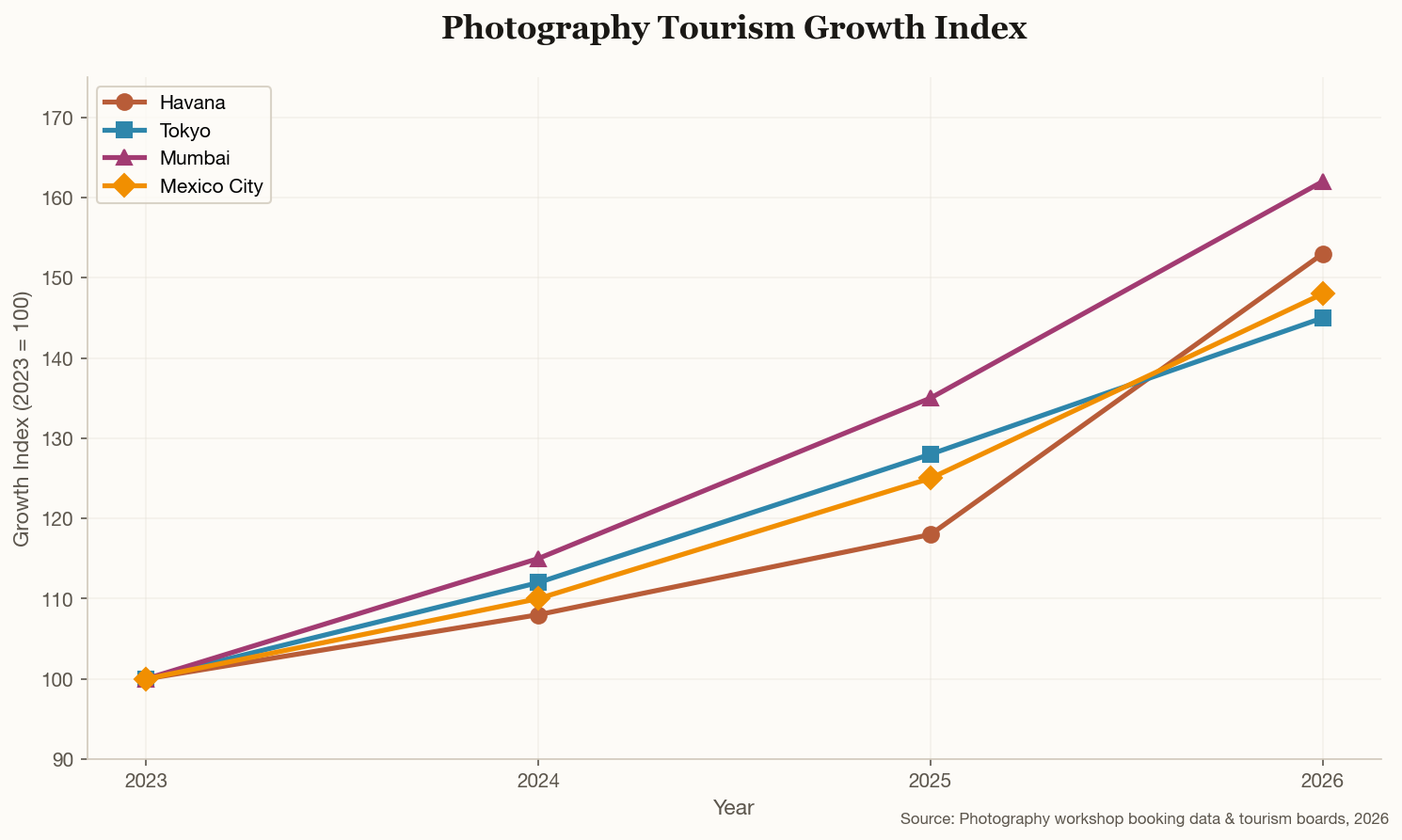
Numbers don't lie, and this one demands attention: 25,000 visitors attended India's first dedicated street photography exhibition. Twenty-five thousand people showed up to look at photographs of the streets they walk every day. The Pure Street Photography Awards exhibition in Mumbai didn't just conclude its run — it smashed every attendance record for the genre in Asia.
The 2026 call for entries was announced this week, and the "Best City" prize is reportedly leaning toward Mumbai's "organized chaos" aesthetic — a phrase that perfectly captures what makes the city magnetic for street shooters. Where Tokyo offers neon geometry and London provides moody restraint, Mumbai delivers overwhelming, unapologetic life. Every frame contains six stories happening simultaneously. The challenge isn't finding a moment. It's choosing which one to capture.
Here's the bigger shift: Mumbai has now surpassed Istanbul as the preferred "East meets West" destination for high-contrast street work. The Global South isn't just participating in street photography's evolution — it's leading it. The massive public interest signals something Western-centric photography media hasn't fully grasped yet: the genre's center of gravity has moved.
London's New Takedown Law Could Kill Candid Photography As We Know It
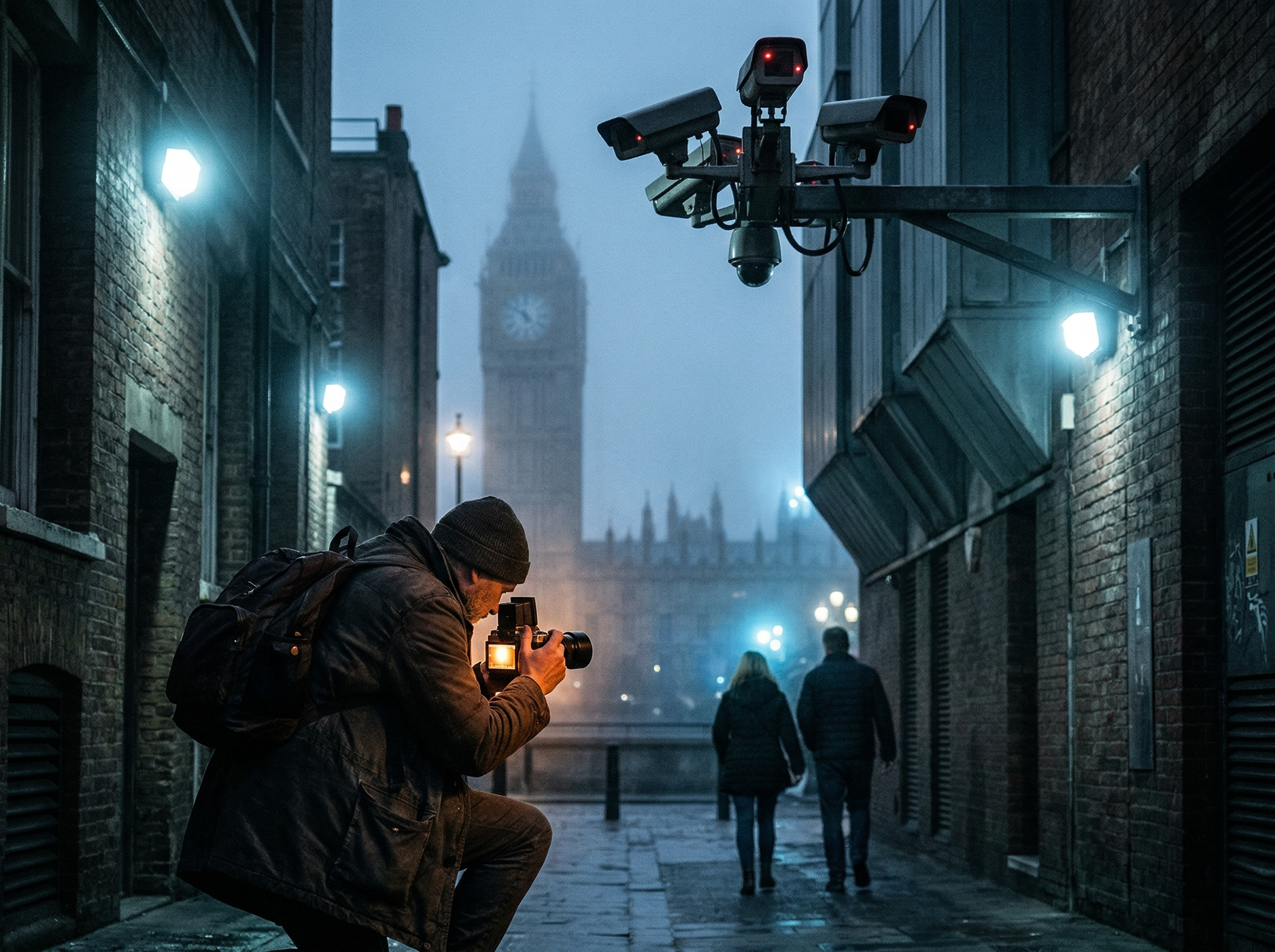
The UK just did something that should worry every street photographer on the planet. A new amendment to the Crime and Policing Bill now requires social media platforms to remove "non-consensual" images within 48 hours if reported as "distressing." Read that again. Not defamatory. Not harassing. Distressing — a standard so subjective it could apply to literally any candid photograph.
The law was designed to combat genuine harassment, and that intent is understandable. But the collateral damage to street photography in London — consistently a top-3 global destination for the genre — is already visible. Photographers report a "chilling effect" on candid portraiture, the backbone of British street photography from Tony Ray-Jones to Matt Stuart. Photography groups including the Royal Photographic Society are lobbying for an "artistic exemption," but the law took effect March 1 with no such carve-out.
The irony is suffocating: London has more CCTV cameras per capita than almost any city on Earth. The state can photograph you dozens of times a day without consent. But a photographer capturing a beautiful, fleeting human moment on the street? That's now legally risky. Watch this space — if the UK sets the precedent, other countries will follow.
Havana's Blackouts Are Making It the Most Cinematic City on Earth
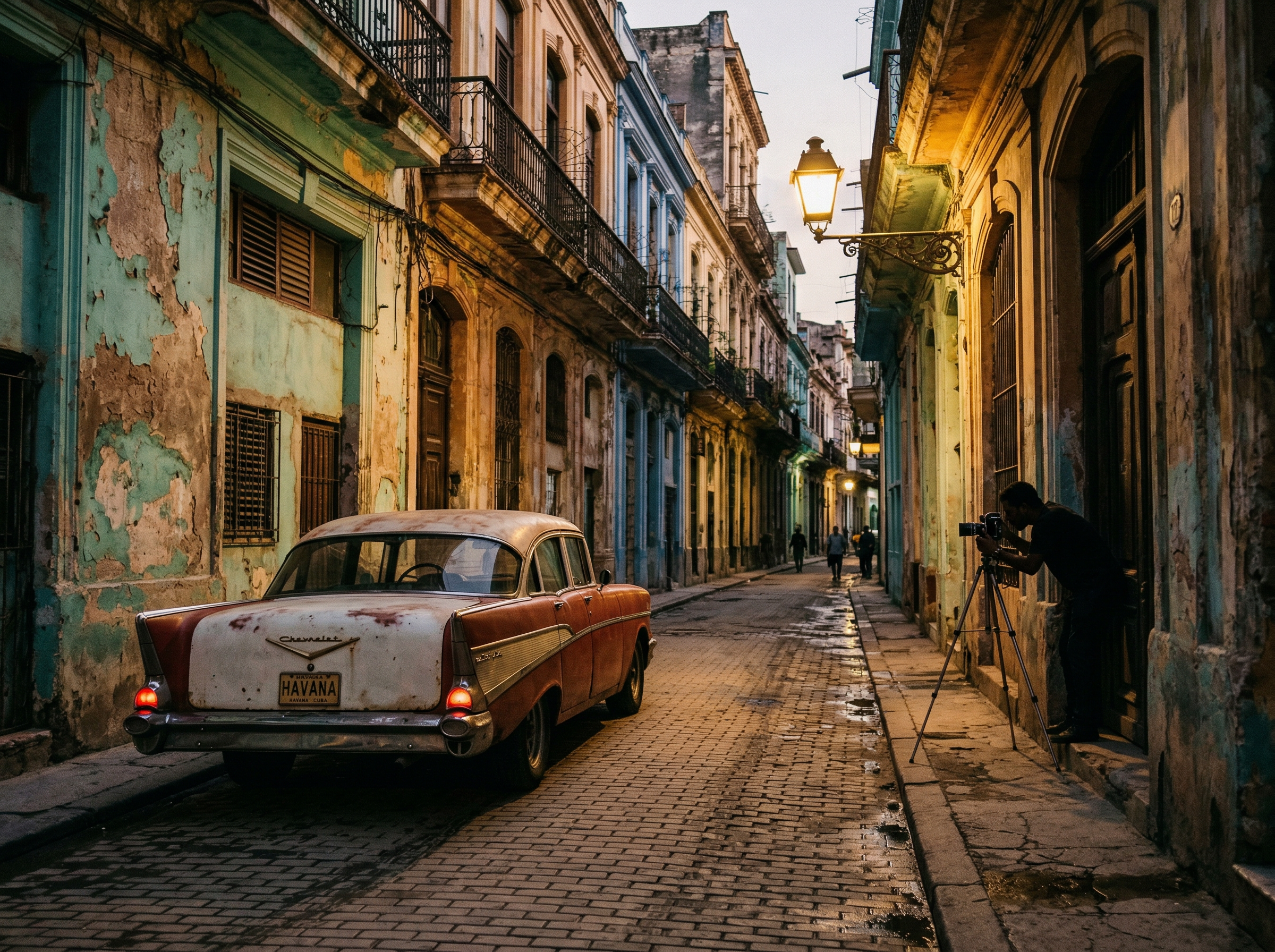
There's something darkly poetic about a city's suffering becoming its most marketable asset. Havana is seeing a 30% surge in photography tourism for 2026, and the draw isn't the classic cars or the crumbling colonial facades — though those help. It's the blackouts. The city's ongoing energy crises create lighting conditions that no studio can replicate: pools of warm light from single streetlamps cutting through absolute darkness, creating natural chiaroscuro that would make Caravaggio weep.
New 2026 workshops from Pascarel Photo are specifically built around "Night Lights of Havana," teaching photographers to work with the city's unique low-light conditions. Cuba is being marketed as the "Final Frontier" for film-based street photography, largely because its lack of digital saturation means your images won't look like everyone else's Instagram feed. There's no algorithmic optimization of Havana's visual identity. Not yet.
The ethical dimension is impossible to ignore. Photography tourism is bringing foreign currency into an economy that desperately needs it, but the aestheticization of poverty and infrastructure collapse deserves honest scrutiny. The best photographers working in Havana right now — the ones whose work will last — are the ones grappling with that tension honestly, not just harvesting "content" from someone else's crisis. That's the difference between a photographer and a tourist with a camera.