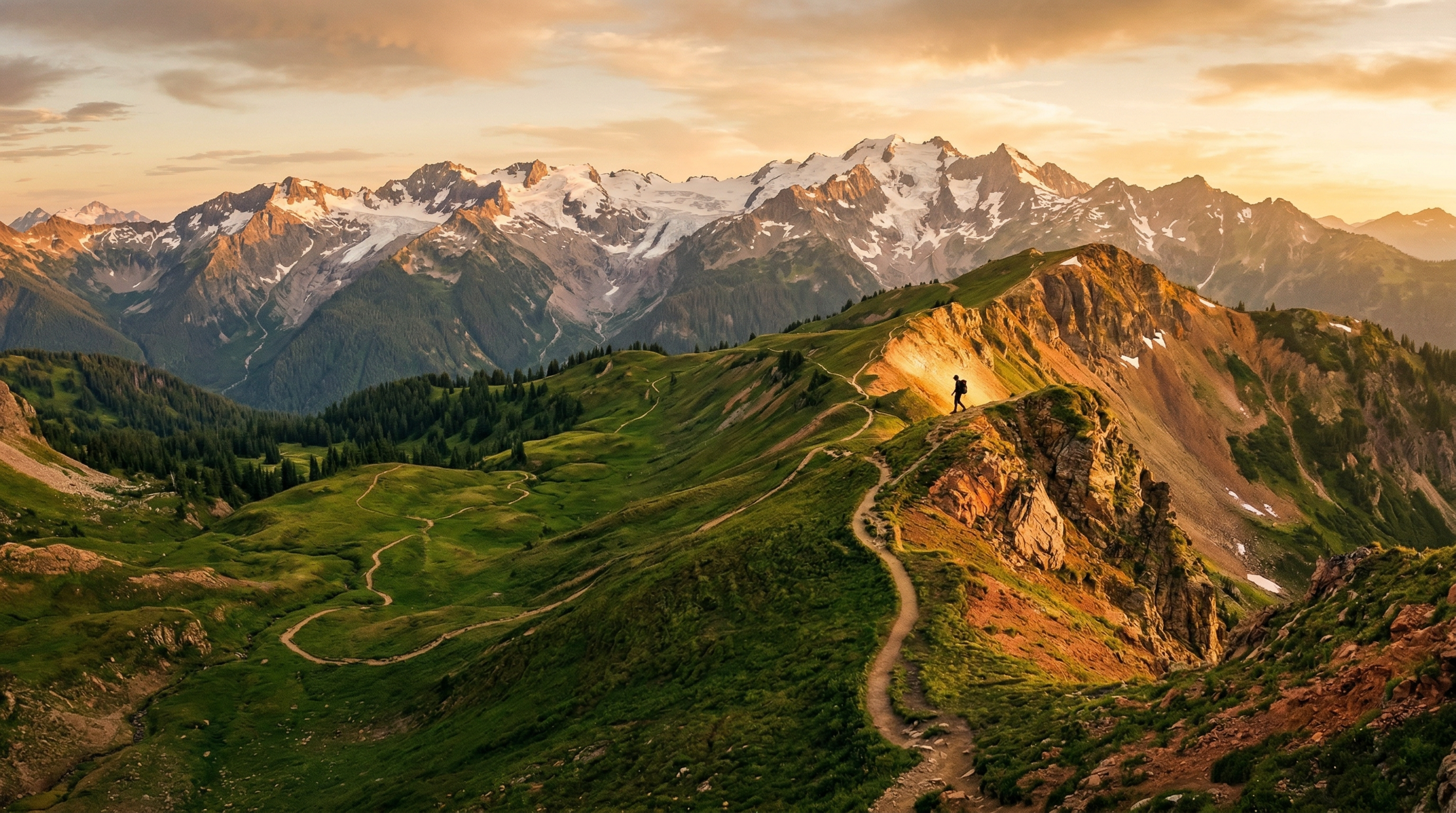

The Park Service Just Dropped Its 2026 Hit List—And Tore Up the Velvet Rope
The National Park Service did something this week that would've been unthinkable two years ago: it published its official "Best Hikes for Spring 2026" list—the first since the February rollback of reservation systems that kept those trails manageable. The Mist Trail in Yosemite, Bright Angel at the Grand Canyon, Hidden Lake Overlook in Glacier—all now fully first-come, first-served.
Here's what that means in practice: 700 miles of trails in Glacier alone are now reservation-free. Logan Pass gets a 3-hour parking limit instead. Across the system, Yosemite, Arches, and Mount Rainier have all scrapped their timed-entry protocols. The NPS estimates a 15–20% jump in daily vehicle traffic as a result.
Acting Assistant Secretary Kevin Lilly framed it as a philosophical pivot: "Our national parks belong to the American people." That's a fine bumper sticker. But if you've ever spent four hours in a Yosemite Valley parking queue, you know what "belonging to the people" looks like at scale. The strategic play here—promoting "second-tier" trails to diffuse congestion—is smart in theory. Whether it survives contact with a million Instagram accounts is another question entirely.
The move: Get to trailheads before 7 AM or plan midweek visits. The reservation era trained crowds to spread out; that discipline is about to evaporate.
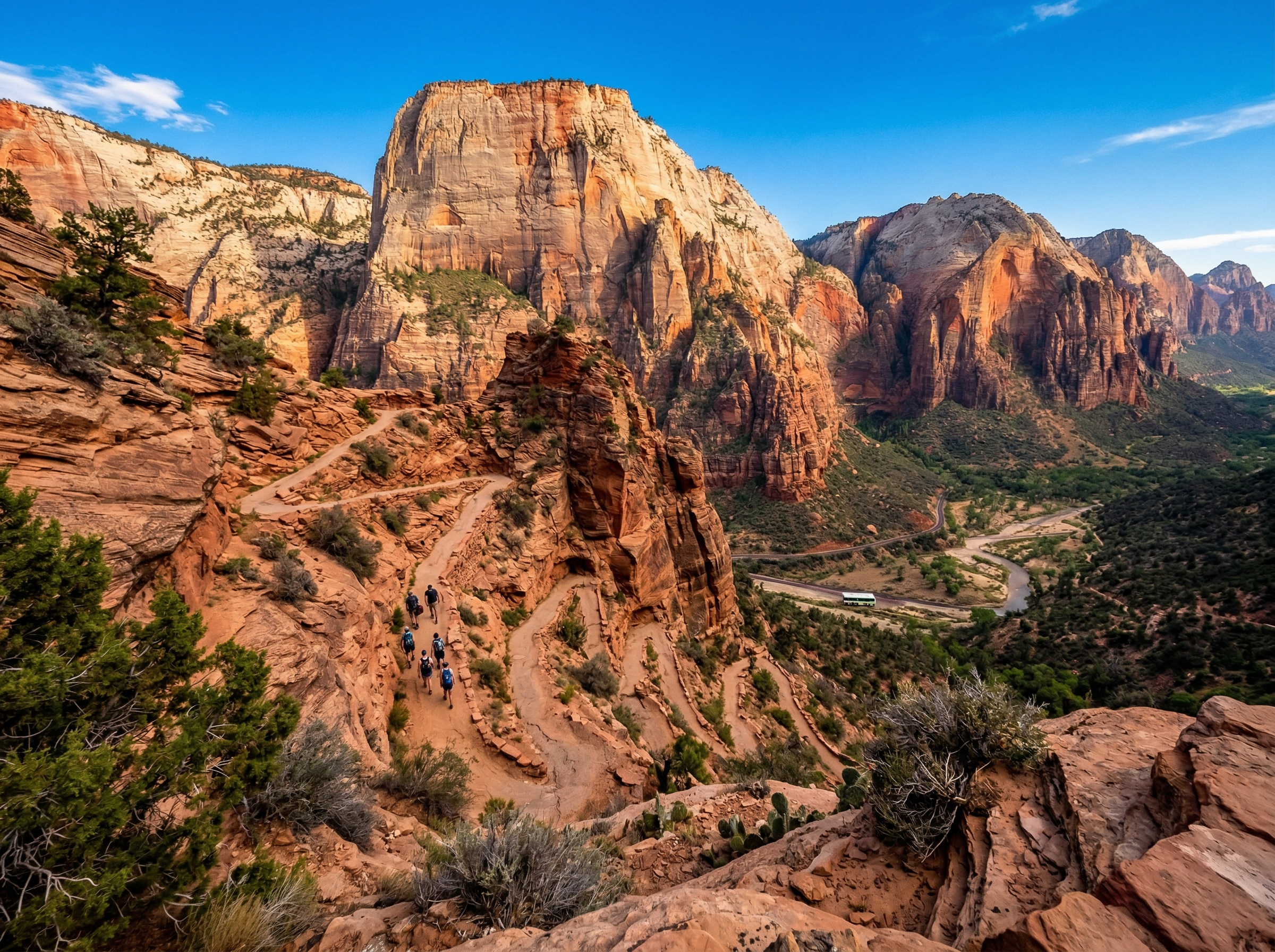
Zion's $25 Million Bet: Build New Trails Before the Old Ones Collapse
Zion National Park has a bottleneck problem that borders on existential. Angels Landing, the park's crown jewel, now requires a lottery permit. The Narrows can hit capacity before breakfast. So Zion is doing what every good product manager does when one feature can't scale: building a second one.
The East Gateway Discovery Center, now 85% complete, opens late 2026 with 18–20 miles of brand-new hiking trails on the park's largely unexplored eastern plateau. Add 34.5 miles of mountain bike trails and an electric shuttle system connecting the east side to the main canyon, and you've got the biggest infrastructure expansion in Zion's history.
The $25 million price tag sounds steep until you realize Zion handled nearly 5 million visitors last year on infrastructure designed for a fraction of that. One park official called it "the biggest relief valve Zion has ever had for its trail system." The real question is whether diverting hikers to the eastern red-rock backcountry will relieve pressure on the famous canyon—or just create a second overcrowded zone. Either way, if you've been waiting for a reason to explore beyond the chains, this is it.
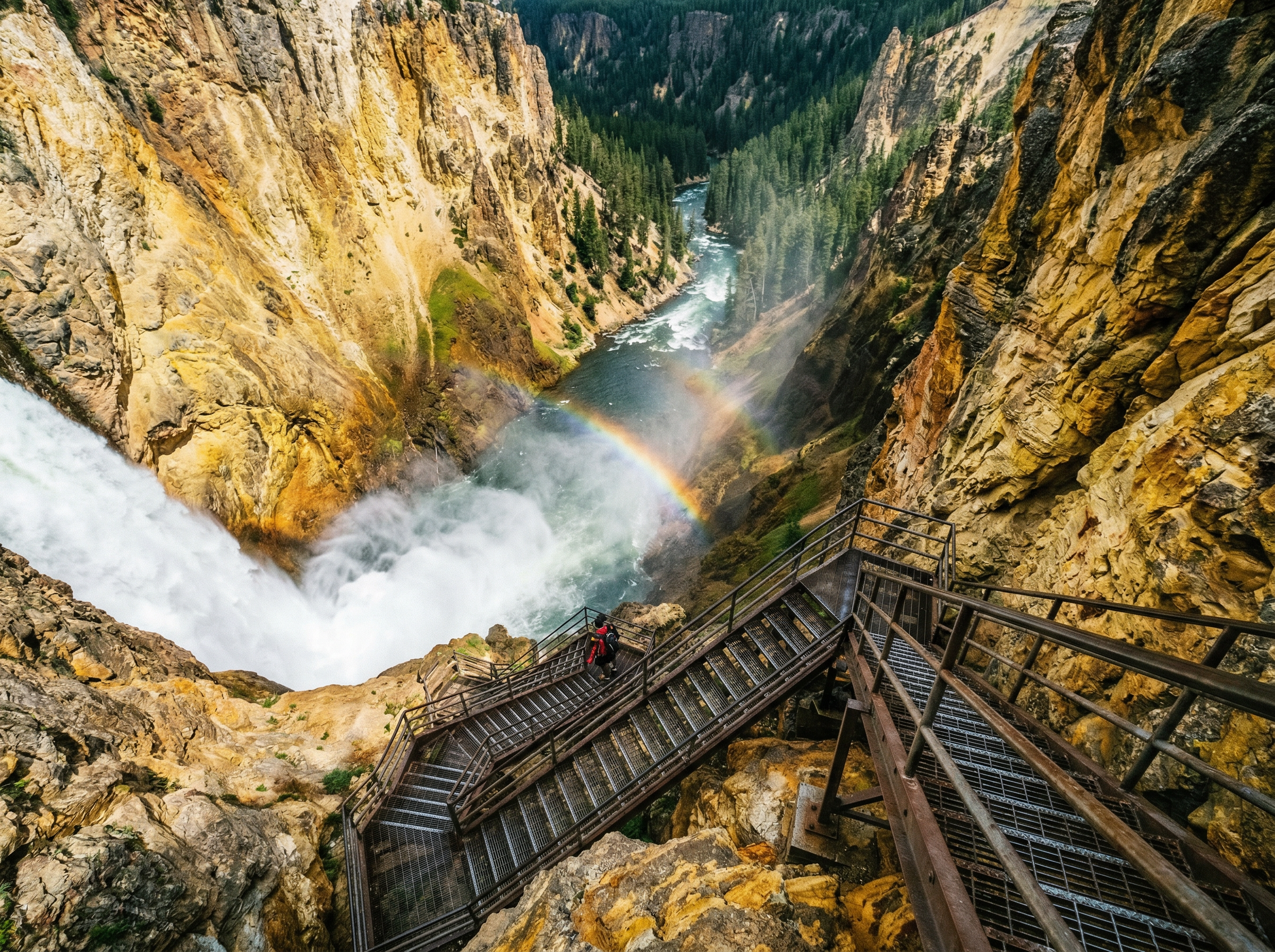
328 Steel Steps Into the Abyss: Yellowstone's Viral "Challenge Hike" Returns
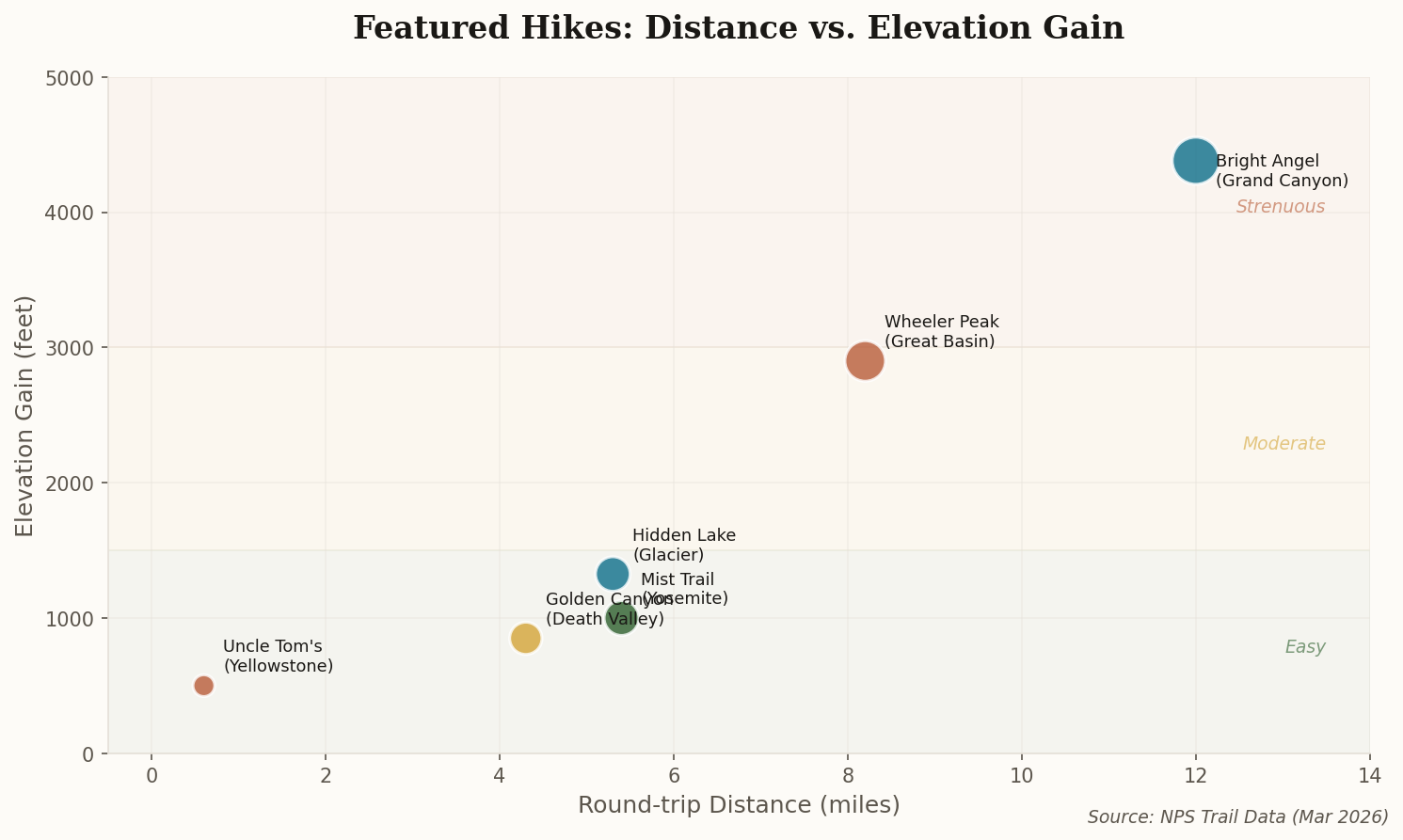
Yellowstone just re-highlighted Uncle Tom's Trail as a "Best Challenge Hike" for 2026, and the numbers alone explain why this half-mile descent has become a social media magnet: 328 steel steps, 500 feet of vertical drop, 30–45 minutes of white-knuckle staircase descending into the Grand Canyon of the Yellowstone.
The trail itself isn't new—it's been a Yellowstone fixture since the 1890s. What's new is the NPS's deliberate rebranding of it as an "endurance challenge" aimed at younger hikers. New safety signage and "step-count challenges" have been installed, essentially gamifying a Victorian-era staircase. The strategy is transparent and brilliant: redirect the selfie crowd from passive viewpoints like Artist Point to an active experience that naturally limits throughput.
At 0.6 miles round trip, Uncle Tom's is the antithesis of an all-day backcountry epic. But that's the point. Not every great hike needs to be a sufferfest. Sometimes the best view in the park is at the bottom of a staircase you'll regret on the way back up.
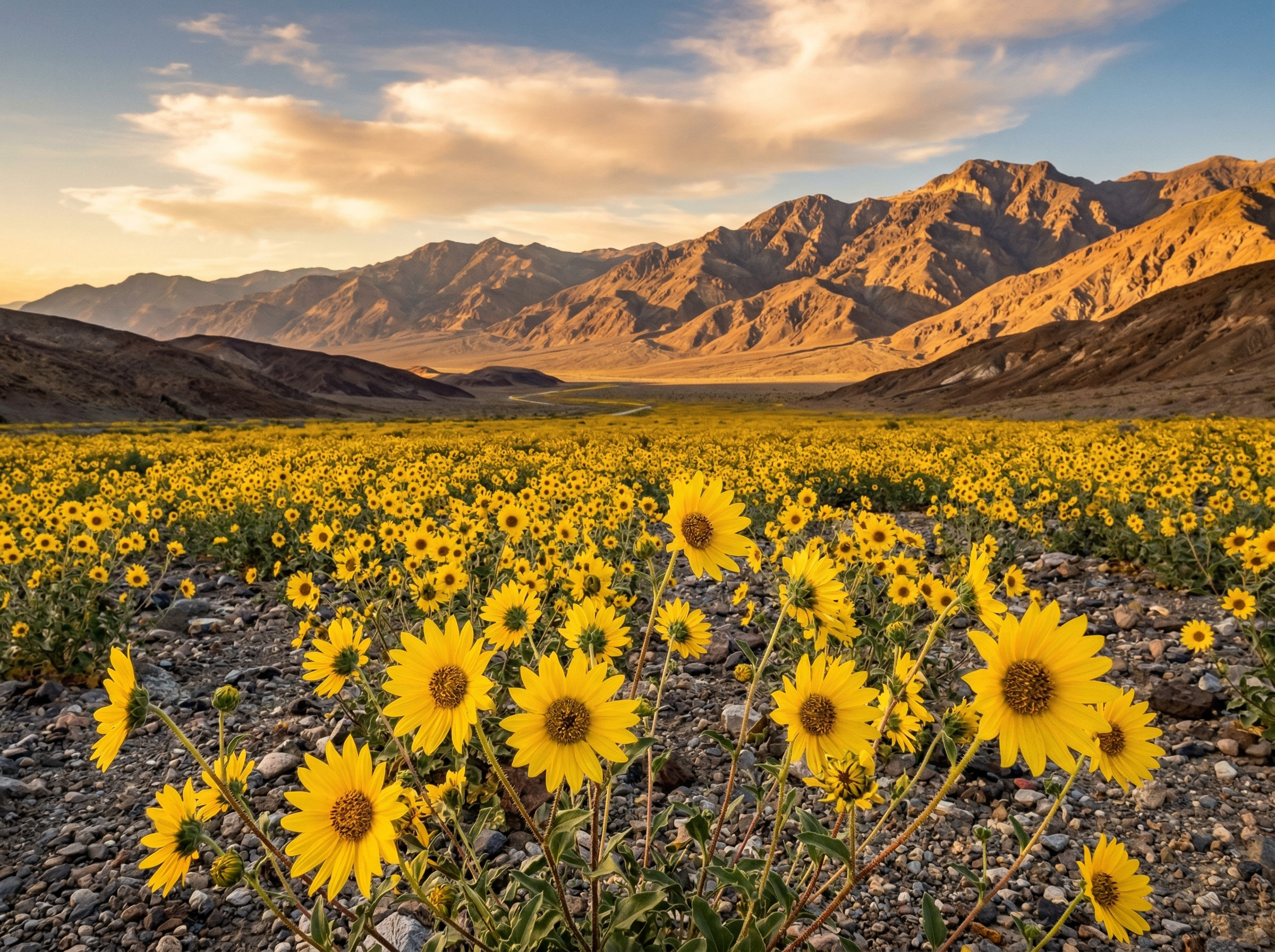
The Desert Is Alive: Death Valley's Once-a-Decade Superbloom Is Peaking Right Now
Heavy late-2025 rainfall has triggered something that happens roughly once every 10–15 years in Death Valley: a superbloom. And the 2026 event is the most significant since 2016. Lower elevations are, according to rangers, "literally glowing" with Desert Gold sunflowers and Sand Verbena carpets.
The hike to see it: the Golden Canyon to Gower Gulch Loop, a 4.3-mile circuit with 850 feet of elevation gain that threads through slot canyons framed by blooming desert. It's manageable for most fitness levels, but there's a catch—temperatures are already hitting 85°F by midday in early March. This isn't a "start whenever" hike; it's a sunrise-or-suffer situation.
Superblooms are inherently ephemeral. They peak for 2–3 weeks, then the desert reclaims itself. If you're within driving distance of Southern California or Las Vegas, this is one of those now-or-wait-a-decade moments. The $30 entrance fee is a bargain for what amounts to a geological miracle in one of Earth's harshest landscapes.
Timing is everything: Peak bloom is happening right now through mid-March. Bring at least 3 liters of water per person, start before 7 AM, and check NPS.gov/deva for daily bloom updates.

118 Million Visits and Counting: The "Hidden Gems" Aren't Hidden Anymore
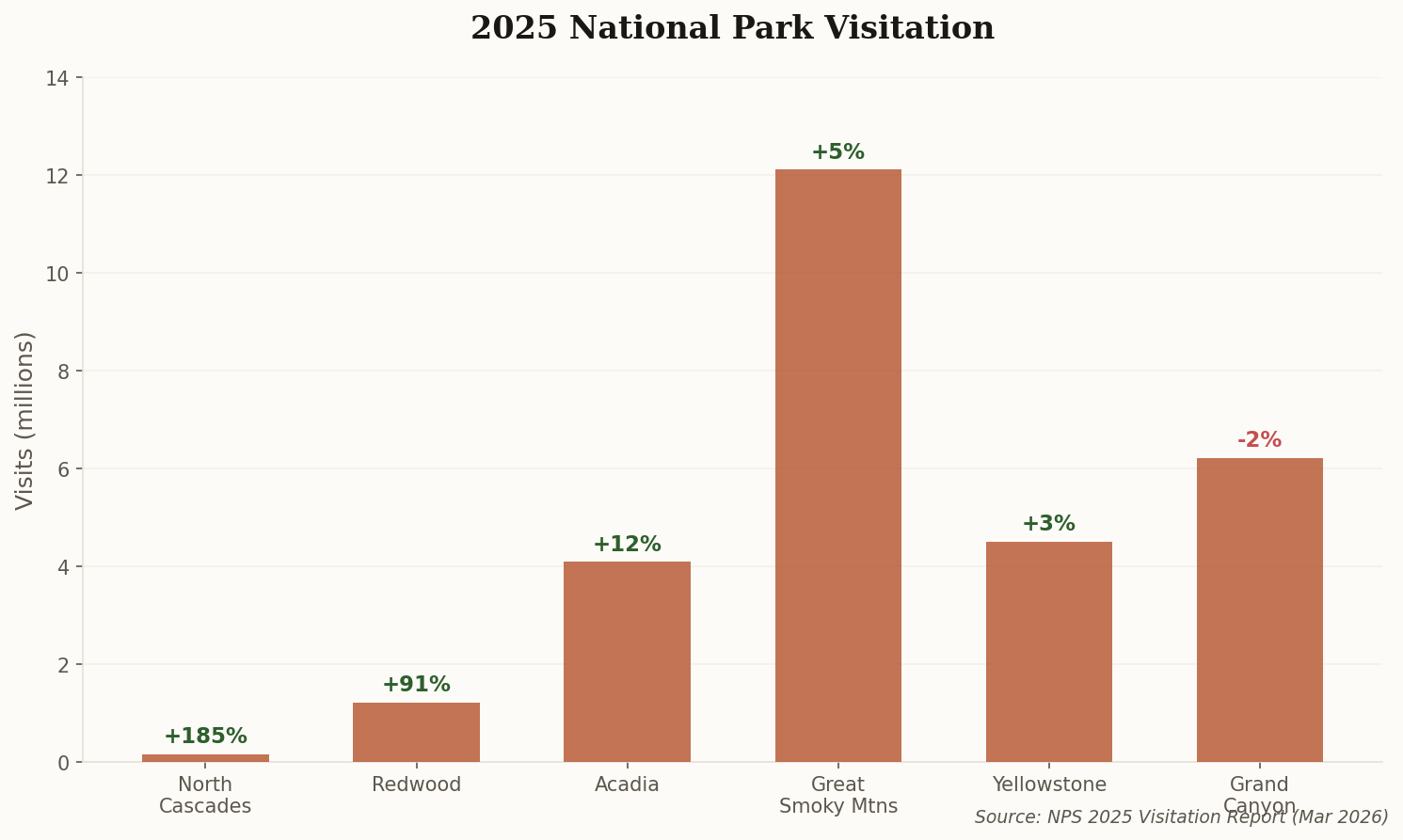
The 2025 visitation numbers are in, and the headline is stark: 118.1 million total visits across the 63 headliner parks. Acadia cracked 4 million for the first time ever. But the real story is in the second tier.
Redwood National Park saw a 91% surge to 1.2 million visitors. North Cascades recorded a 185% increase—the highest percentage jump in the entire system. The "hidden gems" strategy that parks advocates have been pushing for years has worked too well. Every listicle, every TikTok, every "skip Yellowstone, go here instead" article has done its job. Now those quiet parks need the infrastructure that took decades to build at the marquee sites.
There's a bright spot in the data, though: Great Basin National Park in Nevada remains genuinely uncrowded. The Wheeler Peak via Bristlecone Trail—8.2 miles, 2,900 feet of gain, topping out at 13,063 feet among 4,000-year-old bristlecone pines—is the kind of hike that rewards the drive. No shuttle required. No lottery. Just you and trees that were seedlings when the pyramids were new.
77% of Parks at Risk: The Trails We're Losing to a Warming Planet
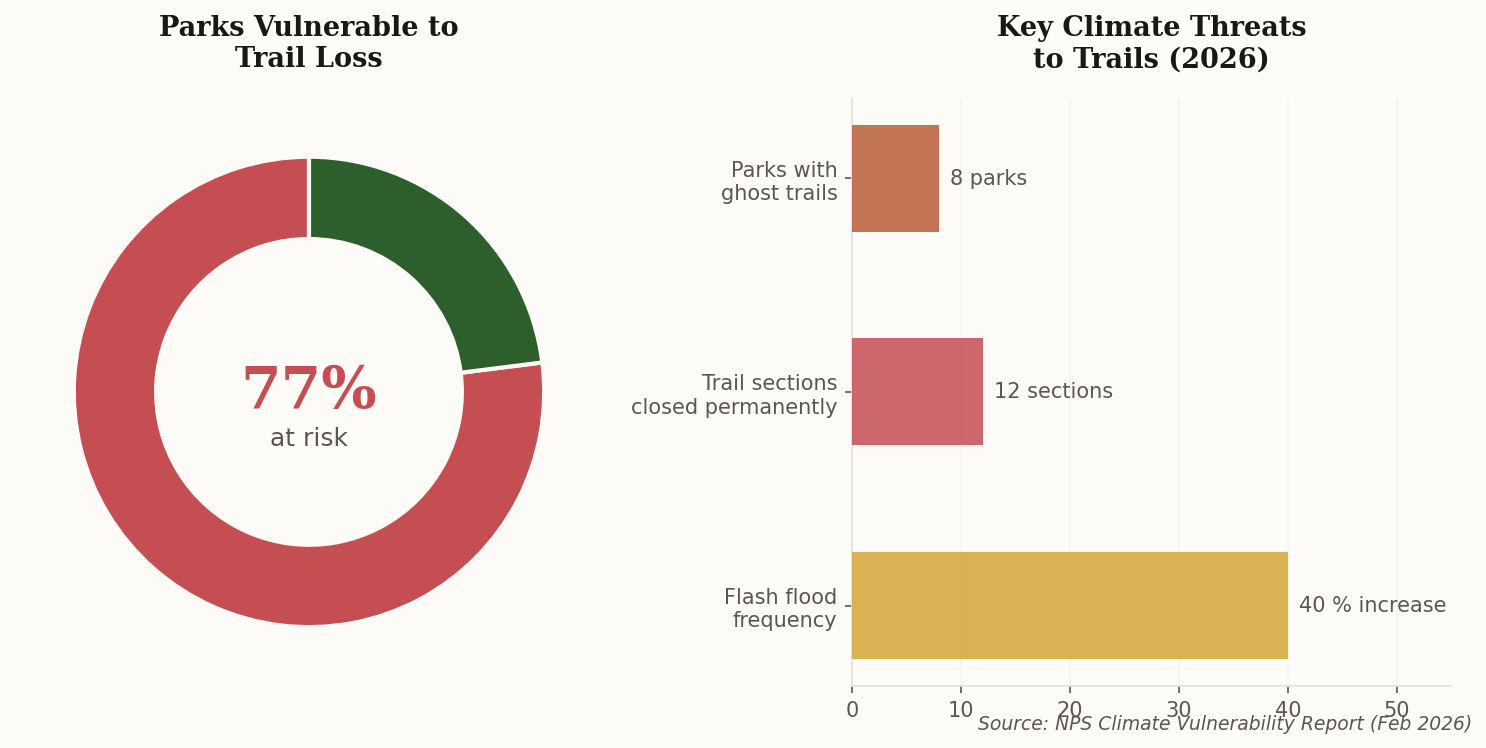
While we debate reservation systems and visitation records, the ground is shifting beneath the trails themselves. A February report from the NPS Climate Change Response Program found that 77% of national parks face "irreversible ecological transformation"—a clinical way of saying the landscapes we're hiking today may not exist for our children.
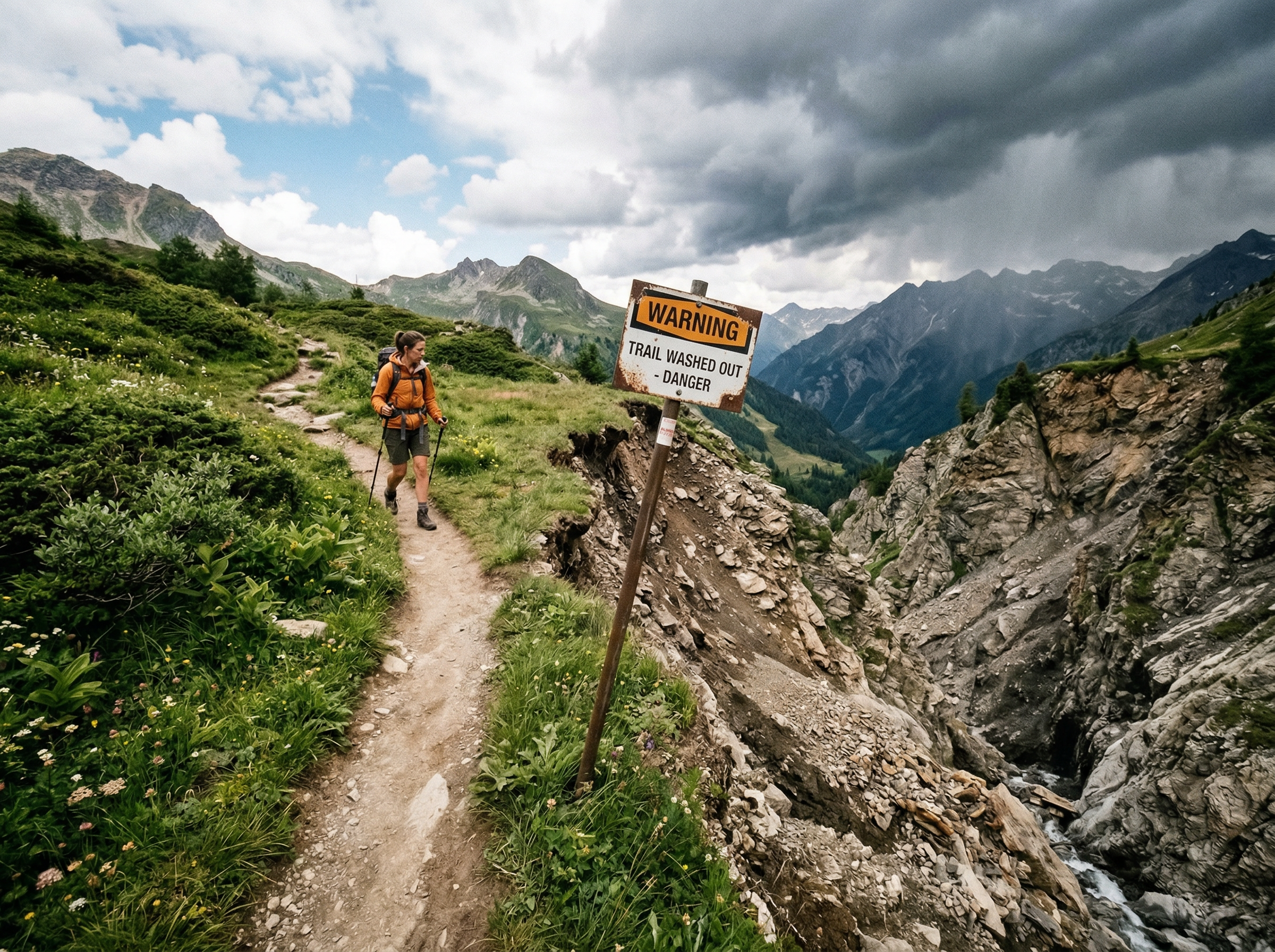
The specifics are sobering. Melting permafrost in Rocky Mountain and Olympic national parks is creating "ghost trails"—established routes that have become too unstable for public use. Flash flood risks have spiked 40% across Southwest parks like Zion and Big Bend. Twelve major trail sections were permanently closed in 2026 alone.
This isn't an argument against hiking—it's an argument for hiking now, and hiking responsibly. The trails we take for granted have an expiration date that's arriving faster than anyone expected. Check daily trail conditions before you go. Carry emergency gear even on short hikes. And consider that the best reason to visit a national park in 2026 might be the simplest one: because you still can.