The Future of Productivity

Your New Coworker Doesn't Sleep

Every major platform just announced AI agents as first-class participants. The productivity stack is being rewritten — and your calendar invite just went to a bot.

Listen
Futuristic workspace with holographic AI agents collaborating alongside humans at a long table, connected by teal energy streams
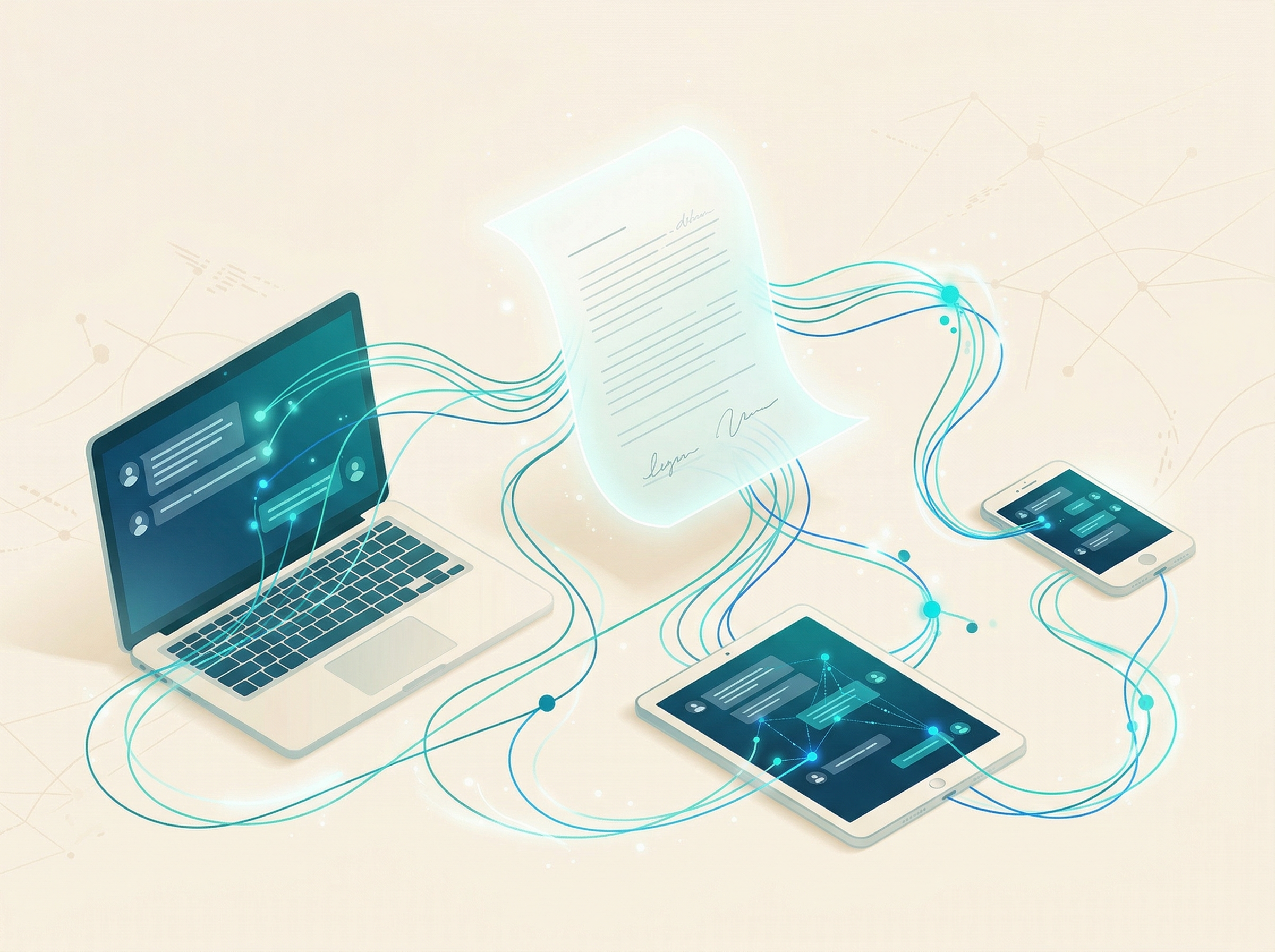
Glowing document threads connecting across multiple devices representing persistent AI conversation history
01

Google Gives Gemini a Memory — And That Changes Everything

Here's the dirty secret of AI assistants in 2025: every conversation was a first date. You'd explain your project, your preferences, your constraints — and the next time you opened the chat, amnesia. Google Workspace just killed that pattern by rolling out Gemini 3.1 Pro with "Persistent Conversation History" across Docs, Sheets, and Slides.

This isn't a minor feature toggle. Persistent context means Gemini remembers your project arc across sessions and devices. Start a financial model in Google Docs on your laptop Monday morning, refine it in Google Sheets from your tablet Tuesday evening, and by Wednesday the AI already knows you prefer EBITDA margins over gross revenue and that Q3 projections should account for the seasonal dip you flagged last week. The side panel becomes a long-term collaborator, not a stateless parrot.

Google also shipped new admin controls for managing how AI-generated insights get shared within organizations — a nod to the enterprise reality that persistent memory creates persistent risk. The real question: how long before "your AI remembers more about your project than you do" becomes a feature, not a bug?

AI agent examining a massive code architecture rendered as a glowing city, identifying vulnerabilities
02

Claude Found 22 Firefox Bugs in 20 Minutes. Your Move, Humans.

When Anthropic partnered with Mozilla to point Claude Opus 4.6 at the Firefox codebase, the result was uncomfortable for anyone who thinks AI agents are glorified autocomplete: 22 high-severity vulnerabilities identified in under 20 minutes. Not trivial lint warnings — actual security holes in one of the world's most audited open-source projects.

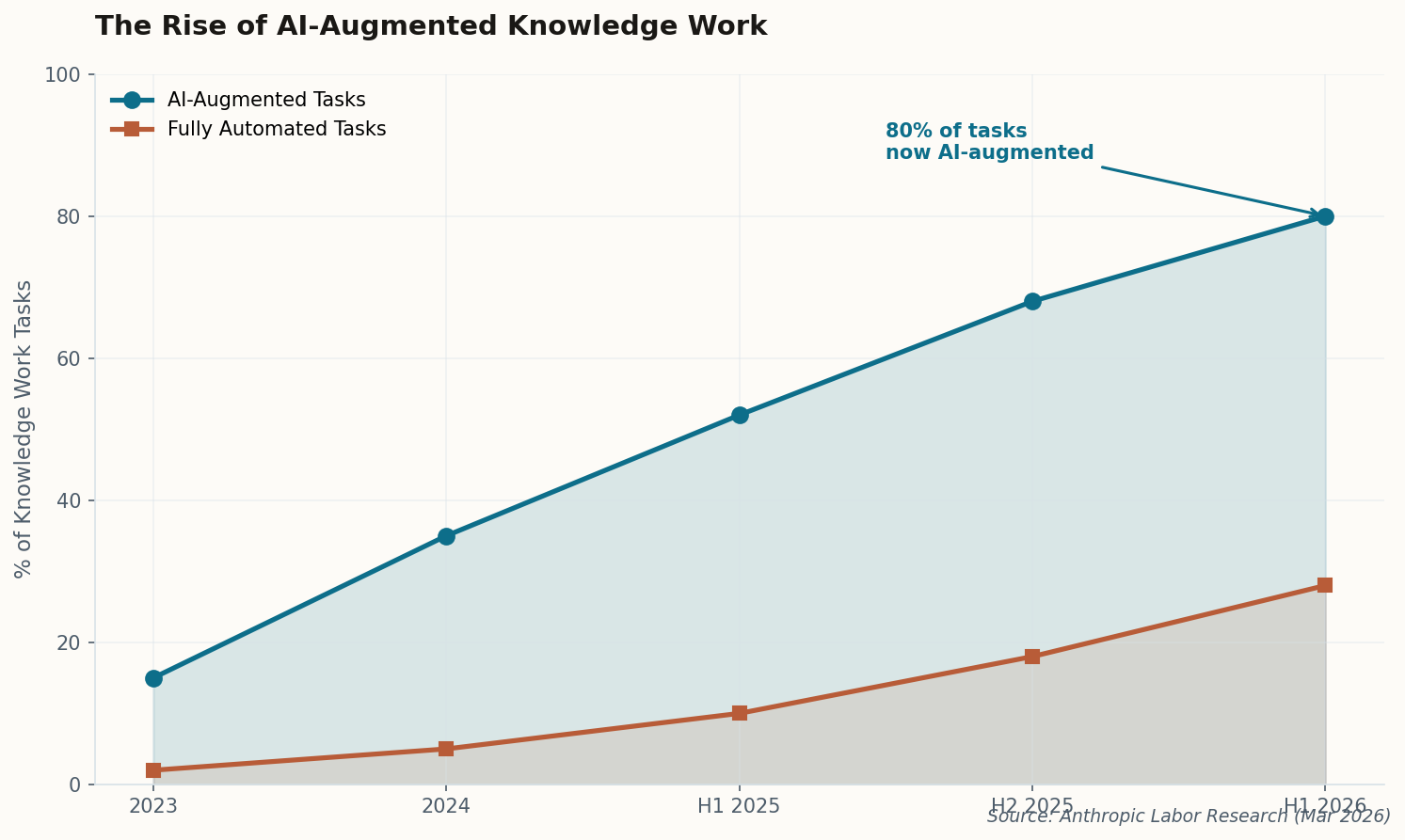
This matters for productivity software because it proves AI agents have crossed a threshold. They're not just writing your meeting summaries anymore; they're doing the kind of deep technical analysis that previously required a specialized security team billing $400 an hour. Anthropic simultaneously released labor research showing that "agentic AI" now augments over 80% of high-end knowledge work tasks — a number that would've seemed absurd 18 months ago.

Line chart showing the rise of AI-augmented knowledge work from 15% in 2023 to 80% in H1 2026
The augmentation curve is steepening. 80% of knowledge work tasks now have some AI assist, up from 15% in 2023. Full automation lags behind but is accelerating. Source: Anthropic Labor Research (March 2026)

The productivity implication is stark: if an AI can navigate millions of lines of C++ and find what teams of humans missed, the definition of "expert work" is being rewritten in real time. And that rewrite doesn't stop at security — it extends to every knowledge domain with a large corpus and high stakes.

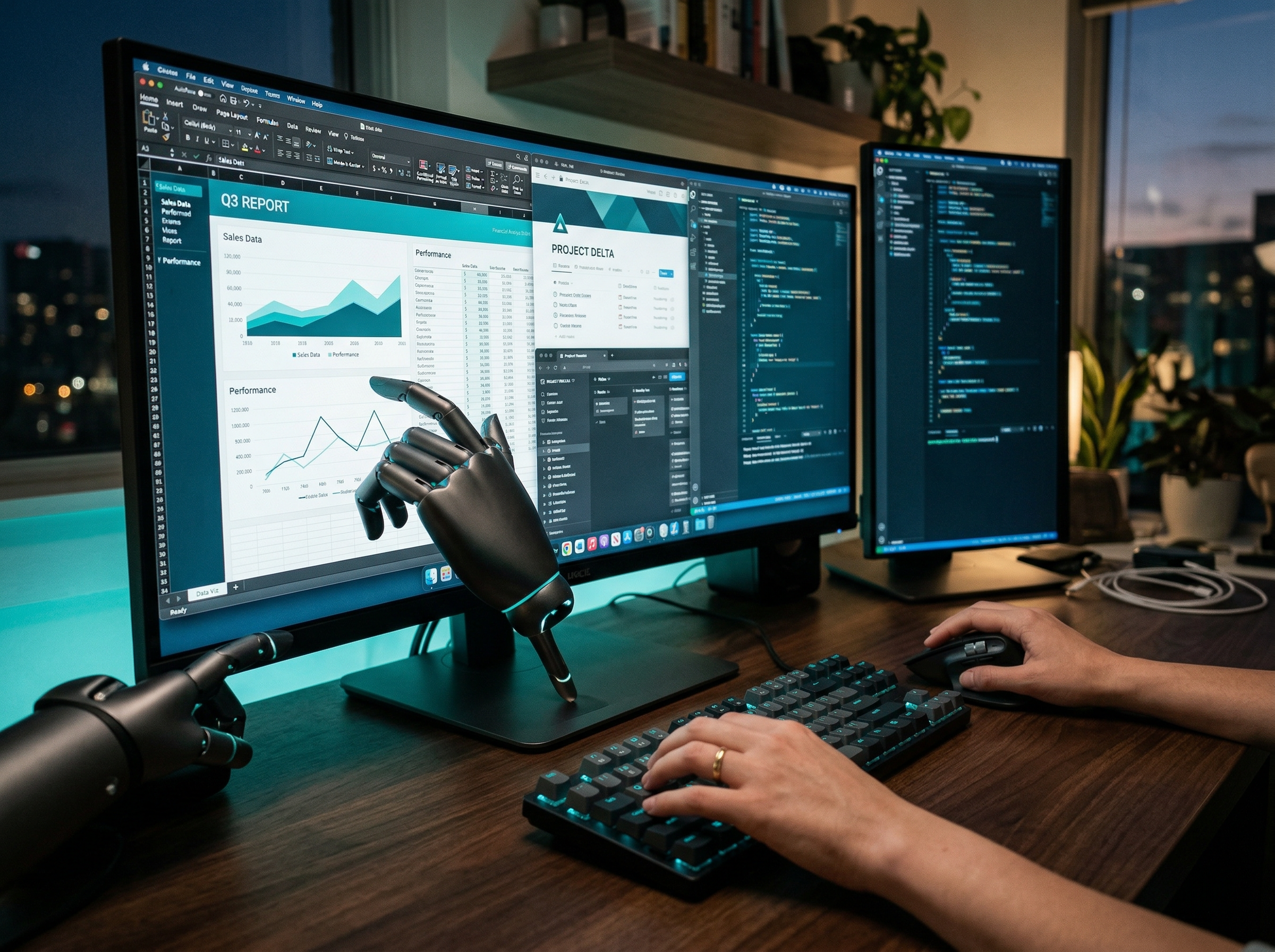
Robotic and human hands collaborating on a desktop computer interface with complex productivity workflows
03

GPT-5.4 Can Finally Use Your Computer. Yes, the Crappy Legacy One.

OpenAI's GPT-5.4 ships with "Native Computer Use" — the model can now interact directly with desktop interfaces, navigating windows, clicking buttons, and executing multi-step workflows with the same visual context as a human sitting at the keyboard. A million-token context window and "Interruptible Reasoning" (you can correct its course mid-thought) round out a release that feels less like a chatbot upgrade and more like hiring a digital contractor.

The "crappy legacy" part is the real story here. Most enterprise productivity isn't happening in shiny AI-native apps — it's trapped in SAP screens from 2009, custom CRM dashboards that haven't been updated since the Obama administration, and Excel macros that nobody understands anymore. Computer Use bridges that gap. Your AI assistant doesn't need an API to interact with your tools; it just looks at the screen and acts.

The 33% reduction in factual errors is quietly the bigger deal for day-to-day productivity. An agent that can reliably navigate your file system, manage your calendar, and execute research workflows is useful. An agent that does all that but hallucinates your meeting time is a liability. OpenAI is clearly betting that reliability, not raw intelligence, is what converts skeptics into users.

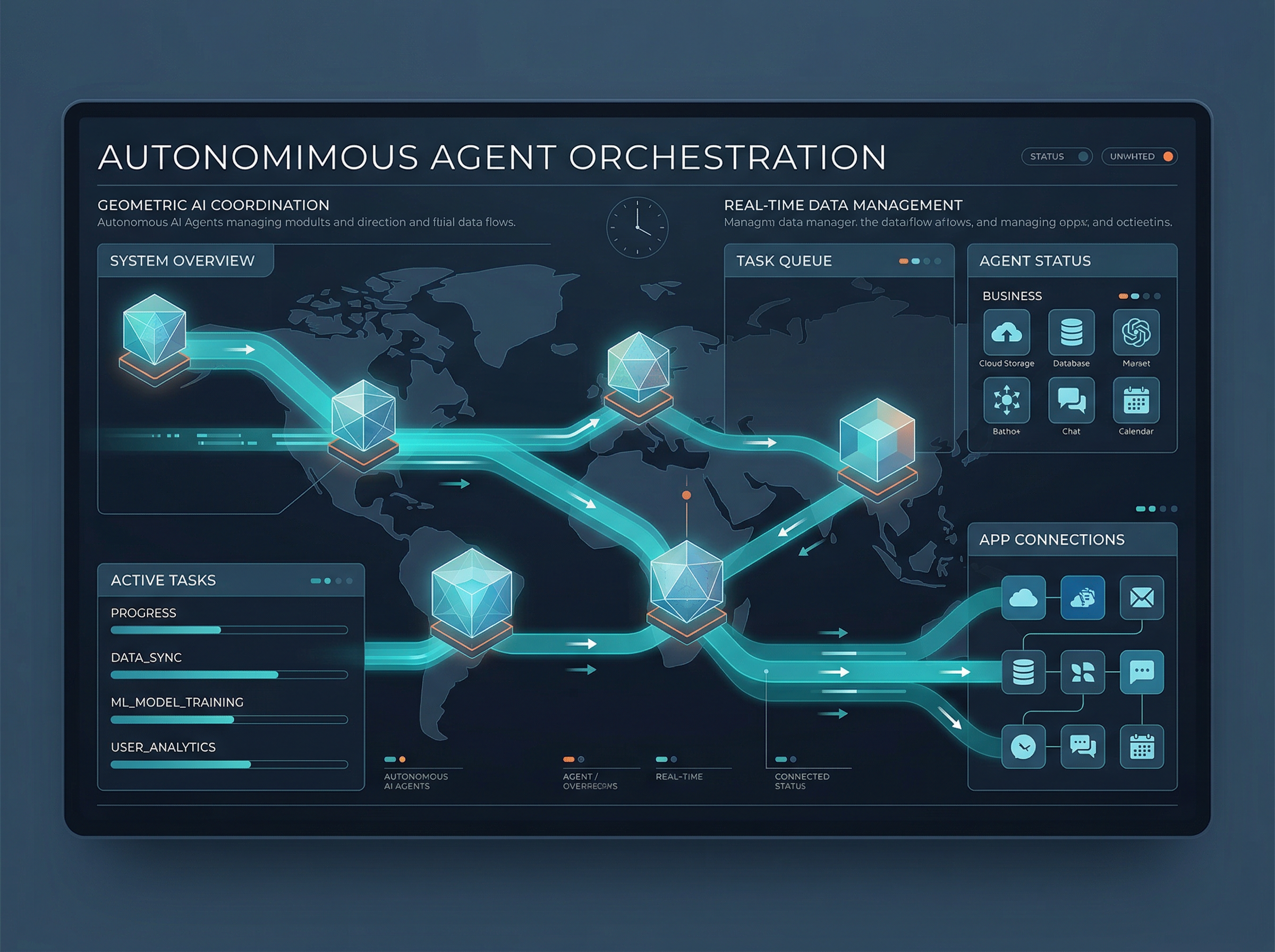
Central command center dashboard with autonomous AI agents managing task flows between connected apps
04

Notion Wants to Be the Air Traffic Control for Your AI Agents

Notion just launched "Custom Agents" in beta — autonomous bots that triage tasks, generate status reports, and sync data across Slack and Google Calendar. Users can now select GPT-5.4 as the underlying model, and granular permissions mean agents can create database entries without needing full access to sensitive historical data.

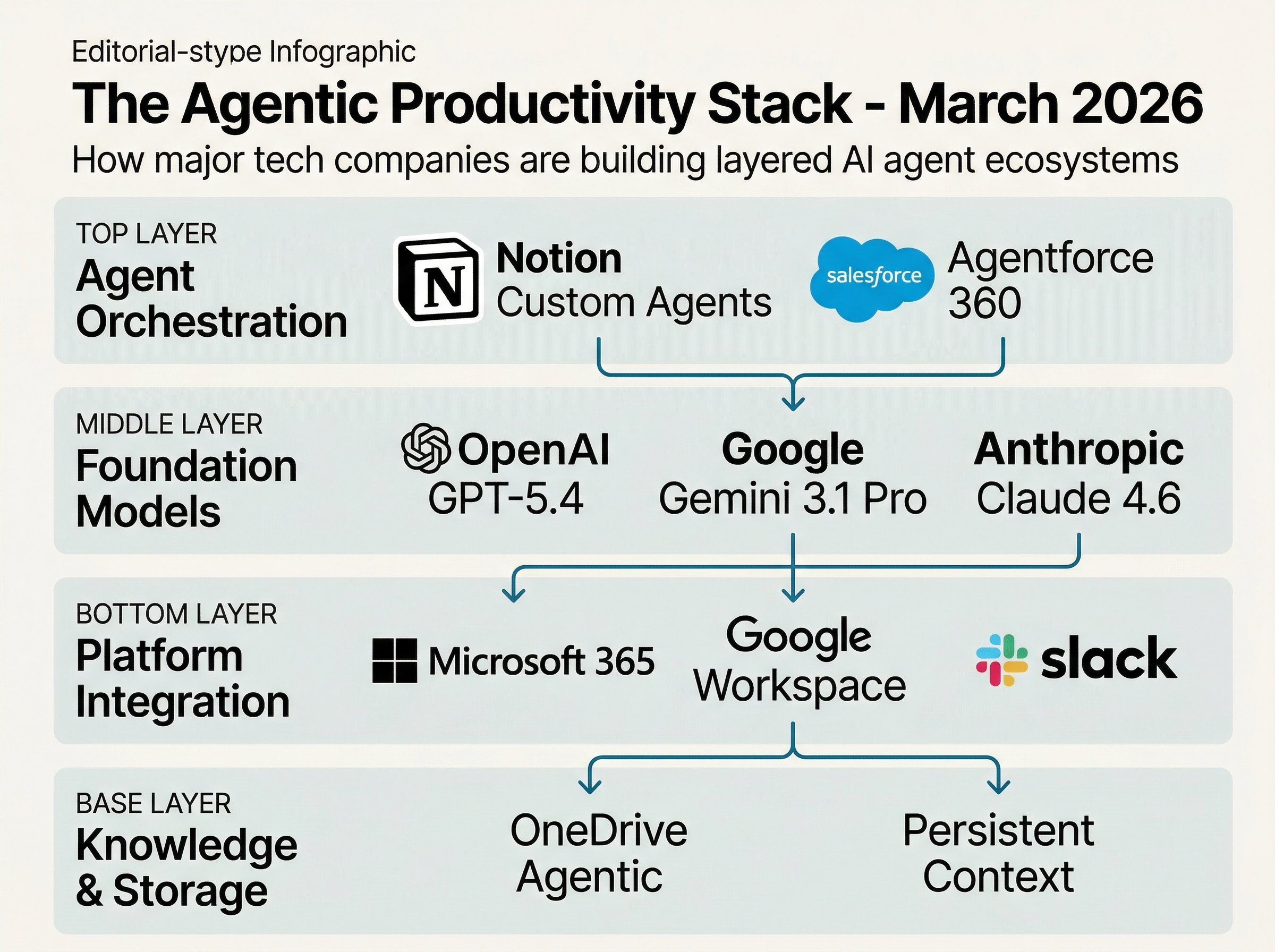
Infographic showing The Agentic Productivity Stack in March 2026 with four layers: Agent Orchestration, Foundation Models, Platform Integration, and Knowledge Storage
The Agentic Productivity Stack — Every layer of the enterprise software stack is being agent-ified, from storage to orchestration.

What's interesting isn't the agents themselves — every tool has "AI features" now. It's Notion's positioning as the orchestration layer. The company is betting that in a world where Google has agents, OpenAI has agents, Anthropic has agents, and Salesforce has agents, someone needs to be the switchboard operator. Notion wants to be that single pane of glass where you define what your agents do, which models power them, and what guardrails constrain them.

The granular permissions model is worth watching. Enterprise adoption of AI agents has been throttled by a single fear: "what can the bot see?" Notion's approach — agents that can write without full read access — is an elegant answer to the compliance teams who've been blocking deployments for months.

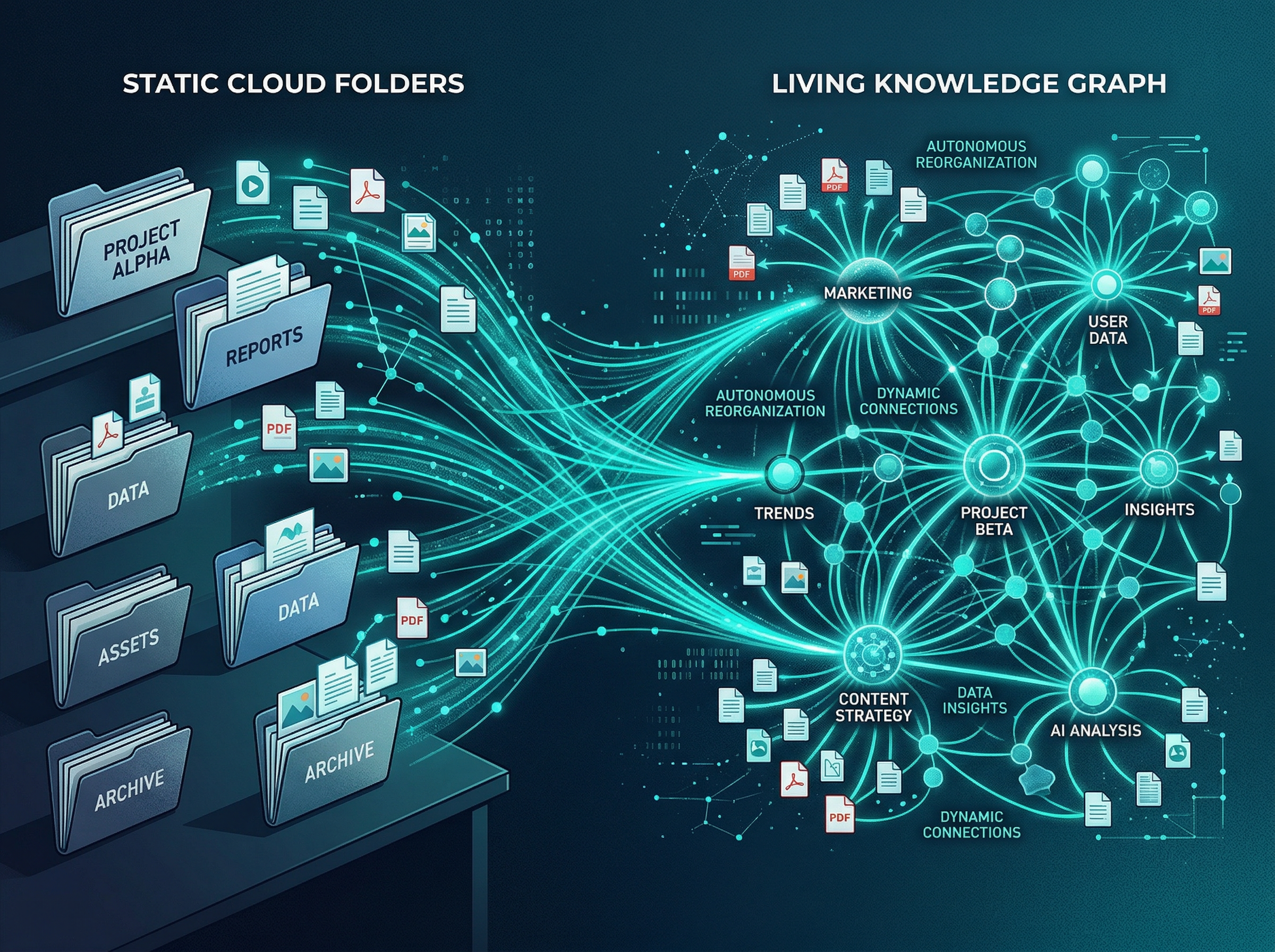
Cloud storage folders transforming into a living knowledge graph with autonomous file organization
05

Microsoft Just Made Your File System Sentient

Microsoft just unveiled "Agentic OneDrive" and "Agent 365" — and the vision is both thrilling and mildly terrifying. Knowledge Agents are now native to OneDrive and SharePoint, autonomously organizing files, enriching metadata, and surfacing documents you didn't know you needed. A new Copilot Snipping Tool lets you snap visual context directly into AI chats for immediate analysis.

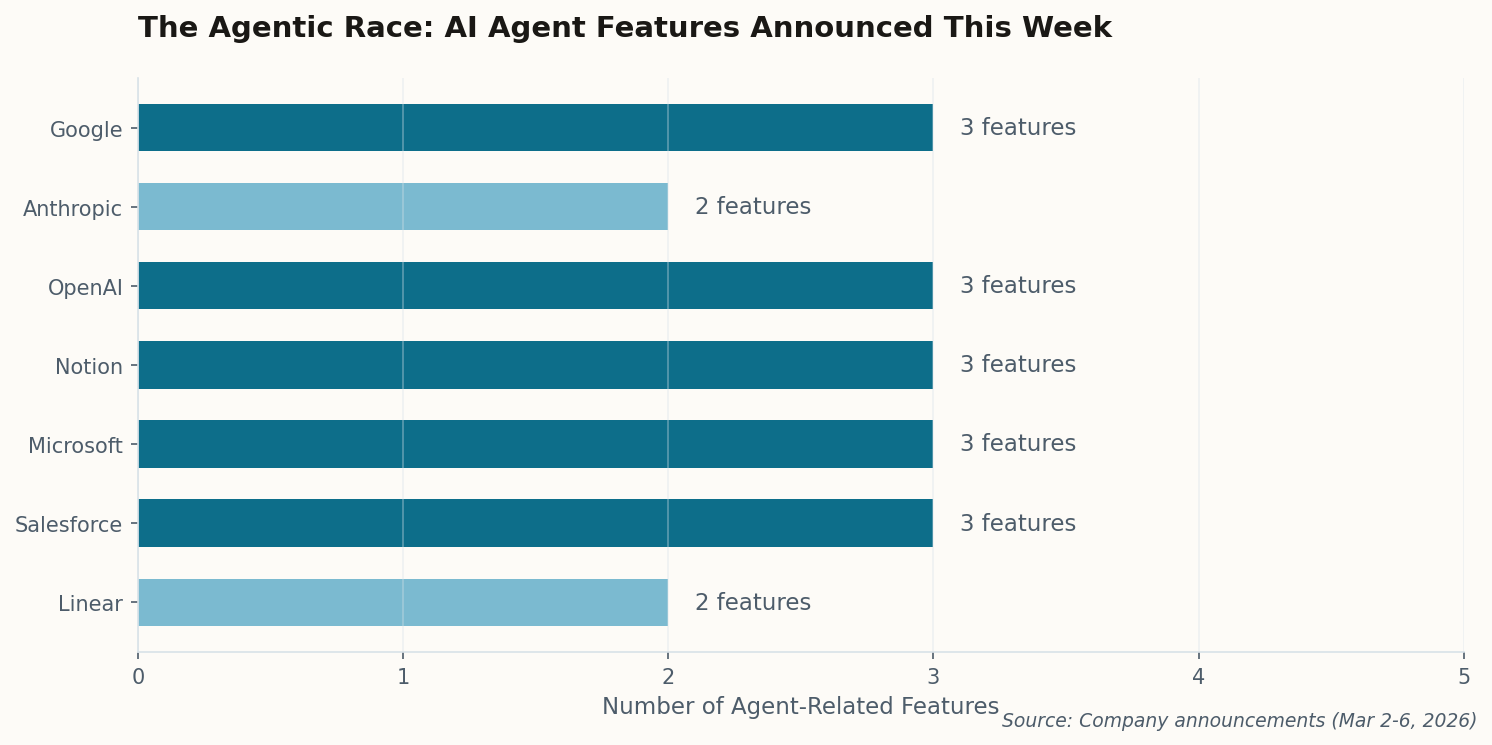
Horizontal bar chart showing AI agent features announced by each major company this week
The Agentic Race: Every major platform shipped 2-3 agent-related features in a single week. The AI productivity arms race is well underway. Source: Company announcements (Mar 2-6, 2026)

"Agent 365" is the enterprise play here — a control plane for admins to monitor and manage digital "agentic workers" across the entire M365 ecosystem. Think of it as an HR system for bots. Microsoft's phrasing is deliberate: "We are moving from a world of files and folders to knowledge and agents." That's not incremental improvement; it's a category redefinition.

The practical reality for most organizations: they have petabytes of unstructured data in SharePoint that nobody can find anything in. If Knowledge Agents can genuinely auto-tag, organize, and surface the right document at the right time, that solves a problem that's cost enterprises billions in lost productivity. The bar is high, but the incentive is enormous.

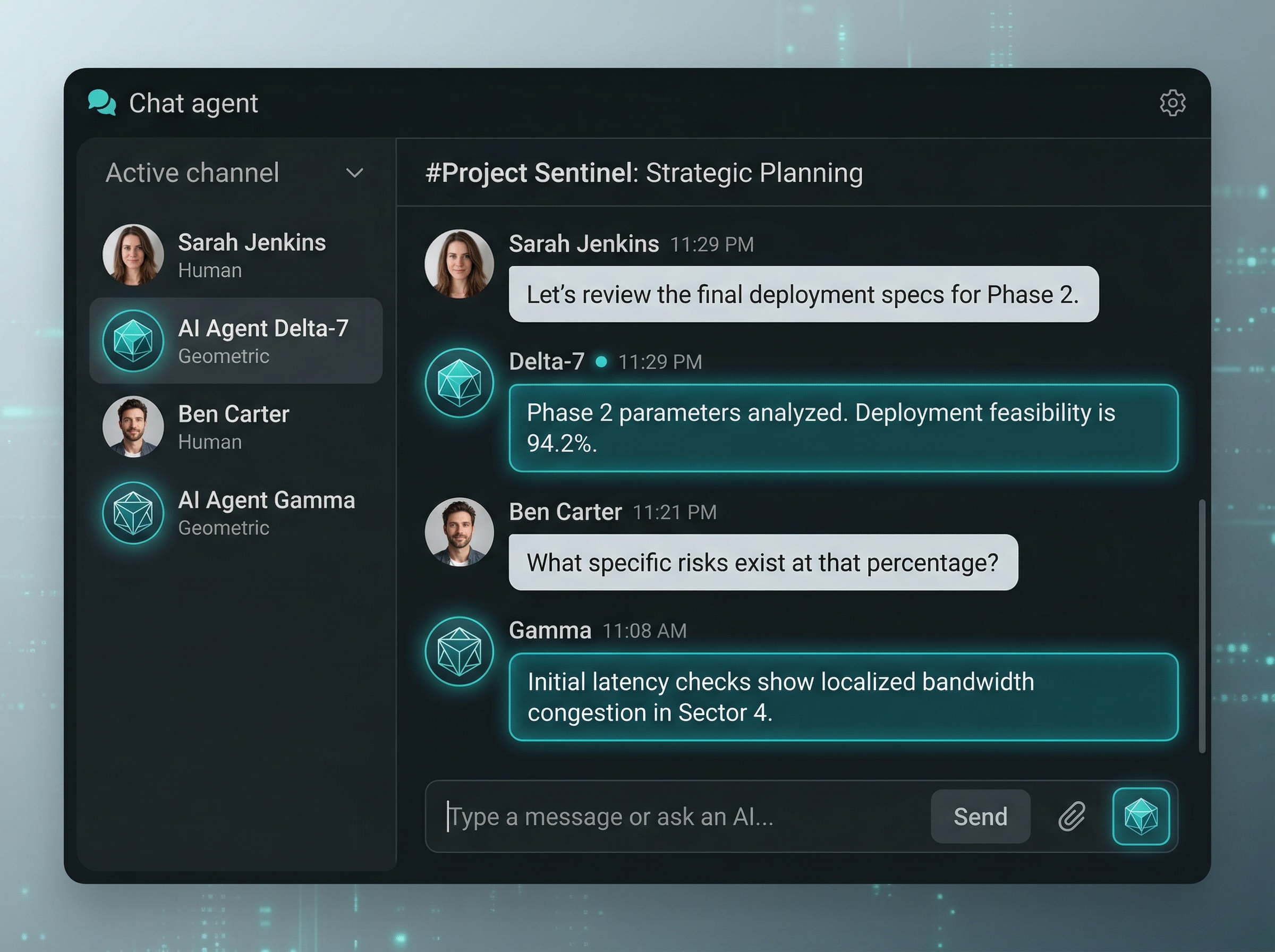
Modern chat interface where human and AI agent avatars collaborate in shared message threads
06

Slack Is No Longer a Chat App. It's an Operating System for Agents.

Salesforce launched "Agentforce 360" in Slack, making AI agents native participants in team channels. Sales agents, HR agents, and IT agents now sit alongside humans in conversations, responding to mentions, closing tickets, and generating reports. A new Model Context Protocol (MCP) server means third-party agents like Claude or Cursor can securely interact with Slack data too.

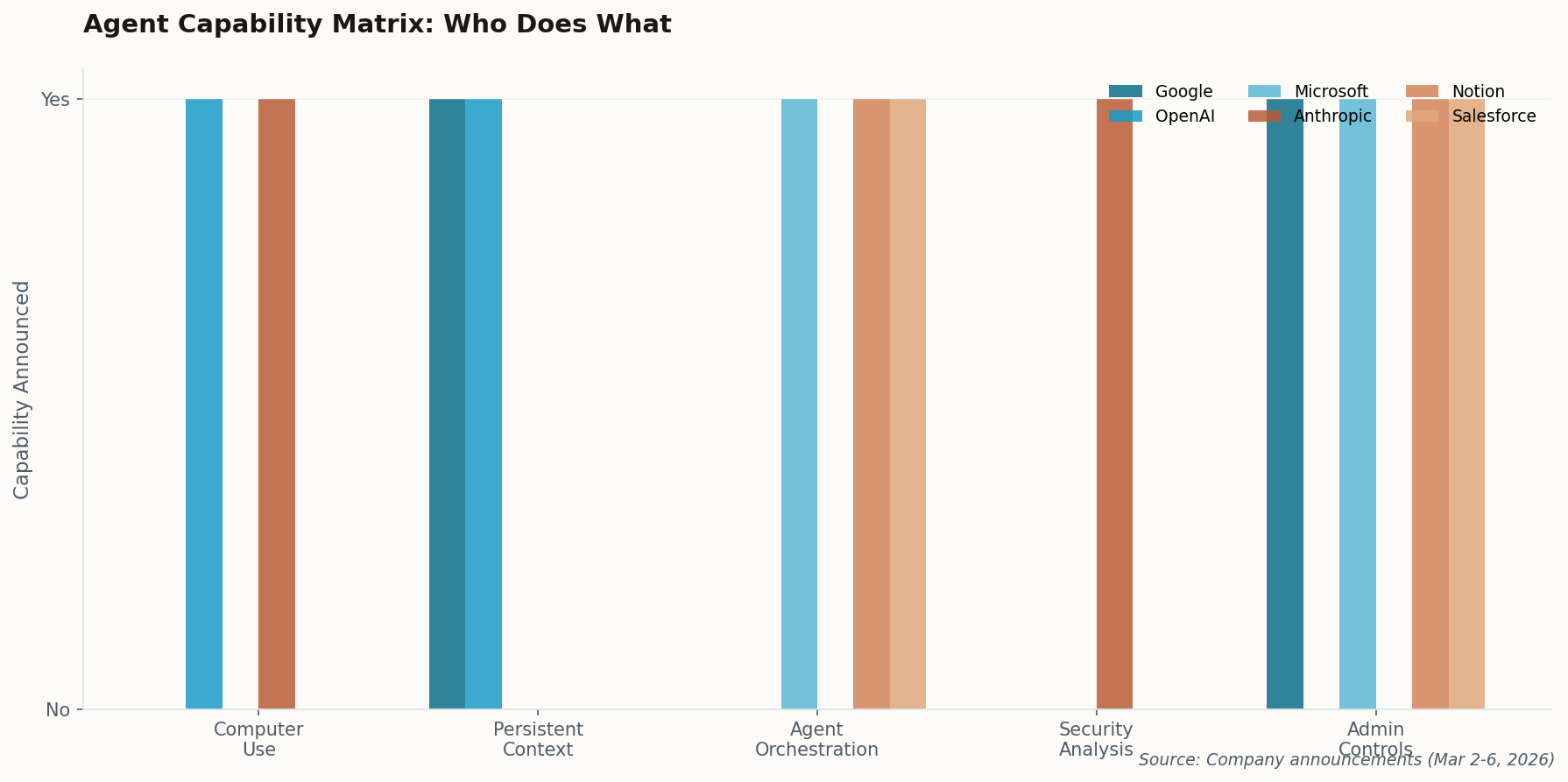
Grouped bar chart comparing agent capabilities across Google, OpenAI, Microsoft, Anthropic, Notion, and Salesforce
Agent Capability Matrix: No single company covers every capability. The fragmentation guarantees that orchestration — connecting these agents — will be the next battleground. Source: Company announcements (Mar 2-6, 2026)

The MCP integration is the sleeper feature here. By opening Slack as a platform for any agent, not just Salesforce's own, Slack becomes the "front door to the agentic enterprise." It's a smart strategic move: rather than trying to build the best AI agent (a losing battle against OpenAI and Anthropic), Salesforce is building the best environment for agents to operate in.

New AI Exclusion Controls let admins black out specific channels from AI processing — a necessary concession to legal and compliance teams. But the broader signal is unmistakable: the future of team communication isn't human-to-human. It's human-to-agent-to-human, with the agent handling the grunt work in between.

The Inbox Zero of Agents

Six companies. One week. One message: the AI agent isn't coming to your workplace — it's already there, with a badge and a desk. The question is no longer "will AI change how we work?" but "who's managing the AI that manages your work?" If the answer is "nobody," you're already behind. The orchestration layer — whoever builds the best one — will define the next decade of enterprise software. Start asking your tools who their agents report to.

Share X LinkedIn