
Spatial Computing

Through the Looking Glass, Darkly

Apple Vision Pro was supposed to define the future of computing. Two years in, it's redefining what "success" means — and the answer isn't what anyone expected.

Listen
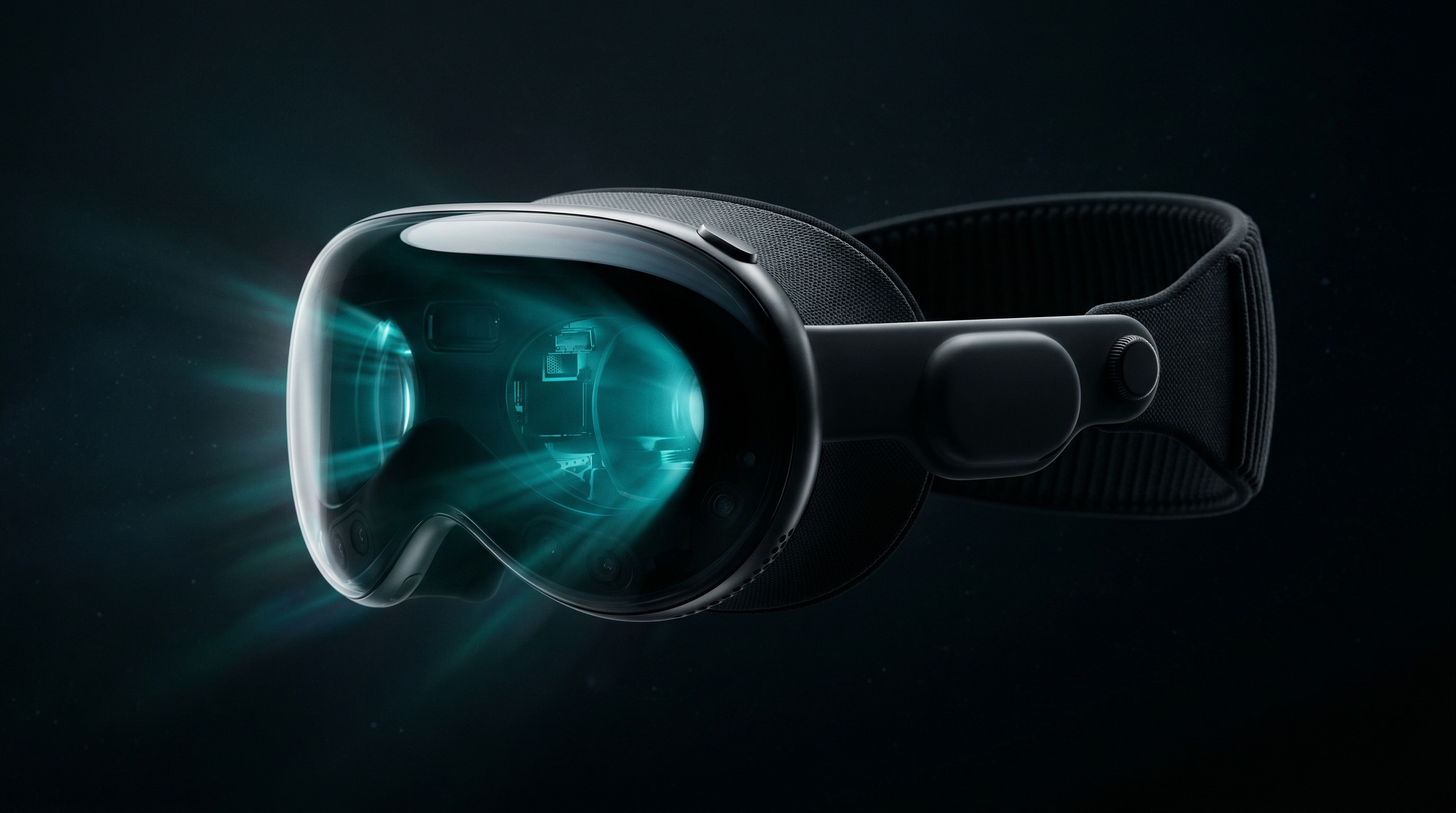
Apple Vision Pro headset floating in dramatic teal-lit void, light refracting through translucent glass panels
Holographic 3D architectural model being analyzed by AI data streams in a spatial computing workspace
01

The Real Killer App Was Never Entertainment

Forget movie watching. Forget virtual desktops floating in a mountain cabin. The moment Apple and Google announced Gemini Ultra integration for visionOS enterprise workflows this week, the Vision Pro's true identity snapped into focus: it's a professional instrument, not a consumer gadget.

The partnership brings "Spatial Data Analysis" to enterprise apps — an AI that can see a 3D model and provide real-time architectural or medical feedback. Imagine an architect rotating a building model while Gemini flags structural concerns, or a surgeon rehearsing a procedure while the AI highlights risk areas in the scan. Sundar Pichai called it "combining the world's best spatial hardware with the world's most capable AI models." That's marketing-speak, but for once it isn't wrong.

The critical detail: this is marketed as a "secure, private cloud solution for corporate clients." Apple isn't building this for you and me. They're building it for the enterprise IT manager who can justify a $3,500 line item on a procurement order. And that changes everything about how we should evaluate this product.
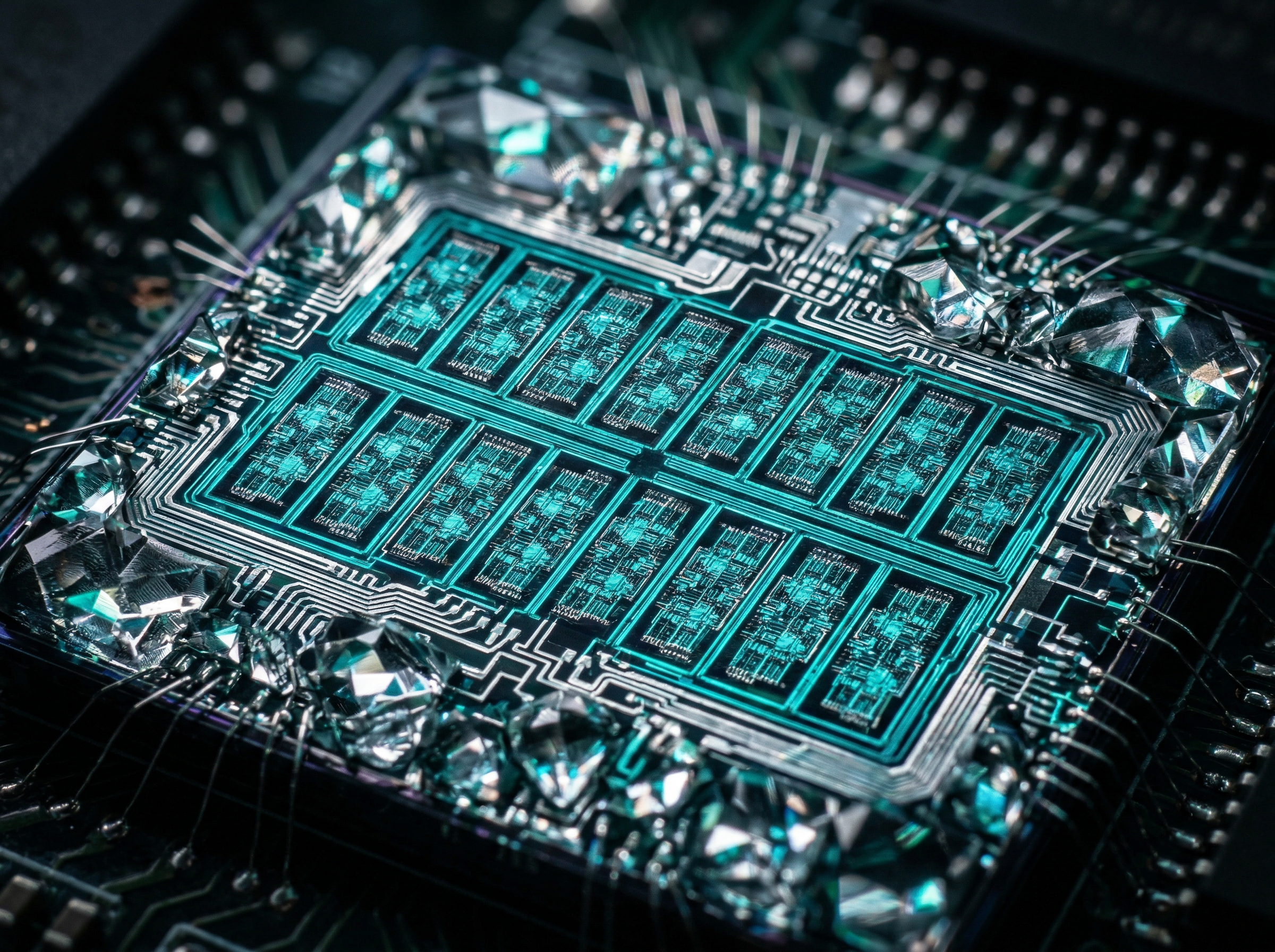
Macro view of futuristic M5 processor chip with teal silicon traces glowing under magnification
02

M5 Turns the Vision Pro Into a Workstation You Wear

Apple's new M5 Pro and M5 Max chips aren't just faster — they're architecturally different. The "Fusion Architecture" includes an 18-core spatial engine and a dedicated "Vision Fabric" that reduces glass-to-glass latency even further. Translation: the world responds to your head movements so quickly it approaches the fidelity of, well, actual reality.

The headline feature for productivity junkies: three simultaneous 4K virtual displays when connected to a Mac. That's 12 million pixels of workspace floating in your living room. Johny Srouji called M5 "the foundation for the next three years of spatial computing performance." He's not being modest — he's being strategic. This chip roadmap locks developers into visionOS for the foreseeable future.

But here's the tension: the M5 makes the Vision Pro better at being a professional tool, not better at being a consumer product. Nobody's buying a $3,500 headset because the latency dropped 2ms. They're buying it because their employer issued a purchase order. Apple's doubling down on the users who already showed up — and that's either smart pragmatism or a slow retreat from the consumer dream.

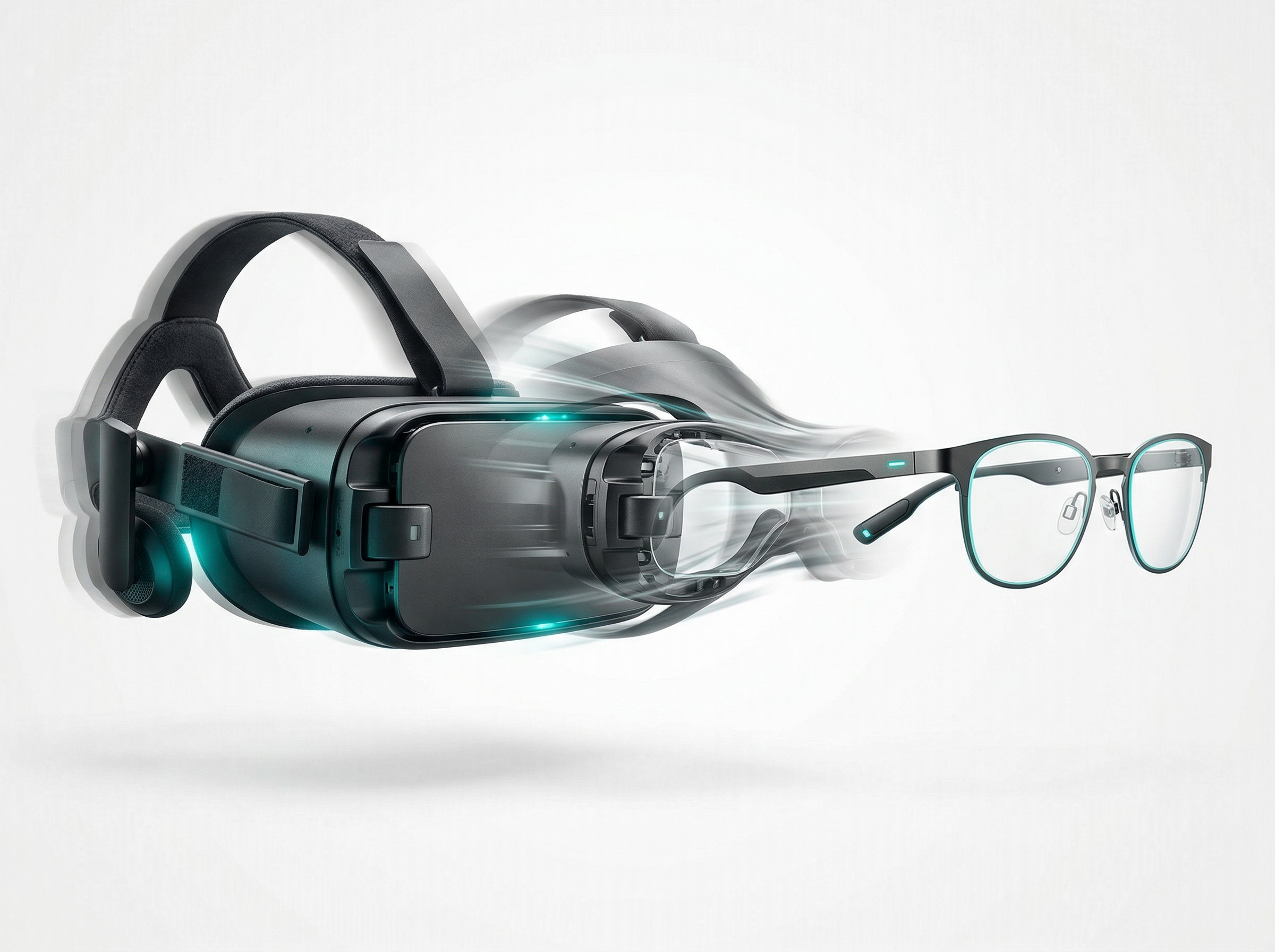
Evolution from bulky VR headset to sleek lightweight smart glasses with motion blur transformation
03

The Quiet Admission: Faces Weren't Meant for Computers

Mark Gurman dropped a bomb this week: Apple is reallocating engineering resources from a budget Vision headset to AI-powered smart glasses and camera-equipped AirPods. Read that again. The company that invented the "spatial computing" category is quietly admitting that strapping a screen to your face isn't how most people want to interact with technology.

The internal logic is sound. The Vision Pro's intelligence — its spatial awareness, hand tracking, eye tracking — can be miniaturized into devices people actually wear all day. Smart glasses. Audio glasses. A pendant. The "face computer" becomes the R&D lab for an entire wearable ecosystem. Gurman's read: "Apple is betting that the intelligence developed for the Vision Pro can be more successfully commercialized in lighter, cheaper form factors."

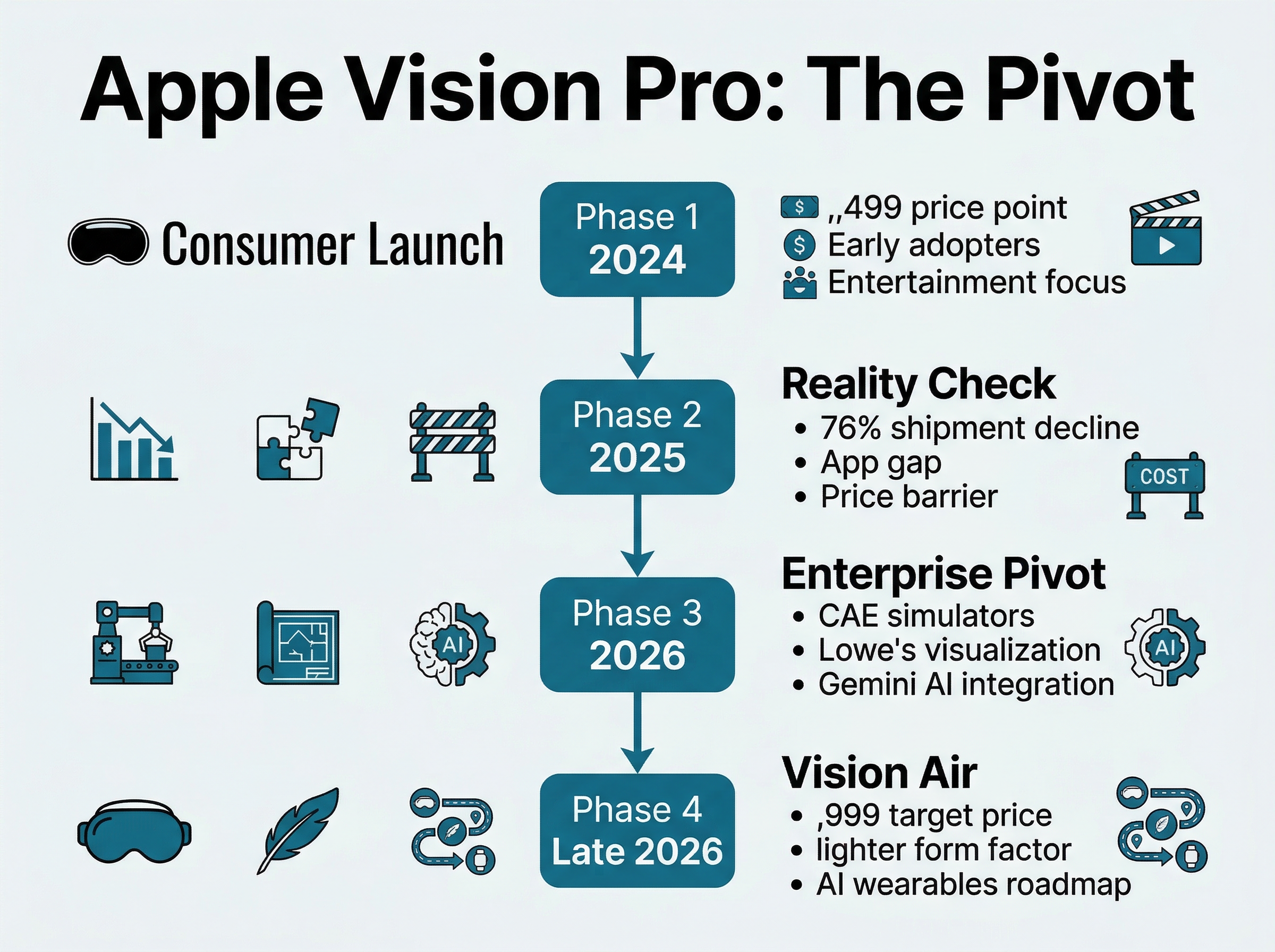
Infographic showing Apple Vision Pro's strategic evolution from consumer launch through enterprise pivot to Vision Air and AI wearables roadmap
Infographic: The Vision Pro Pivot — From face computer to AI wearable ecosystem

This is the most strategically significant story of the month. It doesn't mean Vision Pro is dead — it means Apple sees it as the ancestor, not the destination. The real product is spatial intelligence, distributed across everything you own. The headset was just the prototype.

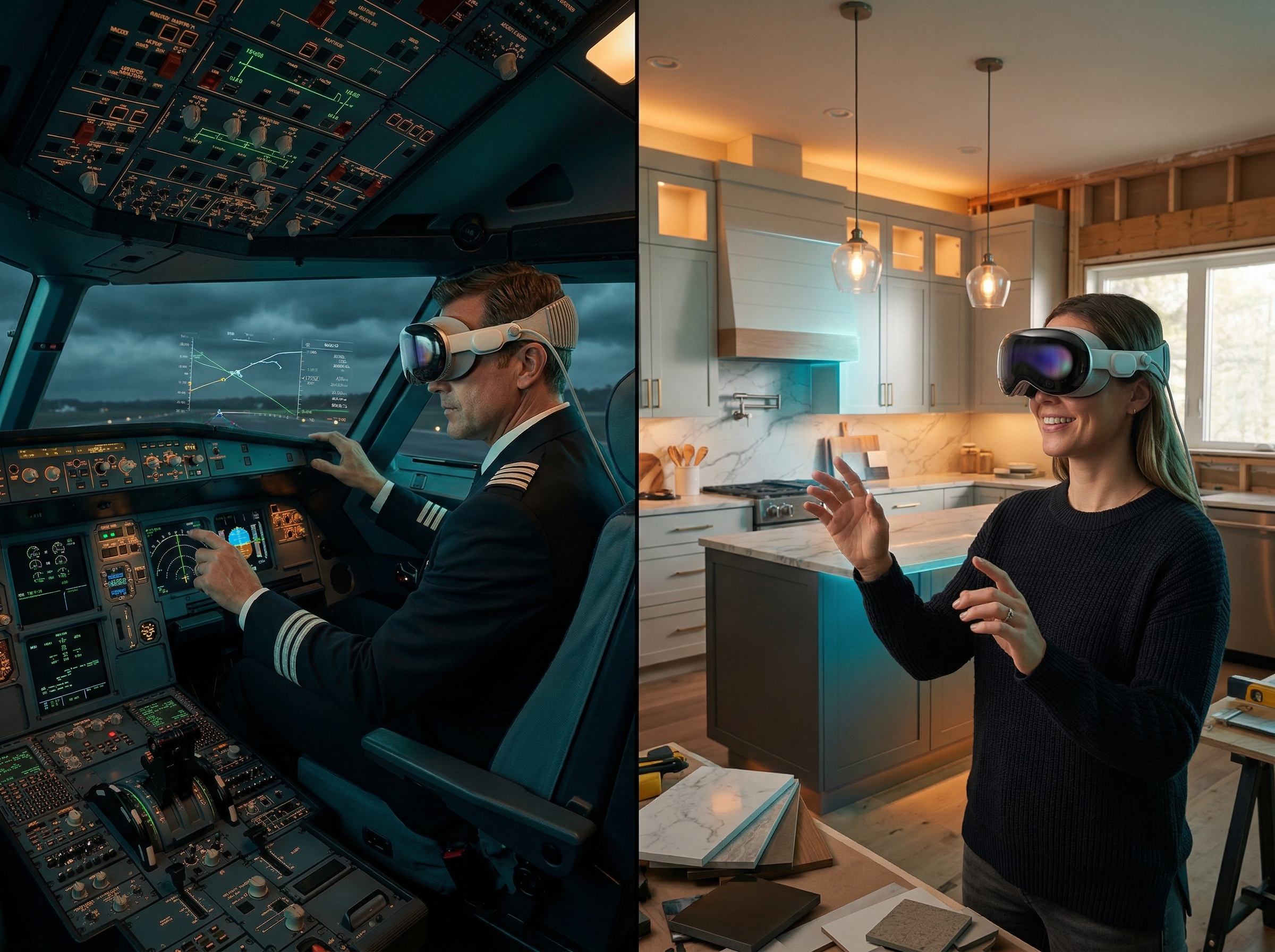
Split scene showing pilot training simulator and kitchen remodel visualization, both using Apple Vision Pro
04

$3,500 Is Cheap When It Replaces a Million-Dollar Simulator

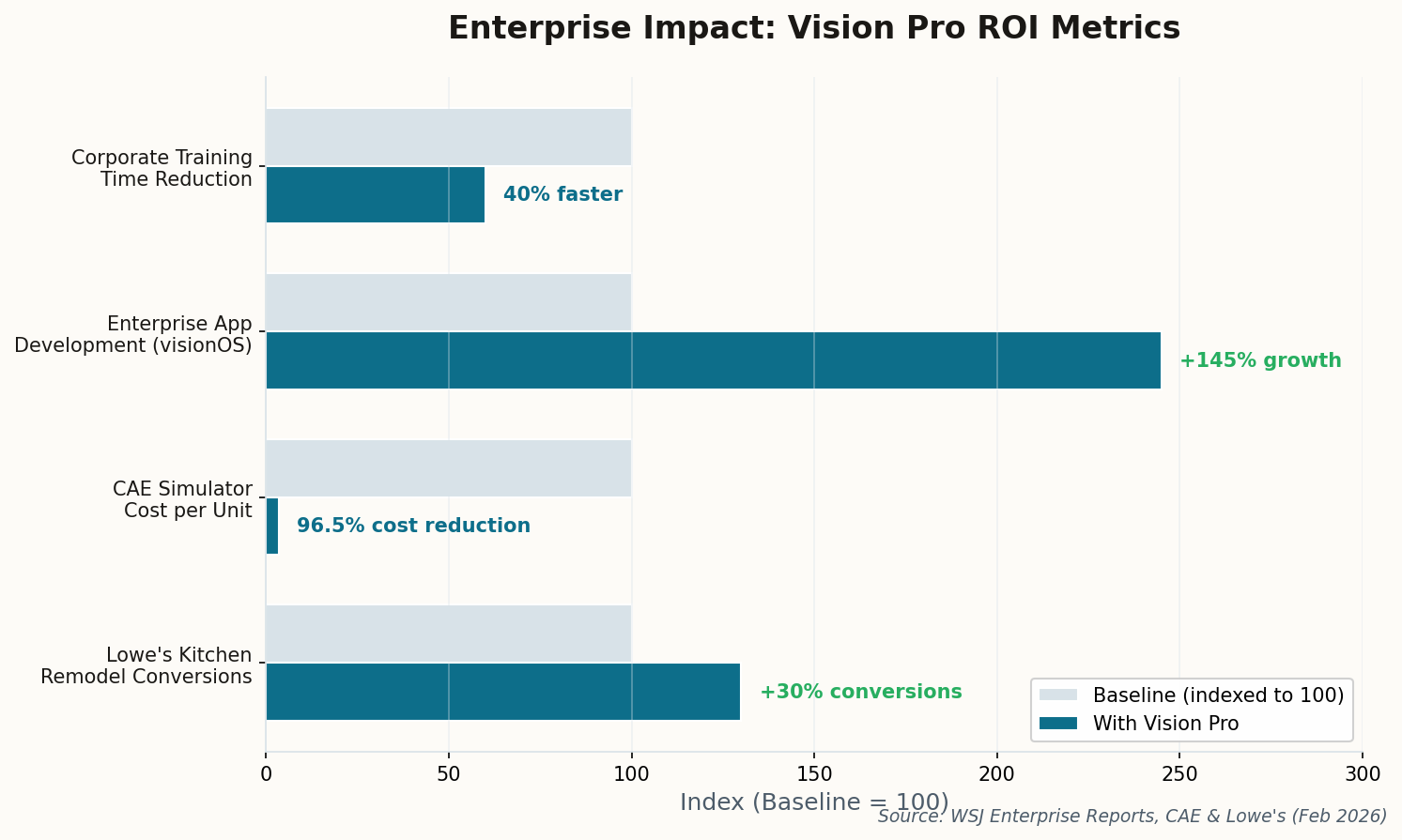
While consumer sales languish, enterprise is telling a completely different story. Lowe's reports a 30% increase in kitchen remodel conversions using Vision Pro visualization. CAE, the pilot training firm, has started replacing million-dollar flight simulators with $3,500 headsets for certain procedures. A CAE executive put it perfectly: "In the enterprise, the Vision Pro isn't an expensive toy; it's the cheapest professional-grade simulator on the market."

Horizontal bar chart comparing enterprise metrics before and after Vision Pro deployment, showing 30% conversion increase at Lowe's and dramatic cost reduction at CAE replacing million-dollar simulators with $3,500 headsets
Enterprise ROI metrics from Vision Pro early adopters. Lowe's and CAE lead in demonstrated returns.

Apple noticed. They've launched new "Team Device Sharing" APIs, enabling a single headset to serve multiple employees in a corporate environment. This is a decisive move — consumer products don't need multi-user login. Professional tools do. Apple is building the features that enterprises are actually asking for, not the features that make good keynote demos.

The question isn't whether Vision Pro has a future. It clearly does — in operating rooms, on factory floors, in architectural firms, and in flight training centers. The question is whether Apple can accept that future without mourning the consumer dream. Because the numbers say the enterprise market is where the ROI actually lives.

Two futuristic chess pieces on marble, one standing tall in aluminum Apple aesthetic, the other fallen in transparent Meta style
05

Meta Blinks First — And Validates Apple's Loneliest Bet

Meta officially cancelled "La Jolla," its direct competitor to the Vision Pro. The reason? Micro-OLED components are simply too expensive to build a compelling high-end headset at a competitive price. Instead, Zuckerberg is pivoting to "Quest Air" — a lighter headset that offloads processing to a phone or wired puck — and doubling down on the wildly successful Ray-Ban smart glasses.

This is the most counterintuitive validation Apple could receive. The primary competitor just admitted that competing at the high end is economically unviable. Apple now owns the "premium face computer" market — a market of one. Whether that's a crown or a consolation prize depends entirely on whether enterprise adoption scales.

Zuckerberg's quote cuts to the heart of it: "We are focusing our resources where the users are: light, wearable, and AI-integrated." Sound familiar? It's almost exactly what Gurman reported Apple is doing internally. Both companies reached the same conclusion — the $3,000+ headset is a niche tool, not a mass-market product. The difference is that Apple has the niche locked down.

Abstract glass sculpture of a downward curve shattering at the bottom, fragments reflecting tiny Vision Pro headsets
06

The Numbers Don't Lie: 45,000 Units Is Not a Mass-Market Product

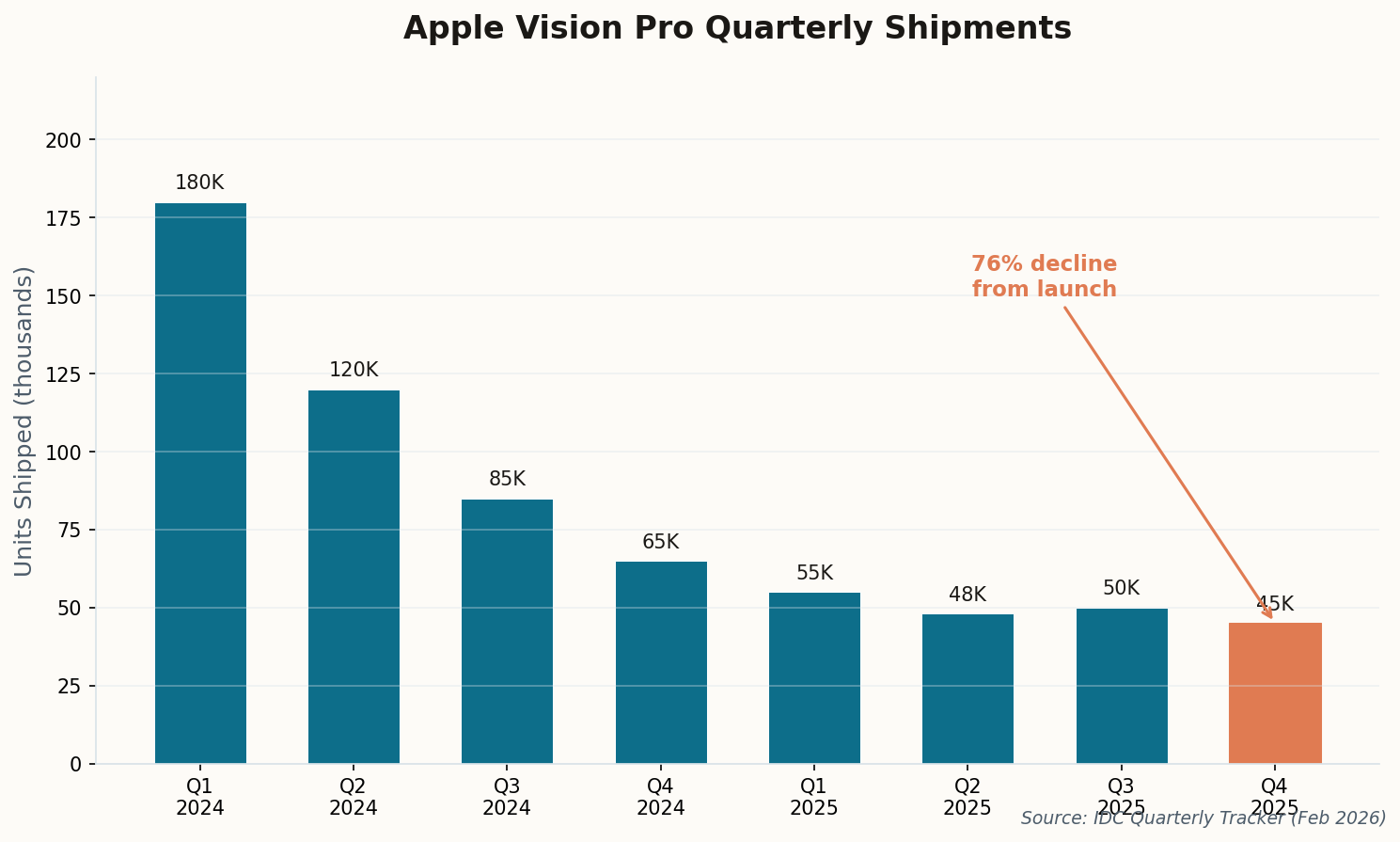
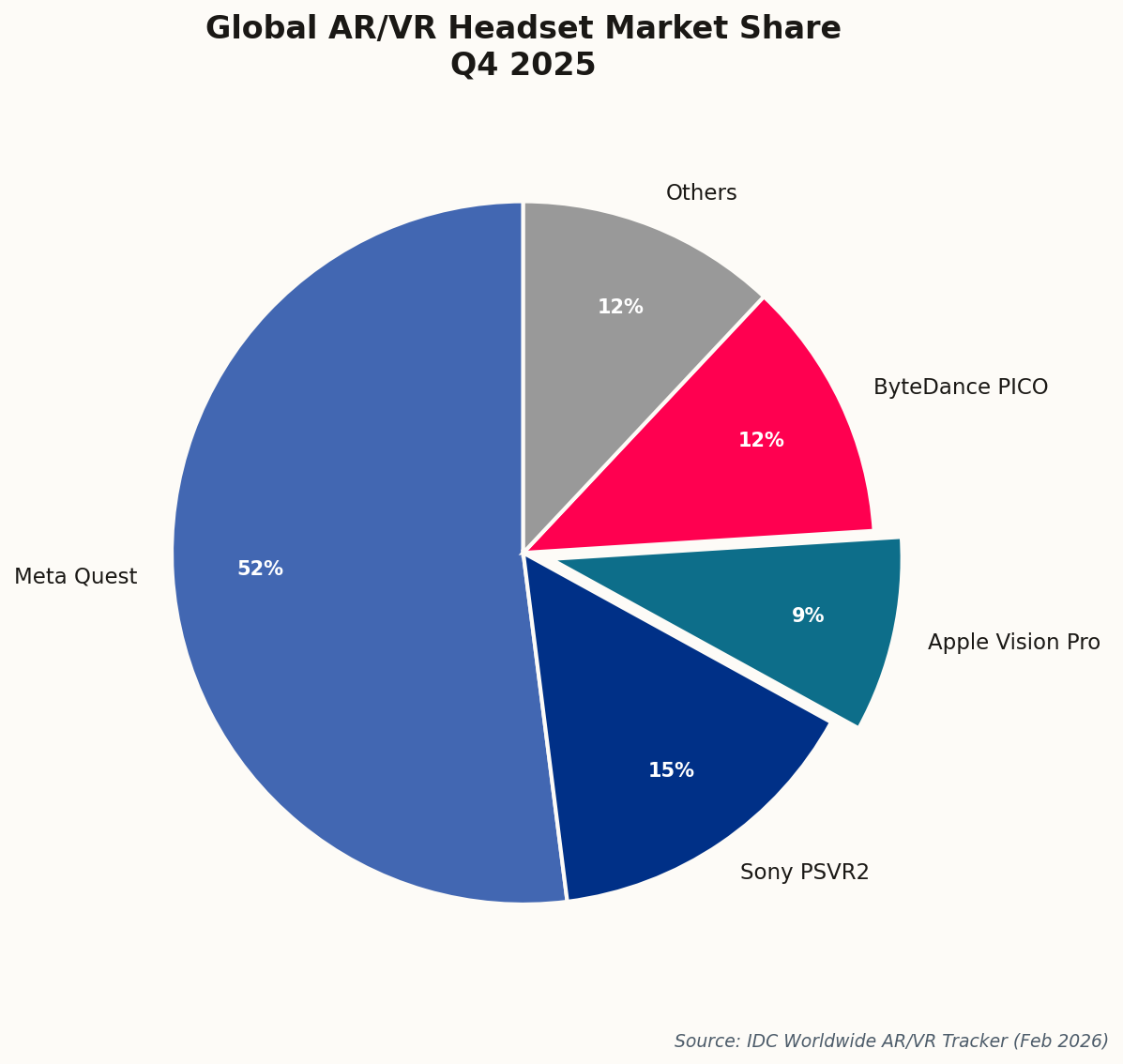
Let's be honest about what 45,000 units in a quarter means. Apple shipped more Vision Pro headsets on launch weekend in February 2024 than it did in all of Q4 2025. IDC pegs the decline at 76% from launch quarter, with market share dipping below 9% of the total AR/VR market. Manufacturing partner Luxshare has reportedly scaled back production to avoid inventory bloat.

Bar chart showing Apple Vision Pro quarterly shipments declining from 180K at launch to 45K in Q4 2025, with annotation highlighting 76% decline
Vision Pro quarterly shipment trajectory. The launch quarter spike was followed by a steep and sustained decline.

IDC analyst Jitesh Ubrani stated it plainly: "The $3,500 price point remains an insurmountable barrier for the average consumer, even during the holiday season." This isn't a hot take — it's arithmetic. At $3,500, every Vision Pro buyer is making a considered, almost professional-grade purchasing decision. That's not how consumer electronics work.

Pie chart showing global AR/VR headset market share for Q4 2025: Meta Quest 52%, Sony PSVR2 15%, ByteDance PICO 12%, Apple Vision Pro 9%, Others 12%
Global AR/VR market share by units shipped. Meta Quest dominates on volume; Vision Pro commands the premium tier alone.

But context matters. The Mac Pro ships fewer units than the MacBook Air — and nobody calls it a failure. Apple's leaked "Vision Air" at $1,999 for late 2026 suggests they understand the consumer price threshold. The question is whether they can ship a compelling $2,000 product without the EyeSight display or the top-tier panels, and whether that product will feel like a Vision Pro or a Vision Compromise. Ming-Chi Kuo calls $2,000 "the psychological tipping point." He might be right. We'll find out by Christmas.

The Pivot Is the Product

Two years ago, Apple told us to strap a computer to our faces. That pitch didn't land — not at $3,500, not with 400 grams on your nose. But in operating rooms, flight simulators, and kitchen showrooms, something unexpected happened: the Vision Pro found its people. Not millions of them. Thousands. The ones who need it, not the ones who want it. Apple's next move — lighter glasses, cheaper headsets, AI everywhere — suggests they've learned the lesson. The future of spatial computing won't be worn on your face. It'll be woven into everything else.

Share X LinkedIn