Travel / Tokyo

Three Perfect Days in Tokyo

Cherry blossoms blooming early, a museum reborn after four years, and the weak yen making Tokyo's finest accessible to everyone. Here's your definitive guide to the city this March.

Listen
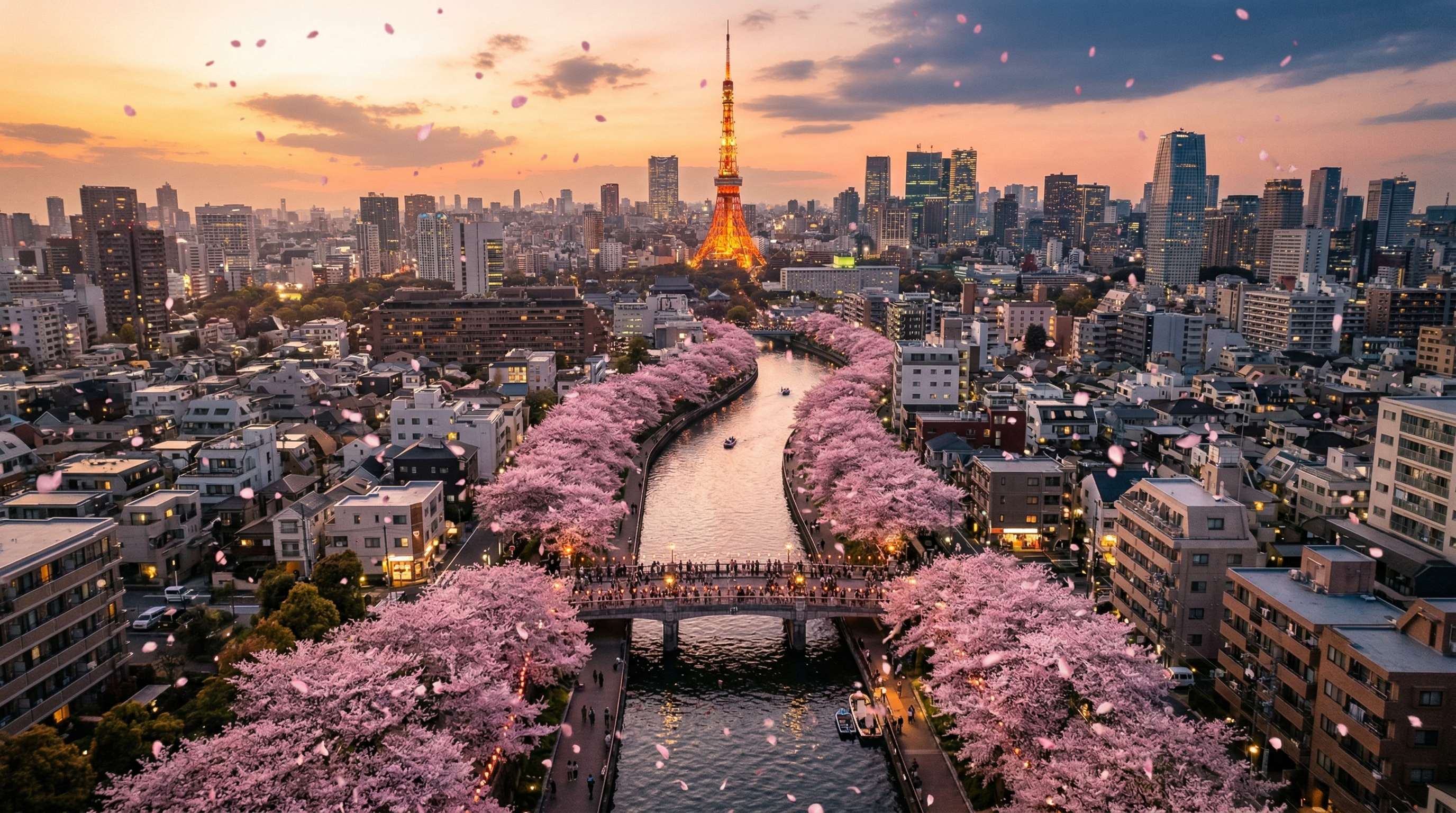
Aerial view of Tokyo at golden hour with cherry blossom trees in full bloom along the Meguro River
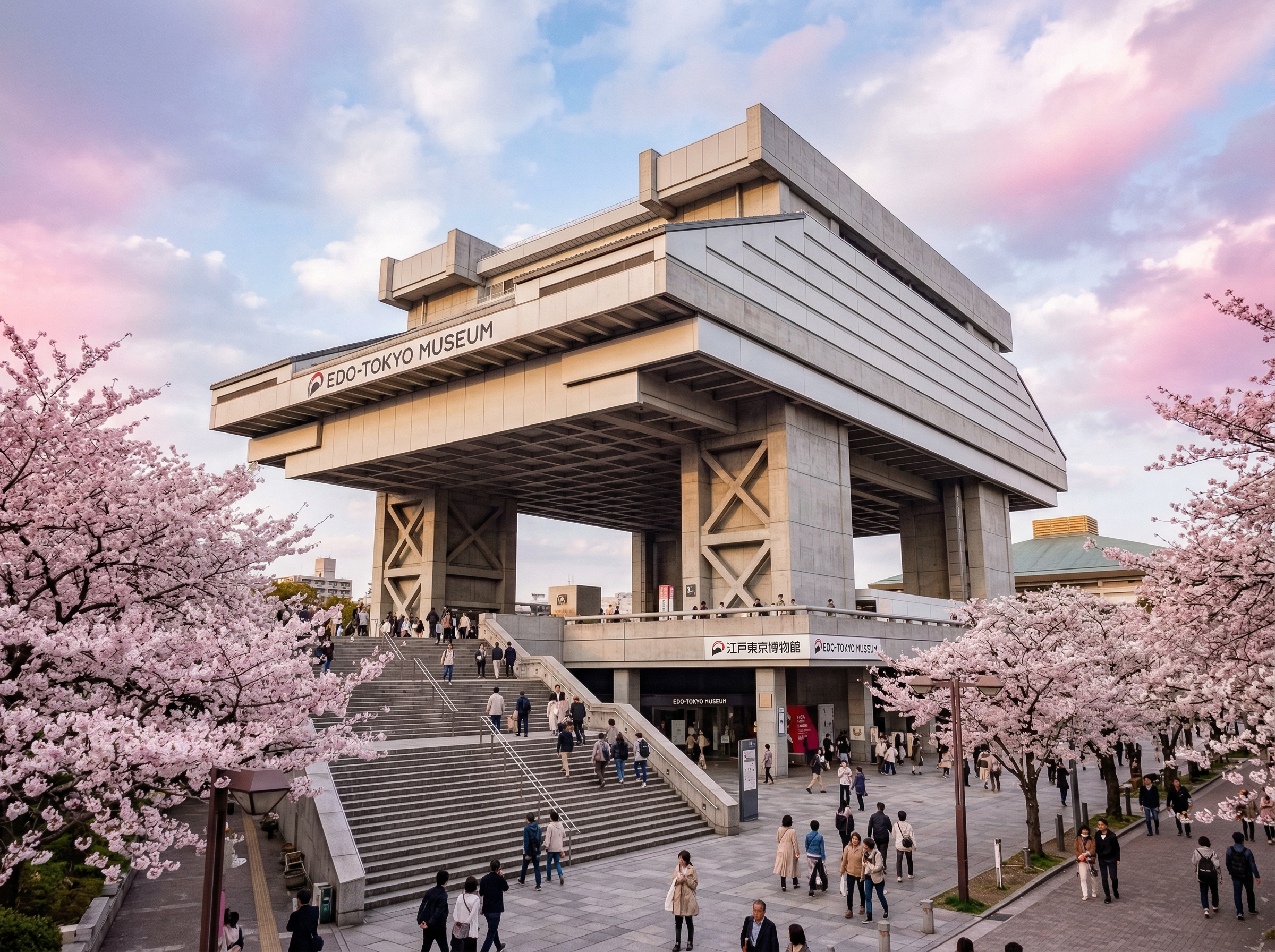
The iconic elevated architecture of the Edo-Tokyo Museum in Ryogoku, framed by cherry blossoms
01

Four Years of Silence, and the Edo-Tokyo Museum Finally Speaks Again

If you've been to Tokyo before 2022, you probably remember the Edo-Tokyo Museum — that magnificent elevated structure in Ryogoku that made you feel like you'd walked into a time machine. If you've visited since, you found a locked door and a construction fence. Four years of silence.

On March 31, the museum finally reopens after one of the most ambitious renovations in Japanese cultural history. The iconic exterior — that distinctive elevated modernist shell — is untouched. But inside, everything has changed. New interactive digital displays bridge the gap between the Edo period and today's megacity. A full-scale replica of a Meiji-era watch shop anchors a new wing exploring Tokyo's obsession with precision and craft. The climate control and accessibility have been completely modernized — a quiet acknowledgment that the original 1993 systems weren't designed for the 33-million-visitor crowds of the 2020s.

Here's the strategic play: the museum reopens on the last day of March, which means you'll catch it if you time your trip right — and you'll beat the Golden Week crush by a solid month. For a rainy spring day (and there will be at least one), this is now the best indoor experience in the city. Full stop.
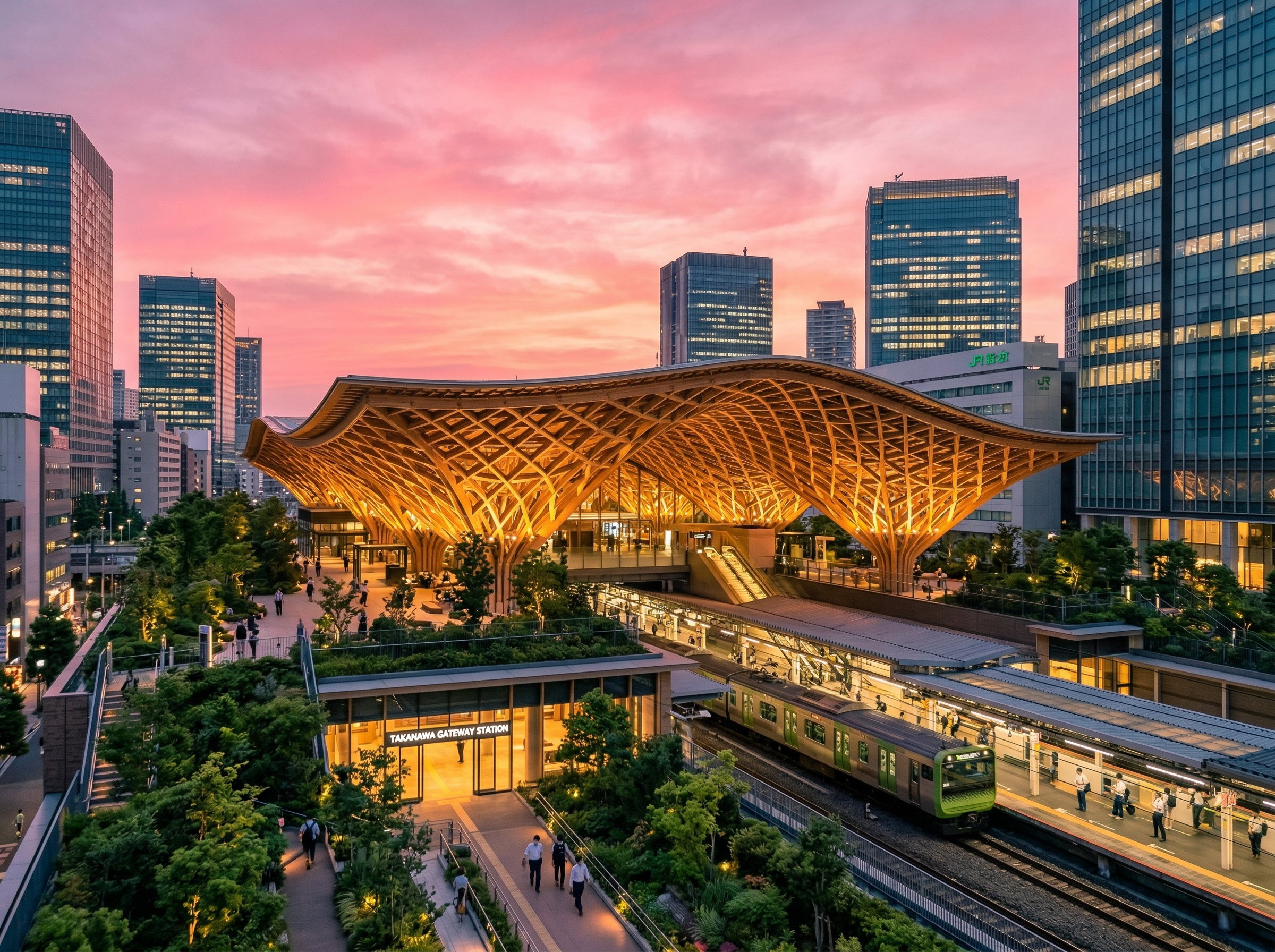
Futuristic Takanawa Gateway Station with geometric wooden lattice roof at twilight
02

Tokyo's Newest Neighborhood Didn't Exist Three Years Ago

The premise sounds absurd: build an entire neighborhood from scratch around a single train station, and open it all at once. But this is JR East, and the station was designed by Kengo Kuma — the same architect behind the 2020 Olympic Stadium. So when Takanawa Gateway City opens on March 27, it won't feel like a construction project. It'll feel like a neighborhood that was always meant to be there.

The complex includes the new JW Marriott Hotel Tokyo, the experimental Museum of Narratives (MoN), a massive NEWoMan shopping complex, and acres of rooftop greenery that blur the line between building and park. JR East is explicitly positioning this as a "testbed for 22nd-century urban life" — walkability, tech-integrated retail, and a density that somehow doesn't feel claustrophobic.

The real significance? This shifts Tokyo's center of gravity southward. For years, the axis has been Shibuya-Shinjuku-Ikebukuro across the north. Takanawa Gateway, sitting between Shinagawa and Tokyo Station on the Yamanote Line, gives the southern corridor a glamorous new anchor. If you want to see what Tokyo thinks the future looks like, this is it.

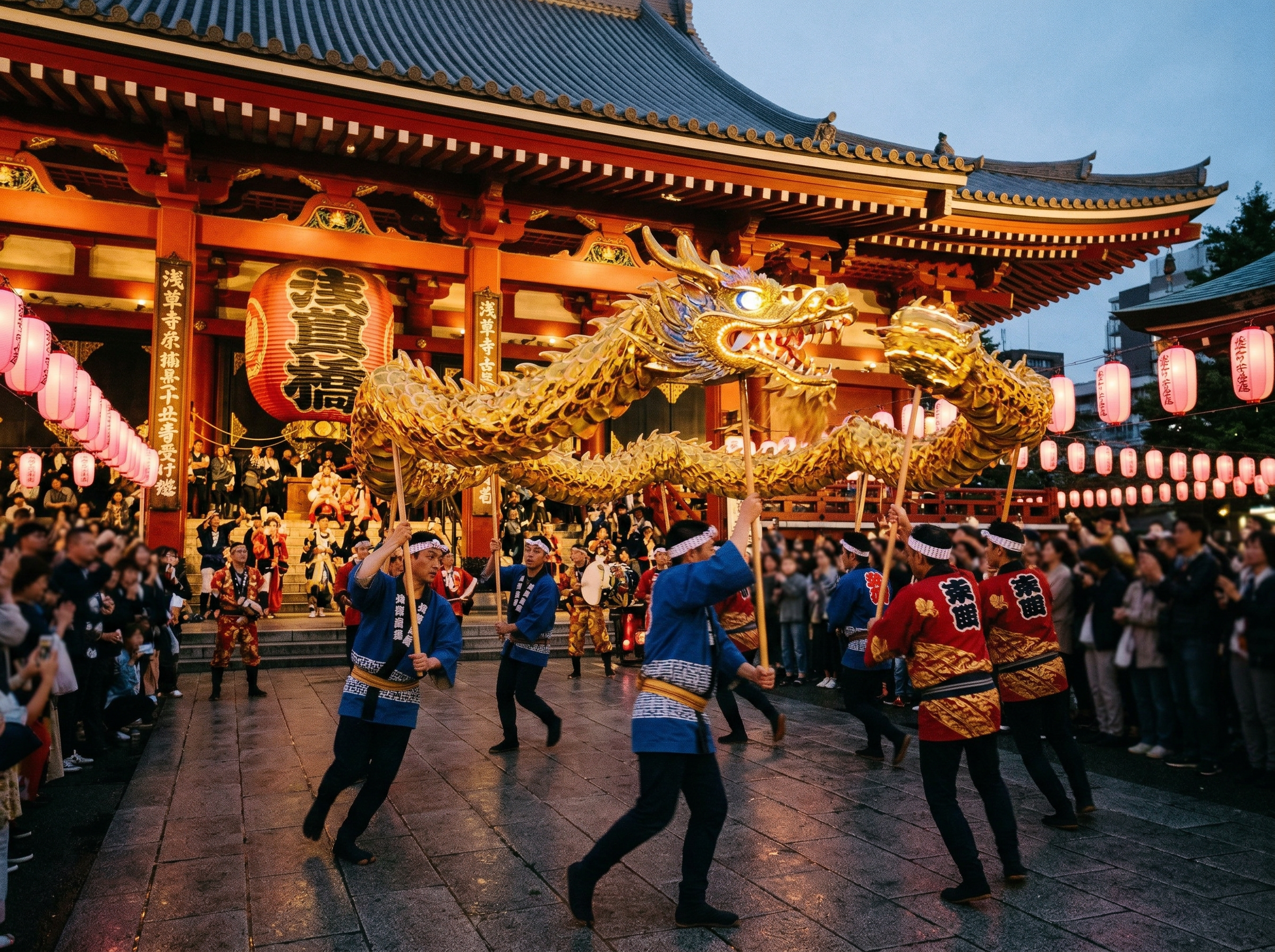
Golden dragon dance performance at Senso-ji Temple with red pillars and lanterns
03

A Fifteen-Meter Golden Dragon Dances Through Asakusa

There's a moment during the Senso-ji Kinryu-no-Mai when the golden dragon's scales catch the light between the temple's vermillion pillars, and every phone in the courtyard goes up simultaneously. It's the single most photographed instant in Asakusa every spring.

Eight dancers manipulate the 15-meter golden dragon in a ritual celebrating the temple's founding, with performances at 11:30 AM, 2:00 PM, and 3:30 PM. The March 18 date places it perfectly in the pre-blossom window — the weather is warming, the crowds haven't peaked, and the temple grounds still have breathing room. If you can only attend one traditional performance during your trip, this is the one. The early afternoon show tends to have the best light.

Also this week: The Mt. Takao Hiwatari-sai (Fire-Walking Festival) takes place March 8, where yamabushi mountain monks walk barefoot over smoldering coals. It's a 45-minute train ride from Shinjuku on the Keio Line — and yes, visitors can walk the cooled embers afterward.

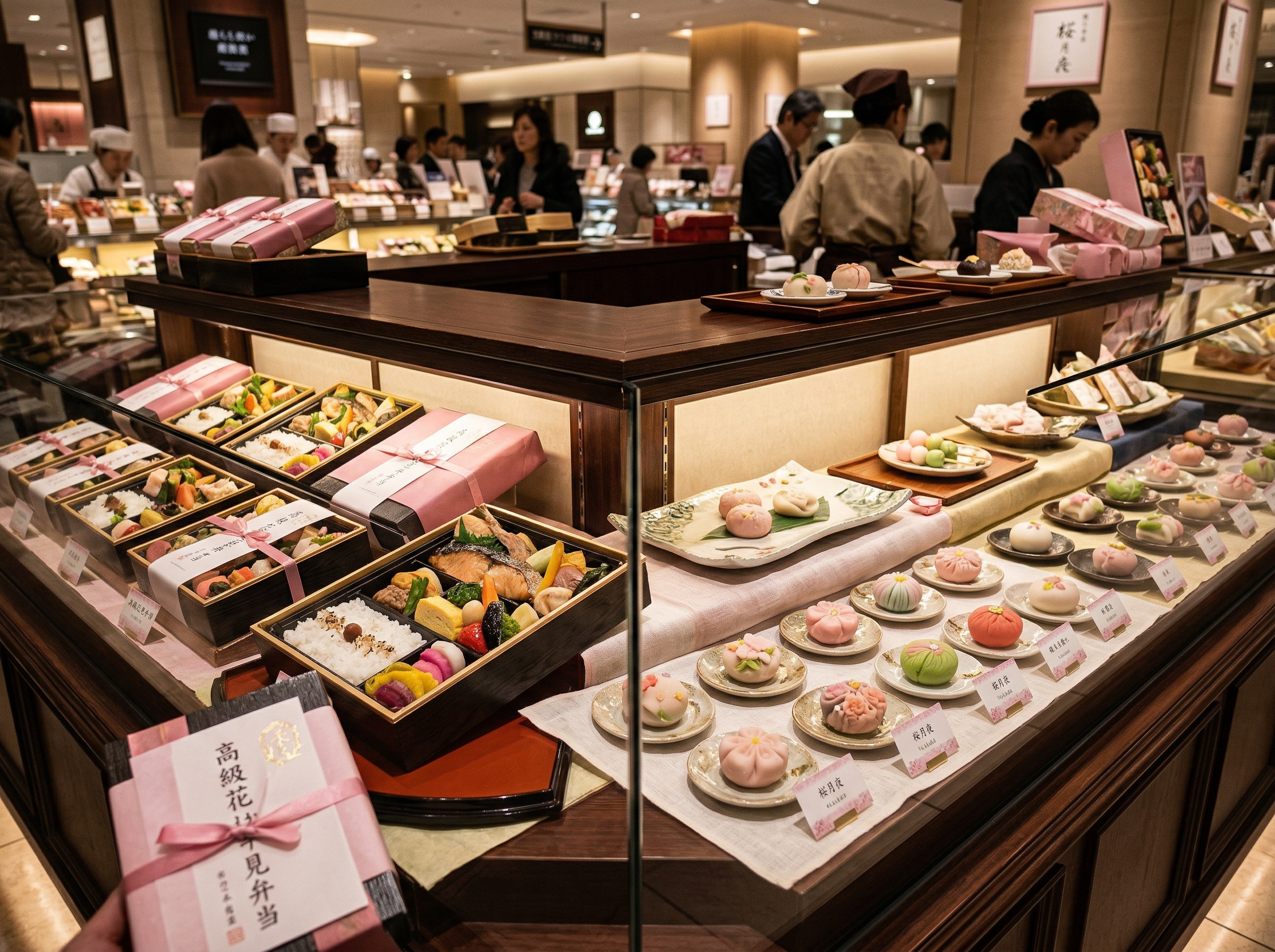
Elegant Japanese department store food hall with luxurious bento boxes and wagashi sweets
04

The Yen Is Weak. Your Tokyo Trip Has Never Been Cheaper.

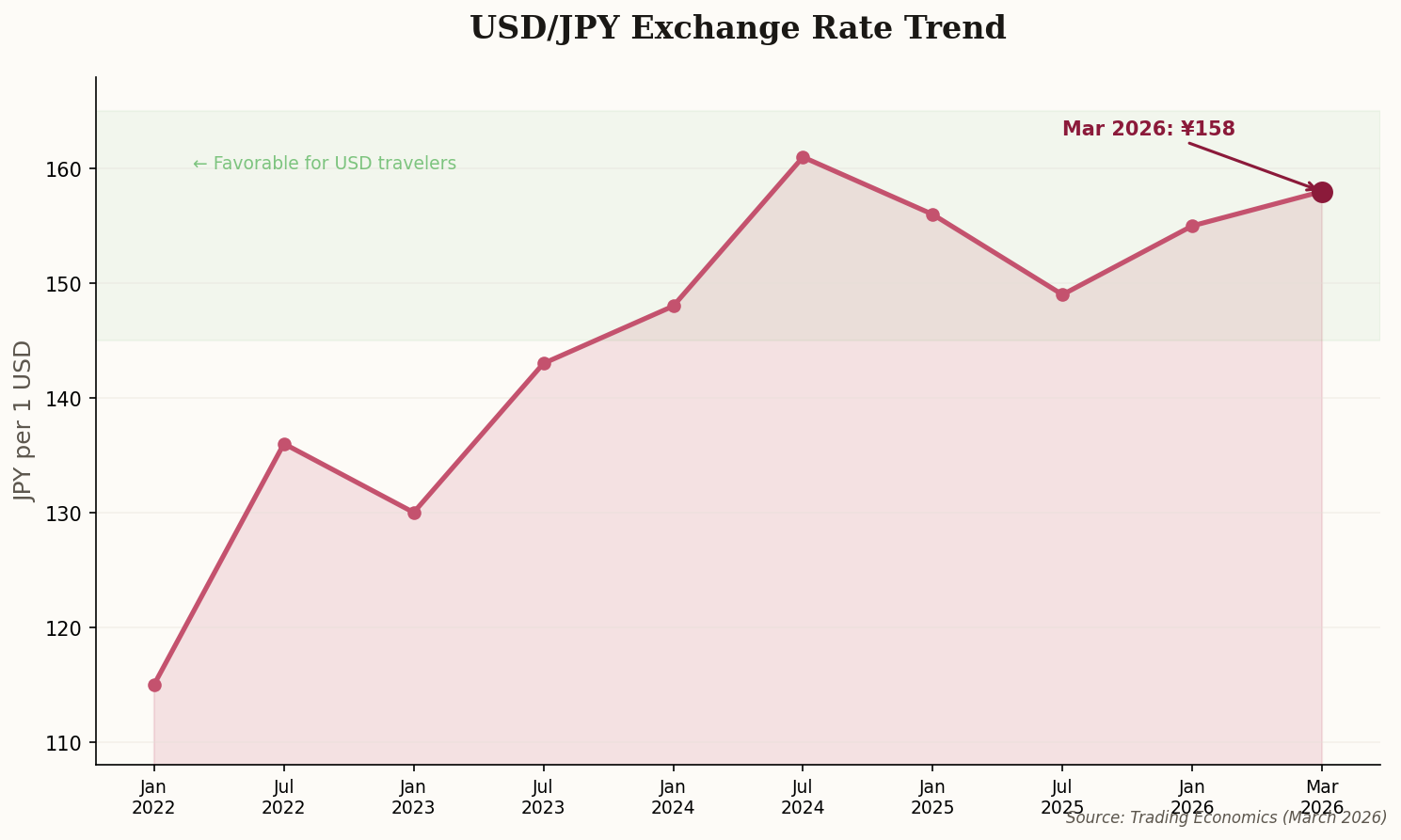
Let's talk numbers. At 157–159 yen to the dollar, Tokyo is running a sale that nobody explicitly advertised. A ¥1,500 bowl of ramen — the kind that would cost $15 in New York — rings in at $9.50. A ¥30,000 omakase dinner works out to $190 instead of the $350 you'd pay for equivalent quality in Manhattan. The math is relentless and it all tilts in your favor.

USD/JPY exchange rate trend from 2022 to March 2026, showing the yen weakening from 115 to 158
The yen has weakened ~37% against the dollar since 2022, making 2026 historically affordable for USD-based travelers.

The real insider move? Depachika — the basement food halls of department stores like Isetan Shinjuku and Takashimaya. After 7:30 PM, these places mark down their exquisite bento boxes by 30-50%. You're eating food prepared by some of Tokyo's best chefs, presented like jewelry, for the price of a fast-casual meal back home. This is the single best budget hack in the city.

And luxury restaurants are playing along. Many top-tier establishments now offer lunch sets at 20–30% of their dinner price to maintain volume during the weak yen era. That three-star kaiseki that costs ¥45,000 at dinner? The lunch tasting might be ¥12,000 — about $76. That's not a meal. That's a heist.

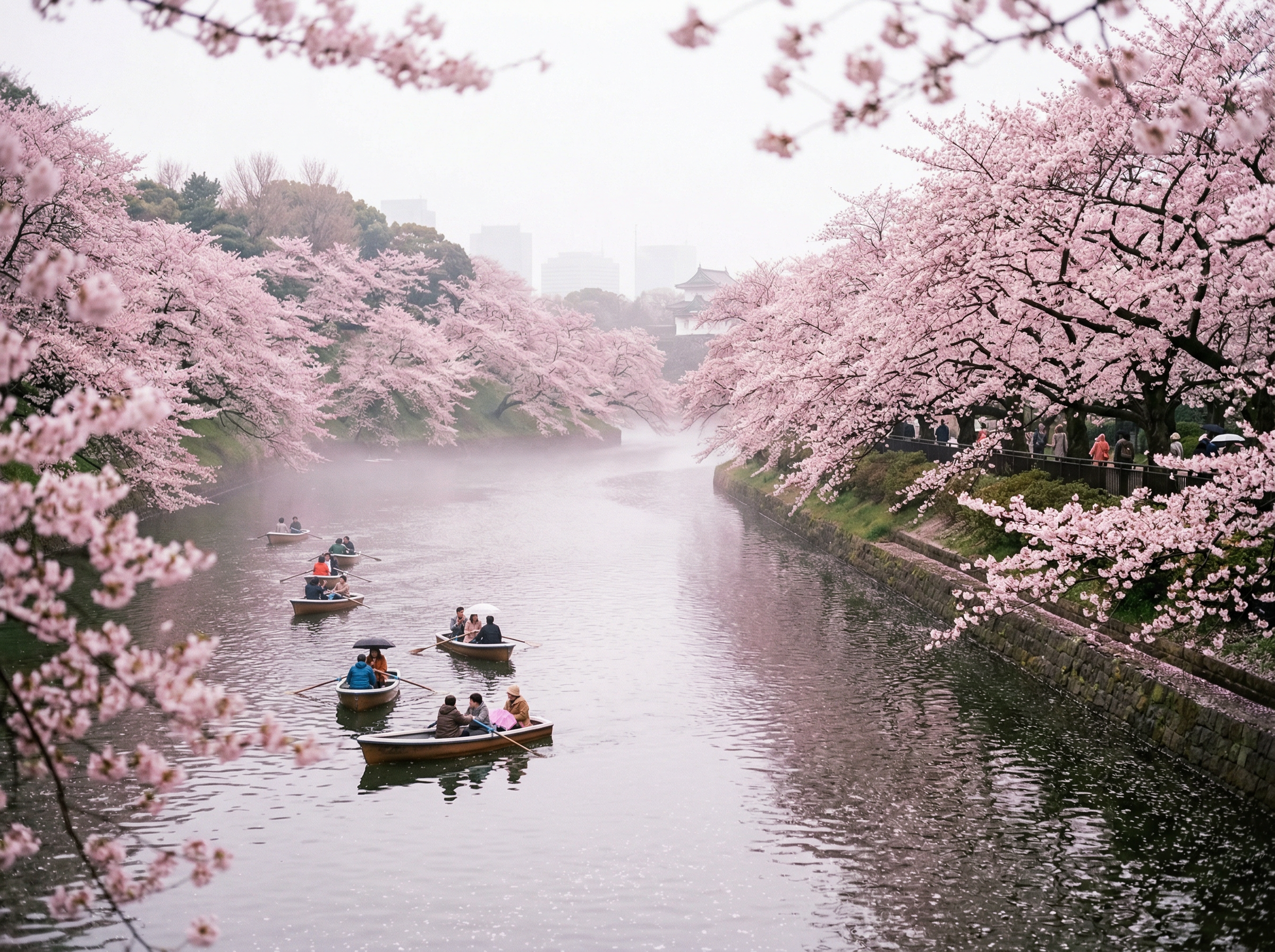
Cherry blossom trees in full bloom along the Chidorigafuchi moat with rowboats on calm water
05

The Blossoms Are Coming Early. Plan Accordingly.

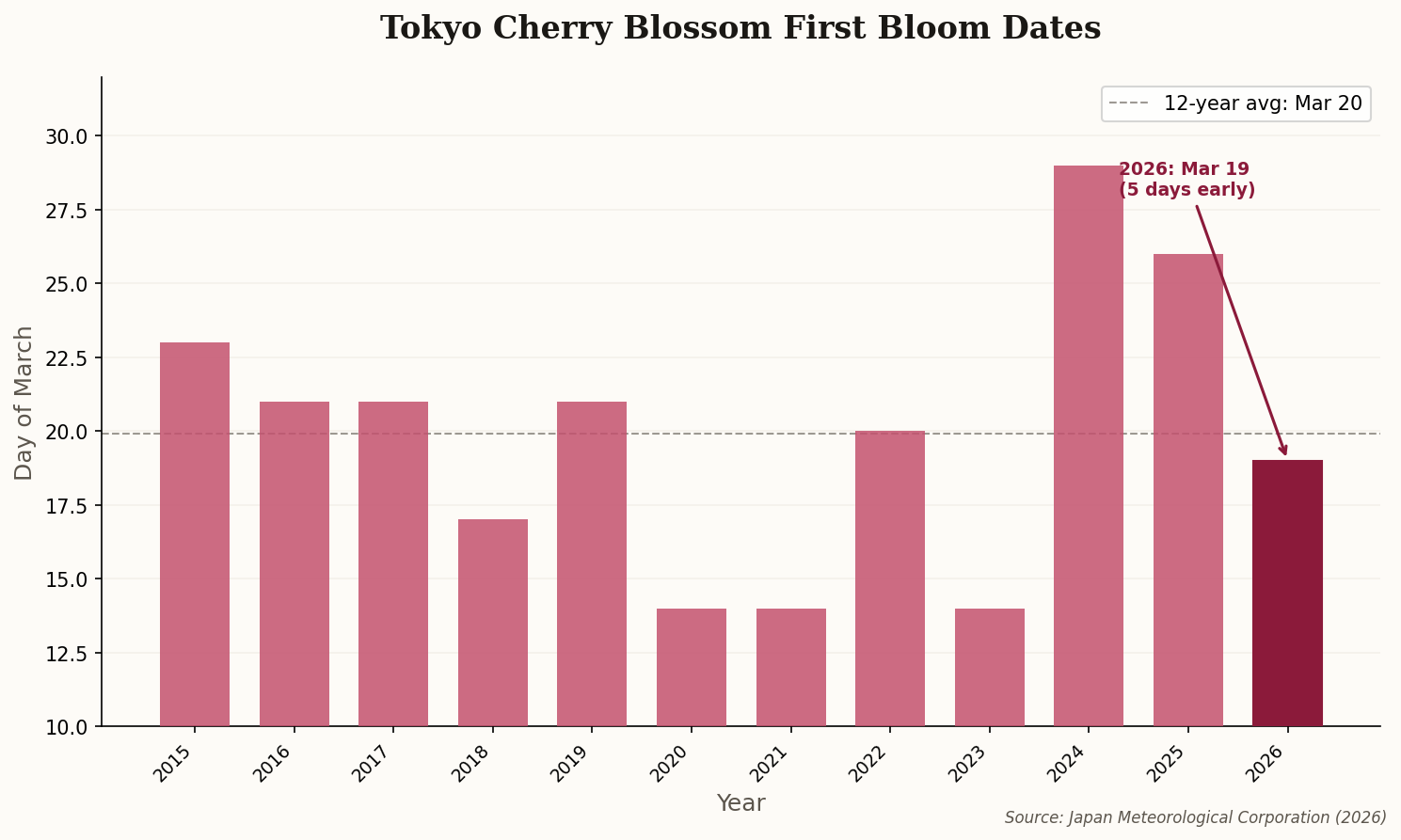
The Japan Meteorological Corporation dropped the 2026 cherry blossom forecast, and the headline is simple: they're early. First bloom (kaika) is projected for March 19. Full bloom (mankai) arrives March 28. Your optimal viewing window runs March 26 through April 2.

Bar chart showing Tokyo cherry blossom first bloom dates from 2015 to 2026, trending earlier
Tokyo's first bloom dates have shifted 4-5 days earlier on average, driven by warmer winters. 2026 continues the trend.

This isn't a fluke — it's a pattern. Warmer sea temperatures have been pulling bloom dates forward for over a decade now. The 12-year average first bloom is March 20; this year hits March 19, continuing a trajectory that's reshaping how the entire country plans its spring.

For your three days: Chidorigafuchi remains the crown jewel — rent a rowboat and drift under a tunnel of pink. Ueno Park is where Tokyo goes to picnic under the trees (arrive before noon to claim a tarp spot). And for something quieter, the Meguro River walk from Nakameguro to Gotanda is the most photogenic 3km stroll in the city — especially at night when the branches are lit from below.

Timing tip: If your dates fall March 14–20, you'll catch the first blossoms opening — magical in its own right, with none of the peak-season crowds. The Japanese call this saki-hajime (the beginning of bloom), and there's a poetic beauty to watching a tree decide to open.

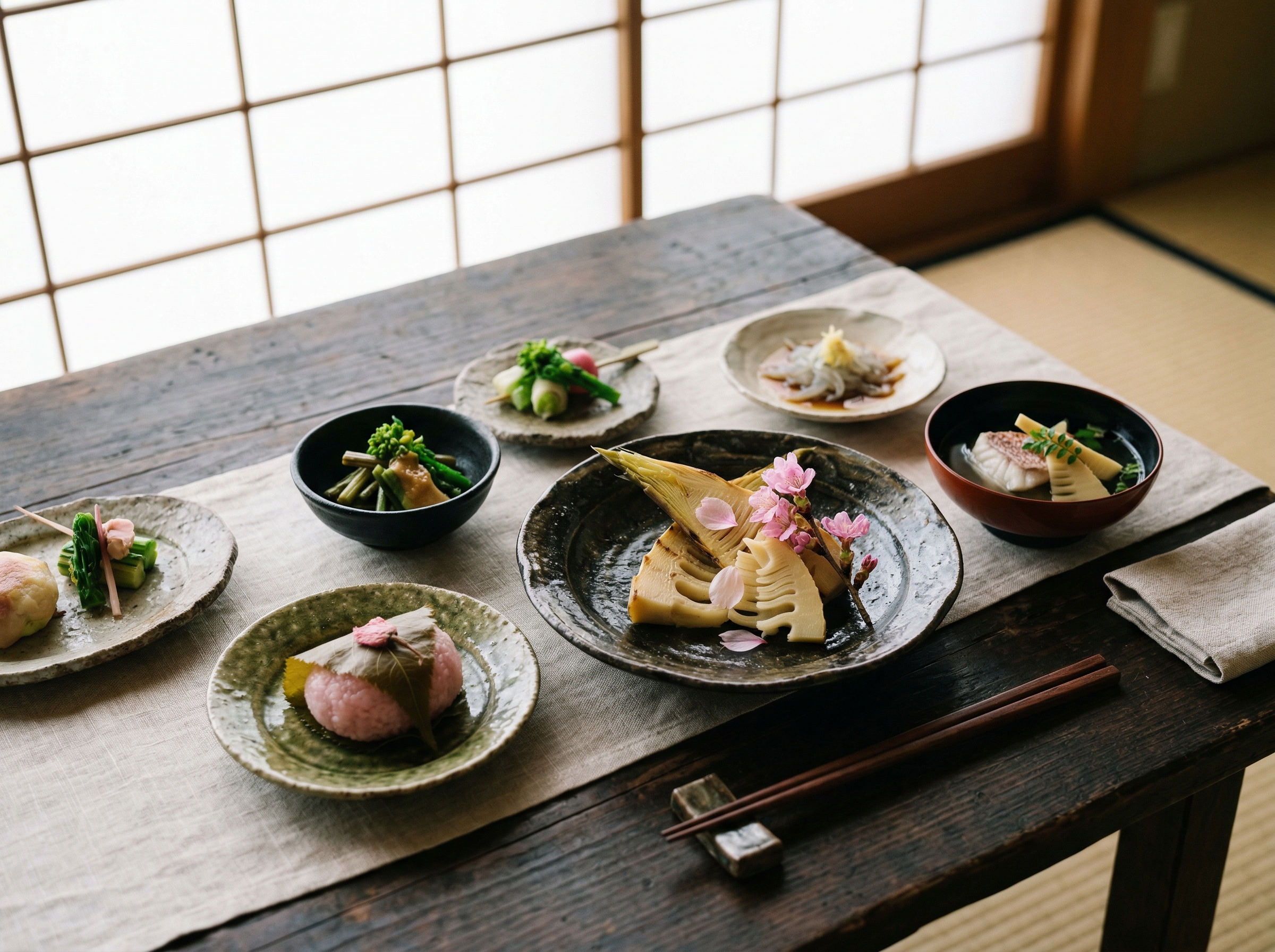
Exquisite Japanese kaiseki course with spring ingredients on handmade ceramic
06

160 Stars and Counting: Tokyo's Unshakeable Culinary Throne

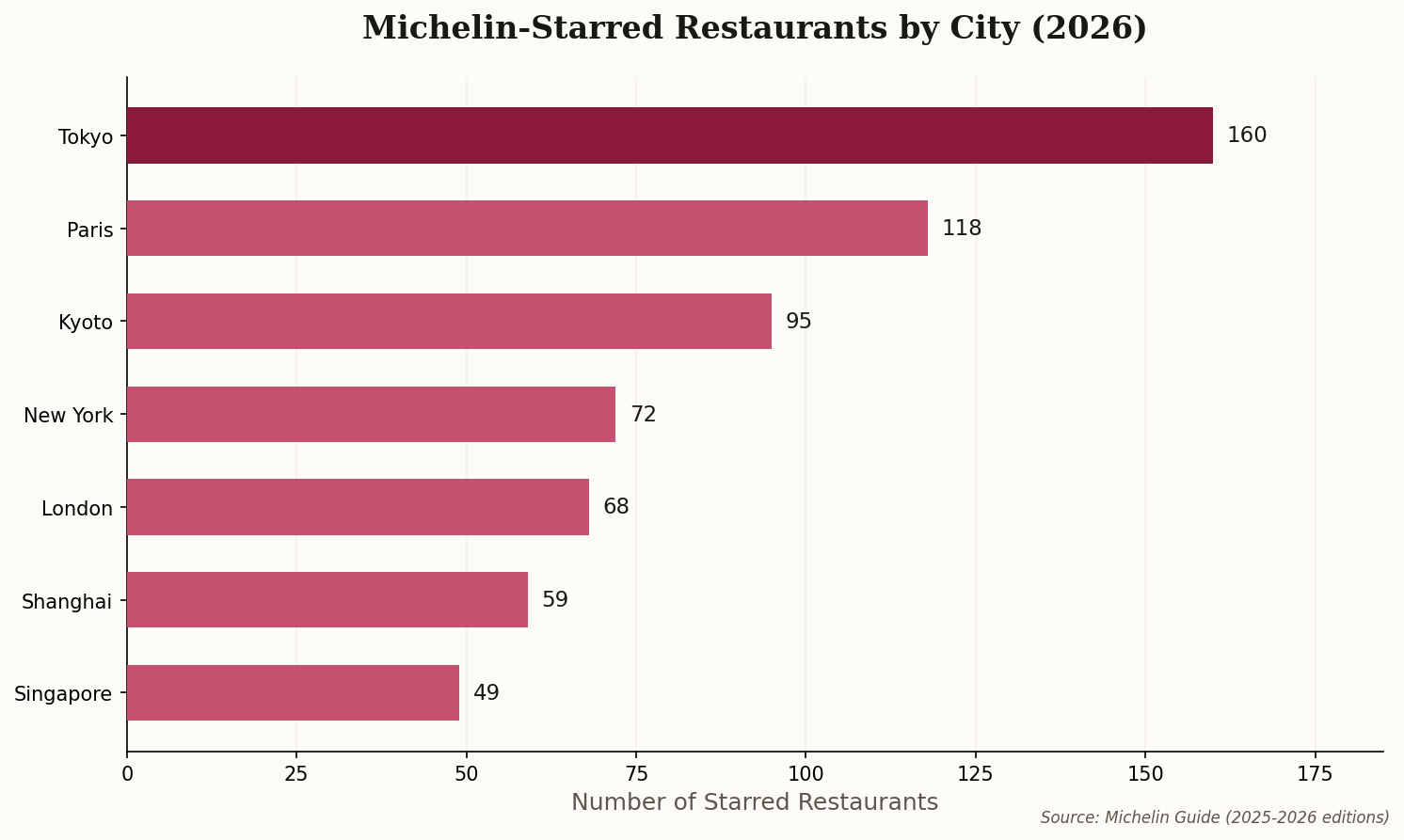
The Michelin Guide Tokyo 2026 confirmed what everyone already suspected: Tokyo is not just the world's most starred city — it's pulling away from the field. With 160 starred establishments, it holds 35% more stars than Paris (118) and nearly double London (68). This isn't a rivalry anymore. It's a coronation.

Horizontal bar chart comparing Michelin-starred restaurants by city, with Tokyo leading at 160
Tokyo holds more Michelin stars than any city on earth — and the gap keeps widening.

The headline promotion: Myojaku in Nishi-Azabu, elevated to three stars. The chef's approach — described as "purity and harmony" — emphasizes seasonal dashi over the fusion complexity that dominated Tokyo's fine dining scene in the 2010s. It represents a philosophical return to fundamentals, and the Michelin inspectors noticed. Fair warning: reservations now require a three-month lead time.

The more interesting trend is what's happening at the margins. A wave of "dessert gastronomy" spots — dedicated dessert-only tasting menus — are gaining recognition for the first time. And the affordable end of the spectrum remains Tokyo's secret weapon: there are dozens of one-star restaurants where dinner costs less than ¥8,000 ($51). That's the beauty of this city's food culture — excellence doesn't require extravagance.

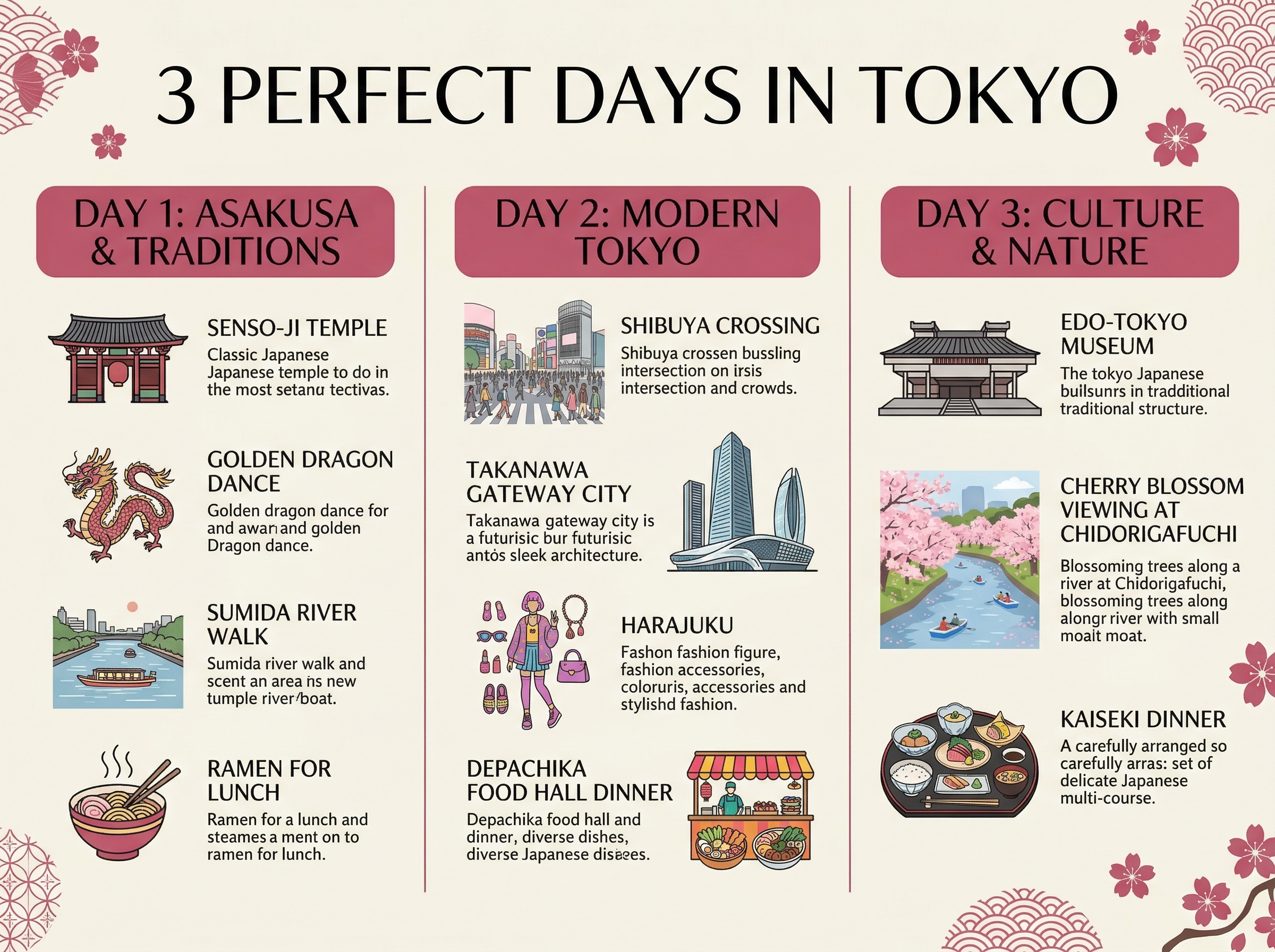
Infographic showing a suggested 3-day Tokyo itinerary: Day 1 covers Asakusa traditions, Day 2 explores modern Tokyo, Day 3 focuses on culture and nature
Infographic: 3 Perfect Days in Tokyo — a suggested itinerary weaving together the highlights above.

The City That Rewards Curiosity

Tokyo doesn't hand you its best experiences on a tourist platter. The fire-walking monks are a 45-minute train ride away. The discounted bento boxes appear after 7:30 PM. The perfect cherry blossom photo requires showing up at Chidorigafuchi before 8 AM. This is a city that rewards the curious, the early risers, and the ones willing to take one more turn down one more alley. Three days isn't enough. But it's enough to understand why people keep coming back.

Share X LinkedIn