Travel Guide

Three Days in Rome

Colosseum dust, cacio e pepe, and the art of doing less in the Eternal City. A field-tested guide to 72 hours that actually matter.

Listen
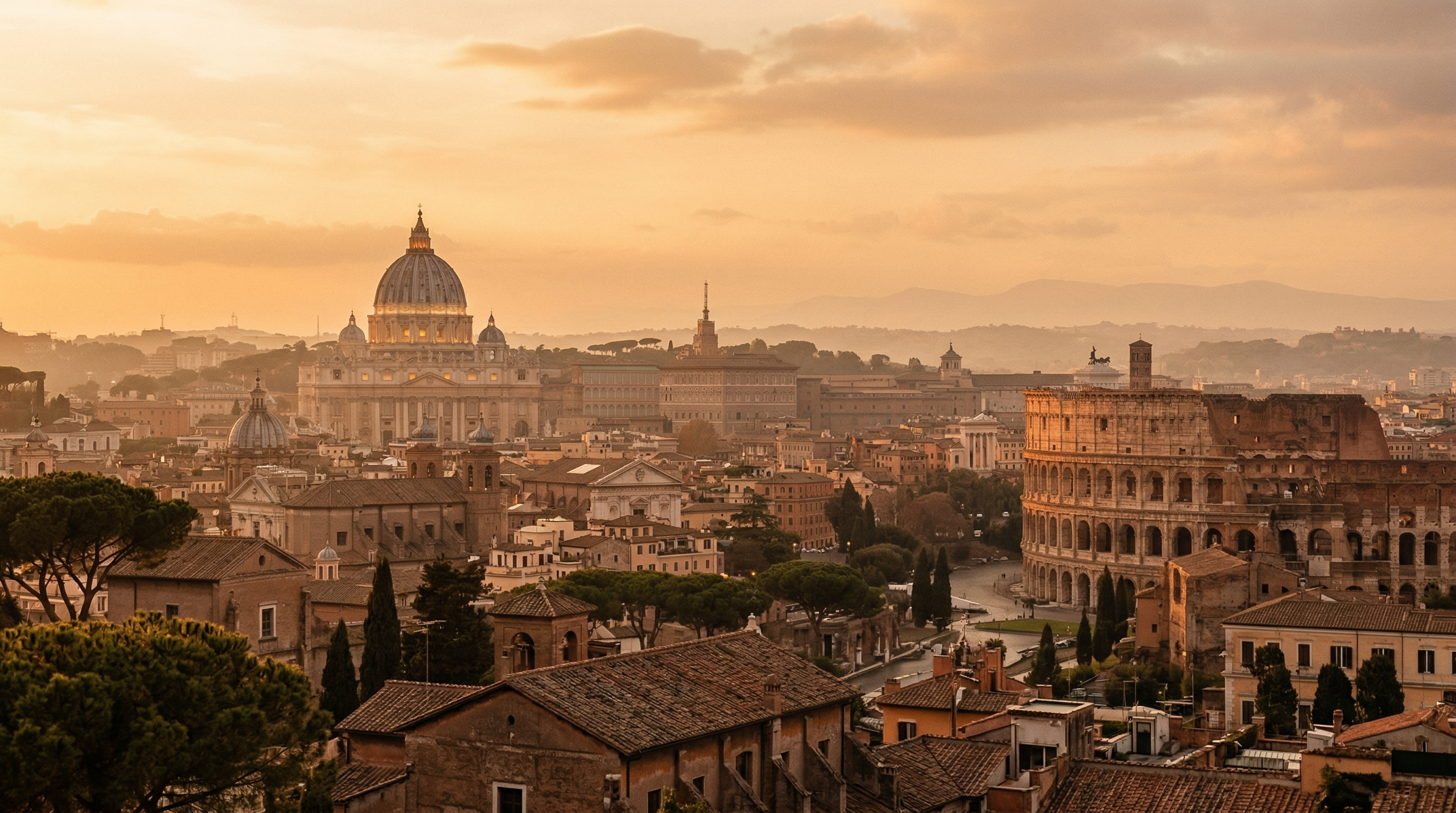
Panoramic golden hour view of Rome's skyline with St. Peter's dome and the Colosseum bathed in warm terracotta light
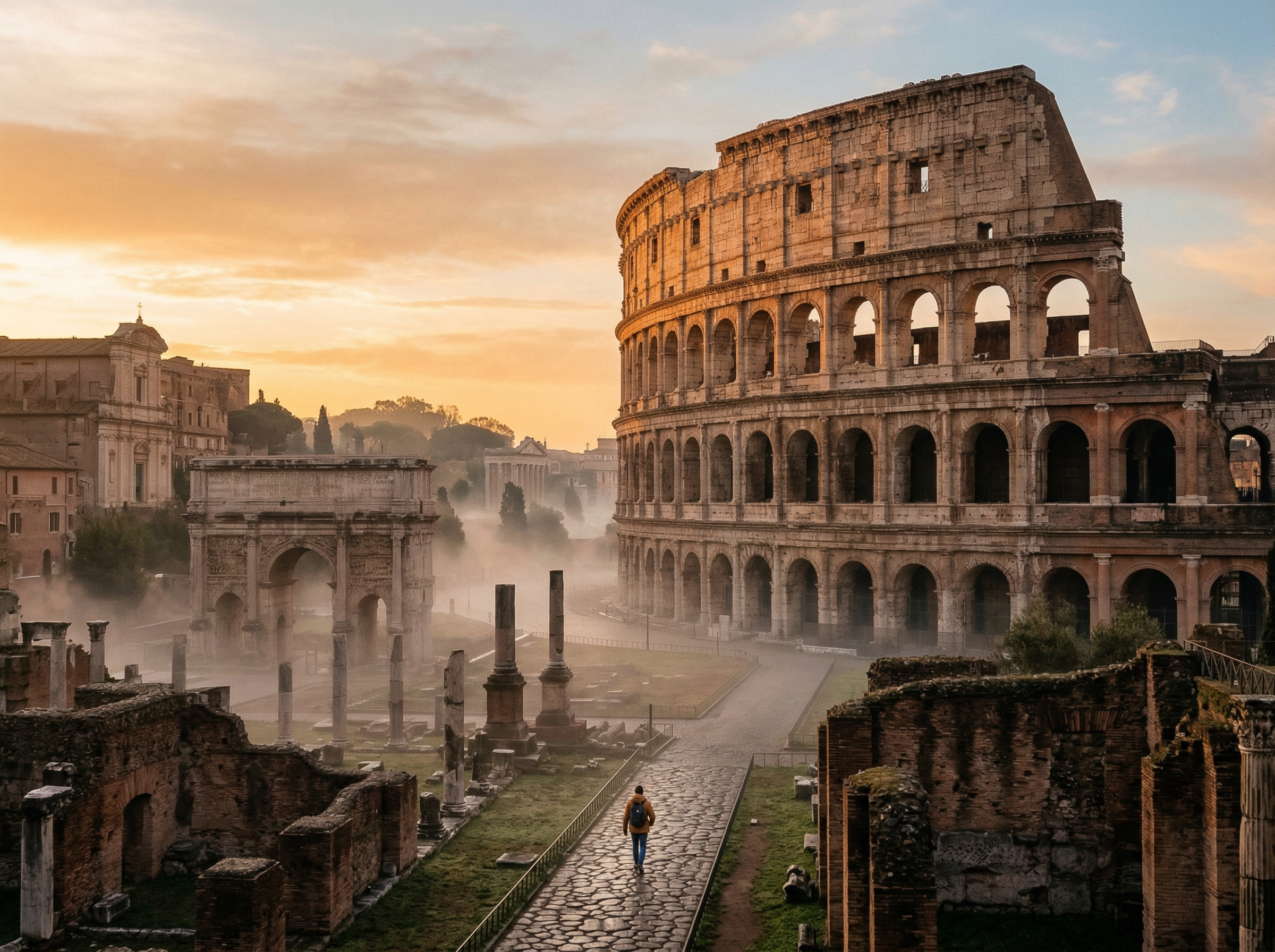
The Colosseum at dawn with morning mist rising from the Roman Forum
01 — DAY ONE

The Bones of Empire

Here's the mistake most people make with ancient Rome: they start at the Colosseum's main entrance, fight through a 90-minute security line, and arrive inside already exhausted and resentful. Don't be that person. Enter through the Palatine Hill gate on Via di San Gregorio. The security line is a fraction of the main gate's. You'll start at the top of the hill with a panoramic view of the Forum spread below you, then work your way down through history—chronologically and topographically.

The combined ticket is €18 standard or €24 for the Full Experience (underground chambers and arena floor). Book exactly 30 days in advance at colosseo.it—these sell out. Tickets are nominative, which means you'll need a physical ID matching the name on your booking. No exceptions, no charm offensives at the gate.

Insider tip: After the Forum, skip the tourist-trap cafes facing the Colosseum and walk 10 minutes into the Monti neighborhood. La Carbonara on Via Panisperna has been serving legendary pasta since 1906. The irony of eating carbonara at a place called La Carbonara in the shadow of ancient Rome is entirely free.

Budget 3–4 hours for the full circuit. Gates open at 8:30 AM and close one hour before sunset. Spring and autumn give you the best light for the Forum—the golden hour hits those columns like a cinematographer's dream.

"Rome is the city of echoes, the city of illusions, and the city of yearning." —Giotto di Bondone
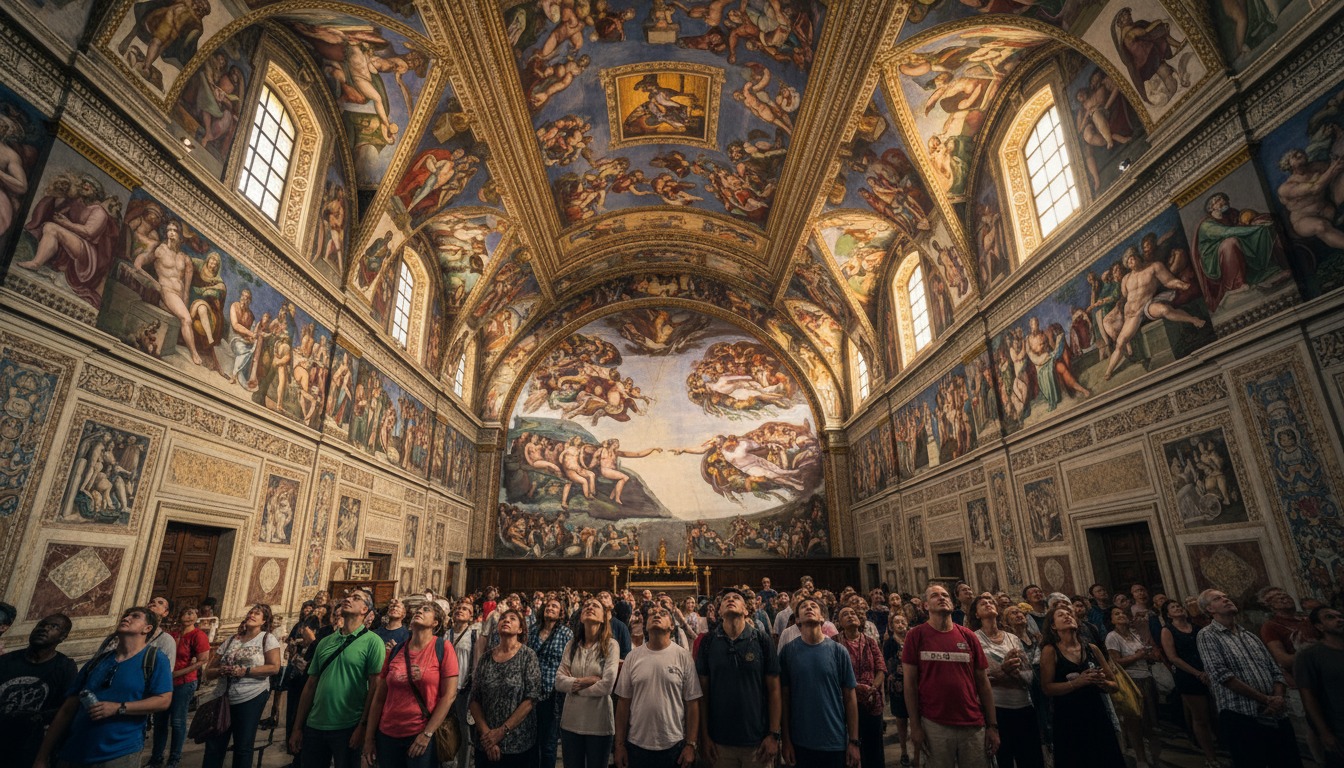
The Sistine Chapel ceiling with Michelangelo's frescoes in rich detail
02 — DAY TWO

Divine Art Behind High Walls

The Vatican is the hardest ticket in Rome, and that's not hyperbole. Book 60 days out at museivaticani.va or accept your fate in a three-hour line. At €17, the museum entry is oddly reasonable for what you get—which is access to one of the most staggering art collections assembled by any institution, ever.

Most visitors beeline for the Sistine Chapel, which is understandable but strategically wrong. The Gallery of Maps and the Raphael Rooms are equally stunning and far less crowded in the early morning. Hit these first, then let the crowd current carry you to Michelangelo's ceiling. A note for 2026: the Last Judgment wall underwent maintenance through March, so scaffolding may partially obscure views early in the year.

The dress code is real. Shoulders and knees must be covered. I've watched people turned away in June heat after waiting two hours. Carry a light scarf in your bag—it weighs nothing and saves everything.

For St. Peter's Basilica, the hack is simple: arrive at 7:00 AM sharp before heading to the Museums at 9:00. The Basilica is free, the line is minimal at dawn, and Michelangelo's Pietà—immediately to your right upon entry—is worth every second of lost sleep. The scale of St. Peter's doesn't photograph well. You have to stand in it to feel the weight of 2,000 years of institutional ambition.

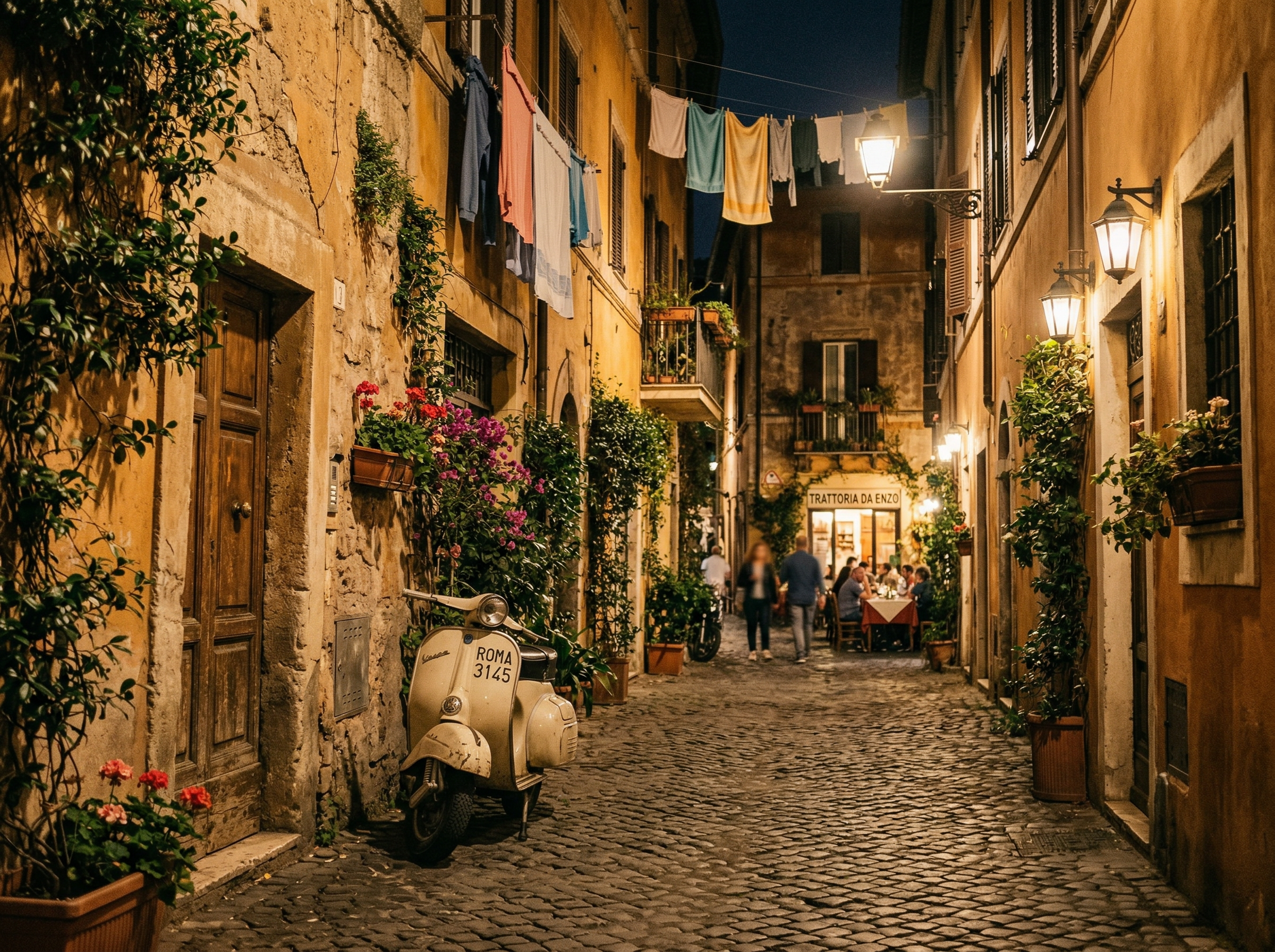
Narrow cobblestone alley in Trastevere with ivy-covered ochre walls and warm light
03 — DAY THREE

Where Rome Stops Performing

After two days of monumental Rome, Day Three is the antidote. This is where the city stops being a museum and starts being a home. Cross the Ponte Sisto into Trastevere around sunset and you'll understand why people move here and never leave. Ivy-clad alleys, laundry strung between buildings, the sound of someone's grandmother arguing with a cat.

Start your morning at the Aventine Keyhole on Piazza dei Cavalieri di Malta. Peek through the green door's keyhole and you'll see St. Peter's Dome framed perfectly by manicured hedges—one of Rome's most photographed secrets. It's free, but budget 20 minutes for the line of influencers ahead of you.

The Jewish Ghetto is Rome's oldest continuously inhabited neighborhood. The Portico d'Ottavia dates to 27 BC and the Turtle Fountain is Renaissance perfection in miniature. Eat carciofi alla giudia (Jewish-style fried artichokes) at Ba'Ghetto—the whole artichoke, fried until it opens like a bronze flower. This is not optional.

End at Santa Maria in Trastevere, one of Rome's oldest churches. The 12th-century mosaics in the apse are hauntingly beautiful and almost never crowded. Ennio Morricone once called Trastevere "a village inside a city, where the stones speak a language older than Latin." He wasn't being romantic. He was being precise.

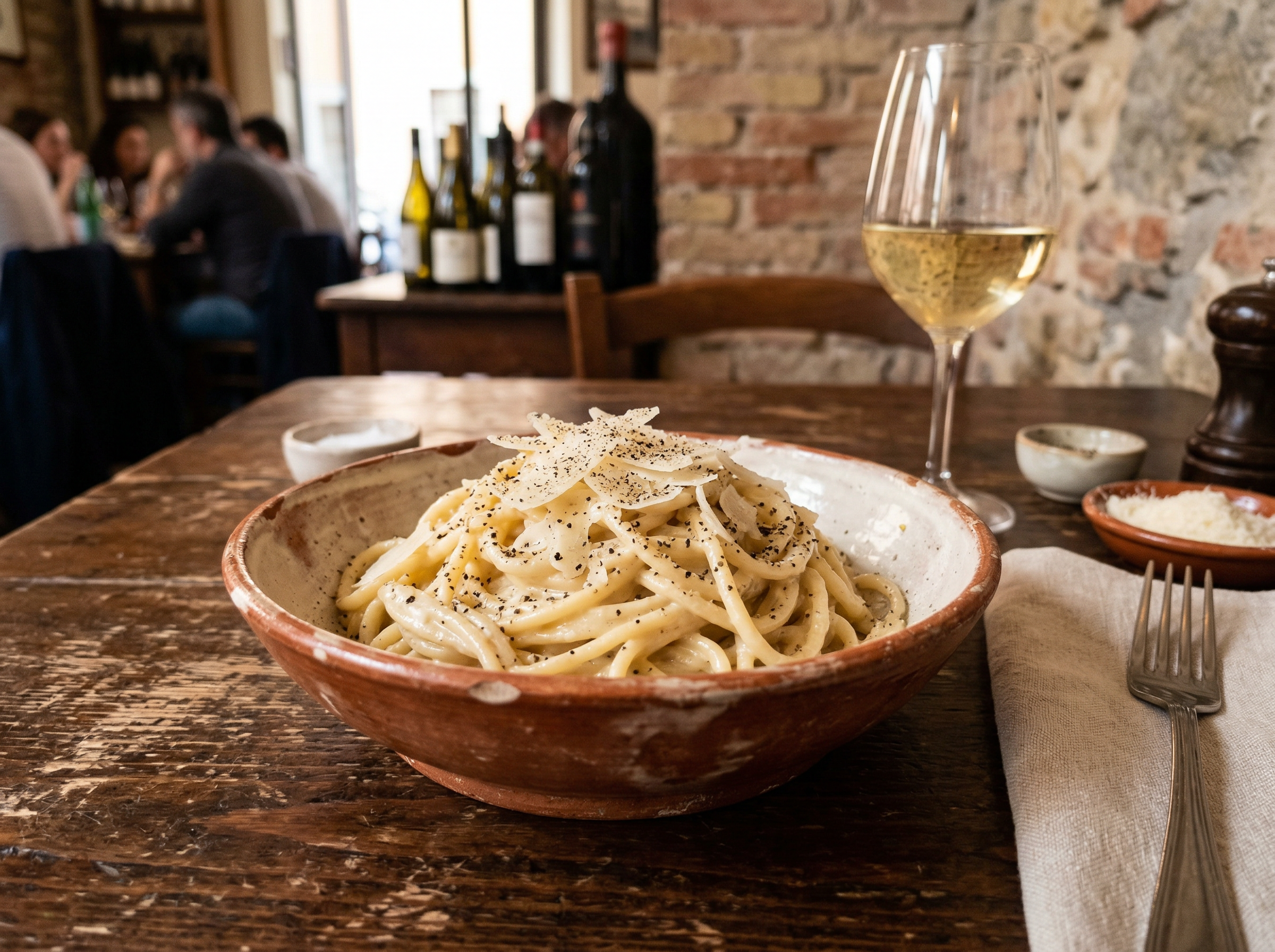
Authentic Roman cacio e pepe pasta in a rustic ceramic bowl with pecorino shavings
04

The Four Pillars of Roman Pasta

Roman cuisine is not "Italian food." It's hyper-local peasant food perfected over centuries, built on four pasta commandments: Carbonara (guanciale, egg, pecorino, black pepper), Cacio e Pepe (pecorino, black pepper, and nothing else), Amatriciana (guanciale, tomato, pecorino), and Gricia (the proto-carbonara—guanciale and pecorino without the egg). If a restaurant serves all four well, you've found a keeper.

For the definitive cacio e pepe, brave the line at Da Enzo al 29 in Trastevere. No reservations. Show up at 11:45 for a 12:00 opening and you'll be seated. The pasta is prepared tableside in a hollowed-out pecorino wheel, which is either genius or theater depending on your tolerance for both.

The great coffee rivalry: Sant'Eustachio il Caffè (secret "frothy" espresso) vs. Tazza d'Oro (famed granita di caffè con panna). Both are near the Pantheon. Stand at the bar: €1.50. Sit at a table: €5+. The coffee is identical either way—you're paying for the chair.

For street food, grab a supplì (fried rice ball with a molten mozzarella core) at Supplizio near Campo de' Fiori. And one non-negotiable rule: never, under any circumstances, order fettuccine Alfredo at a Roman trattoria. Yes, Alfredo di Lelio invented it here in 1914—but it left for America and never came back. No self-respecting Roman kitchen serves it, and asking for it will earn you the kind of look usually reserved for people who clap when the plane lands.

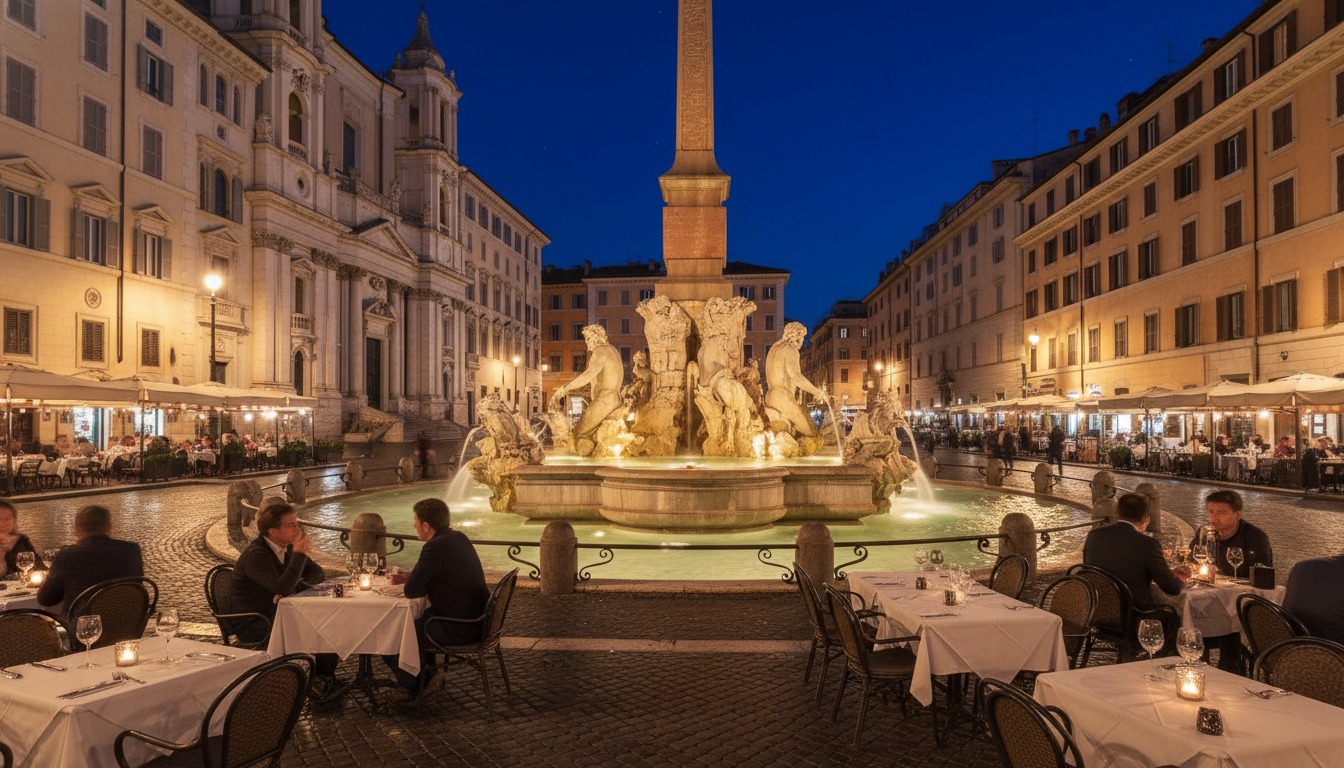
Rome's Piazza Navona at night with Bernini's Four Rivers Fountain illuminated
05

The Great Illumination

Something happens to Rome when the sun drops. The heat breaks, the marble turns gold under the streetlights, and the tempo shifts from frantic sightseeing to something approaching actual living. The ritual is aperitivo—that sacred window between 6:30 and 8:30 PM when a Spritz or Negroni comes with enough snacks to constitute dinner if you're strategic about it.

Freni e Frizioni in Trastevere is the crowd-favorite. It's a converted auto repair shop (the name means "brakes and clutches") with an aperitivo buffet that justifies the €12 cocktail price. For something more elevated, The Court at Palazzo Manfredi puts you literally eye-level with the Colosseum. Drinks start at €25. The view is priceless. Whether that math works for you is a personal decision.

After drinks, walk to Piazza Navona after 10:00 PM when the tour groups have vanished. Bernini's Four Rivers Fountain at night—lit from below, water catching light—is one of those experiences that reminds you why you traveled in the first place. No audio guide needed. Just stand there.

"Rome at night is a different city entirely—a stage set where every shadow hides a ghost." —Federico Fellini

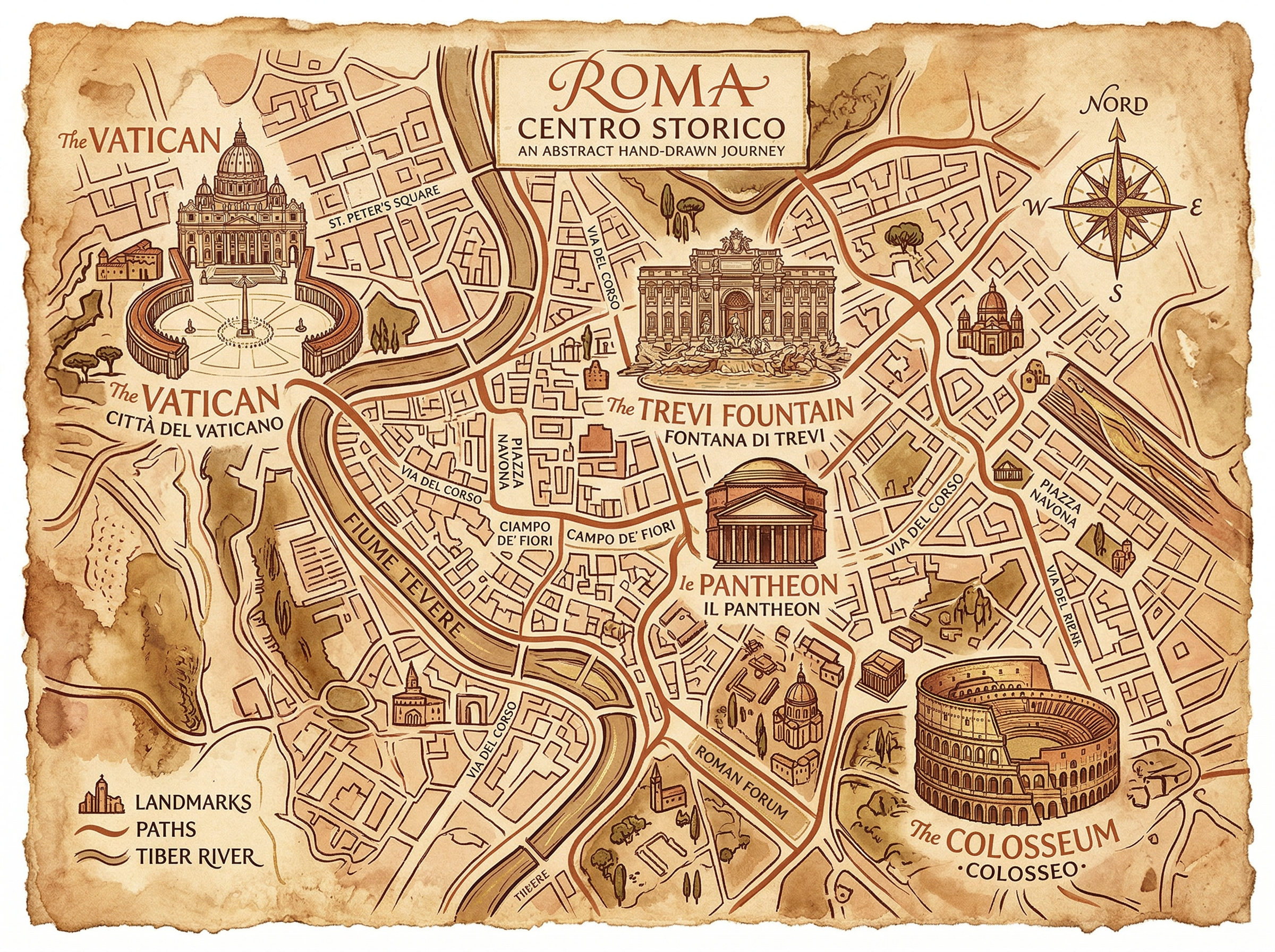
Illustrated map of Rome's historic center with major landmarks connected by winding paths
06

The Logistics Nobody Tells You

The Leonardo Express from Fiumicino Airport is €14 and takes 32 minutes to Roma Termini. Don't even think about a taxi (€50 flat rate) unless you're splitting it four ways. Within the city, use Tap & Go contactless payment on buses and the Metro—a single ride is €1.50 and you don't need to fumble with ticket machines. Rome's Metro has only three lines. Learn them: A (orange), B (blue), C (green, still expanding).

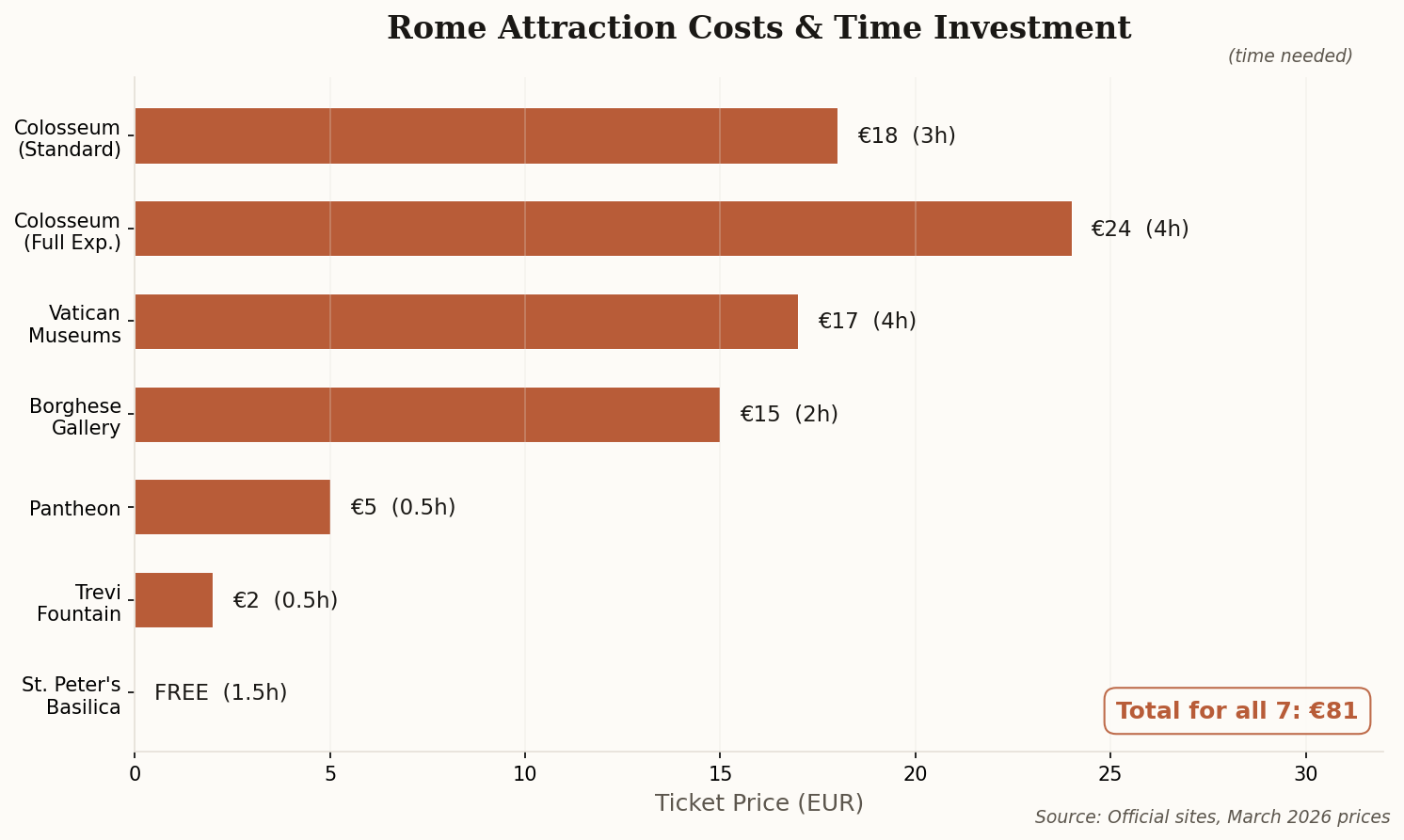
Chart comparing ticket prices and time needed for Rome's major attractions
Rome's major attraction costs at a glance. The total damage for all seven: €81. The time investment: roughly 16 hours across three days.

The headline for 2026: a €2 fee now applies to enter the lower basin area of the Trevi Fountain. Book your 30-minute slot online. Yes, they actually did it. The barrier guards are real and they don't care about your feelings.

Pickpocket awareness: Roma Termini station and the infamous Bus 64 (Vatican route) are the hotspots. Wear a crossbody bag. Never put your phone on the table while eating outside. This isn't fear-mongering—it's the same practical awareness you'd apply in any major city. Rome is safe. It's just also very good at separating tourists from their belongings.

Tipping: not expected. A coperto (cover charge, usually €2–3) appears on every restaurant bill. Rounding up by a few euros is generous. Nobody will chase you down the street for not leaving 20%.

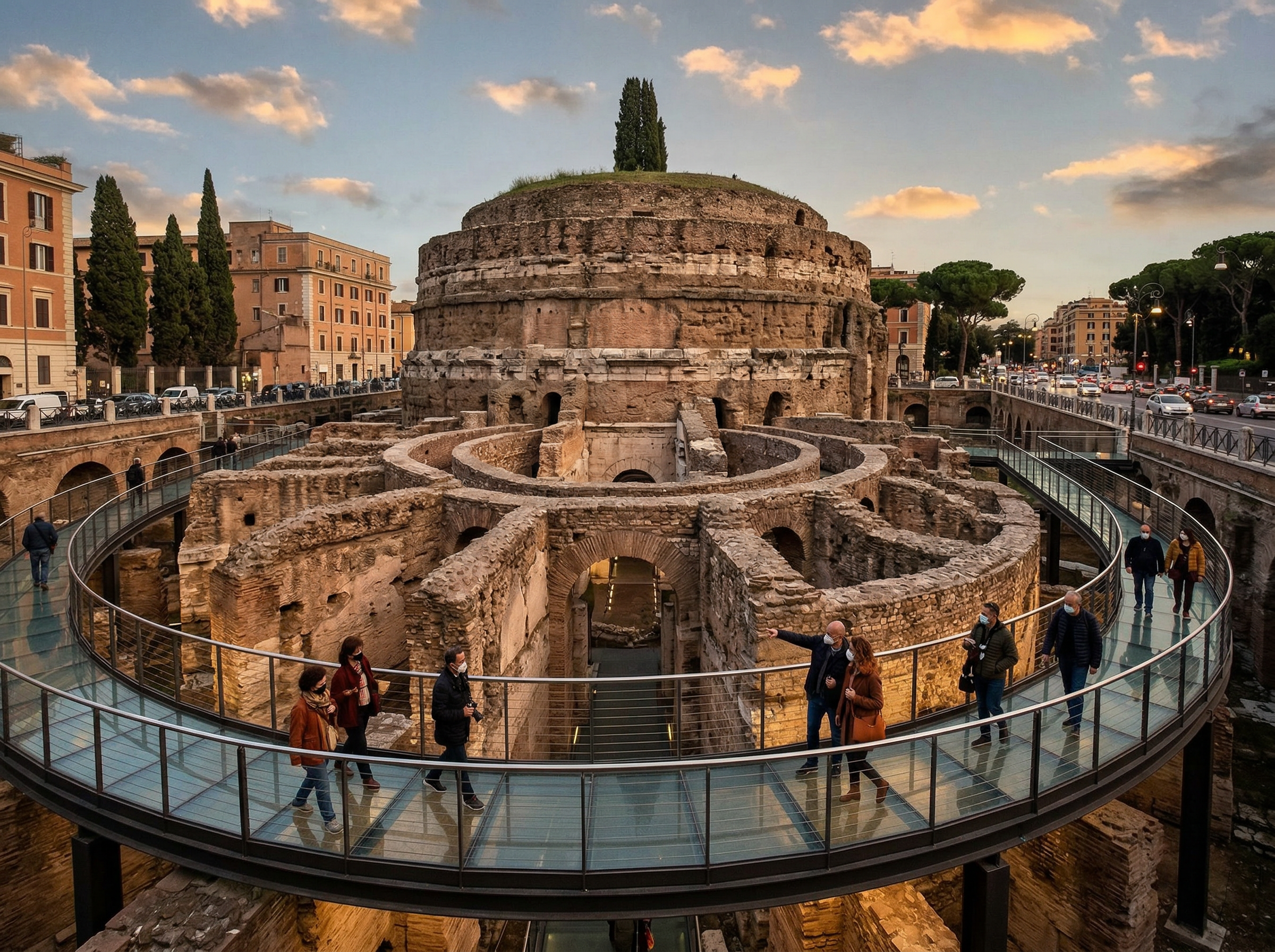
The recently restored Mausoleum of Augustus with modern glass walkways against ancient stone
07

Why 2026 Is the Sweet Spot

2025 was Rome's Holy Year—a Jubilee that brought millions of pilgrims, massive infrastructure investment, and monument restorations citywide. The payoff arrives in 2026: scaffolding down, surfaces cleaned, crowds thinning. You get the renovated city without the Jubilee crush. This is the window.

The Mausoleum of Augustus has fully reopened after decades of restoration. It's the largest circular tomb in the ancient world, and until recently it was a weedy ruin you could only peer at through a fence. Now there are proper walkways, lighting, and interpretive displays. History buffs: this is your moment.

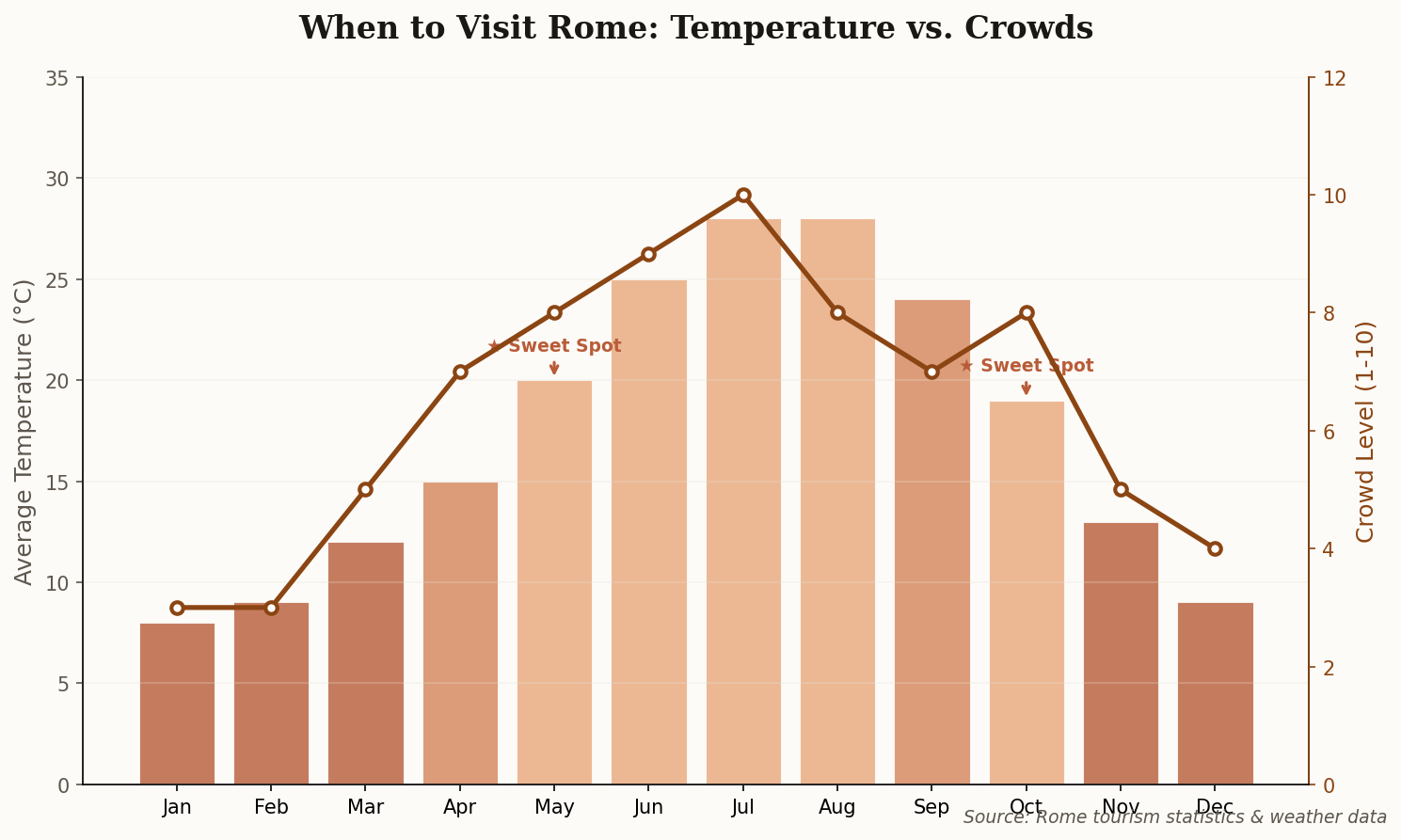
Chart showing Rome's monthly temperatures versus crowd levels, highlighting May and October as sweet spots
The optimal visit window: May and October deliver warm weather (20–24°C) with manageable crowds. August is hell—35°C and half the trattorias close for vacation.

One final warning: the "gladiator" photo-op guys outside the Colosseum are illegal and aggressive. They'll pose with you unbidden and demand €20. Ignore them completely. Don't make eye contact. This is the one context where Roman rudeness is a survival skill.

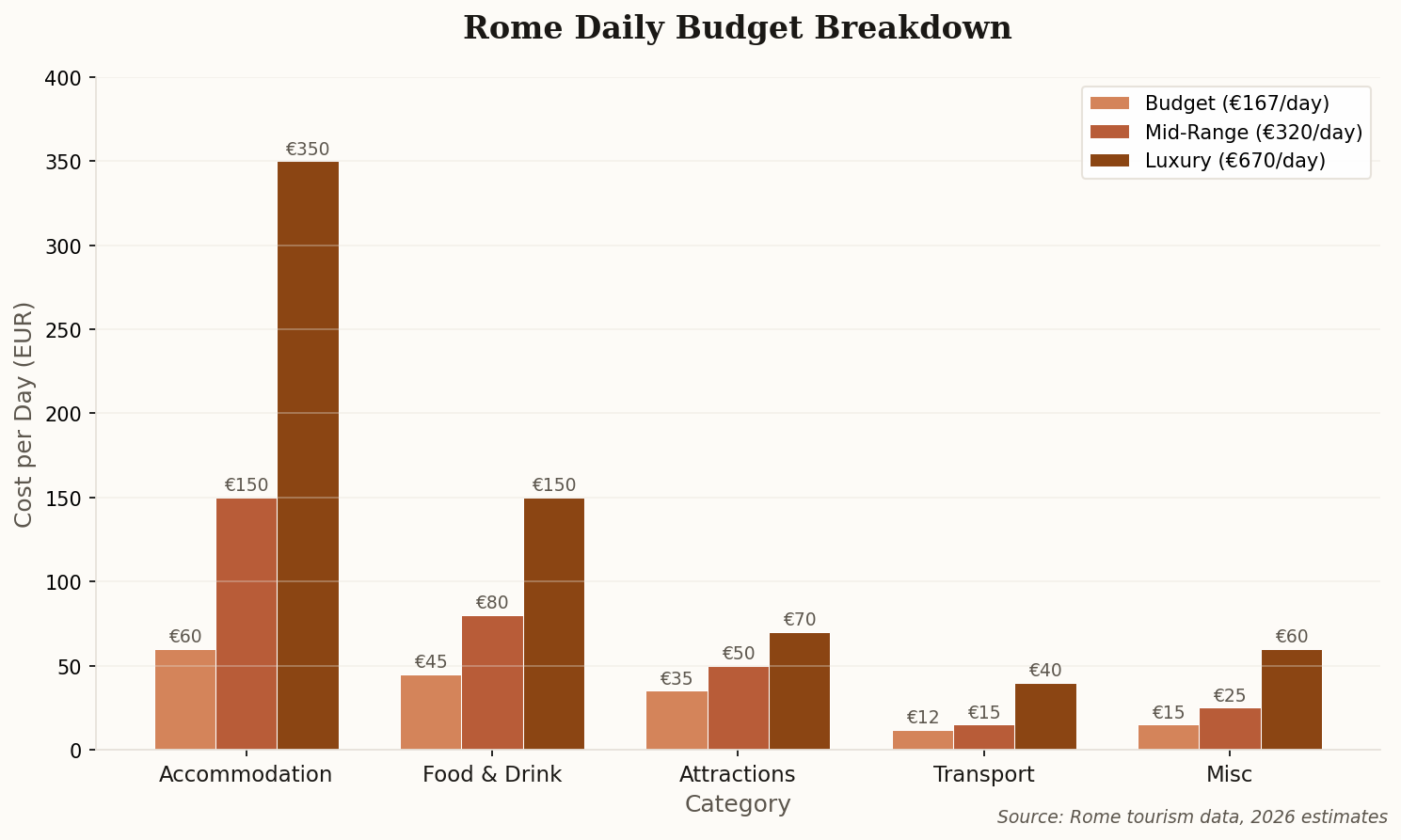
Chart showing daily budget breakdown for budget, mid-range, and luxury travelers in Rome
What Rome actually costs: from €167/day on a budget to €670/day in luxury. The mid-range sweet spot (€320/day) gets you excellent food and comfortable stays without the five-star premium.

Arrivederci, Not Addio

Three days isn't enough for Rome. It's never enough. But three intentional days—where you resist the urge to see everything and instead let the city reveal itself at its own pace—will give you something better than a checklist of monuments. It'll give you the feeling of having actually been somewhere. The Forum will still be there when you come back. And you will come back.

Share X LinkedIn