Travel / Copenhagen

Three Days in Copenhagen

A water temple by Kengo Kuma, a brewery reborn as a city, and the restaurant where nothing is wasted. Your 72-hour blueprint for the world's most livable capital.

Listen
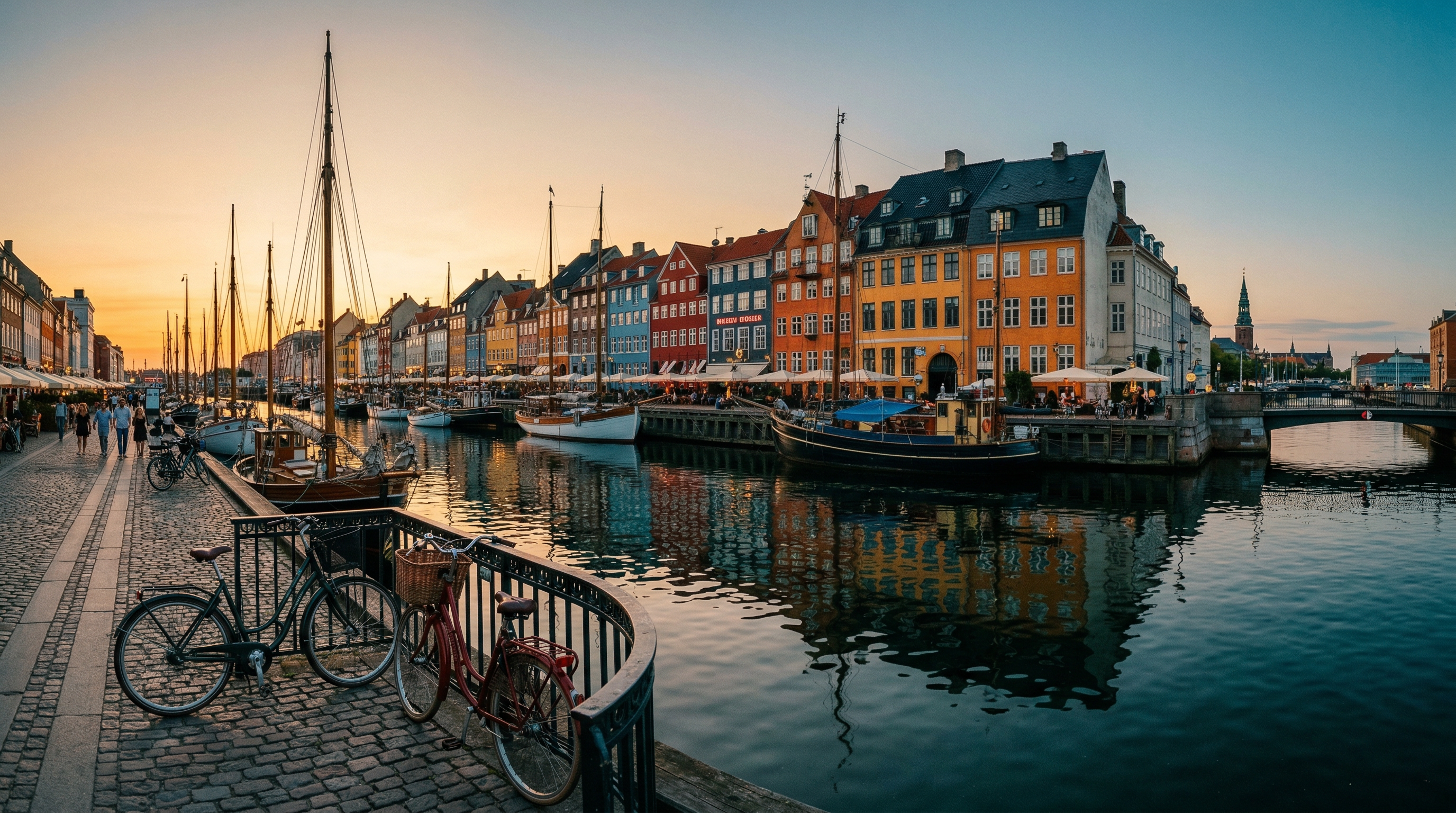
Colorful townhouses lining the Nyhavn canal in Copenhagen at golden hour, with wooden boats moored along the quay
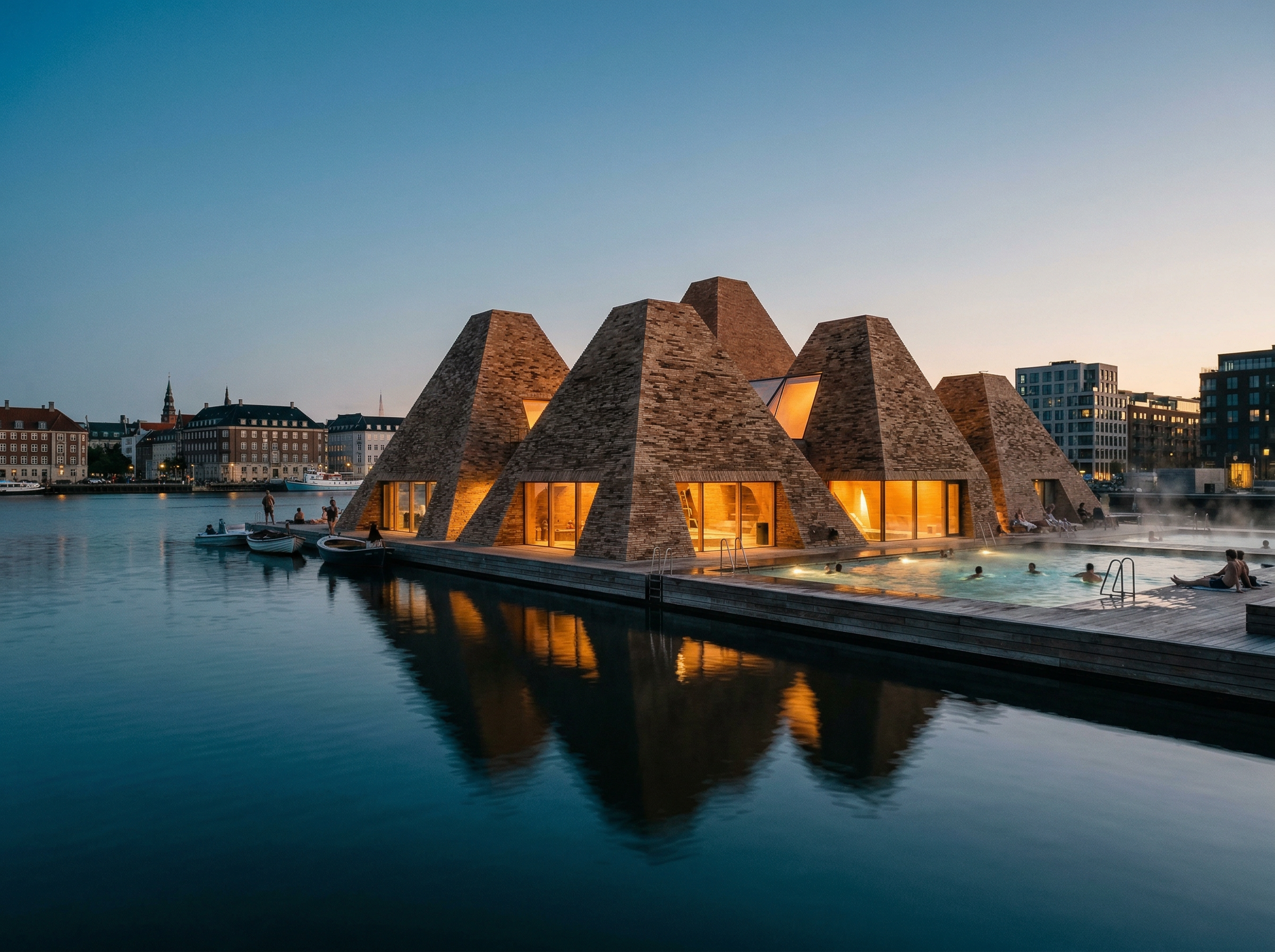
The Water Culture House on Paper Island with pyramid-shaped brick architecture reflecting in Copenhagen's harbor
01

The Water Temple That Rewrites Copenhagen's Shoreline

Copenhagen has always had a love affair with its harbor. The city that turned a polluted industrial waterfront into swimmable public baths has now raised the stakes: Kengo Kuma's Water Culture House (Vandkulturhuset) opened on Paper Island in January, and it's the most ambitious piece of public architecture the city has produced since the Opera House.

The building is a cluster of pyramid-shaped brick hulls that look like they're emerging from the water itself — Kuma's signature move of blurring the boundary between structure and landscape. Inside: indoor and outdoor harbor baths, saunas with 360-degree waterfront views, and wellness facilities that make Islands Brygge's beloved concrete pools look like a rehearsal. Outside: the rest of Paper Island's redevelopment is coming together around it, with a new food hall and residential spaces that suggest Copenhagen isn't done reinventing its waterfront.

Day 1 tip: Visit Vandkulturhuset in the morning before crowds arrive. Combine it with a walk through Christianshavn's canals — you're already on the water side of the city. Bring a swimsuit even in March; the heated outdoor pool is open year-round.

The design philosophy — "blurring the lines between the city's historic masonry and the fluidity of the harbor water" — isn't just architect-speak. It's a statement about what public space can be when a city refuses to build anything merely functional. This is the building that will define your Instagram from this trip, and it deserves it.
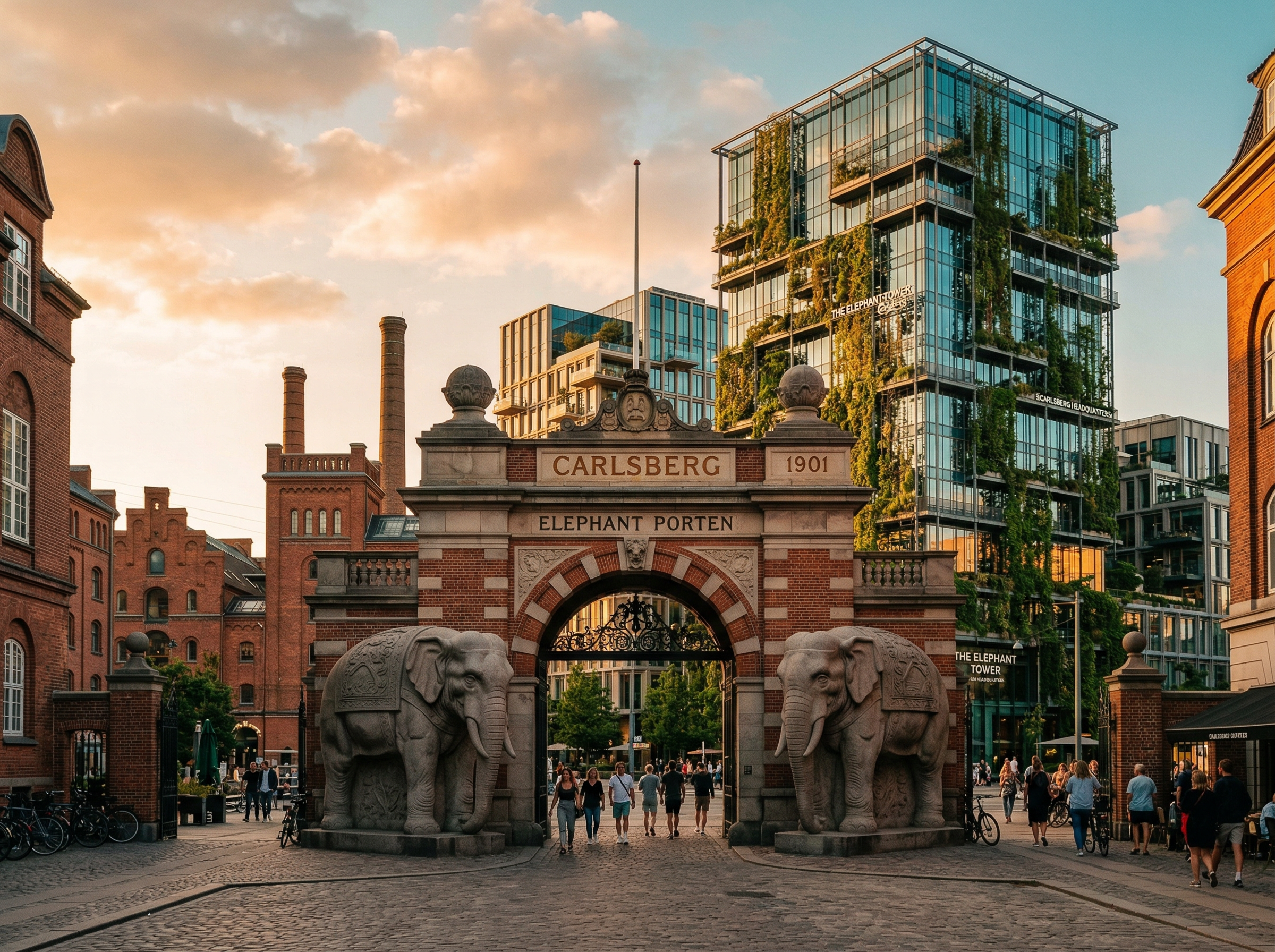
The historic Carlsberg Elephant Gate with modern glass towers and vertical gardens rising behind it
02

A Brewery Dies, a Neighborhood Is Born

Fifteen years. That's how long it took to turn the Carlsberg brewery — where beer had been brewed since 1847 — into something that functions less like a tourist attraction and more like an actual city district. As of early 2026, Carlsberg Byen is officially complete, and it's shifted the gravitational center of interesting Copenhagen firmly toward Vesterbro.

The numbers tell one story: new residential blocks, restaurants, a boutique hotel (Hotel Ottilia), and the new "Home of Carlsberg" experience, which is a digital-first museum that makes the old Jacobsen brewery story feel surprisingly relevant. But the real story is architectural. Walk through the Elephant Gate — those four massive granite elephants holding up the archway — and you're passing from 19th-century industrial grit into vertical gardens and glass-wrapped lofts. The dipylon tower still stands, but now it's surrounded by some of the city's best new rooftop bars.

Day 1 afternoon: After Vandkulturhuset, metro to Carlsberg station. Walk the district, visit the Home of Carlsberg museum, and end at a rooftop bar for sunset. The area connects naturally to Vesterbro's Istedgade bar scene for evening.

What makes Carlsberg Byen worth your afternoon instead of a third lap around Nyhavn is the lesson it teaches: Copenhagen doesn't preserve industrial heritage under glass. It metabolizes it. The result is a neighborhood where the past isn't a museum exhibit — it's the foundation you're standing on while drinking a natural wine with a view.

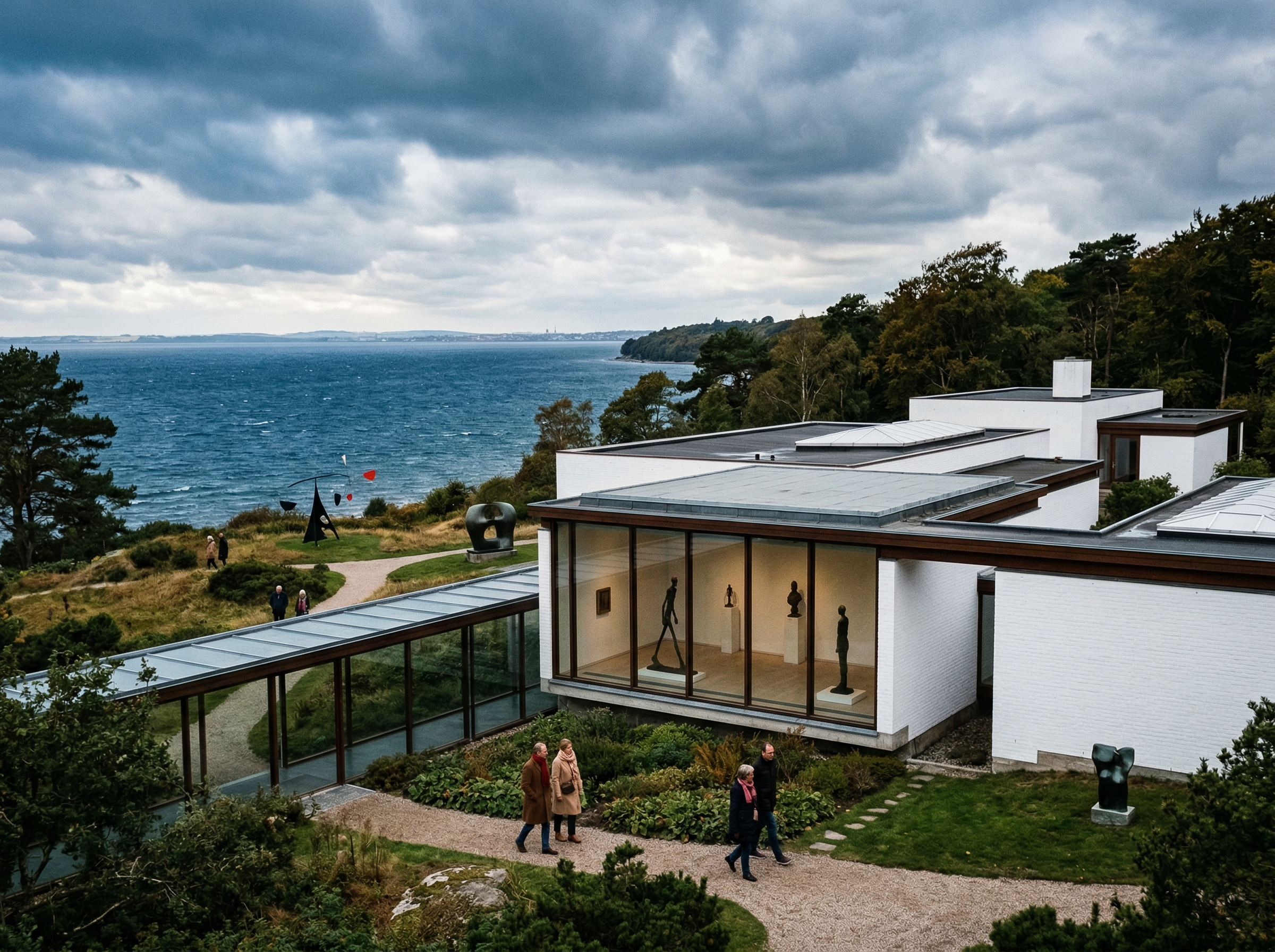
Louisiana Museum of Modern Art's modernist pavilions overlooking the Øresund sea with Giacometti sculptures visible
03

Basquiat's Heads and Sophie Calle's Heart at Louisiana

There's a reason people call Louisiana the most beautiful museum in the world, and it has nothing to do with what's on the walls. It's the way modernist glass corridors connect white pavilions while framing the Øresund sea and the Swedish coastline beyond. The art, somehow, has to compete with the architecture and the landscape. In 2026, it's winning.

Two blockbuster exhibitions are running through spring: Basquiat — Headstrong (through May 17) is the first major Scandinavian study of Basquiat's obsession with the human head — crowns, skulls, anatomy diagrams, the whole neurological theater of his work. And Sophie Calle (March 26 through August 23) brings the French artist's intimate, occasionally unnerving narrative photography into Louisiana's contemplative spaces. The pairing is inspired: Basquiat's raw urban energy against Calle's quiet surveillance of human connection.

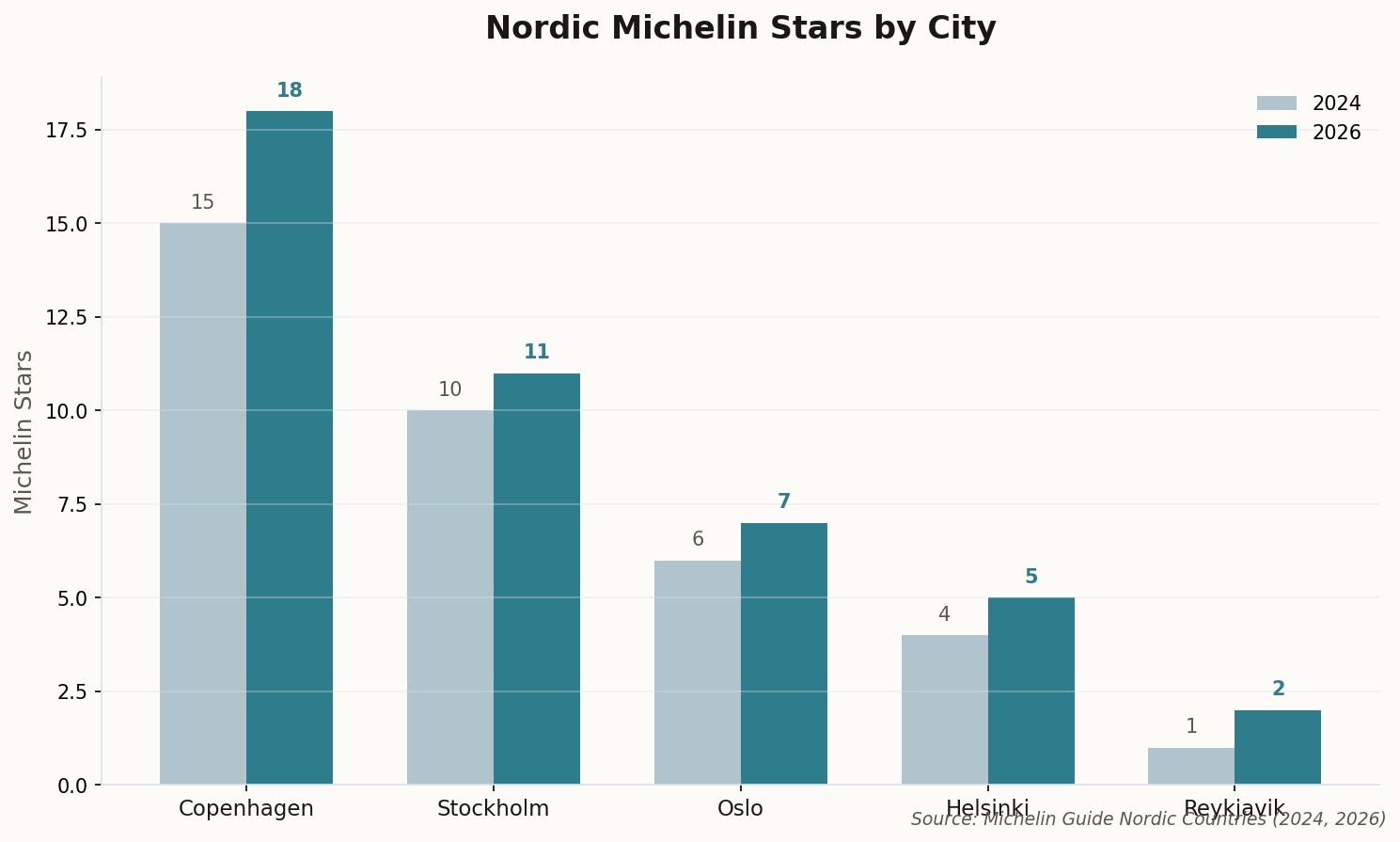
Bar chart comparing Michelin star counts across Nordic capitals, showing Copenhagen leading with 18 stars in 2026
Copenhagen leads the Nordics with 18 Michelin stars in 2026, nearly double Stockholm's count — but Louisiana's cafeteria might be the best meal of all.

Day 2 morning: Take the 35-minute train from Copenhagen Central to Humlebæk. Budget 3-4 hours — you'll need them for the exhibitions, the sculpture garden, and the café lunch overlooking the sound. The Copenhagen Card covers both the train and admission.

Louisiana is the argument that a museum shouldn't compete with its surroundings but merge with them. If you visit only one cultural institution in Denmark — and really, you should visit several — this is it. Just remember: the 35-minute train ride up the coast is part of the experience.

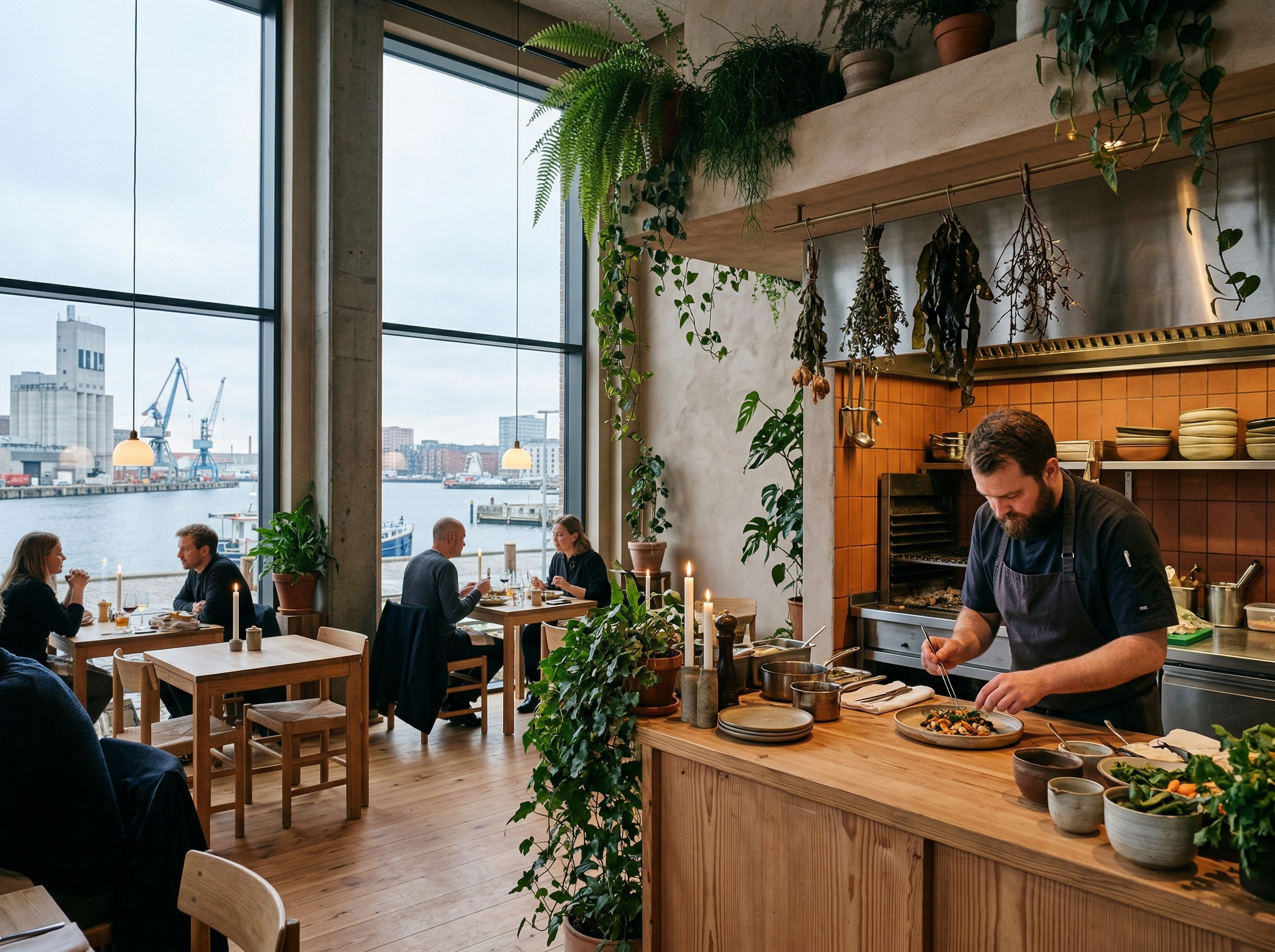
Modern sustainable restaurant interior in Nordhavn with open kitchen and harbor views through floor-to-ceiling windows
04

The Port Where Nothing Goes to Waste

If Noma invented New Nordic cuisine and then closed its doors, the question was always: what comes next? The answer is in Nordhavn, the former industrial port district where cranes still dot the skyline but the warehouses now house some of the city's most forward-thinking kitchens.

The centerpiece is Esse, from chef Matt Orlando (formerly of Amass). "We aren't just recycling; we are reimagining what is edible," Orlando says, and he means it literally: whole-ingredient cooking that uses the parts of plants and fish that other restaurants throw away. Nearby, Sushi Anaba — a Nordhavn omakase counter that earned a Michelin star — and VIE have turned this stretch of waterfront into the city's most interesting culinary corridor.

But here's the thing about Nordhavn that guides don't tell you: it's also where Copenhagen's sustainable-city ambitions become physical. The buildings are designed for carbon neutrality. The harbor itself is swimmable. You can eat a world-class zero-waste dinner and then walk past the architecture that makes it philosophically coherent. It's not a food district bolted onto a neighborhood — it's a neighborhood that treats food and sustainability as the same conversation.

Day 2 evening: After Louisiana, return to Copenhagen and metro to Nordhavn. Book Esse or Sushi Anaba in advance — both are small and in demand. Walk the waterfront at dusk when the industrial-meets-residential architecture is at its most photogenic.

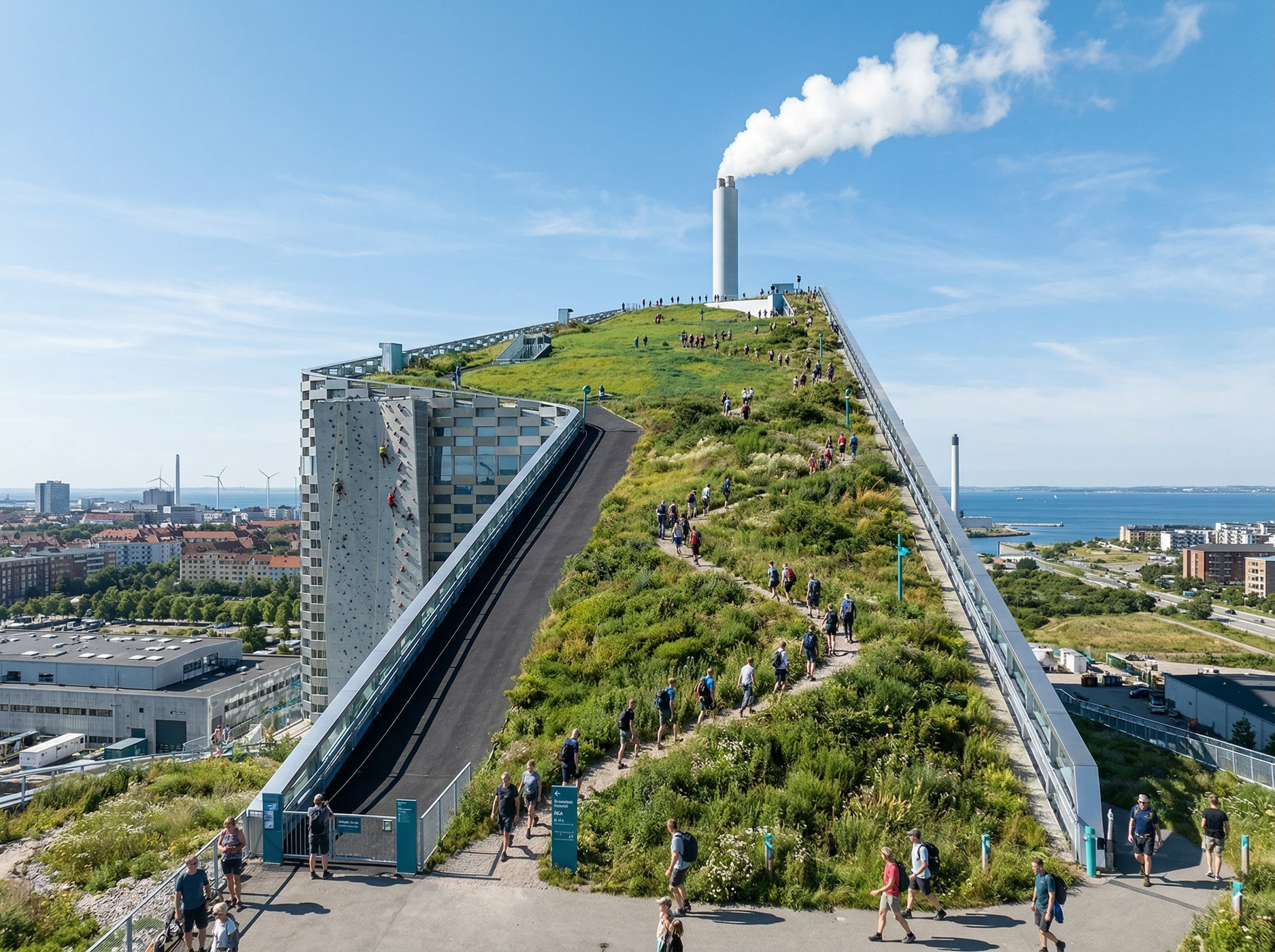
CopenHill waste-to-energy plant with its dramatic ski slope roof and hikers ascending through rooftop vegetation
05

The Mountain That Burns Trash and Grows Gardens

CopenHill is the kind of building that sounds fake until you're standing on it. A waste-to-energy plant — the kind that burns garbage — with an artificial ski slope on the roof, a 490-meter hiking trail, the world's tallest artificial climbing wall (85 meters), and a fully mature ecosystem of over 70 plant species growing on top of what is, functionally, an industrial incinerator.

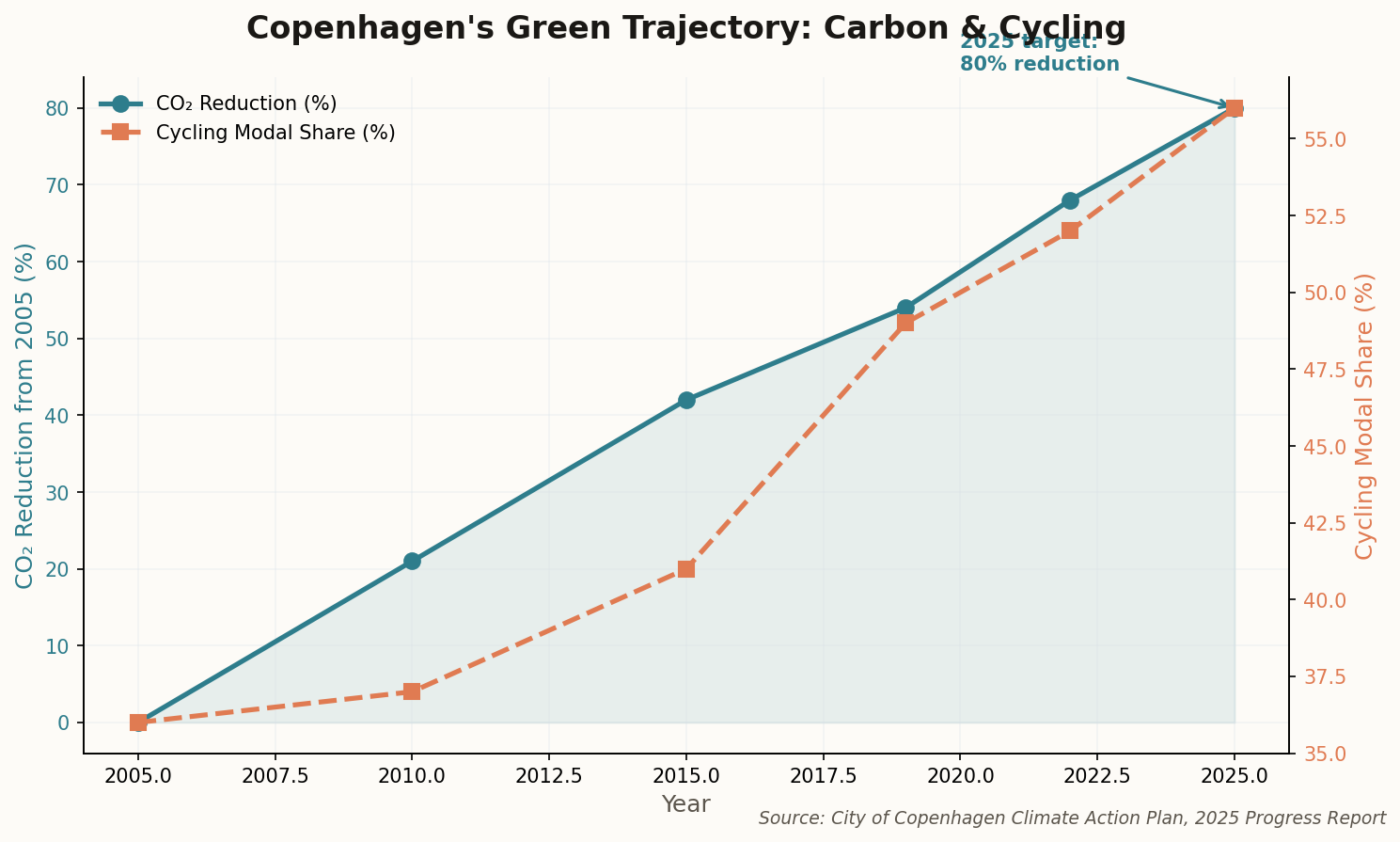
Dual-axis chart showing Copenhagen's 80% CO2 reduction since 2005 alongside rising cycling modal share approaching 50%
Copenhagen's carbon reduction trajectory and cycling modal share, 2005-2025. The city hit its 80% reduction target while nearly half of all commuters now cycle.

Bjarke Ingels calls it "hedonistic sustainability" — the idea that green infrastructure shouldn't require sacrifice. The plant provides heat for 150,000 Copenhagen households. The chimney was originally designed to puff a visible smoke ring for every ton of CO₂ produced — a provocation that proved too technically complex to implement, though the intent alone says everything about how Copenhagen thinks about infrastructure. And in 2026, the rooftop ecosystem has fully matured, so you're hiking through what feels like a wild meadow while walking on top of a facility that processes 440,000 tons of waste per year.

Day 3 morning: Take the metro to Amager and walk or bike to CopenHill. Hike the trail, do the climbing wall if you're brave, and admire the view of the Øresund Bridge. Then head back toward the city for the afternoon's hidden gems.

If there's a single building that explains Copenhagen's worldview, it's this one. Other cities build recycling centers. Copenhagen built a mountain where you can ski on top of one. That's either visionary urbanism or the most Nordic flex in history — probably both.

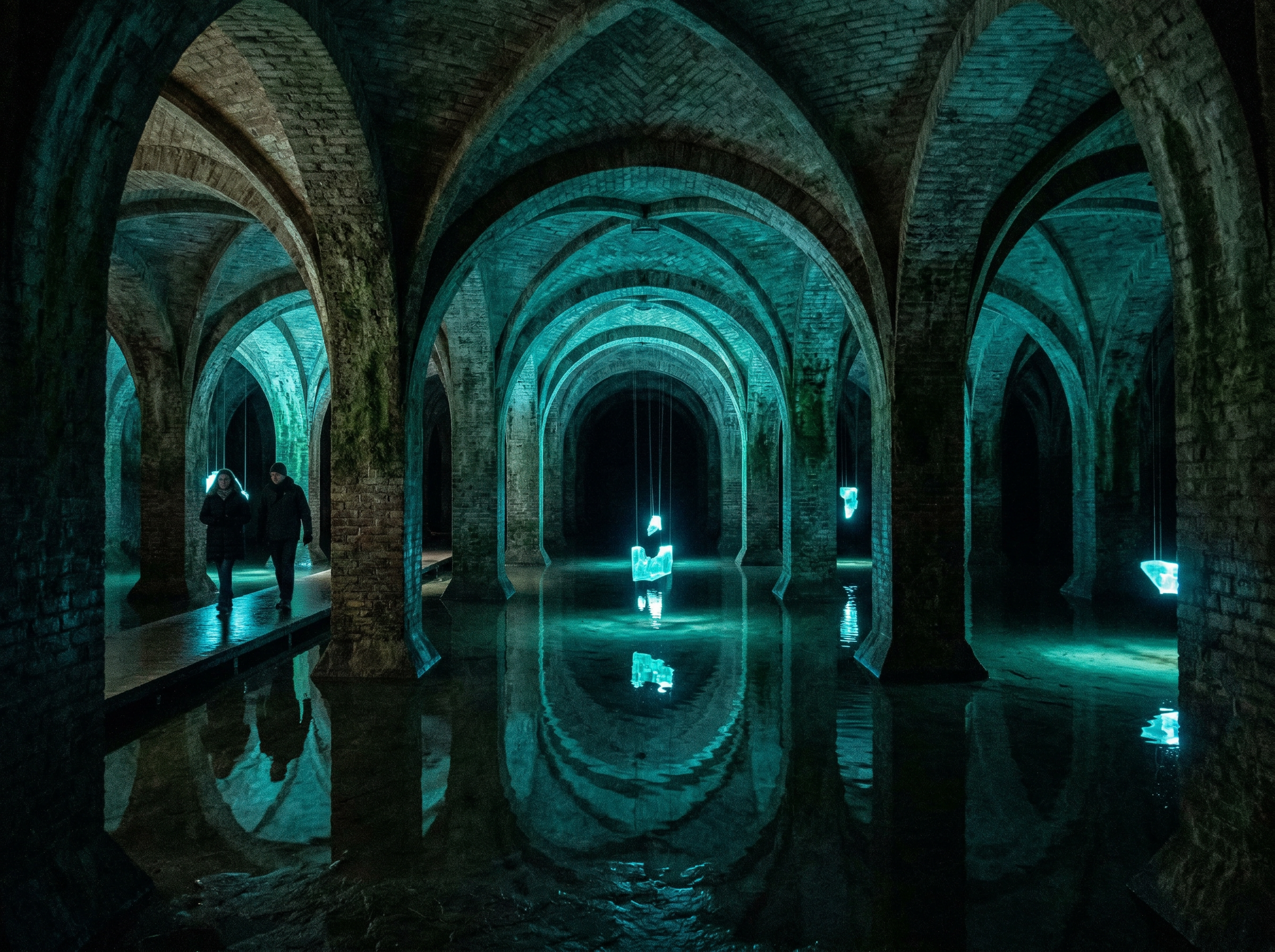
The subterranean Cisternerne art space with Gothic arched columns reflected in water and ethereal blue-green light installations
06

The Underground, the Cemetery, and the Card That Pays for Itself

Every great city has a layer beneath the obvious one. In Copenhagen, it's literal: Cisternerne is an underground reservoir beneath Frederiksberg Palace that's been converted into a subterranean art space. You enter through a small glass pyramid in Søndermarken park — very Louvre, very Copenhagen — and descend into a vast, humid cavern where the echo takes 17 seconds to fade. The 2026 installation uses site-specific light and sound that turns the extreme atmosphere into the medium. It's equal parts art gallery and cave exploration.

Above ground, Jægersborggade in Nørrebro is the street that locals will mention if you ask them where "real" Copenhagen lives. Formerly rough, now the center of the city's vintage shopping and organic food scene. Hit Coffee Collective for some of Europe's best direct-trade coffee, Meyers Bageri for the canonical kanelsnegl (cinnamon roll), and then walk through Assistens Cemetery next door — where H.C. Andersen and Søren Kierkegaard are buried and locals sunbathe between the headstones. Only in Copenhagen is a cemetery also a park.

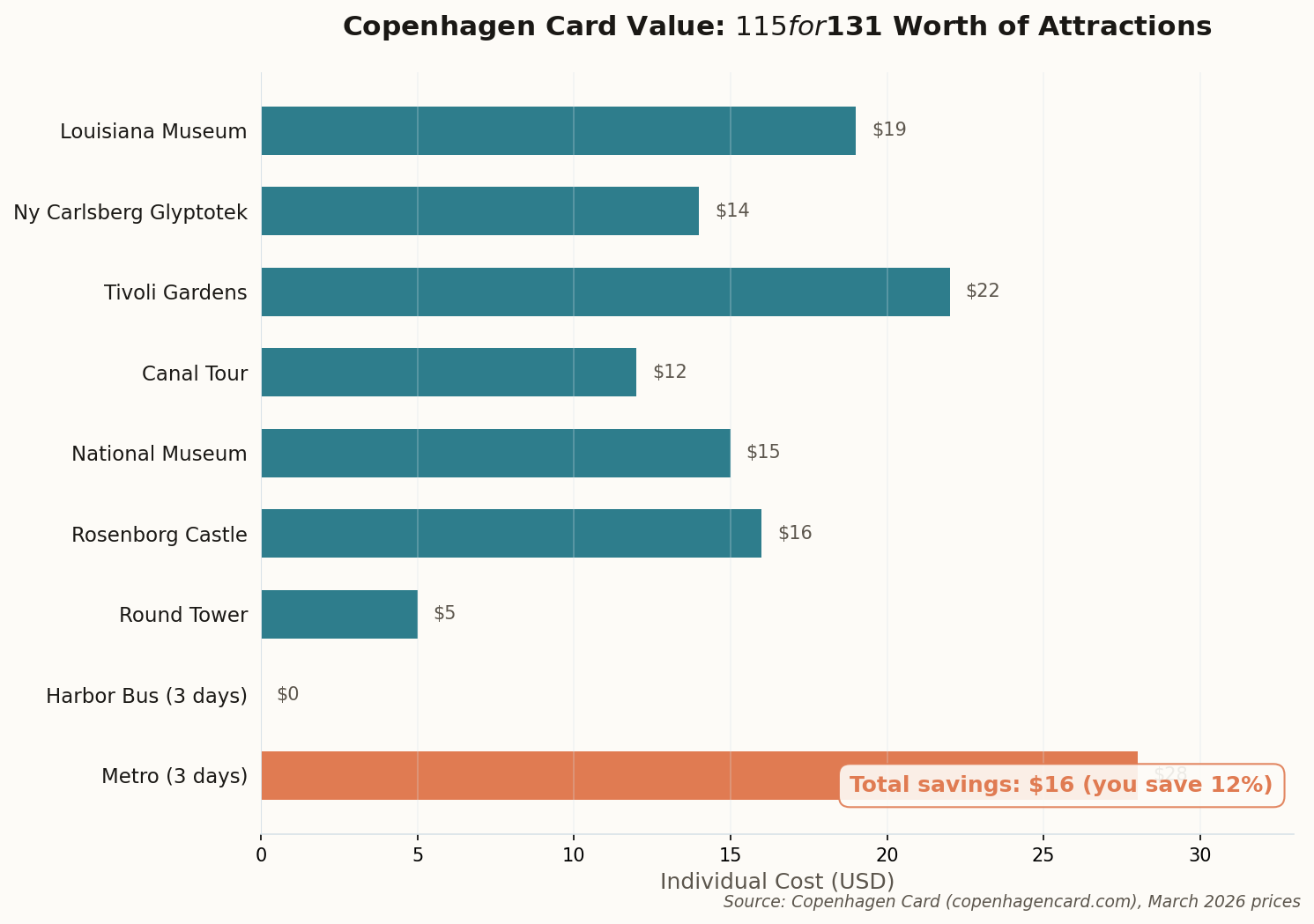
Horizontal bar chart showing the value breakdown of the Copenhagen Card — $131 worth of attractions for $115
The 72-hour Copenhagen Card covers admission and transport totaling $131+ if purchased separately — a $16 savings before counting unlimited metro and bus rides.

On the practical side: the 2026 Copenhagen Card is the single best tool for a 3-day trip. It covers 80+ museums (including Louisiana, the Glyptotek, and Rosenborg), unlimited transport (including the airport train), and now integrates with the DOT Tickets app for real-time harbor bus tracking. The 72-hour version runs about $115 — it pays for itself if you visit Louisiana, the Glyptotek, and take a canal tour, which you absolutely should.

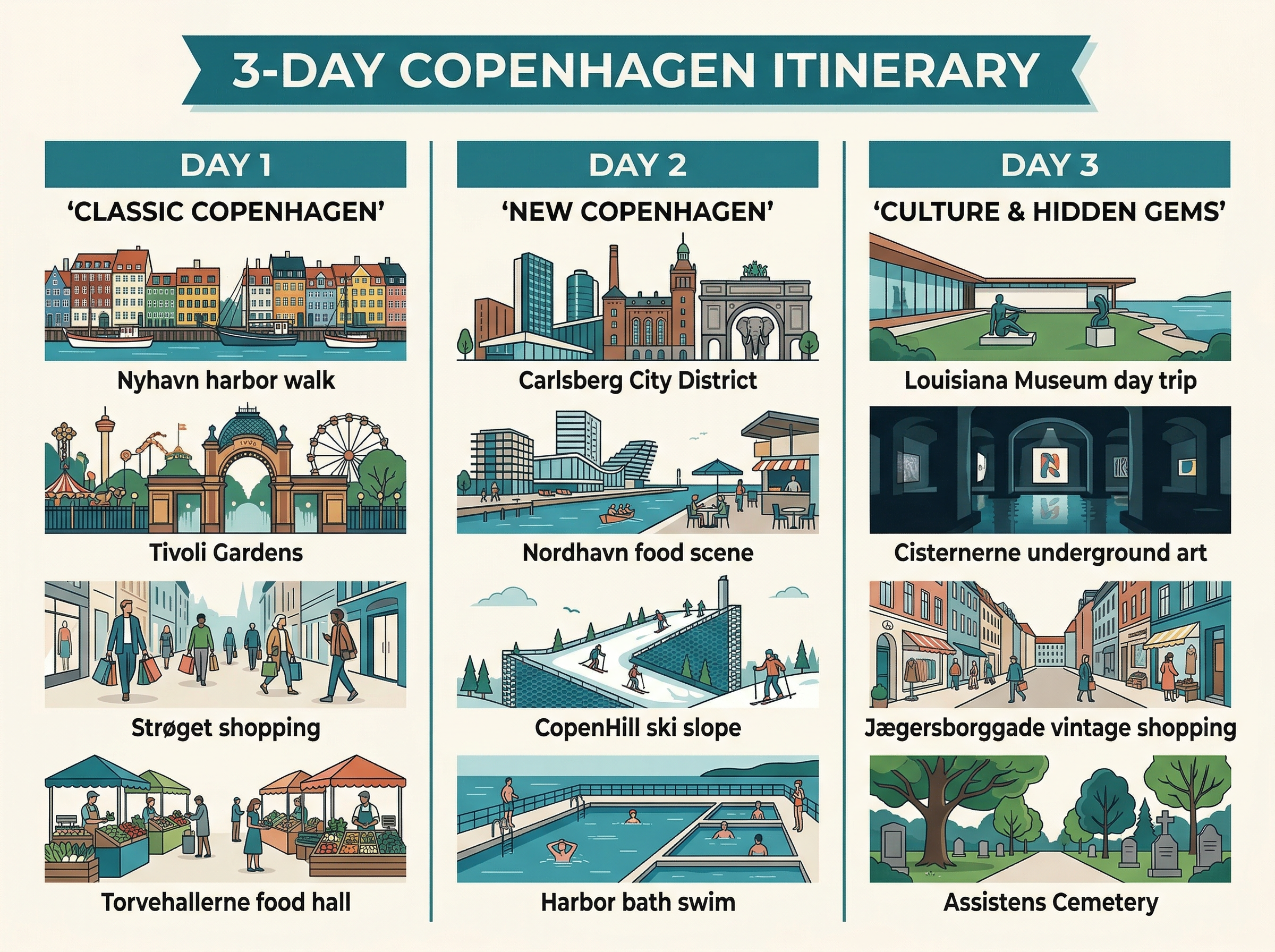
Three-day Copenhagen itinerary infographic showing Day 1 (Classic Copenhagen), Day 2 (New Copenhagen & Louisiana), and Day 3 (CopenHill & Hidden Gems)
Infographic: Your 3-Day Copenhagen Blueprint — Generated with Nano Banana 2.0

March weather tip: Expect 3-8°C with occasional rain. Layer up, bring a waterproof shell, and lean into the hygge — Copenhagen invented the concept of finding warmth in dark, damp weather. The Copenhagen Card even includes free hot drinks at participating cafés to help you manage.

Go Before You're Ready

Copenhagen doesn't wait for perfect weather or perfect plans. It builds ski slopes on incinerators, turns reservoirs into galleries, and serves world-class dinners made from what other kitchens throw away. Three days won't be enough — they never are — but they'll be enough to understand why this cold, flat, absurdly expensive city at the edge of Scandinavia keeps showing everyone else how it's done. Pack layers. Rent a bike. Swim in March.

Share X LinkedIn