The $100 Million Vision That Nobody Asked For
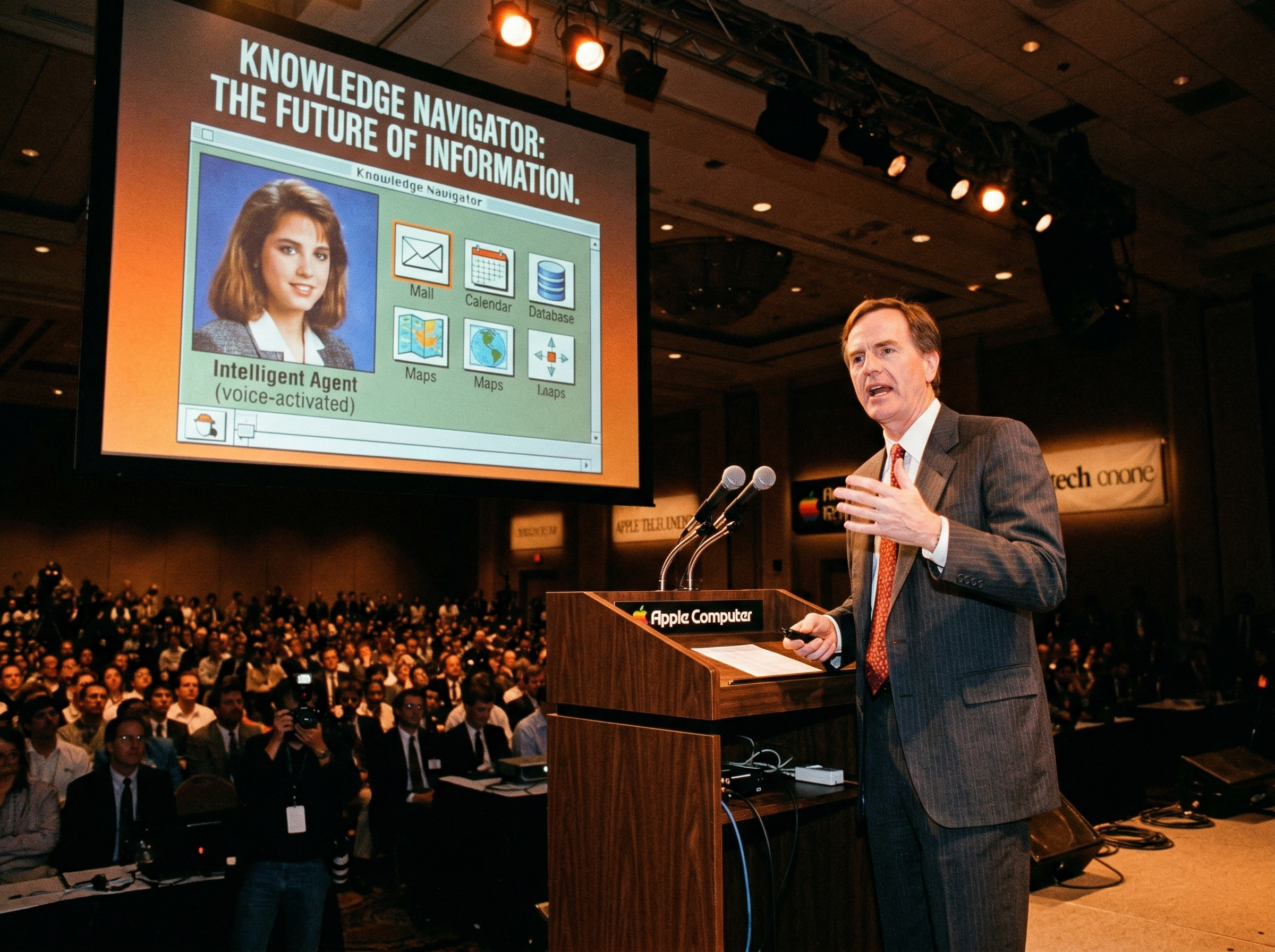
In 1987, while most of Silicon Valley was busy figuring out how to make desktop PCs less ugly, John Sculley was dreaming about something nobody had words for yet. He called it the "Knowledge Navigator" — a tablet-sized device with a touch interface, an AI assistant, and wireless connectivity. This was 1987. The World Wide Web wouldn't exist for another four years.
The concept video Sculley commissioned showed a professor casually chatting with a bow-tied AI agent on a tablet, pulling up research, making video calls, and annotating documents with a finger. It looked like science fiction because it was. But Sculley was deadly serious, and he had Apple's checkbook. Over the next six years, the project — codenamed "Newton" after Isaac Newton — would consume roughly $100 million in development costs. Engineers Steve Sakoman and Jean-Louis Gassée kicked off the project, which grew into a team that essentially had to invent an entire computing paradigm from scratch.
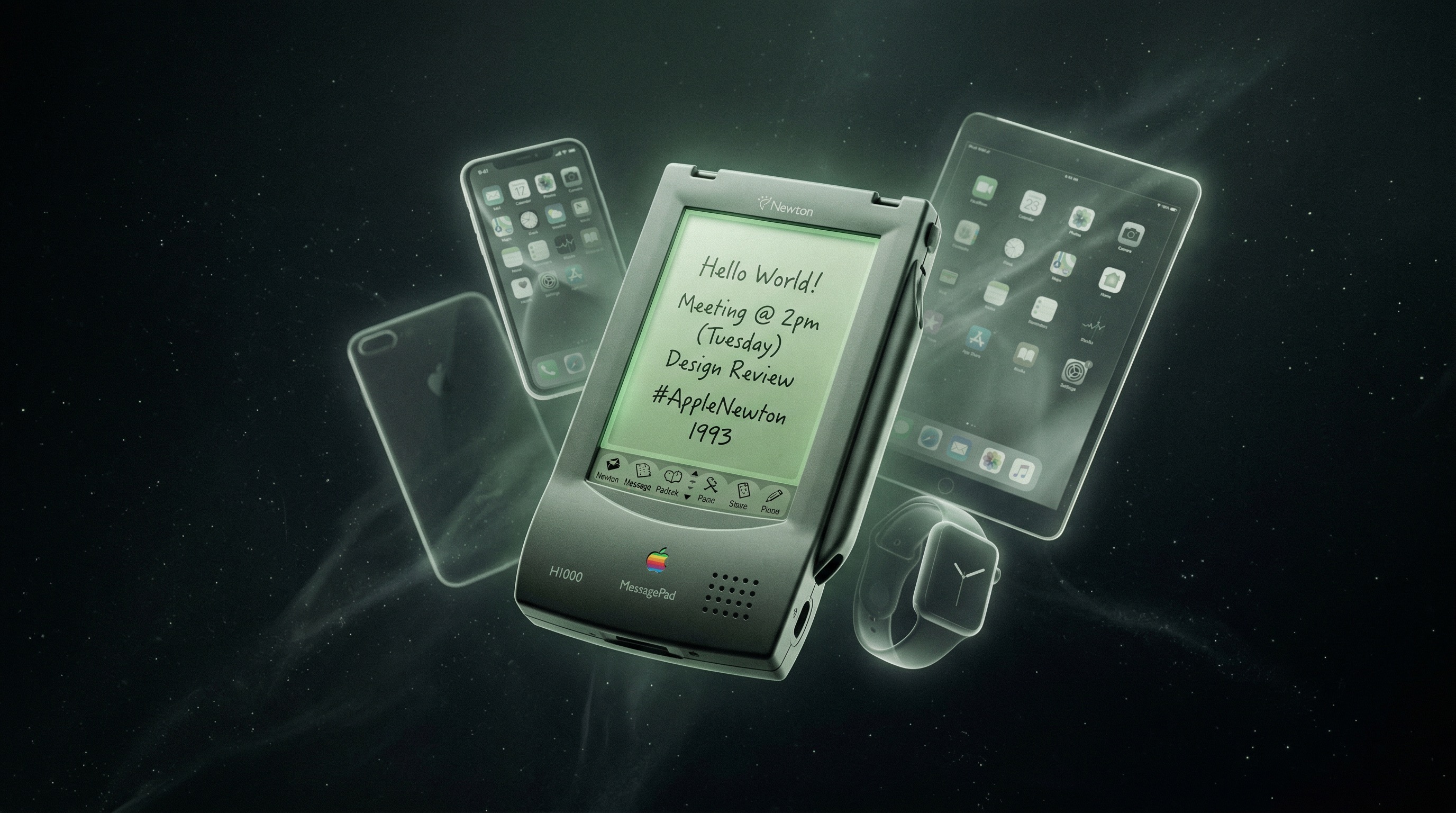
At CES 1992, Sculley stood on stage and coined a term the world hadn't heard before: "Personal Digital Assistant." The audience nodded politely. Nobody understood what he was talking about. On August 2, 1993, the MessagePad H1000 shipped for $699 — about $1,500 in today's dollars. It was simultaneously the most advanced handheld computer ever created and a product hopelessly ahead of the infrastructure needed to make it useful.
The $3 Million Bet That Accidentally Saved Apple
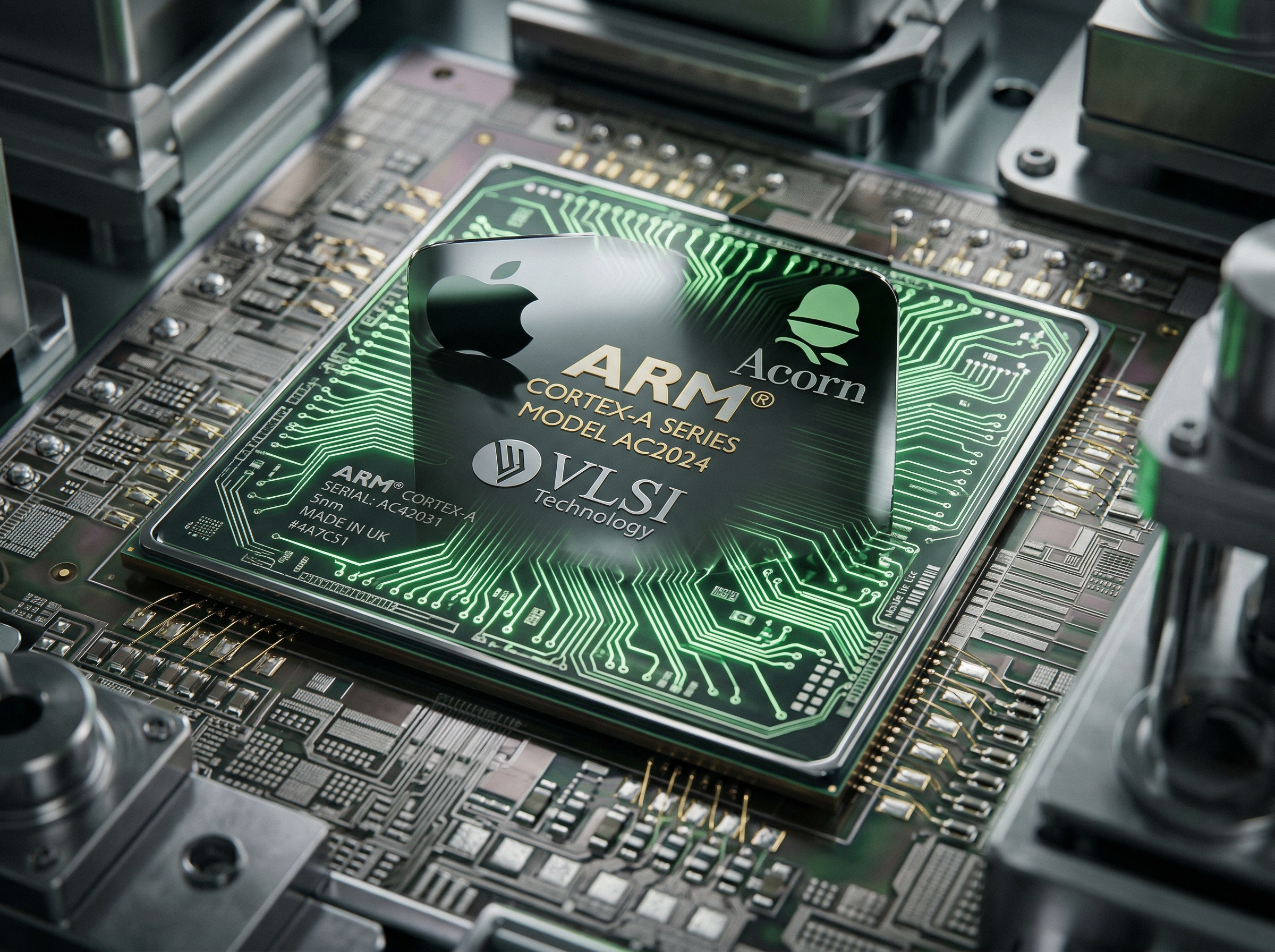
Here's the part of the Newton story that reads like a financial thriller. The device needed a processor that was powerful enough to do real computing but efficient enough to run on batteries. Nothing on the market fit. So on November 27, 1990, Apple did something extraordinary: it invested $3 million for a 43% stake in a joint venture with Acorn Computers and VLSI Technology. They called it Advanced RISC Machines — ARM.
The ARM 610 processor they developed for Newton was a revelation: powerful enough to run handwriting recognition in real time, sipping power so conservatively that the MessagePad could run for weeks on four AAA batteries. It was the first mass-market device to prove that RISC architecture could power personal computing.
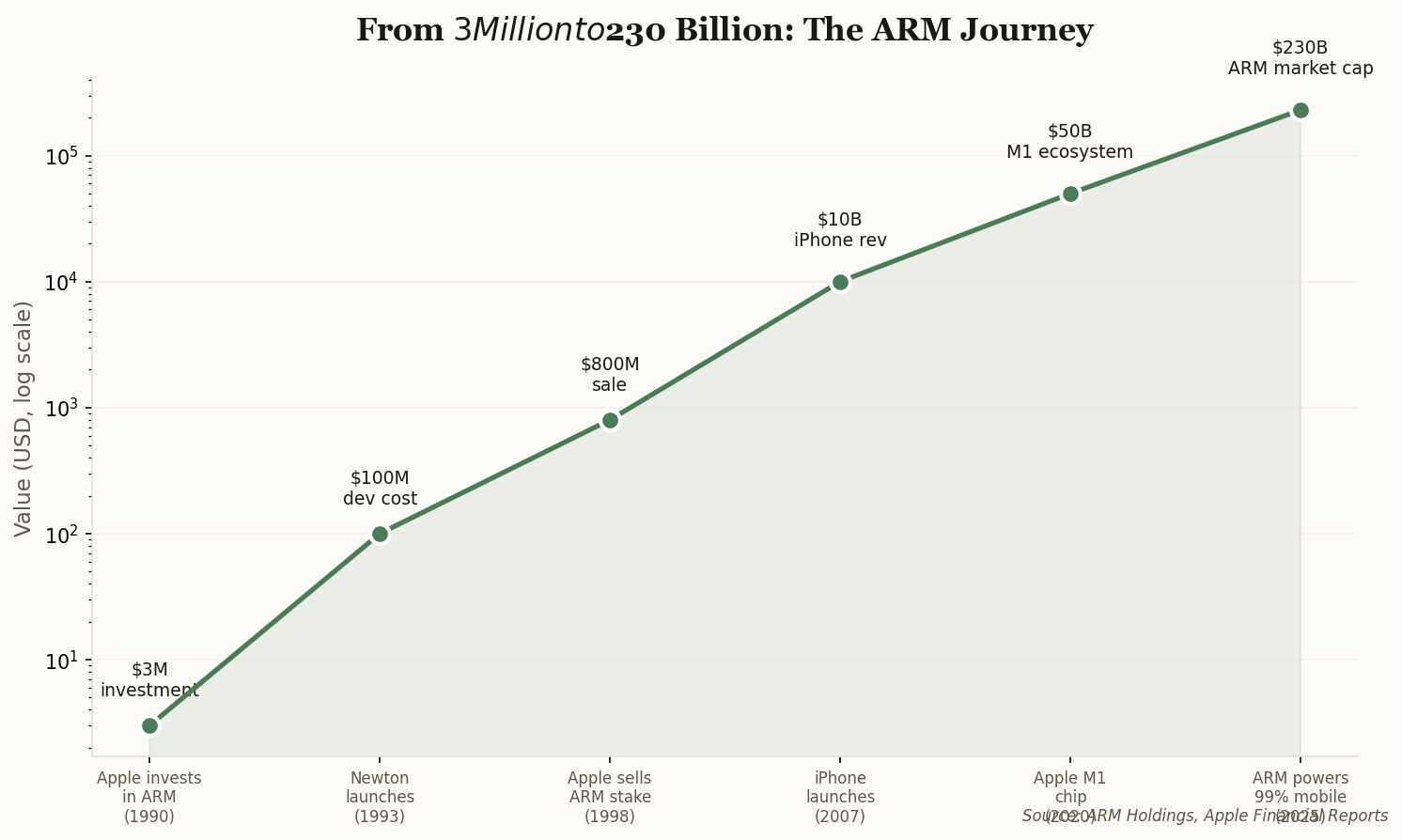
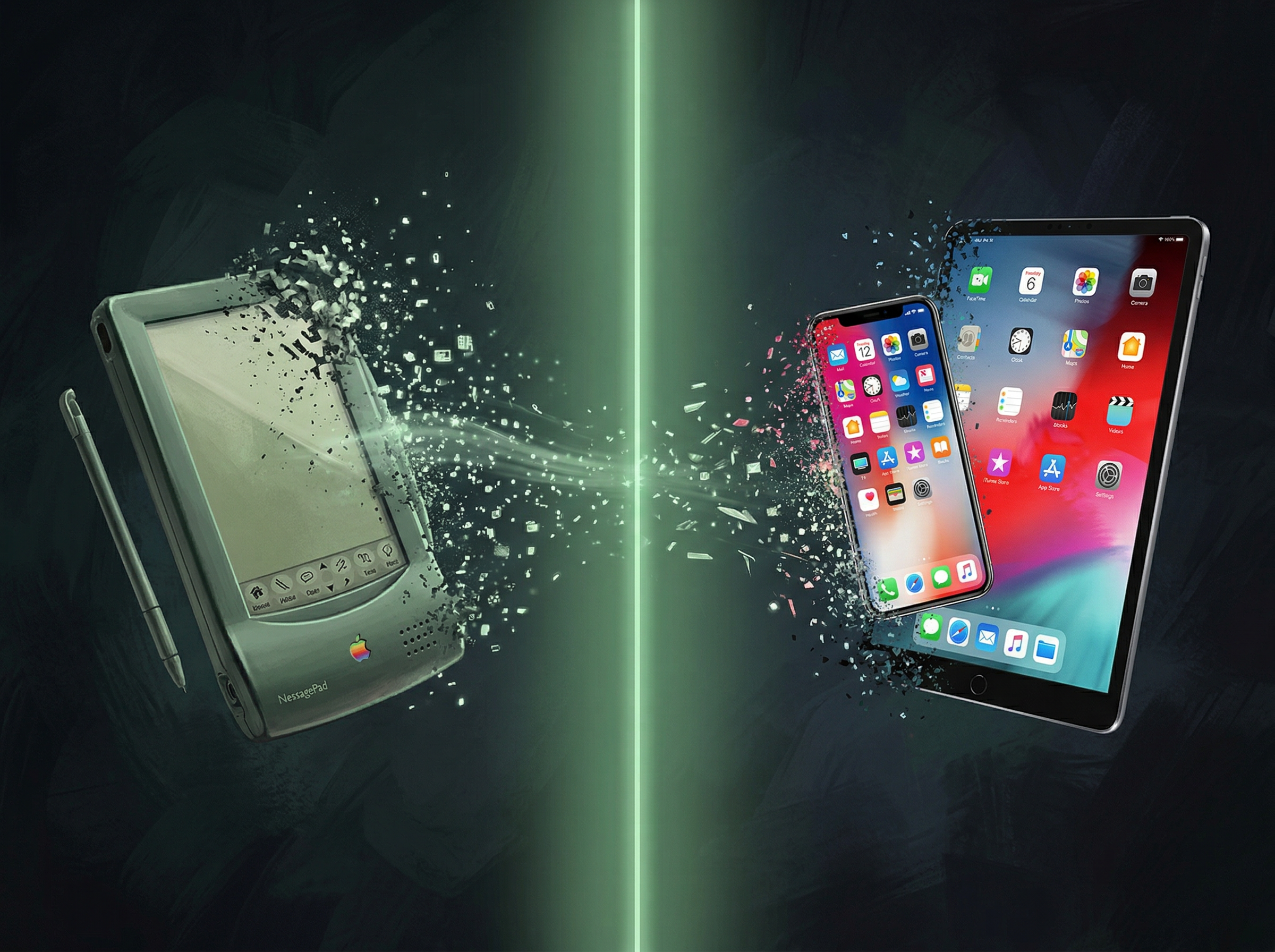
When Apple was circling the drain in the late 1990s, it sold its ARM stake for roughly $800 million. That cash infusion helped fund the iMac and iPod development that ultimately saved the company. And the ARM architecture? It now powers virtually every smartphone on Earth, every iPad, and — since the M1 in 2020 — every Mac. The Newton died, but its heart kept beating in everything Apple built afterward.
"Egg Freckles" and the Handwriting Debacle
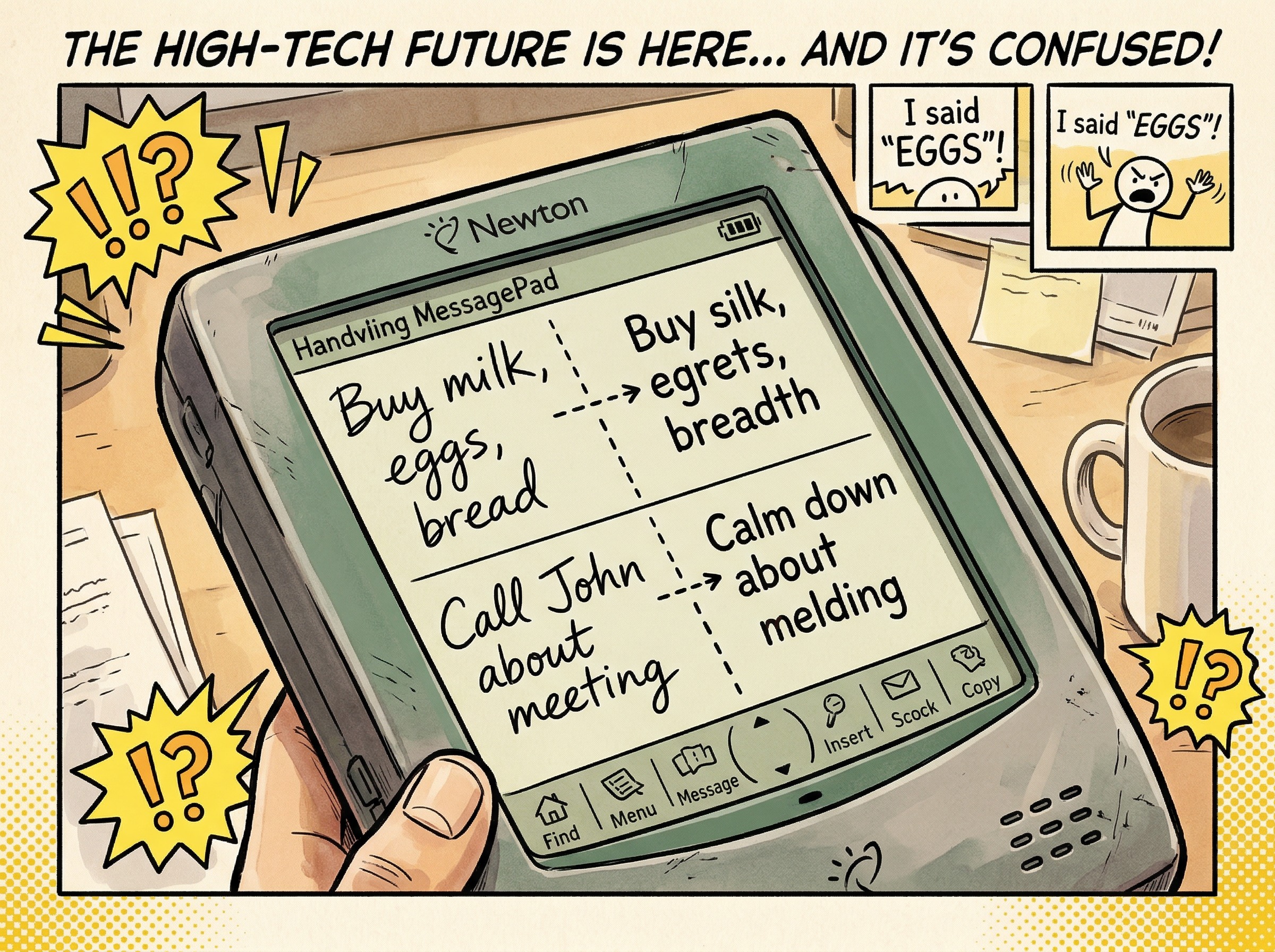
The Newton's handwriting recognition was supposed to be its killer feature. Instead, it nearly killed the product. The first-generation CalliGrapher engine required users to "train" it by writing sample characters, and even after training, it mangled input with spectacular creativity. Writing "Catching on?" might produce "Egg Freckles?" — and that's not a hypothetical. Garry Trudeau immortalized exactly that failure in his Doonesbury comic strip, and the phrase became an industry punchline overnight.
Then The Simpsons delivered the killing blow. In the 1994 episode "Lisa on Ice," a bully writes "Beat up Martin" on a Newton, which helpfully translates it to "Eat up Martha." The gag lasted about five seconds. The damage lasted a decade. Larry Tesler, who led the handwriting recognition team, later admitted the real problem: "As soon as I saw the final Newton brochure claiming it recognized handwriting, I knew we were doomed." The technology worked — sort of — but Sculley's marketing had promised magic, and what shipped was merely impressive.
The Easter Egg: Apple's engineers had the last laugh. In Newton OS 2.0 (1995), if you wrote "Egg Freckles" on the screen, the device would respond: "I am not catching on." The improved Rosetta engine in OS 2.0 focused on printed text recognition and was actually quite good — but by then, the public had already made up its mind.
Seven Models, Zero Market Share
Apple shipped seven Newton models across five years, each one better than the last, each one proving that "better" wasn't the same as "good enough for the market." The original MessagePad 100 had 640KB of RAM — your calculator probably has more. The final MessagePad 2100 was a genuine marvel: a 162MHz StrongARM processor (ten times faster than the original), 8MB of RAM, and a 480×320 screen that was genuinely useful for real work.
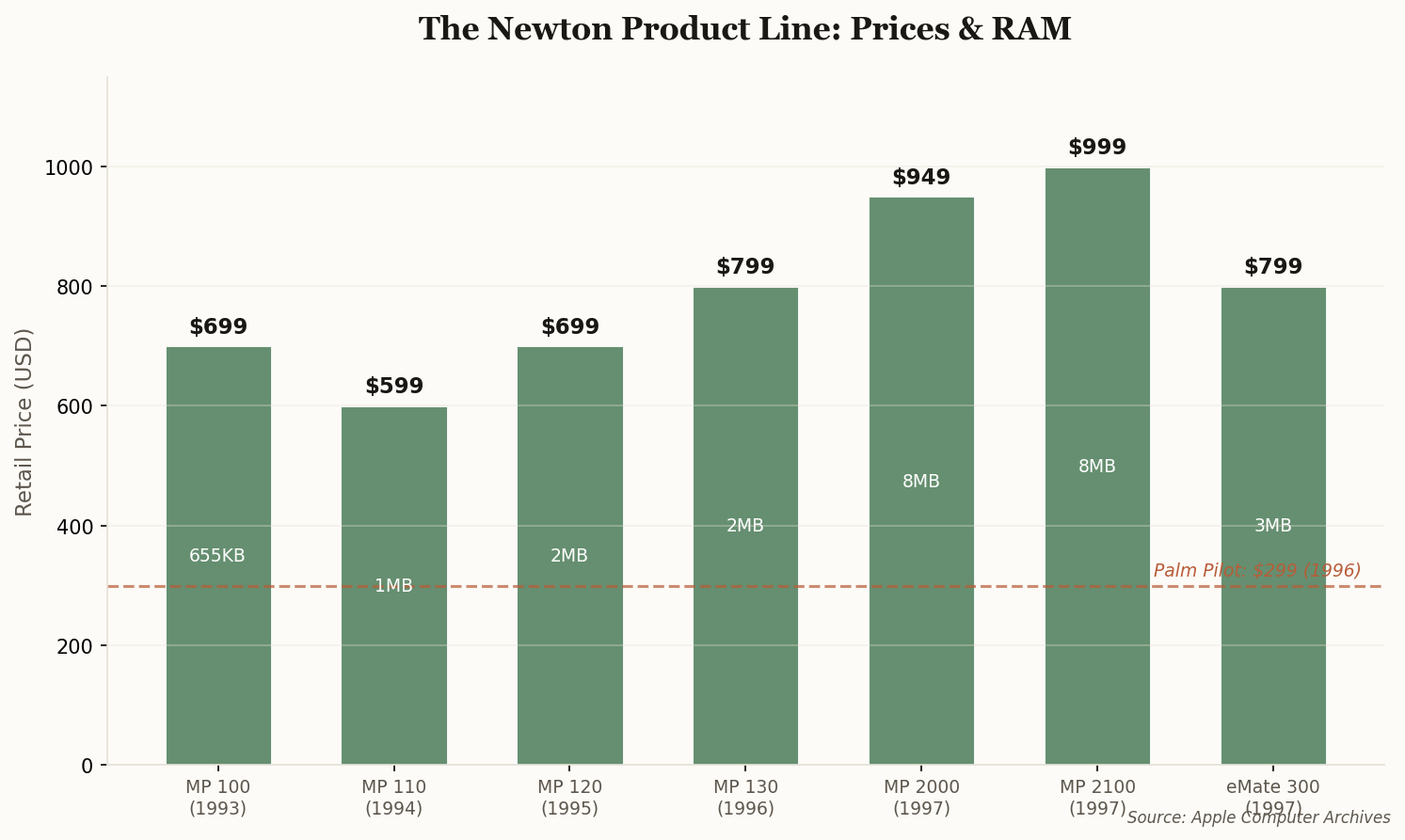
The eMate 300 deserves special mention — a translucent green clamshell laptop aimed at education. Its DNA is unmistakable in the original iBook — designed by Jony Ive, who had already cut his teeth on the MessagePad 110 — that launched a year after Newton's cancellation. Apple was building the future; it just couldn't sell the present.
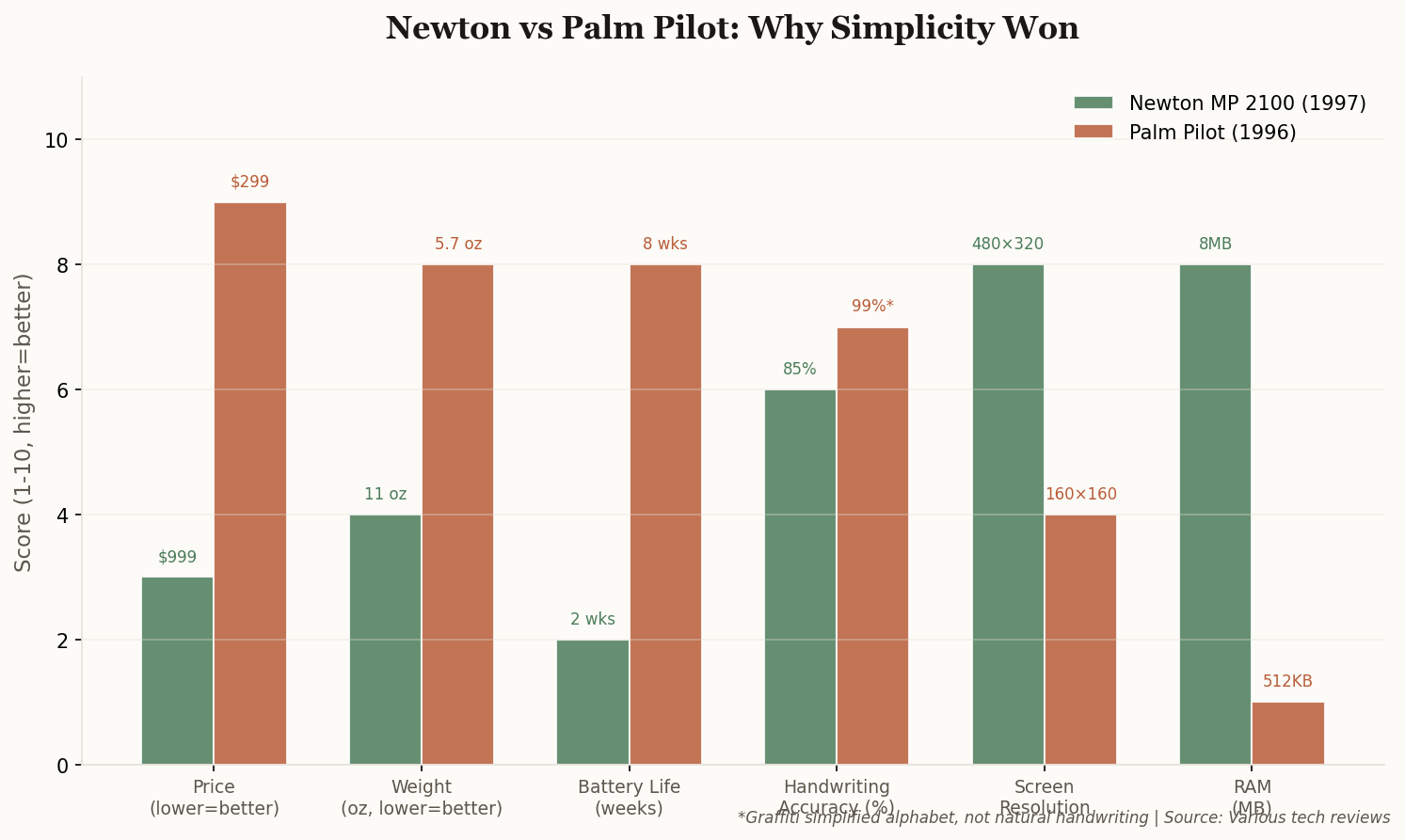
The fundamental problem was the Palm Pilot. Launched in 1996 for $299, it was smaller, lighter, and used Graffiti — a simplified alphabet that worked 100% of the time because users met the machine halfway. The Newton tried to understand humans. The Palm Pilot taught humans to understand the machine. Guess which approach sold better?
Steve Jobs Killed Newton. Then He Stole Its Soul.
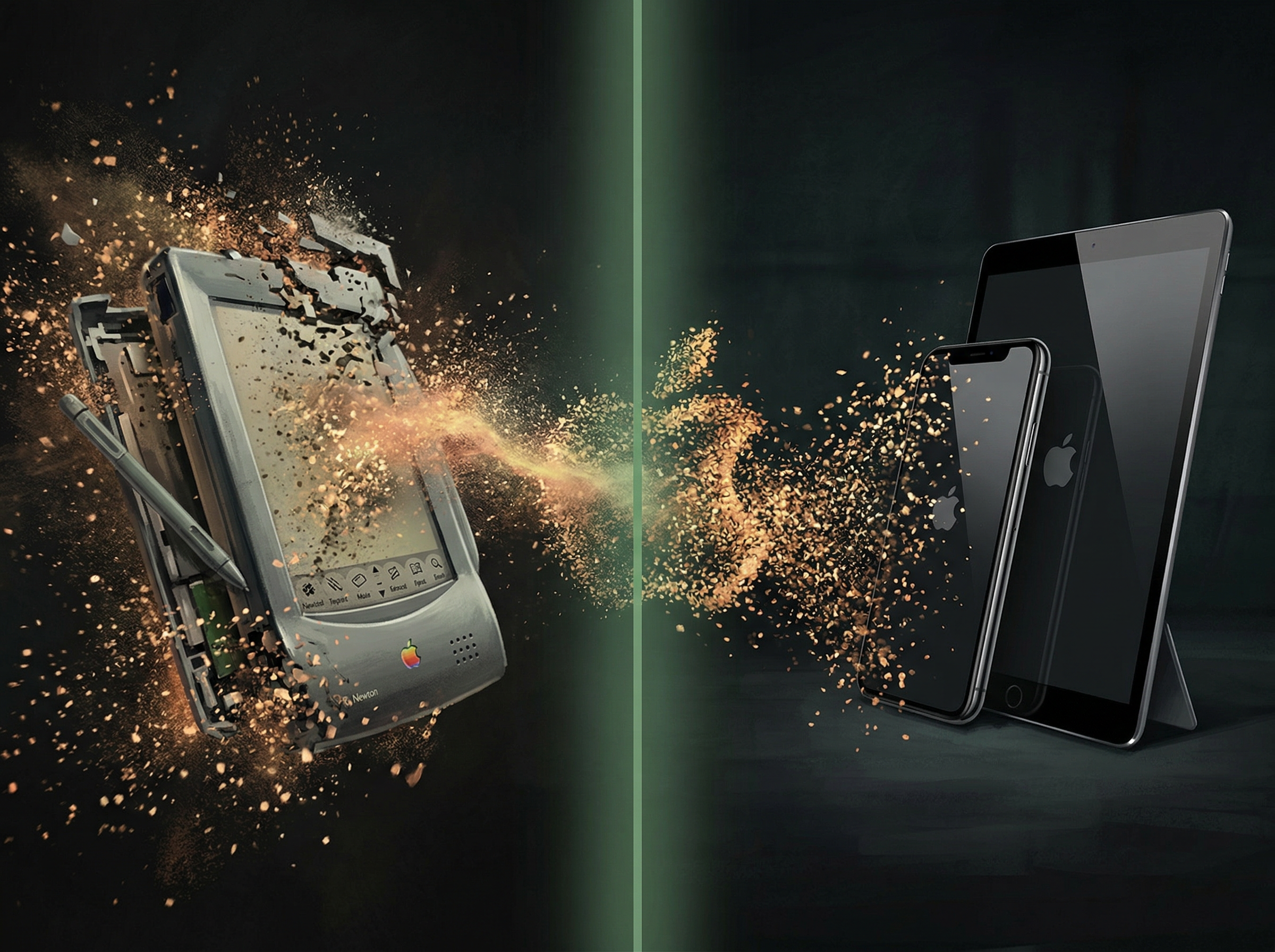
When Steve Jobs returned to Apple in 1997, the Newton was already doomed. Not because it was bad — the MessagePad 2100 was the best handheld computer money could buy — but because it was Sculley's baby, and Jobs was systematically dismantling everything his predecessor had built. On February 27, 1998, Jobs officially killed the Newton division. His reasoning was characteristically blunt: "God gave us ten styluses. Let's not invent another."
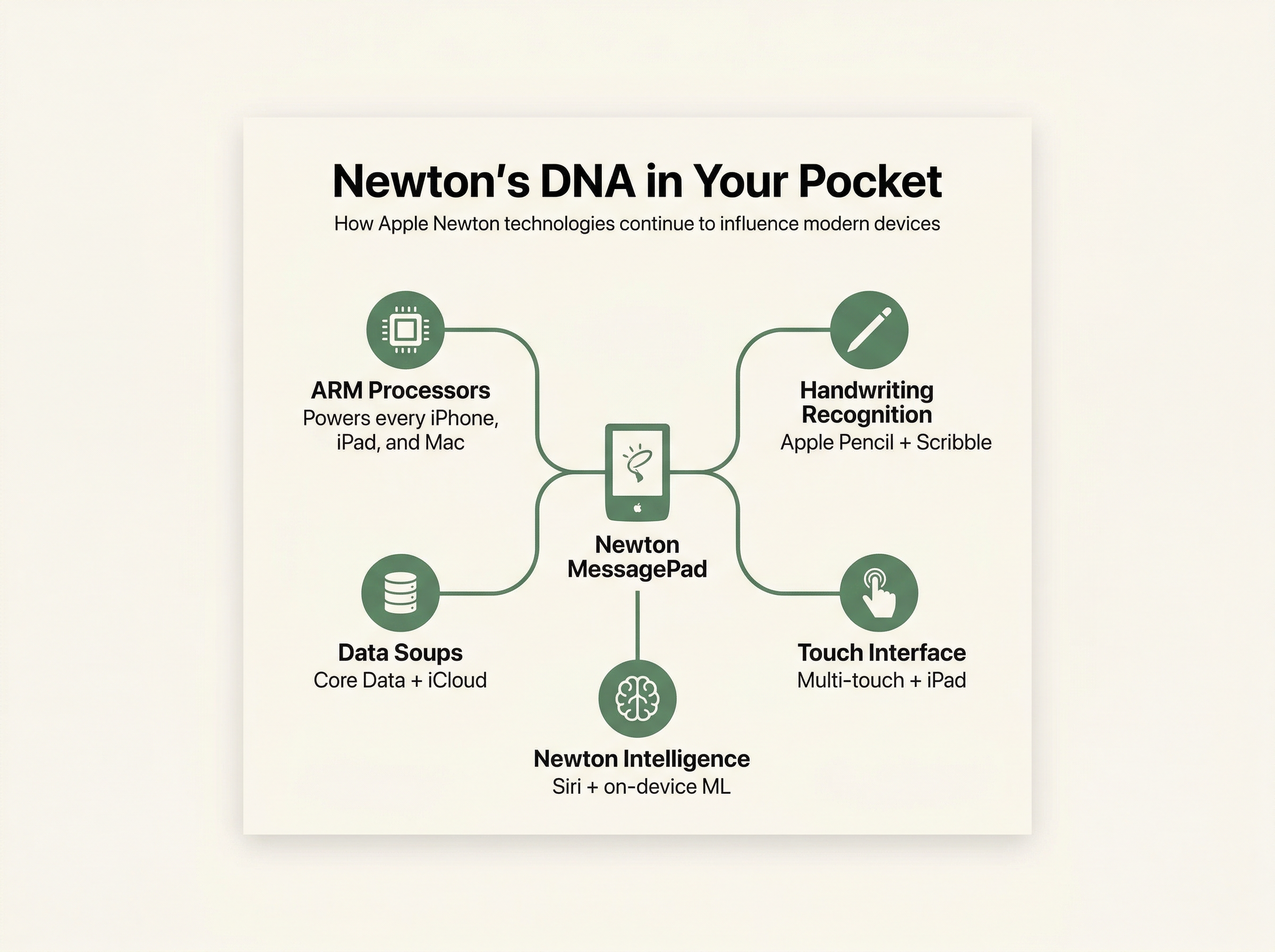
But here's the delicious irony. Nearly every technology that made the iPhone and iPad revolutionary had roots in Newton. ARM processors? Newton funded their creation. Touch-based computing? Newton proved it was viable. An intelligent assistant that understands natural language? Newton Intelligence did it in 1993 — write "Lunch with Bill Friday" and it created a calendar event linked to your contact named Bill. The Inkwell handwriting recognition that shipped in Mac OS X was literally Newton's code, cleaned up and repackaged.
The phrase "Eat Up Martha" became internal shorthand at Apple during iPhone development. Every time an engineer tested text input, they were haunted by Newton's ghost. The iPhone's keyboard had to be perfect, because Apple had already learned what happens when it isn't. Newton didn't fail — it was a $100 million lesson that Apple eventually got an A+ on.
The Immortals: Newton's Community Refuses to Die
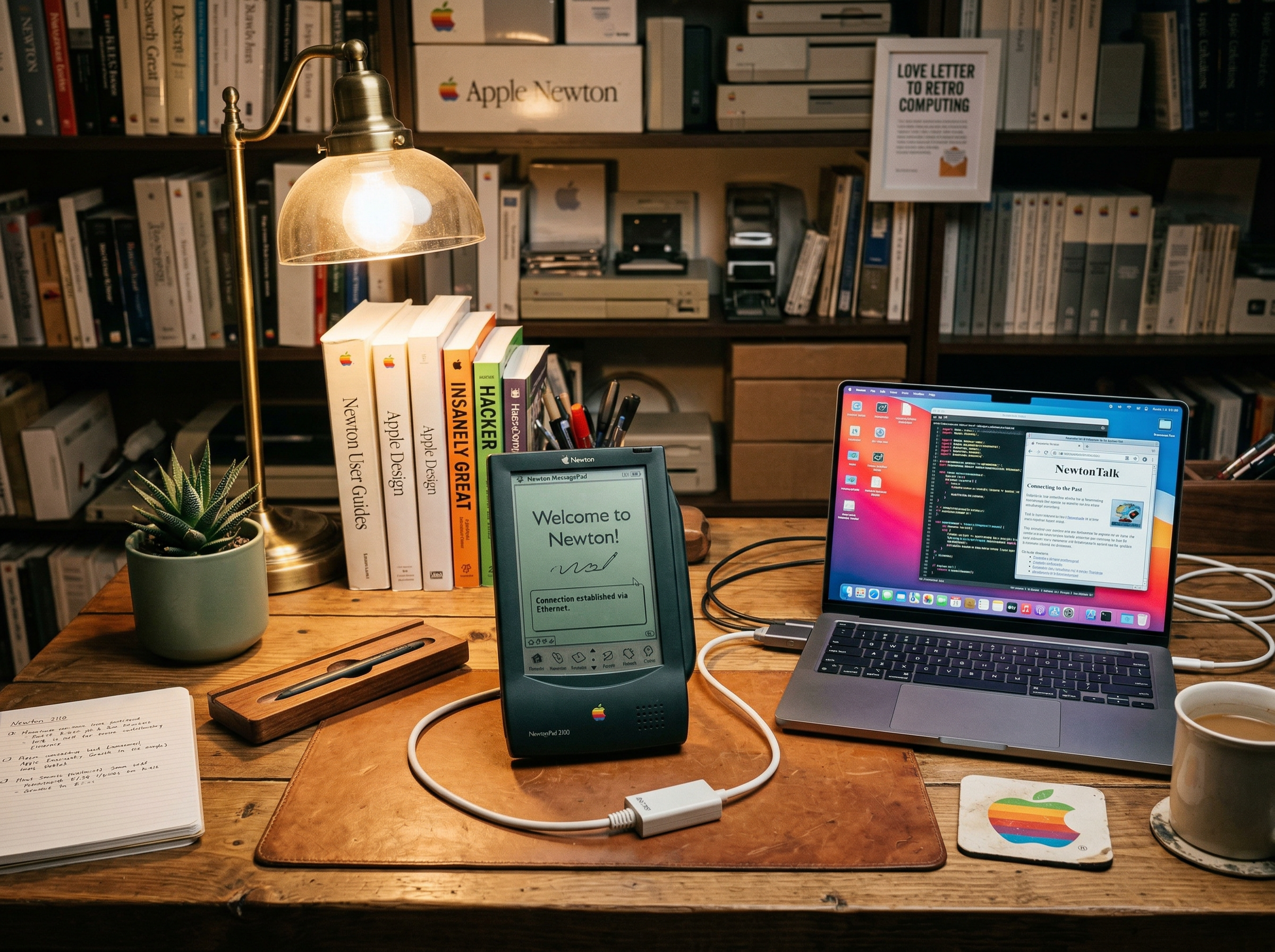
Twenty-eight years after Apple pulled the plug, people are still using Newtons. Not as museum pieces — as actual tools. The United Network of Newton Archives (UNNA) remains the primary software repository, and NewtonTalk, a mailing list active since the late 1990s, still buzzes with discussions about hardware repairs, modern connectivity hacks, and getting Newtons online via Wi-Fi and Ethernet adapters.
The Einstein Emulator lets you run Newton OS on modern Macs and Android devices, and it works surprisingly well. Many "Newtonians" argue that the device's modeless interface — where you can write, draw, or annotate anywhere without switching between apps — remains superior to the app-siloed experience of modern tablets. They might be right.
The Newton even got its own documentary: Love Notes to Newton, made by filmmaker Noah Leon, was released for free on YouTube in 2024 and sparked a new wave of collector interest. The Museum of Failure features the Newton as a centerpiece, and the Computer Museum of America is launching an "Apple@50" exhibition in Spring 2026 featuring rare Newton prototypes. A MessagePad 2100 in good condition now fetches $300–$500 on eBay — more than it cost new, adjusted for how many were made. The market has decided: the Newton wasn't a failure. It was early.