Travel / Kyoto

Three Days in Kyoto

Vermillion gates, bamboo cathedrals, and the best bowl of ramen you'll never find on Google Maps. A no-nonsense guide to doing Kyoto right.

Listen
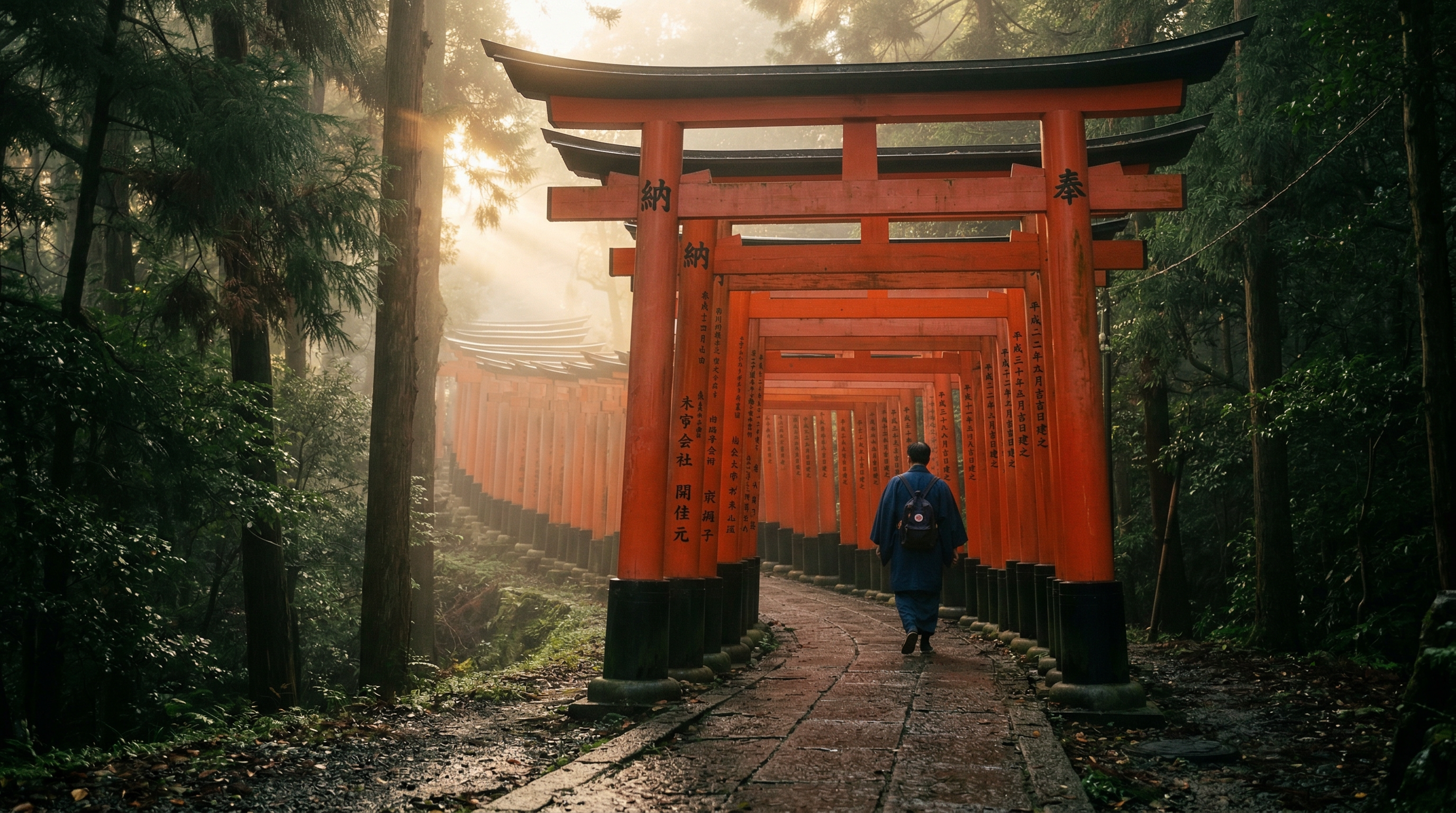
Vermillion torii gates of Fushimi Inari shrine stretching into misty morning light in Kyoto, Japan
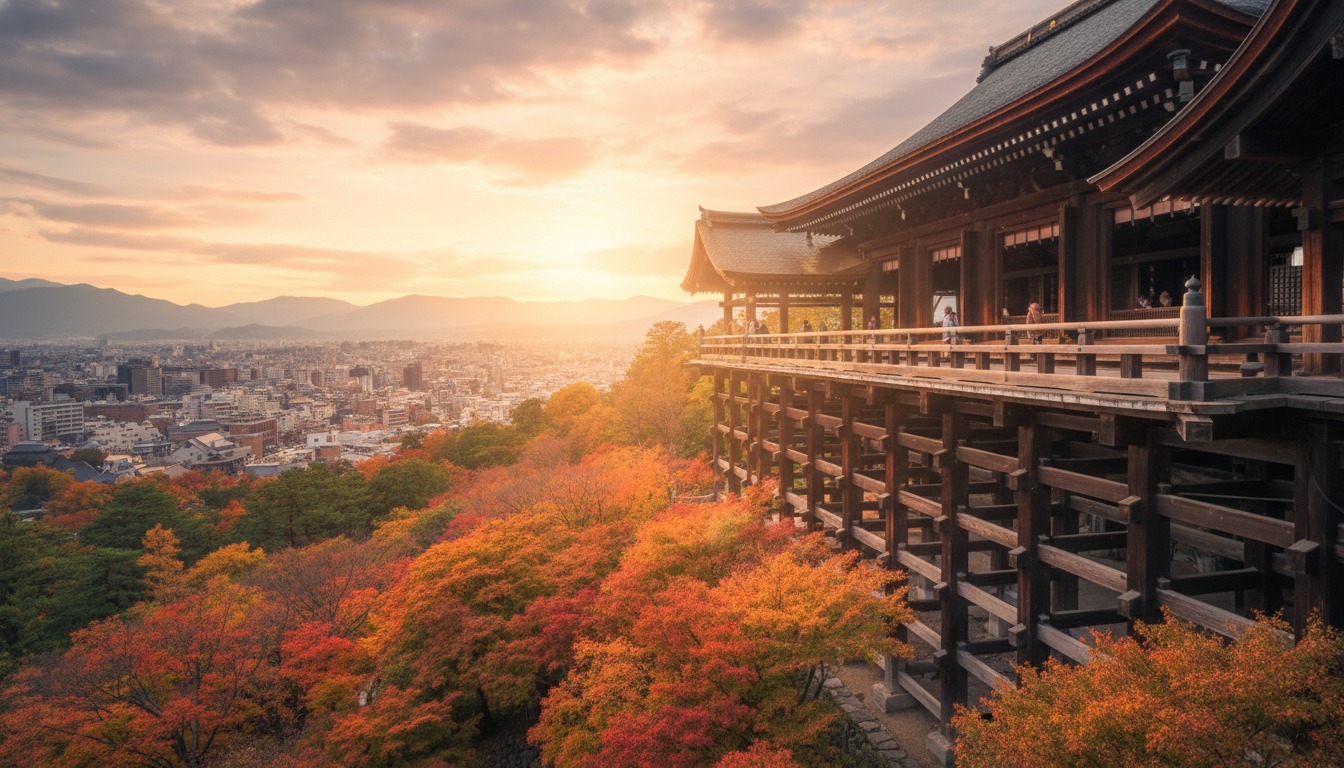
Kiyomizu-dera temple veranda overlooking Kyoto rooftops at golden hour
DAY 01

The East Side: Where Kyoto Earns Its Reputation

Here's the thing about Fushimi Inari: everyone shows you the same photo of vermillion gates receding into infinity, and everyone neglects to mention that by 9 AM the place is a slow-moving human conveyor belt. Show up at 6:30. Not 7. Not "earlyish." Six-thirty. The shrine is open 24 hours and the morning light filtering through ten thousand torii while you're essentially alone is the single most photogenic moment in all of Japan.

The full hike to the Mt. Inari summit takes two to three hours and most tourists turn back at the first overlook. Don't be most tourists. The upper trail thins to near-solitude, and halfway up there's a bamboo-flanked side path that rivals Arashiyama without the Instagram pilgrimage. The descent loops through quiet residential neighborhoods where vending machines outnumber people—peak Japan.

After Inari, take the Keihan Line to Kiyomizu-dera, the wooden temple famous for its cantilevered stage built without a single nail. The walk up through Sannenzaka and Ninenzaka—stone-paved lanes lined with traditional shops—is the postcard version of "Old Kyoto" that actually delivers. Entry is ¥500 and worth every coin.

For matcha, skip the tourist-trap cafes at the temple gates. Gokago near Kiyomizu does modern lattes that would impress a Melbourne barista. For the real thing—stone-ground, whisked, served on tatami—find Shinise Chaya near Kodai-ji. It's been doing this for 300 years. They know what they're doing.

Gion after dark: As of 2026, many private alleys in the geisha district are strictly closed to tourists to protect geiko and maiko from harassment. Fines of ¥10,000 are enforced. Stick to the main Hanami-koji street and the beautiful Shirakawa Canal area. You may spot a geisha heading to an engagement—admire from a respectful distance, camera down.
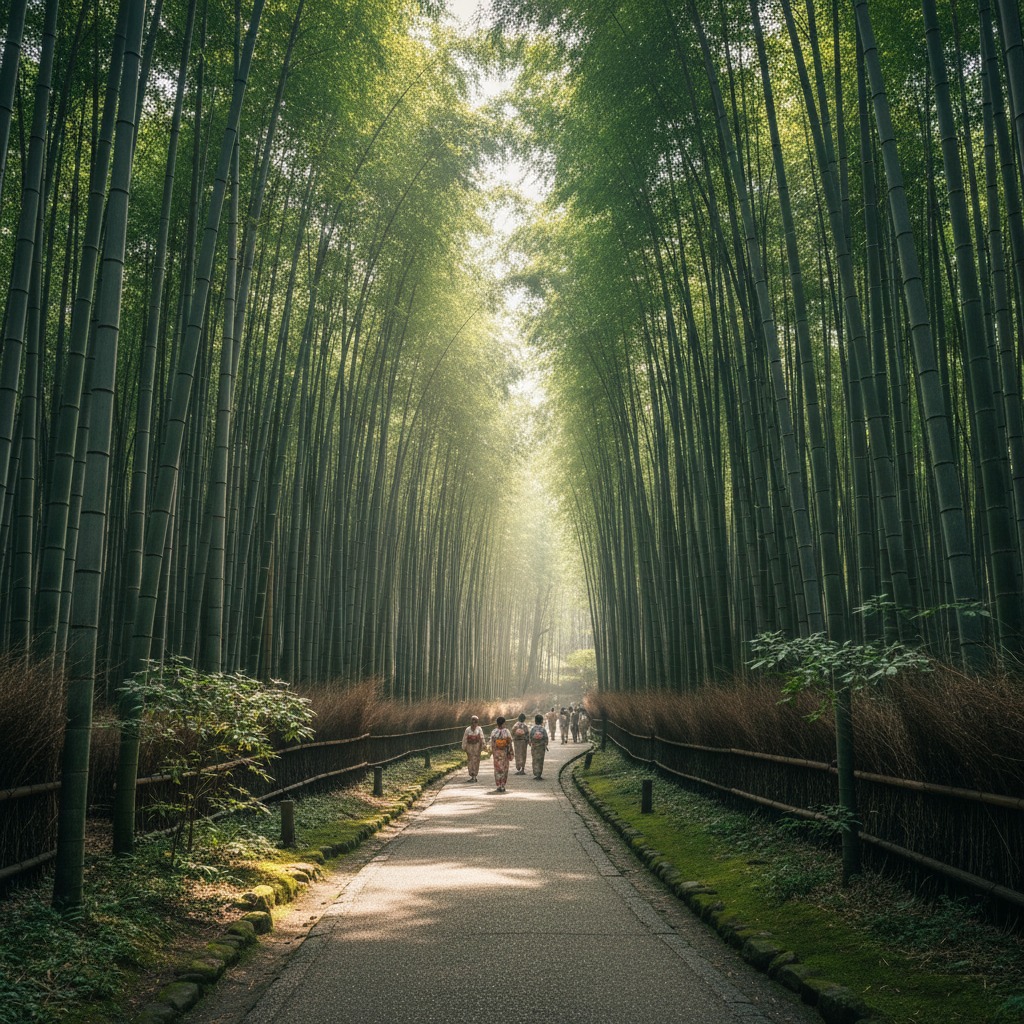
Towering bamboo grove of Arashiyama with dappled sunlight filtering through
DAY 02

Arashiyama: Managing Expectations in a Bamboo Cathedral

Let's get the uncomfortable truth out of the way: the Arashiyama Bamboo Grove is 200 meters long. That's it. Two football fields of bamboo, and by 10 AM it's shoulder-to-shoulder selfie sticks. If you arrive by 7:00 AM, you'll get maybe twenty minutes of the ethereal, swaying-green-cathedral experience the internet promised. After that, it's a theme park.

The real move? Walk fifteen minutes north to Adashino Nenbutsu-ji. This temple has its own private bamboo path, 8,000 stone Buddhist statues weathered by centuries, and approximately zero tour groups. It's the Arashiyama that Arashiyama used to be.

Tenryu-ji (¥800) is the anchor of western Kyoto—a UNESCO World Heritage site whose 14th-century Sogenchi Garden has survived fires, wars, and the Meiji Restoration. The garden is designed to be viewed from the temple veranda while seated. Sit. This isn't a walk-through. The borrowed scenery of the Arashiyama mountains behind the pond is a masterclass in how Japanese gardens frame nature rather than contain it.

Then climb. Monkey Park Iwatayama (¥600) requires a 20-minute uphill hike, which filters out the lazy. At the summit, 120-plus macaques roam completely free while you feed them from inside a caged hut. The irony is intentional and delightful, and the panoramic view of Kyoto from up there is better than any temple observation deck.

If you have time, grab the Sagano Romantic Train (¥880) along the Hozugawa River gorge. Book Car 5—the "Rich Car"—which is completely open-air with no windows. In cherry blossom or autumn foliage season, it's transcendent. In summer, it's just hot.

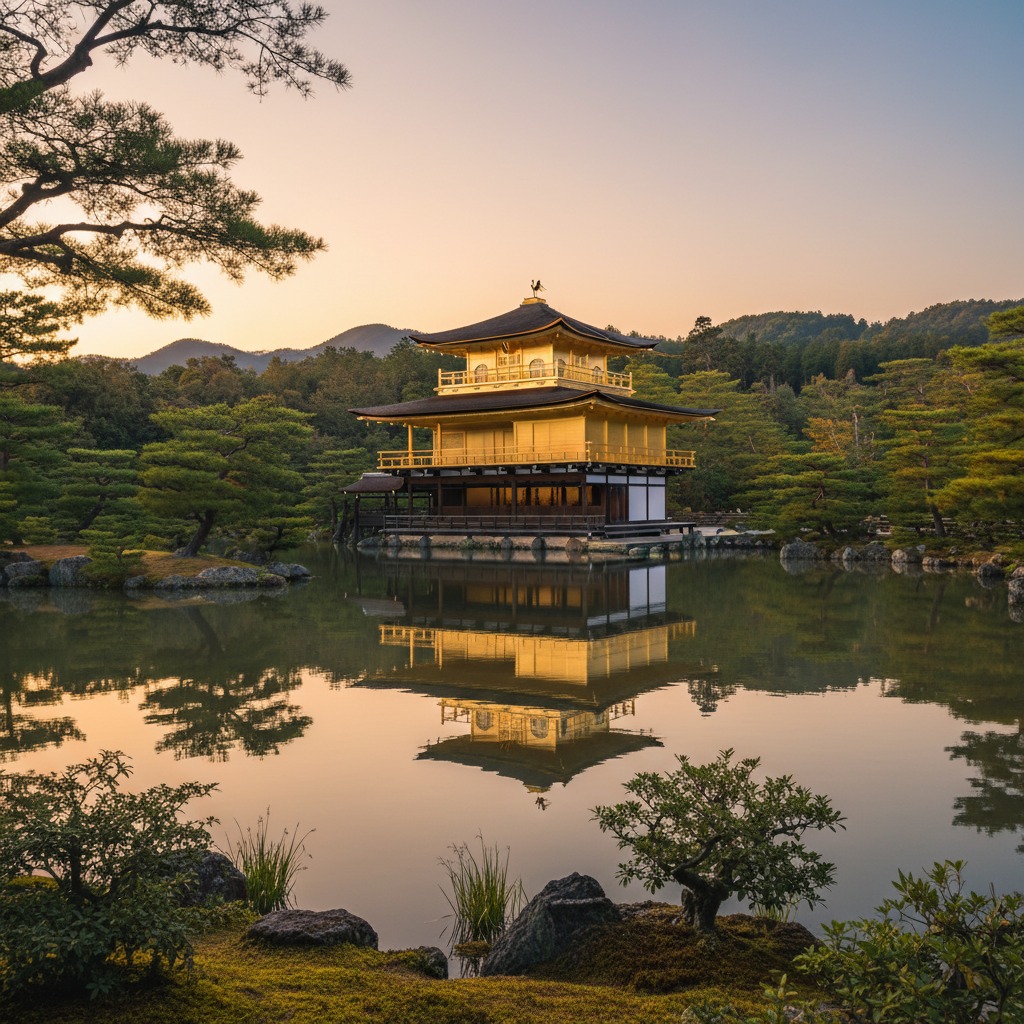
Kinkaku-ji Golden Pavilion reflected in the mirror pond at golden hour
DAY 03

The Quiet North: Gold, Gravel, and the Temple Everyone Ignores

Kinkaku-ji is the single most photographed building in Japan, and it deserves to be. The Golden Pavilion floating above its mirror pond is genuinely breathtaking even after you've seen it on a thousand postcards. But it's a "walk-through" site—you can't enter the building, the path is one-way, and the whole experience takes 30 minutes. Go at 9:00 AM sharp or 4:00 PM to avoid the worst of it. ¥500.

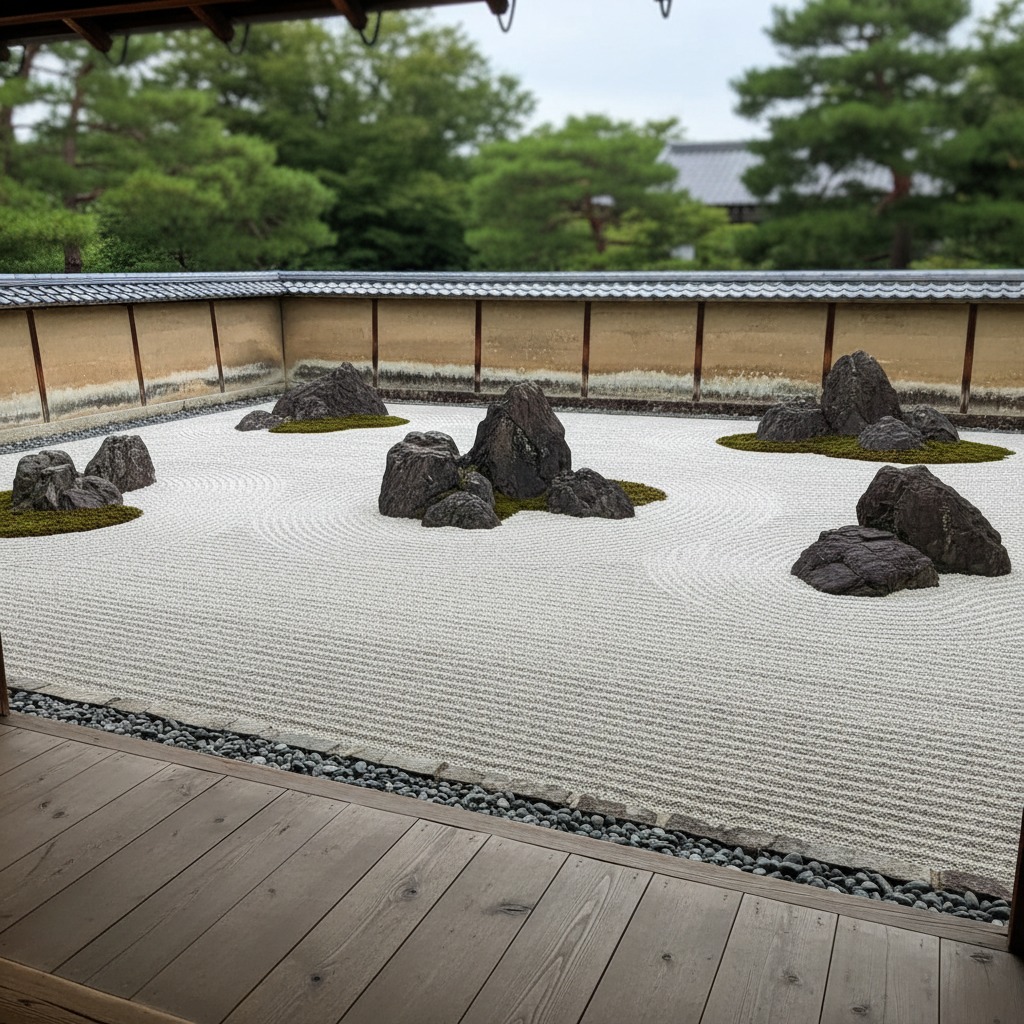
Twenty minutes west by bus, Ryoan-ji (¥600) is the philosophical counterweight. Its rock garden—fifteen stones on raked white gravel—is arguably the most famous Zen composition in the world. Here's the puzzle the monks left you: from any seated position on the veranda, you can only see fourteen stones. The fifteenth is always hidden. The garden argues that complete understanding is always just beyond reach. Spend twenty minutes here. Let it work on you.

Then do yourself a favor and visit the place most tourists skip entirely. Daitoku-ji is a massive Zen temple complex in north Kyoto with two dozen sub-temples, most of which see fewer visitors in a day than Kinkaku-ji sees in five minutes. Start with Zuiho-in—built for a Christian feudal lord in the 16th century, its garden contains a hidden crucifix in the stone arrangements that the monks maintained through centuries of Christian persecution. Then visit Koto-in for the best maple and moss walkway in all of Kyoto. No crowd. No rush. Just raked gravel and birdsong.

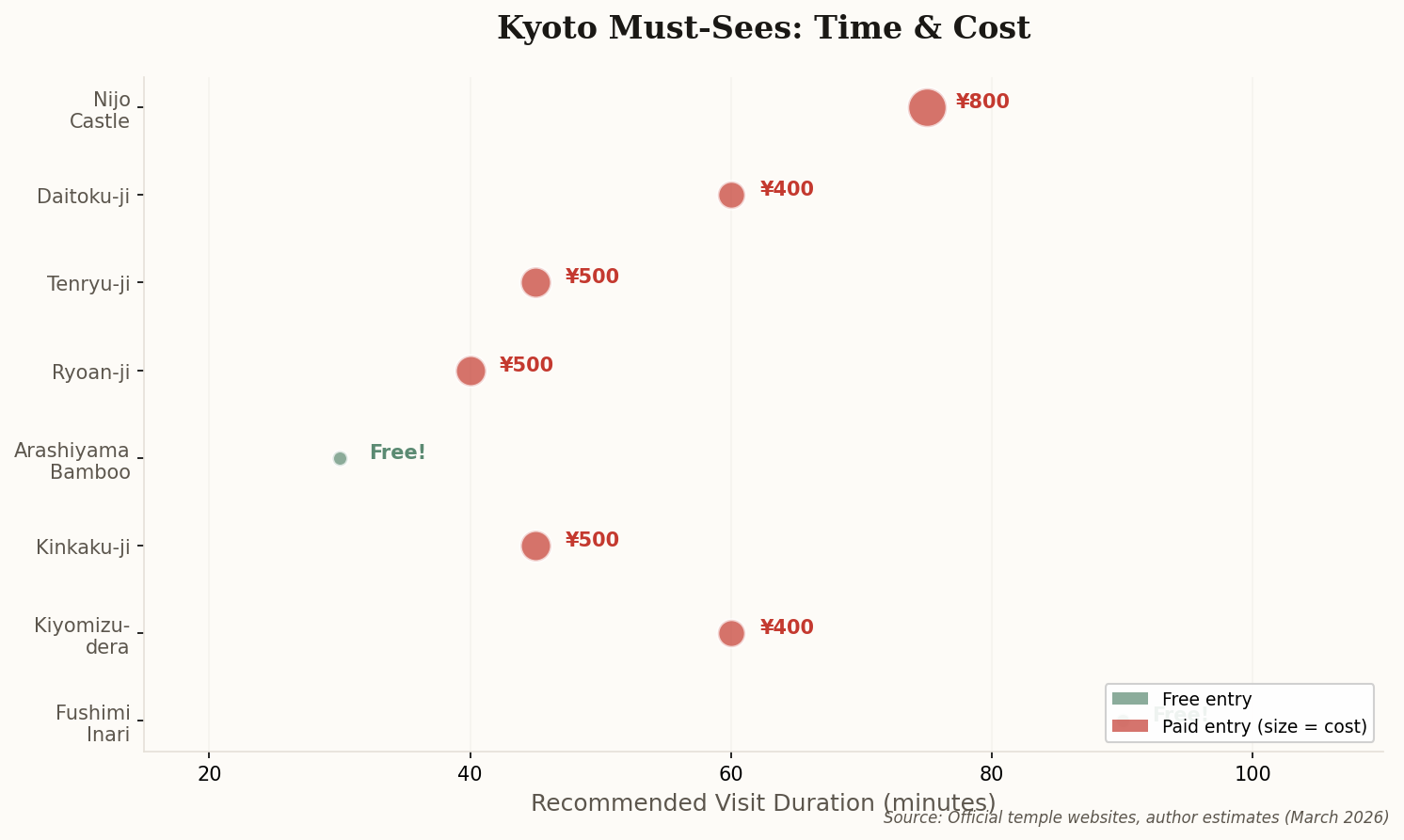
Scatter chart showing recommended visit duration and entry fees for 8 major Kyoto temples and attractions
Time and cost for Kyoto's major sites. Fushimi Inari and the Bamboo Grove are free; Nijo Castle requires the most time and money.

End the day at Nishiki Market—"Kyoto's Kitchen"—a narrow, covered arcade of 130+ food stalls. The must-eats: tako-tamago (a whole baby octopus stuffed with a quail egg on a stick) and the soy milk donuts from Konna Monja. Budget ¥3,000 for a proper food crawl. Ignore the tourist-priced wagyu sticks. The locals don't eat those.

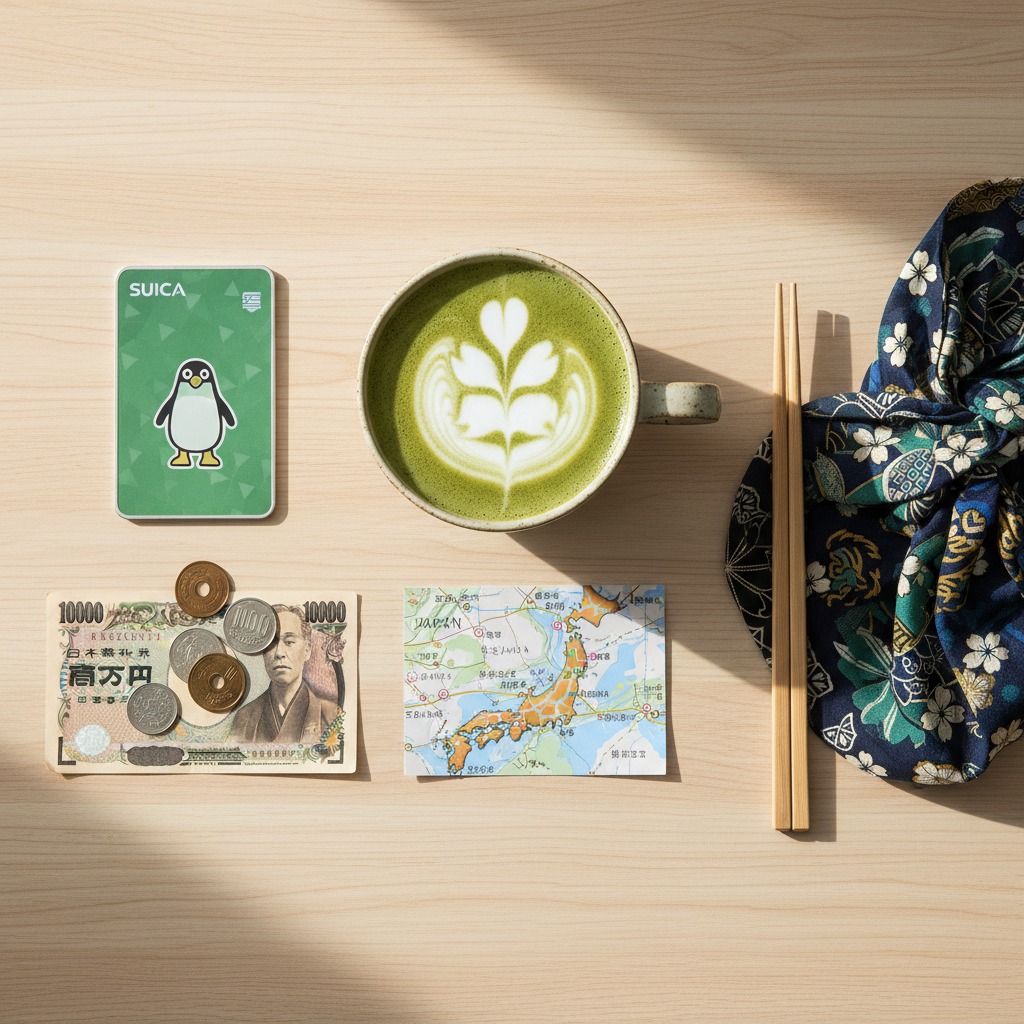
Flat-lay of Japanese travel essentials including transit card, yen, and a matcha latte
04

The Practical Stuff That Actually Matters

The old bus pass is dead. If you're working from a 2024 guidebook, throw it out. Kyoto killed the ¥700 bus-only day pass. The replacement is the Subway & Bus One-Day Pass at ¥1,100, which covers both systems. More importantly: as of 2026, tourists pay a higher "Express" bus fare (¥500 vs. ¥230 for locals) on the most crowded routes. Kyoto is not subtle about wanting you to take the subway instead. Take the hint—the subway is faster anyway.

For getting to Kyoto, an IC card (Suica or ICOCA) covers trains, buses, convenience stores, and vending machines. If you're doing day trips to Nara or Osaka, the JR Kansai Area Pass (1-day ¥2,400) pays for itself on a single round trip.

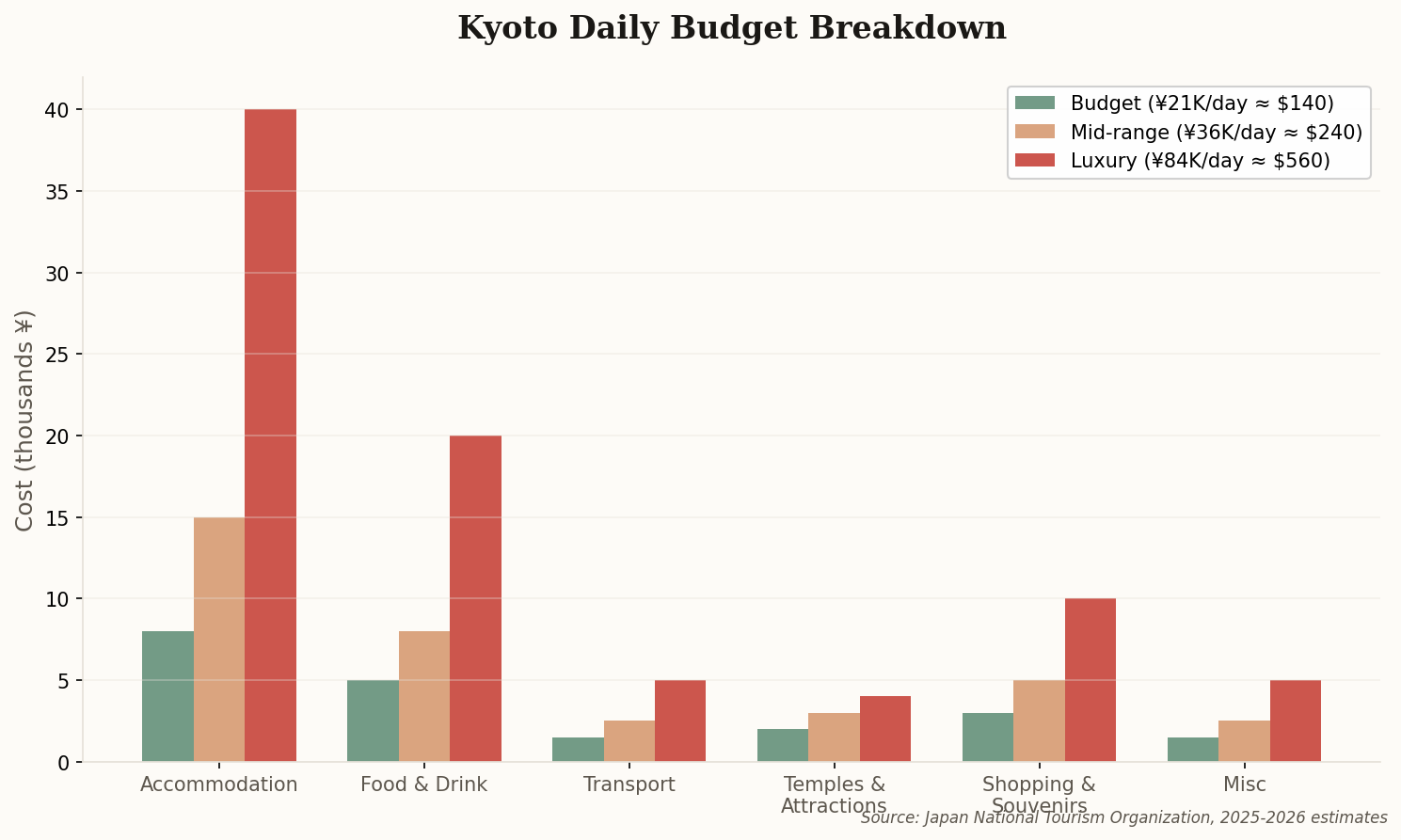
Bar chart comparing daily budget breakdown for budget, mid-range, and luxury Kyoto trips across 6 categories
Daily budget breakdown across three tiers. Accommodation is the biggest variable; food is surprisingly affordable even at the mid-range level.

Where to stay: Kawaramachi/Downtown ($150–$200/night) puts you within walking distance of Gion, Pontocho, and Nishiki Market. Kyoto Station area ($130–$170/night) is the pragmatic choice for day trips. Note the new 2026 tiered accommodation tax—up to ¥1,000 per night for mid-range hotels. Budget it in.

Pro tip: Don't bring large suitcases on city buses. It's now heavily discouraged and you'll get stares that could cut glass. Use "Hands-Free Kyoto" (Yamato Transport) to send bags from the station to your hotel for ~¥1,500. Your back and fellow passengers will thank you.

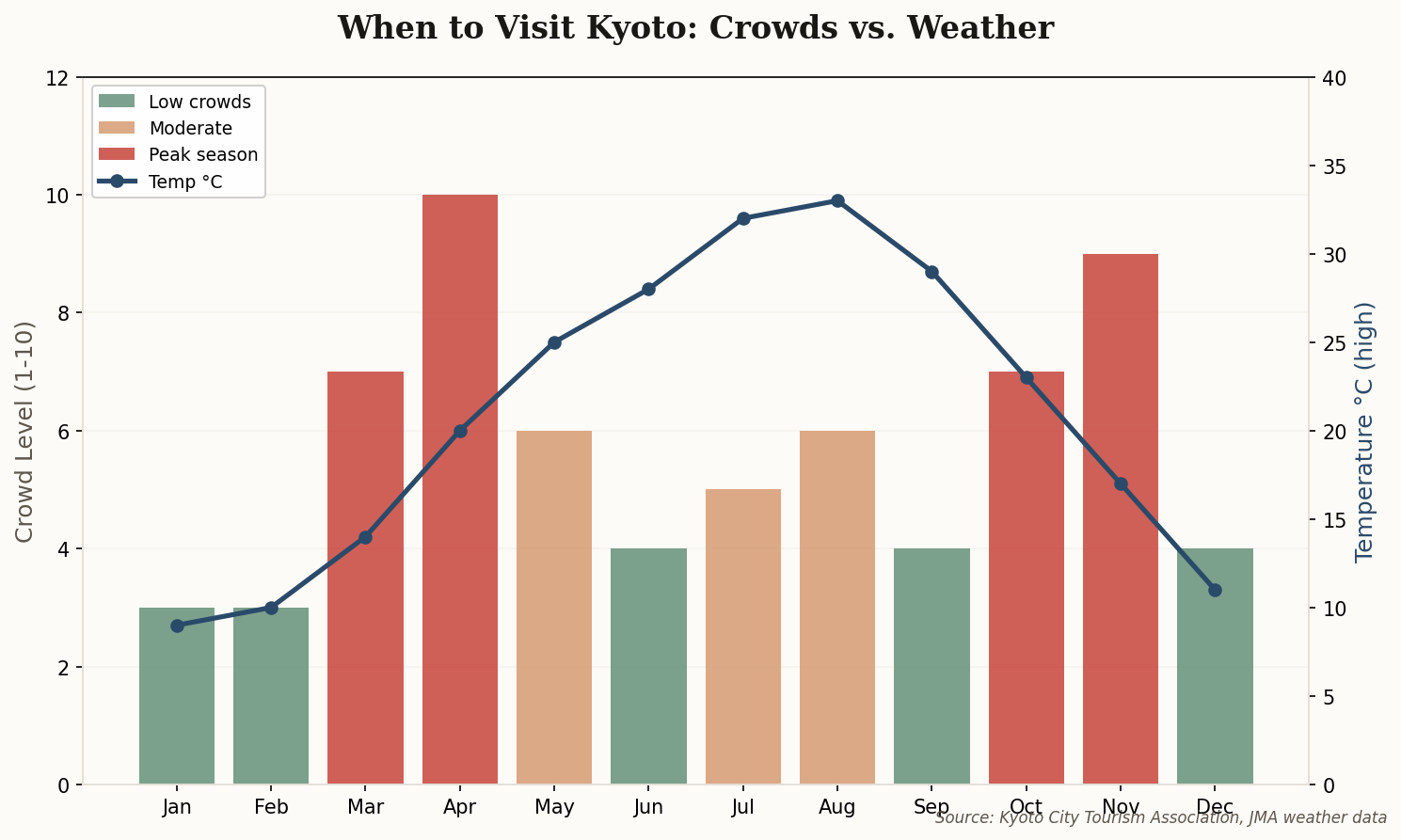
Cherry blossom 2026 is predicted for March 25–April 5. Autumn colors peak mid-to-late November. Both periods are absolute chaos. If you can, visit the weeks immediately before or after—you'll get 80% of the beauty at 30% of the crowds. January and February are Kyoto's best-kept secret: cold, clear, uncrowded, and sometimes dusted with snow.

Entry requirements: Use the Visit Japan Web app for digital customs and immigration. QR codes are required for fast entry. Fill it out before your flight.

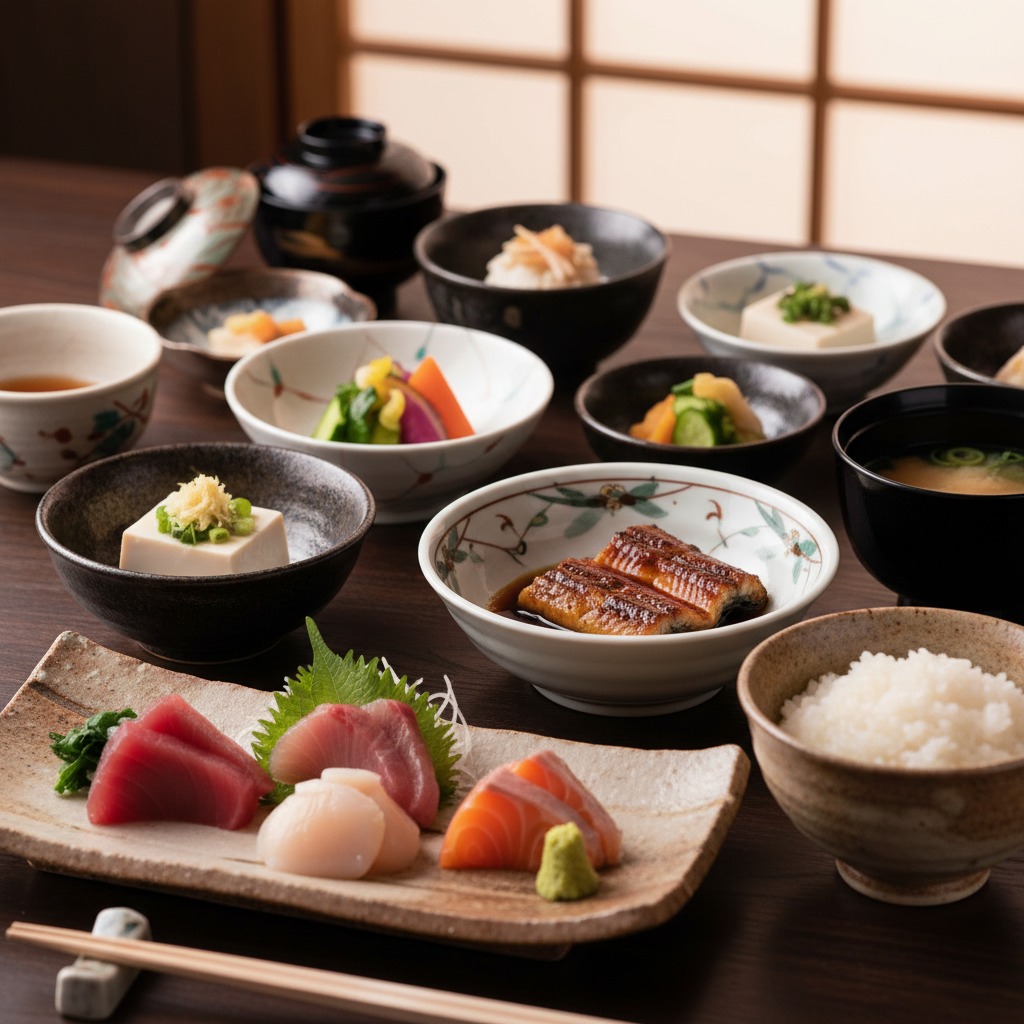
Exquisite kaiseki meal arranged on handmade ceramic plates in a traditional Kyoto restaurant
05

Eat Like You Mean It

Kyoto invented kaiseki—the multi-course dining art form where every dish is a seasonal poem on handmade ceramics—and experiencing it here isn't optional, it's the point. Roan Kikunoi (two Michelin stars) does a lunch course for ¥15,000 that will ruin all other meals for you permanently. If that's too rich, Isoyama on Pontocho alley serves a more accessible kaiseki dinner at ¥12,000 with river-facing window seats.

At the other end of the spectrum: Honke Daiichi Asahi near Kyoto Station opens at 6 AM and serves the best classic shoyu ramen in the city to a line of construction workers, salarymen, and tourists who've done their homework. ¥850 for a bowl that'll reorganize your priorities. For something more refined, Menya Inoichi does a seafood broth that's more technique than tradition.

Kyoto's local specialty that nobody talks about is yudofu—boiled tofu. It sounds boring and it tastes transcendent when done right. Shorai An in Arashiyama serves it with river views, and after a morning of temple-hopping, the simplicity hits different. Also: obanzai (home-style Kyoto cooking) at any place with a handwritten menu and no English translation. Those are the real ones.

For sake, skip the tourist circuit and head to the Fushimi Sake District, where 37 breweries have been making sake with local spring water for centuries. Gekkeikan Sake Museum is the most famous, but Fushimi Sakagura Koji offers an 18-sake tasting flight across local breweries for ¥2,000. The best deal in Kyoto.

Local secret: For a "Pontocho vibe" without the tourist markup, head one block east to Kiyamachi Street. Same canal-side atmosphere, half the prices, and it's where Kyoto residents actually eat and drink. The tiny bars with five seats are the best ones.

Zen rock garden at Ryoan-ji temple with perfectly raked white gravel and carefully placed stones
06

Cultural Intelligence: What Most Guides Won't Tell You

Kyoto is in the middle of an identity crisis, and as a visitor, you're part of the conversation whether you like it or not. The city welcomed 53 million tourists in 2024, and the local government's patience has officially run out. The result is a series of aggressive overtourism measures that will reshape your trip if you're not prepared for them.

The basics that still matter: Temples (Buddhist, names end in "-ji" or "-dera") and shrines (Shinto, names end in "-jinja" or "-gu") are different religious traditions. Bow slightly when entering either. Remove shoes whenever you see a raised wooden floor. Don't touch anything behind a rope. These aren't suggestions—they're the minimum.

The bigger shift is what Kyoto calls "empty-handed tourism"—the city's 2026 push to get tourists off buses and out of the way of local commuters. Coin lockers are everywhere. Yamato delivery is cheap. The message is clear: travel light, move fast, respect the fact that this is someone's home, not a theme park.

Combined bar and line chart showing monthly crowd levels and temperatures in Kyoto throughout the year
When to visit: April (cherry blossoms) and November (fall foliage) are peak madness. January-February and September offer the best crowd-to-beauty ratio.

No-photo zones in Gion are strictly enforced. Fines of ¥10,000 (about $65) are issued regularly, and signs are posted in multiple languages so "I didn't know" won't fly. If a geiko or maiko walks past, appreciate the moment without reaching for your phone. They're on their way to work, not performing for you.

The best advice anyone gave me about Kyoto: If a temple says "Special Opening" (tokubetsu kōkai), drop everything and go. Many of the finest gardens, screen paintings, and architectural treasures in Kyoto are only open to the public 2–4 weeks per year. These windows are when the city reveals what it usually keeps hidden.

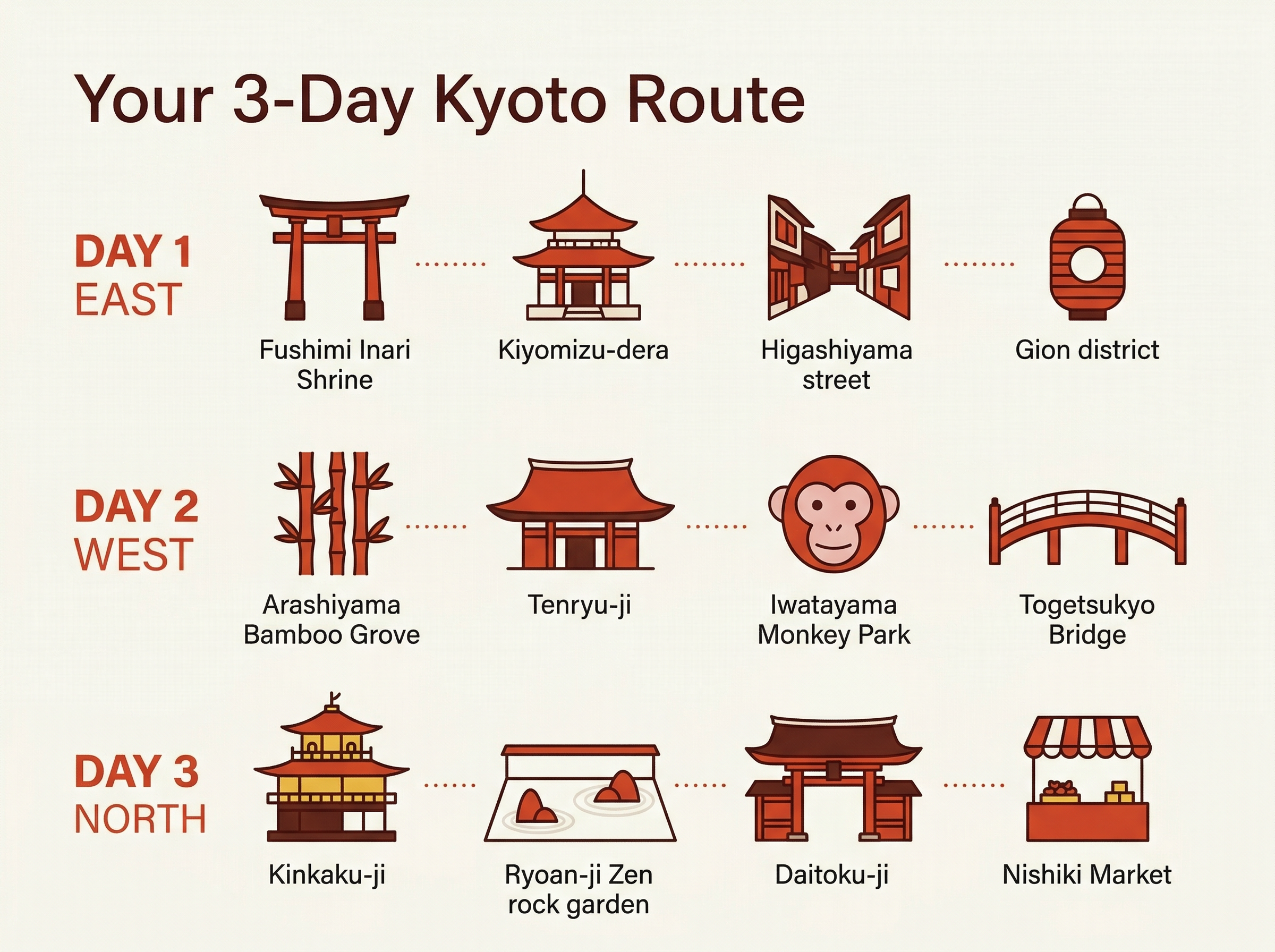
Visual itinerary infographic showing the 3-day Kyoto route: Day 1 East, Day 2 West, Day 3 North with icons for each stop
Your 3-Day Kyoto Route at a glance — Generated with Nano Banana 2.0

The City That Teaches You to Slow Down

Kyoto doesn't give you its best if you're rushing. The gardens are designed for sitting. The meals are designed for savoring. The temples are designed for silence. Three days isn't enough to see everything—but it's enough to understand why people spend lifetimes trying. Come early. Walk slowly. Eat everything. And when you find a quiet garden with nobody else in it, stay a while. That's the Kyoto that matters.

Share X LinkedIn