Travel

Three Days in Barcelona

The cranes are coming down on the Sagrada Família. Here's how to spend 72 hours in the city that's finally finishing what Gaudí started.

Listen
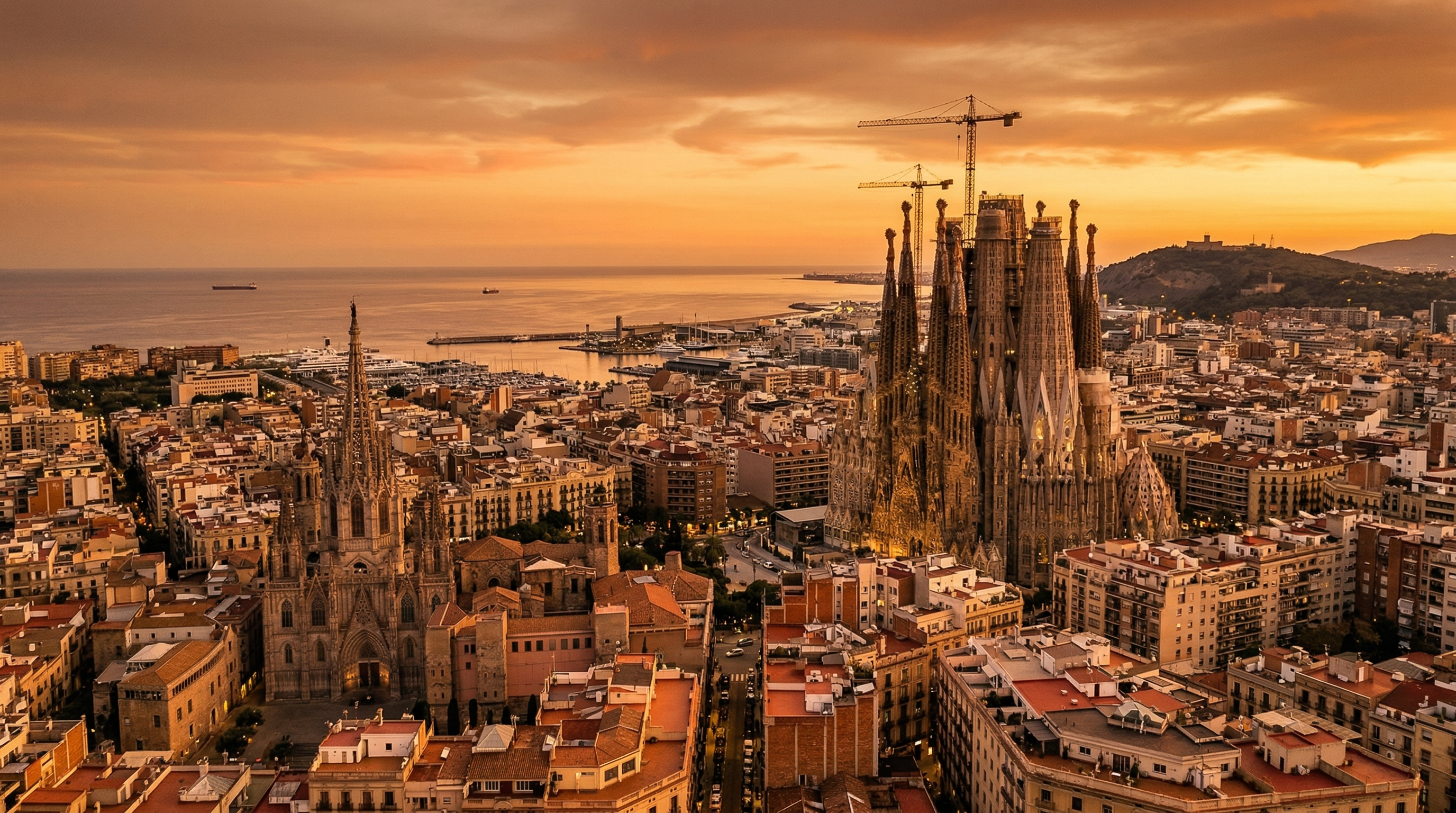
Panoramic view of Barcelona at golden hour with the Sagrada Família rising above terracotta rooftops
Interior of the Sagrada Família with sunlight streaming through stained glass, illuminating forest-like columns
01

144 Years Later, the Cranes Are Finally Coming Down

Here's a sentence that has never been true in any living person's lifetime: the Sagrada Família is almost finished. The central Tower of Jesus Christ—all 172.5 meters of it—had its cross installed on February 20, 2026, making the basilica the tallest church in the world and marking the end of a construction project that has outlived empires, world wars, and approximately 47 architectural trends.

2026 isn't just "a good year" to visit Barcelona. It's the year. The city has been named UNESCO World Capital of Architecture, with over 1,500 events planned around the centenary of Gaudí's death. Every museum, gallery, and hole-in-the-wall cultural space is gearing up for something. If you've been meaning to visit "someday," someday just got a deadline.

The practical consequence: book your Sagrada Família tickets 4–6 weeks ahead. Seriously. The ticketing system is already groaning under the weight of centenary demand, and walk-up entry is essentially dead for the foreseeable future. Same goes for Park Güell—the free days are over, and the timed-entry slots fill fast.

Pro tip: Visit the Recinte Modernista de Sant Pau, a 10-minute walk from the Sagrada Família. It's the "other" Modernisme masterpiece by Lluís Domènech i Montaner—a UNESCO World Heritage site with a fraction of the crowds.
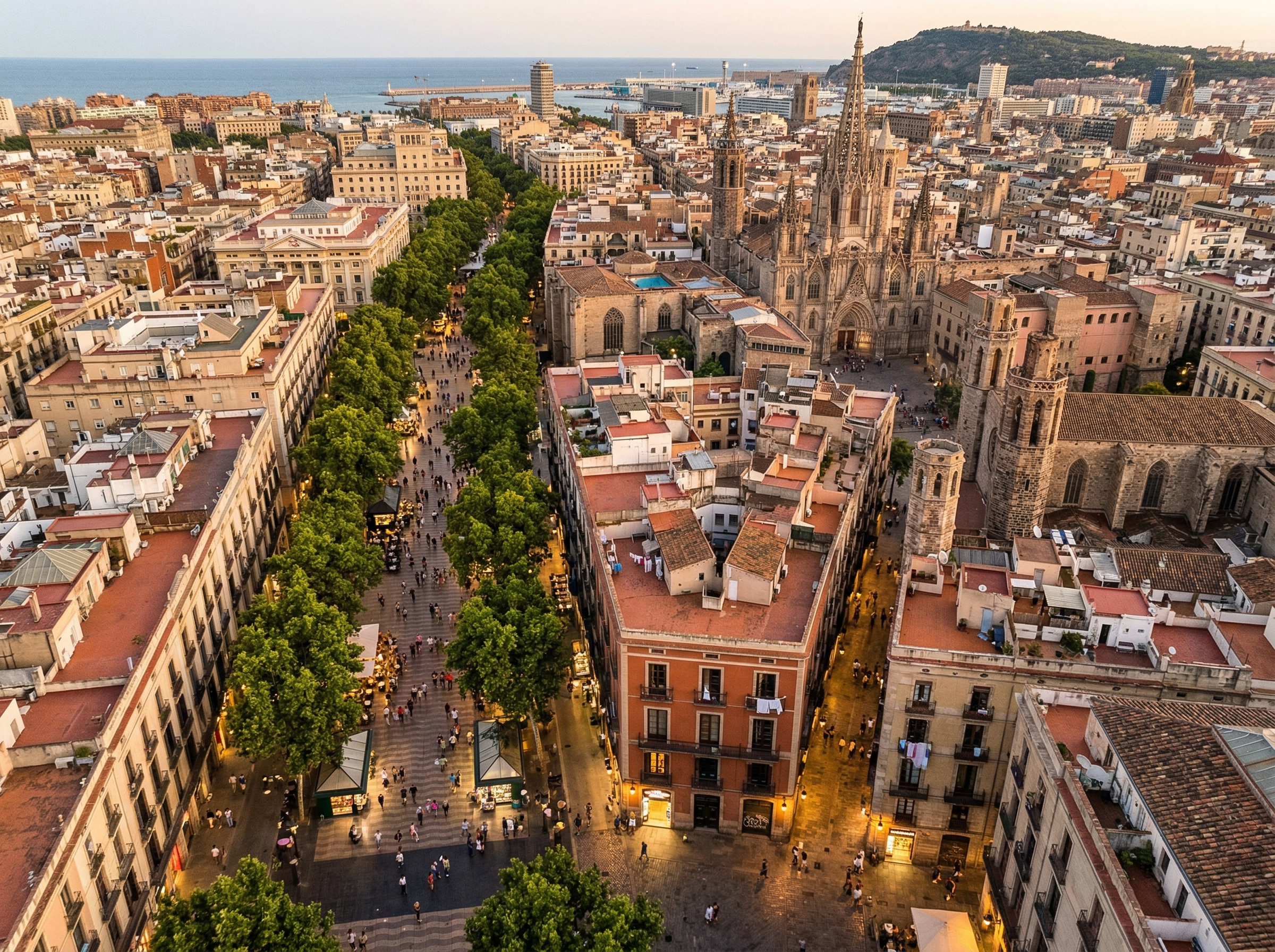
Aerial view of Barcelona's Gothic Quarter streets with warm evening light and iron balconies
02

Barcelona Is Done Being Cheap (And That's Probably a Good Thing)

Effective April 1, 2026, Barcelona's tourist tax for 5-star hotels hits €15 per person per night. That's on top of room rates that have surged 30% since 2019. If you're thinking "I'll just grab an Airbnb," think again: the city is phasing out all short-term rental licenses by 2028, and a significant chunk are already offline.

This isn't punitive—it's a deliberate pivot. Barcelona's mayor has been blunt: the city wants "better tourism, not more tourism." Guided groups are now capped at 20 people, and megaphones are banned. The vibe shift is real, and honestly? The city is better for it. Fewer rolling suitcases clogging the Gothic Quarter, more breathing room at the markets.

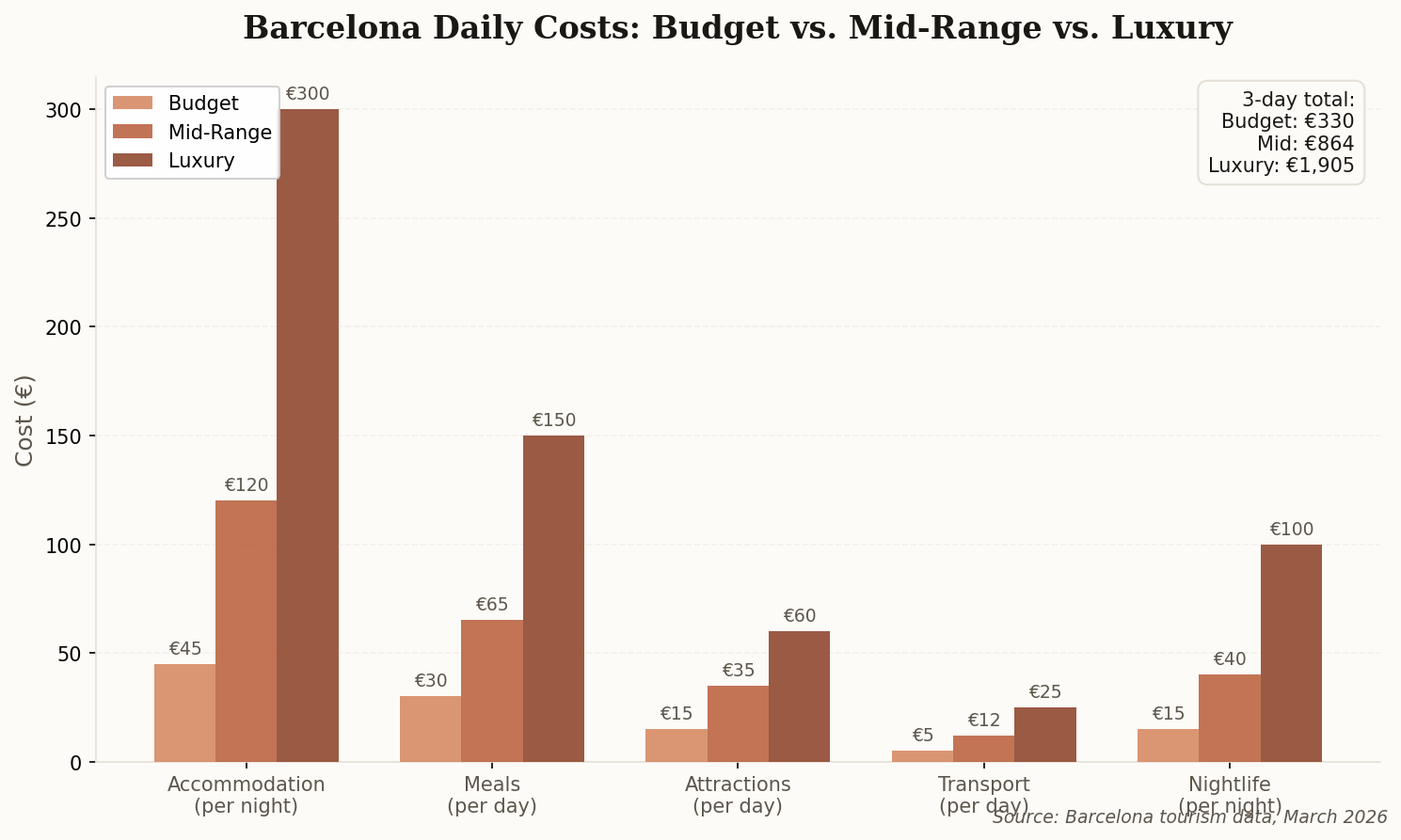
Bar chart comparing Barcelona daily costs across budget, mid-range, and luxury tiers for accommodation, meals, attractions, transport, and nightlife
Daily cost breakdown for a 3-day Barcelona trip. Budget travelers can do it for ~€330 total; mid-range runs about €864. The gap widens dramatically at the luxury tier.

The smart play for 2026: book a boutique hotel in El Born or Gràcia early, factor in the tax, and treat the higher cost as an investment in a less-chaotic experience. The crowds haven't disappeared—but the city is getting smarter about managing them.

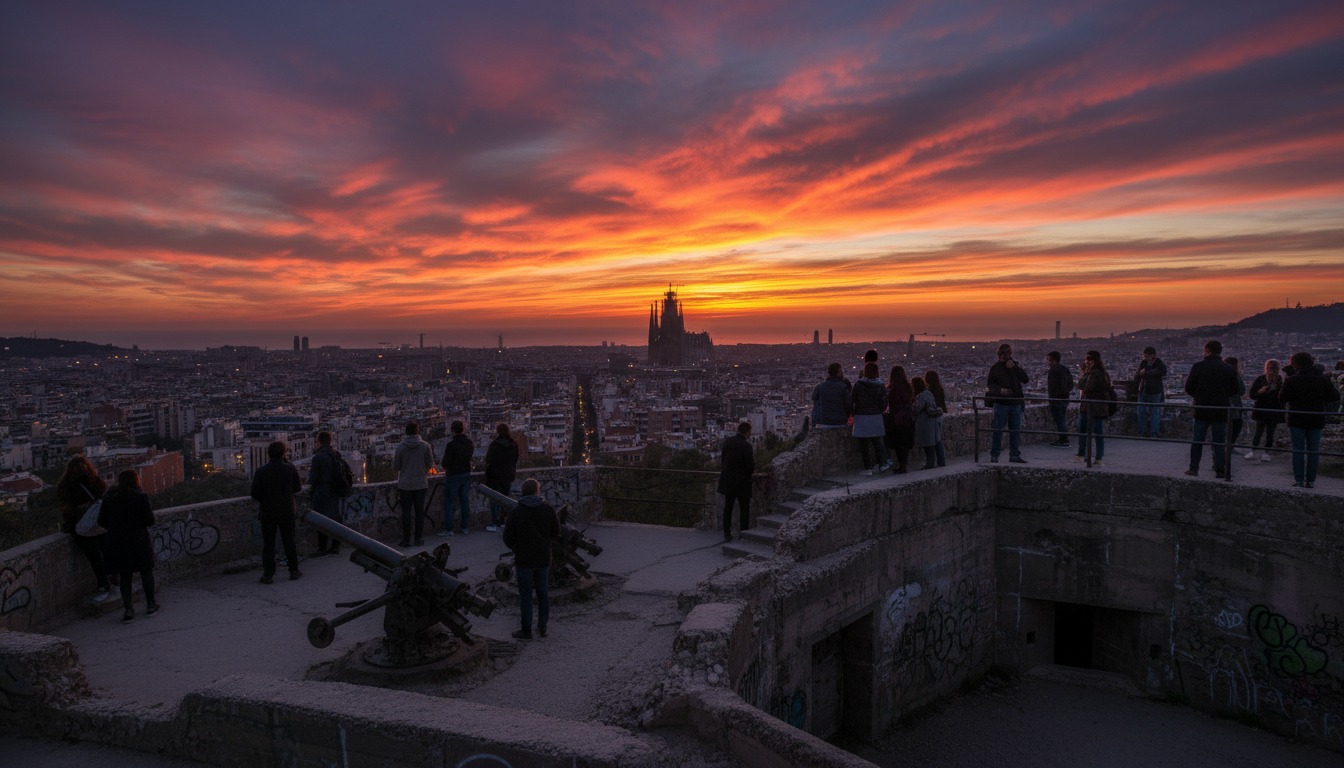
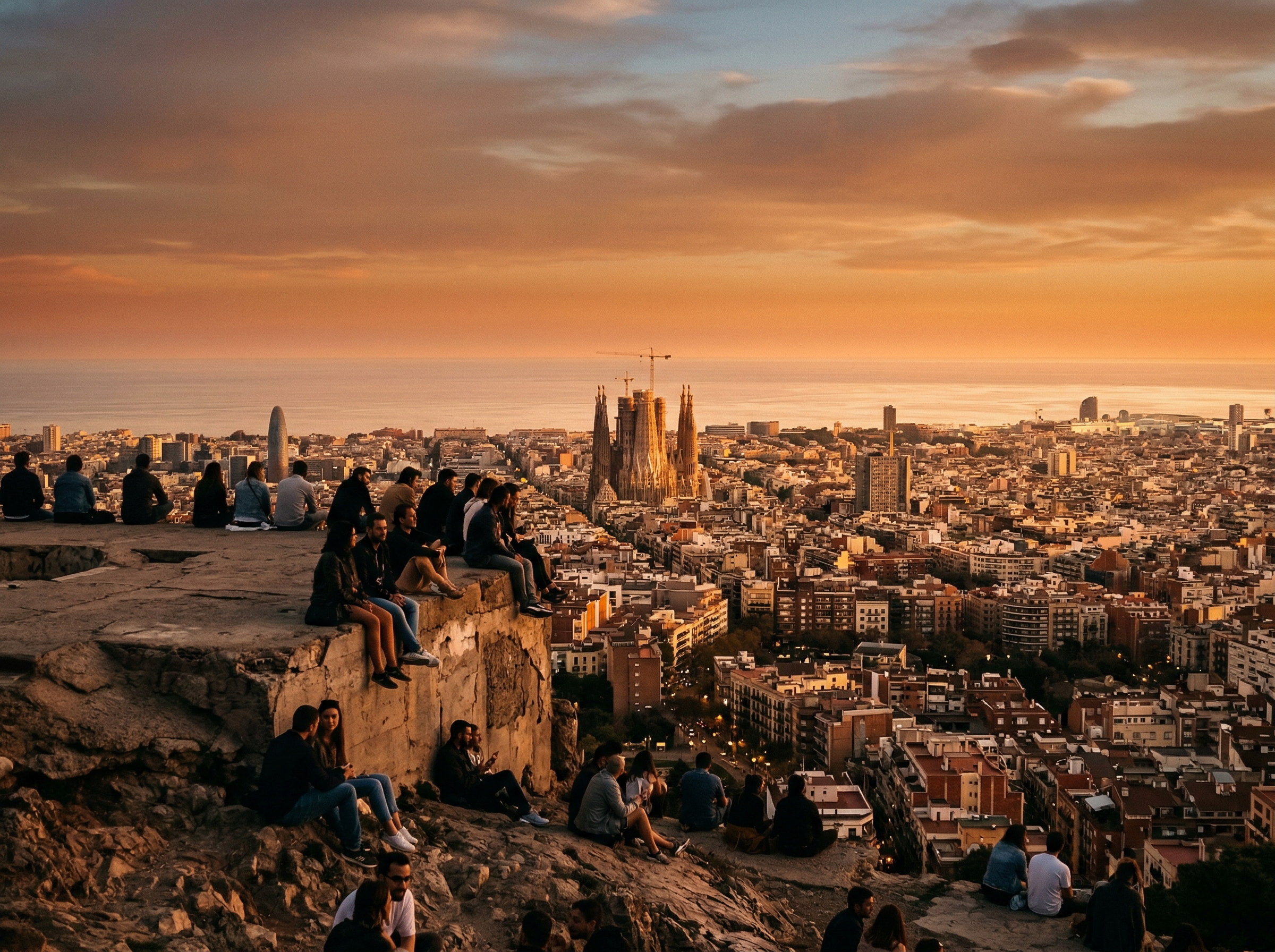
Panoramic sunset view from Bunkers del Carmel with silhouettes of people on old concrete fortifications overlooking Barcelona
03

The Best View in Barcelona Costs Nothing

Every travel guide in existence will tell you about the Bunkers del Carmel. I'm telling you anyway, because it's one of those rare cases where the hype is exactly right. Former anti-aircraft fortifications from the Civil War, perched on the Turó de la Rovira hill, offering the only 360-degree unobstructed view of Barcelona, the Mediterranean, and Montjuïc. Free. Always.

The ritual is simple: arrive around 5 PM, bring a bottle of wine and some cheese from a neighborhood colmado, find a spot on the warm concrete, and watch the city turn gold beneath you. The Sagrada Família catches the light first, then Montjuïc, then the harbor. By the time the sun hits the water, you'll understand why people come back to Barcelona for a lifetime.

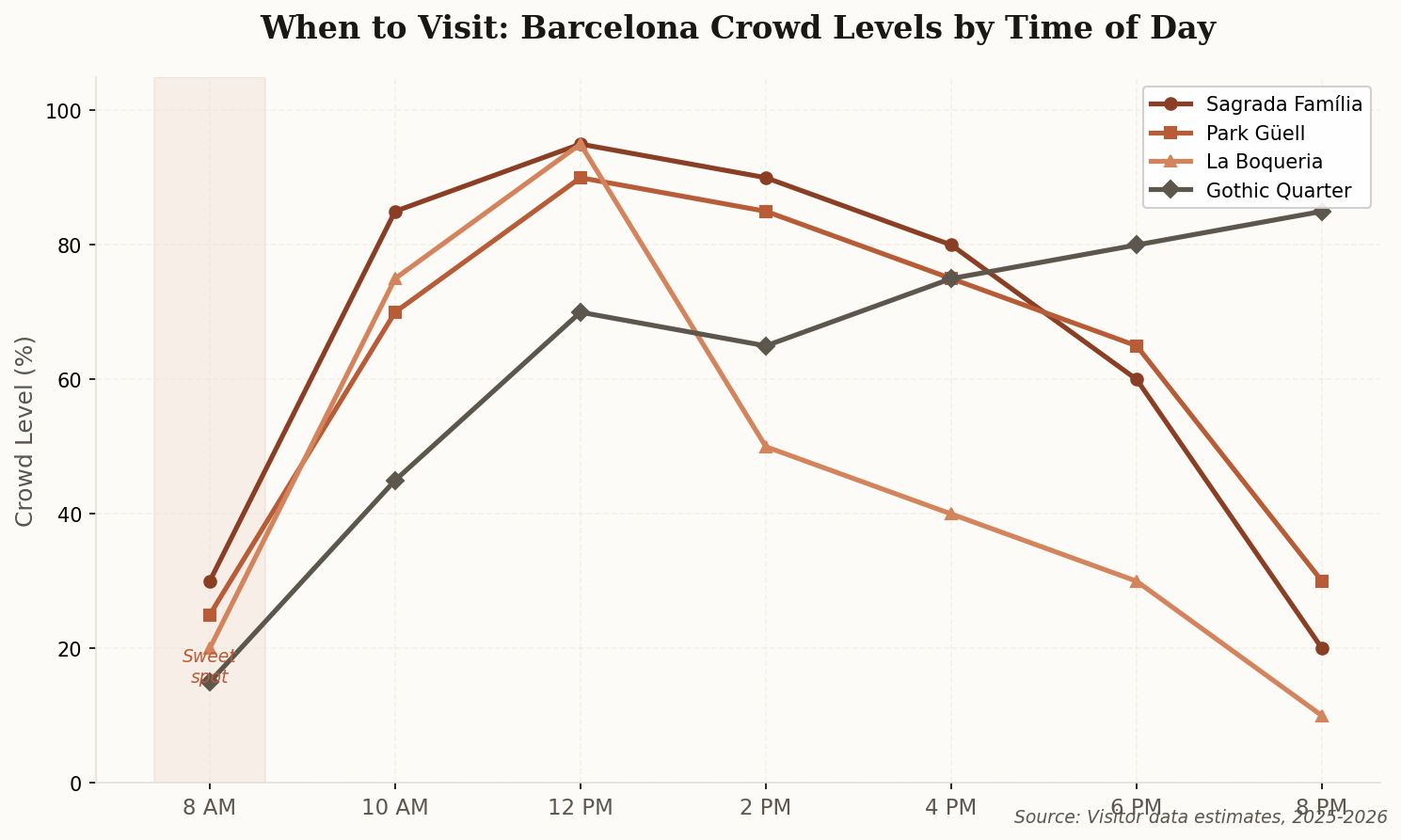
Line chart showing tourist crowd levels by time of day at four major Barcelona attractions
Crowd density at major attractions throughout the day. Early morning (8 AM) is consistently the sweet spot—especially at the Sagrada Família and La Boqueria, where midday crowds can make navigation impossible.

One note: 2026 regulations have restricted late-night access to protect the surrounding neighborhood. The sweet spot is now 5–8 PM. Plan your Day 3 around this—it's the kind of experience that should be the last thing you do in Barcelona, not a rushed checkbox between museums.

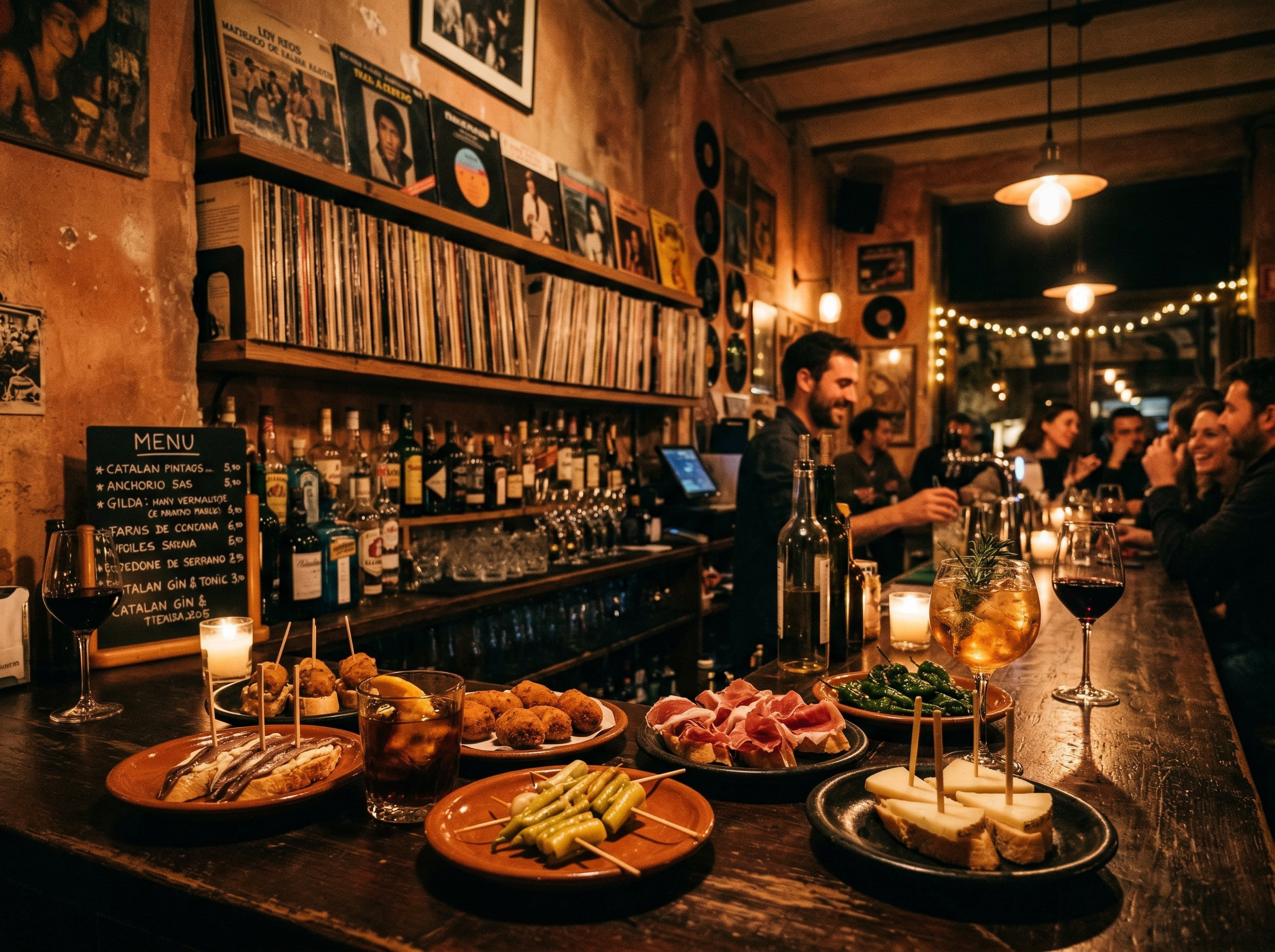
Moody interior of a Barcelona tapas bar with vinyl records, amber lighting, and small plates on a dark wood counter
04

Tapas, Hi-Fi, and the Death of the Tourist Trap

The most interesting thing happening in Barcelona's food scene isn't a new Michelin star—it's the "vinyl bar" movement. Picture this: Michelin-quality small plates, an audiophile sound system spinning rare records, and a bartender who takes both the cocktails and the turntable seriously. That's Barra Oso in Gràcia and Bar Canyí in Sant Antoni.

The concept is deceptively simple: high-concept food in a low-pretension setting where the acoustic environment matters as much as the plate. It's the antithesis of the Las Ramblas tourist restaurant with laminated menus in six languages. These places don't need a sign on the door—they barely have a presence online. You find them through word of mouth, which is exactly the point.

What this signals is bigger than food trends. Barcelona's creative energy is decentralizing. The neighborhoods that matter in 2026 aren't the ones on the postcard—they're Sant Antoni, Gràcia, and Poble-sec. If you spend all three days in the Gothic Quarter, you'll miss the actual city.

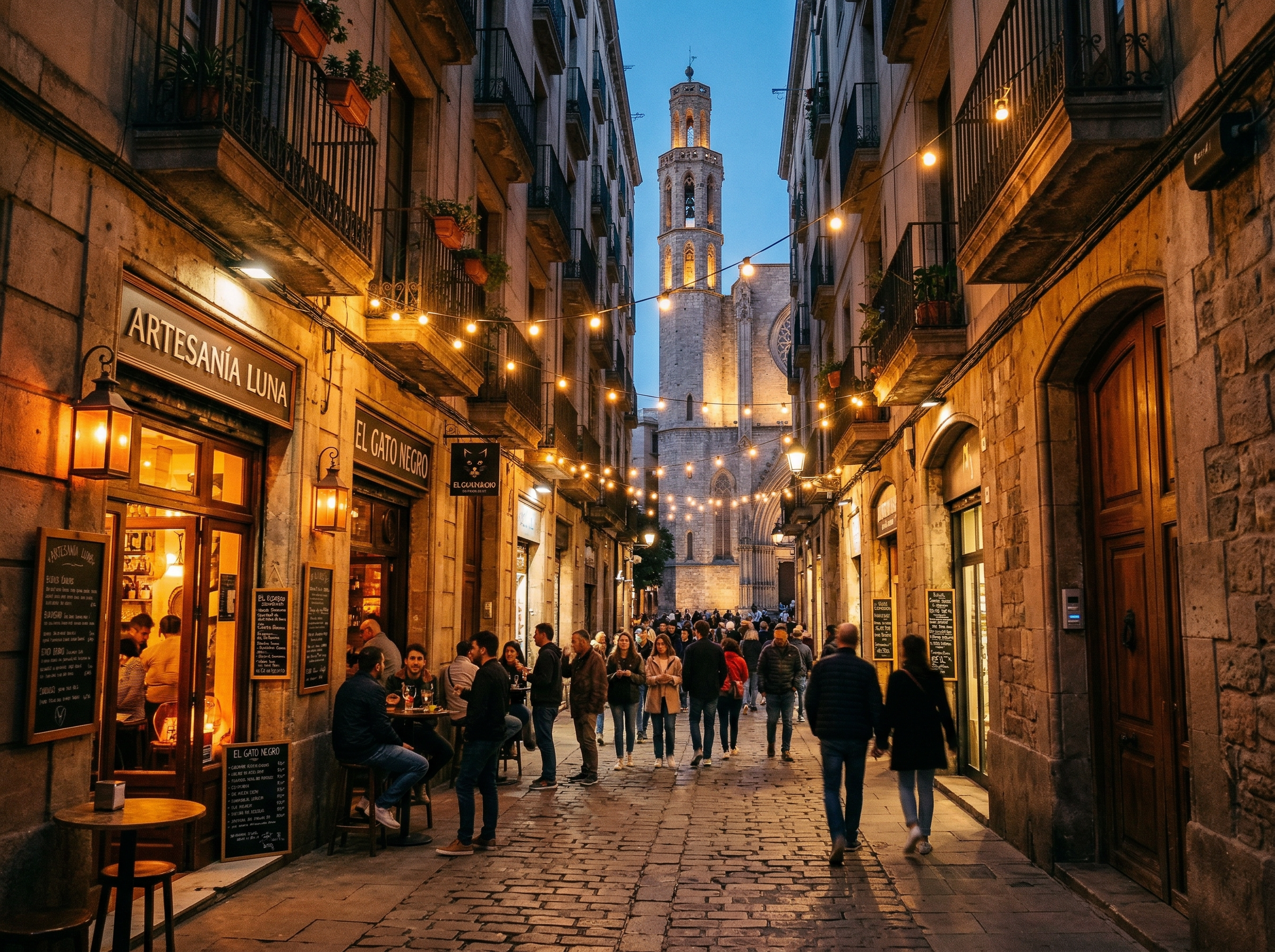
Charming narrow medieval street in El Born Barcelona at dusk with warm string lights and boutique shops
05

El Born: Where Medieval Stone Meets Neon

If you only have three days, base yourself in El Born. Full stop. It's the highest-density concentration of things-worth-doing in the city: the Picasso Museum, Moco Museum for street art and digital installations, the Gothic masterpiece of Santa Maria del Mar, and some of the world's best cocktail bars (including Paradiso, named #1 bar on Earth in 2022 and still ranked #4 globally).

The neighborhood is walkable in every direction—Gothic Quarter to the west, Barceloneta beach to the south, Ciutadella Park to the east. You can stumble from a 14th-century basilica into a cutting-edge speakeasy in under five minutes. That's the magic of Barcelona's density: nothing feels far away.

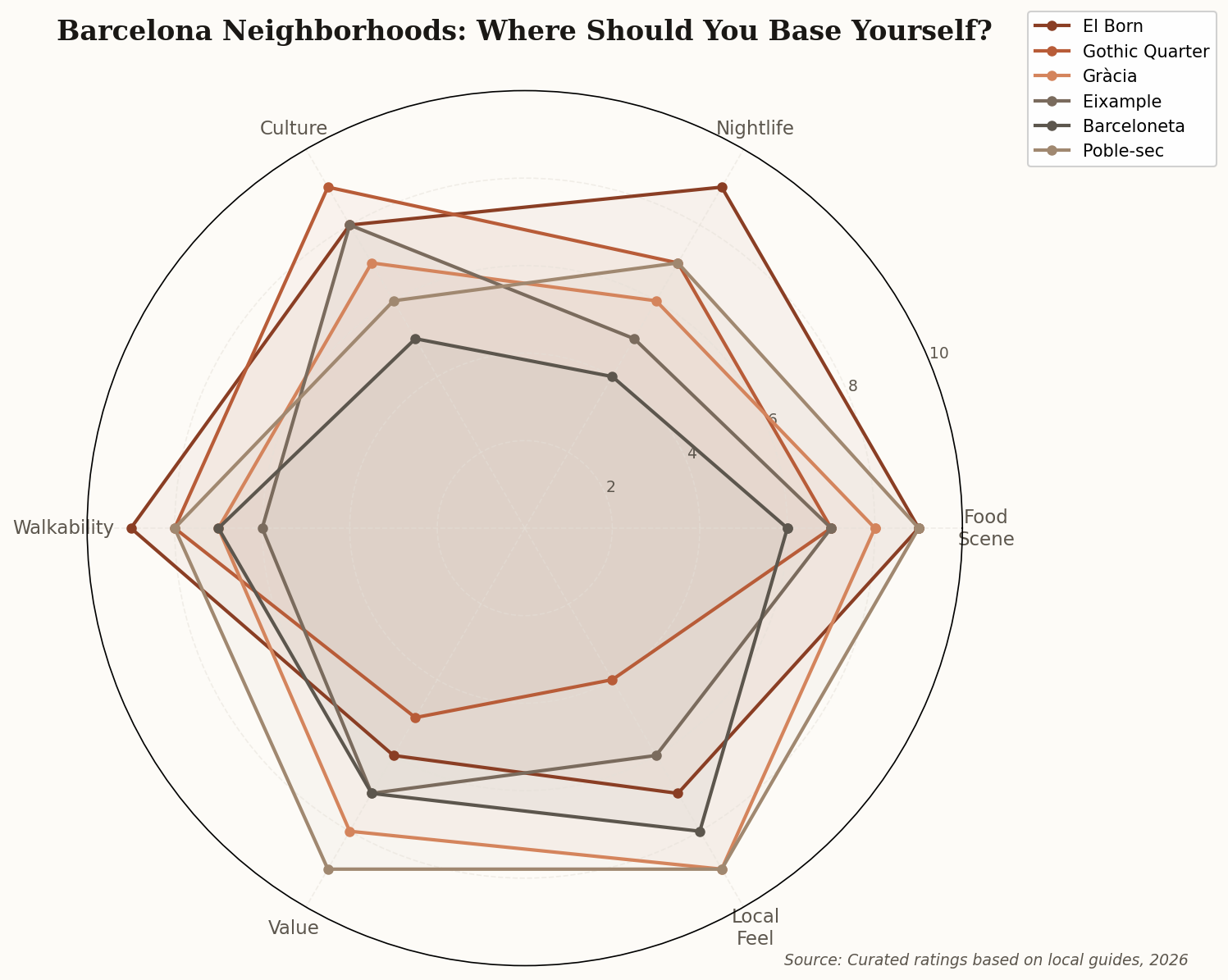
Radar chart comparing six Barcelona neighborhoods across food scene, nightlife, culture, walkability, value, and local feel
Neighborhood comparison across six key dimensions. El Born wins on food and nightlife density; Poble-sec dominates on value and local authenticity. Gràcia offers the strongest "living like a local" experience.

The cocktail bar scene deserves its own mention. Dr. Stravinsky does molecular-level craft cocktails in a space the size of a phone booth. Paradiso hides behind a pastrami fridge door (yes, really). And for something quieter, the wine bars along Passeig del Born serve natural Catalan wines that most visitors never discover because they're too busy at La Boqueria.

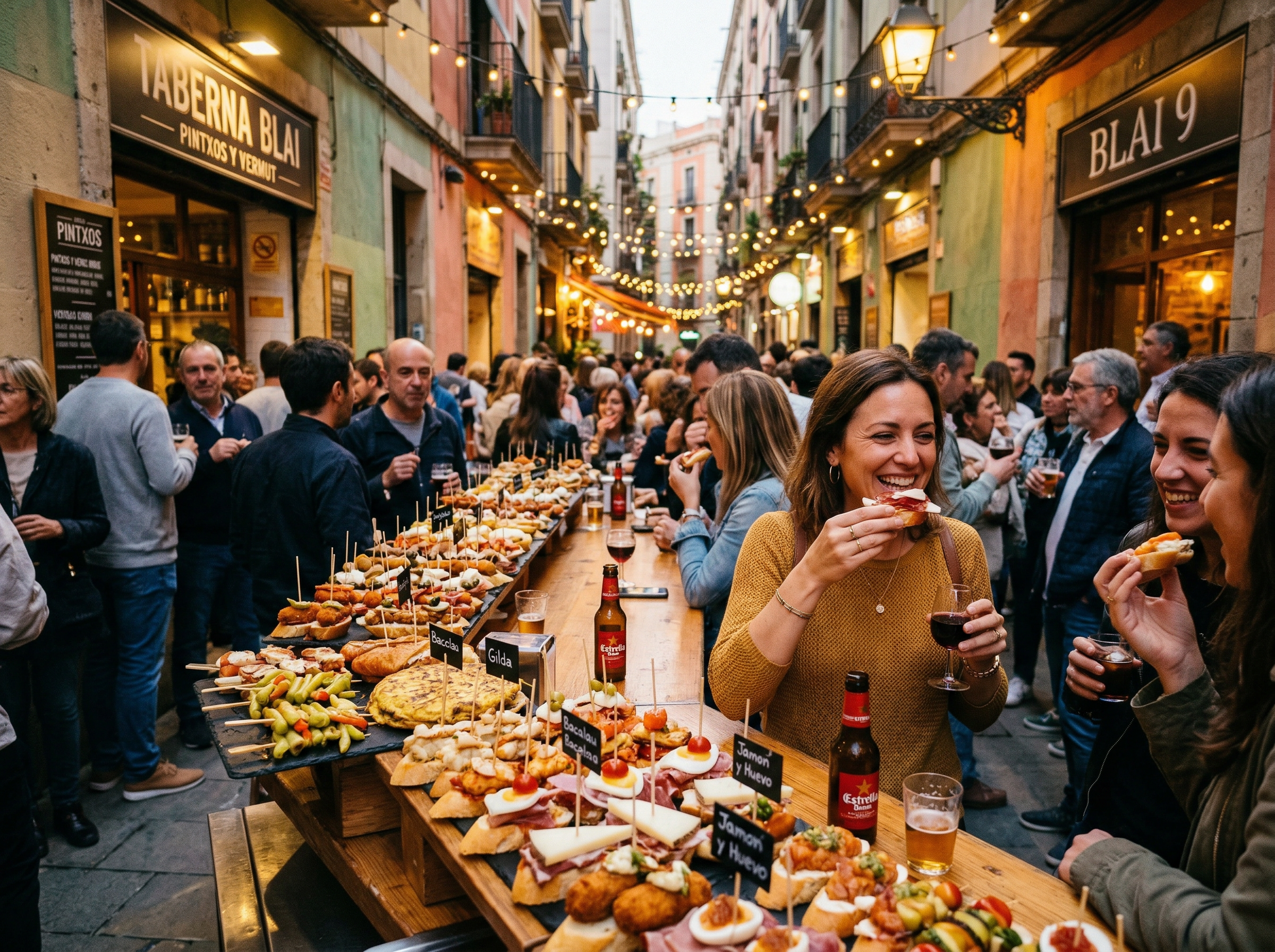
Vibrant street scene on Carrer de Blai with colorful pintxos on bar counters and people eating under string lights
06

The €2 Pintxo Crawl That Puts Michelin to Shame

Here's the budget strategy every Barcelona first-timer needs: Carrer de Blai in Poble-sec. It's a pedestrian street lined with pintxo bars, each displaying dozens of small bites on toothpick skewers. You grab what looks good, eat it standing at the bar, and pay €1.50–€2.50 per piece. No reservation, no pretension, no waiting.

The strategy: start at one end around 8 PM (Spaniards eat late; go with it), work your way down, and sample 2–3 pieces at each bar before moving on. La Tasqueta de Blai is the anchor—the original pintxo spot on the street—but Blai 9 and Blai Tonight each have their devotees. You'll eat spectacularly for under €20 per person.

What makes this special isn't just the price. It's the cultural cross-pollination: Basque-style pintxos served in Catalonia, prepared by cooks from all over Spain, eaten by a mix of Barcelona locals, art students from the nearby Fundación, and the occasional tourist who did their homework. It's the most democratic dining experience in a city that knows how to eat.

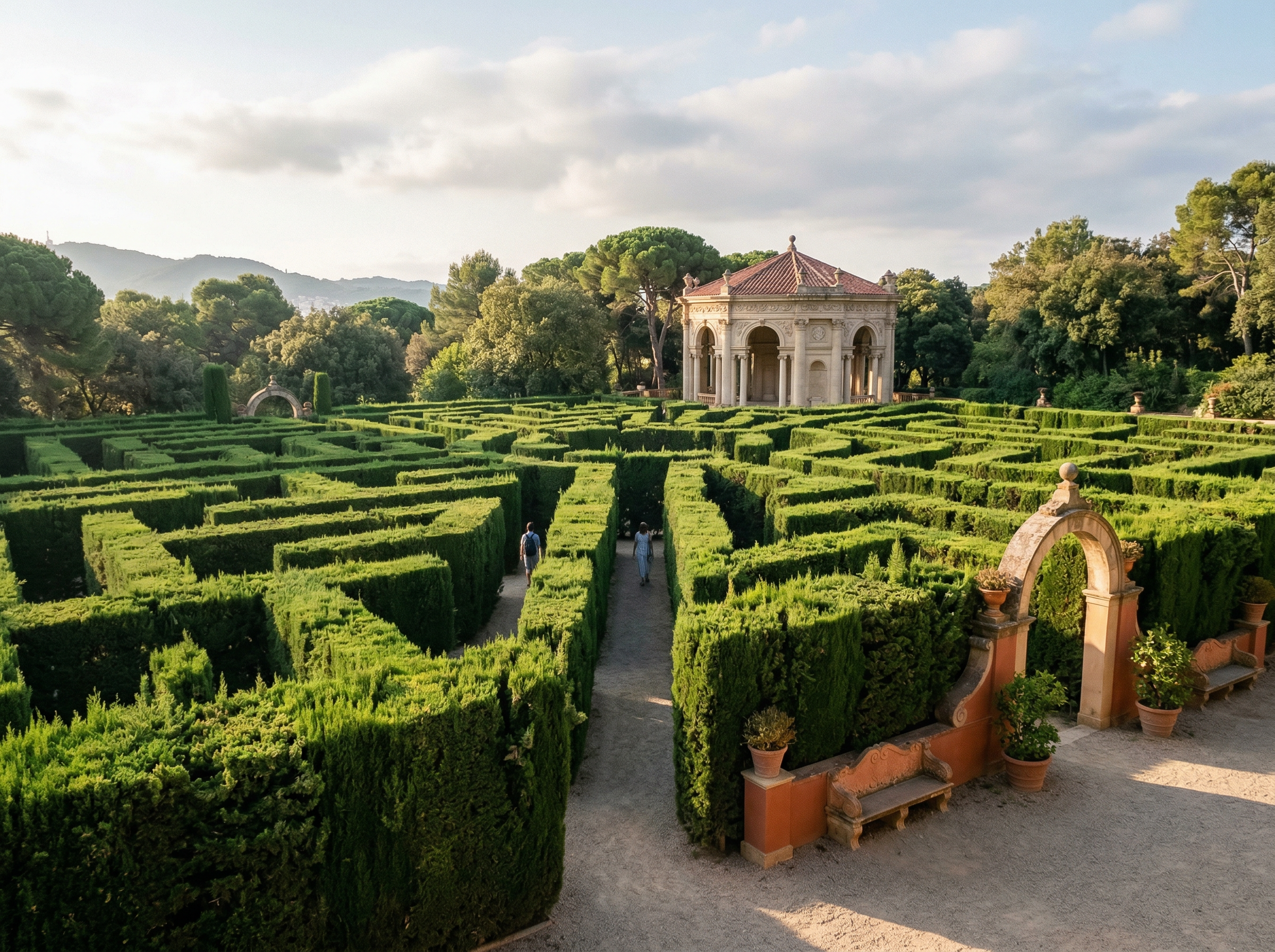
Mystical hedge labyrinth at Parc del Laberint d'Horta with tall cypress walls and morning light
07

A Labyrinth, a Nameless Tavern, and the Real Barcelona

Two places that don't appear on most itineraries, and should.

La Cova Fumada is a gritty, unmarked tavern in Barceloneta that has served the same menu for decades. No sign. No website. Opens only for breakfast and lunch. It's credited with inventing the bomba—a spicy meat-and-potato croquette that's become a Barcelona icon—and the version served here, at the source, is still the best. Pair it with a glass of ice-cold vermouth and you'll understand why the maritime neighborhood hasn't surrendered its soul to the beach bars.

Parc del Laberint d'Horta is Barcelona's oldest garden—an 18th-century cypress hedge labyrinth with neoclassical pavilions, hidden in the Horta district far from the tourist epicenter. Entry is often free on Sundays, and even on paid days, you'll likely have the winding paths to yourself. While everyone fights for selfies at Park Güell, this is where the real quiet magic lives.

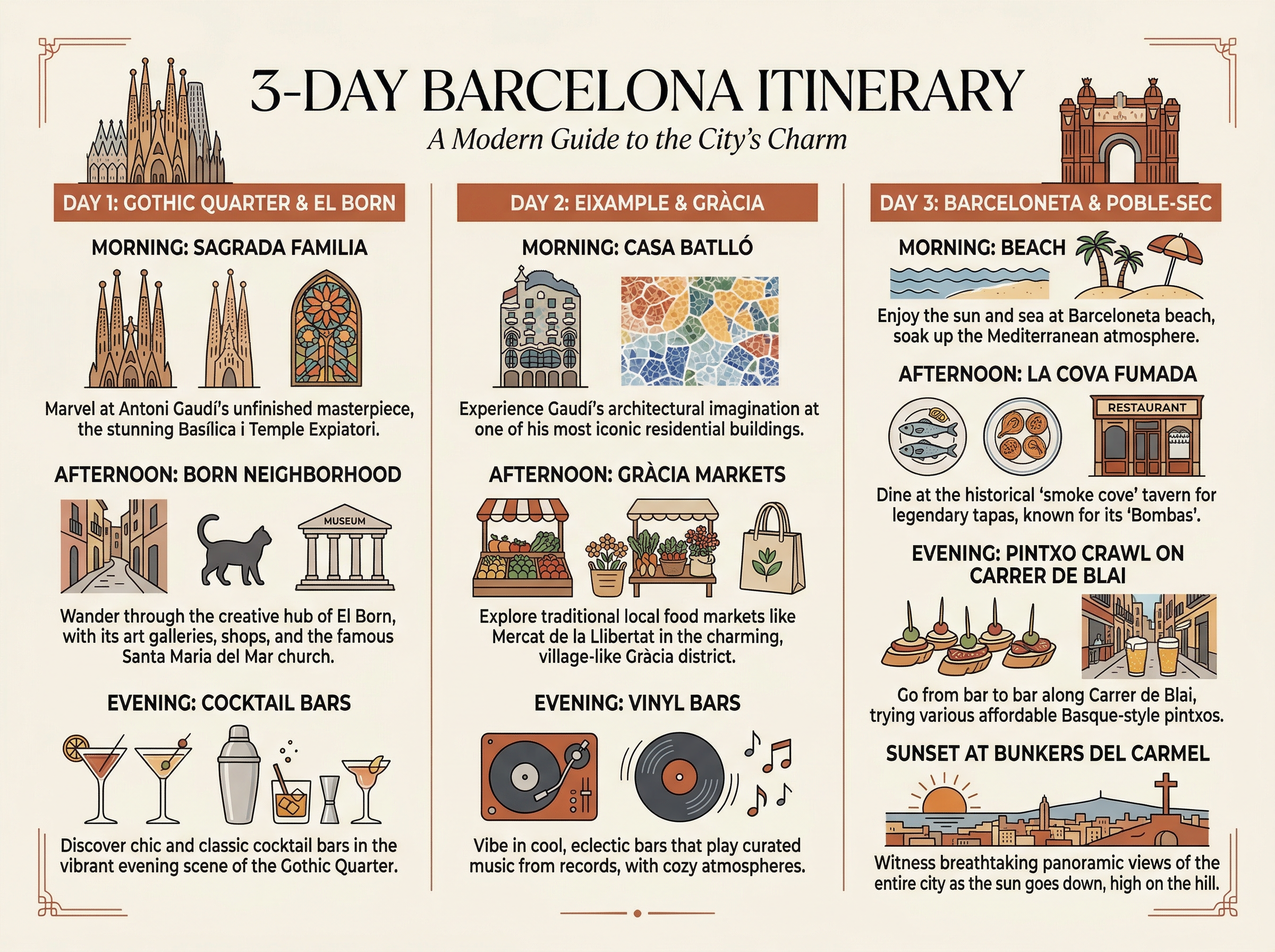
Visual 3-day Barcelona itinerary infographic showing Day 1 (Gothic Quarter and El Born), Day 2 (Eixample and Gràcia), and Day 3 (Barceloneta and Poble-sec)
Infographic: Your 3-Day Barcelona Blueprint — Generated with Nano Banana 2.0

Both places share something essential: they reward the traveler who's willing to go slightly off-script. Barcelona's greatest trick is convincing millions of visitors that the city is its famous landmarks. It's not. The city is the unlabeled tavern, the forgotten garden, the sunset from an old bunker with a cheap bottle of wine. The landmarks are just the door you walk through to find it.

Bon Viatge

Barcelona in 2026 is a city in transition—more expensive, more regulated, but also more intentional about the experience it offers visitors. The cranes are coming down, the vinyl bars are turning up, and the pintxos are still €2. Three days isn't enough. But it's enough to know you'll come back.

Share X LinkedIn