Tech History

The Software Company Apple Couldn't Let Go

How Claris Corporation was born, killed, reborn, killed again, and reborn once more — and what its 39-year odyssey reveals about Apple's complicated relationship with software.

Listen
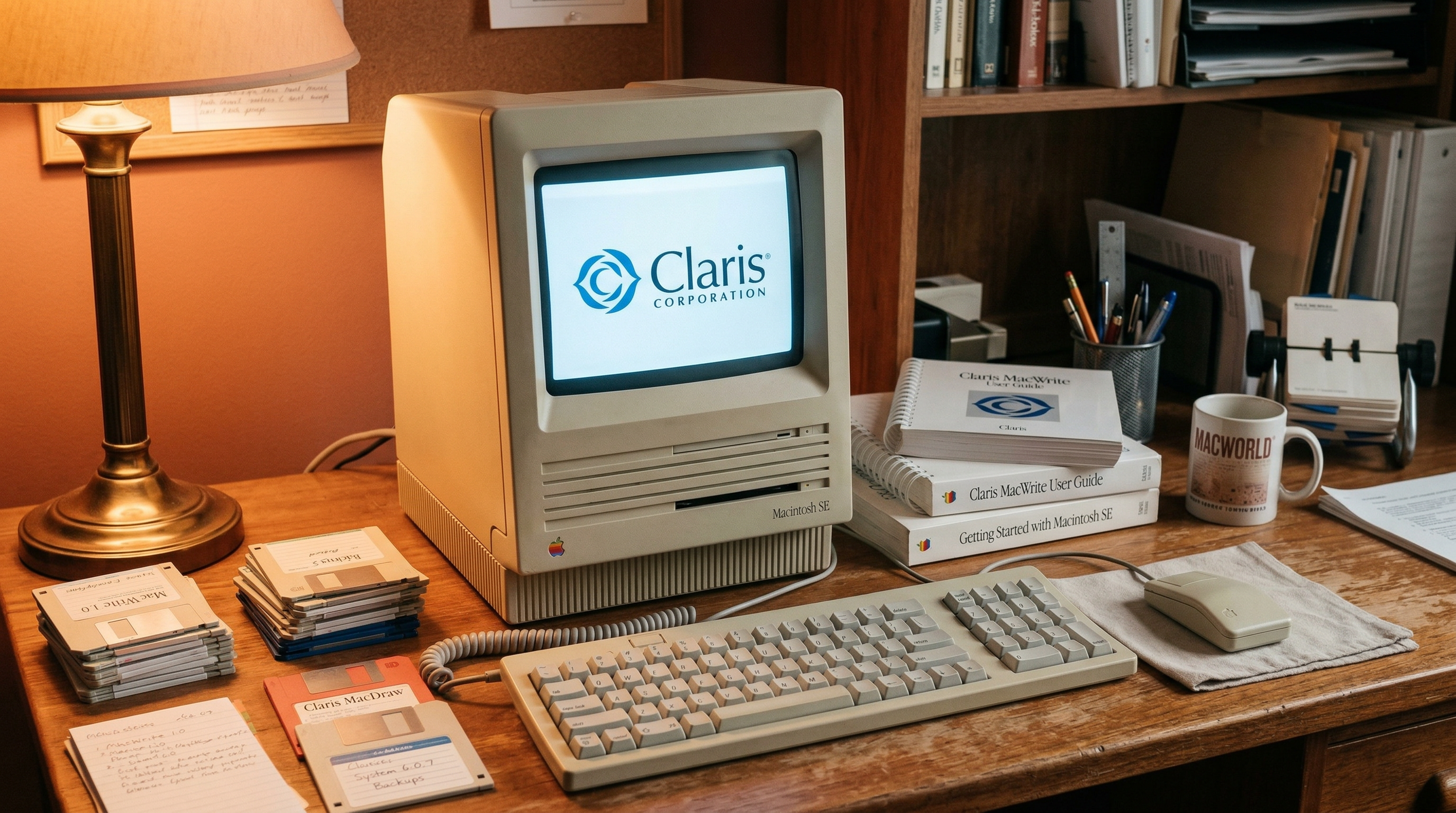
A vintage Macintosh computer glowing warmly on a wooden desk, surrounded by floppy disks and Claris software manuals
01

The Boardroom Bargain That Built a Legend
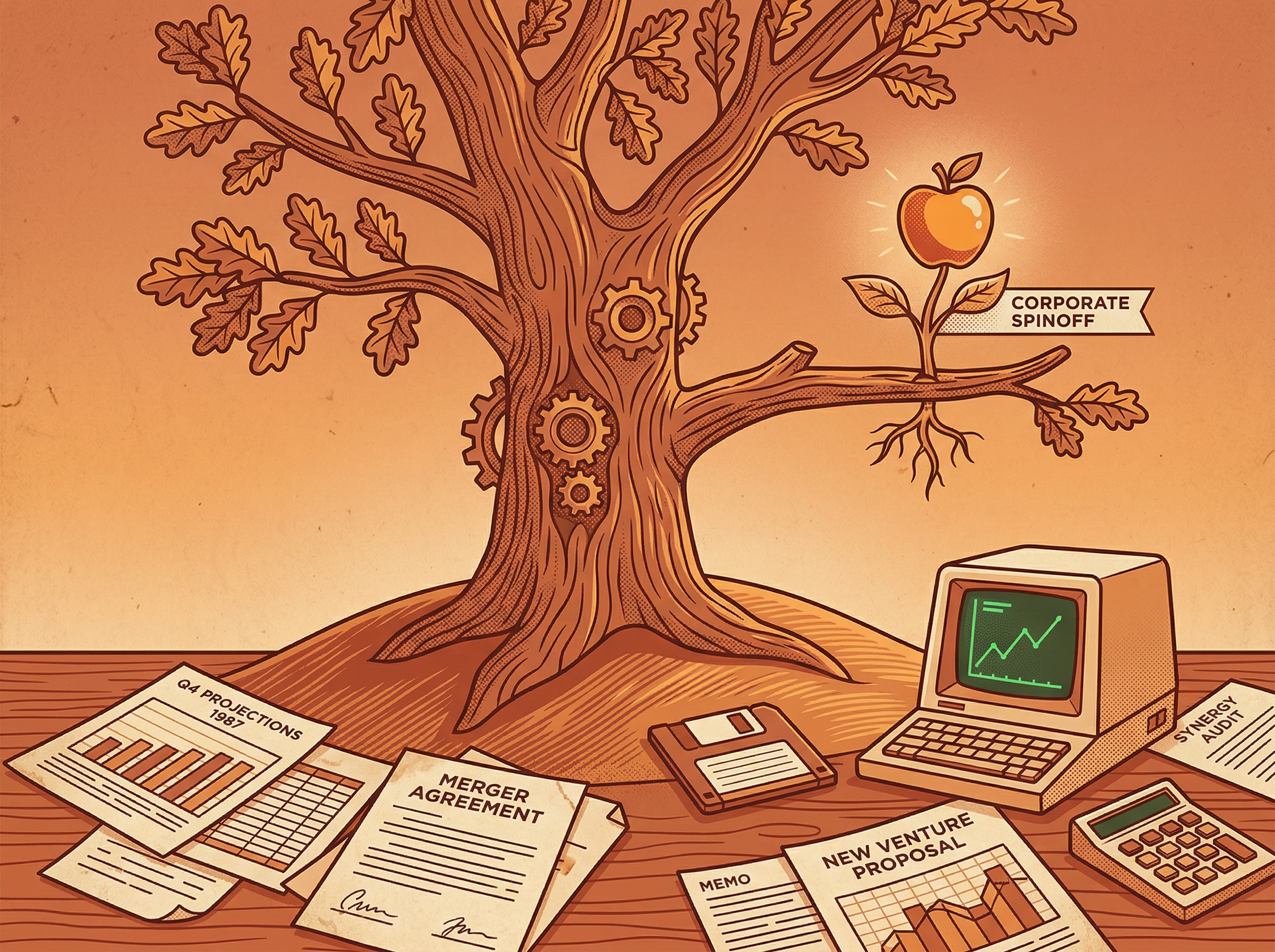
A seedling growing from a larger tree, bearing apple-shaped fruit, symbolizing the Claris spinoff

Here's the problem nobody talks about when you dominate both hardware and software: your partners hate you. By the mid-1980s, Apple was shipping MacWrite and MacPaint bundled with every Macintosh — and companies like Microsoft and Lotus were furious. Why would anyone buy third-party software when Apple was giving away its own for free?

John Sculley had a solution that was either brilliant or doomed from inception: spin the application division off into its own company. In April 1987, Claris Corporation was born, led by Bill Campbell — Apple's VP of Marketing, a former Columbia University football coach, and the man who would eventually become the most important mentor in Silicon Valley history.

The product lineup was immediately recognizable: MacWrite, MacPaint, MacDraw, MacProject, and the venerable AppleWorks for the Apple II. As Campbell put it: "We wanted to create a company that was a world-class software company, not just a department of a hardware company." Clean packaging, consistent icons, professional presentation — the "Claris look" set the gold standard for Macintosh software design. The catch? Apple still owned the whole thing.
02

When Software Came in Boxes and Mattered

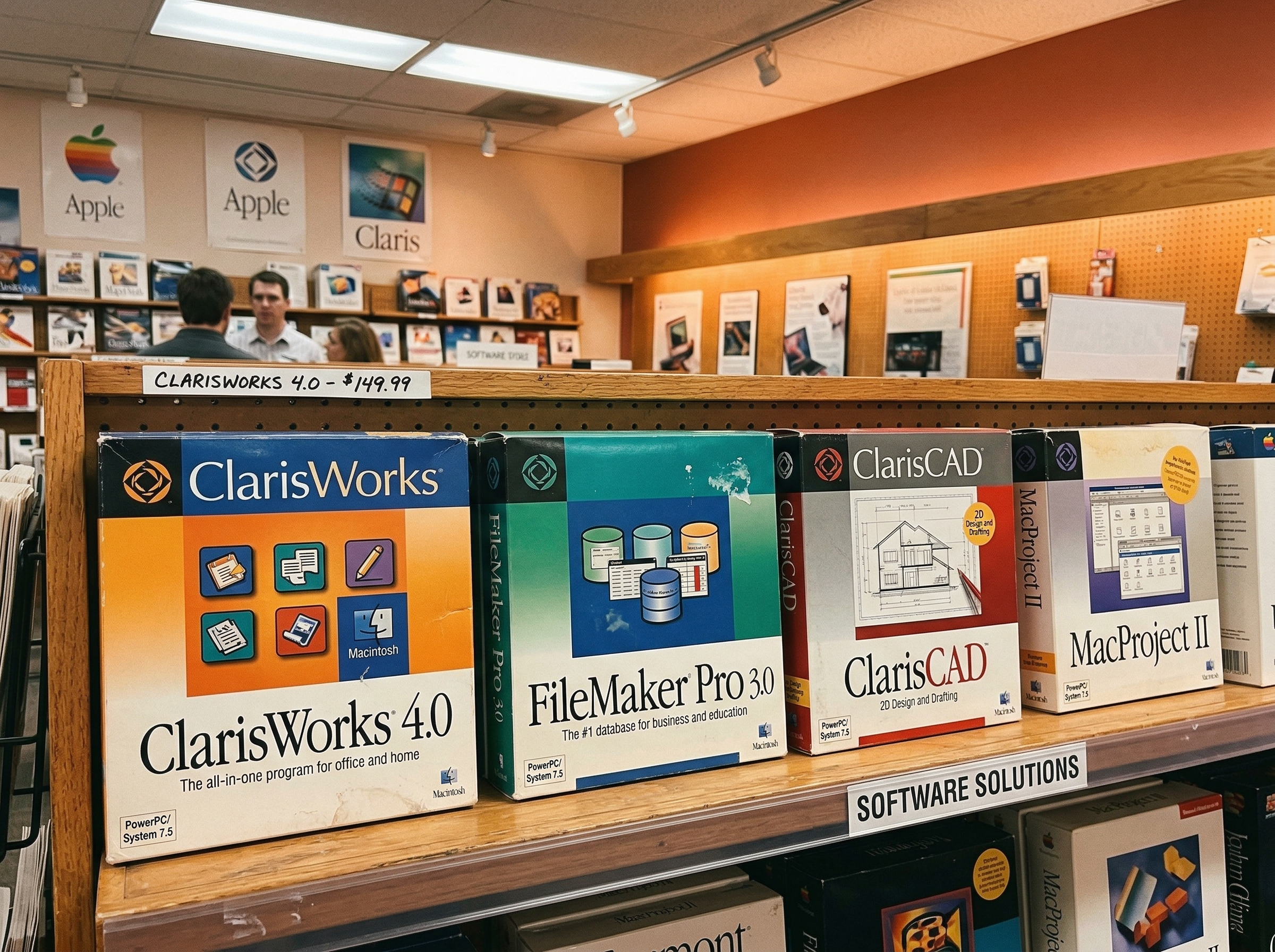
Colorful software boxes on a retail shelf including ClarisWorks, FileMaker Pro, and ClarisCAD

Claris moved fast. In July 1988, it acquired Nashoba Systems, a small company whose database product called Nutshell was about to change everything. Rebranded as FileMaker II, it became the crown jewel of the Claris portfolio — and eventually the only product to survive every corporate reshuffling that followed.

But the real breakthrough came in 1991. ClarisWorks 1.0, developed by Scott Holdaway and Bob Hearn at Spartacus Software, used a revolutionary "frame-based" architecture that let users mix text, graphics, spreadsheets, and databases in a single document. It ran on 1MB of RAM. Microsoft Works couldn't touch it.

There was also ClarisCAD for the 2D design crowd, and ClarisImpact for business graphics. For a brief, shining moment in the early 1990s, Claris was doing what Apple always wanted its software division to do: competing on merit, winning on quality, and making the Mac feel like the only platform that mattered. The irony was that this very success would trigger the decision that nearly destroyed the company.

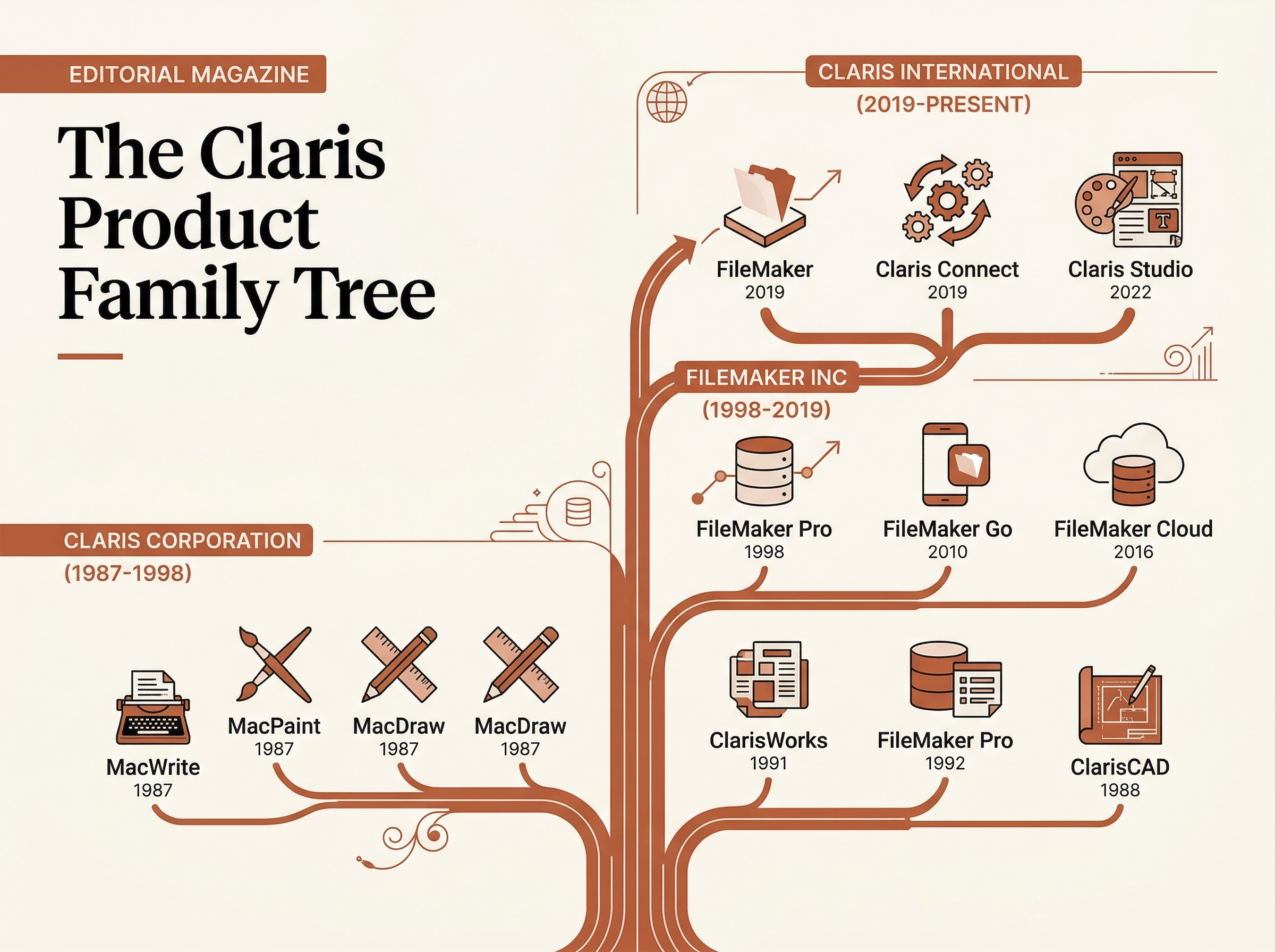
Infographic showing the Claris product family tree from 1987 to present, with three eras: Claris Corporation, FileMaker Inc, and Claris International
The Claris Product Family Tree — 39 years of evolution from MacWrite to Claris Connect
03

The IPO That Died on the Launchpad

A torn stock certificate lying on a mahogany desk, symbolizing the cancelled Claris IPO

This is where the story gets Shakespearean. By 1989, Claris was generating over $100 million in annual revenue. The original deal had always included an eventual IPO — a path to real independence. Bill Campbell and his team prepared the prospectus, hired the bankers, and got everything ready for launch.

Then John Sculley killed it.

The reasoning was corporate survival math: if Claris went public, Apple would lose control of its key software. With Microsoft aggressively expanding Office for Mac, Sculley couldn't stomach the risk of his software subsidiary becoming a competitor or, worse, a takeover target. In June 1990, the IPO was cancelled at the eleventh hour.

The fallout was immediate and devastating. Campbell and virtually the entire senior management team resigned in protest. "We were furious. We stayed a while... and then everybody left," Campbell later recalled. His departure would prove to be Apple's most consequential loss of the decade — Campbell went on to mentor Steve Jobs, Larry Page, Jeff Bezos, and half the founders of modern Silicon Valley, earning the title "The Coach of Silicon Valley." The irony is exquisite: Apple's fear of losing control of Claris cost them the man who would eventually help save the company.

04

Eighty Percent of Every Classroom in America

A 1990s school computer lab with rows of classic Macintosh computers running ClarisWorks

Despite the leadership exodus, what happened next was arguably Claris's finest hour. With Campbell gone and the IPO dead, the remaining team did something counterintuitive: they stopped trying to be Microsoft and focused entirely on the people who already loved them. Students. Teachers. Home users. The rest of us.

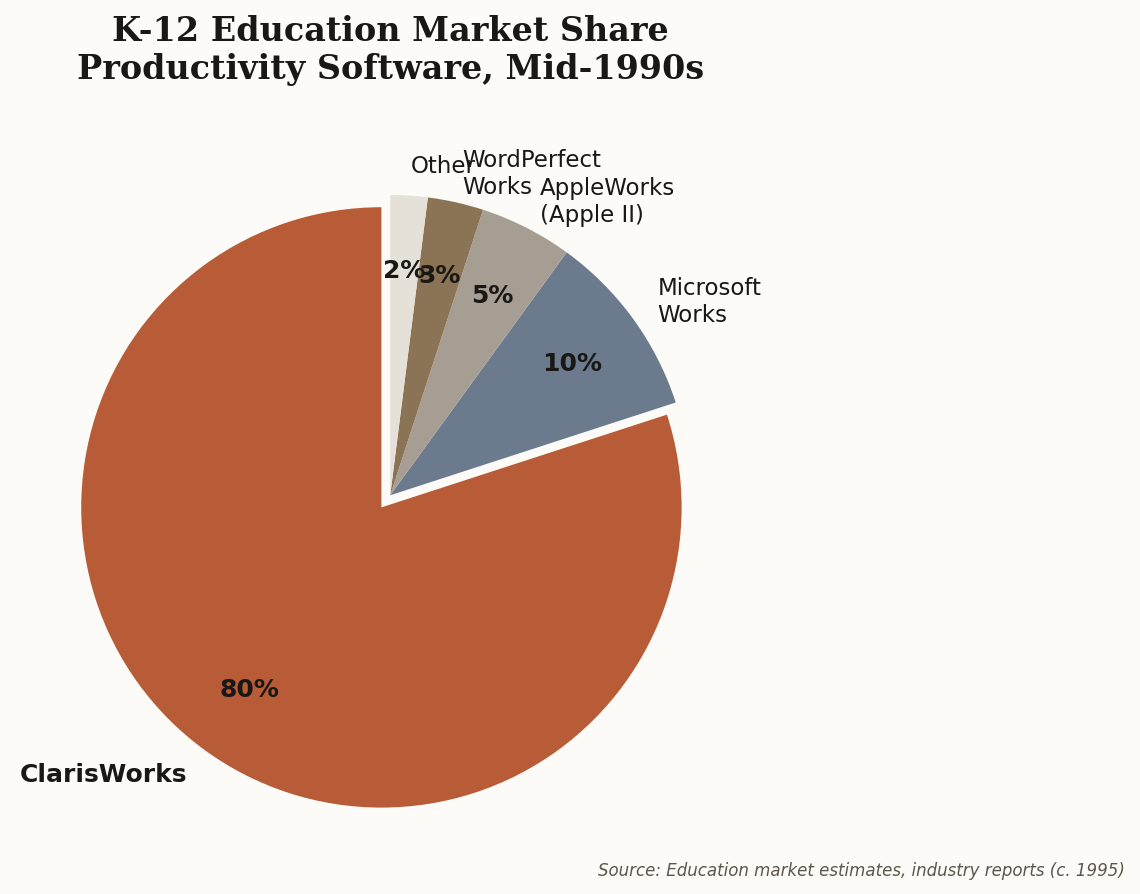
Apple began bundling ClarisWorks with every consumer Mac in the Performa series. The strategy worked because ClarisWorks was genuinely better for its audience. It was lean — running on hardware that would choke on Microsoft Office — and its integrated approach meant a third-grader could write a report, draw a picture, and make a chart without ever switching applications. By the mid-1990s, ClarisWorks held an estimated 80% share of the K-12 education productivity software market.

Pie chart showing K-12 education market share in the mid-1990s: ClarisWorks 80%, Microsoft Works 10%, AppleWorks (Apple II) 5%, WordPerfect Works 3%, Other 2%
K-12 education market share for productivity software, mid-1990s. ClarisWorks dominated through Apple hardware bundling and genuine product-market fit.

Think about what that means: an entire generation of Americans learned to use a computer through Claris software. Every book report, every science fair poster, every "what I did this summer" essay — ClarisWorks. It was the Google Docs of the 1990s, a decade before Google existed. And it earned its dominance not through network effects or lock-in, but through the radical act of being simple enough for a child and powerful enough for a teacher.

05

Steve Jobs and the Art of Deciding What Not to Do

A small building being absorbed into a larger glass corporate headquarters, symbolizing the Claris reabsorption

When Steve Jobs returned to Apple in 1997, he famously drew a simple 2x2 grid on a whiteboard: Consumer/Pro across the top, Desktop/Portable down the side. Everything that didn't fit into one of those four quadrants was gone. Claris didn't fit.

On January 27, 1998, Jobs folded Claris back into Apple. MacWrite, MacDraw, ClarisImpact — all discontinued. ClarisWorks was moved to Apple's internal software group and rebranded as AppleWorks (versions 5.0 and 6.0 would follow, increasingly neglected, before Apple finally put it out of its misery in 2007).

But Jobs made one crucial exception. FileMaker was highly profitable, had a thriving Windows user base, and didn't compete with anything Apple was doing. So while the rest of Claris was absorbed, FileMaker was spun out as its own subsidiary: FileMaker, Inc. As Jobs famously said: "Deciding what not to do is as important as deciding what to do." In this case, what he decided not to do was kill his most reliable revenue stream.

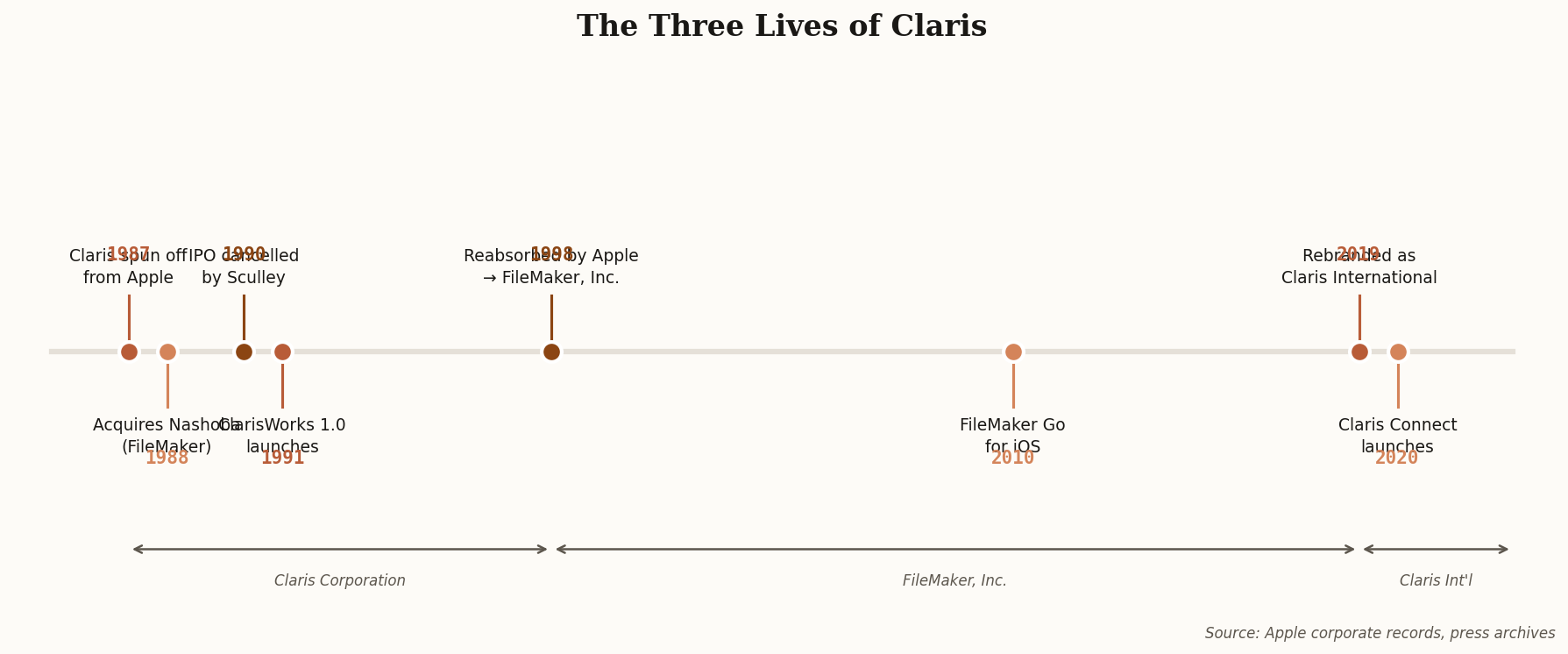
Timeline chart showing the three lives of Claris: Claris Corporation (1987-1998), FileMaker Inc (1998-2019), and Claris International (2019-present)
The Three Lives of Claris — from April 1987 spinoff through reabsorption to the 2019 rebirth, every major milestone in the company's history.
06

Twenty-One Years of Quiet Profit

A quiet office with a computer showing a database interface and stacks of profit reports, representing FileMaker's steady success

Here's the thing about FileMaker, Inc. that most tech journalists never understood: it was never trying to be exciting. For 21 years, while Apple launched the iPod, iPhone, iPad, and Apple Watch — while it became the most valuable company in the world — FileMaker just kept doing its thing. Building databases. Shipping updates. Making money.

And it evolved, quietly but relentlessly. FileMaker Pro went from a desktop-only Mac database to a cross-platform development environment spanning Mac, Windows, iOS, and the web. When Apple launched the iPhone in 2007, FileMaker was ready: FileMaker Go arrived in 2010, letting businesses run custom database apps on iOS. Long before "low-code" became a venture capital buzzword, FileMaker was the actual market leader in letting non-programmers build complex business systems.

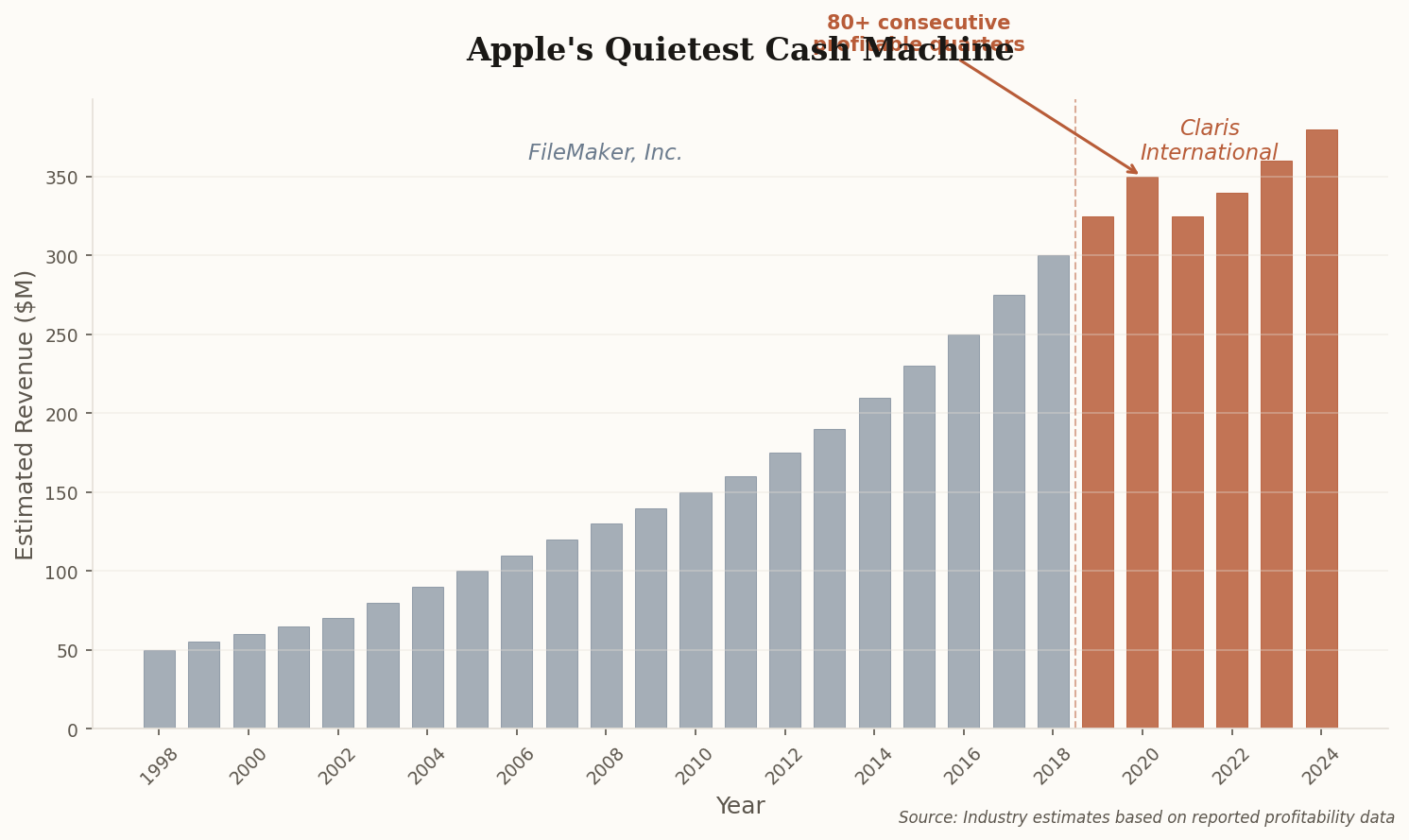
Bar chart showing FileMaker/Claris estimated annual revenue from 1998 to 2024, showing consistent growth across more than two decades
Apple's quietest cash machine — estimated revenue trajectory for FileMaker/Claris showing consistent growth across 80+ consecutive profitable quarters.

The numbers tell a story of boring, beautiful consistency: 80+ consecutive quarters of profitability. No layoffs. No pivots. No "we need to talk about our strategy" blog posts. Just a subsidiary that understood its market, served its customers, and deposited checks in Apple's bank account. In Silicon Valley, where the median startup lifespan is measured in months, FileMaker's quiet durability was almost subversive.

07

The Name Returns — But Can Lightning Strike Twice?

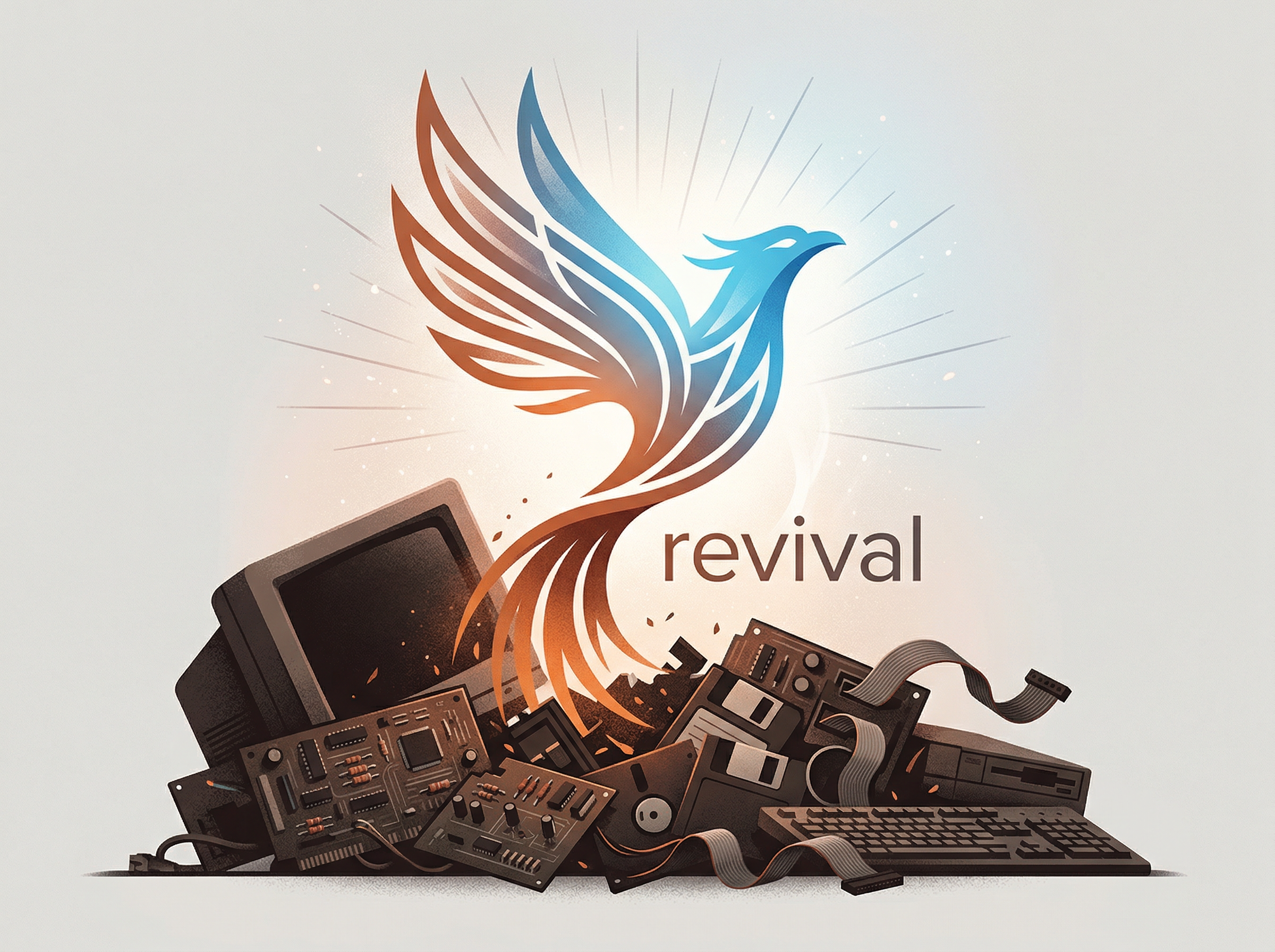
A phoenix rising from embers reimagined as a modern tech logo emerging from vintage computer parts

On August 6, 2019, CEO Brad Freitag made an announcement that sent a wave of nostalgia through the Mac community: the company was changing its name back to Claris. "We wanted to restore the Claris brand. We wanted to celebrate our legacy," Freitag said. It was more than sentiment. It was a signal.

The new Claris International had ambitions beyond databases. In March 2020, it launched Claris Connect, an iPaaS (Integration Platform as a Service) tool that connects FileMaker apps to Slack, Trello, Salesforce, and dozens of other services. The vision was a "Workplace Innovation Platform" — not just a database, but a complete ecosystem for custom business software.

It's a bold bet, and it faces real headwinds. The low-code/no-code market is now crowded with well-funded competitors like Airtable, Notion, and Retool. But Claris has something none of them have: 39 years of institutional knowledge, a fanatically loyal customer base, and an owner with $200 billion in the bank. Whether the Claris name still carries magic in 2026 is an open question. What's not open to debate is that no other company in the history of technology has been spun off, reabsorbed, renamed, and reborn as many times and still kept turning a profit. The cockroach of Cupertino — and I mean that as the highest compliment.

The Lesson Claris Keeps Teaching

The most interesting thing about Claris isn't its products or its profits — it's what it reveals about Apple. A company famous for ruthless simplification has, for 39 years, refused to let go of a software subsidiary that doesn't fit any obvious strategic narrative. Maybe that's because Claris proves something Apple has never been comfortable saying out loud: sometimes the best strategy is to find a market, serve it honestly, and just keep showing up. No disruption required.

Share X LinkedIn