The Wireframe Revolution
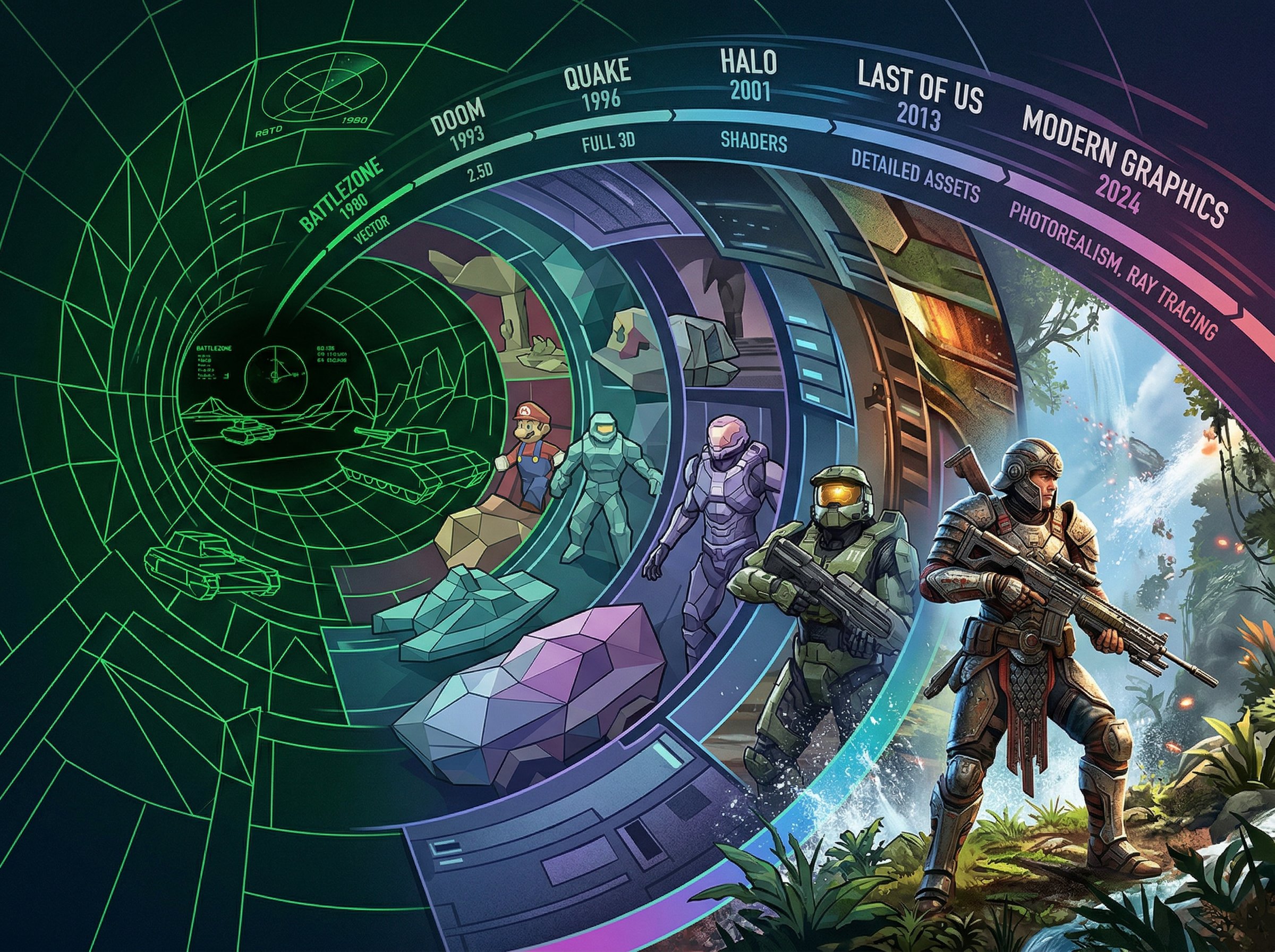
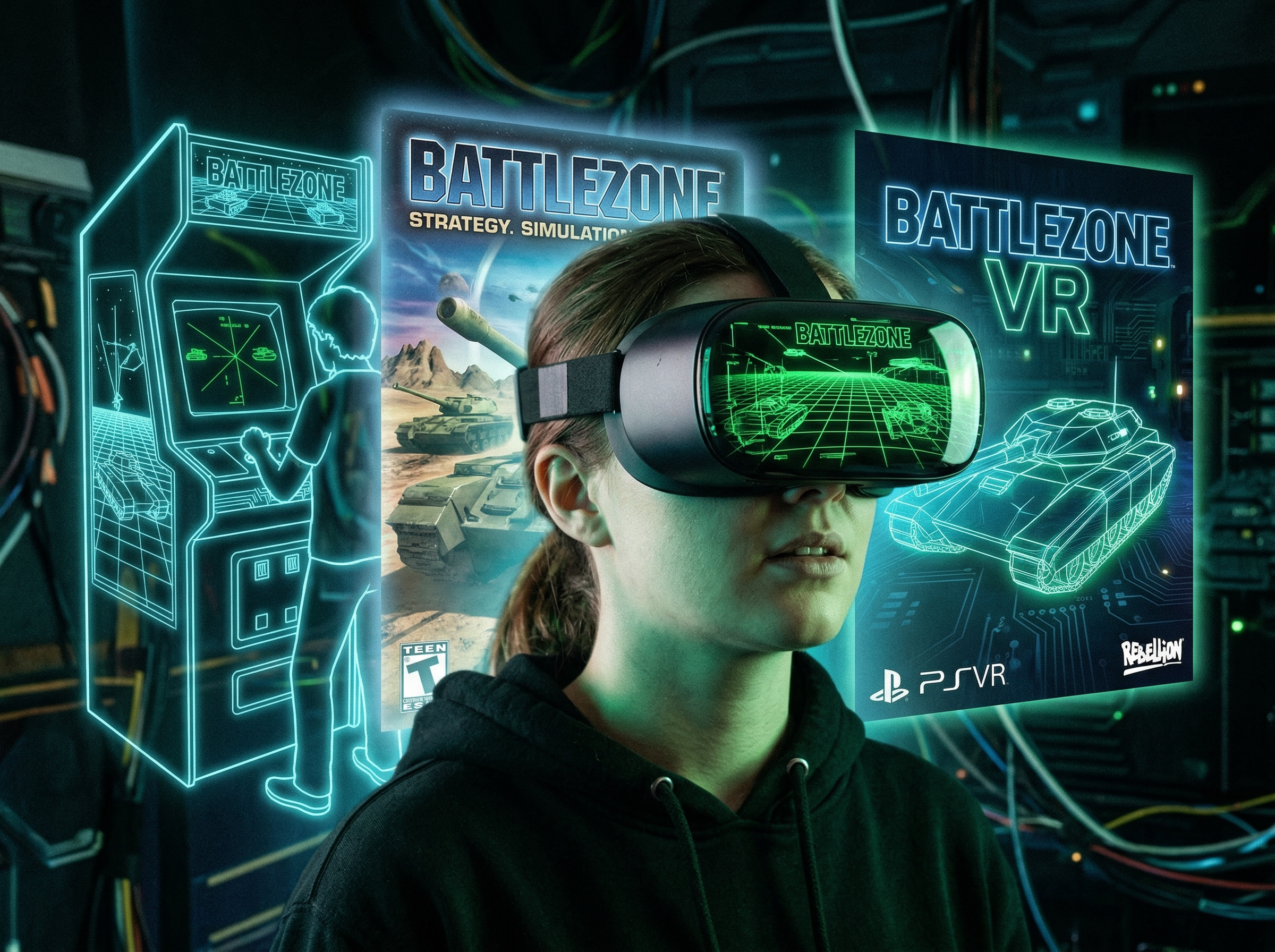
Before Battlezone, every video game put you above the action. You were a god looking down at sprites. Then Ed Rotberg at Atari did something that seems obvious in hindsight but was genuinely radical in 1980: he put you inside the game.
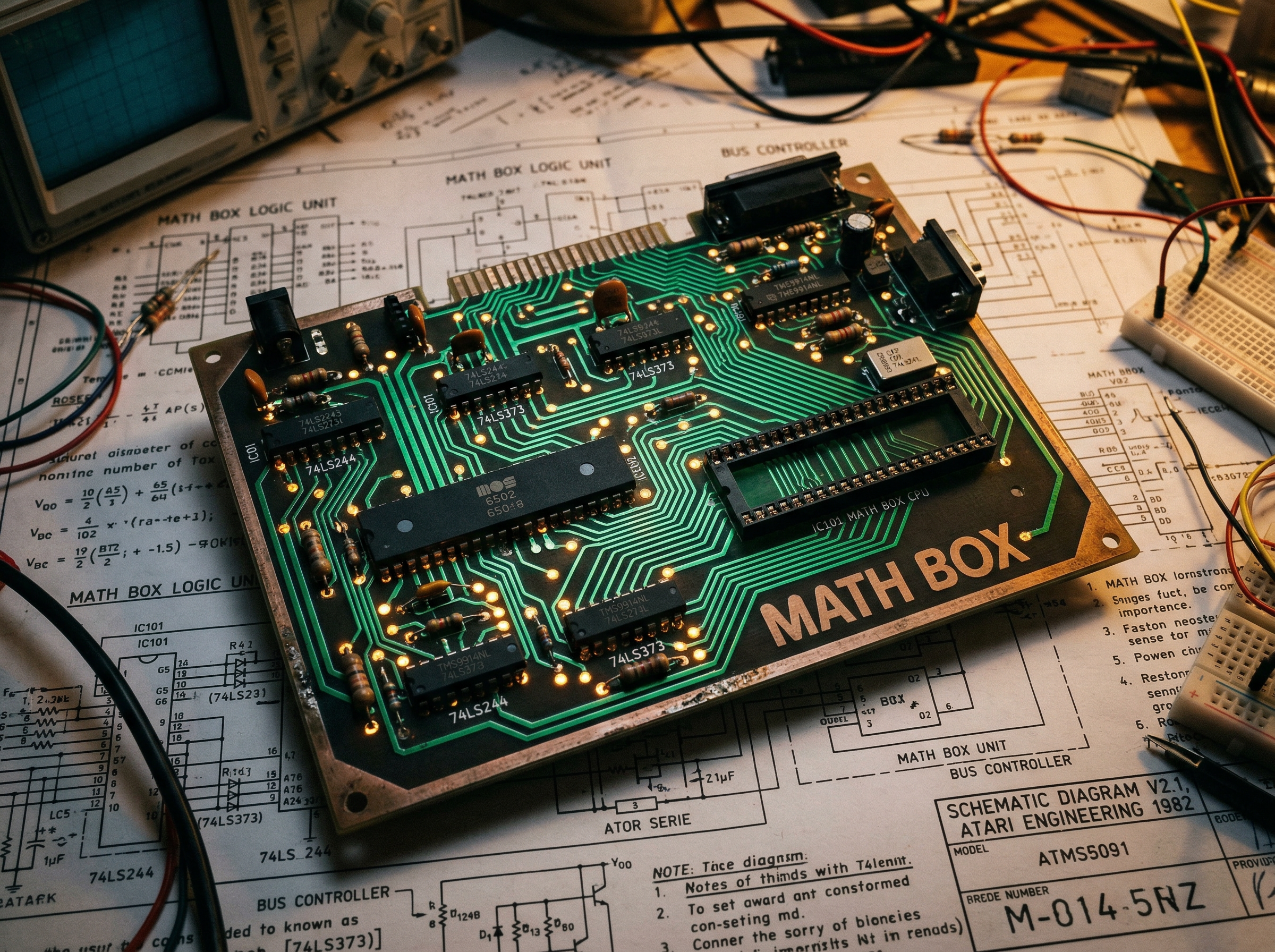
The technical achievement was staggering. Rotberg and his hardware team—including Jed Margolin and Mike Albaugh—designed the "Math Box," a custom bit-slice coprocessor that could chew through the trigonometric calculations needed to project 3D coordinates onto a 2D plane in real time. This wasn't just clever software running on standard hardware. They built bespoke silicon to make 3D possible at arcade speeds.
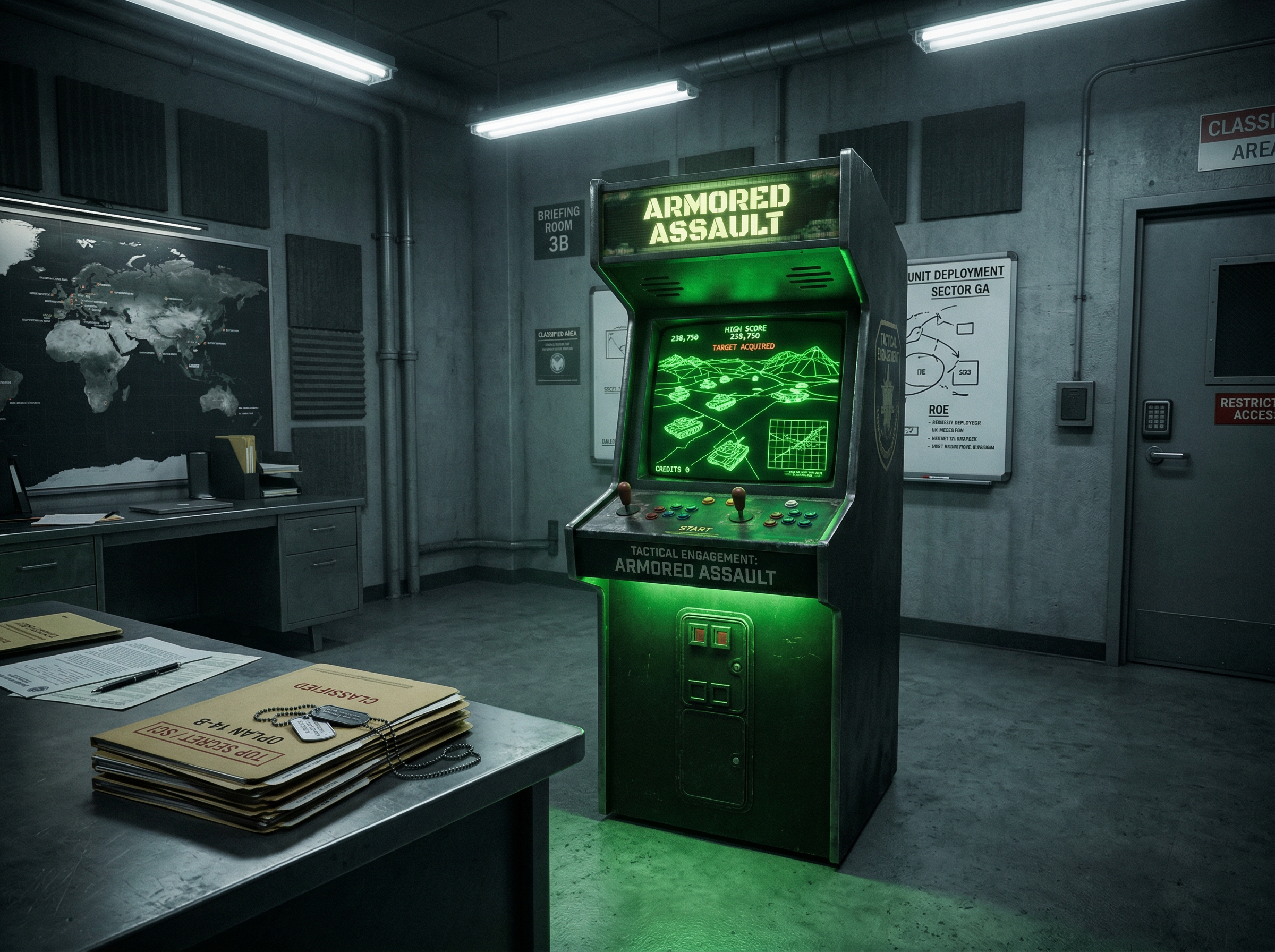
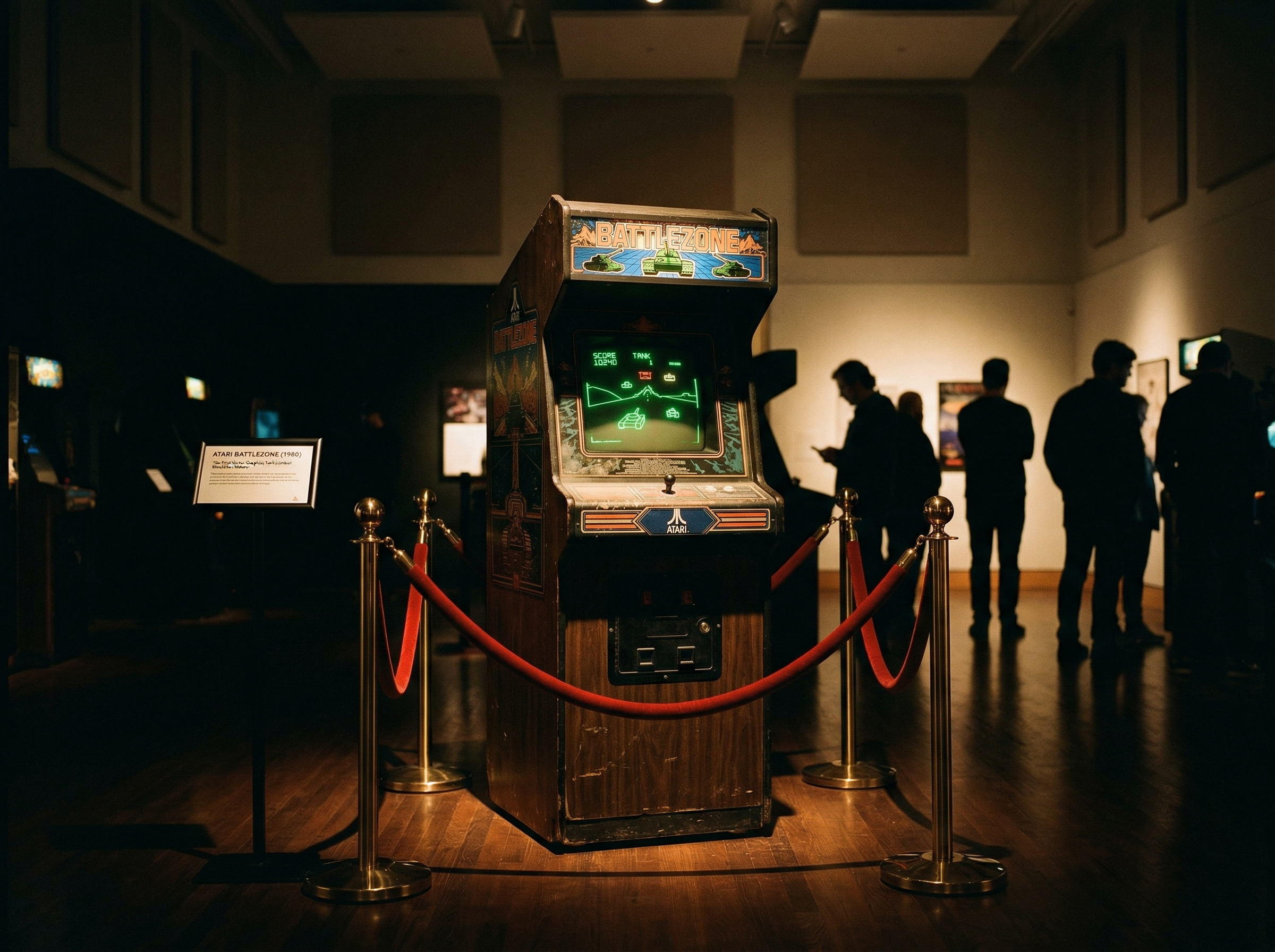
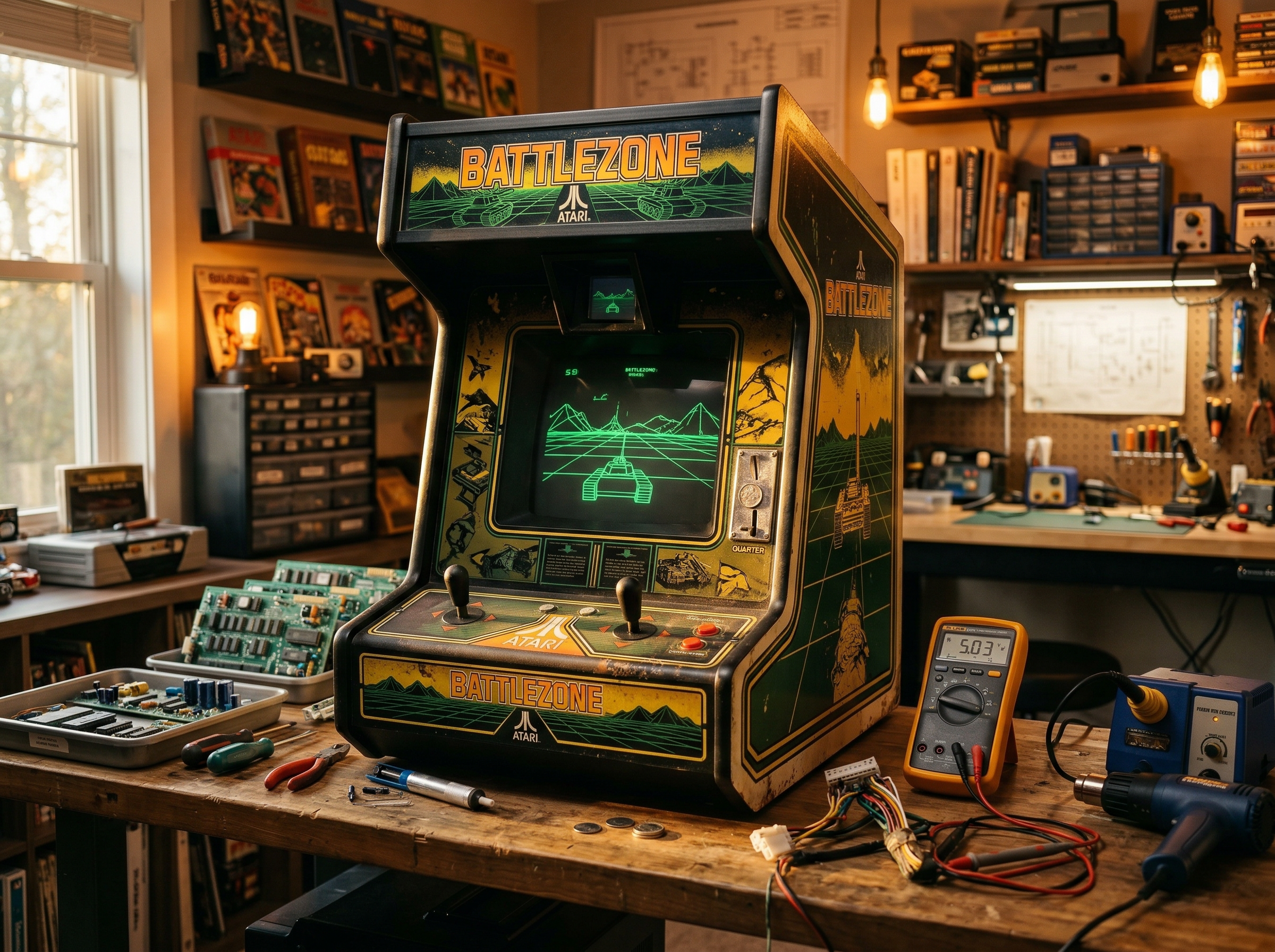
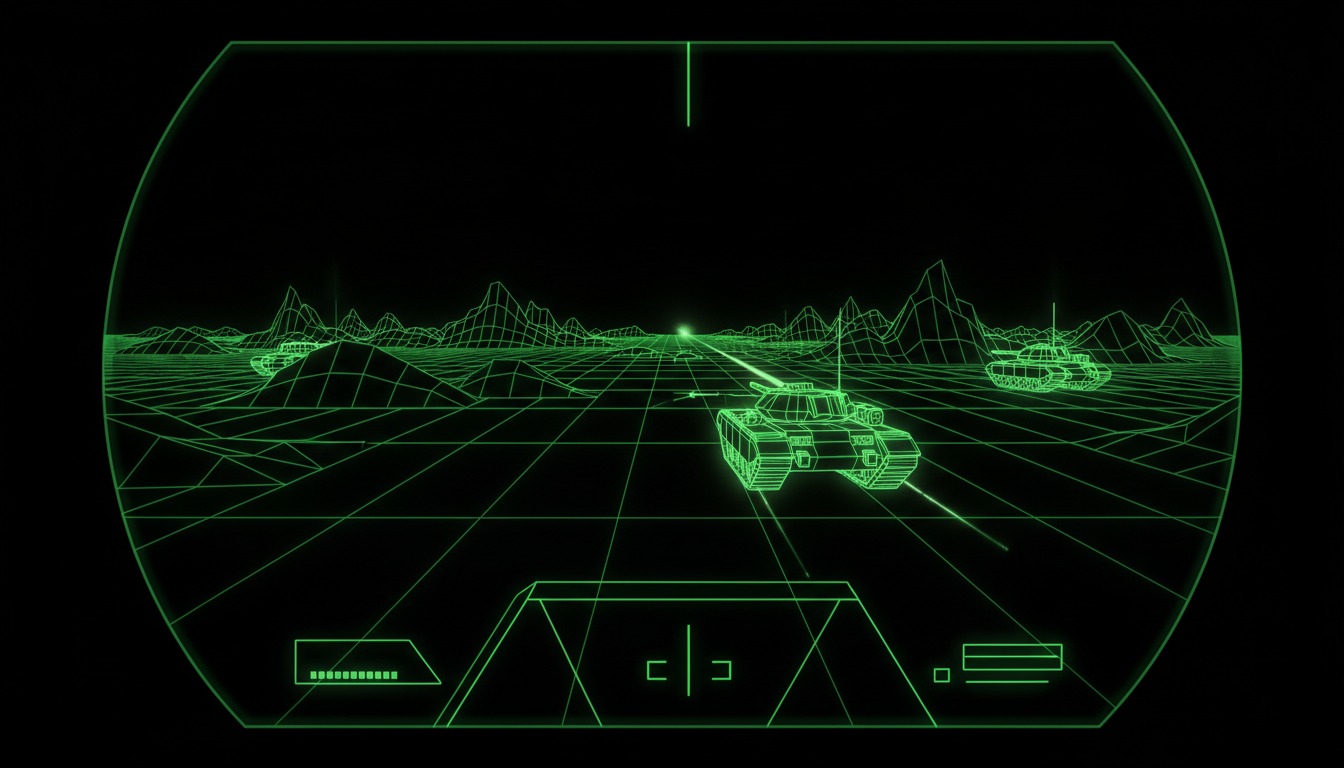
The display itself was equally distinctive. Atari's Quadrascan vector monitor drew sharp, luminous green lines directly onto the screen—no pixels, no raster scanning. The result was that iconic wireframe glow: crisp geometric mountains, angular tanks, and a distant volcano rendered in phosphor green against deep black. Forty-six years later, that aesthetic remains instantly recognizable.
The periscope matters. The original cabinet forced players to press their faces into a rubber eyepiece, blocking out the arcade. It was proto-VR—full immersion through physical isolation. The cabinet design wasn't decoration. It was the interaction model.