Computing History

The Machine That Invented the Future

How a computer nobody could buy became the ancestor of every device you own. The Xerox PARC Alto turned 53 and the world still hasn't caught up to everything it imagined.

Listen
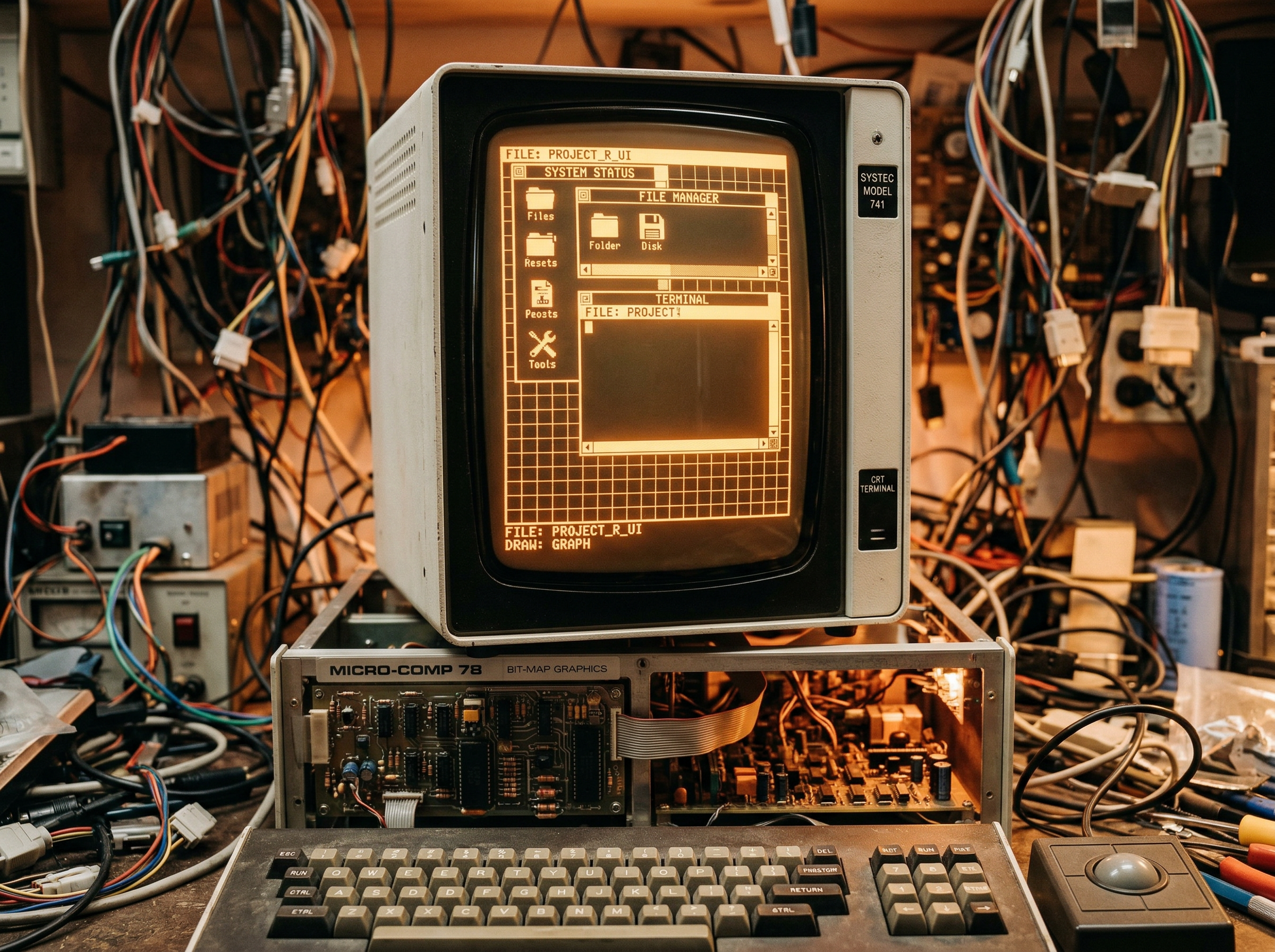
The Xerox Alto computer workstation, its portrait-orientation CRT monitor glowing in a dim 1970s research lab
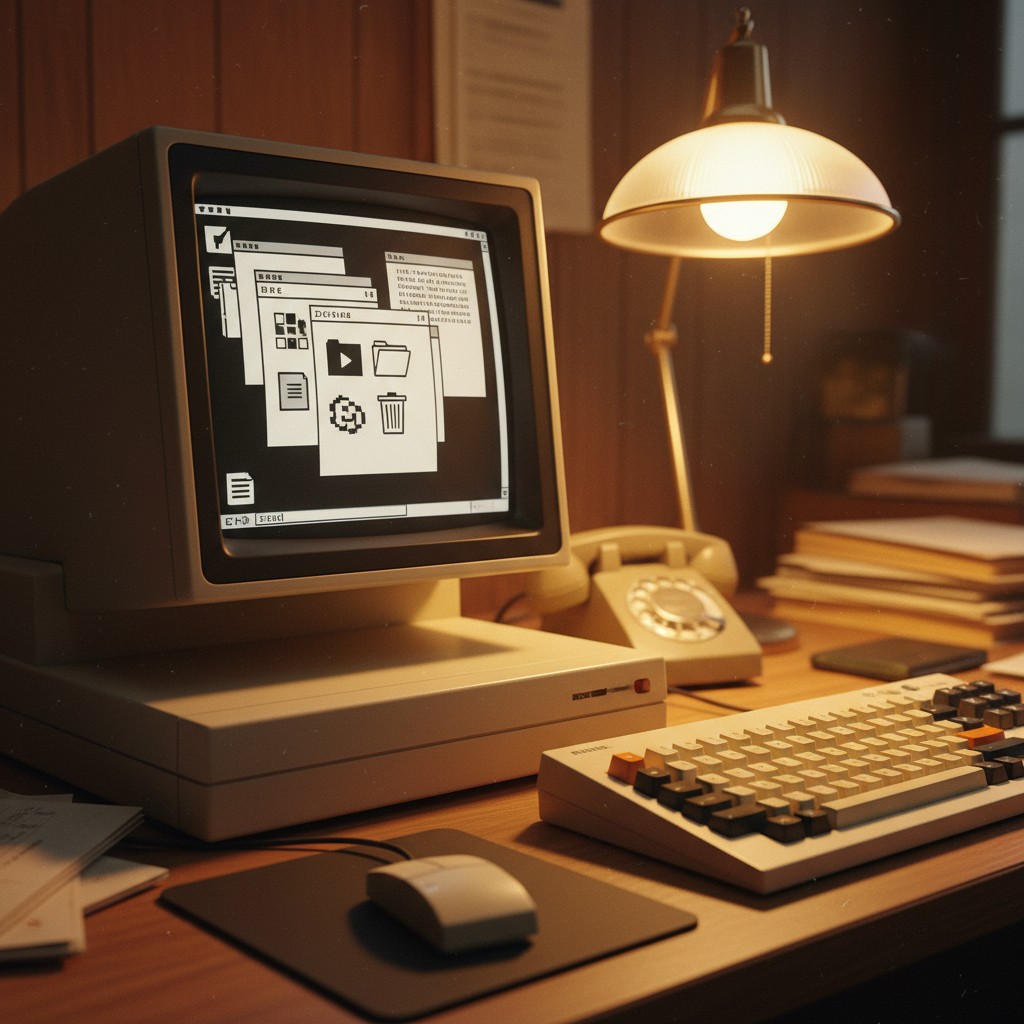
Close-up of a 1970s Alto workstation with bitmap display showing windows and icons
01

A Time Machine Built from Transistors

In 1973, while the rest of the computing world was punching cards and staring at green-on-black terminals, a small team in Palo Alto built the future and put it on a desk. The Xerox Alto wasn't just a personal computer. It was a personal computer that wouldn't look out of place for another eleven years.

The specs tell the story. 128 KB of RAM when most minicomputers shipped with a fraction of that. A 606 × 808 pixel bitmapped display—in portrait orientation, deliberately designed to look like a sheet of paper. A three-button mouse. And here's the kicker: it was never meant for sale. Chuck Thacker designed the hardware, Butler Lampson architected the system, and Alan Kay saw it as a stepping stone toward his true vision—the Dynabook, a portable computer for children that wouldn't exist in any real form until the iPad arrived 37 years later.

Roughly 2,000 Altos were built. They went to PARC researchers, Stanford, MIT, the White House, and a few Xerox offices. Nobody else could have one. It cost an estimated $32,000 in 1973 dollars—around $220,000 today. But the point was never the hardware. The point was proving that a computer could be personal, could have a face, could respond to human gestures rather than demanding humans learn its language.
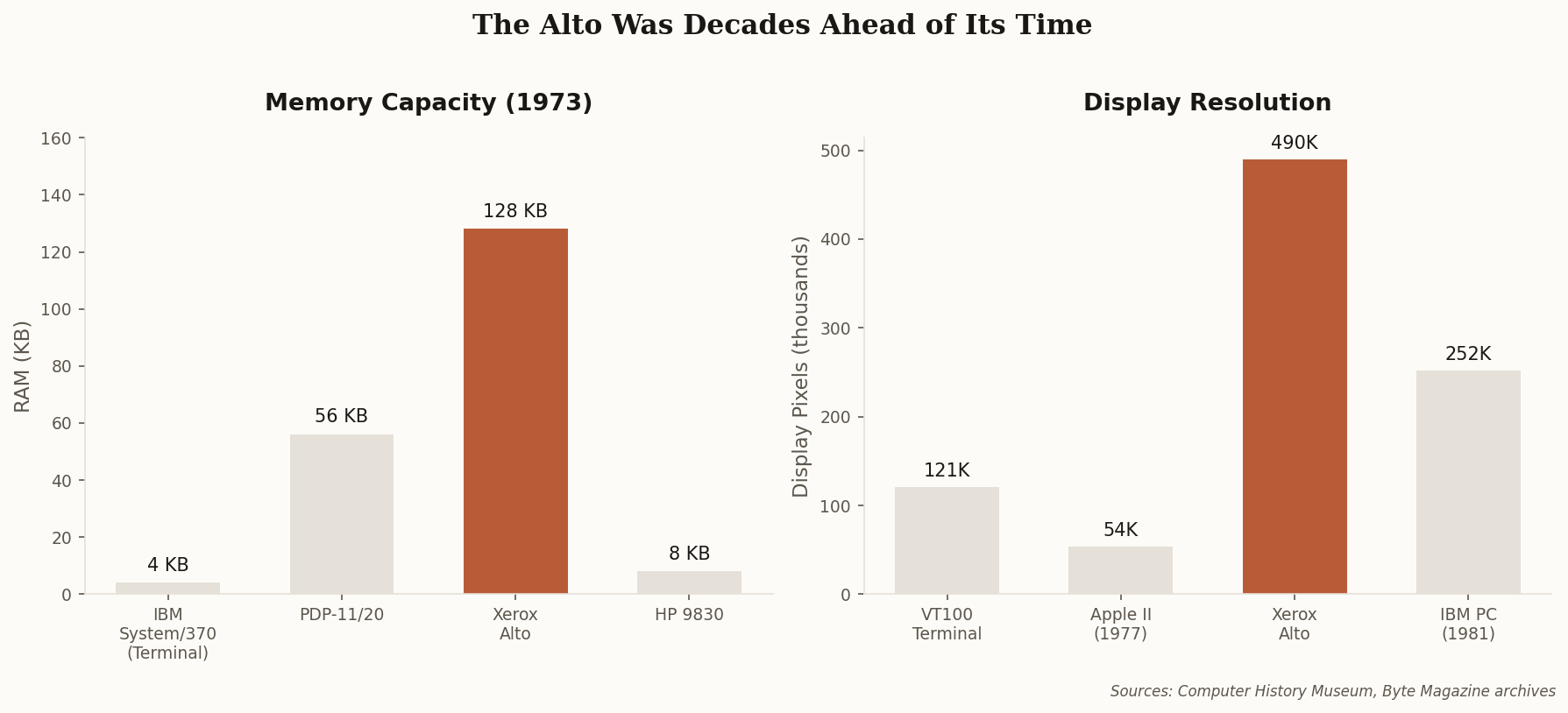

Chart comparing the Alto's RAM and display resolution against contemporary machines, showing it dramatically outperformed them all
The Alto's 128 KB RAM and 490K-pixel display dwarfed everything available in 1973—and most machines for a decade after.
Abstract visualization of interconnected Alto innovations: GUI windows, ethernet cables, mouse, and laser beams
02

Six Inventions That Ate the World

PARC didn't invent one important thing. They invented all of them, simultaneously, and then connected them together. Any single innovation would have been career-defining. Together, they were civilization-defining.

The graphical user interface gave computers a face—overlapping windows, icons, menus, and the radical idea that you could point at things on screen. The WYSIWYG editor Bravo, built by Charles Simonyi and Butler Lampson in 1974, let you see your document exactly as it would print. Before Bravo, you typed formatting codes and prayed. Bob Metcalfe invented Ethernet in 1973, connecting Altos at 3 Mbps—turning isolated machines into the first local area network and enabling the first office email system.

Meanwhile, Bill English refined Douglas Engelbart's mouse into the ball-based three-button design that would become standard for decades. Alan Kay, Dan Ingalls, and Adele Goldberg created Smalltalk, the first purely object-oriented programming language—the paradigm that Java, Python, and Swift are all built on. And Gary Starkweather built the first laser printer by modifying a Xerox copier, closing the loop between screen and page.

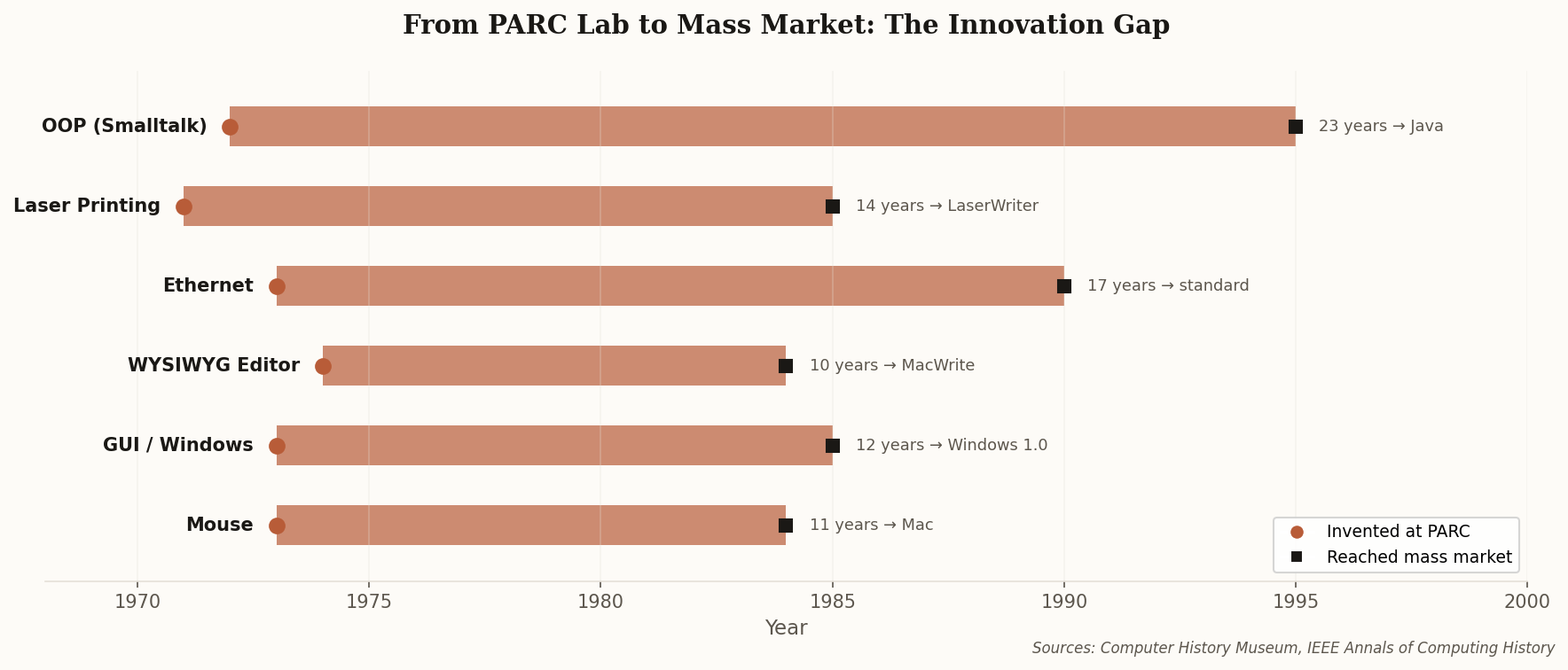
These weren't independent projects. They were a single coherent vision of what computing should be: visual, networked, personal, and printable. That vision took the rest of the industry 10-20 years to catch up to.

Timeline showing how each PARC innovation took 10-20 years to reach the mass market
Every major PARC innovation took at least a decade to reach consumers. The average gap between invention and mass adoption was 14 years.
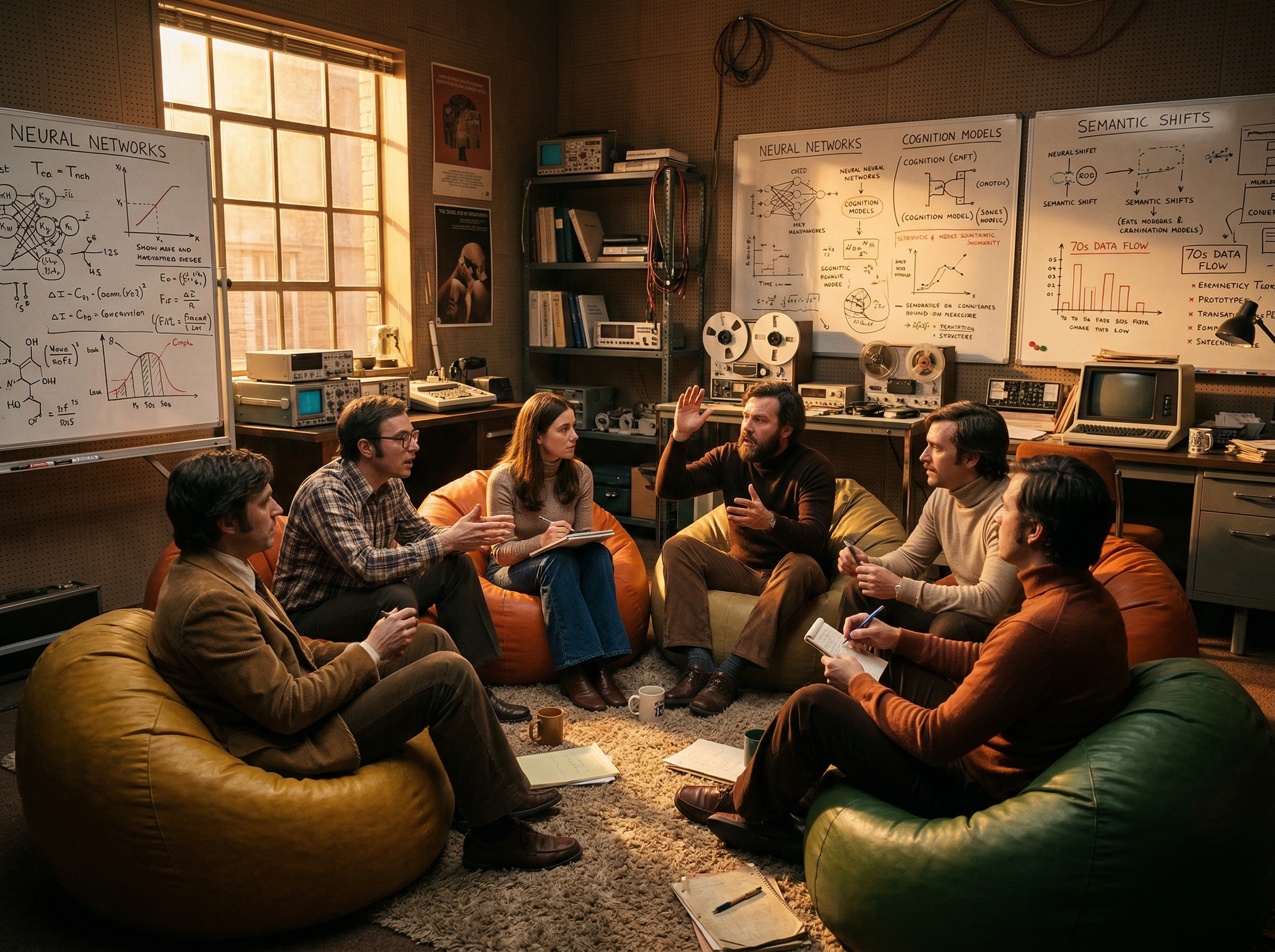
Researchers in beanbag chairs having an intense intellectual debate in a 1970s research lab
03

The Beanbag Chair Meritocracy

You don't get six world-changing inventions from a normal corporate lab. You get them from a place where the furniture is beanbag chairs, the dress code is "whatever," and your boss's management philosophy is "maximum pugnaciousness upward and maximum nurturing downward."

Bob Taylor ran PARC's Computer Science Laboratory like no other research director in corporate America. His "Dealer meetings"—named after the blackjack book Beat the Dealer—were weekly mandatory sessions where one researcher presented an idea and everyone else, lounging in beanbag chairs, tore it apart. The only rule: argue to illuminate, not to win. Taylor's genius wasn't technical. It was organizational. He recruited the best minds he could find, shielded them from Xerox's corporate bureaucracy 3,000 miles away in Rochester, and let them build whatever they believed the future demanded.

The tension was always there. In 1977, at what became known as "Futures Day," PARC researchers demonstrated the "Office of the Future" to Xerox executives in Boca Raton. The executives' wives were amazed by the word processing. The executives themselves saw an expensive toy. They ran a copier company. Paper was the product. The idea that the computer would one day make the copier obsolete was, to them, heresy—and financial suicide.

The culture equation: Take the best researchers in the world. Put them 3,000 miles from corporate HQ. Give them beanbag chairs instead of corner offices. Tell them to build the future. Then protect them from the people signing the checks. That was PARC's formula. It worked until the protector ran out of political capital.

A visionary figure standing before a glowing computer screen, light reflecting in his glasses
04

The Hundred-Million-Dollar Museum Tour

The story has been told so many times it's become myth, but the facts are stranger than the legend. In December 1979, Steve Jobs walked into Xerox PARC, saw the Alto's graphical interface, and walked out with the blueprint for the Macintosh. The popular version says he stole it. The truth is Xerox sold it—for 100,000 shares of Apple pre-IPO stock at $10 per share.

Jobs later described the moment with characteristic intensity: "I was blinded by the first thing they showed me, which was the graphical user interface." He immediately pivoted both the Lisa and the Macintosh to mouse-driven GUI interfaces. But Alan Kay, who was at PARC during the visit and later joined Apple, offered a sharper critique. Jobs saw the windows and the mouse, Kay argued, but missed the deeper innovations—Smalltalk's object-oriented architecture and Ethernet's networked computing model. The Macintosh was, in Kay's famous assessment, "the first personal computer good enough to be criticized."

Jobs defended himself with a line he attributed to Picasso: "Good artists copy, great artists steal." But here's what gets lost in the heist narrative: Apple didn't just copy the Alto. They spent five years and hundreds of millions of dollars turning PARC's research prototype into a consumer product. The Alto cost $32,000. The Macintosh cost $2,495. That gap is where the real engineering happened. Xerox proved the concept. Apple proved the market.

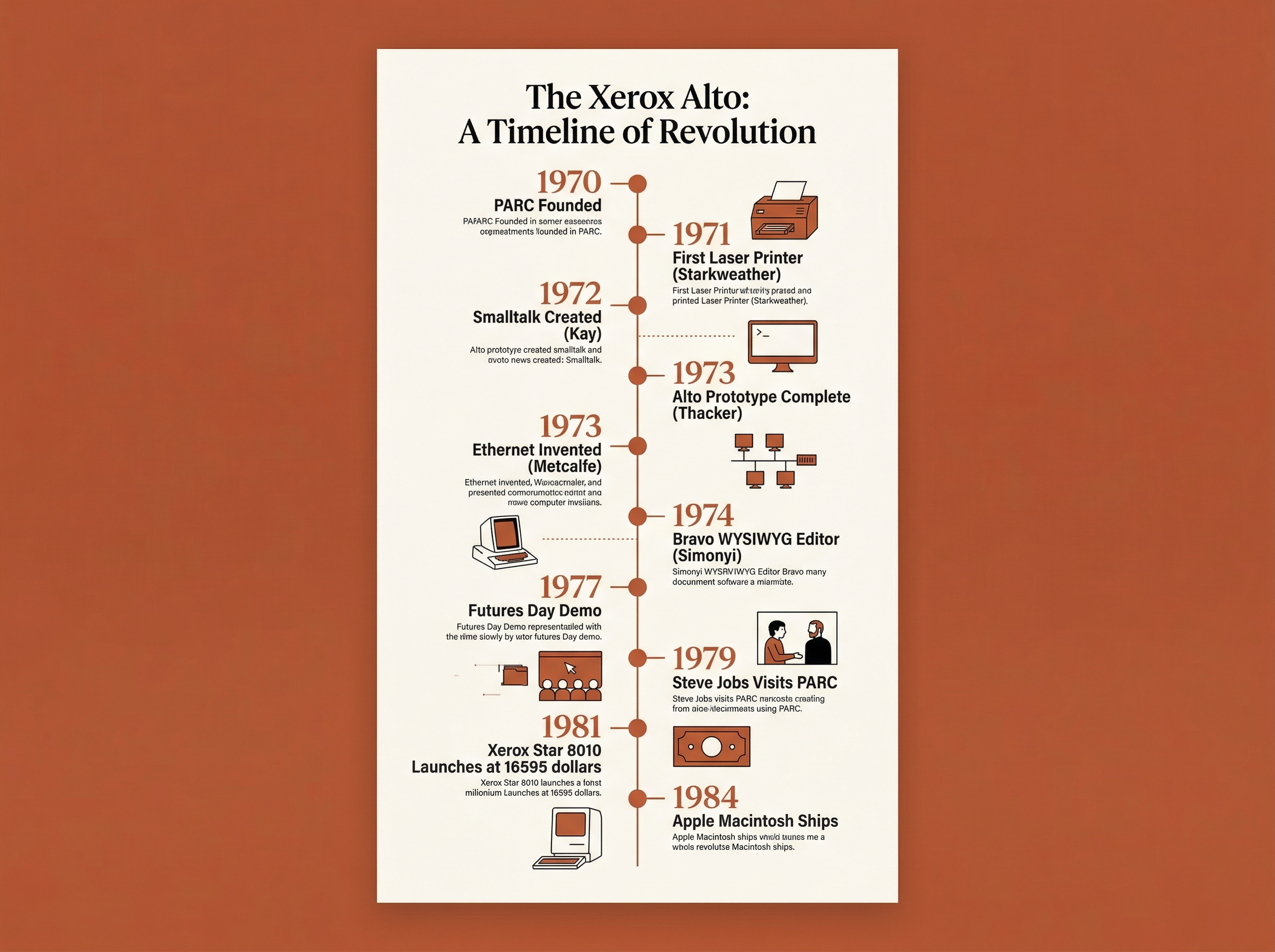
Timeline infographic showing key milestones from PARC's founding in 1970 through the Macintosh launch in 1984
From PARC lab to mass market: the decade-long journey from research prototype to consumer product.
A golden computer prototype slipping through corporate hands, light scattering as it falls
05

How to Fumble a Hundred-Billion-Dollar Idea

Xerox did try to sell the future. In 1981, they launched the Xerox Star 8010, a commercialized descendant of the Alto. It had everything: the GUI, the mouse, Ethernet, the laser printer connection. It was beautiful. It was also $16,595 per workstation—roughly $60,000 in today's dollars. A functional office setup with multiple terminals and a server easily exceeded $100,000.

But the price wasn't even the fatal problem. The Star was slow. Its custom hardware couldn't keep pace with the sophisticated GUI software, and simple operations like opening a document felt agonizingly slow. The same year, IBM released the IBM PC at $1,565. The PC had no mouse, no GUI, and no networking. It had something more important: it was fast, cheap, and it ran spreadsheets. Corporations bought PCs by the thousands while the Star gathered dust in showrooms.

The deeper failure was cultural. Xerox executives were "copier people." Their entire business model was based on the volume of paper moving through offices. The personal computer didn't just represent a new product category—it represented the eventual obsolescence of their core business. Asking Xerox to champion the Alto was like asking Kodak to champion digital photography. The technology was sound. The self-preservation instinct was stronger.

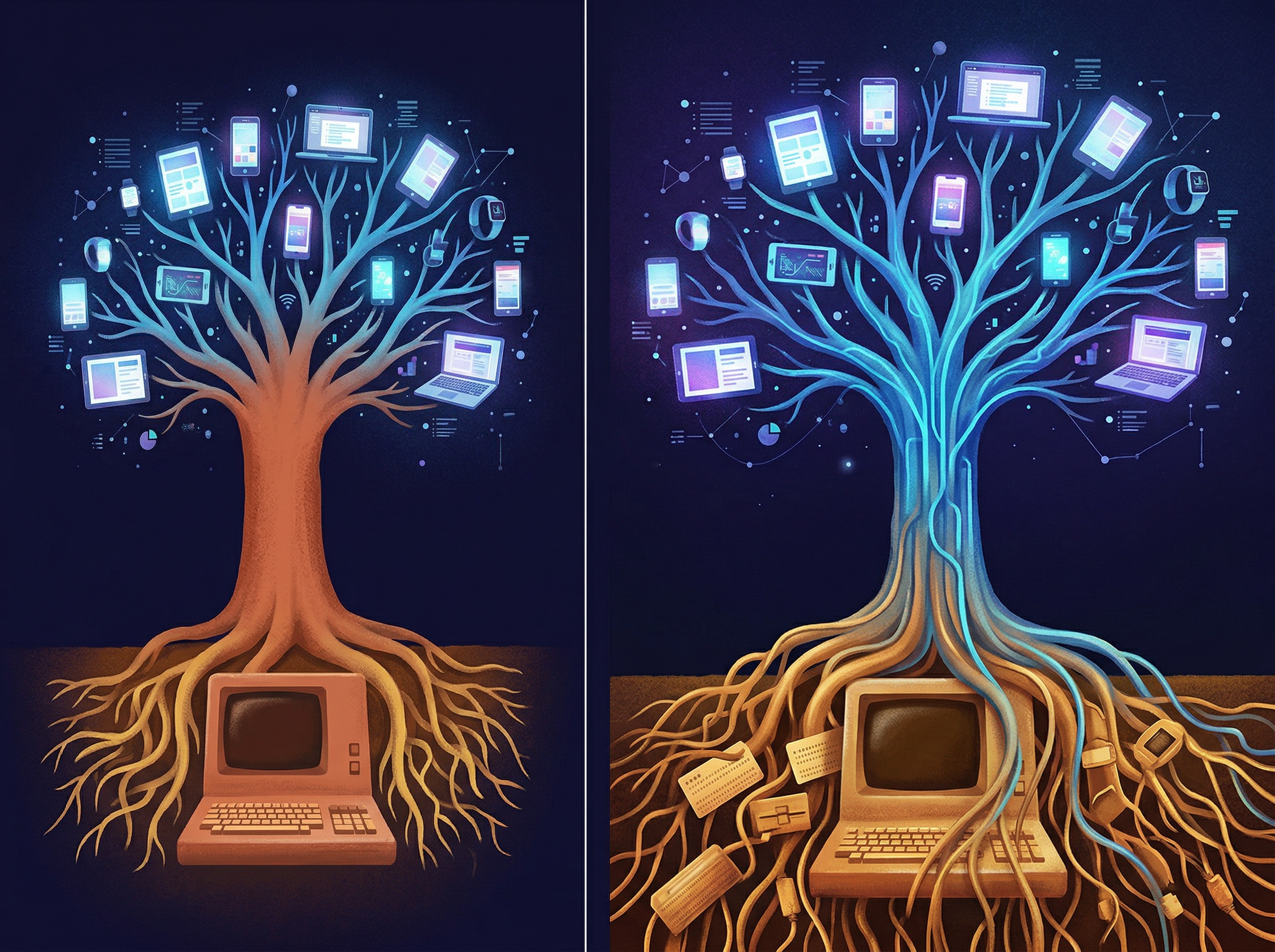
A knowledge tree with roots shaped like a 1970s computer and branches growing into modern devices
06

The Diaspora That Built Silicon Valley

The Alto didn't fail. It was distributed—scattered across Silicon Valley in the minds of the people who built it. When PARC's researchers realized Xerox would never bring their work to the world, they left. And they took the future with them.

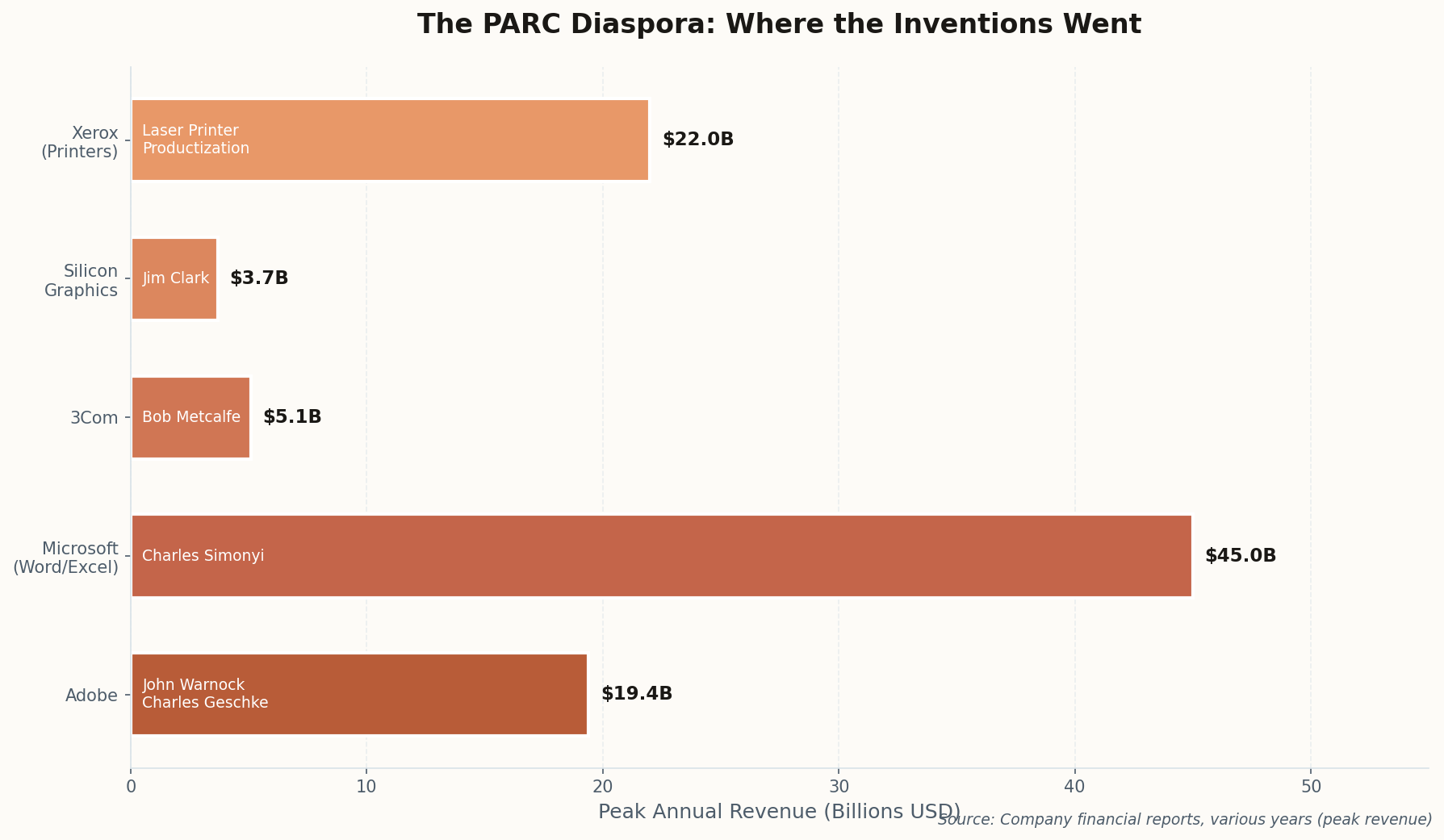
Charles Simonyi went to Microsoft, where he built Word and Excel—direct descendants of Bravo. Bob Metcalfe founded 3Com and turned Ethernet from a PARC experiment into the backbone of global networking. John Warnock and Charles Geschke founded Adobe, creating PostScript and PDF—technologies that digitized publishing. Larry Tesler went to Apple, bringing Cut, Copy, and Paste with him. The WIMP interface (Windows, Icons, Menus, Pointers) that the Alto pioneered became the standard for every major operating system from 1984 to the present.

Horizontal bar chart showing where PARC alumni went and their market impact
The PARC diaspora seeded virtually every major tech company. The combined market impact of companies founded or transformed by PARC alumni exceeds half a trillion dollars.

The losses have mounted in recent years. Larry Tesler died in 2020. Bill English, who refined the mouse, died the same year. Chuck Geschke in 2021. David Boggs, Ethernet's co-inventor, in 2022. John Warnock in 2023. The generation that built the future is leaving us, and Alan Kay—still sharp, still opinionated—keeps issuing warnings. We got the "caricature" of the Alto, he argues: the pretty icons and the mouse clicks. But we lost the deeper vision of the computer as an intellectual amplifier, a tool for creation and education. We turned the most powerful thinking machine ever built into a consumption device. The Alto's inventors dreamed of an intellectual amplifier. We built a shopping cart.

The Future Is Already Here

William Gibson said the future is already here—it's just not evenly distributed. In 1973, the future was concentrated in a beige box on the third floor of a research lab in Palo Alto. Fifty-three years later, it's in your pocket, on your desk, and on your wrist. Every time you drag a file to a folder, every time you click a link, every time you print a document that looks exactly like it did on screen—you're living in the world the Alto imagined. The question Alan Kay keeps asking is whether we're living up to it.

Share X LinkedIn