Molten Lead and Rubber Cement: The World Before Desktop Publishing
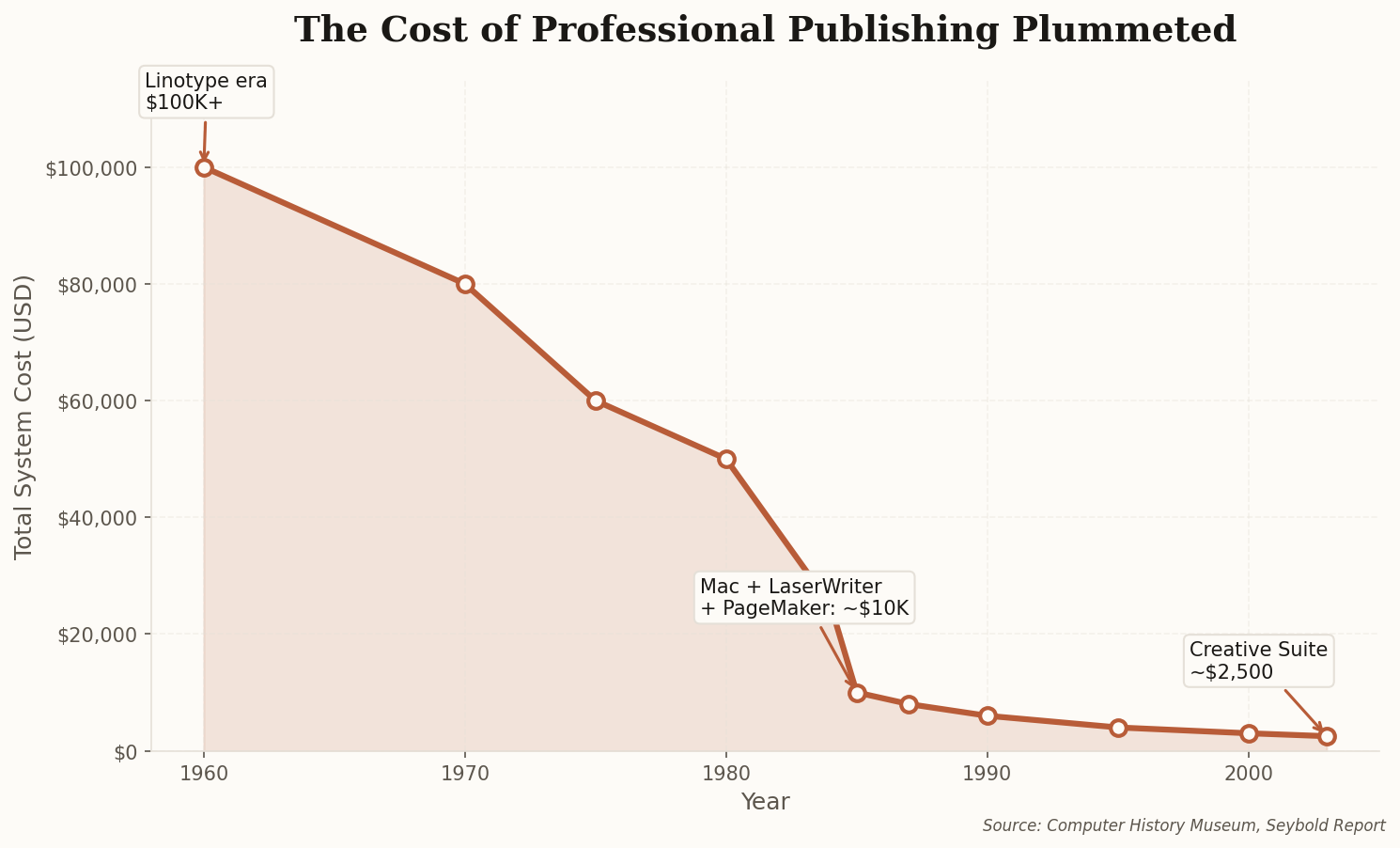
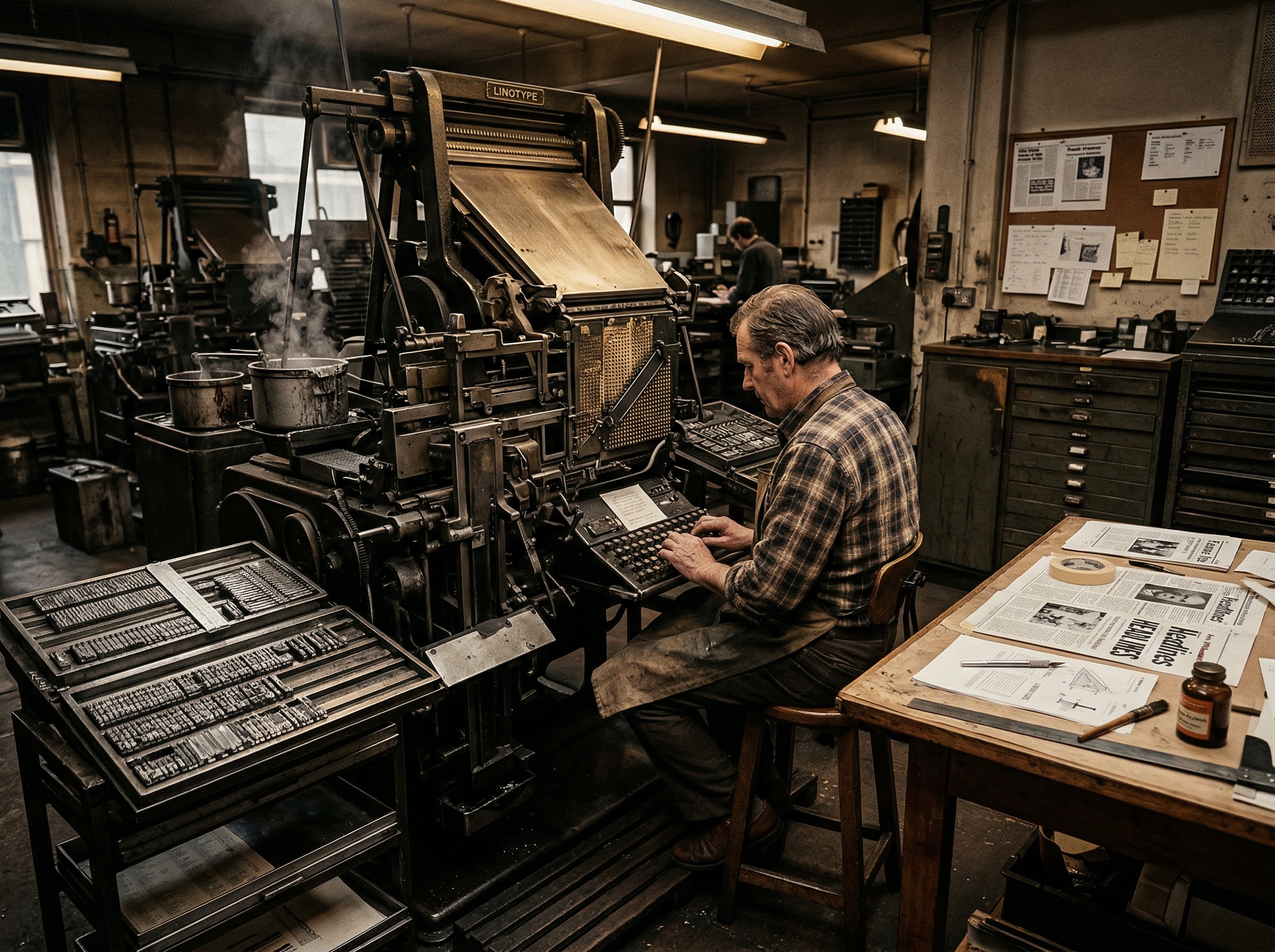
Before 1985, publishing wasn't a career choice. It was a capital investment. The Linotype machine—invented in 1884 and essentially unchanged for a century—required an operator to key characters on a 90-key keyboard while molten lead was injected into brass molds to cast entire lines of type. A new machine cost $18,000 to $20,000 in the 1960s, which is north of $180,000 in today's dollars. You also needed specialized ventilation for the lead fumes and highly skilled union labor to run the thing.
By the 1970s, phototypesetting had replaced hot metal, but the economics barely changed. Professional systems from Mergenthaler ran $20,000 to $50,000. Fonts weren't files—they were physical film strips or glass disks costing hundreds of dollars each. And once the typesetter spat out your galleys? A "paste-up artist" literally cut and glued text columns onto boards using X-Acto knives, T-squares, and hot wax rollers. A complex magazine spread took hours of manual labor. A 24-page corporate brochure could run a typesetting-only budget of $35,000—about $1,450 per page, just for the words.
The gatekeepers were real. If you wanted to put something in print that looked professional, you needed access to equipment that cost as much as a house. The "freedom of the press," as A.J. Liebling famously noted, belonged to those who owned one.