Apple History · AI · Design

The Six-Minute Prophecy

In 1987, Apple filmed a vision of the future. It took 37 years — and the entire AI revolution — to prove them right.

Listen
01

$60,000, Six Weeks, and One Bow Tie
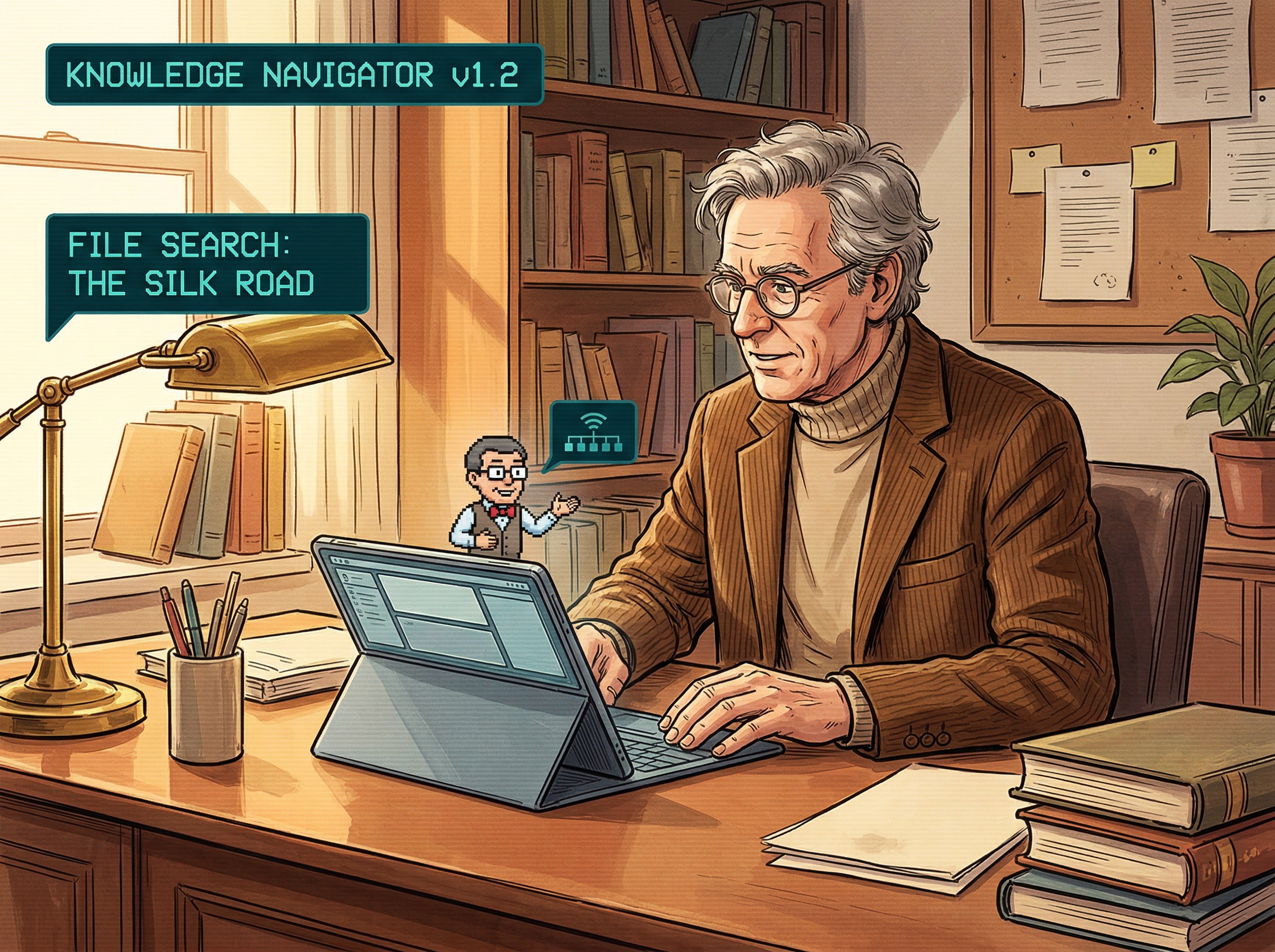
Recreation of the 1987 Apple Knowledge Navigator concept video scene

In 1987, John Sculley — Apple's CEO, the man who'd been lured from Pepsi with the legendary "do you want to sell sugar water" pitch — had just finished writing his autobiography, Odyssey: Pepsi to Apple. In its epilogue, he described a "fantasy machine" that could navigate the world's libraries, museums, and databases through an intelligent agent. It was the kind of corporate futurism that usually dies in a PowerPoint deck.

Except Sculley actually built it. Not the machine — the video.

He commissioned Hugh Dubberly (Creative Director) and Doris Mitsch (Interaction Designer) at Apple Creative Services to produce a concept film. Director Randy Field shot the thing in six weeks for approximately $60,000. The result was a six-minute video that would haunt the tech industry for the next four decades.

The video shows a university professor named Mike sitting at his desk. On his folding, leather-bound tablet — picture a Moleskine notebook with a touchscreen — lives Phil, a small bow-tied avatar who acts as researcher, secretary, and intellectual sparring partner. Phil screens calls, synthesizes research papers, understands context-dependent natural language, and even shows a sense of humor. Mike asks Phil to find articles about Amazonian deforestation and run climate simulations. Phil does all of it without breaking a sweat — or his bowtie.

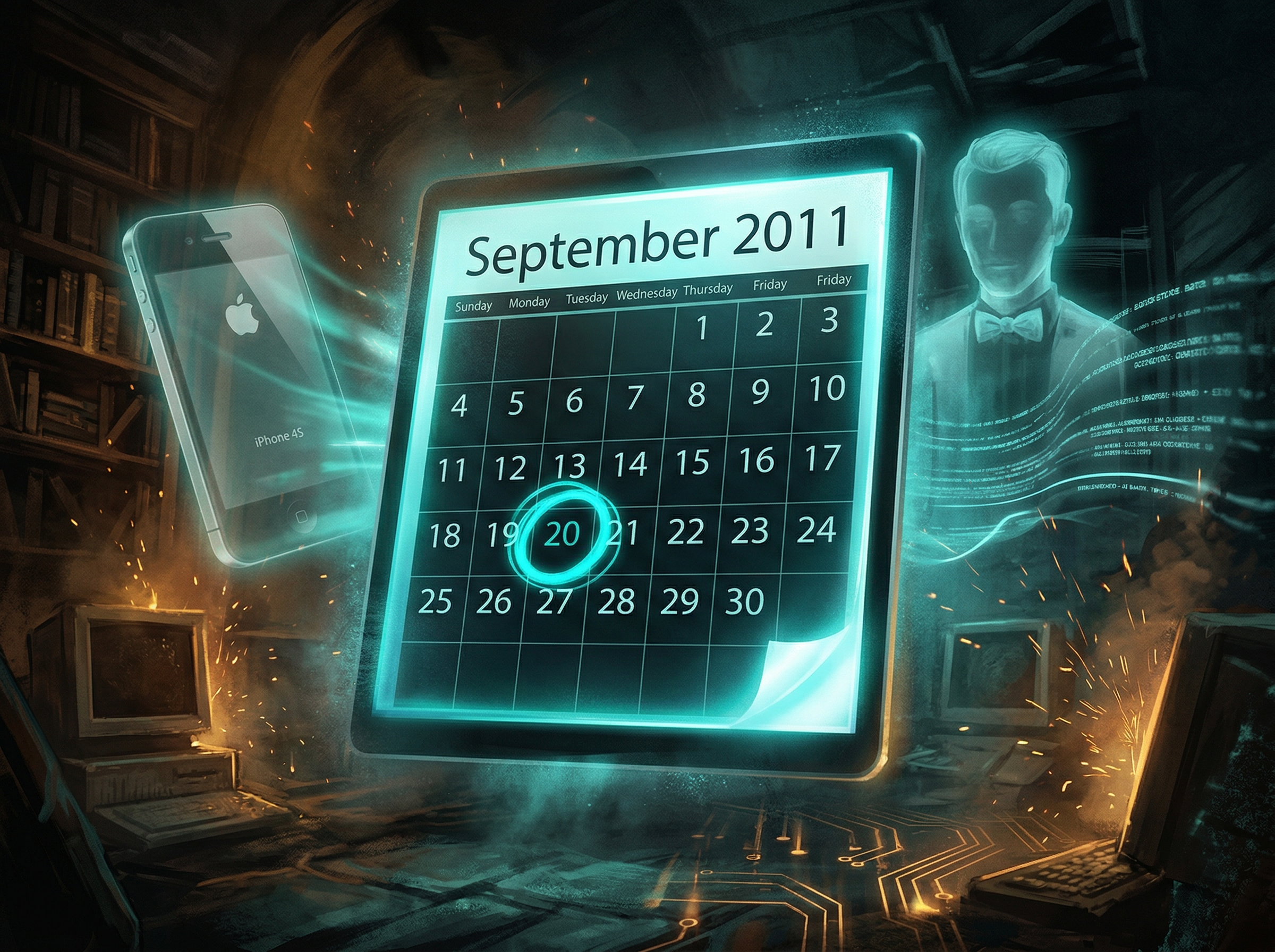
The kicker: The calendar on screen reads September 16, 2011. Apple chose that date as a "far future" target, roughly 25 years out. Remember this date. It becomes important.
02

Every Prediction Landed — They Just Took the Scenic Route

A glowing September 2011 calendar page surrounded by silhouettes of the devices that fulfilled the prophecy

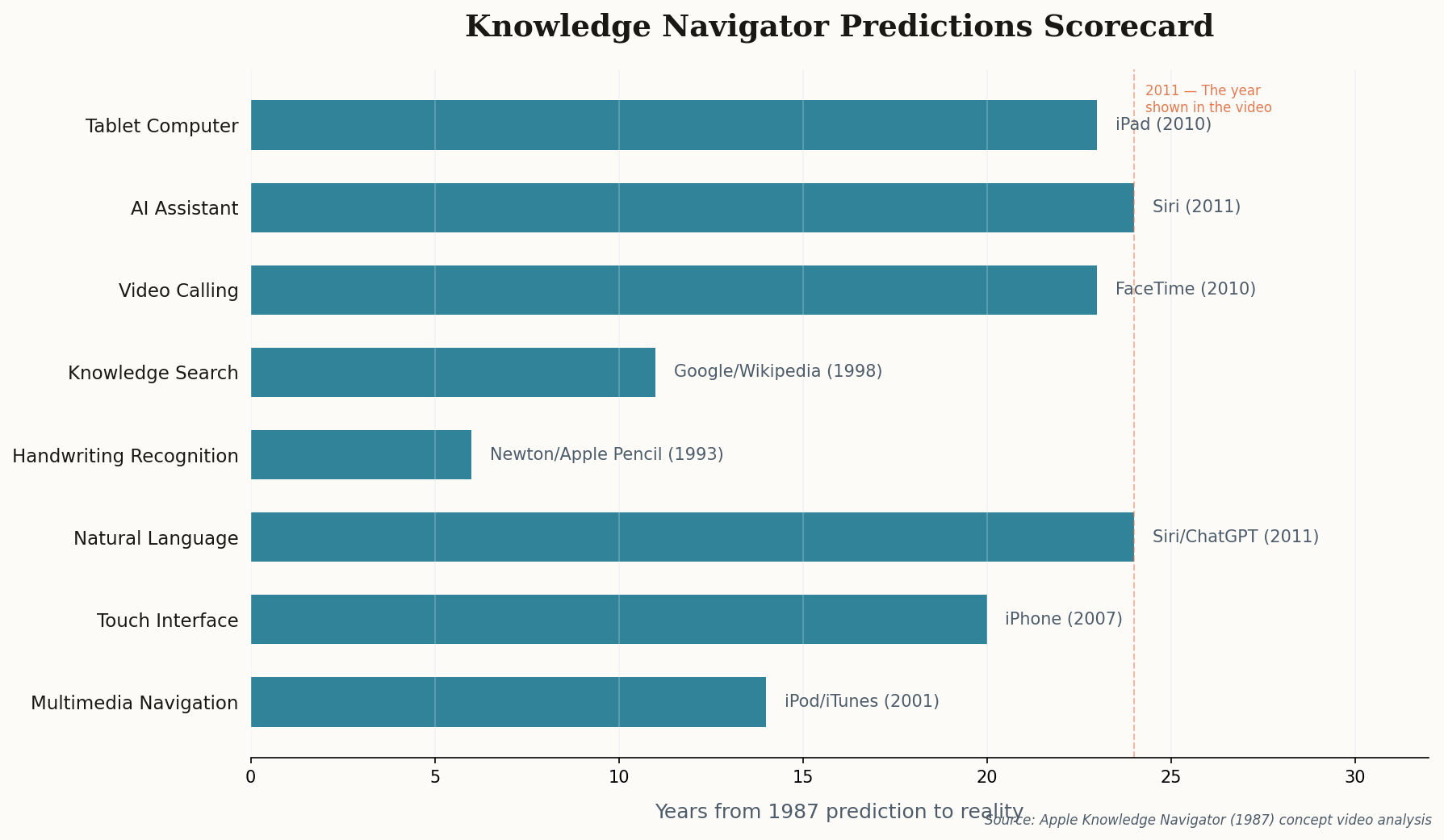
Let's play a game. Here's what a six-minute video from the Reagan era predicted, and when reality caught up:

Bar chart showing the Knowledge Navigator predictions and how many years each took to become reality
Every major technology shown in the 1987 concept video eventually shipped as a real product. The Knowledge Navigator predicted Siri's arrival within weeks of the actual date shown on screen.

The video showed a touch-based tablet computer 23 years before iPad. It showed video calling 23 years before FaceTime. It showed an AI assistant that understands context and natural language 24 years before Siri. It showed instant access to global research databases 11 years before Google existed and 14 years before Wikipedia launched.

But here's the part that gives technologists actual chills: the calendar on Phil's screen read September 16, 2011. Apple announced Siri on October 4, 2011 — eighteen days later. The video predicted not just the technology, but the year it would arrive, with uncanny precision.

Was it luck? Probably. But it's the kind of luck that makes you wonder whether Alan Kay — the Apple Fellow whose 1968 Dynabook concept was the philosophical ancestor of all of this — was right when he said, "The best way to predict the future is to invent it."

03

The Visionary Who Got Fired Before His Vision Shipped

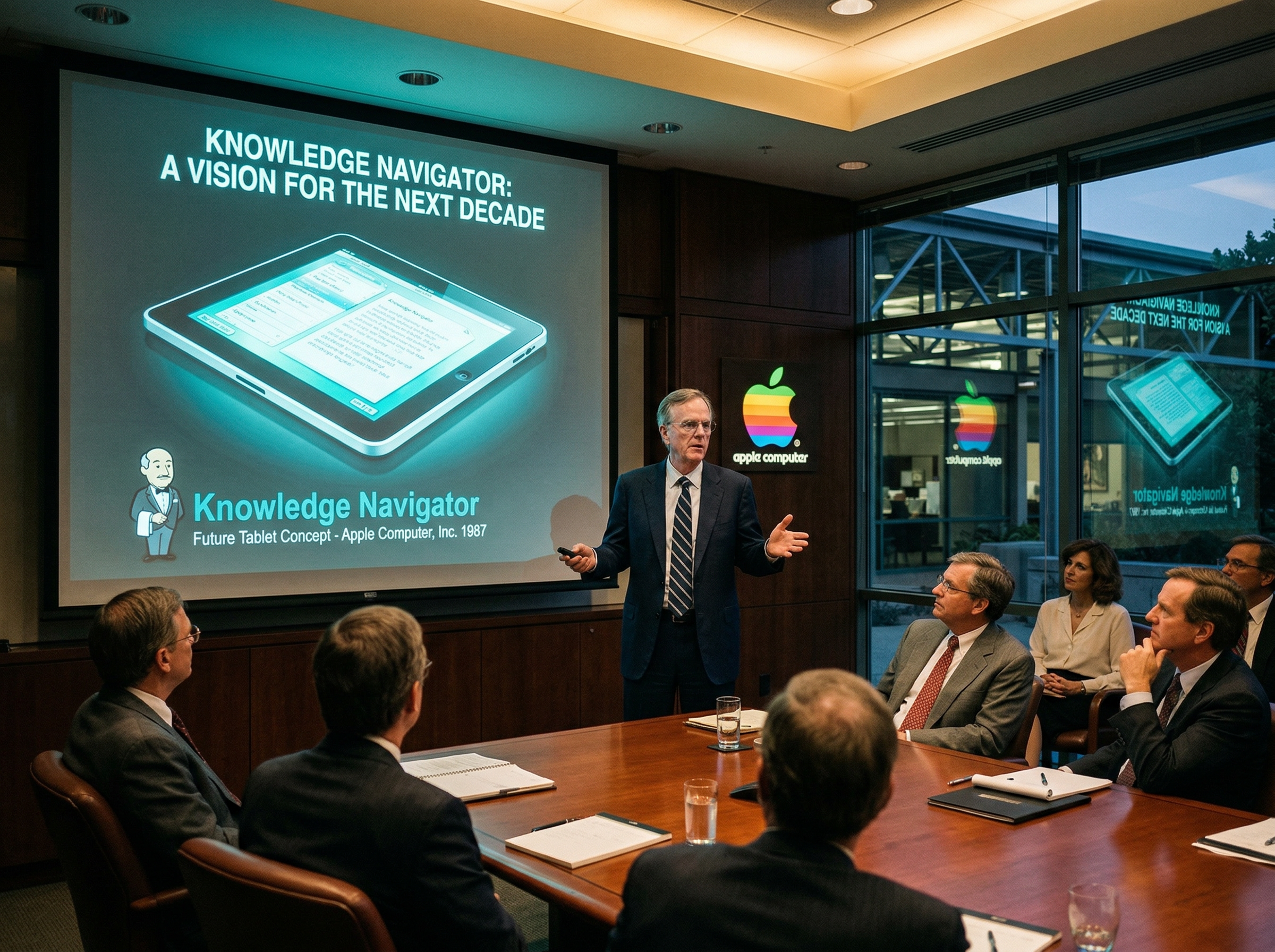
A 1980s corporate boardroom with a futuristic tablet concept on the presentation screen

John Sculley's tragedy is one of Silicon Valley's cruelest ironies: he saw the future more clearly than almost anyone, and got fired for not being able to build it fast enough.

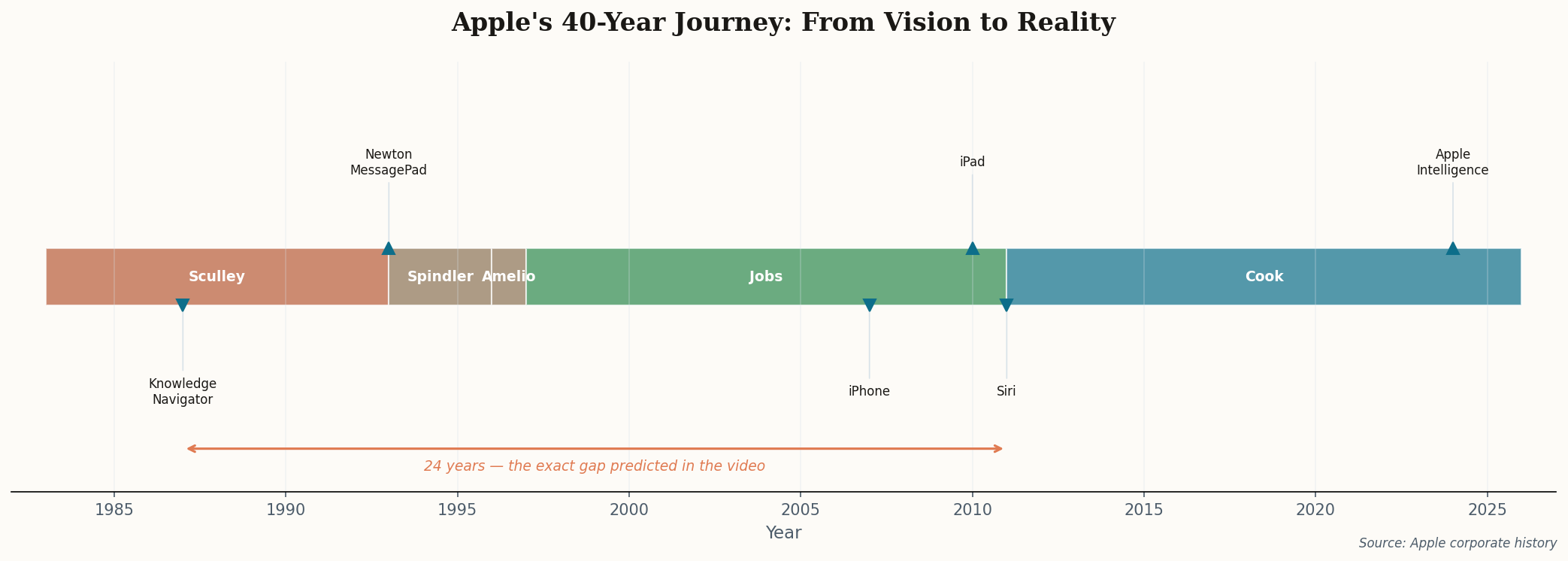
Timeline showing Apple CEOs from 1983 to 2026, highlighting the 24-year gap between Knowledge Navigator and Siri
Apple's CEO timeline from Sculley to Cook. The Knowledge Navigator vision survived four leadership changes across 37 years.

The late 1980s at Apple were a paradox. The Mac was selling well, HyperCard had launched as a proto-web hypertext system, and the Advanced Technology Group — Apple's blue-sky R&D wing — was churning out brilliant research on intelligent agents and hypertext. Researchers like Mike Liebhold made sure the Knowledge Navigator video wasn't pure science fiction. Every technology shown was grounded in real, emerging research.

But Sculley's attempt to commercialize the vision came too early. The Newton MessagePad, launched in 1993, was supposed to be the Knowledge Navigator you could actually buy. Instead, it became a punchline. The handwriting recognition was famously terrible — Gary Trudeau mocked it in Doonesbury for an entire storyline. The hardware was too big, too expensive, and too slow.

Sculley was forced out in October 1993, following a 97% drop in profits. The board lost confidence in his expensive moonshot R&D projects. The Knowledge Navigator video gathered dust. The Newton limped along for another five years before Steve Jobs killed it in 1998, one of his first acts upon returning.

The lesson isn't that Sculley was wrong. It's that being right 20 years too early is commercially indistinguishable from being wrong.

04

From SRI to Siri: How Phil Got Reincarnated

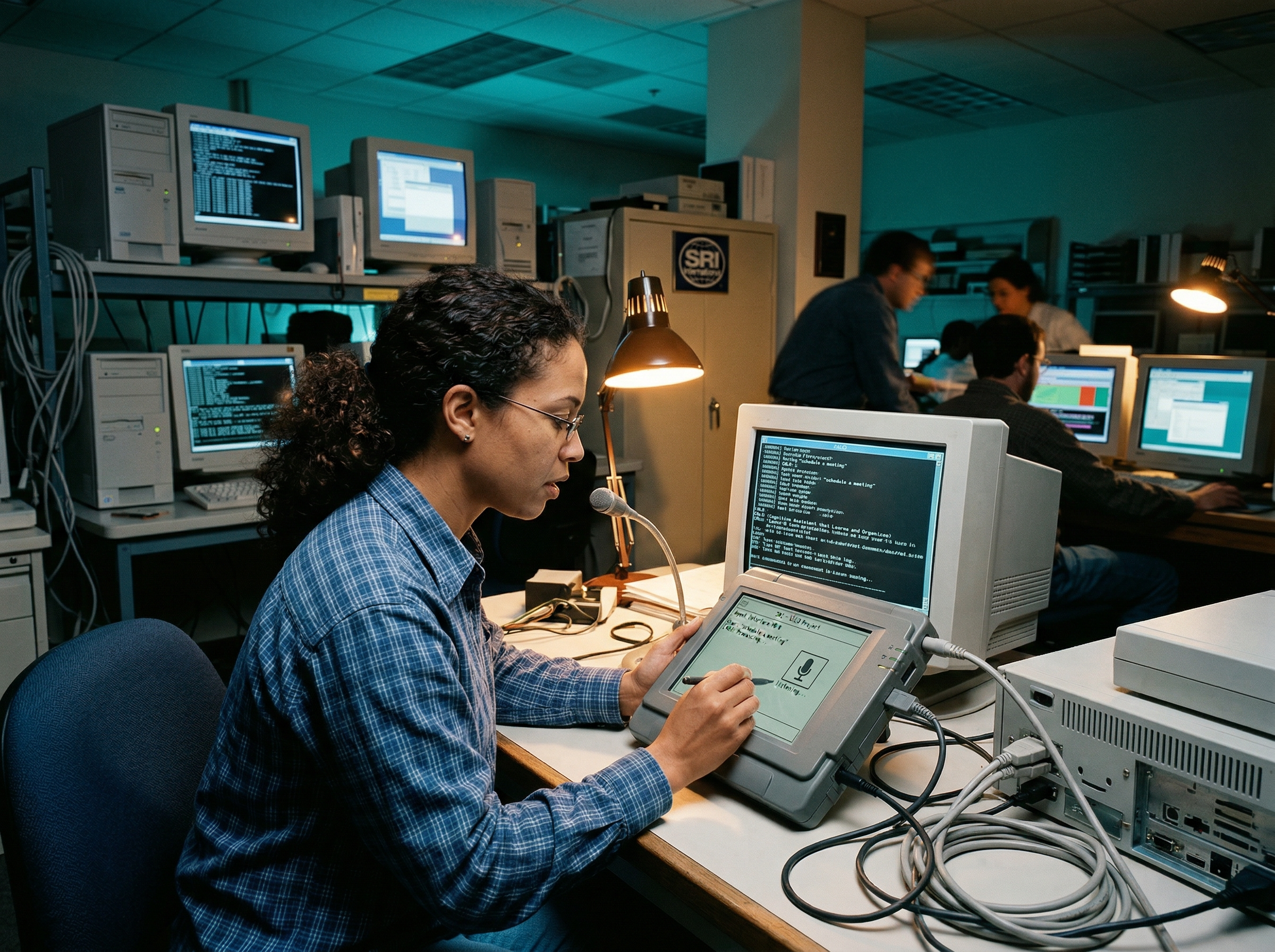
A researcher at SRI International working on an early AI agent prototype

The Knowledge Navigator didn't just predict Siri. It inspired Siri.

Adam Cheyer, one of Siri's co-founders, has been explicit about this. In the 1990s, while working at SRI International, Cheyer built a prototype tablet specifically designed to replicate the "Phil" agent from the Knowledge Navigator video. He wanted to make the bow-tied avatar real. His co-founder, Dag Kittlaus, shared the obsession.

The path from SRI to Siri ran through a massive DARPA-funded project called CALO (Cognitive Assistant that Learns and Organizes) — a five-year, $150 million effort involving 25 research institutions. CALO's goal was, essentially, to build Phil. When the project ended, Cheyer, Kittlaus, and Tom Gruber spun out the conversational AI component as a startup called Siri, Inc.

Apple acquired Siri in April 2010 for a reported $200 million. Eighteen months later, on October 4, 2011 — eighteen days after the date on Phil's calendar — Tim Cook stood on stage and introduced Siri to the world.

The initial reaction was disappointing. Siri could set timers and tell jokes, but it couldn't synthesize research papers or run climate simulations. It couldn't see what you were doing on screen. It was Phil with a lobotomy — charming but shallow. That gap between the 1987 vision and the 2011 reality would take another thirteen years to close.

05

Apple Intelligence: The 37-Year Promise, Finally Kept

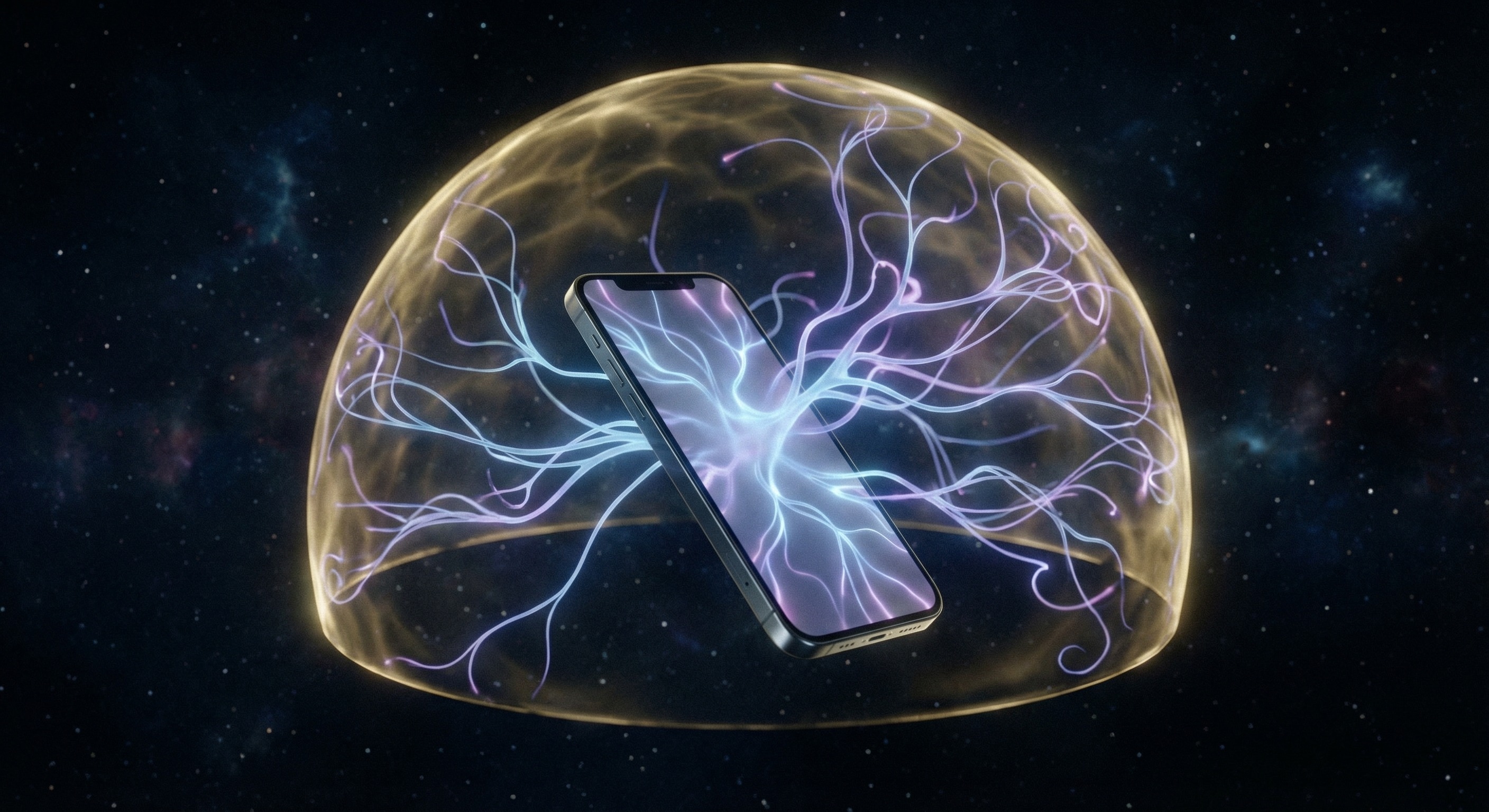
Modern Apple Intelligence interface on an iPad, showing the vision finally realized

When Apple announced Apple Intelligence at WWDC 2024, the tech press immediately drew the Knowledge Navigator comparison. And for once, the comparison held up.

Apple Intelligence introduced exactly the capabilities Phil demonstrated in 1987: on-screen awareness (the AI can see what you're doing), personal context (it cross-references your emails, files, and calendar), and conversational reasoning (you can make ambiguous requests and it figures out what you mean). When you tell the new Siri to "find that article my colleague shared last week about deforestation," it actually can. Phil would be proud.

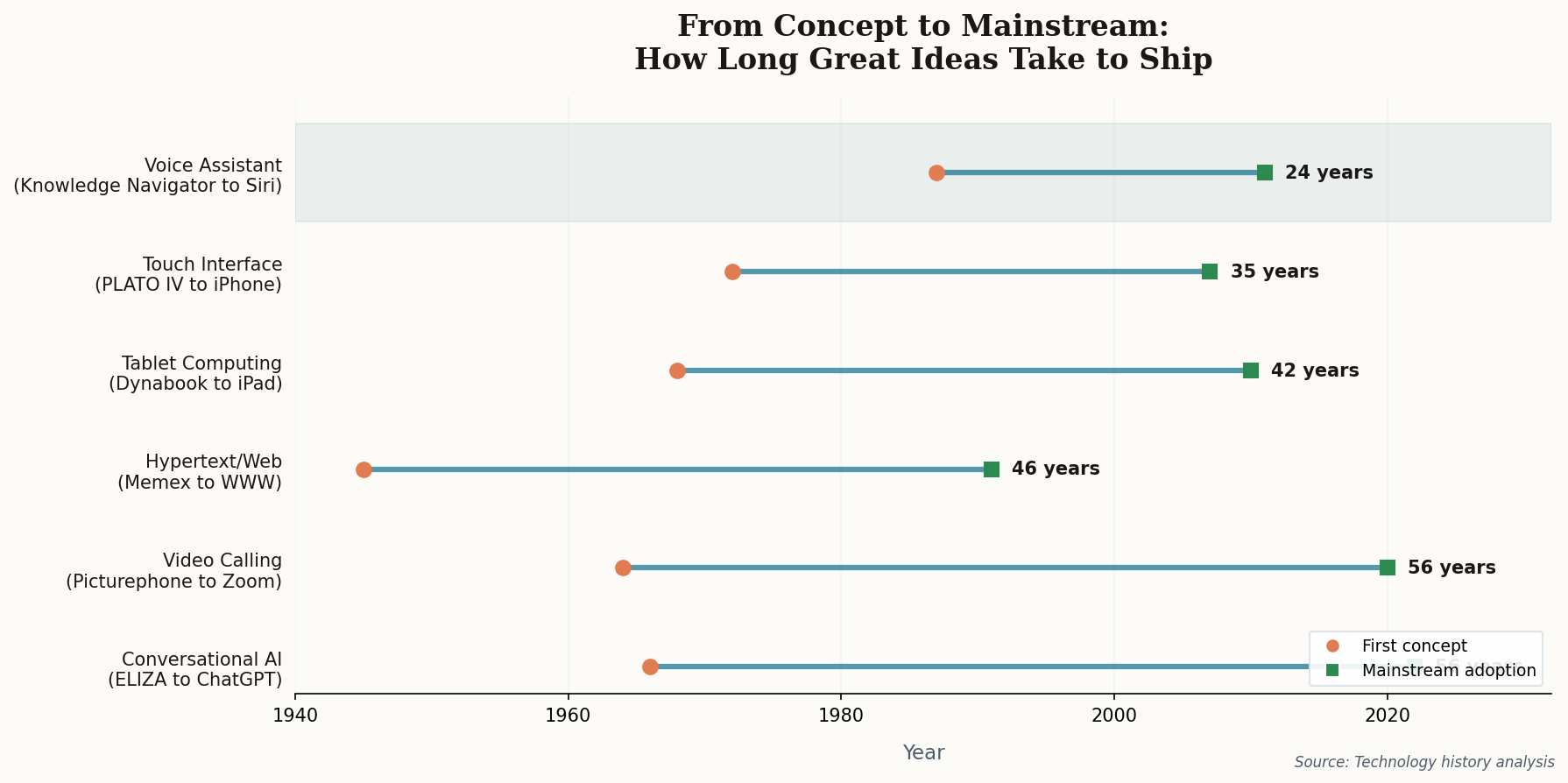
Comparison chart showing how long various technologies took from concept to mainstream adoption
The Knowledge Navigator's voice assistant concept took 24 years from vision to reality. Compare that to conversational AI (56 years from ELIZA to ChatGPT) or video calling (over 45 years from AT&T's 1964 Picturephone to mainstream adoption via FaceTime).

The real breakthrough is Large Language Models. In 1987, the "conversational reasoning" in the Knowledge Navigator video was faked by a voice actor reading a script. There was no technology on Earth that could do what Phil did. LLMs finally provided the missing piece — the ability to understand intent, synthesize information, and respond in natural language. It took 37 years, the invention of the internet, the smartphone revolution, and the entire deep learning explosion to catch up to a six-minute video shot on a $60,000 budget.

Recent retrospectives in AppleInsider and Business Insider (2024-2025) characterize the current AI era as the final fulfillment of the "Sculley Vision." The man got fired. His video got vindicated.

06

The Future Video That Invented a Genre

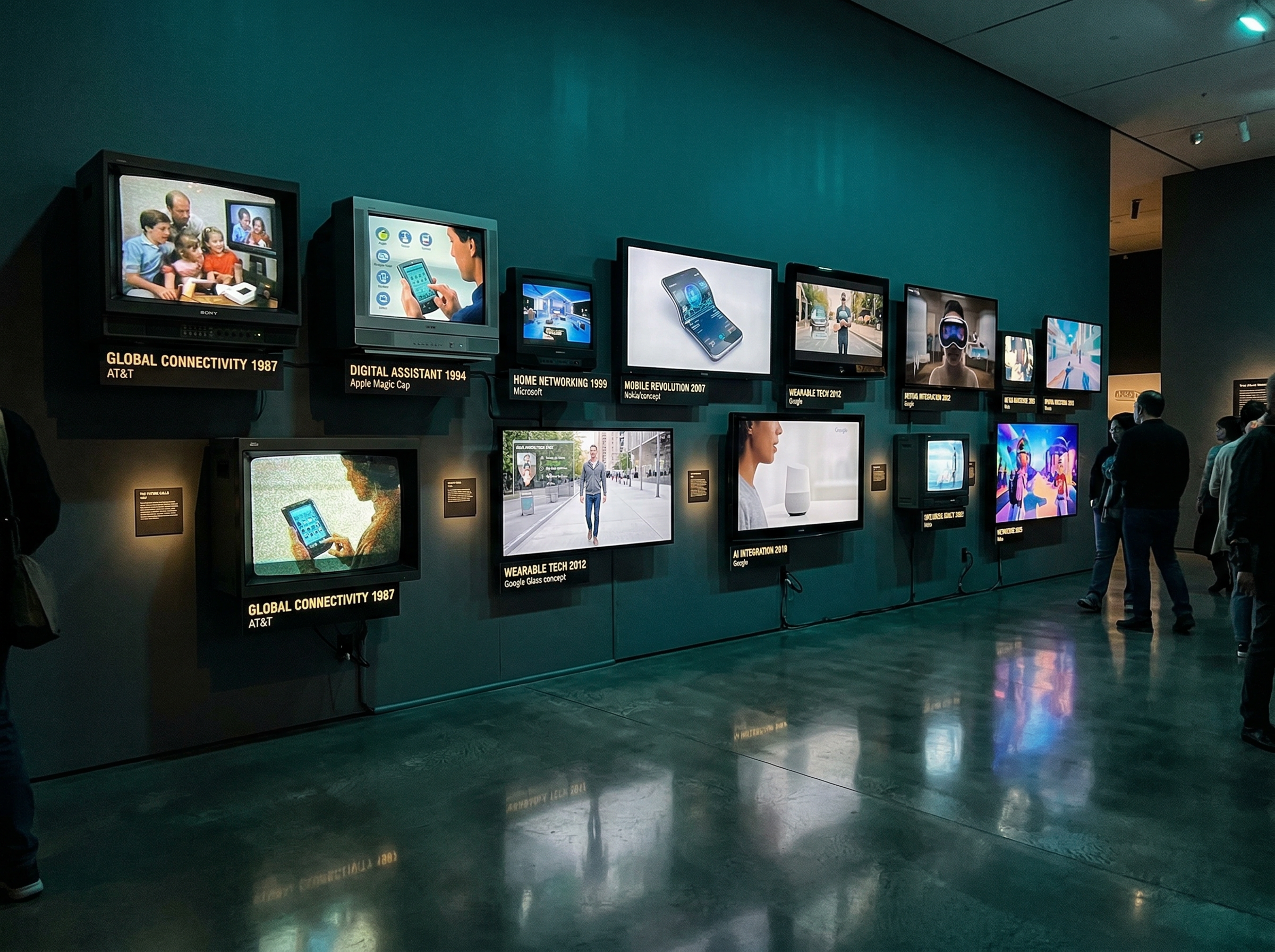
A gallery wall showing multiple screens playing different tech company concept videos through the decades

The Knowledge Navigator didn't just predict the future. It created a template for how tech companies predict the future.

Before 1987, concept videos were rare. After the Knowledge Navigator, they became a corporate staple. Microsoft's Productivity Future Vision series (2009-2019) borrowed the format wholesale — polished scenarios of professionals using technology that didn't exist yet. The Microsoft Courier tablet, leaked in 2009, bore an uncanny resemblance to the Knowledge Navigator's folding book-style hardware. Google Glass's early demos followed the same playbook.

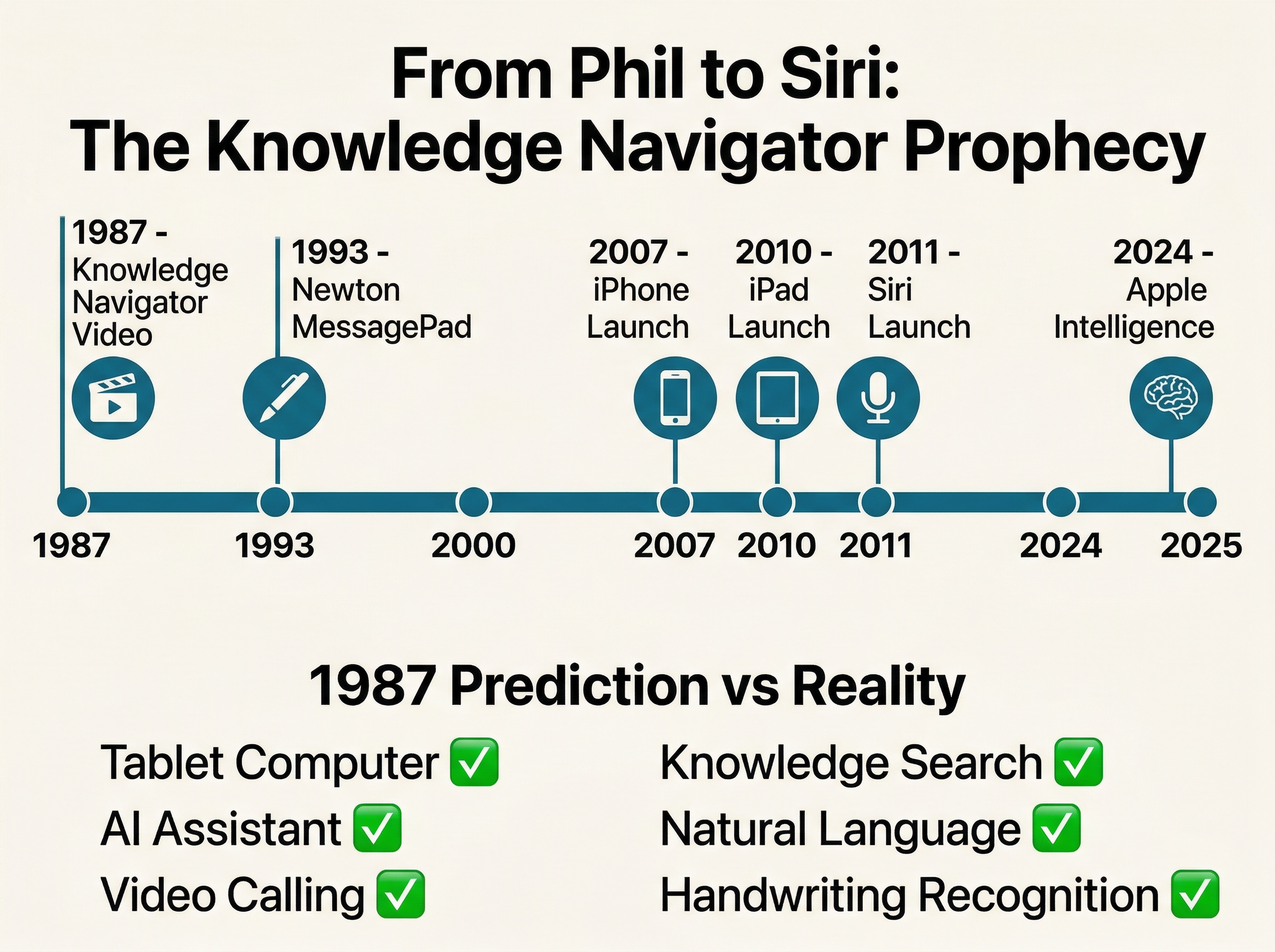
Timeline infographic showing the Knowledge Navigator's journey from 1987 prediction to 2024 fulfillment
Infographic: From Phil to Siri — The Knowledge Navigator's 37-year journey from concept video to reality. Generated with Nano Banana 2.0

The video is now a staple in design schools, taught alongside Edward Tufte's Envisioning Information as a masterclass in "Wizard of Oz" prototyping — the technique of simulating a technology's user experience before the technology exists. It proved that you don't need to build the future to design it. You just need a camera, a clear vision, and a bow tie.

The most remarkable thing about rewatching the Knowledge Navigator today isn't what it got right. It's how modest it feels. In 1987, a tablet that could answer questions and make video calls was science fiction. In 2026, it's the device you're probably reading this on. The future arrived. It just took the scenic route.

The Best Way to Predict the Future

Alan Kay said to invent it. John Sculley said to film it. Apple eventually said to ship it. The Knowledge Navigator reminds us that the distance between a bold vision and a shipping product isn't imagination — it's patience. Sometimes the right idea just needs the world to catch up.

Share X LinkedIn