Design & Culture

Ninety Years of Rings

How a Depression-era dinner plate became America's most collected ceramic—and why a new shade of lavender has thousands of collectors reaching for their wallets.

Listen
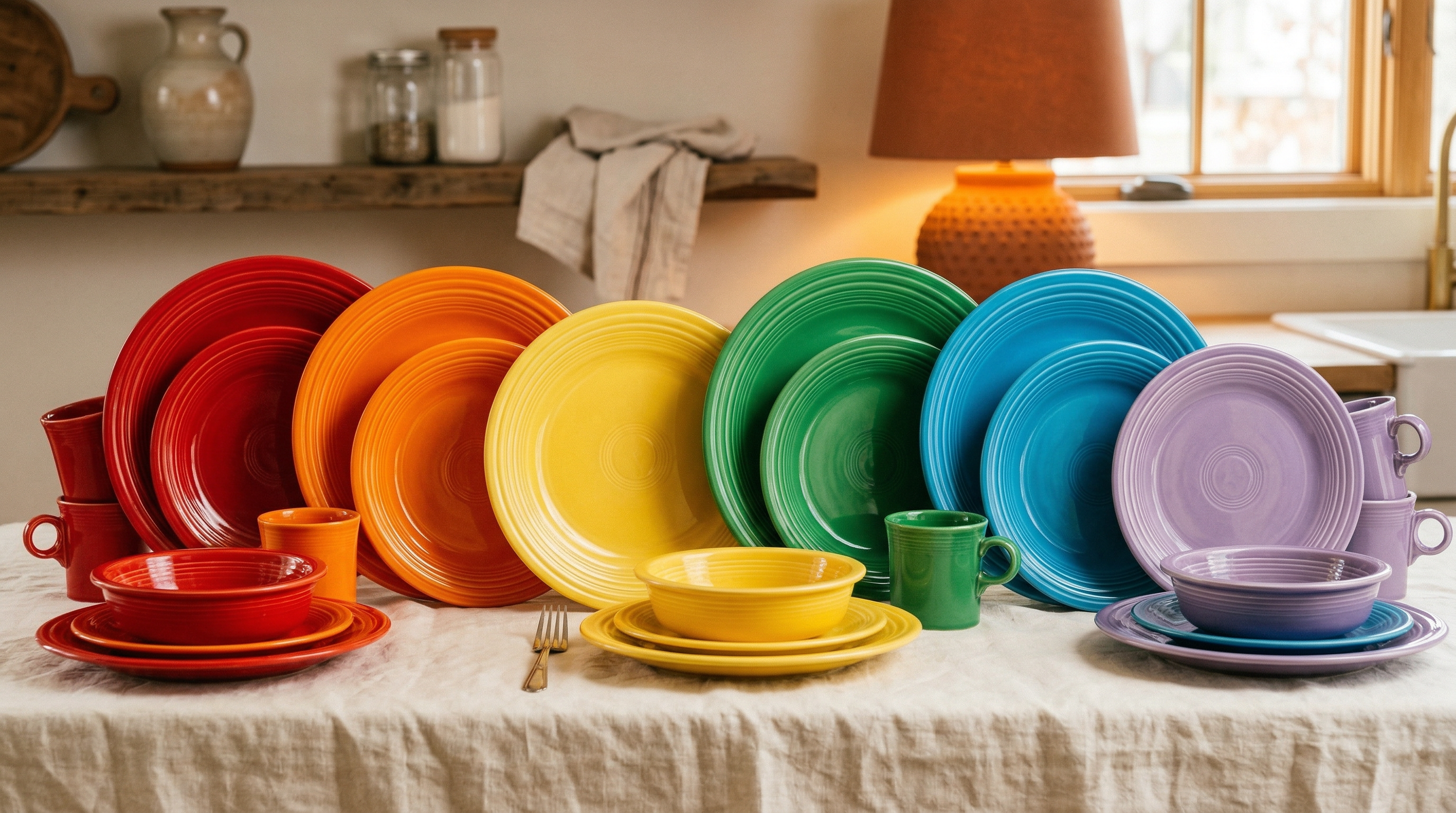
A rainbow cascade of Homer Laughlin Fiesta dinnerware in scarlet, sunflower, cobalt, shamrock, and tangerine, with concentric ring patterns catching warm light
01

Lavender Drops on Day 90—and Yes, That's Deliberate
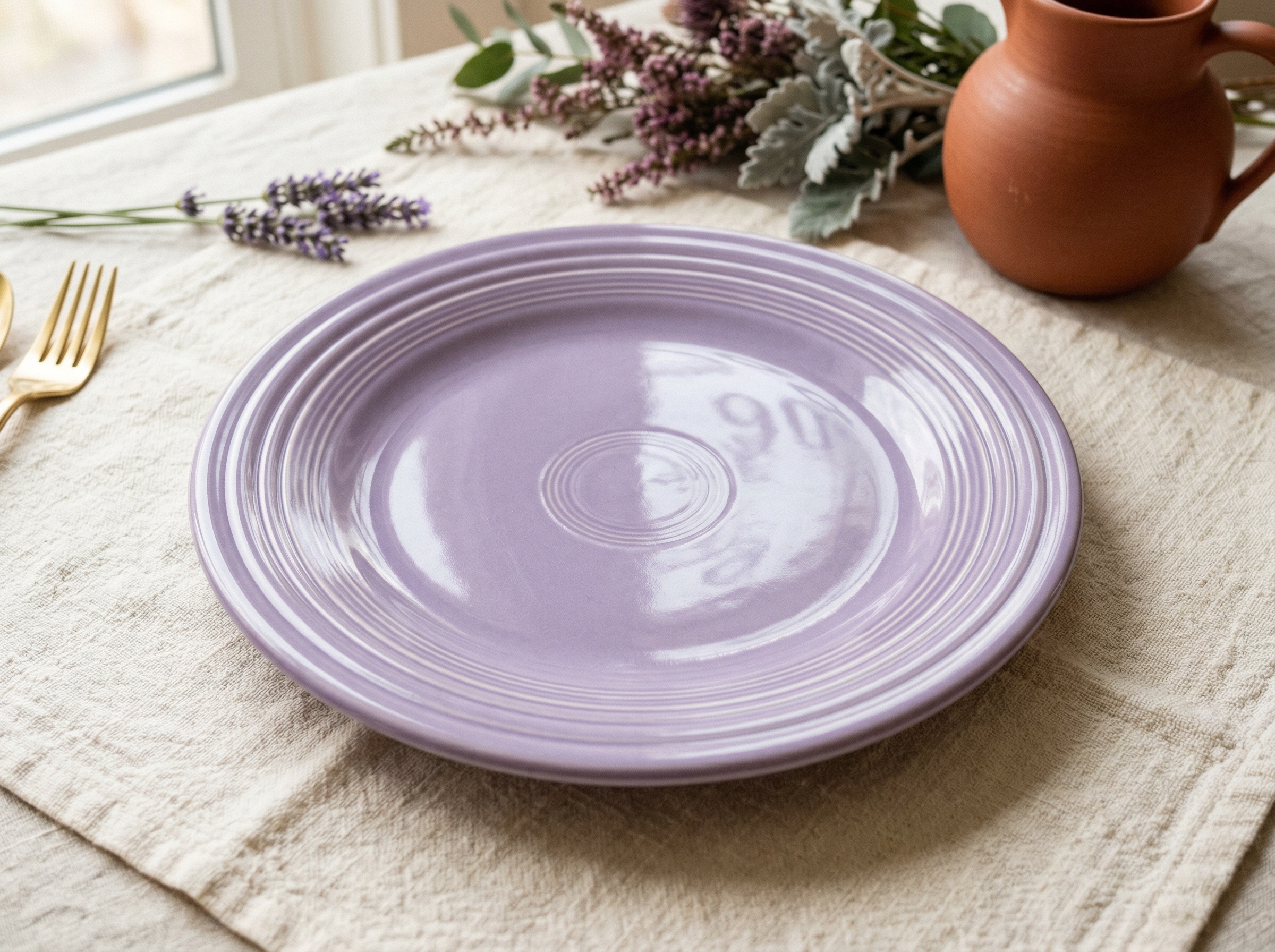
A single Fiesta plate in the new Lavender color, a serene botanical purple with concentric Art Deco rings

Most brands celebrate round-number anniversaries with a press release and maybe a cake in the break room. Fiesta Tableware Company chose to release its 90th anniversary color on March 31—the 90th day of the year. That's not marketing. That's theater.

The color is Lavender, described as a "serene, botanical purple" that evokes renewal and calm. It's a pivot from the bolder anniversary colors of recent years, and it signals something interesting: Fiesta is chasing the wellness-aesthetic crowd without abandoning the collectors who have made this brand what it is. Every piece produced in 2026 carries a special 90th-anniversary backstamp, which means anything you buy this year is immediately a dated collectible.

Here's the strategic brilliance: anniversary backstamps create urgency that transcends color preference. Even if lavender isn't your thing, the backstamp makes every 2026 piece a future rarity. It's the kind of move that turns casual buyers into accidental collectors—and accidental collectors into lifelong customers.
02

The Great Linen War: When Neutrals Split a Community

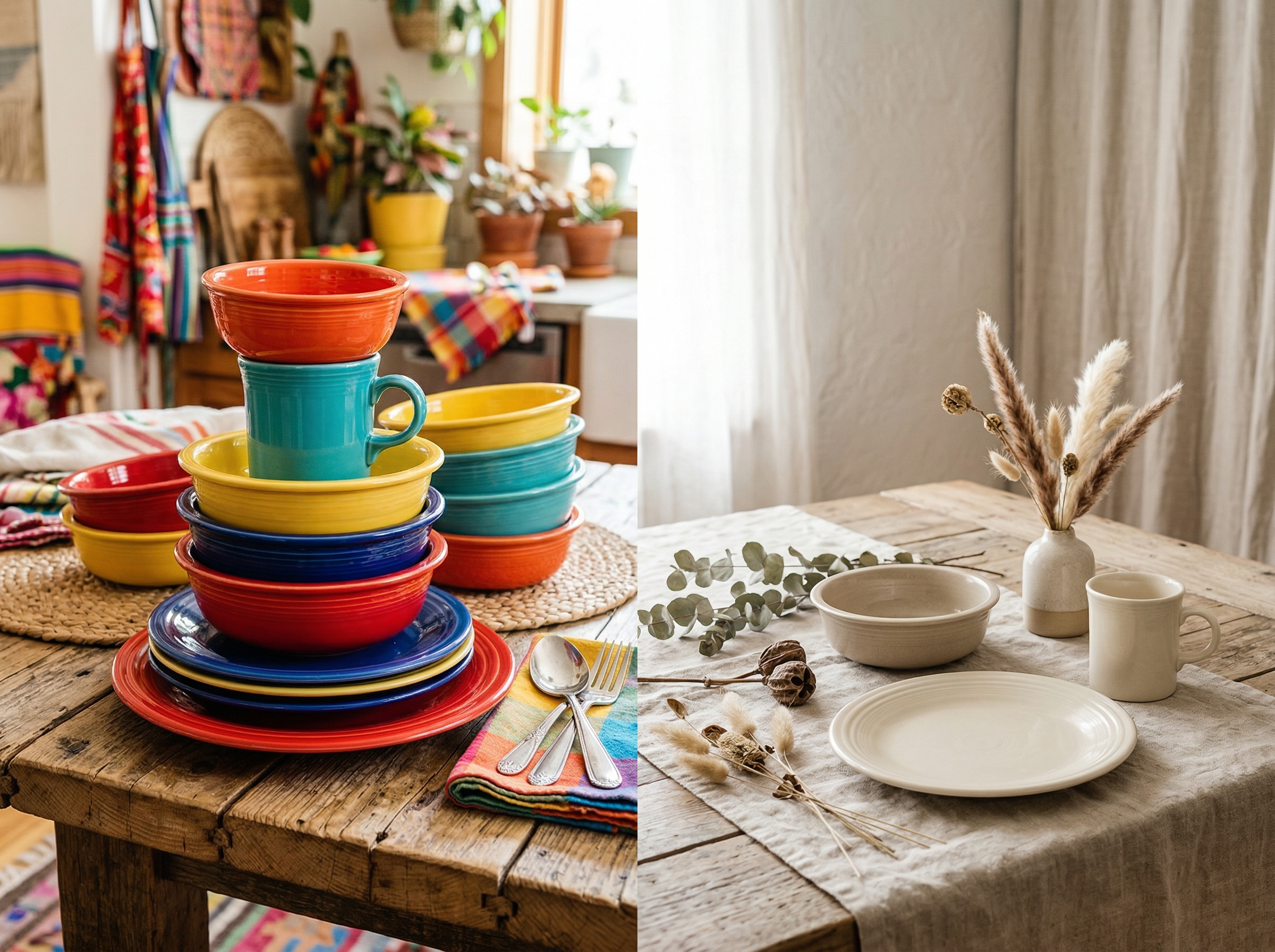
Split composition showing bold vibrant Fiesta colors on the left and calm neutral linen pieces with dried botanicals on the right

When Fiesta announced Linen as its 2025 color—a warm, understated neutral replacing the retired Ivory—the collector community did what collector communities do best: it fractured along generational lines.

On one side, long-time Fiesta devotees who believe the brand should be loud. These are the people who stack Scarlet on Sunflower on Peacock and call it Tuesday. On the other, a newer cohort drawn to the organic modern aesthetic—the earth tones, the dried pampas grass, the Joanna Gaines of it all. They see Linen as Fiesta finally speaking their language.

The numbers settled the argument. Linen became one of the most-registered colors for 2025 weddings, proving that the mass market's appetite for "quiet" ceramics is real. But the controversy exposed a deeper tension: can a 90-year-old brand built on chromatic joy successfully play both sides of the color spectrum? The Lavender release suggests Fiesta thinks so—serene enough for the minimalists, purple enough for the maximalists.

03

The 15-Color Rule Is the Best Marketing Strategy You've Never Heard Of

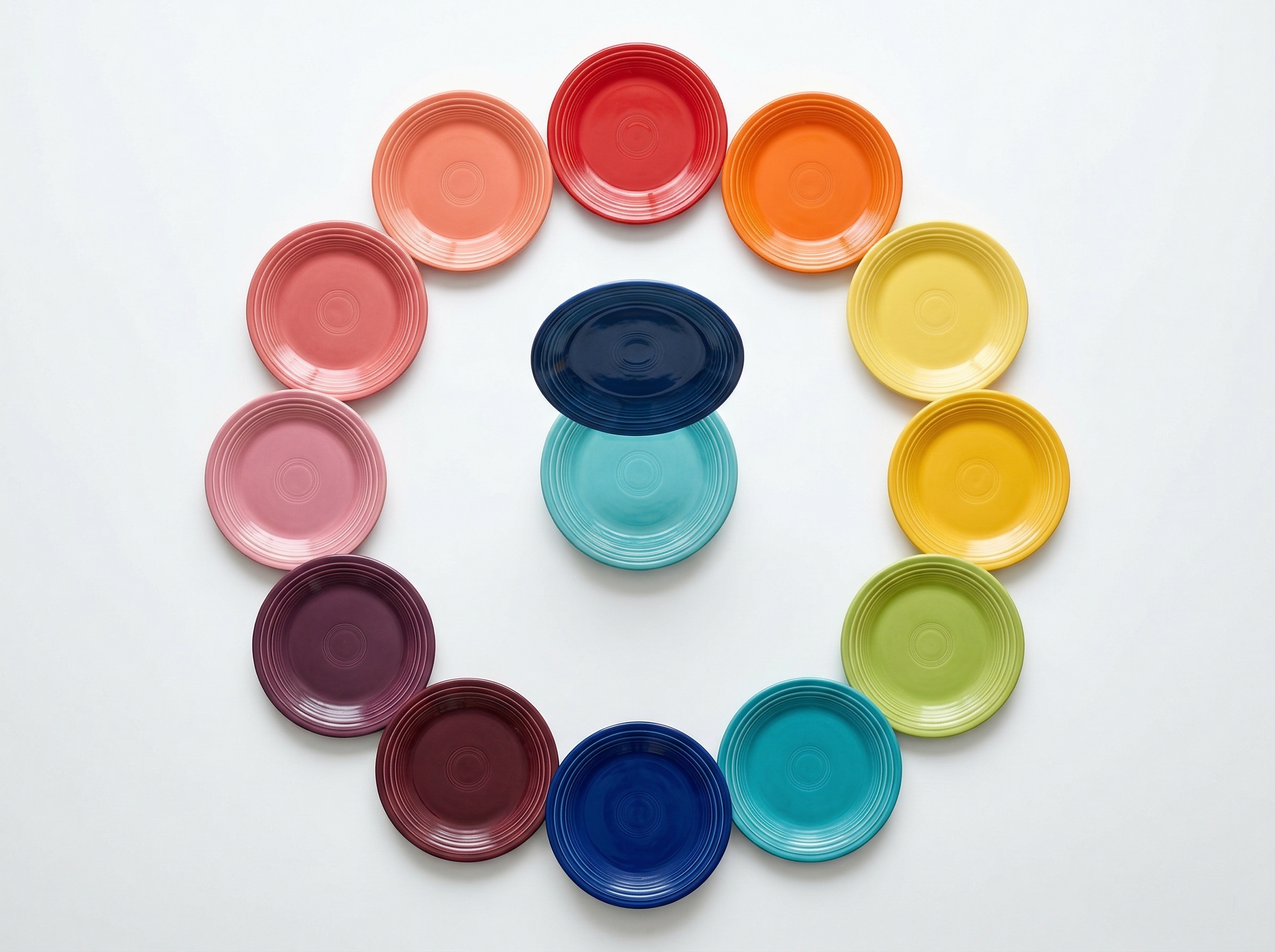
Fifteen Fiesta plates arranged in a color wheel circle viewed from above, with one plate being removed

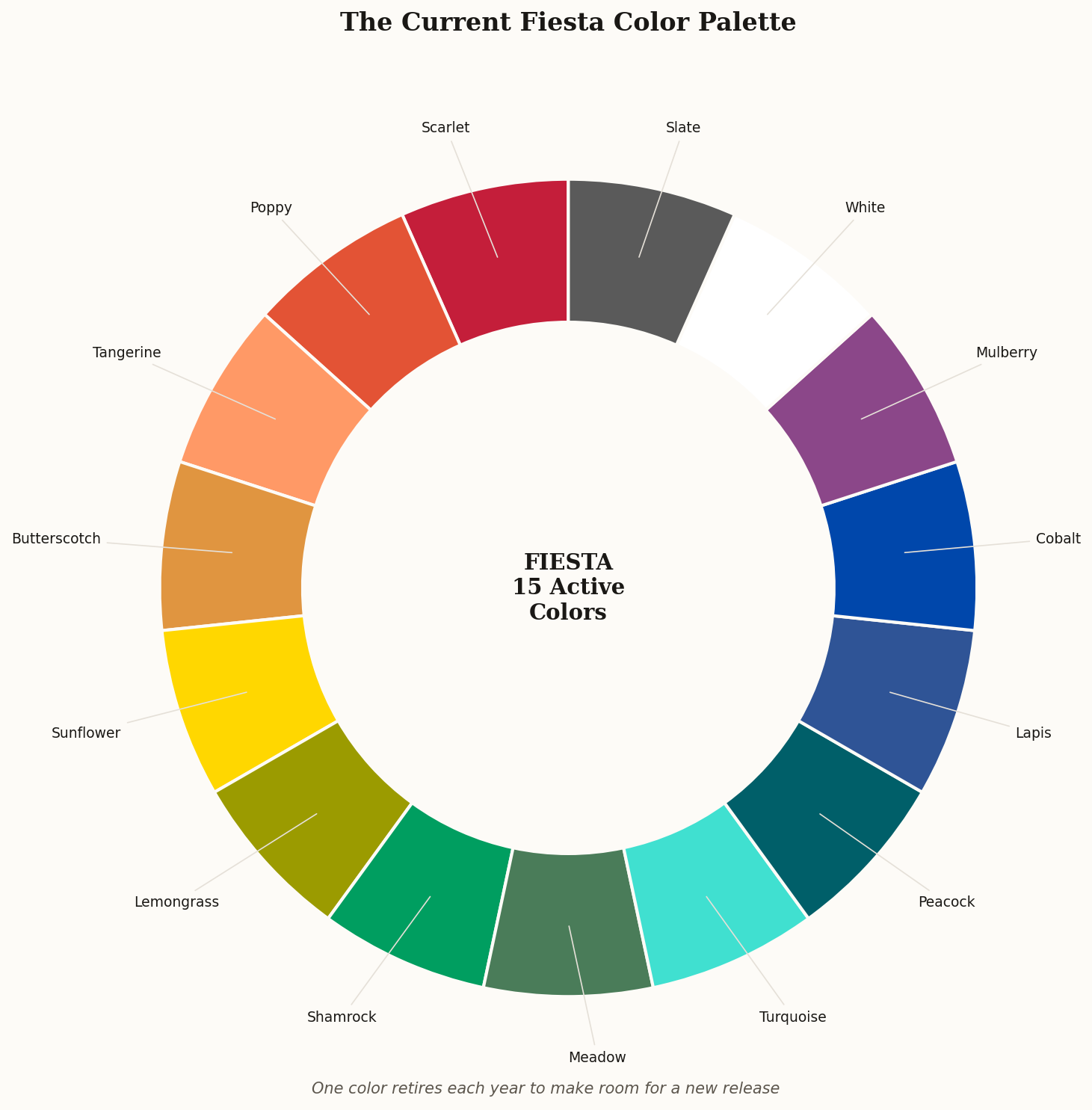
Here's a business model that would make a Supreme drop blush: at any given time, Fiesta maintains exactly 15 active colors. Every year, one retires. Every year, one debuts. The retired color immediately becomes scarcer. The new one generates buzz. The cycle repeats, and has been repeating, for decades.

Donut chart showing Fiesta's current 15-color active palette including Scarlet, Poppy, Tangerine, Butterscotch, Sunflower, and more
The current Fiesta palette: 15 colors, each earning its seat at the table until rotation day arrives.

This is artificial scarcity executed with surgical precision. When word leaked that Twilight and Ivory were on the retirement block, collectors panic-bought entire place settings. Not because they needed more plates—because they understood the game. A retired Fiesta color doesn't just leave the catalog; it enters the secondary market where prices climb year over year.

The genius is that Fiesta spends almost nothing on traditional advertising. The community does the marketing through "hunt" culture, Reddit threads dissecting retirement rumors, and eBay listings that function as price signals. It's a hobby disguised as kitchenware—or maybe kitchenware disguised as a hobby. Either way, it works.

04

Your Grandma's Plates Are Radioactive (and TikTok Is Obsessed)

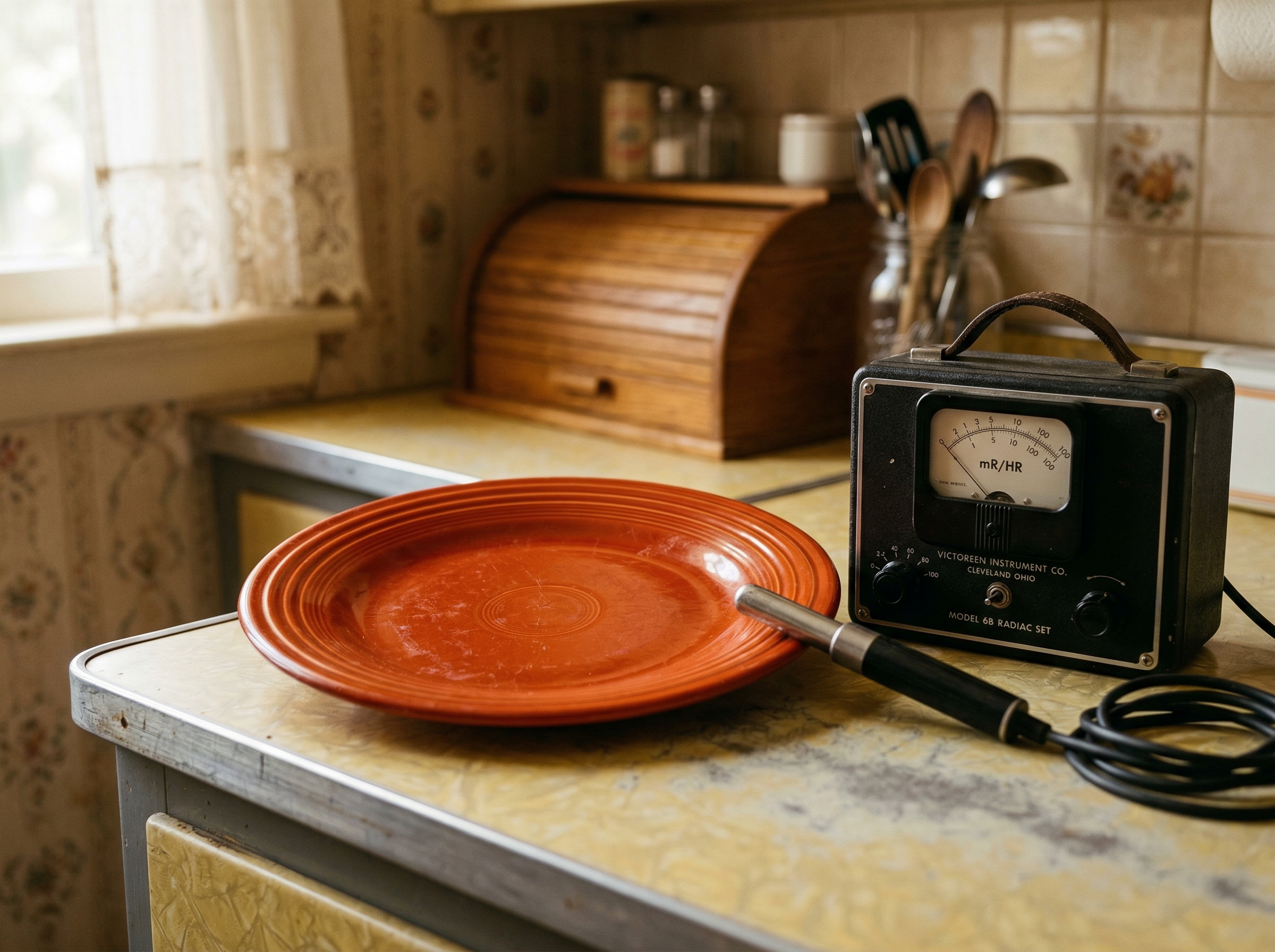
A vintage 1940s Fiesta plate in iconic orange-red 'Radioactive Red' glaze with a Geiger counter beside it

Every great brand needs a weird story, and Fiesta's is genuinely nuclear. Between 1936 and 1972, the iconic orange-red glaze—known to collectors as "Radioactive Red"—contained uranium oxide. The pieces emit low-level alpha particles. They will, in fact, make a Geiger counter click.

The EPA's official position is "display only," though the actual health risk is negligible (you'd need to eat off the same plate daily for years to accumulate any meaningful exposure). But "negligible risk" doesn't trend on TikTok. "YOUR GRANDMA'S DISHES ARE RADIOACTIVE" does. And throughout 2024-2025, Gen Z creators discovered the joy of waving Geiger counters over thrift-store Fiesta finds, racking up millions of views.

This is marketing you cannot buy. The radioactive story gives Fiesta a "forbidden fruit" mystique that separates it from every other dinnerware brand on earth. Nobody's making TikToks about their Corelle. The danger—real or perceived—transforms a dinner plate into a conversation piece, and conversation pieces are what collectors actually collect.

05

A Jug That Cost Less Than a Dollar Just Sold for $11,160

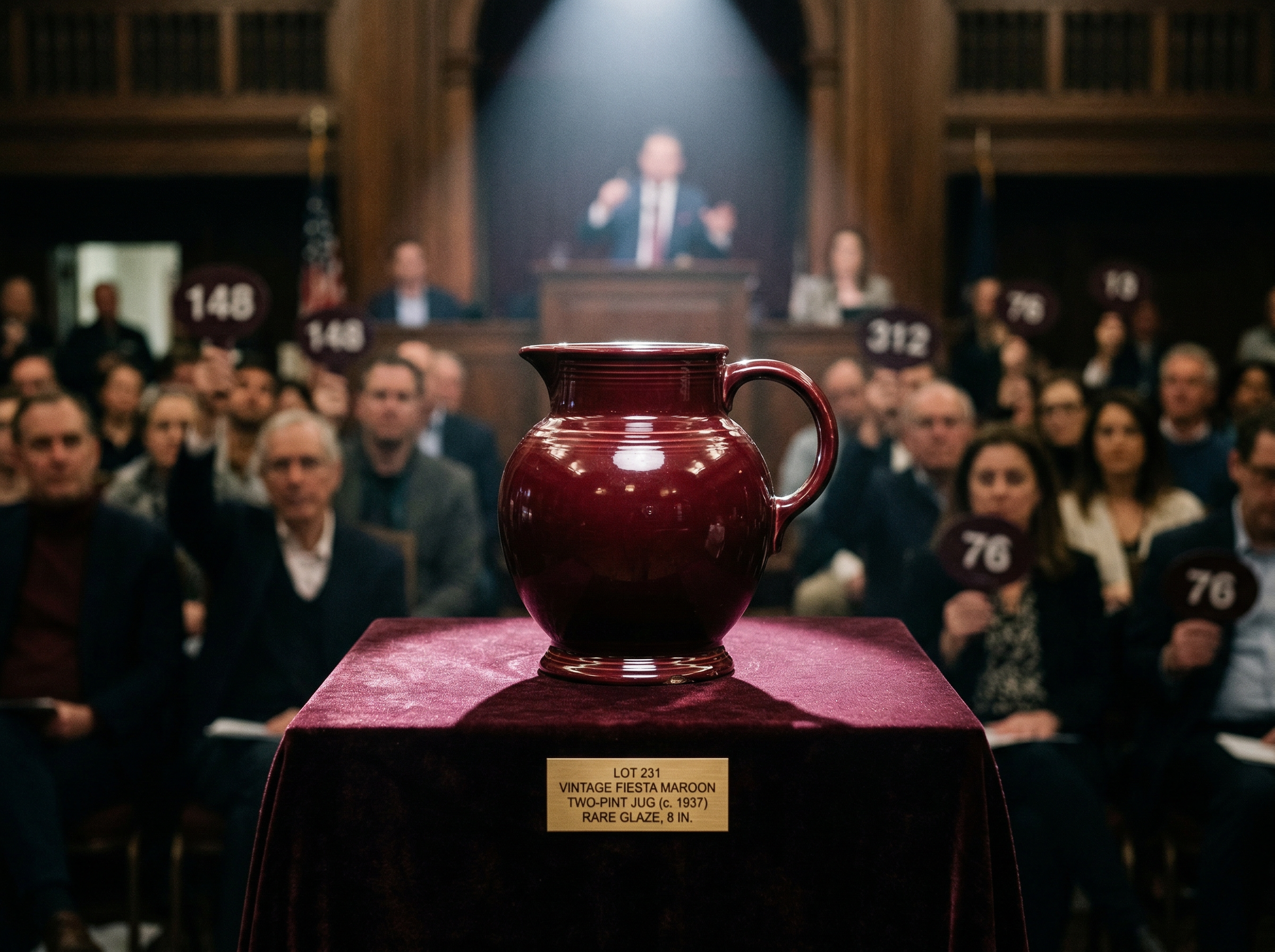
A rare vintage Fiesta maroon two-pint jug on a velvet auction pedestal under dramatic spotlight

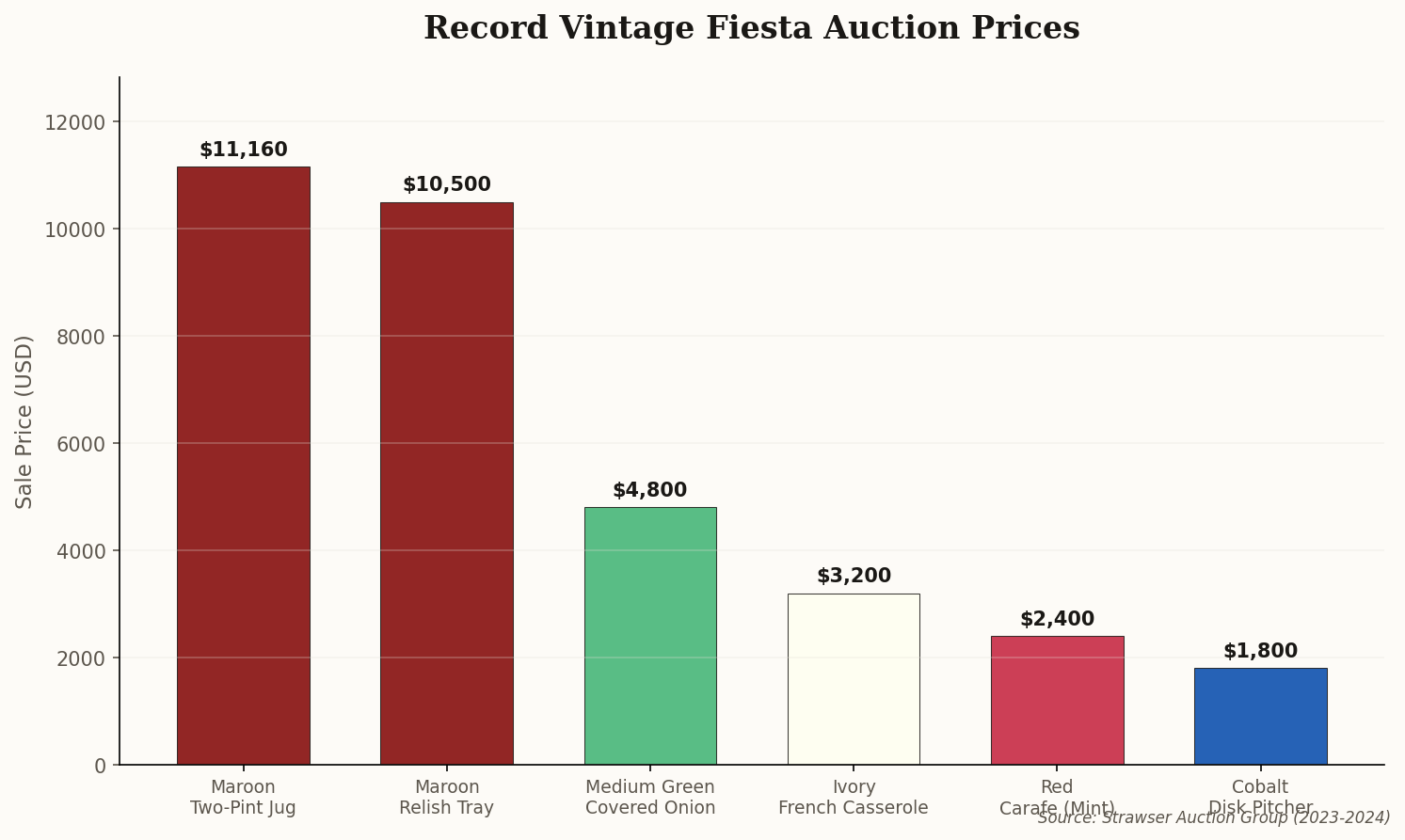
In March 2024, a Maroon Two-Pint Jug—one of only two known to exist in that experimental glaze—sold at auction for $11,160. A Maroon Relish Tray in the same sale fetched over $10,500. These are pieces of pottery that originally retailed for pennies during the Depression.

Bar chart showing record vintage Fiesta auction prices, with the Maroon Two-Pint Jug leading at $11,160
Record auction prices for rare vintage Fiesta pieces. Maroon—an experimental glaze never mass-produced—commands the highest premiums.

Maroon is the "Holy Grail" of Fiesta collecting because it was never a production color. It was experimental, which means surviving pieces are essentially prototypes—industrial artifacts that were never meant to leave the factory. The fact that they command five-figure prices validates Fiesta as something more than kitchenware. It's a legitimate category of collectible art, sitting alongside rare coins and vintage watches in auction house catalogs.

What makes this market different from, say, fine art is accessibility. You can still find vintage Fiesta at estate sales for a few dollars. The gap between the entry point (a $3 thrift-store saucer) and the ceiling ($11K for a maroon jug) is what keeps the hobby alive. Everyone's one garage sale away from a find that changes their collection.

06

The Man Who Made Art Deco Affordable to Everyone

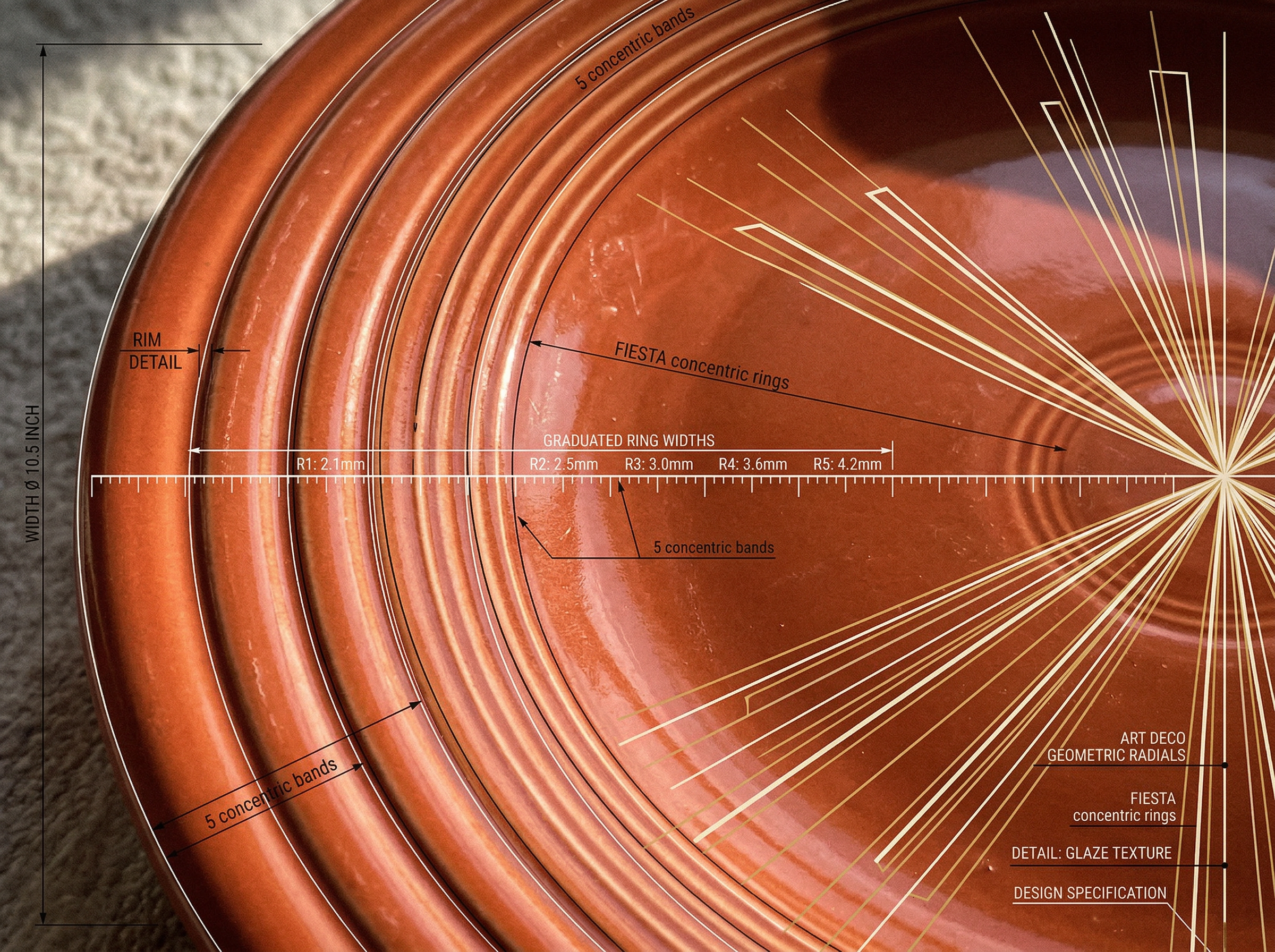
Close-up of Fiesta dinnerware concentric ring pattern with dramatic side lighting revealing graduated ring widths

In 1935, English immigrant Frederick Hurten Rhead sat down at the Homer Laughlin China Company in Newell, West Virginia, and designed a dinner plate that would still be in production nine decades later. The concentric rings weren't decorative whimsy—they were engineered. The graduated ring widths catch light at different angles, making each solid-color glaze appear to shift and glow. It's a design trick that makes a $20 plate look like it belongs in a museum.

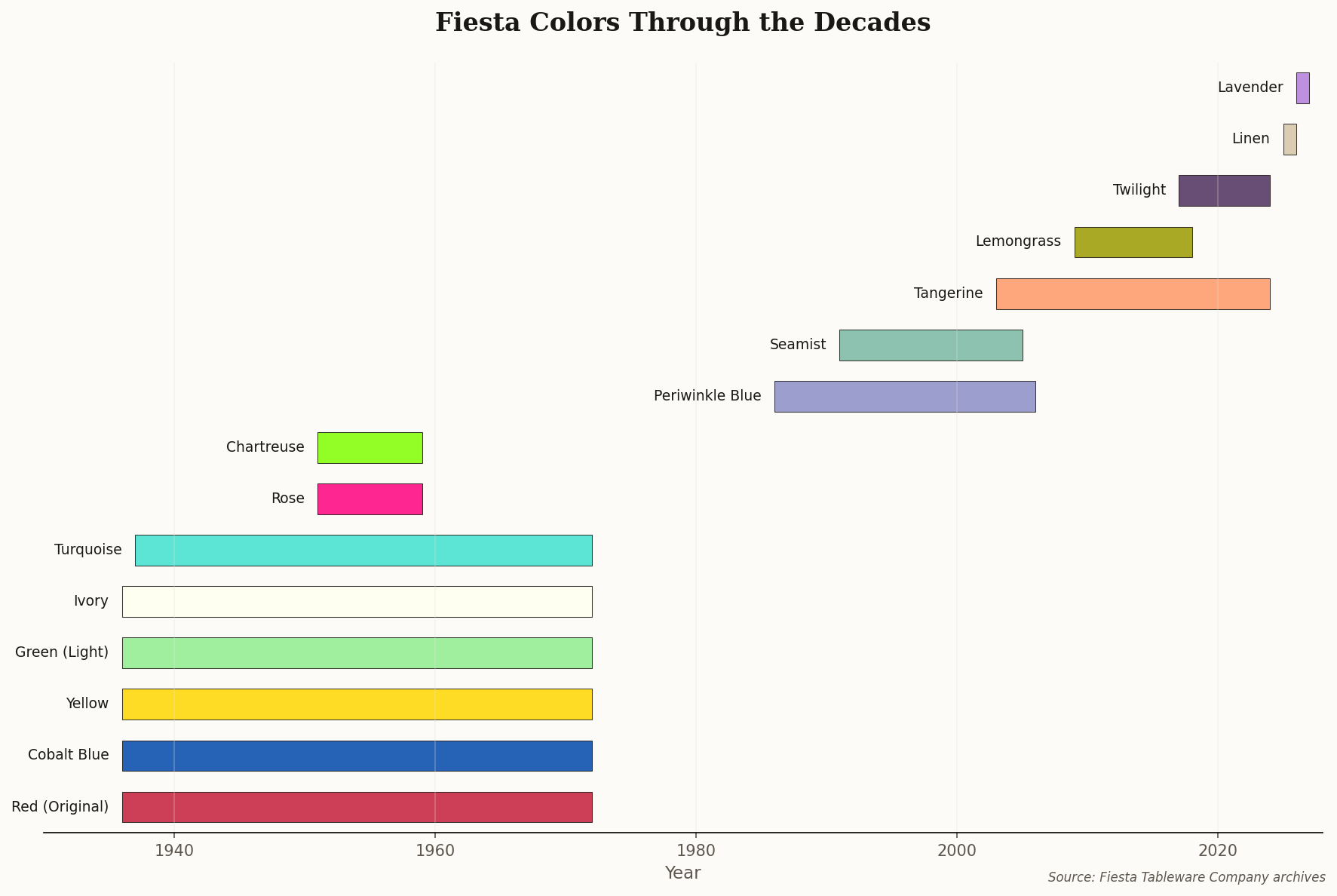
Horizontal timeline chart showing Fiesta color production runs from 1936 to 2026, including original colors, mid-century additions, and modern releases
Nine decades of color: from the original five glazes of 1936 to 2026's Lavender, Fiesta's palette tells the story of American design taste.

Rhead's other stroke of genius was the "Open Stock" concept—radical for 1936. Instead of forcing Depression-era families to buy expensive 92-piece matched sets, he let them purchase individual pieces. A cup here, a saucer there, each in a different color. He turned financial necessity into an aesthetic: the mixed-color table setting that defines Fiesta to this day.

The most remarkable thing about Rhead's design is its temporal invisibility. Put a 1936 plate next to a 2026 plate and you cannot tell them apart. The form hasn't changed because it didn't need to. In an industry obsessed with trends and seasonal refreshes, Fiesta proves that true design transcendence comes from solving the problem so completely that iteration becomes unnecessary. The rings are enough. They've always been enough.

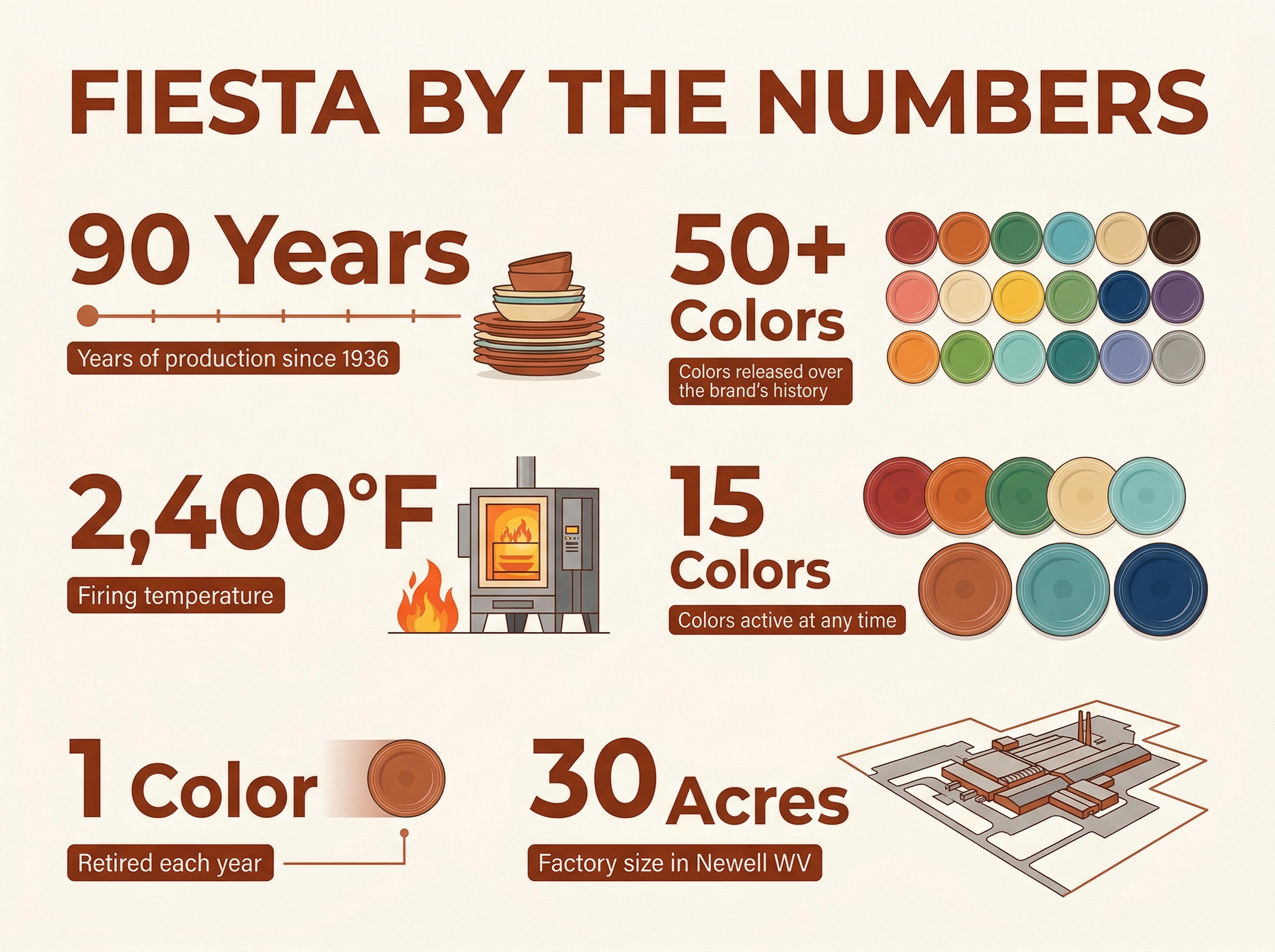
Infographic showing key Fiesta statistics: 90 years of production, 50+ colors released, 2400 degree firing temperature, 15 active colors, 1 color retired yearly, 30 acre factory
Fiesta by the Numbers — Generated with Nano Banana 2.0

The Rings Hold

Ninety years in, the question isn't why Fiesta is popular—it's why everything else isn't built this way. A design so resolved it never needed revision. A color strategy that turns customers into collectors and collectors into evangelists. A factory in West Virginia that still fires every piece at 2,400°F because shortcuts aren't in the recipe. Lavender arrives on March 31. The 90th day. The rings continue.