The Grand Gallery Was an Engine Room
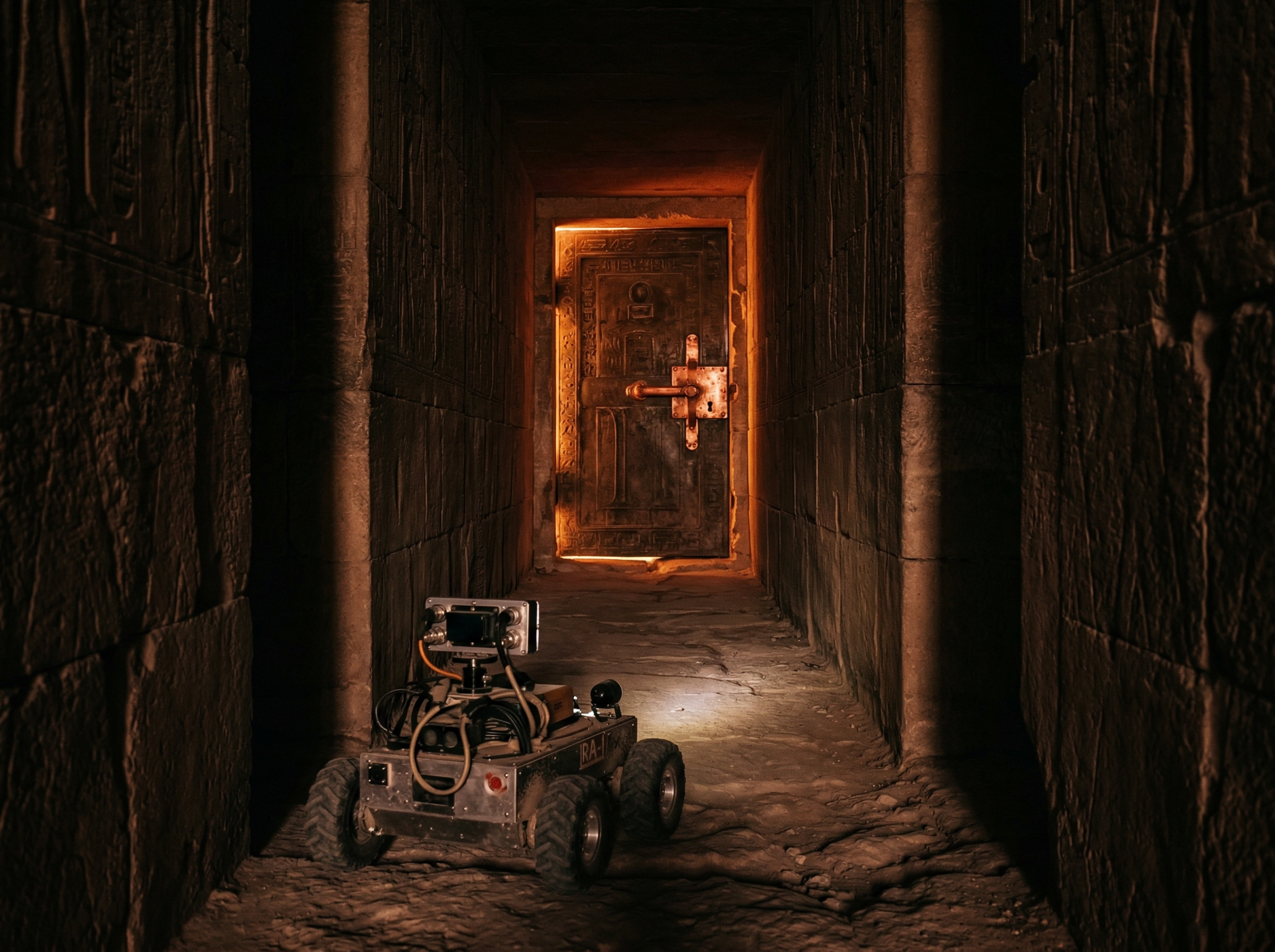
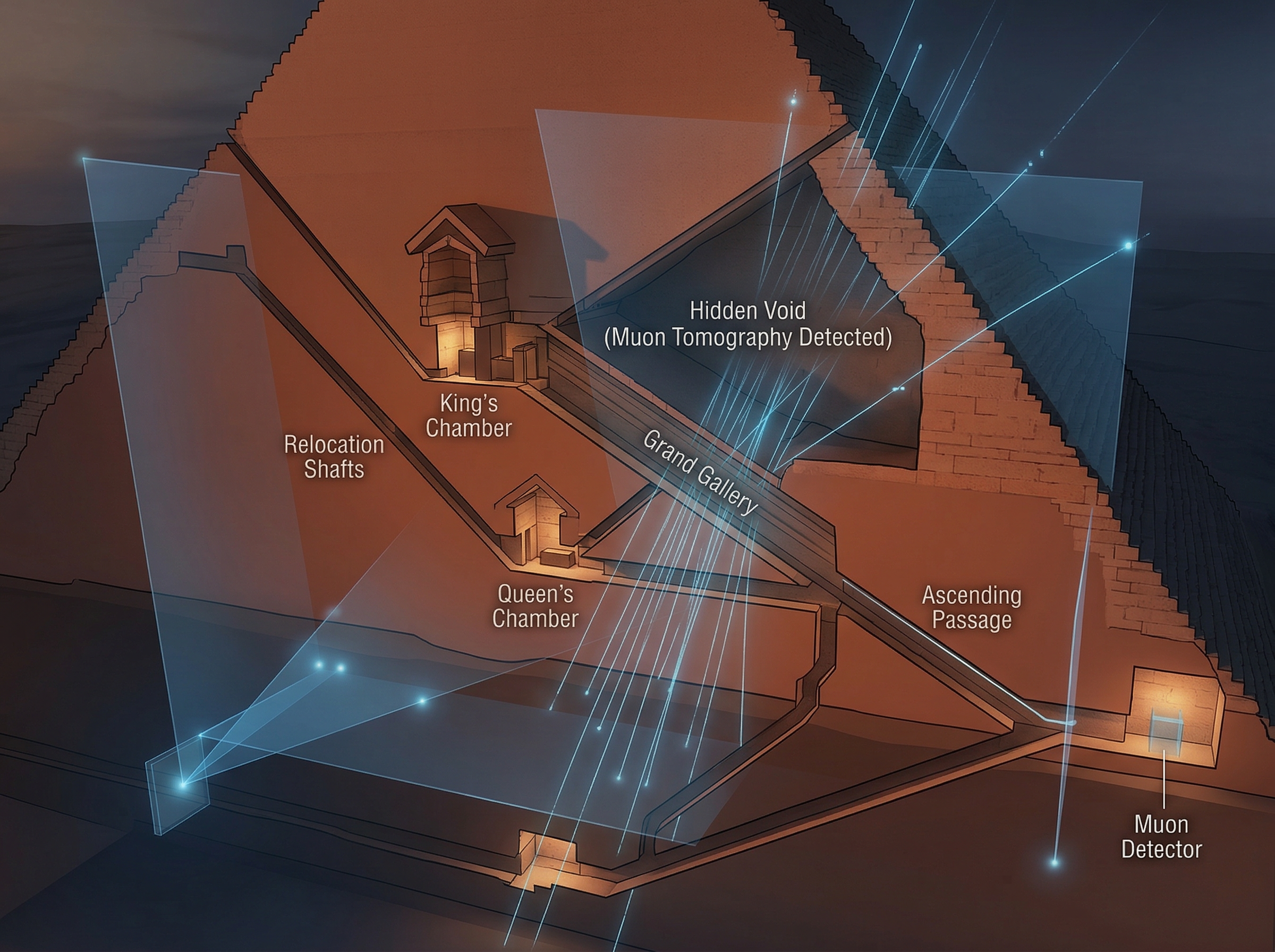
The Great Pyramid has never been a static pile of stone — we just lacked the tools to prove it. The latest muon imaging from the ScanPyramids project has confirmed a 30-meter-long cavity sitting directly above the Grand Gallery, angled at precisely 26 degrees — mirroring the gallery's slope exactly. That's not a coincidence. That's a machine.
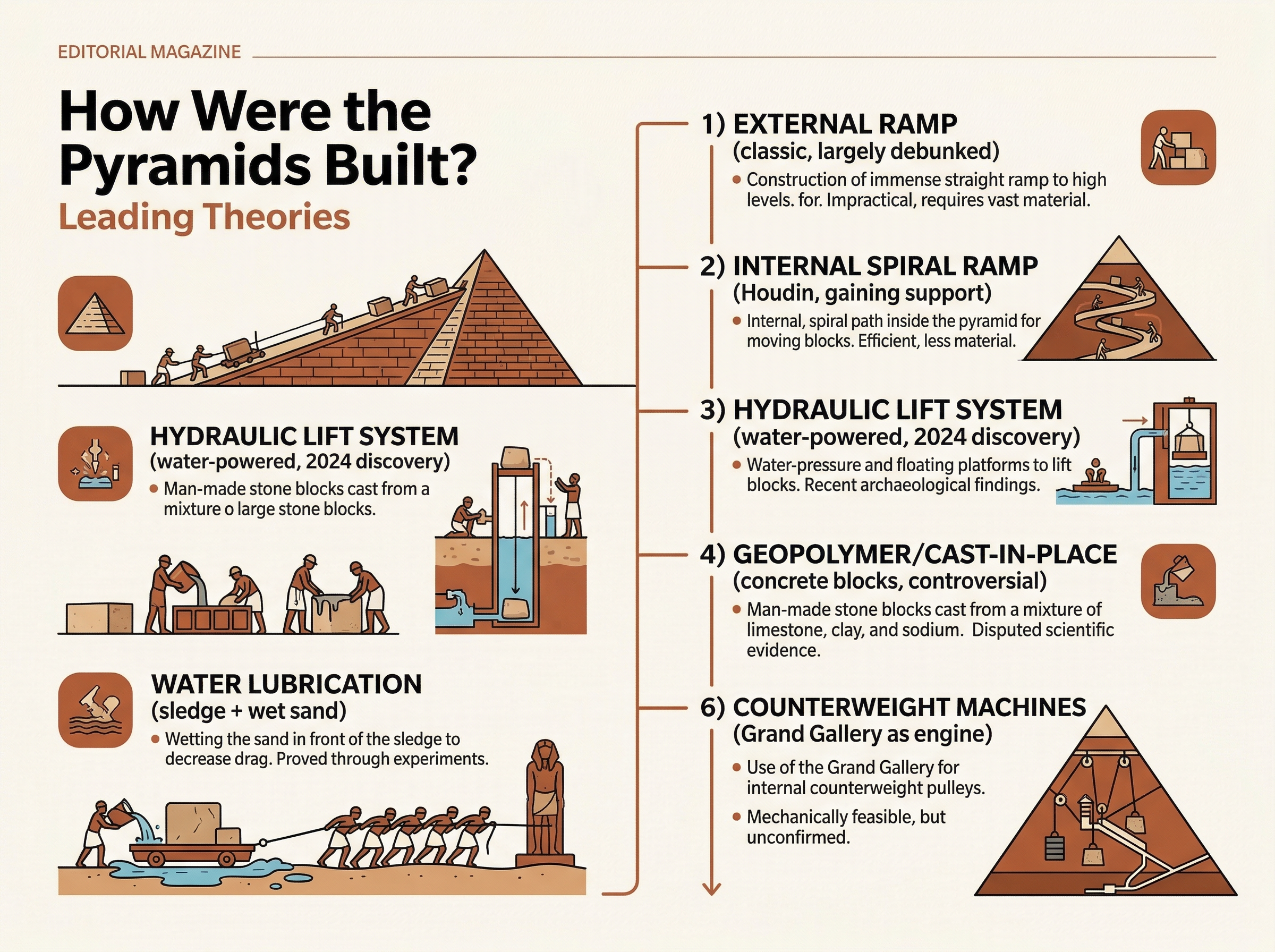
The theory, championed by architect Jean-Pierre Houdin and refined by Dr. Simon Andreas Scheuring, is elegant in its simplicity: the Grand Gallery functioned as a counterweight track. Heavy granite blocks slid down the gallery on wooden cradles, their gravitational energy hauling 60-ton King's Chamber beams up through internal ramps. The "Big Void" above was the staging area — a reservoir of counterweights waiting to be deployed.
"The Great Pyramid was not a pile of stones; it was a machine. The Grand Gallery was the engine room." — Dr. Simon Andreas Scheuring
This reframes the entire structure. The pyramid wasn't just the product of brute labor — it was a kinetic engineering system that used gravity itself as its power source. The ancient Egyptians understood mechanical advantage centuries before the Greeks formalized the concept. We just needed cosmic rays to see it.