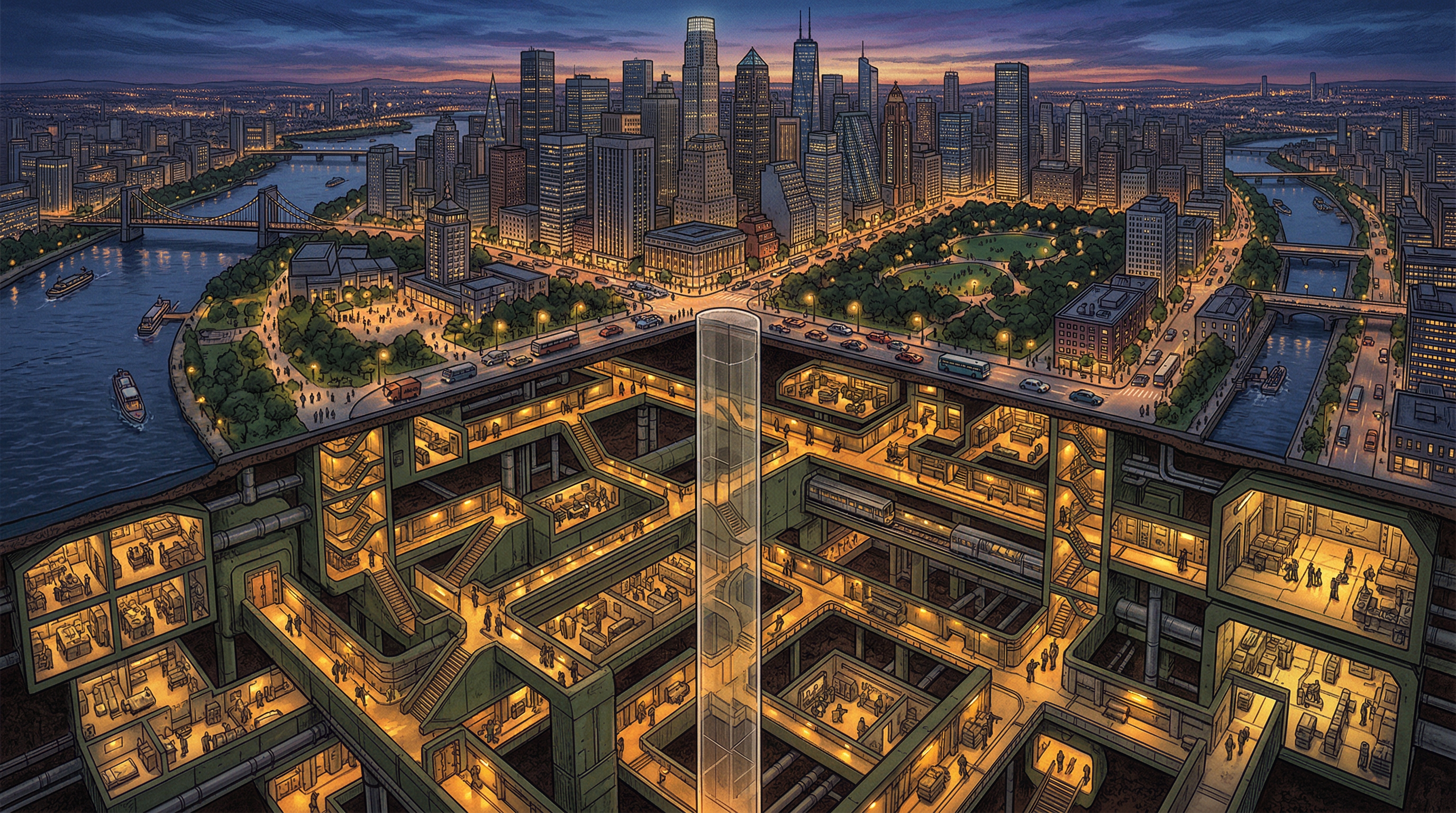
Ten Nations Just Agreed to Share Their Bunkers
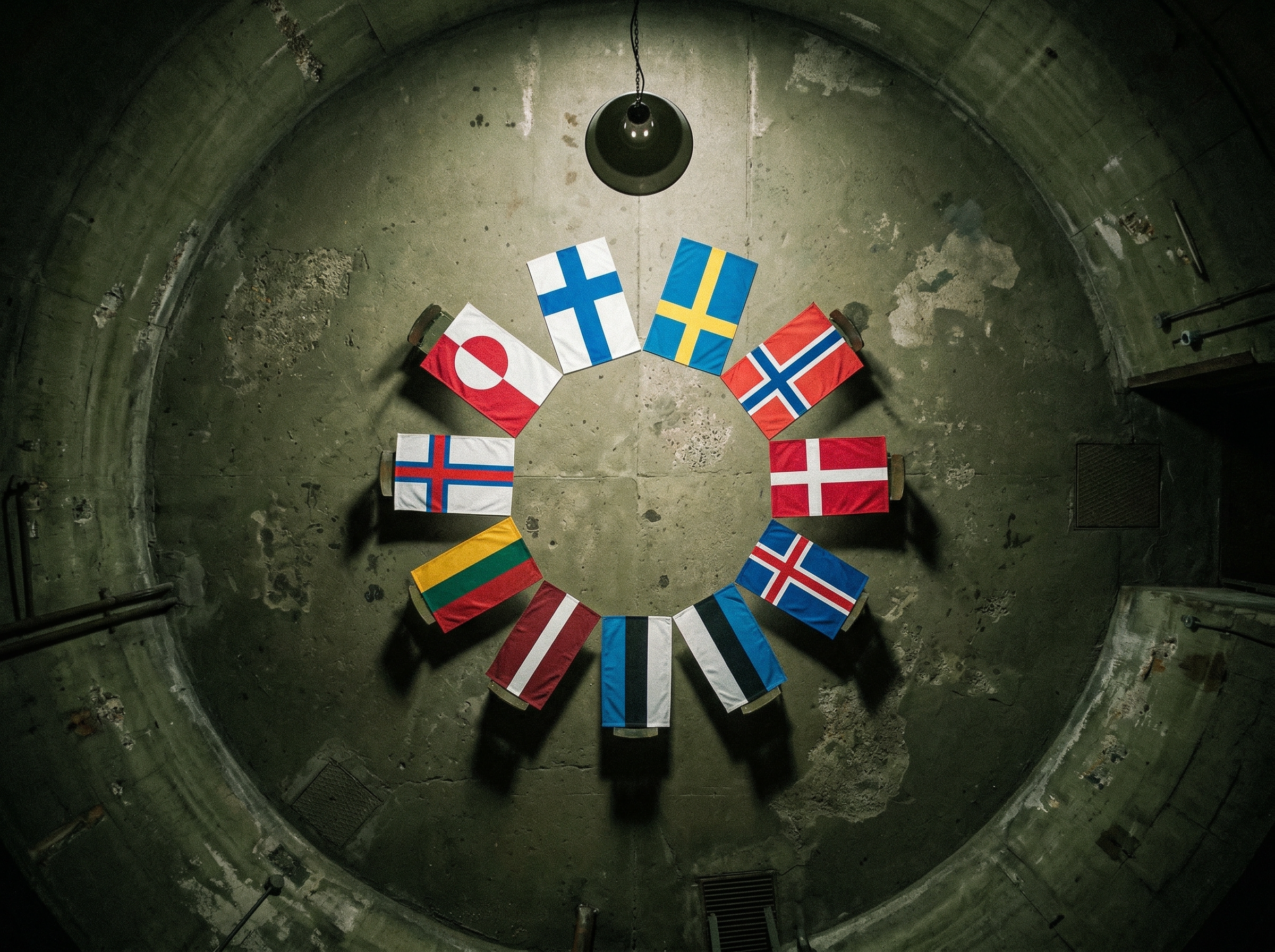
Here's something that would have been unthinkable five years ago: ten countries just signed a pact to let each other's citizens use their bomb shelters. Finland, Sweden, Norway, Denmark, Iceland, the three Baltic states, Poland, and Germany signed a Memorandum of Understanding this week that integrates their civil defense networks into a single system. The practical centerpiece is a "Digital Shelter Registry" — a unified mobile app that shows any citizen of any signatory nation where the nearest hardened infrastructure is, regardless of which country they're standing in.
A Finnish tourist in Tallinn during an emergency pulls up the same app they'd use in Helsinki and gets routed to the nearest Estonian shelter. The pact also includes joint planning for cross-border population movement — bureaucratic language for "where do millions of people go if they need to flee?" This is the first time civilian protection has been treated as a shared geopolitical asset rather than a purely domestic concern.
The timing isn't subtle. With NATO's eastern flank increasingly focused on deterrence, these nations are building the civilian backbone to match their military posture. Shelters are only useful if people can find them, and borders are only useful if they don't become death traps during a crisis. This pact quietly solves both problems.
Your Phone Is Now Your Bunker Map
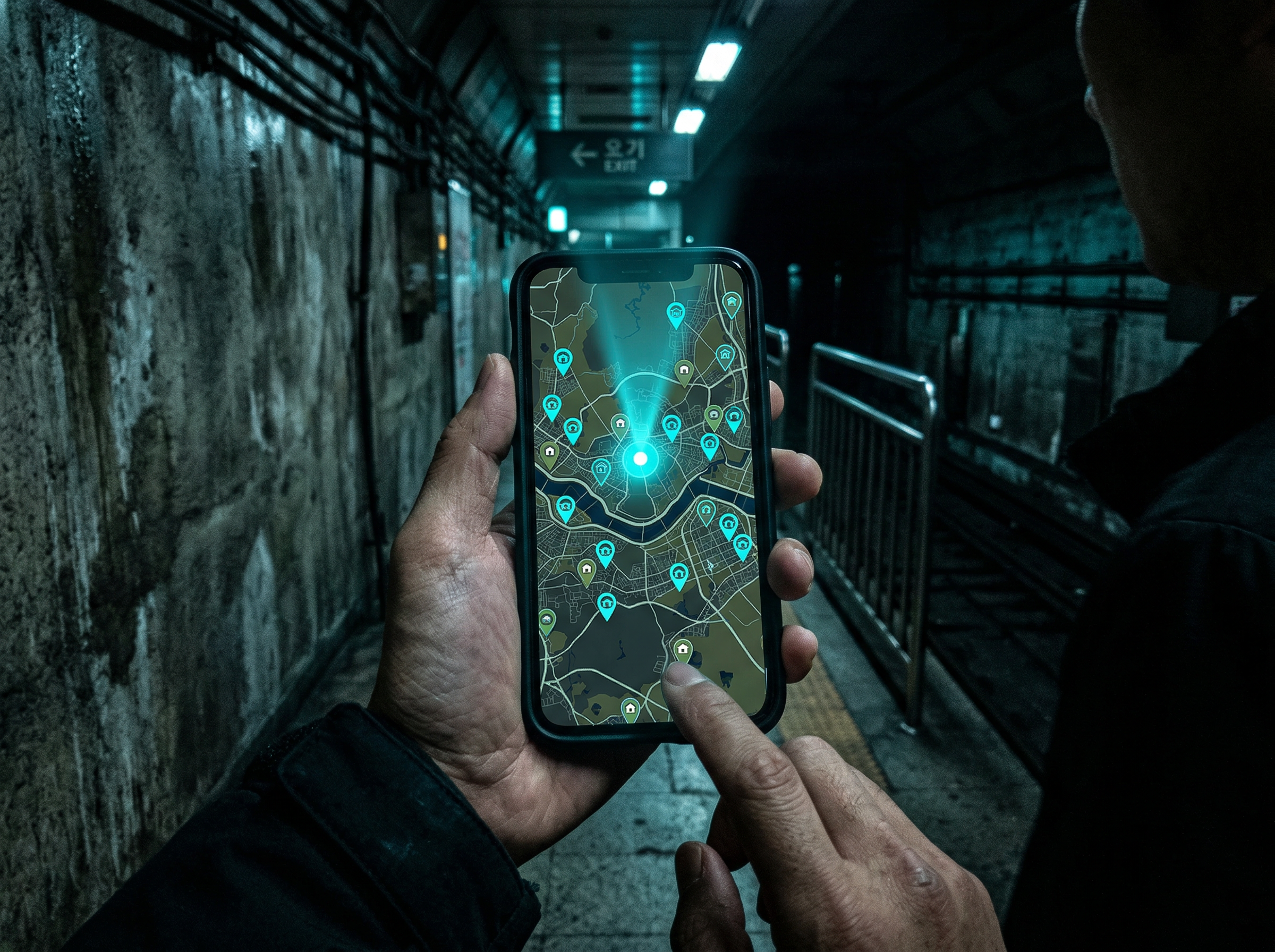
South Korea just updated its "Safety Stepping Stone" app and the result is probably the most sophisticated civilian defense interface on the planet. The app provides real-time GPS navigation to the nearest of the country's 17,000 designated shelters — mostly subway stations and basement parking structures — with live updates on current capacity and air quality inside each one. As one official put it: "In a digital society, a shelter you can't find on your phone doesn't exist."
Starting January 2026, all South Korean shelters are required to maintain 14 days of pre-staged water and medical supplies. That's not a suggestion — it's a strictly enforced regulation. The Ministry of the Interior and Safety runs spot checks. For a country that lives within artillery range of North Korea's 13,000 guns pointed at Seoul, this isn't theoretical preparedness. It's Tuesday.
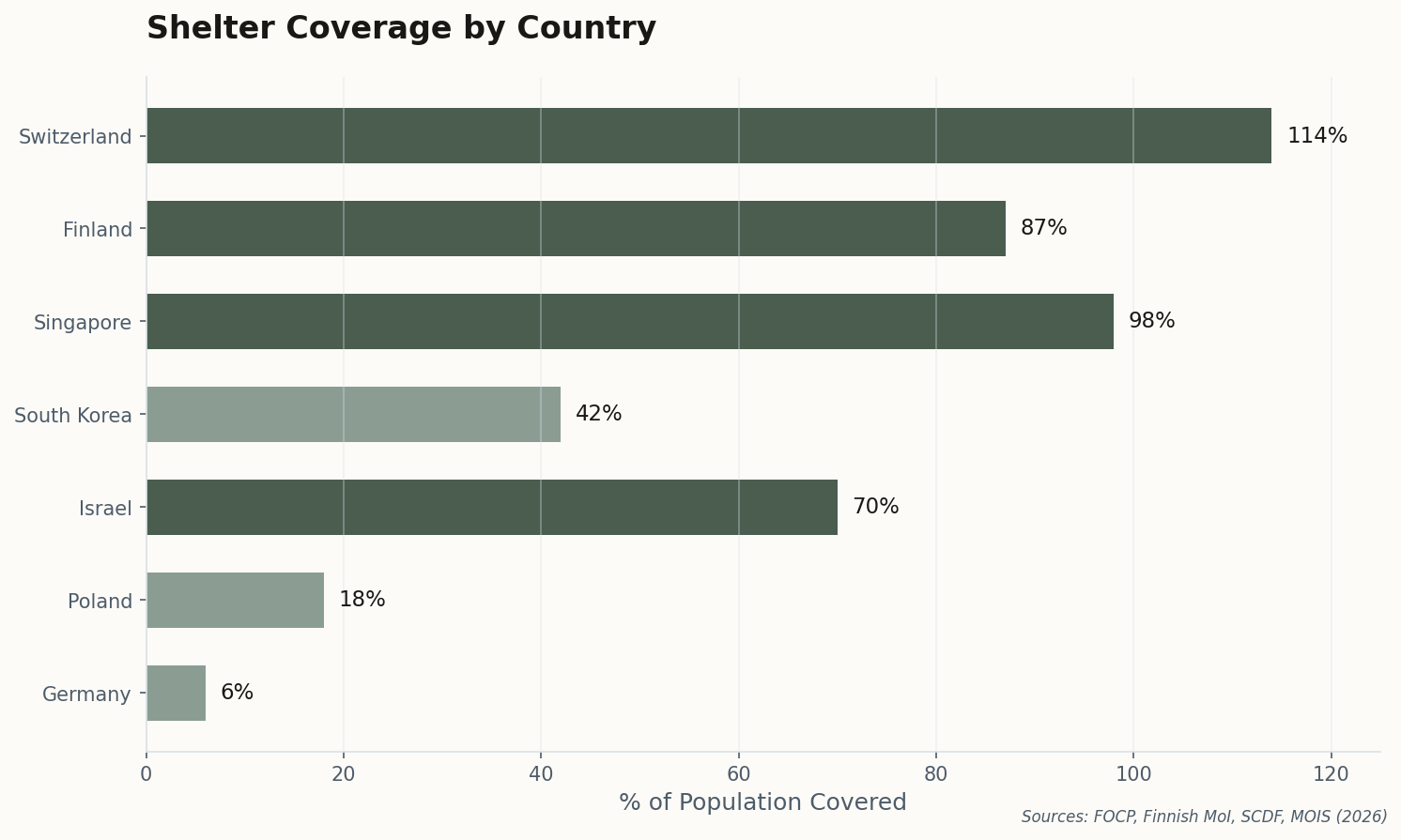
The gap between nations that take shelter infrastructure seriously and those that don't is staggering. Switzerland shelters 114% of its population. Germany? About six percent. South Korea's 17,000 shelters don't match those extremes in raw coverage, but what the country lacks in capacity it compensates for with the best digital integration in the world. When seconds count, knowing where to go matters as much as having somewhere to go.
The $20 Million Bunker Has a Hydroponic Garden and a Waiting List
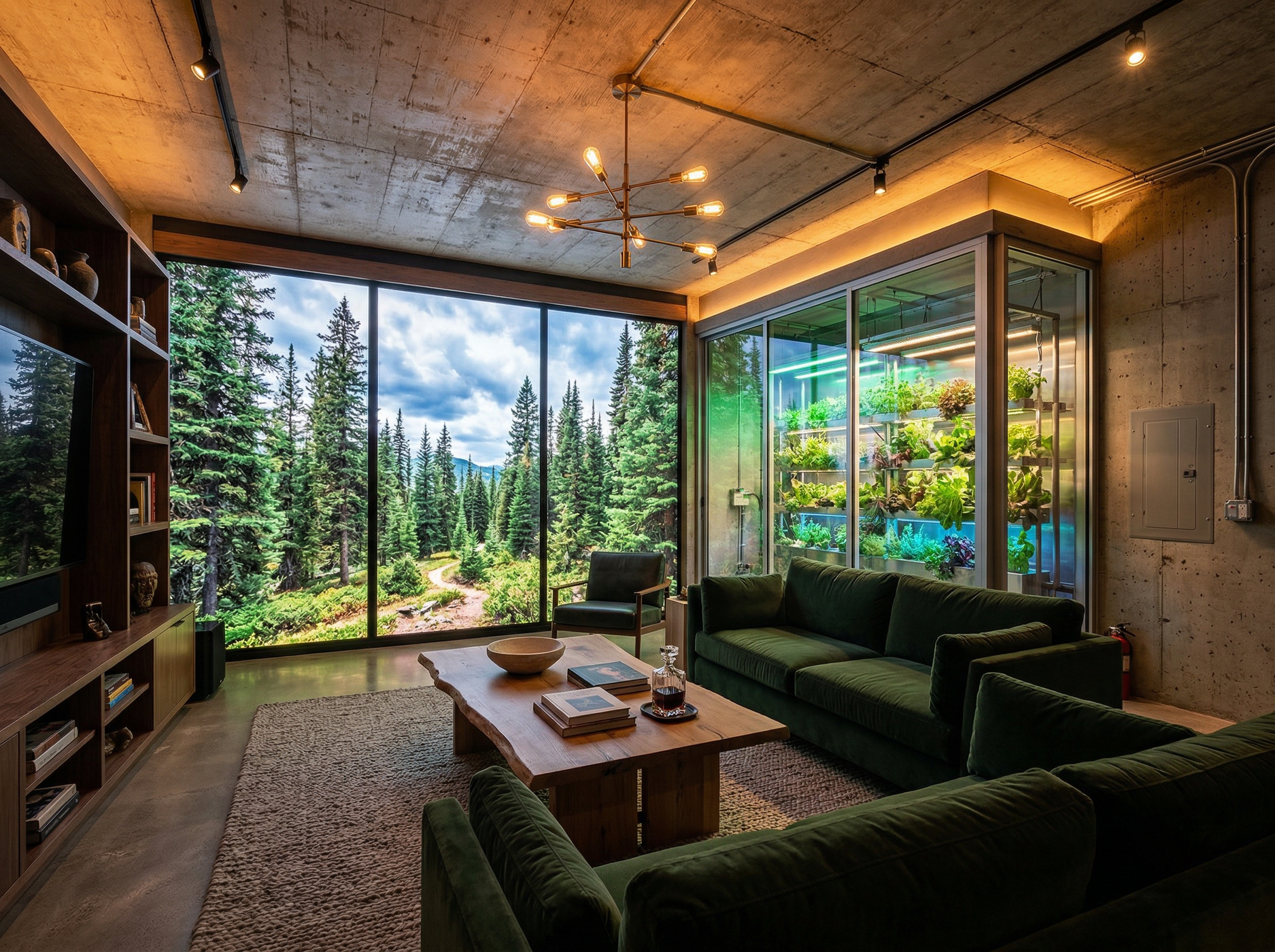
"Our clients aren't looking to survive; they're looking to maintain their standard of living through a catastrophe." That's the sales pitch for Project Aerie, a luxury subterranean development in Virginia where individual units sell for $9 million to $20 million — and Phase 1 is already sold out. Features include AI-driven medical suites, underground hydroponic gardens designed for five-year self-sufficiency, and "biophilic" lighting that mimics the sun's 24-hour cycle to prevent what designers call "bunker fatigue."
This isn't just rich-people excess (though it is that too). It's the visible tip of a $37 billion market that's growing at 7.8% annually. The shelter industry spans everything from $25,000 prefab steel boxes to converted Atlas missile silos in Kansas selling as 15-story condominiums at $1.5 million per floor. The converted silos can withstand a 20-kiloton nuclear blast at half a mile and feature "digital windows" that pipe in live outdoor scenery via HD screens.
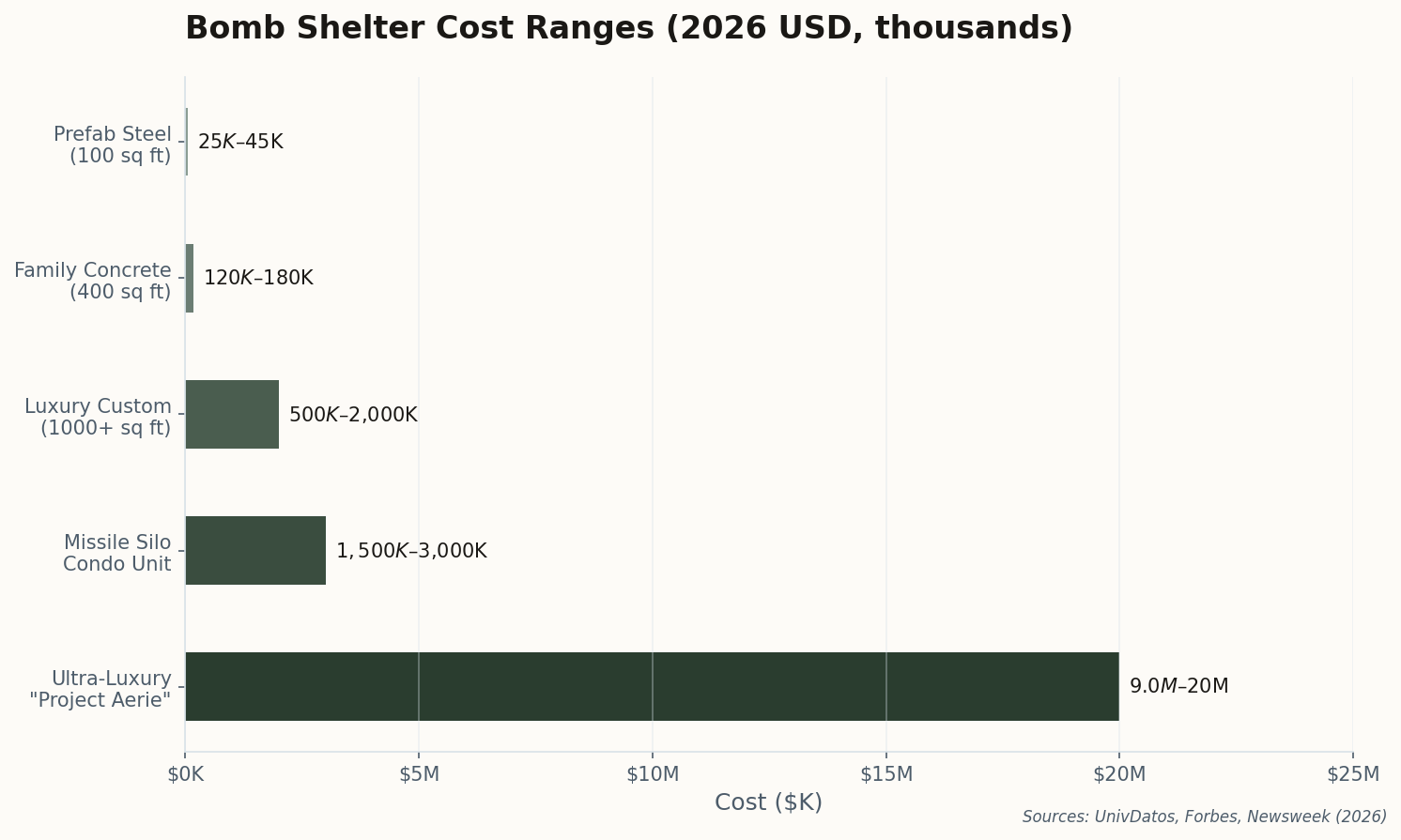
What's changed isn't the existence of luxury shelters — those have been around since the Cold War. What's changed is demand. A 400% increase in civilian survivalist spending since 2020 has turned bunkers from a fringe prepper niche into a legitimate real estate category. When your real estate agent starts mentioning "hardened square footage," you know the Overton window has moved underground.
Finland's Swimming Pools Can Survive a Nuclear Blast
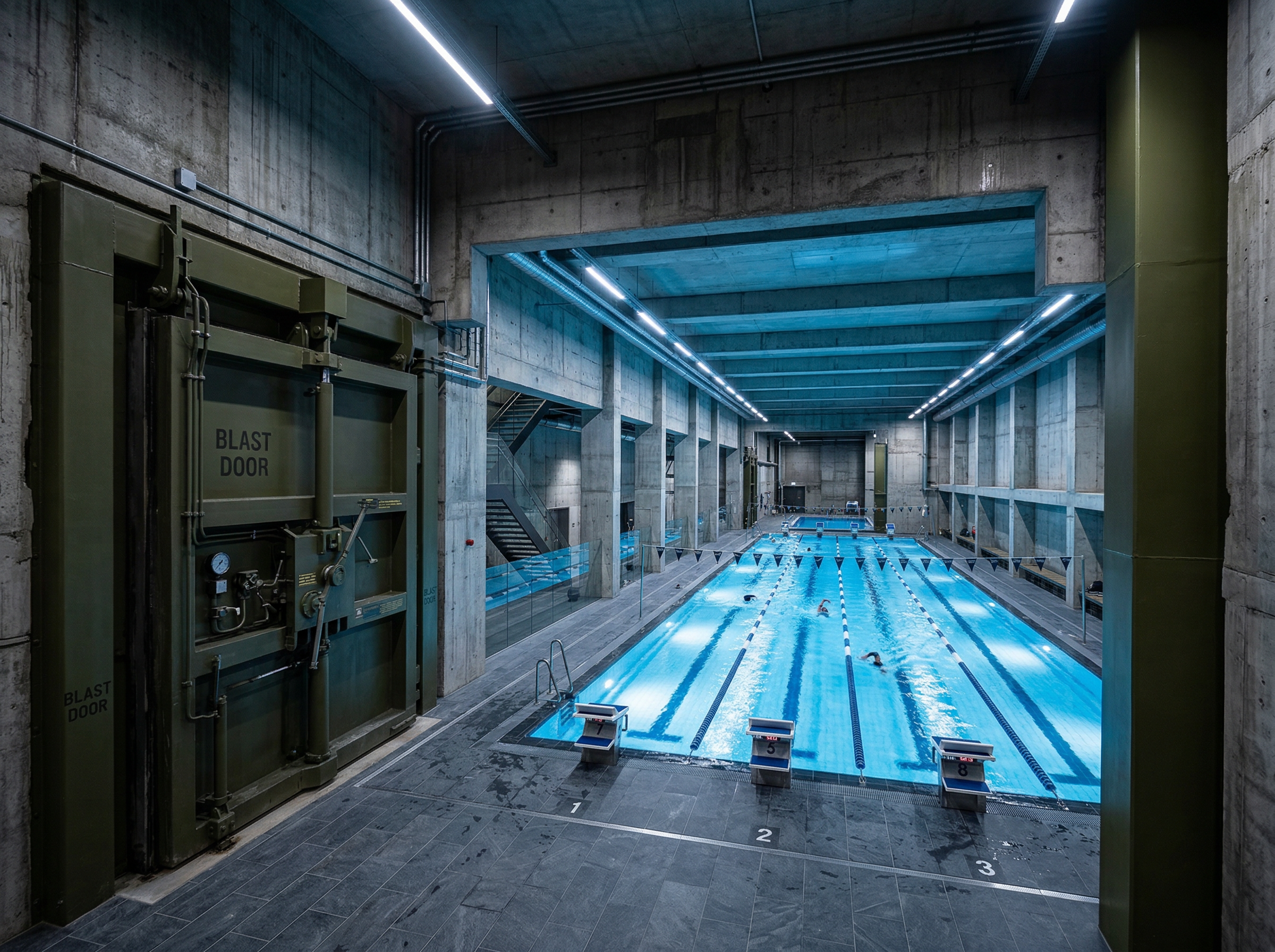
Finland doesn't build bunkers. Finland builds underground sports centers that happen to survive nuclear blasts. That distinction matters. The country now maintains 54,000 shelters covering 4.8 million people — 87% of its 5.5 million population. But the genius isn't in the numbers; it's in the design philosophy. Take the Itäkeskus swimming center in Helsinki: during peacetime it's an Olympic-grade pool complex. In a crisis, it converts into a blast-resistant shelter for 3,800 people within six hours.
This "dual-use" approach, called the Luola (Cave) model, solves the fundamental problem with shelters: they're expensive to maintain and useless 99.99% of the time. By making them serve a daily civic purpose — swimming pools, parking garages, hockey rinks — Finland ensures the infrastructure stays funded, maintained, and familiar to the people who'd need to use it. Eighty-five percent of Finnish shelters are private, built into apartment basements under strict building codes that have been on the books for decades.
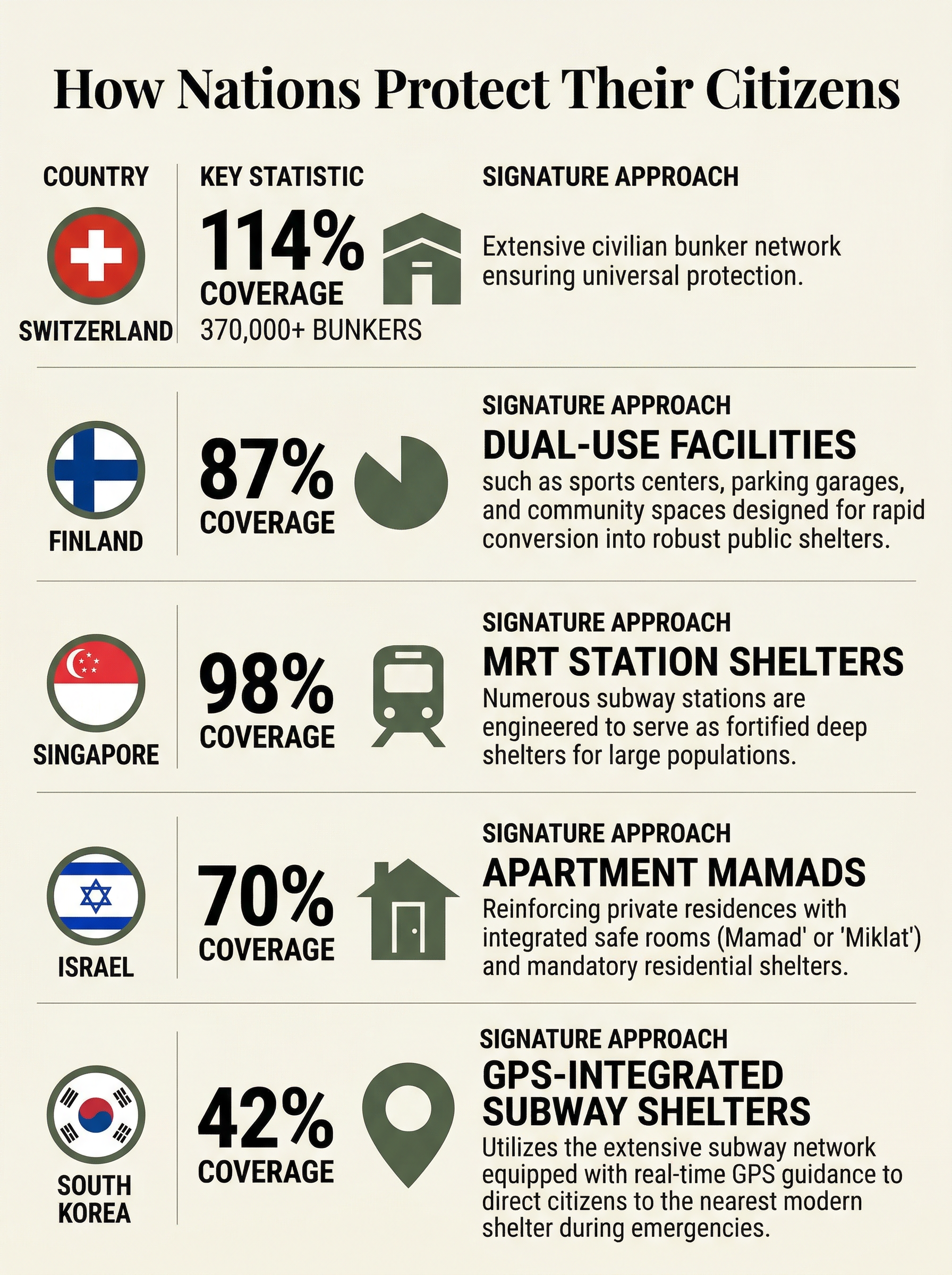
The lesson isn't that Finland is paranoid. It's that Finland decided decades ago that protection is a public utility, like electricity or water. You don't notice it when it works. You only notice it when it's not there. Switzerland took the same approach and now covers 114% of its population with 370,000 bunkers. The countries that treat shelters as infrastructure rather than insurance have coverage rates that make everyone else look negligent.
The Most Important Room in an Israeli Home Is Also the Nursery
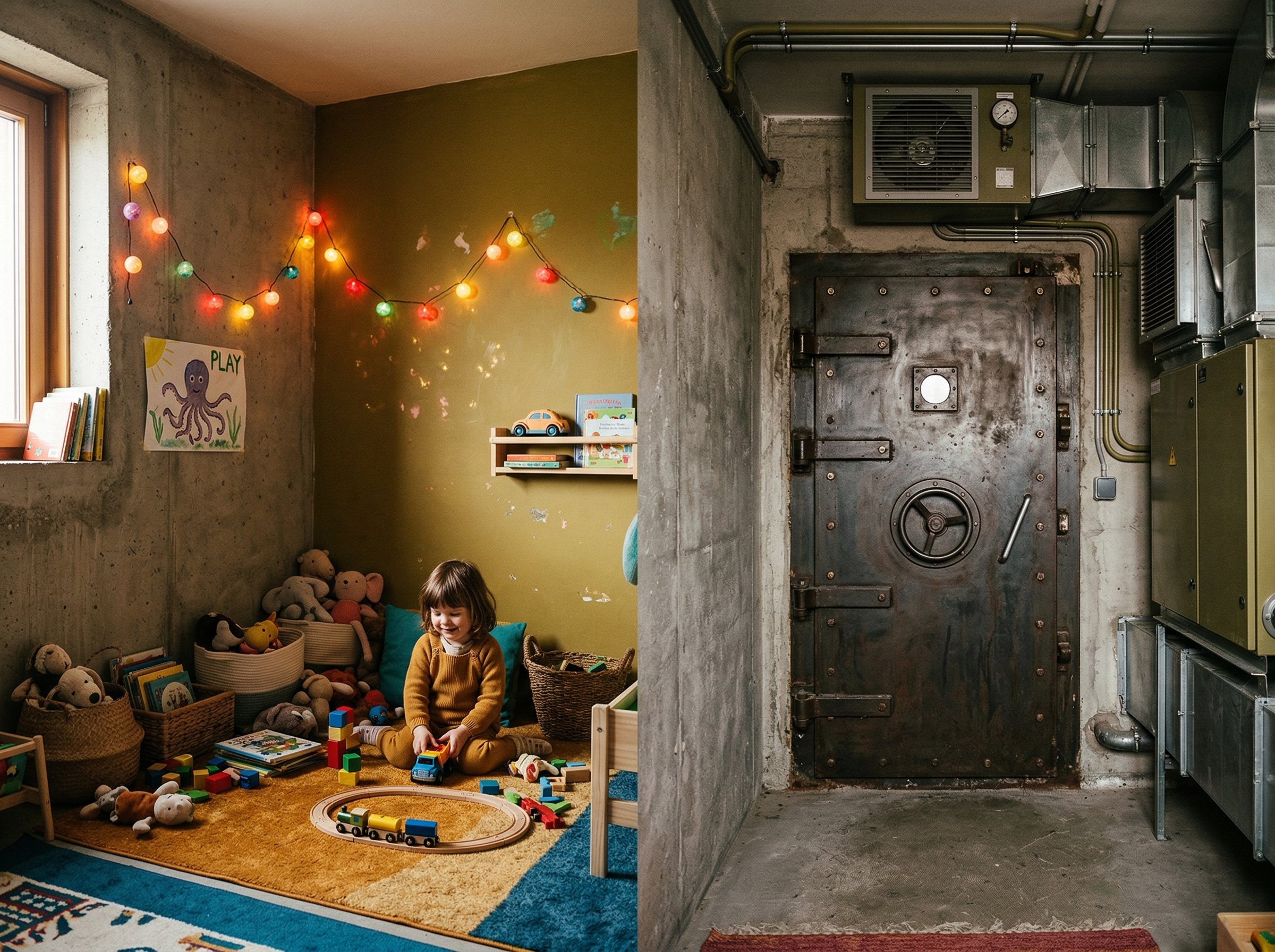
During the February 2026 escalations, residents of Tel Aviv spent an average of 14 hours in shelters over a three-day period. For most, the shelter was a Mamad — a reinforced concrete room built into the apartment itself, usually doubling as a children's bedroom or storage closet. "The Mamad has become the most important room in the Israeli home — part nursery, part fortress," as the LA Times reported.
But here's the ugly part: roughly 30% of Israeli homes still lack a private Mamad. These are overwhelmingly older buildings in poorer communities, where residents must sprint to crowded public shelters when sirens sound. The Home Front Command knows this. New government subsidies now cover up to 50% of the roughly $40,000 cost to retrofit a safe room into an older building — an acknowledgment that shelter inequality is, in a country that faces regular rocket fire, a literal life-or-death divide.
Israel's experience is the starkest real-world test case for shelter infrastructure. It's not theoretical. The Mamad isn't a Cold War relic or a luxury purchase. It's a room where children sleep, and when the sirens go off, they don't even have to leave their bed. The 30% who lack that protection aren't reading this as a policy paper. They're reading it as a survival calculation.
Germany Spent Decades Decommissioning Its Bunkers. Now It's Spending €10 Billion to Get Them Back.
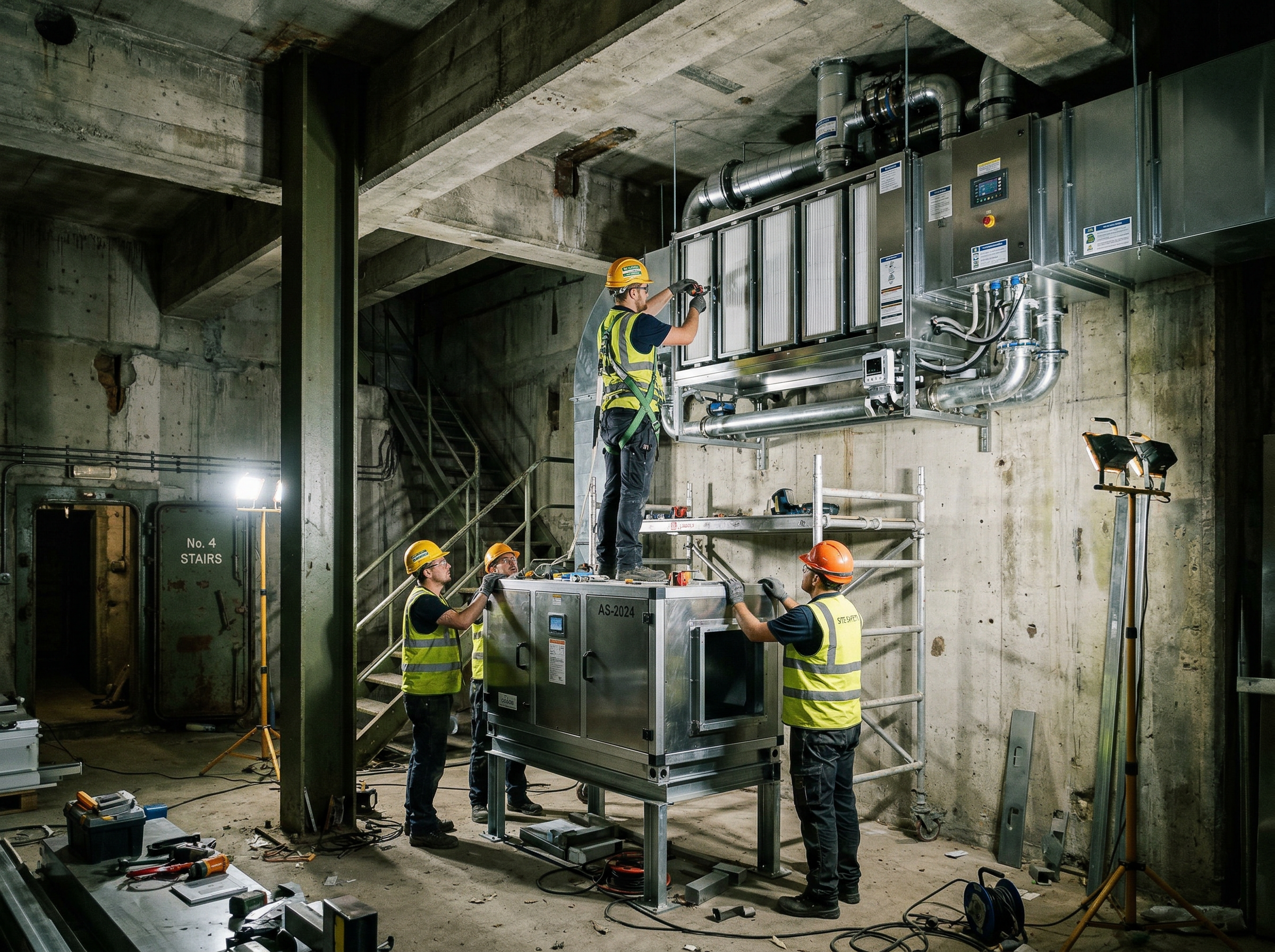
"The era of the 'peace dividend' is over." That's German Interior Minister Nancy Faeser announcing a €10 billion ($10.8 billion) initiative to reactivate 2,000 Cold War-era bunkers and convert metro stations, parking garages, and decommissioned military sites into shelter infrastructure. The goal: one million new shelter spaces by 2035. For a country that currently covers about 6% of its population, this is less a policy update and more a philosophical U-turn.
Germany's story is the cautionary tale in all of this. After reunification, the prevailing logic was that bunkers were Cold War relics — expensive, ugly, and no longer necessary. Shelters were sold off, repurposed as nightclubs and mushroom farms, or simply sealed and forgotten. It took Europe's changed security landscape to reverse three decades of deliberate disinvestment.
The program includes modernized cell broadcast alerts and siren networks — infrastructure that Germany largely let decay. The contrast with Finland and Switzerland, which never stopped investing, is brutal. Those countries spend modest annual sums to maintain what they already built. Germany is now spending ten billion euros to rebuild what it chose to abandon. The cheapest shelter is always the one you never tore down.