Lisinopril

Your Blood Pressure's Backup Plan

America's most-prescribed blood pressure pill is having a complicated year. A supply crisis is locking out vulnerable patients, new research is rewriting when and where it works best, and a rival drug is coming for the patients it can't reach.

Listen
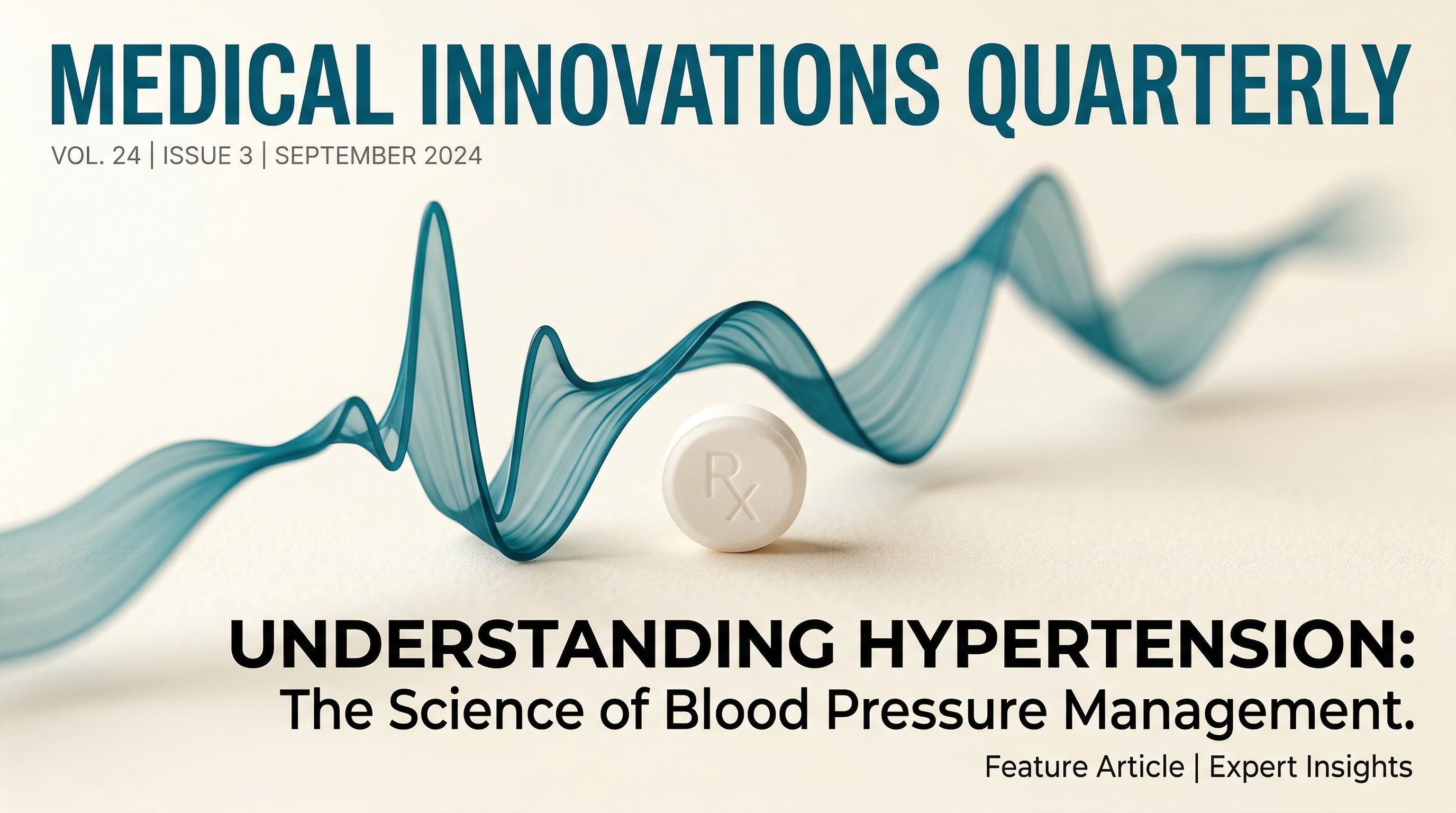
Lisinopril tablet with stylized blood pressure wave visualization in teal
01

The $745 Bottle That Used to Cost $15
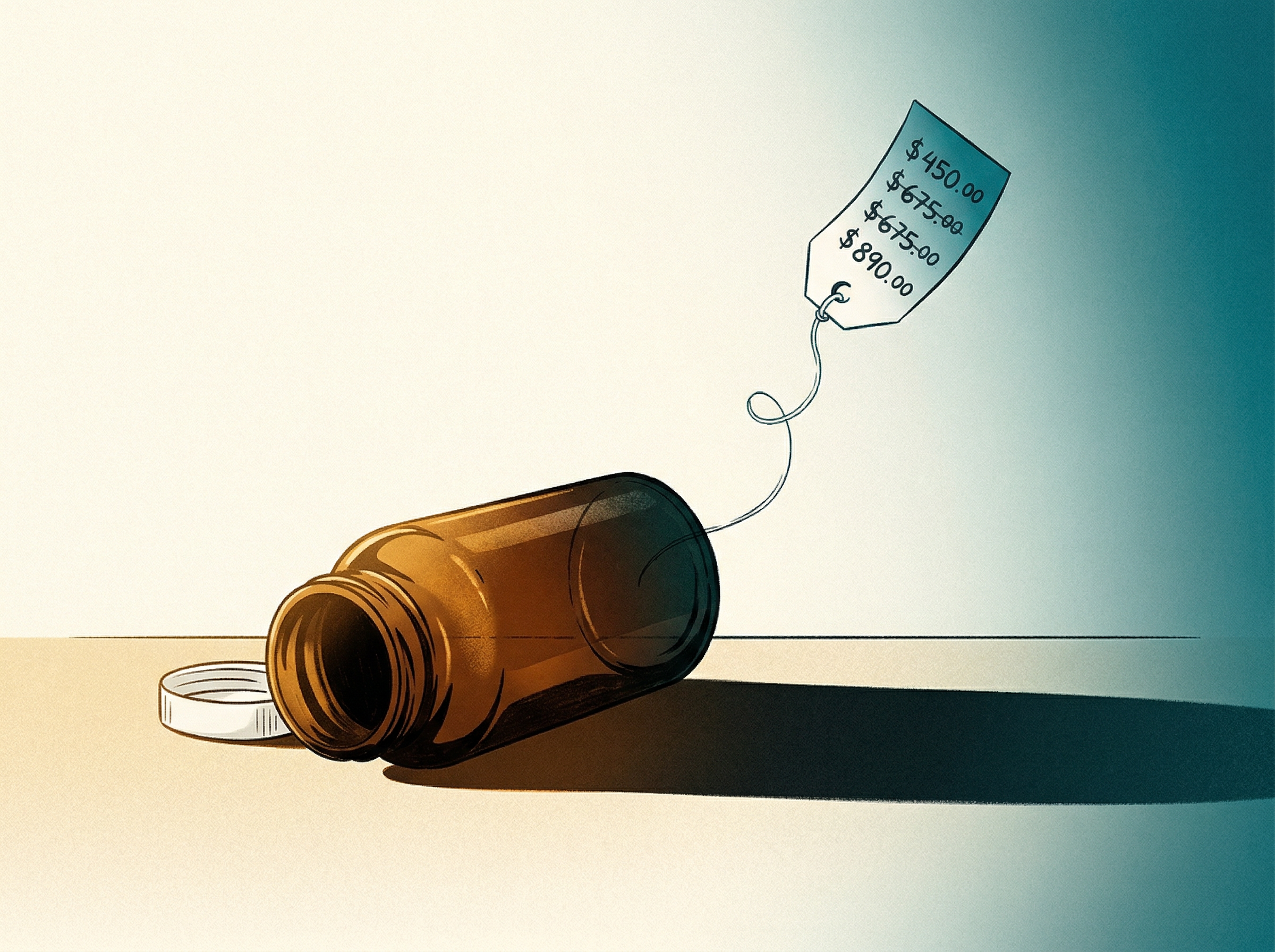
Empty medicine bottle casting long shadow, symbolizing drug shortage and rising costs

Here's a number that should make your blood boil: $745. That's what a single bottle of Qbrelis—the only FDA-approved liquid form of Lisinopril—costs right now in early 2026. The same medication in tablet form? Four dollars a month. Generic. Everywhere. No drama.

The liquid version isn't a luxury. It's a necessity for children with congenital hypertension and elderly patients who can't swallow pills. And right now, a severe supply shortage has made it nearly impossible to find. Clinicians are being forced into workarounds: compounded suspensions from specialty pharmacies (inconsistent quality, insurance won't cover them), or pivoting patients to Enalapril solution—a different drug entirely.
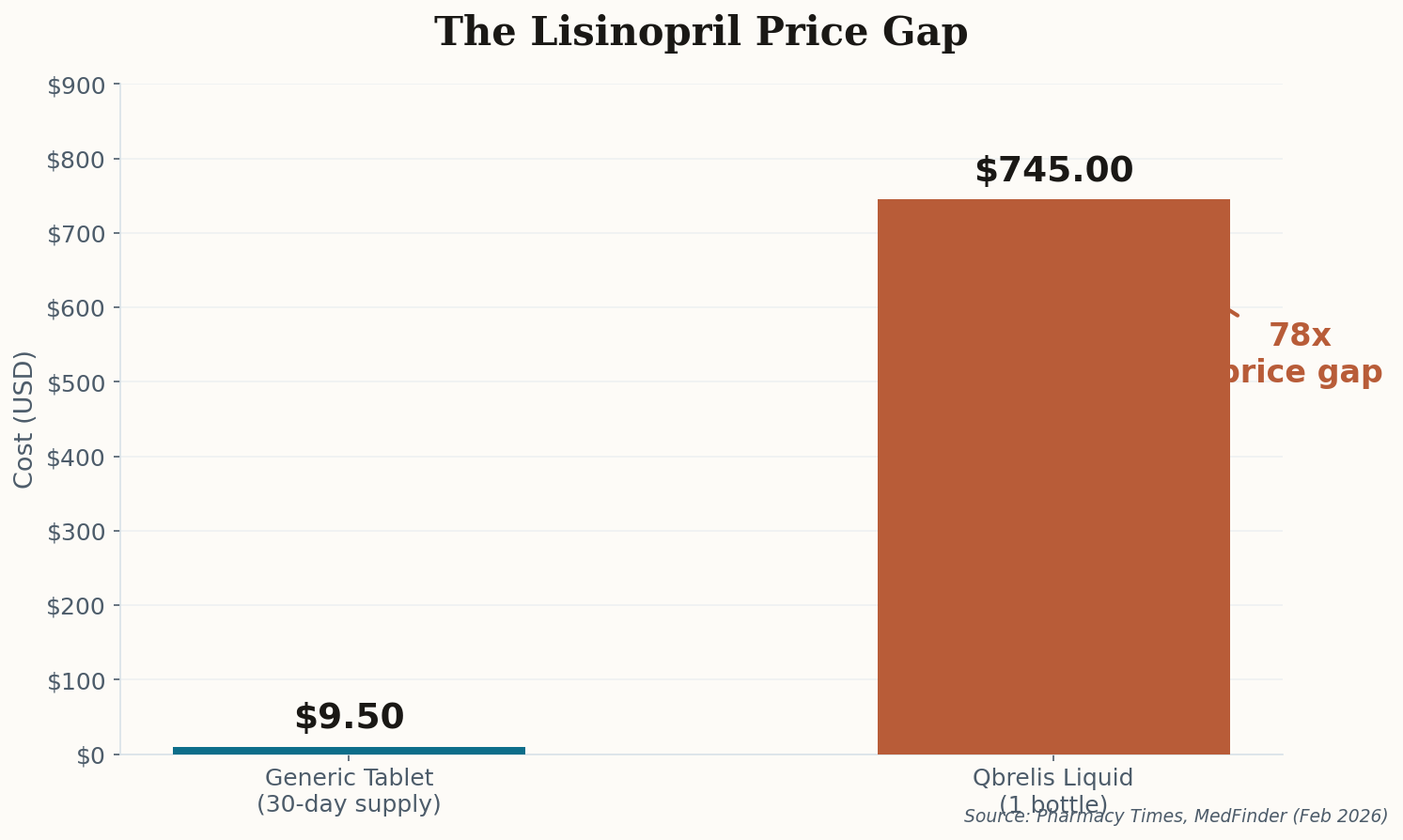
Bar chart comparing Lisinopril generic tablet cost ($9.50) to Qbrelis liquid ($745), showing a 78x price gap
The 78x price gap between tablet and liquid Lisinopril highlights how formulation, not molecule, drives drug costs. Source: Pharmacy Times / MedFinder, Feb 2026.

This is the pharmaceutical access paradox in miniature. The active ingredient is dirt cheap—among the most affordable generics on Earth. But the moment you need it in a different delivery form, you're at the mercy of a single manufacturer and a supply chain that apparently can't handle one factory hiccup without leaving the most vulnerable patients scrambling.

What to watch: If you or a family member takes liquid Lisinopril, talk to your pharmacist about compounded alternatives now—don't wait for the shortage to resolve. Ask your prescriber whether an Enalapril solution switch is clinically appropriate.

02

The Postpartum Window Where Lisinopril Wins Big

Abstract illustration of protective shield surrounding heart symbol, representing maternal health breakthrough

Postpartum hypertension is one of those clinical nightmares that doesn't get the attention it deserves. A woman survives pregnancy, delivers her baby, and then her blood pressure spikes dangerously in the days after. The standard treatment has been Nifedipine ER—a calcium channel blocker. It works. But a major new trial says Lisinopril works better.

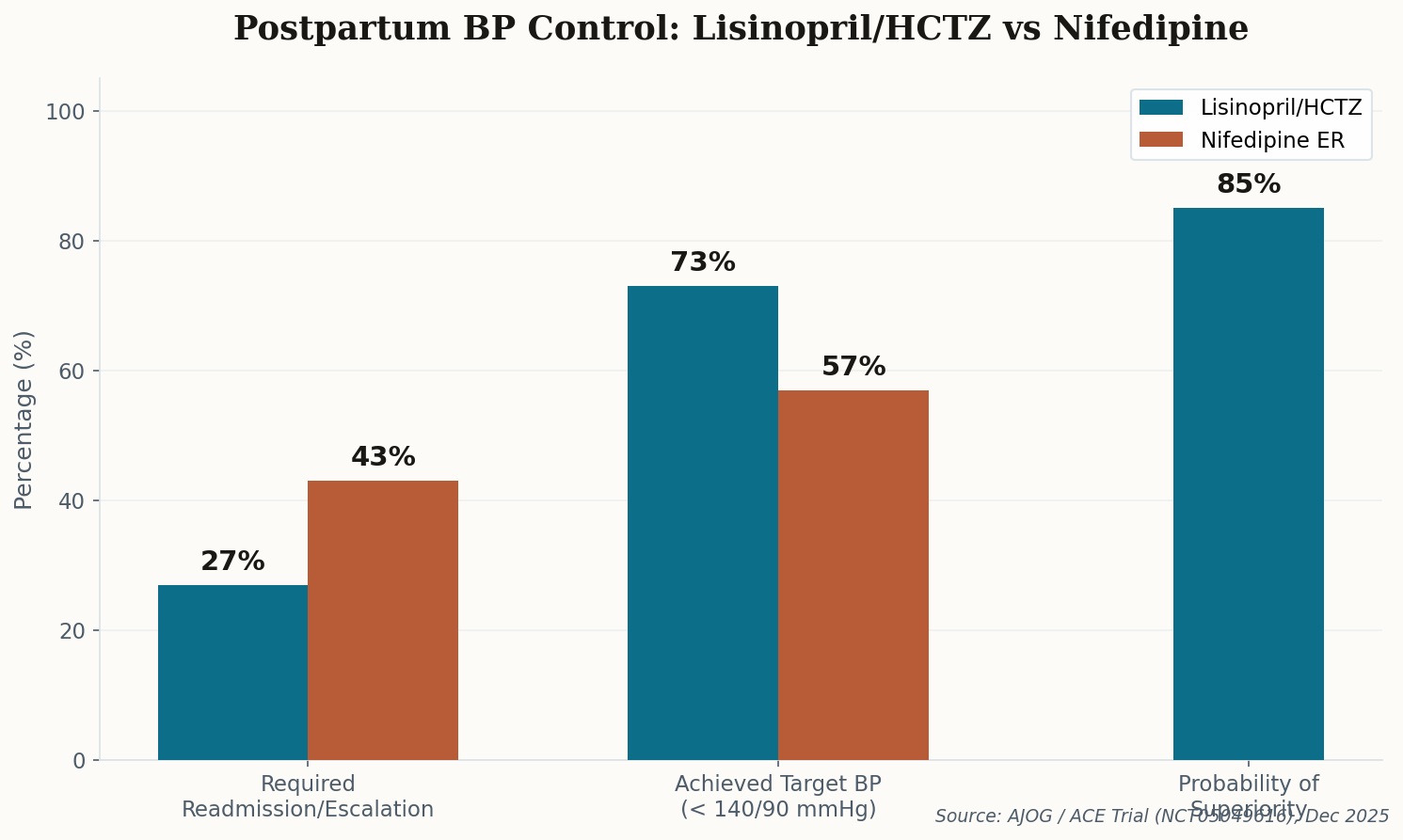
The ACE Trial (NCT05049616), analyzed in a systematic review published in AJOG, compared Lisinopril combined with Hydrochlorothiazide against Nifedipine ER for controlling blood pressure in the first 7-10 days after childbirth. The results weren't subtle: only 27% of women on the Lisinopril combination needed readmission or further escalation, compared to 43% on Nifedipine. Bayesian analysis put the probability of Lisinopril/HCTZ superiority at 85%.

Bar chart comparing Lisinopril/HCTZ vs Nifedipine ER outcomes in postpartum hypertension, showing 27% vs 43% readmission rates
The ACE Trial found Lisinopril/HCTZ significantly reduced readmission rates compared to Nifedipine ER in postpartum hypertension. Source: AJOG / ACE Trial, Dec 2025.

The implication is significant. Postpartum preeclampsia management hasn't had a major shakeup in years. If these results hold through larger confirmatory trials, Lisinopril/HCTZ could become the new standard of care for a condition that affects roughly 1 in 10 pregnancies complicated by hypertension. That's a lot of women whose hospital stays could be shorter and safer.

Critical caveat: Lisinopril is absolutely contraindicated during pregnancy (it can cause fetal harm). This use is strictly postpartum, after delivery. The timing window matters enormously.

03

When Lisinopril Isn't Enough, Baxdrostat Steps In

Abstract visualization of two diverging molecular pathways in teal and amber, representing different blood pressure treatment approaches

Some patients do everything right. They take their Lisinopril. They add a diuretic. They add a calcium channel blocker. Three drugs, maximum doses, and their blood pressure still won't budge. That's resistant hypertension, and it affects roughly 10-15% of people on treatment. For these patients, the Phase III results from the BaxHTN trial are genuinely exciting.

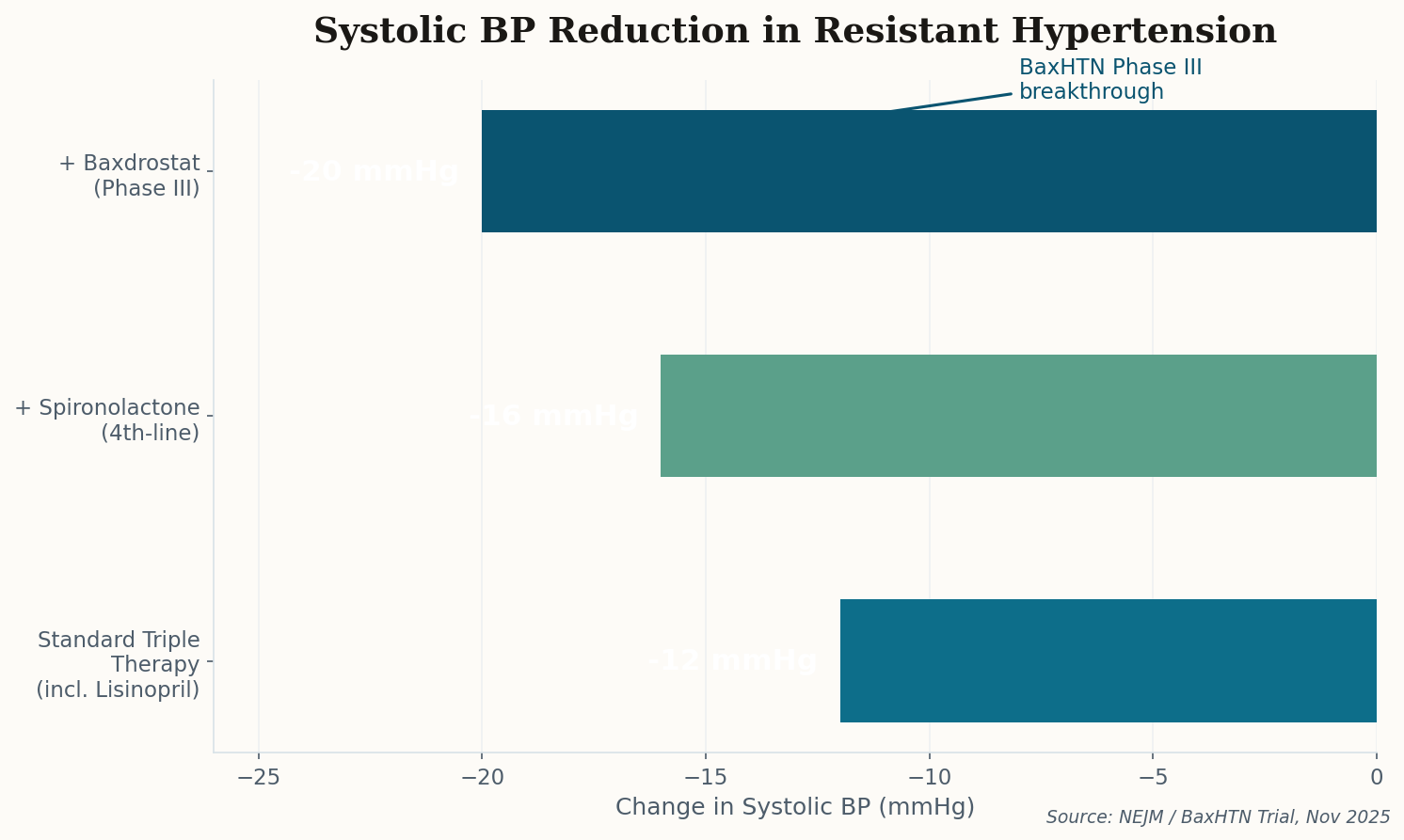
Baxdrostat works by a completely different mechanism than ACE inhibitors. Where Lisinopril blocks the conversion of angiotensin I to angiotensin II, Baxdrostat inhibits aldosterone synthase—cutting off excess aldosterone production at its source. In the trial, published in the NEJM, patients with resistant hypertension saw an additional 20 mmHg drop in systolic blood pressure when Baxdrostat was added to their existing triple therapy.

Horizontal bar chart showing systolic BP reductions: standard triple therapy -12 mmHg, plus spironolactone -16 mmHg, plus Baxdrostat -20 mmHg
Baxdrostat achieved the largest systolic BP reduction in resistant hypertension patients already on standard triple therapy. Source: NEJM / BaxHTN Phase III, Nov 2025.

To put that 20 mmHg in context: that's the difference between Stage 2 hypertension (where your stroke risk is dramatically elevated) and a controlled reading. For patients who've been told "we've tried everything," this is the first compelling new option in years. Baxdrostat doesn't replace Lisinopril—it picks up where Lisinopril leaves off.

What's next: FDA review of Baxdrostat is expected in late 2026. If approved, it would be the first new mechanism-of-action antihypertensive in over a decade. Watch for the advisory committee date.

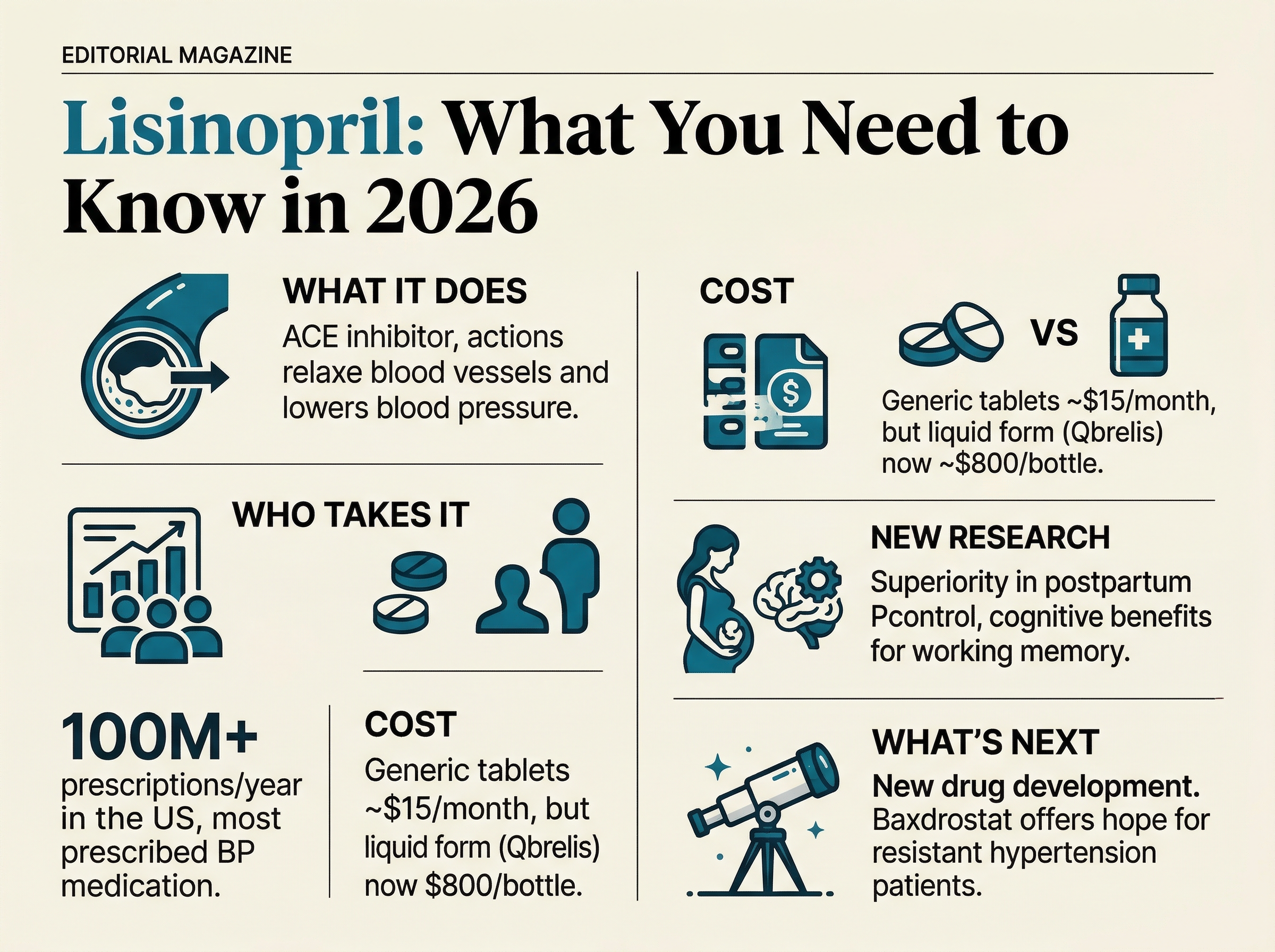
Infographic summarizing Lisinopril key facts for 2026: what it does, who takes it, cost disparities, new research, and future alternatives
Infographic: Lisinopril in 2026 — Generated with Nano Banana 2.0

The Bigger Picture

Lisinopril remains the workhorse of American blood pressure management—over 100 million prescriptions a year, generic, affordable, and effective for most people. But 2026 is exposing the cracks: a supply chain that can't serve its most vulnerable patients, a research landscape that's reshaping when and where it works best, and a new class of drugs waiting in the wings for the patients it can't reach. If you're one of the millions on this medication, the story is more nuanced than "take your pill." It's worth understanding what's changing—and what questions to ask at your next appointment.