Hardware Showdown

The $9,500 Question

A fully loaded Mac Studio and two DGX Spark boxes cost almost exactly the same. One wins on bandwidth. The other wins on compute. Neither wins on everything. Here's what actually matters for running AI coding models locally.

Listen
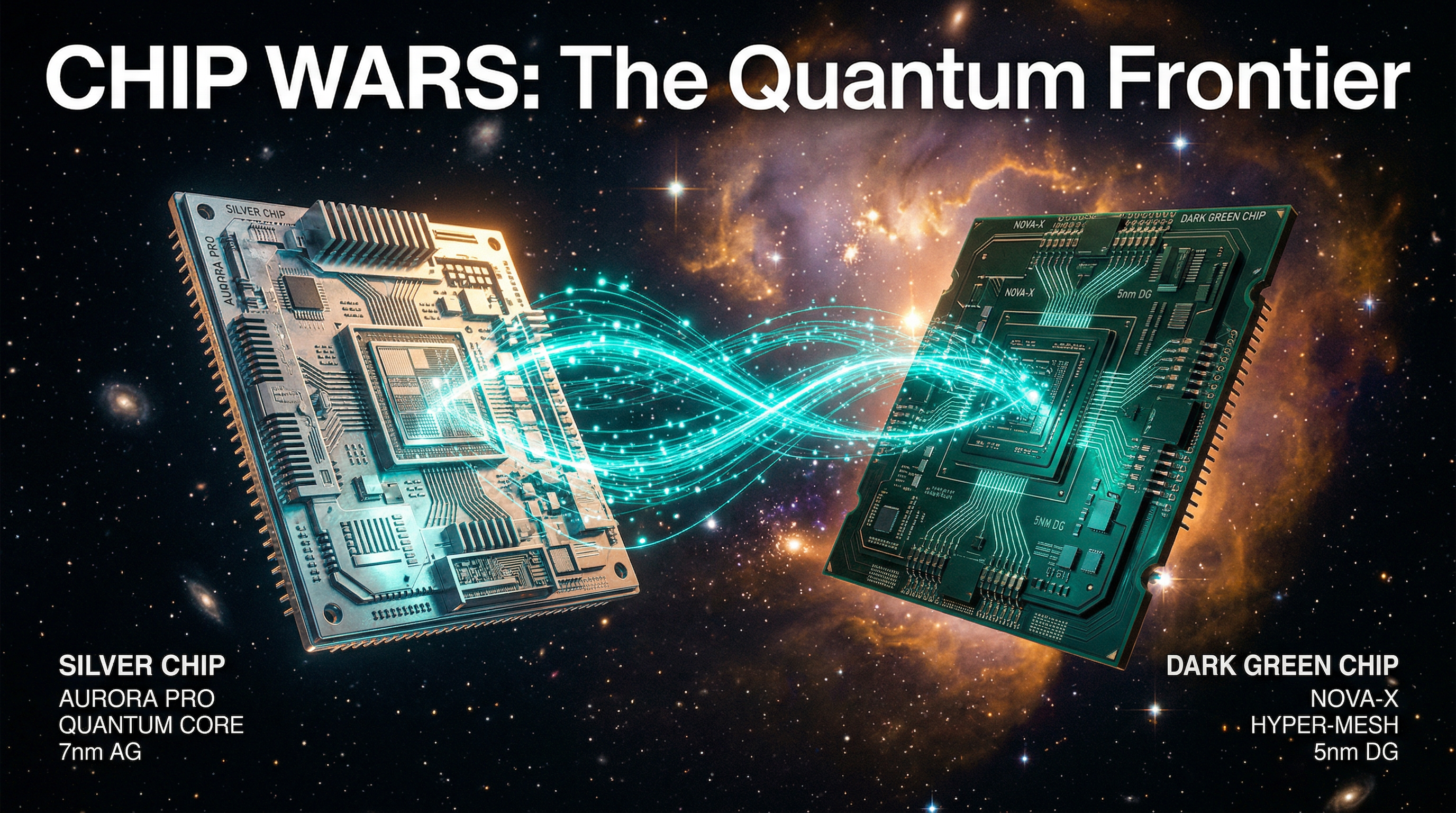
Two competing silicon architectures connected by data streams — representing the Mac Studio vs DGX Spark comparison for local AI coding workloads
01

NVIDIA Just Made the Mac Studio Look Like a Bargain

LPDDR5x memory chips stacked like precious commodities, reflecting the supply constraints driving price increases

The DGX Spark's MSRP just jumped $700 — from $3,999 to $4,699 — and NVIDIA is blaming LPDDR5x supply constraints. That's an 18% price hike that fundamentally reshapes the math for anyone weighing these two platforms.

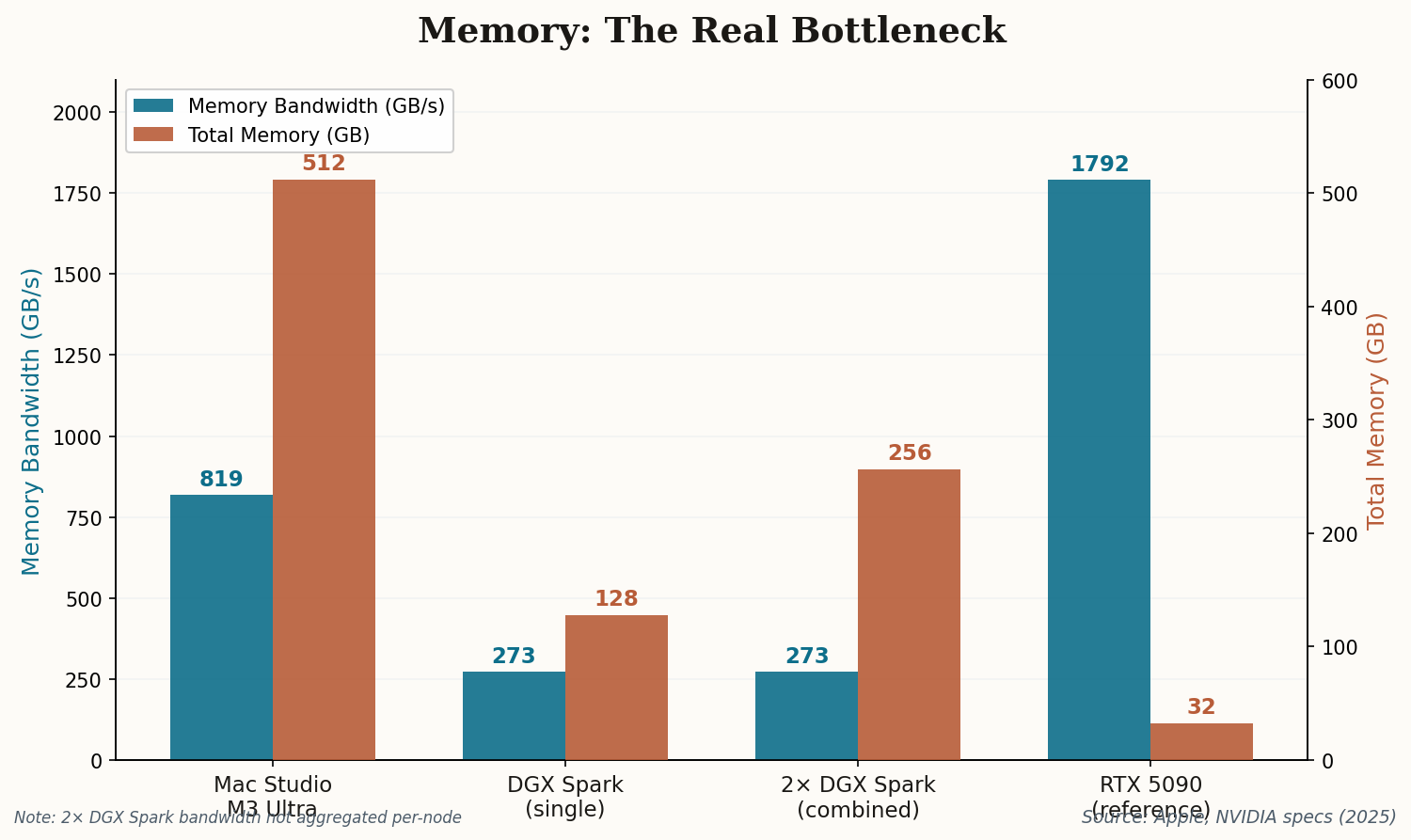
Two DGX Sparks now run $9,398. A Mac Studio M3 Ultra with 512GB unified memory starts at $9,499. We're talking a $101 difference for dramatically different hardware: the Mac gives you 4x the memory (512GB vs. 256GB combined), 3x the bandwidth per node (819 GB/s vs. 273 GB/s), and silence. The Sparks give you roughly 77x the AI compute (2 PFLOPS sparse FP4 vs. 26 TFLOPS FP16) and the entire CUDA ecosystem.

The price parity is almost poetic. NVIDIA positioned the Spark as a "personal AI supercomputer on your desk," but at $4,699, that desk needs deep pockets. For developers whose primary workflow is running coding models — not training them — the value proposition has shifted decisively toward Cupertino.
02

The Plot Twist: What If You Used Both?

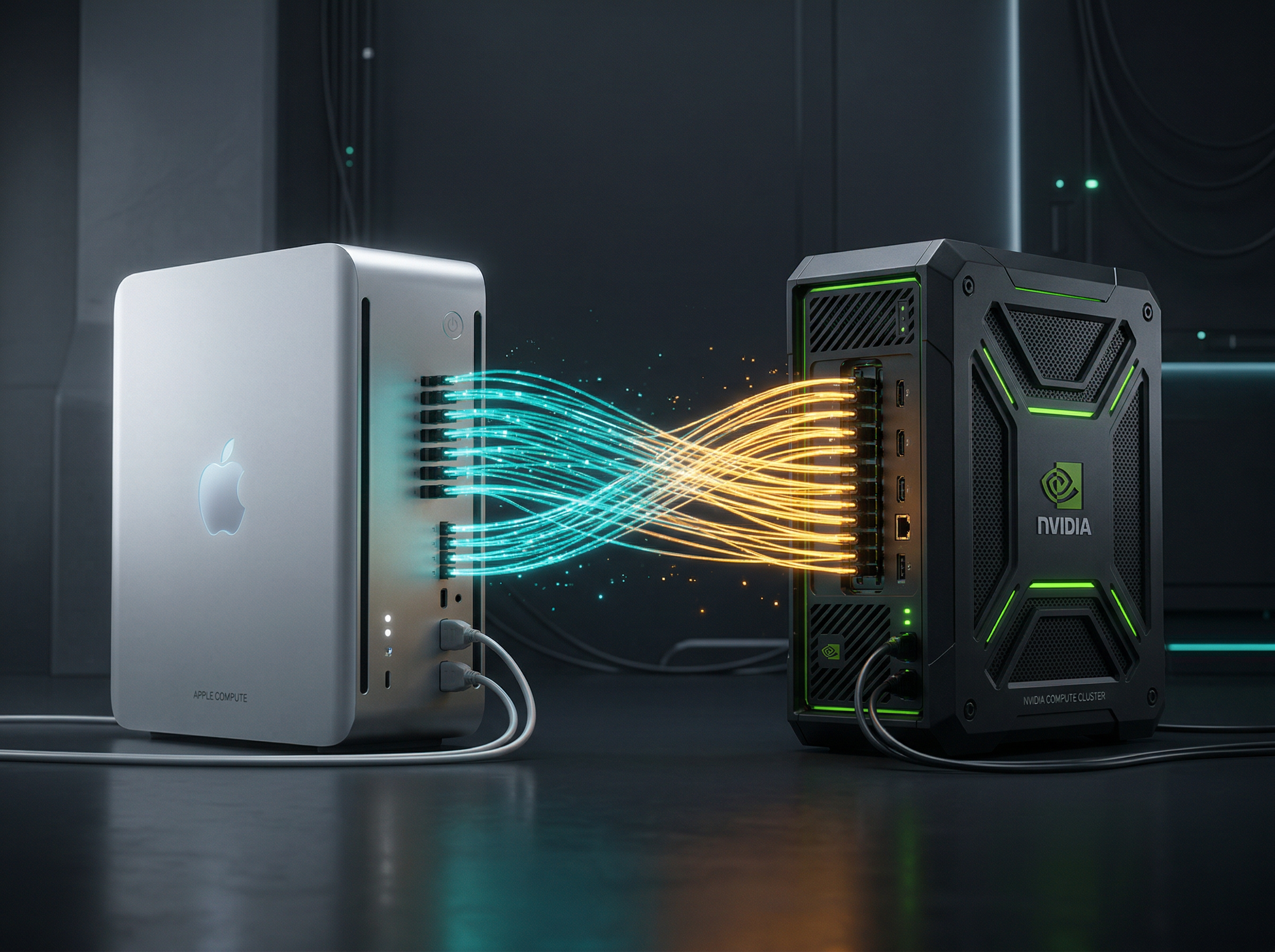
Two different computing architectures bridged by fiber optic connections, representing the EXO Labs hybrid approach

EXO Labs did something clever: they wired two DGX Sparks to a Mac Studio M3 Ultra and let each system do what it does best. The Spark handles the prefill phase (processing your prompt — compute-heavy), and the Mac handles the decode phase (generating tokens — bandwidth-heavy). The result? A 2.8x speedup over the Mac alone, and 1.9x faster than the Spark alone.

This isn't theoretical. Running Llama 3.1 8B at FP16 with an 8,192-token prompt, the hybrid cluster matched the Spark's blistering prefill speed while keeping the Mac's quick token generation. The trick is EXO's disaggregated inference framework, which streams the KV cache layer-by-layer between machines so both systems work simultaneously instead of waiting on each other.

The hardware specs tell the story: DGX Spark brings 128GB at 273 GB/s but 100 TFLOPS (FP16). The Mac Studio M3 Ultra brings 256GB at 819 GB/s but only 26 TFLOPS. The Spark has 4x more compute; the Mac has 3x more bandwidth. EXO makes them complementary, not competing.

The catch: EXO 1.0 with automated scheduling and KV streaming isn't publicly released yet (the alpha is at 0.0.15). But the architecture proves something important — the "Mac vs. Spark" question might be a false binary. The real power move could be the $19,000 heterogeneous cluster that demolishes either platform running solo.

03

John Carmack Lit the DGX Spark on Fire (Figuratively)

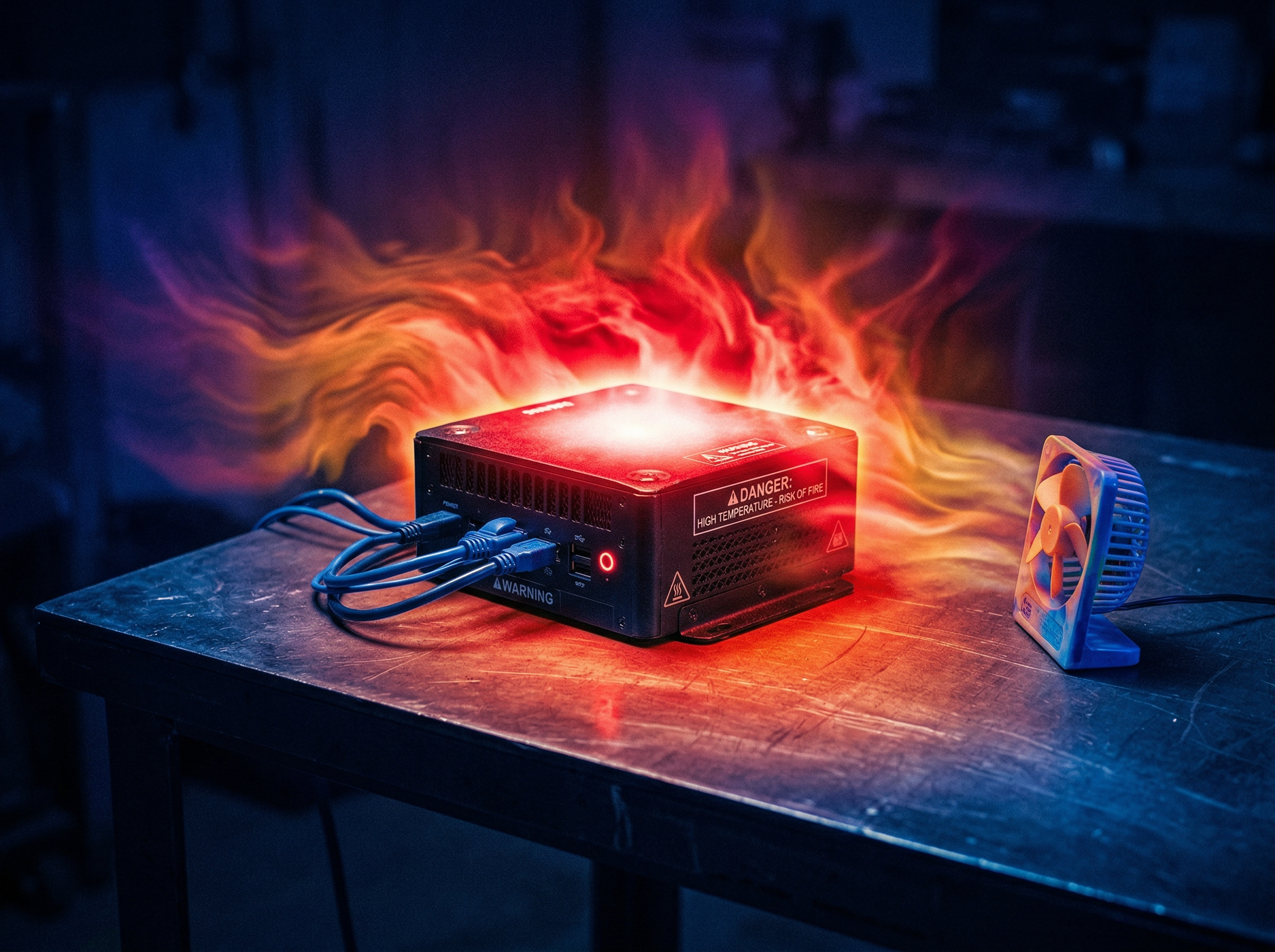
A computing device radiating intense heat, visualized as thermal camera gradient from cool blue to blazing red

When John Carmack says your hardware underperforms, people listen. The legendary programmer reported that his DGX Spark maxed out at just 100 watts — less than half its 240W rating — delivering roughly half the quoted performance. The system ran hot, crashed during extended workloads, and was rebooting spontaneously under sustained AI loads.

The NVIDIA developer forums quickly filled with corroborating reports. Users documented GPU crashes, thermal shutdowns, and the realization that the Spark's beautiful 1.13-liter chassis might be its own worst enemy. The GB10 Grace Blackwell superchip generates serious heat, and the compact enclosure simply can't dissipate it fast enough under sustained load.

Compare this to the Mac Studio, which runs at roughly 70W under full LLM inference and produces zero audible noise. Apple's thermal engineering, born from years of fanless laptop design, gives the Mac Studio a decisive quality-of-life advantage. You can run 70B models all day in a quiet home office. The Spark? Some users report keeping "a small USB fan pointed at mine."

AMD seized the moment, offering Carmack a Strix Halo box as an alternative. The episode raised pointed questions about NVIDIA's plans to rebrand the GB10 as the "N1" APU for laptops — if it throttles in a desktop box, what happens in a slim chassis?

Head to Head: The $9,500 Showdown
Spec Mac Studio M3 Ultra 2× DGX Spark
Price $9,499 $9,398
Memory 512 GB unified 256 GB (128 each, networked)
Bandwidth 819 GB/s 273 GB/s per node
AI Compute 26 TFLOPS (FP16) 2 PFLOPS (sparse FP4)
Power ~70W (silent) ~300W (audible fans)
Max Model 671B (DeepSeek-V3) 200B (NVFP4 quantized)
Ecosystem MLX + llama.cpp CUDA 13 + TensorRT
Fine-tuning Limited (MPS unstable) Full CUDA + QLoRA
Inference winner: Mac Studio — faster token generation, runs bigger models, dead silent.
Training winner: DGX Spark — CUDA ecosystem, fine-tuning, production code parity.
Bar chart comparing memory bandwidth and total memory capacity across Mac Studio M3 Ultra, single DGX Spark, 2x DGX Spark, and RTX 5090
Memory bandwidth is the primary bottleneck for LLM token generation. The Mac Studio's 819 GB/s gives it a commanding 3x lead over each DGX Spark node. Note: 2x Sparks cannot aggregate their bandwidth — each node still processes at 273 GB/s.
04

The Numbers Don't Lie (But They Do Mislead)

Abstract visualization of performance metrics as architectural columns of varying heights, representing benchmark comparisons

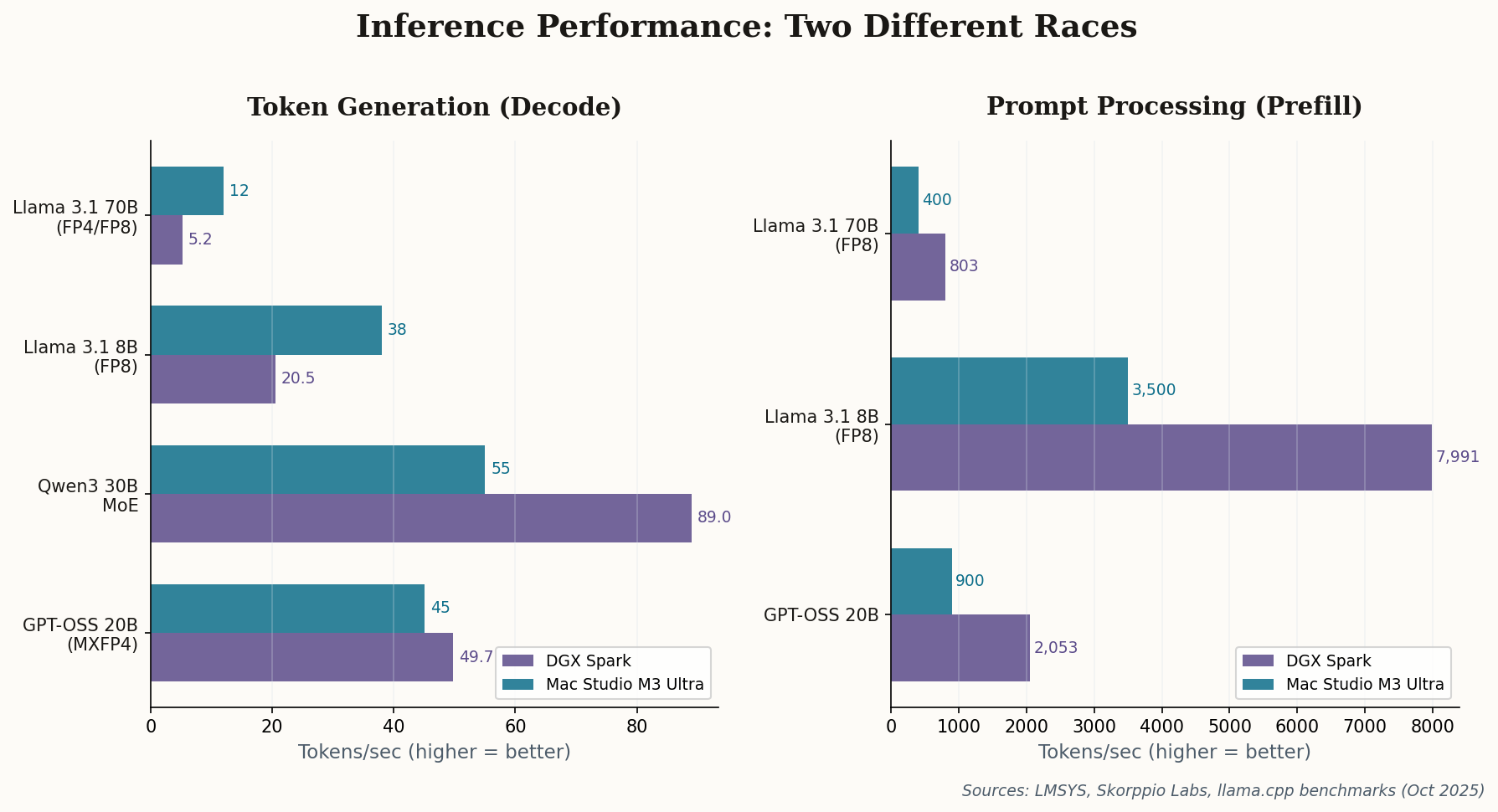
The LMSYS in-depth review of the DGX Spark remains the most rigorous benchmark available, and the numbers reveal a fascinating split personality. On Llama 3.1 8B (FP8), the Spark hits 7,991 tokens/sec on prefill but only 20.5 tokens/sec on decode at batch 1. Crank up concurrency to batch 32 and decode jumps to 368 tokens/sec — but that's a server workload, not a coding assistant on your desk.

The llama.cpp community benchmarks tell an even more interesting story. Mixture-of-Experts models are the killer app for the Spark: Qwen3 30B MoE hits approximately 89 tokens/sec, while the similarly-sized Qwen3 32B Dense slams into a "bandwidth wall" at just 10.7 tokens/sec. The MoE architecture means only a fraction of the model's parameters are active per token, dramatically reducing the bandwidth requirement.

Dual panel chart comparing token generation (decode) and prompt processing (prefill) speeds across multiple models for DGX Spark vs Mac Studio
LLM inference has two phases: prefill (processing your prompt) and decode (generating tokens). The Spark dominates prefill with raw compute. The Mac Studio wins decode with superior bandwidth. Which phase matters more depends entirely on your workflow.

For the Llama 3.1 70B at FP8 — the kind of model a serious coding assistant would run — the Spark manages 803 tokens/sec prefill but only 2.7 tokens/sec on decode. That's painful for interactive use. On the Mac Studio, the 70B model benefits from 819 GB/s bandwidth to deliver noticeably faster token-by-token generation, though it needs 4-bit quantization (GGUF via llama.cpp) to fit in memory comfortably.

Here's the insight most benchmarks miss: coding AI workloads are decode-dominated. You paste a file into your prompt once (prefill), then the model generates hundreds of tokens of code, explanation, or refactoring suggestions (decode). A 2x prefill advantage matters far less than a 2-3x decode advantage when you're waiting for the model to finish writing a function.

05

The CUDA Factor: Why Some Developers Won't Switch

A developer's desk with warm lamp light contrasting with cool monitor glow, showing an AI coding session

Sebastian Raschka — the Machine Learning with PyTorch author — tested the DGX Spark against his Mac Mini M4 Pro for local PyTorch development, and his conclusion cuts to the heart of the ecosystem debate: "It is a CUDA device and thus much better supported in PyTorch."

For Ollama-based inference with optimized MXFP4 precision, both platforms hit roughly 45 tokens/sec on GPT-OSS 20B. Performance parity. But Raschka's real use case is coding LLMs from scratch in pure PyTorch, and here the Spark's CUDA support is decisive. MPS on macOS is still unstable for training workloads — fine-tuning jobs that converge perfectly on CUDA will sometimes fail to converge on MPS.

The production parity argument: If you fine-tune a model locally on CUDA and deploy it to an AWS p5 instance or GCP GPU instance, there's zero porting work. Fine-tune on MLX and you'll spend days re-validating that your model performs identically on CUDA in production.

That said, Apple's MLX framework is evolving rapidly. MLX 2.0 added native agent support optimized for the M-series Neural Engine, and Apple is adding CUDA backend support to MLX — meaning you could eventually write and test locally on Apple Silicon, then deploy to NVIDIA hardware without rewriting. That future isn't here yet, but it's visible on the horizon.

06

512 Gigabytes of Unified Memory Changes the Game

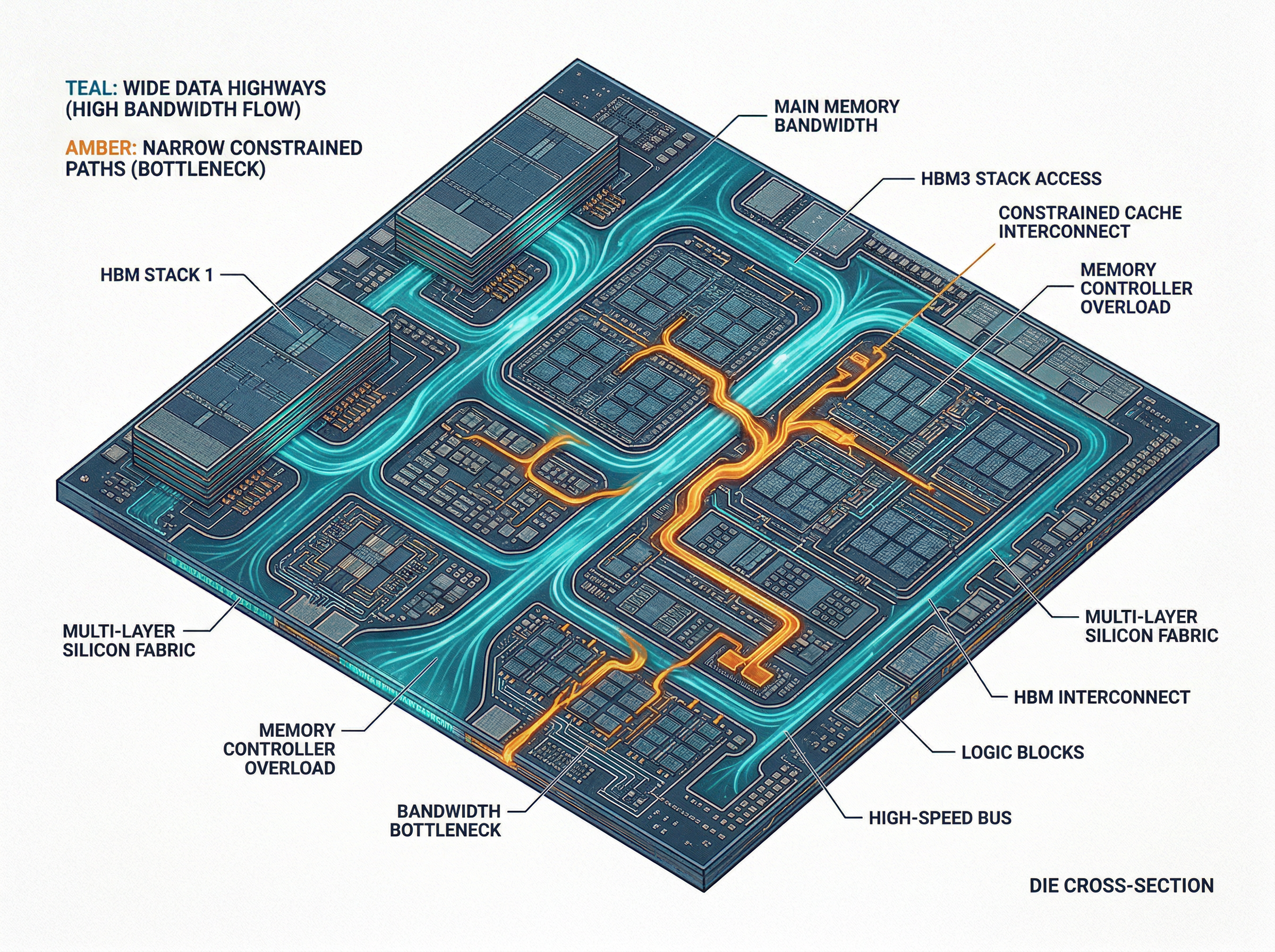
Cross-section of a silicon chip showing wide data highways flowing through memory architecture, contrasting narrow bottleneck paths

When ServeTheHome called the 512GB Mac Studio "the local AI play," they weren't being hyperbolic. At 819 GB/s of memory bandwidth and half a terabyte of unified memory, the M3 Ultra Mac Studio can load DeepSeek-V3 — a 671-billion-parameter model — entirely in memory. The DGX Spark? Its 128GB ceiling means you're quantizing everything above 200B parameters into oblivion, or you're not running it at all.

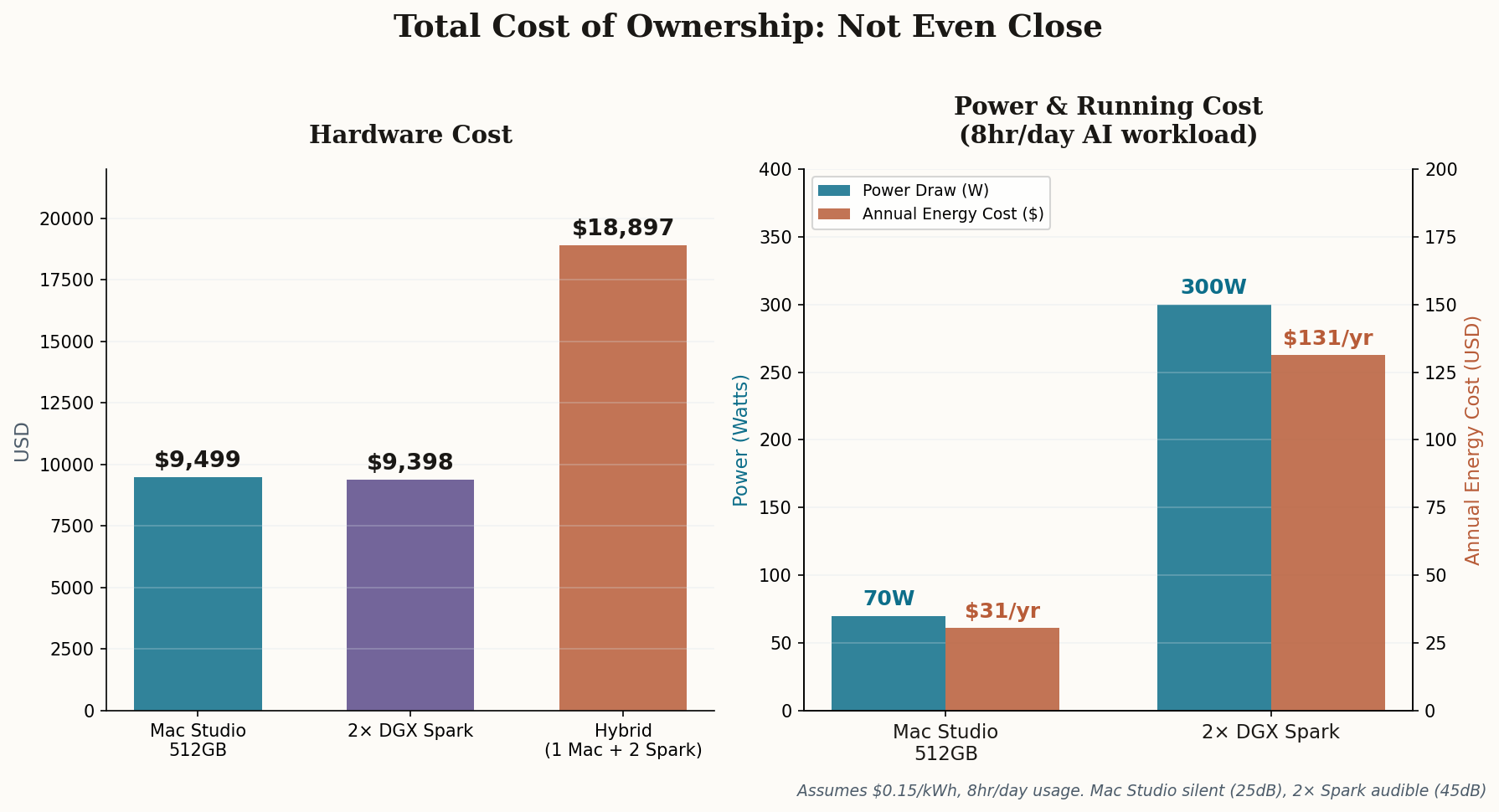
Dual panel chart comparing hardware cost and annual power costs between Mac Studio and 2x DGX Spark configurations
At near-identical purchase prices, the Mac Studio's 70W power draw translates to roughly $30/year in electricity for 8hr/day AI workloads — versus $131/year for two Sparks at ~300W combined. The Mac is also dead silent; the Sparks are audible.

The bandwidth advantage is structural, not incremental. LLM token generation speed is fundamentally limited by how fast you can read model weights from memory. The Mac's 819 GB/s means it reads the entire weight matrix roughly 3x faster than the Spark's 273 GB/s per clock cycle. For a 70B model, that translates directly into 3x faster token generation — the thing you actually feel while coding.

There's also the "it just works" factor. The Mac Studio is a general-purpose workstation. You run your IDE, your browser, your Slack, and a 70B coding model simultaneously — all sharing unified memory, all running silently. The DGX Spark is a dedicated AI appliance that runs Linux, needs its own monitor-keyboard-mouse setup (or SSH), and exists solely to serve models. For developers who want one machine that does everything, the Mac Studio is the only real option in this price range.

The Verdict

For the specific question — "is a fully loaded Mac Studio better than two DGX Sparks for running AI coding models locally?" — the answer is yes, and it's not close. The Mac Studio wins on the metrics that matter most for interactive coding: token generation speed, model capacity, silence, power efficiency, and the ability to be your everything machine. The DGX Spark wins on training, fine-tuning, and CUDA ecosystem compatibility — important concerns, but secondary ones for the "run a coding model on my desk" use case. The real galaxy-brain move? Run both. EXO Labs proved the hybrid approach can deliver 2.8x the performance of either alone. But that's a $19,000 setup, and most of us don't have three boxes worth of desk space.