
Apple Hardware Forecast

The Fold Will Be Televised

Every credible analyst says Apple is building a foldable iPhone. The real question isn't if, but whether 2026 is the year it actually ships—or whether yield nightmares push the dream into 2027.

Listen
Conceptual illustration of a sleek folding smartphone with a creaseless display and titanium edges
Factory assembly line under amber warning lights with quality control equipment
01

The Hinge That Could Break September

Here's the spoiler for anyone already planning their September pre-order: you might want to keep that credit card holstered. Multiple supply chain watchers are now flagging a scenario that Apple has faced before with ambitious hardware—a splashy announcement followed by months of agonizing unavailability.

The culprits are specific. Mass-producing Apple's novel titanium/liquid-metal hinge is proving more complex than prototyping it, and applying transparent polyimide (PI) protective films at scale without microscopic defects remains a yield headache. Sound familiar? This is the Vision Pro playbook all over again: announce in September, ship to a privileged few in Q4, and leave the mass market waiting until well into 2027.

The question isn't whether Apple can make a foldable iPhone. It's whether they can make ten million of them without a defect rate that would make Tim Cook lose sleep. Given Apple's zero-tolerance for hardware quality scandals, constrained supply is almost certainly preferable to a premature flood. Expect a "available in limited quantities" asterisk on whatever September brings.

Abstract market growth visualization with a flat line suddenly spiking upward
02

The Market Has Been Waiting for Permission

DSCC analyst Ross Young has been tracking foldable display supply chains longer than most people have owned foldable phones. His latest assessment is pointed: the global foldable market has plateaued. Samsung's Galaxy Z Fold sales are slowing as consumers adopt a wait-and-see posture, and competitors like OnePlus and Google haven't moved the needle on mainstream adoption.

Young's thesis is straightforward: the foldable market needs Apple to legitimize it, the same way the tablet market needed the iPad in 2010 and the smartwatch market needed the Apple Watch in 2015. "Apple does not appear to be in a hurry," Young notes, "but their entry in 2026 will legitimize and revitalize the entire global foldable market." This is Apple's classic move—let the pioneers absorb the arrows, then arrive with polish.

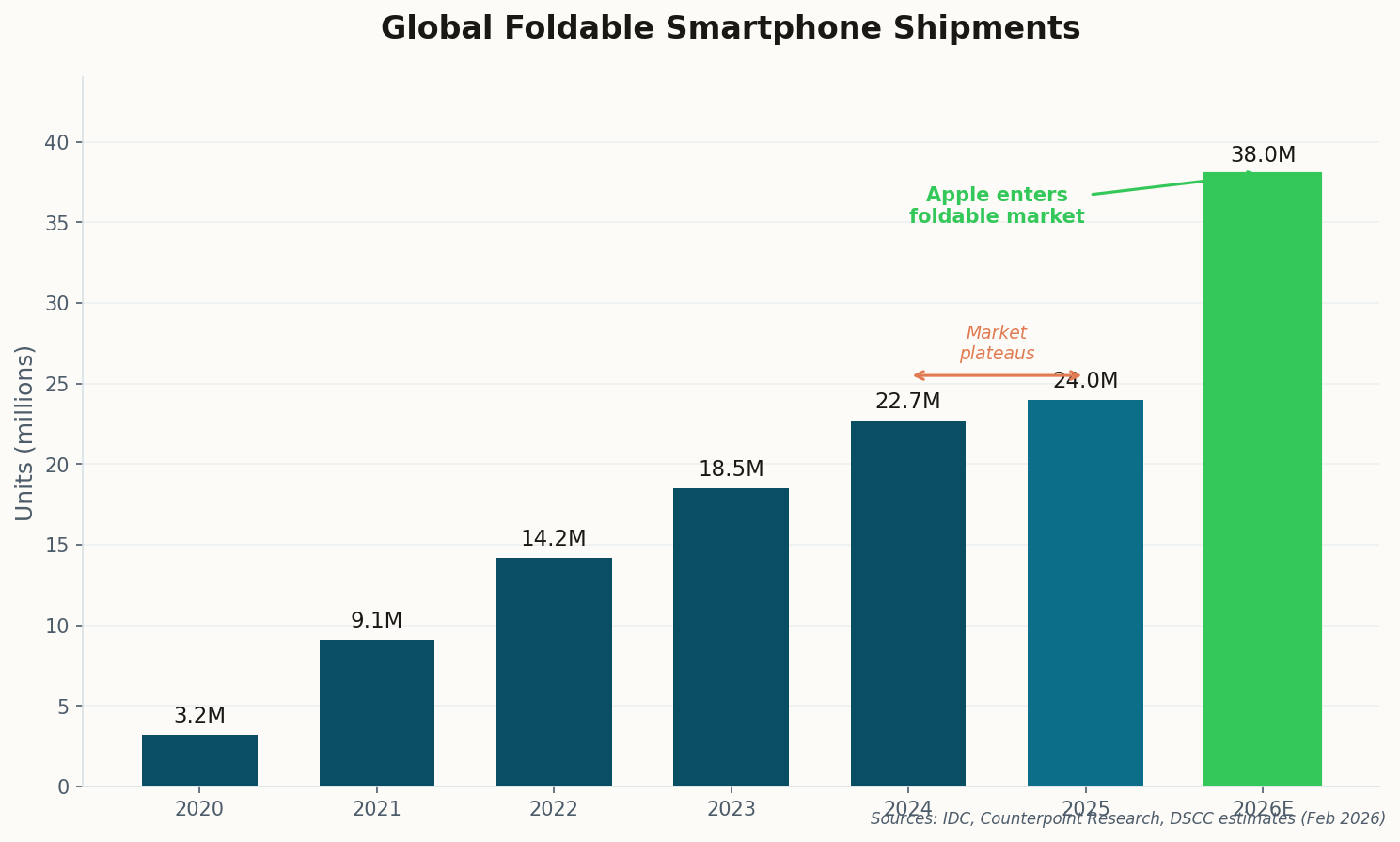
Bar chart showing global foldable smartphone shipments from 2020 to 2026, with projected spike from Apple's market entry
Global foldable shipments have plateaued at ~24M units. Analysts project Apple's entry could push 2026 past 38M. Sources: IDC, Counterpoint Research, DSCC.

The data tells the story clearly. After explosive growth from 3.2 million units in 2020 to 22.7 million in 2024, the market flatlined in 2025. Apple's projected 10-11 million units alone could push 2026 to 38 million—a 58% year-over-year jump. That's not revitalization. That's a second founding.

Macro photography of precision titanium hinge mechanism with liquid metal alloy joints
03

The Hinge Is the Whole Ballgame

If you want to understand why Apple waited this long to enter the foldable market, look at Samsung's hinge history. The original Galaxy Fold in 2019 was a durability disaster. Six generations later, the crease is still visible and the hinge still feels like a compromise. Apple apparently decided the hinge deserved the same engineering obsession they brought to the MacBook Pro's lid mechanism.

A newly published patent reveals a hinge system that blends titanium with "liquid metal" components—the amorphous alloy Apple has been experimenting with since the iPhone 5's SIM ejector tool. The design features curved link surfaces with rotational synchronization gears, meaning the fold and unfold motion should feel mechanically precise rather than floppy. Amphenol, the company already manufacturing MacBook Pro hinges, has reportedly been contracted for production.

The engineering ambition is clear: Apple is targeting hundreds of thousands of fold cycles without mechanical degradation. For context, Samsung's Z Fold 6 is rated for 200,000 folds. If Apple can credibly claim 300,000+, it neutralizes the durability objection that has kept cautious buyers on the sideline.

Stage presentation podium under dramatic spotlight with folding phone silhouette
04

September's Stage Is Already Being Set

Jeff Pu of Haitong International is one of the few analysts with consistent access to Apple's Asian supply chain, and he's now placing the iPhone Fold announcement squarely at September 2026—alongside the iPhone 18 Pro and Pro Max. That detail matters enormously.

Announcing the foldable alongside the flagship lineup signals that Apple views this as a mainline consumer product, not a niche experiment like Vision Pro. The specs reinforce this: an A20 Pro chip on TSMC's 2nm process, 12GB of RAM (specifically to power on-device Apple Intelligence), and dual 48MP cameras on the inner display with 18MP selfie cameras on both screens. This is not a concept device. It's a flagship.

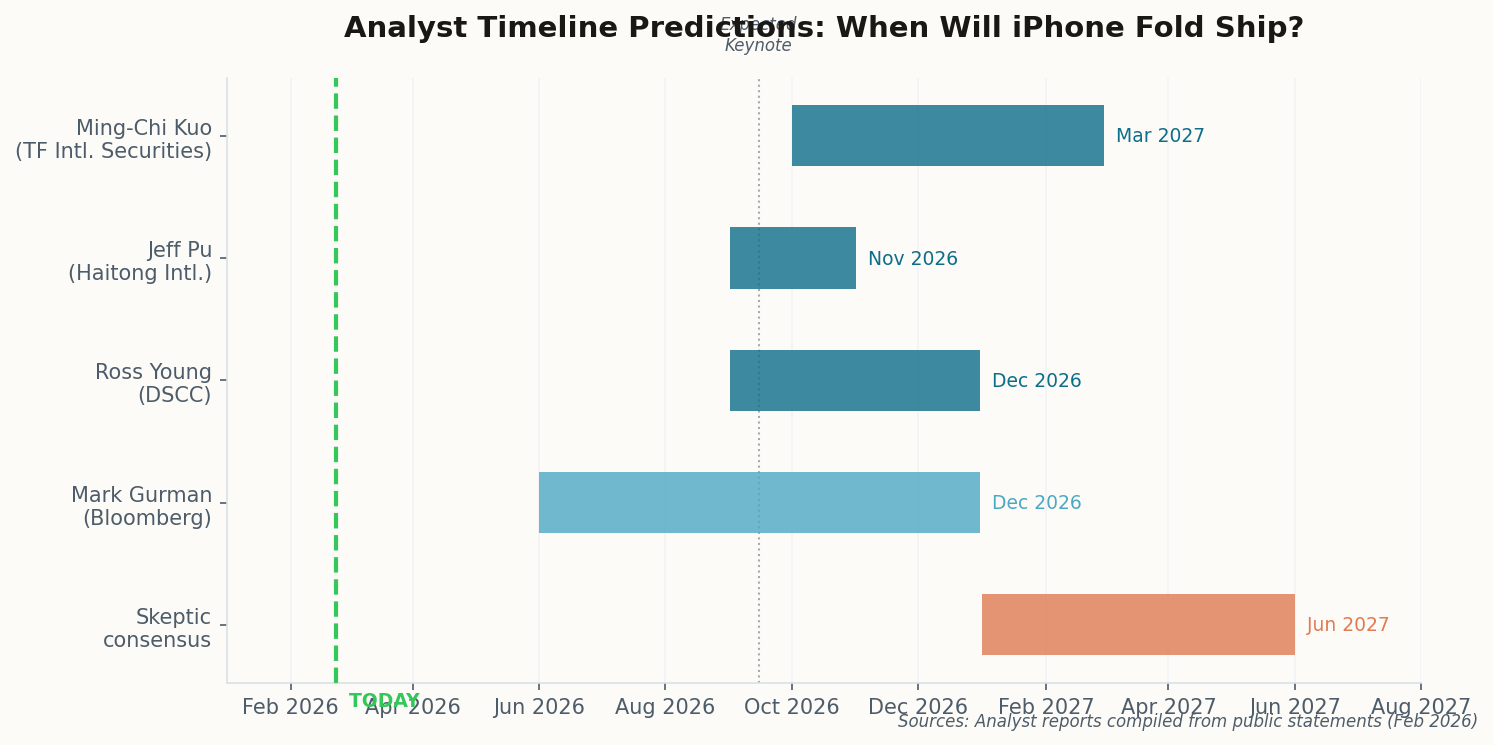
Horizontal bar chart showing analyst timeline predictions for iPhone Fold shipping dates
Most analysts cluster around a September 2026 announcement, but the skeptic consensus warns actual retail availability may slip to early 2027. Sources: Compiled from analyst reports.

Look at the analyst consensus chart above. Four of five major voices agree on a late-2026 window. The outlier—the skeptic consensus around yield issues—doesn't actually disagree on the announcement. They just question whether you'll be able to buy one before Q1 2027. The smart bet: September announcement, December trickle, spring 2027 general availability.

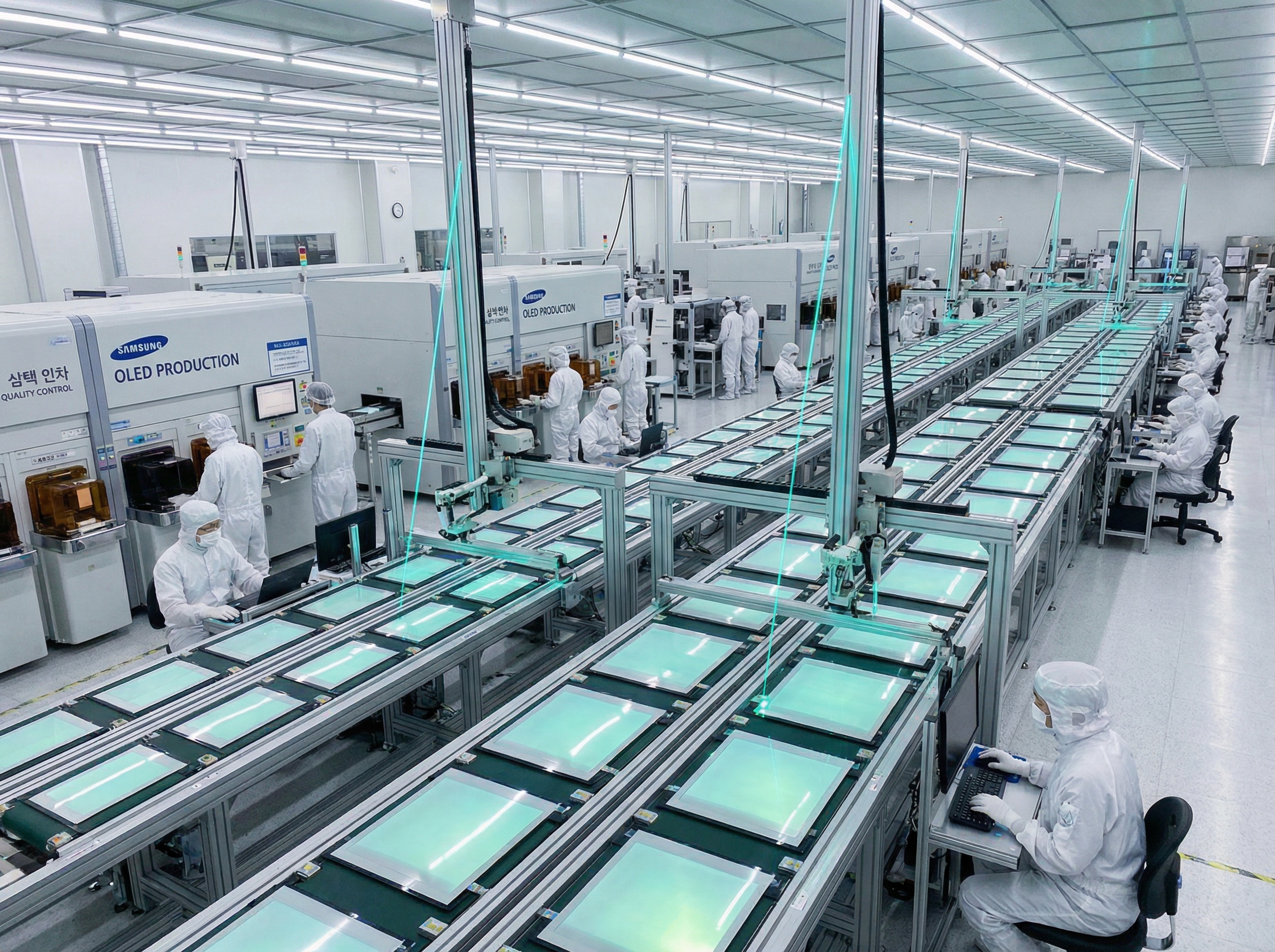
Clean room factory floor with rows of OLED display panels in production
05

Ten Million Panels Don't Lie

Supply chain rumors are easy to dismiss. Supply chain orders are not. Samsung Display has reportedly secured an exclusive contract to produce 10 to 11 million foldable OLED panels for Apple in 2026. Neither LG Display nor BOE Technology made the cut for the primary inner display—Apple's crease requirements were apparently too stringent.

An order of this magnitude means several things simultaneously. First, Apple is serious. You don't commit to 10+ million panel orders for a science project. Second, they expect massive demand—for context, Samsung shipped roughly 10 million Galaxy Z Fold and Z Flip units combined across all of 2024. Apple is matching Samsung's entire foldable volume in its first year with a single device.

Third, and perhaps most importantly, the exclusivity tells us something about the state of foldable display technology. Despite years of investment, only Samsung Display can currently manufacture crease-free panels at Apple-grade quality. The supply chain monoculture is a risk—one factory fire or yield collapse could derail the entire launch—but it also confirms Apple's quality bar remains non-negotiable.

Book-style foldable phone with open display showing teal gradient wallpaper
06

The Book, Not the Flip

Ming-Chi Kuo of TF International Securities has arguably the best track record of any Apple supply chain analyst, and his latest report paints a clear picture: the first foldable iPhone will be a book-style fold (like Samsung's Z Fold), not a clamshell flip (like the Z Flip). The inner display will measure approximately 7.8 inches, with a 5.5-inch cover screen for quick interactions.

The form factor choice is telling. A book-fold device is fundamentally a productivity play—it unfolds into a small tablet, competing with the iPad mini rather than doubling as a fashion-forward compact phone. This aligns with Apple's emphasis on 12GB of RAM and Apple Intelligence: they're building a device for multitasking power users who want a tablet that fits in their pocket, not a nostalgia flip phone.

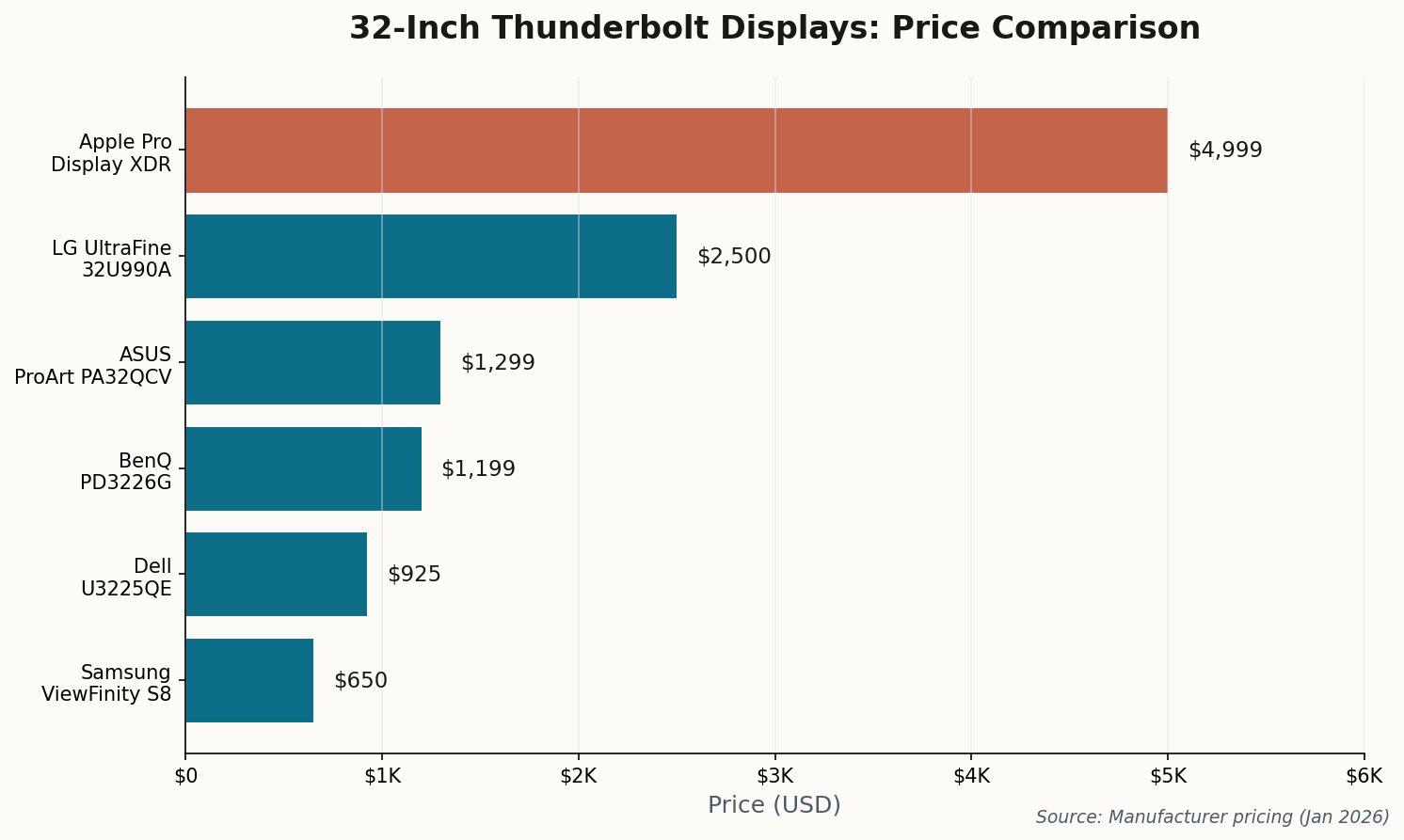
Horizontal bar chart comparing pricing of iPhone Fold against other flagship and foldable smartphones
At a projected $2,000-$2,500, the iPhone Fold would create an entirely new "Ultra" pricing tier above the Pro Max. Sources: Retail pricing and analyst projections.

The biggest surprise may be the price. At a projected $2,000-$2,500—more than a thousand dollars above the iPhone Pro Max—Apple isn't trying to make foldables mainstream. They're creating a new ultra-premium tier. The titanium casing, 5,400-5,800 mAh battery (the largest ever in an iPhone), and book-fold form factor all scream "professional productivity device." The flip phone? That'll probably come in 2028, once Apple has proven the hinge at scale.

The bottom line: Kuo's Q4 2026 mass production target, combined with his caveat that "smooth shipments may not occur until 2027 due to early-stage yield challenges," is the most honest assessment we have. The fold is coming. The question is whether you'll be able to actually buy one before Valentine's Day 2027.

So, Will It Ship in 2026?

My read: 70% likely that Apple announces an iPhone Fold at the September 2026 keynote. But only about 35% likely that you can walk into an Apple Store and buy one before the calendar flips to 2027. The supply chain evidence is overwhelming—this device is real and deep into engineering validation. But Apple's own quality standards, combined with the genuine technical challenges of mass-producing a novel hinge and crease-free display, make a constrained "soft launch" far more probable than a full-volume blitz. Plan for announcement in September. Plan for availability in spring 2027. And plan for a price tag that makes the Pro Max look like a bargain.