Foldable Hardware

Two Hinges Too Many

Samsung's $2,899 tri-fold is breaking in users' hands. Apple is watching. A Chinese upstart says it solved the bulk problem. And the foldable market might be stalling anyway. Welcome to the most expensive stress test in consumer electronics.

Listen
Futuristic tri-fold smartphone unfolded on a reflective surface with teal lighting
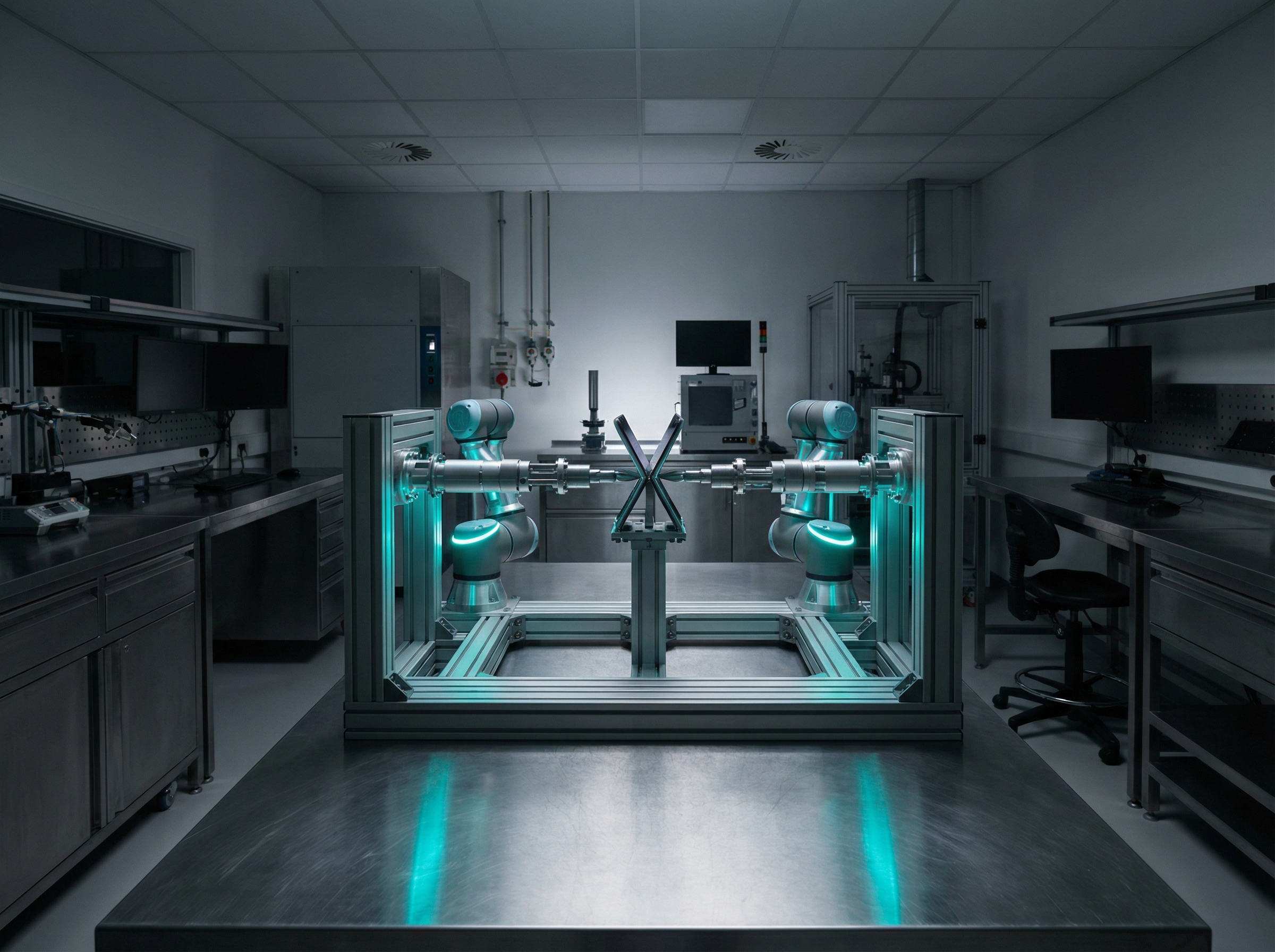
Smartphone undergoing mechanical stress testing in a lab
01

The Hinge That Couldn't Hold

Here's a fundamental question that Samsung's engineering team apparently didn't answer before shipping: what happens when you double the mechanical failure points on a device people shove in their back pockets?

Independent durability testing of the Galaxy Z TriFold has revealed what physics probably could have predicted. Two hinges compromise structural rigidity so severely that standard mechanical stress tests — the kind every phone must survive — cause irreversible damage. The internal flexible display panel, stretched across three segments and two fold points, is "extremely delicate and highly susceptible to permanent damage from everyday hazards and torsion." That's not a reviewer being dramatic. That's the test data talking.

The core issue isn't that hinges are bad. Samsung's bi-fold Galaxy Z Fold line has progressively improved over six generations. The issue is that materials science for flexible OLED panels and ultra-thin glass hasn't kept pace with the ambition to add more folds. Each additional hinge exponentially increases the attack surface for mechanical failure — and exponentially increases the price tag consumers are asked to absorb for that risk.
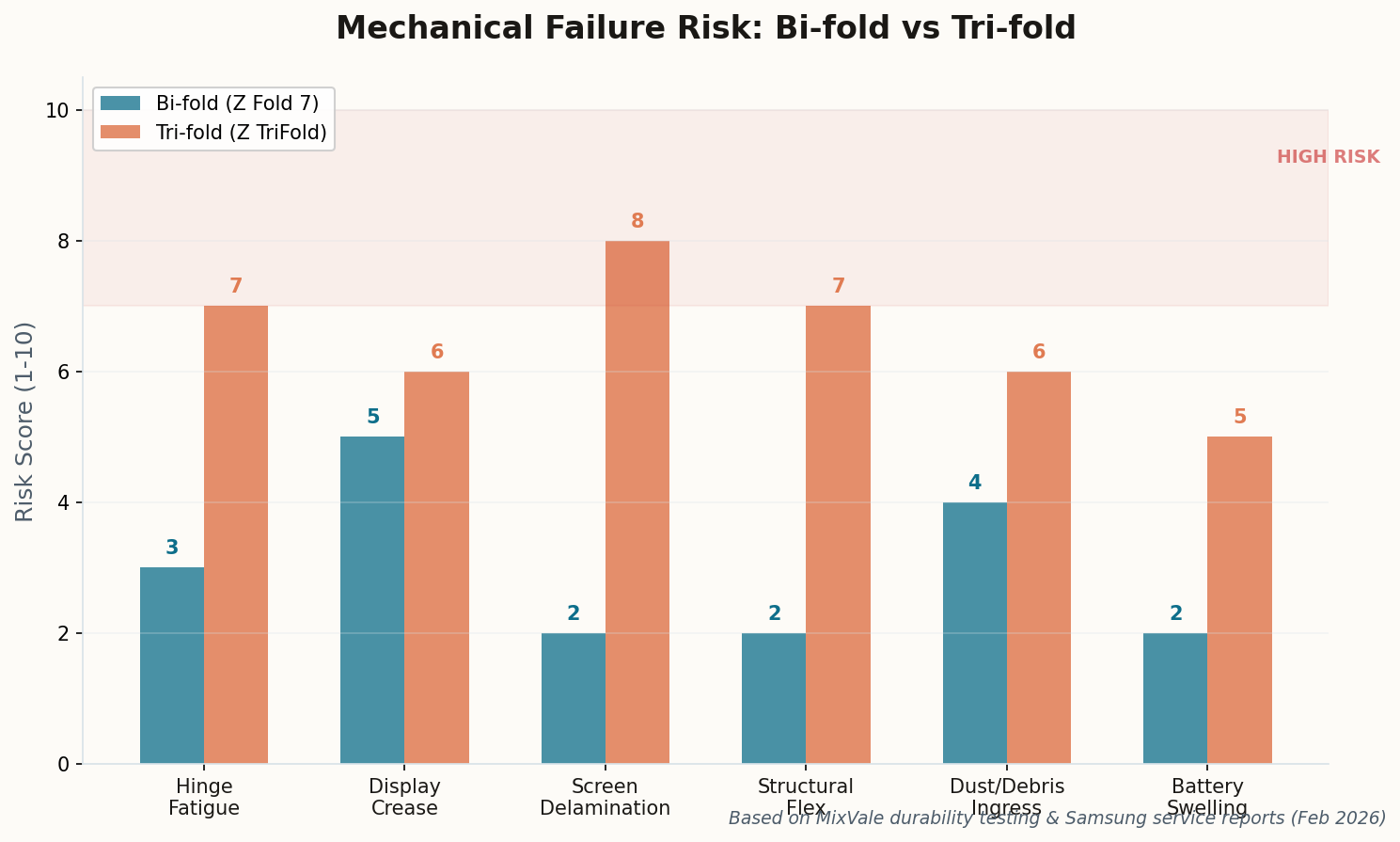
Bar chart comparing mechanical failure risk scores between bi-fold and tri-fold phones across six categories
Mechanical failure risk comparison based on independent durability testing. Tri-fold devices score significantly higher across all six failure modes, with screen delamination and structural flex reaching critical thresholds.
Minimalist blueprint sketches of a folding device concept
02

Apple Watches the Carnage and Takes Notes

If you're Apple — a company that famously waited four years after the first smartphone to ship the iPhone — watching Samsung's $2,899 tri-fold crack in customers' hands must feel like vindication of the most expensive variety.

Analysts now report that Apple's long-rumored foldable iPhone, still targeted for H2 2026, is being developed with "entirely new, unorthodox components" rather than relying on existing supply chains. Translation: Apple is looking at Samsung's display panels, Samsung's UTG (Ultra-Thin Glass), Samsung's hinge mechanisms, and deciding it can't trust any of them. That's a staggering indictment of the existing foldable supply chain from its largest potential customer.

The strategic calculus is razor sharp. Apple doesn't need to be first. It needs to ship a foldable that works perfectly on day one, because its brand can't survive the kind of "dead screen within five days" headlines Samsung is currently eating. The TriFold debacle isn't slowing Apple down — it's accelerating the company's investment in custom engineering while simultaneously lowering the bar it needs to clear to impress.

The Apple paradox: Every Samsung foldable failure makes Apple's eventual entry more impactful — and more cautious. The longer Apple waits, the more data it collects on what breaks. The question is whether patience becomes paralysis.

Smartphone display showing glitch artifacts and green flickering
03

$2,899 Buys You Five Days

Early adopters of the Galaxy Z TriFold are discovering that being first can be extraordinarily expensive. Reports are flooding in of inner display failures within days of unboxing: unresponsive screens, persistent green or white flashing, ghost touching that renders the device unusable, and — in the most unsettling cases — complete device death within five days of purchase.

The failure pattern tells a manufacturing story. Users report hearing a "strange popping sound" when closing the device before the screen fails. Physical air bubbles are appearing under the UTG layer — a symptom that suggests the adhesive bonding the ultra-thin glass to the flexible OLED substrate is delaminating under the stress of repeated folding across two crease points. This isn't a software glitch. This is a materials failure at the molecular level.

Samsung is offering free repairs or full refunds, which is the right customer response. But the damage to the tri-fold category is harder to repair. At $2,899, the Z TriFold was supposed to be Samsung's flagship showcase — proof that the future of smartphones involves more screens, not bigger ones. Instead, it's becoming Exhibit A in the case against rushing bleeding-edge hardware to market before the fundamental materials are ready.

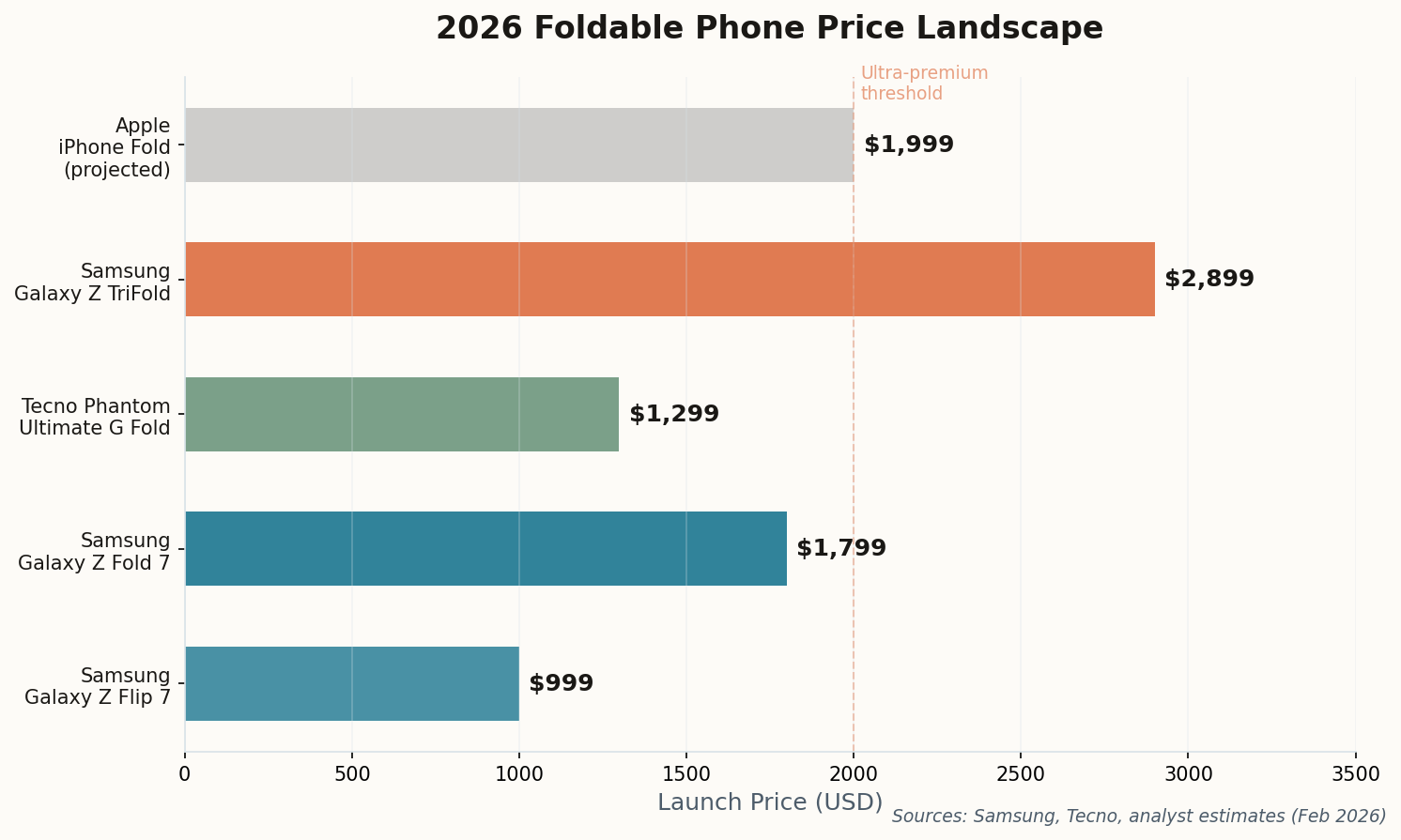
Horizontal bar chart comparing prices of 2026 foldable phones
The 2026 foldable price landscape. Samsung's tri-fold sits at nearly $3,000 — 61% more than the bi-fold Z Fold 7 — with significantly higher failure rates. Apple's projected entry would slot in at the bi-fold tier, not the tri-fold one.
Ultra-thin device profile showing razor-thin edge
04

3.49 Millimeters of Audacity

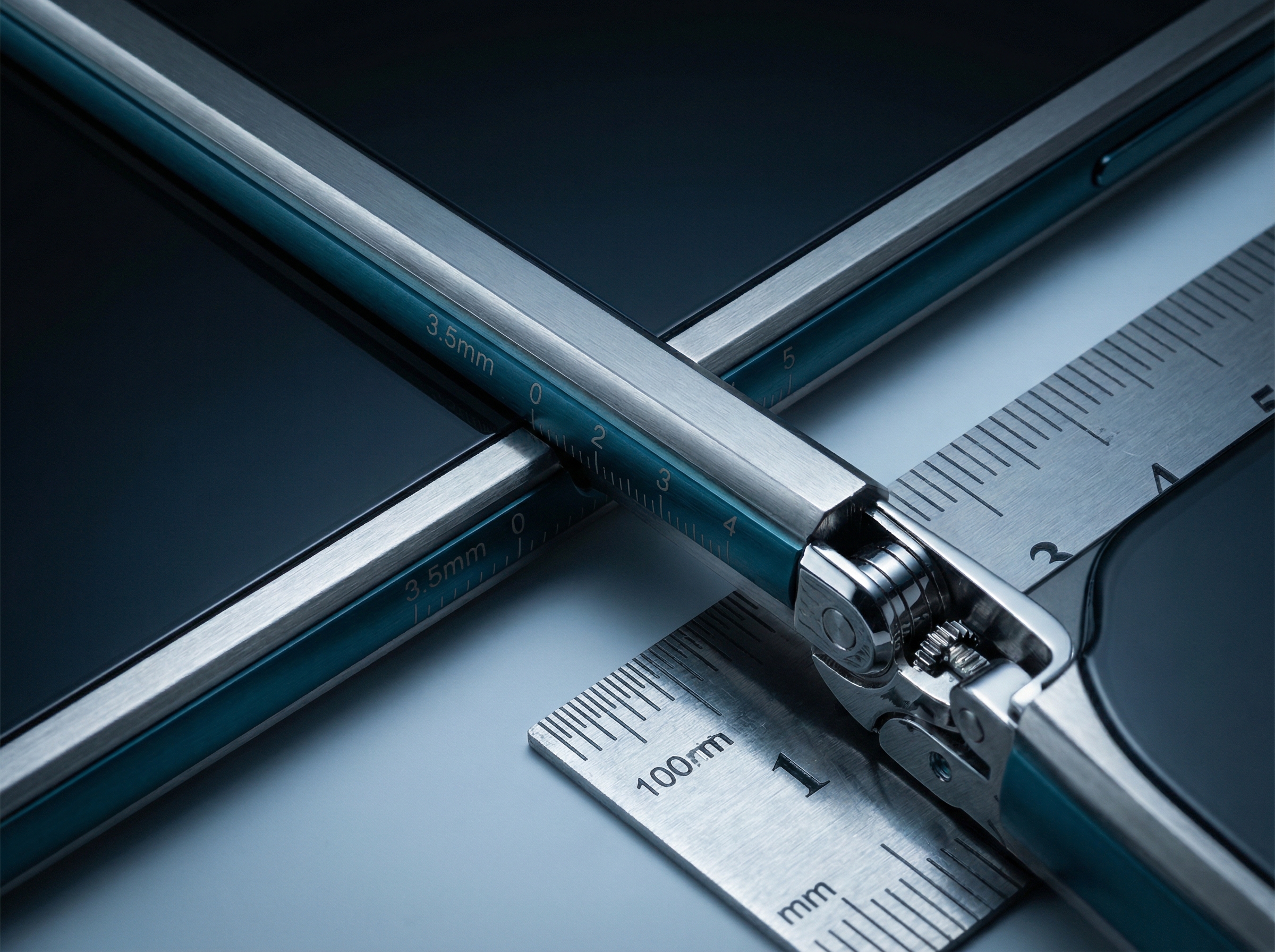
While Samsung fights fires, a Chinese manufacturer most Western consumers have never heard of is quietly attempting to rewrite the tri-fold playbook. Tecno is bringing its Phantom Ultimate G Fold to MWC 2026 next week, and the specs are audacious: 3.49mm unfolded thickness, 9.94-inch display, and a dual-hinge system built from 2000MPa steel with a Titan Fibre back cover.

For context, 3.49mm is thinner than two credit cards stacked together. If Tecno's measurements hold up in the real world, this would be the thinnest tri-fold ever built — solving the primary consumer complaint about multi-fold devices before most people even experience one. The engineering approach is fundamentally different from Samsung's: instead of adapting existing bi-fold components, Tecno designed the hinge and chassis as a unified structural system from the ground up.

The skeptic's response writes itself: Tecno has no track record in premium foldables, MWC demos aren't shipping products, and "world's thinnest" claims rarely survive contact with mass production yield rates. All fair. But the fact that a relatively obscure OEM can out-engineer Samsung on paper — while Samsung can't keep its screens alive for a week — says something uncomfortable about whether incumbency actually matters in this race.

Empty premium tech retail display cases with moody lighting
05

The Market Nobody Asked For

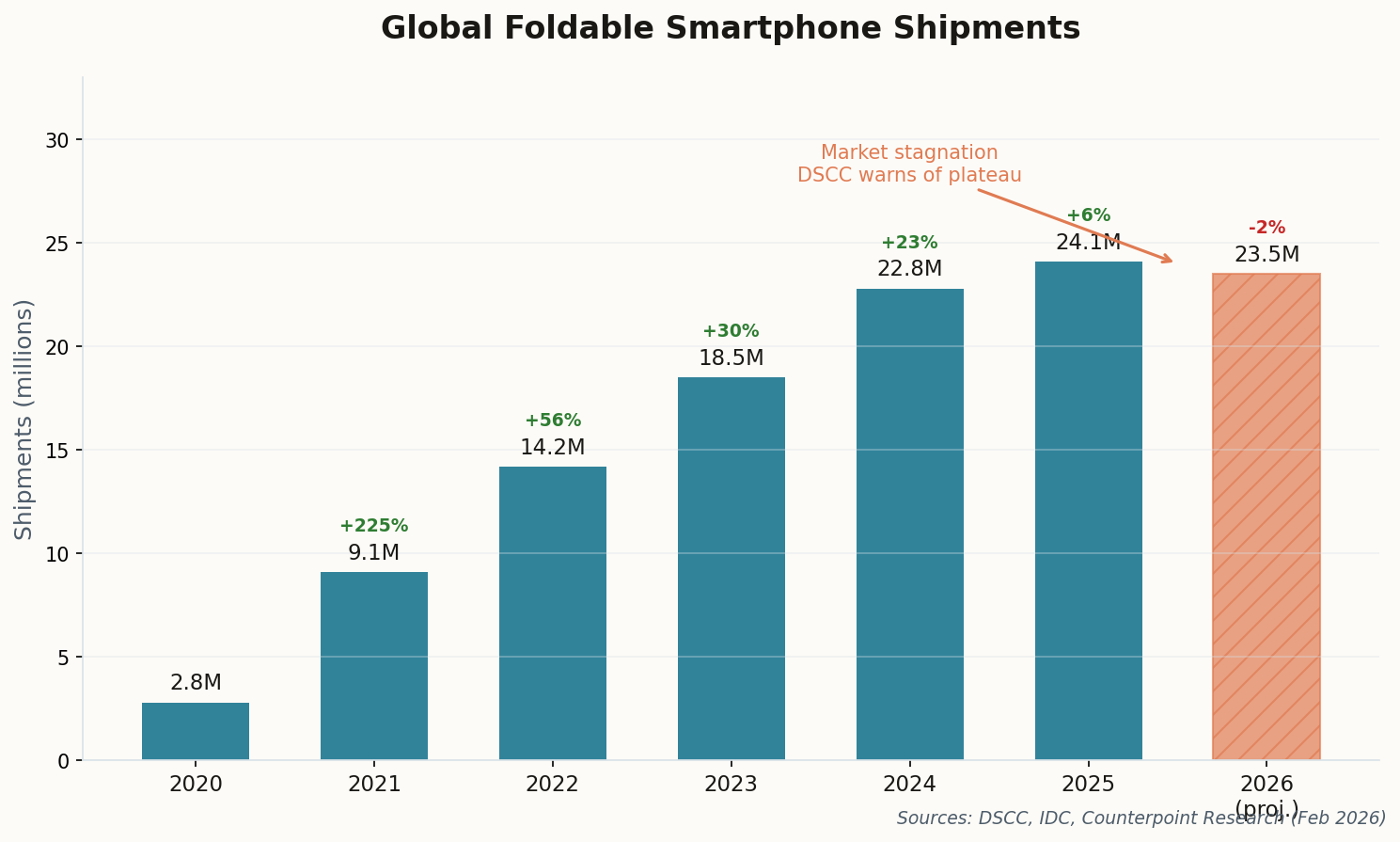
Here's the number that should make every foldable executive nervous: Display Supply Chain Consultants (DSCC) data shows the foldable market may actually contract in 2026. Not slow down. Contract. After six years of consecutive growth, the industry's most hyped form factor is hitting a ceiling — and manufacturers are responding by pushing even more expensive, even less proven devices.

Bar chart showing global foldable smartphone shipments from 2020 to 2026, with projected decline
Global foldable shipments grew 225% from 2020 to 2024, but growth has collapsed from 56% (2021) to a projected -2.5% in 2026. The era of easy foldable growth is over.

The disconnect is striking. The foldable market grew from 2.8 million units in 2020 to 24.1 million in 2025 — impressive on paper, but still a rounding error against 1.2 billion total smartphone shipments. And now, instead of solving the problems that kept foldables niche — price, durability, app optimization — the industry is doubling down on complexity. Samsung's answer to slowing bi-fold sales isn't to make bi-folds cheaper. It's to ship a $2,899 tri-fold.

Analysts are openly questioning "the strategic wisdom of Samsung launching a tri-fold phone, especially given the niche market for foldables." That's the polite version of what supply chain insiders are saying privately: yield rates for tri-fold panels remain catastrophically low, defect rates are unacceptable, and the addressable market for a $3,000 phone is measured in hundreds of thousands, not millions.

Software interface elements floating in a holographic teal display
06

Samsung's Plan B Was Hiding in the Code

Samsung may publicly project confidence in the tri-fold, but its software tells a different story. Buried in a leak of One UI 9 (built on Android 17), developers discovered references to a new device codenamed "H8" — expected to launch as the Galaxy Wide Fold.

The Wide Fold is notable for what it isn't: not a tri-fold, not an experiment. It's a 4:3 aspect ratio bi-fold that Samsung is reportedly targeting 1 million units in initial sales — an order of magnitude above realistic Z TriFold expectations. Set to launch alongside the Galaxy Z Fold 8 and Z Flip 8, the Wide Fold represents Samsung's true bet on the foldable future: not more folds, but more options.

The timing says everything. Even as Samsung markets the Z TriFold as the pinnacle of smartphone innovation, it's quietly building a portfolio that hedges against that bet entirely. The Wide Fold's 4:3 ratio suggests a device optimized for productivity and media consumption — the actual use cases that justify a folding phone — rather than the "look how many times we can fold this" spectacle of the tri-fold. Sometimes the most revealing product decisions are the ones a company doesn't talk about.

The Fold Forward

The tri-fold phone is the space race of consumer electronics — technically extraordinary, brutally expensive, and serving a market that might not actually exist. Samsung got there first, and "first" is turning out to be a liability, not an advantage. The real innovation happening in foldables isn't adding more hinges. It's making the ones we have actually survive contact with human hands. Whoever solves that — Samsung, Apple, Tecno, or someone we haven't heard of yet — wins the decade. The rest is origami.