Geopolitics & Defense

The Hundred-Mile Question

Five expert opinions on what happens if China crosses the Taiwan Strait—and why none of them are reassuring.

Listen
Dramatic aerial view of the Taiwan Strait at twilight, dark waters separating two illuminated coastlines with military silhouettes on the horizon
Aircraft carrier battle group steaming through Pacific waters toward a distant island at sunset
01

The Uncomfortable Truth: Taiwan Can't Hold the Line Alone

There's a comforting narrative making the rounds in Washington: arm Taiwan to the teeth with asymmetric weapons, turn it into a "porcupine," and let Beijing conclude the juice isn't worth the squeeze. RAND analyst David Ochmanek would like a word.

His December 2024 analysis lays it out bluntly: mines, anti-ship missiles, and coastal batteries are necessary but nowhere near sufficient. The fundamental problem is geography. China sits 100 miles from Taiwan with the world's largest navy, while the closest major U.S. base is in Okinawa—over 400 miles away. The PLA could establish air superiority over the strait in hours, potentially seizing the island before American reinforcements even clear port.

"A robust U.S. military intervention would still be essential to defeat a large-scale attack." — David Ochmanek, RAND Corporation

This matters because the "porcupine" strategy has become the default consensus in Western defense circles—a convenient fiction that lets everyone feel like the problem is being managed without confronting the harder question. If the U.S. doesn't show up in force, and fast, the porcupine becomes roadkill. Ochmanek's analysis strips away the comforting euphemisms and forces the real question: is Washington prepared to fight a major naval war in the Western Pacific? The answer is considerably less reassuring than the talking points suggest.
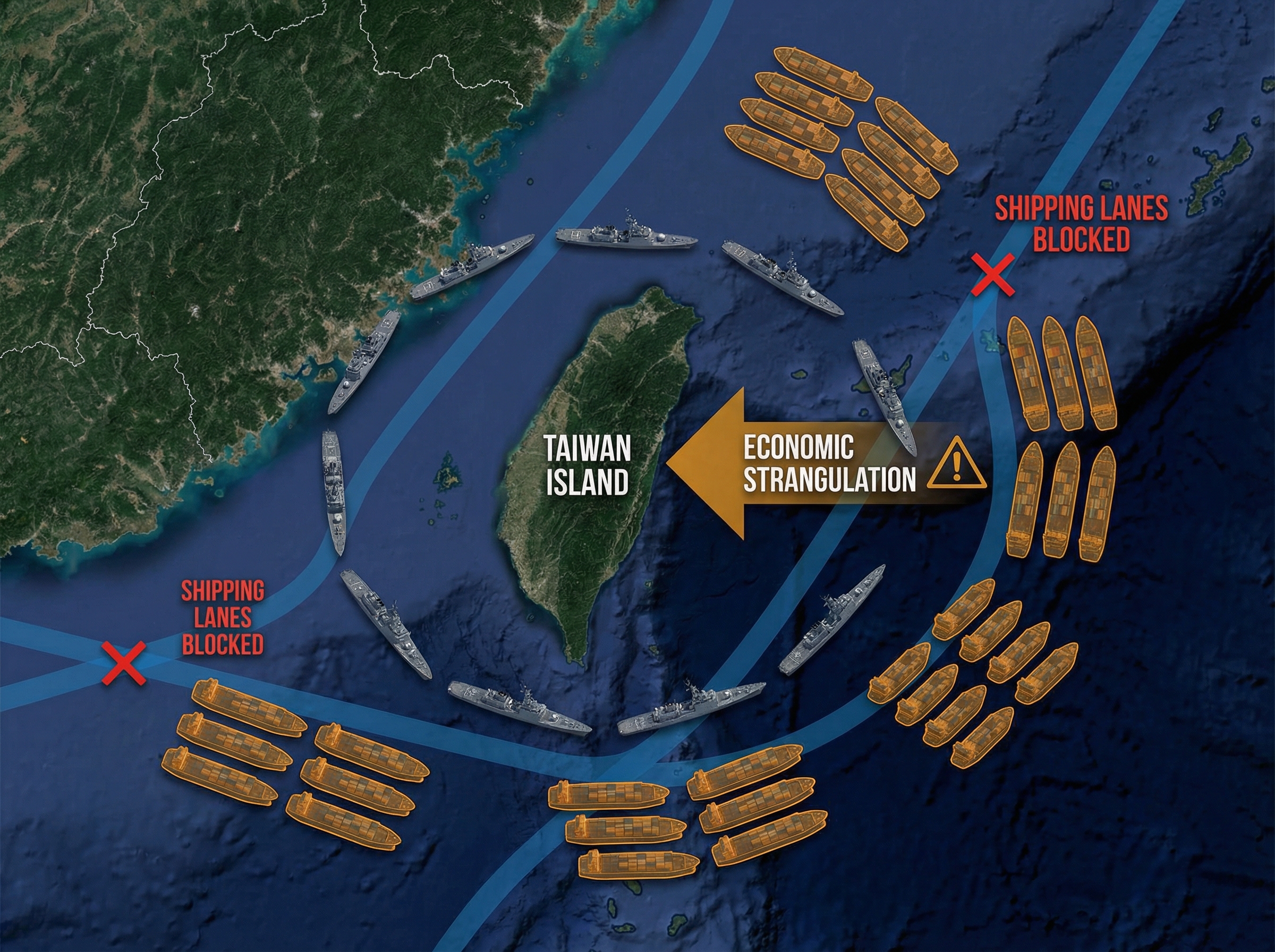

Container ships anchored motionless in foggy waters with a naval cordon visible in the distance
02

Forget D-Day—Think Siege of Leningrad

The Hollywood version of a Taiwan conflict involves amphibious landing craft storming beaches while F-35s dogfight overhead. Michael O'Hanlon, a senior fellow at Brookings, argues the reality would look nothing like that. His assessment: a maritime blockade is far more probable than an amphibious assault—and far harder to counter.

The logic is disarmingly simple. Beijing doesn't need to storm beaches if it can strangle Taiwan's energy imports and food supply. Taiwan imports 98% of its energy. A naval quarantine, enforced by China's growing fleet and backed by the threat of anti-ship missiles from the mainland, could bring the island to its knees in weeks without a single beach landing. And here's O'Hanlon's sobering punchline: military modeling of such a blockade shows the outcome is "too close to call."

"Neither China nor the United States possesses the credible capability to achieve total victory and force regime change against the other." — Michael O'Hanlon, Brookings Institution

This is the scenario that should terrify planners on both sides of the Pacific. Not a quick, decisive battle—but a grinding, multi-year war of attrition where both economies hemorrhage, global trade freezes, and there's no clear off-ramp. O'Hanlon's analysis is a cold shower for anyone hoping for a clean resolution. In the blockade scenario, nobody wins. Everybody bleeds.

Stock market trading floor in chaos with cascading red numbers and traders in despair
03

The $10 Trillion Reckoning

While the defense analysts debate ships and missiles, Bloomberg Economics asked the question that would hit your 401(k) directly: what does a Taiwan war do to the global economy? The answer: it obliterates it.

Their macroeconomic model—the most rigorous published to date—projects a 10.2% crash in global GDP in the first year of a full-scale invasion. That's $10 trillion in economic output, vaporized. For context, the 2008 financial crisis shaved about 2% off global GDP. COVID-19 took roughly 3.1%. A Taiwan war would be both of those disasters combined, then doubled.

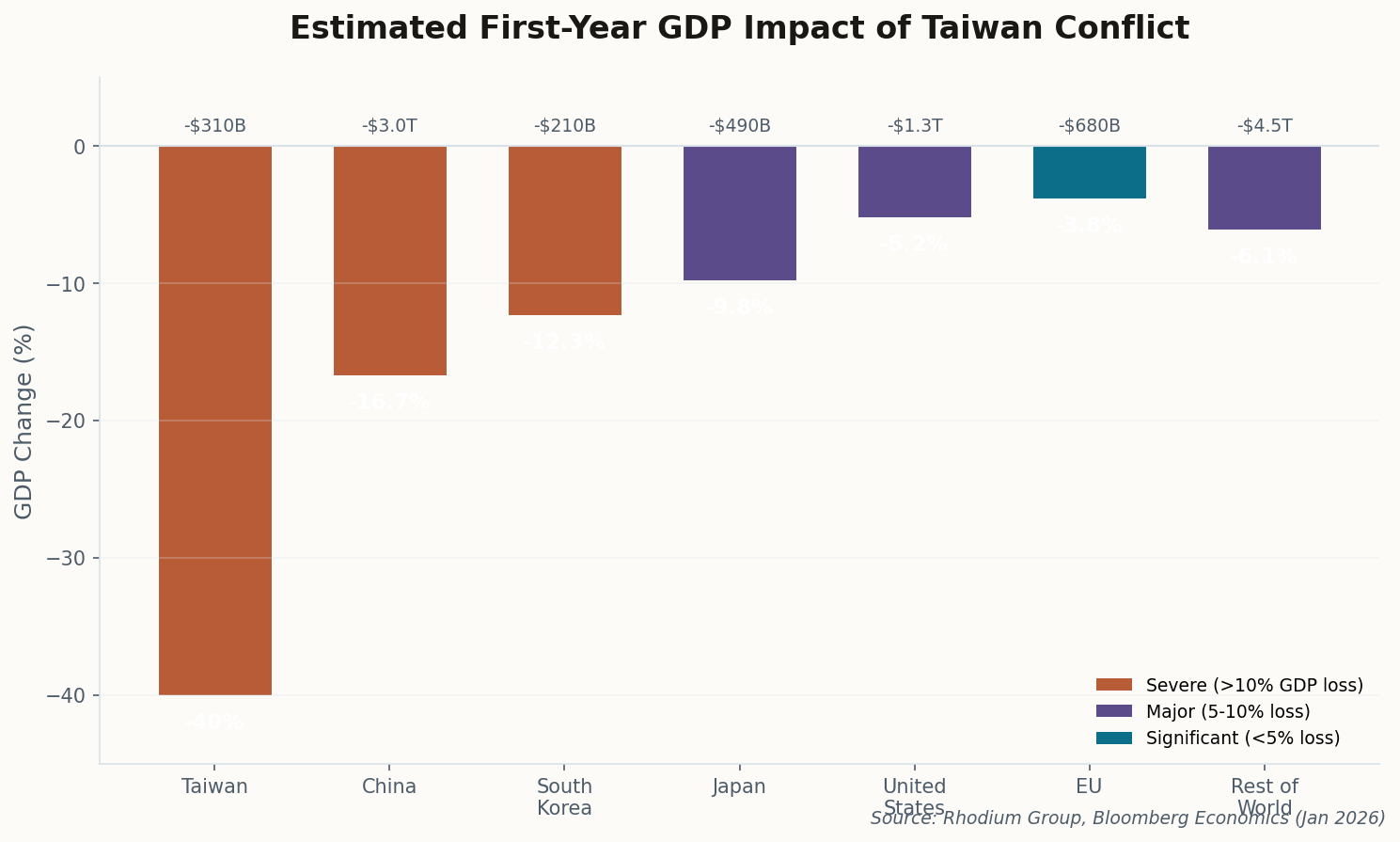
Bar chart showing projected GDP impact of a full-scale Taiwan invasion: Taiwan -40%, China -16.7%, South Korea -13.5%, Japan -9.8%, US -6.7%, EU -5.2%, Global -10.2%
Bloomberg Economics modeling projects the worst global economic shock since World War II. Taiwan's GDP would effectively halve; China would suffer more than the country that invaded.

The numbers are staggering at every level. Taiwan's GDP drops 40%. China itself loses 16.7%—meaning Beijing would inflict more economic damage on itself than any sanction regime could ever achieve. The U.S. takes a 6.7% hit, a deeper recession than any American alive has experienced. And the mechanism isn't just trade disruption—it's the instantaneous disappearance of the advanced semiconductors that power everything from iPhones to hospital equipment to missile guidance systems.

"A war over Taiwan would have a cost in blood and treasure so high that even those unhappiest with the status quo have reason not to risk it." — Bloomberg Economics

The Bloomberg team's implicit argument is that this economic mutual assured destruction is itself a deterrent. The problem with that theory? Economic deterrence didn't stop Russia from invading Ukraine either.

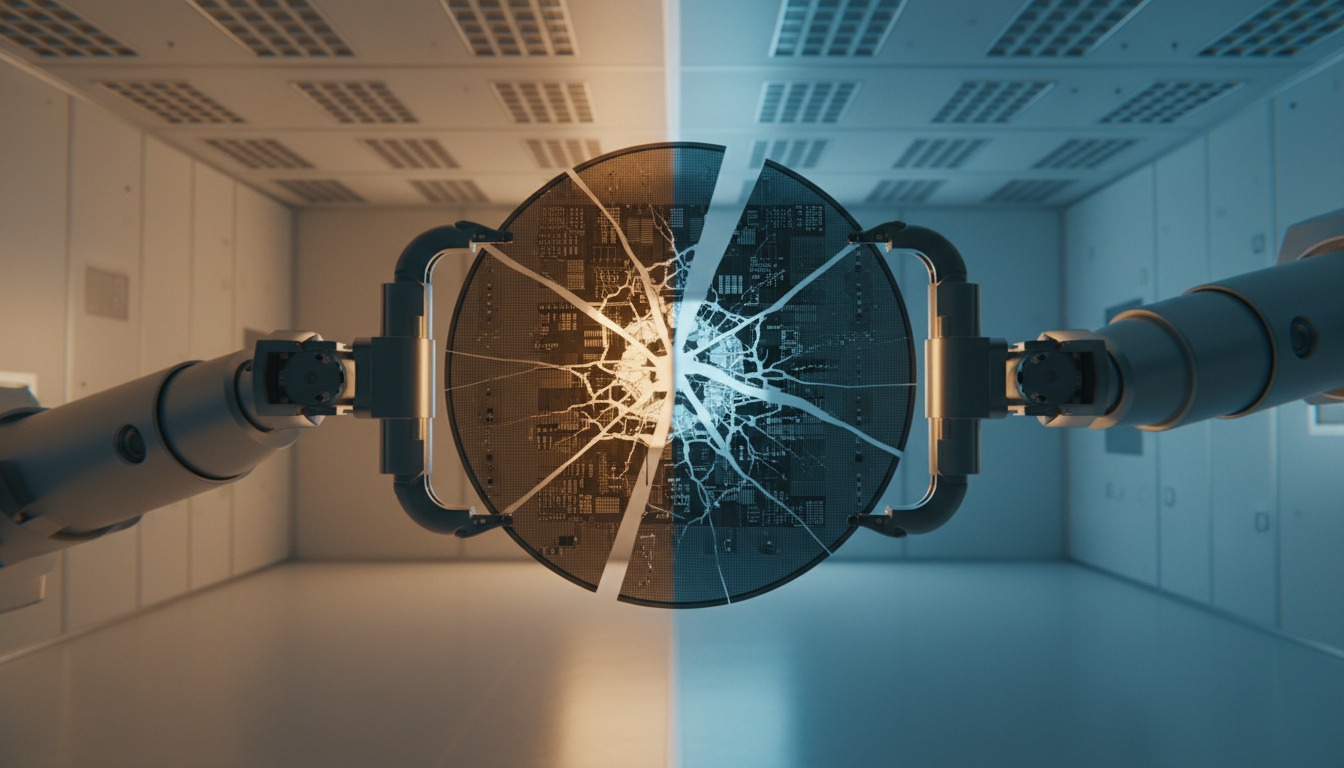
Semiconductor wafer held by robotic arm in cleanroom, half cracked and fractured with split lighting
04

You Don't Need Bullets to Break the World's Supply Chain

Here's the terrifying part about the Taiwan scenario that most analyses undersell: the economic catastrophe doesn't require an invasion. It doesn't even require a blockade. Rhodium Group analysts Charlie Vest and Agatha Kratz mapped out what happens when Taiwan's semiconductor exports simply stop—and the answer is $1.6 trillion in lost revenue, overnight.

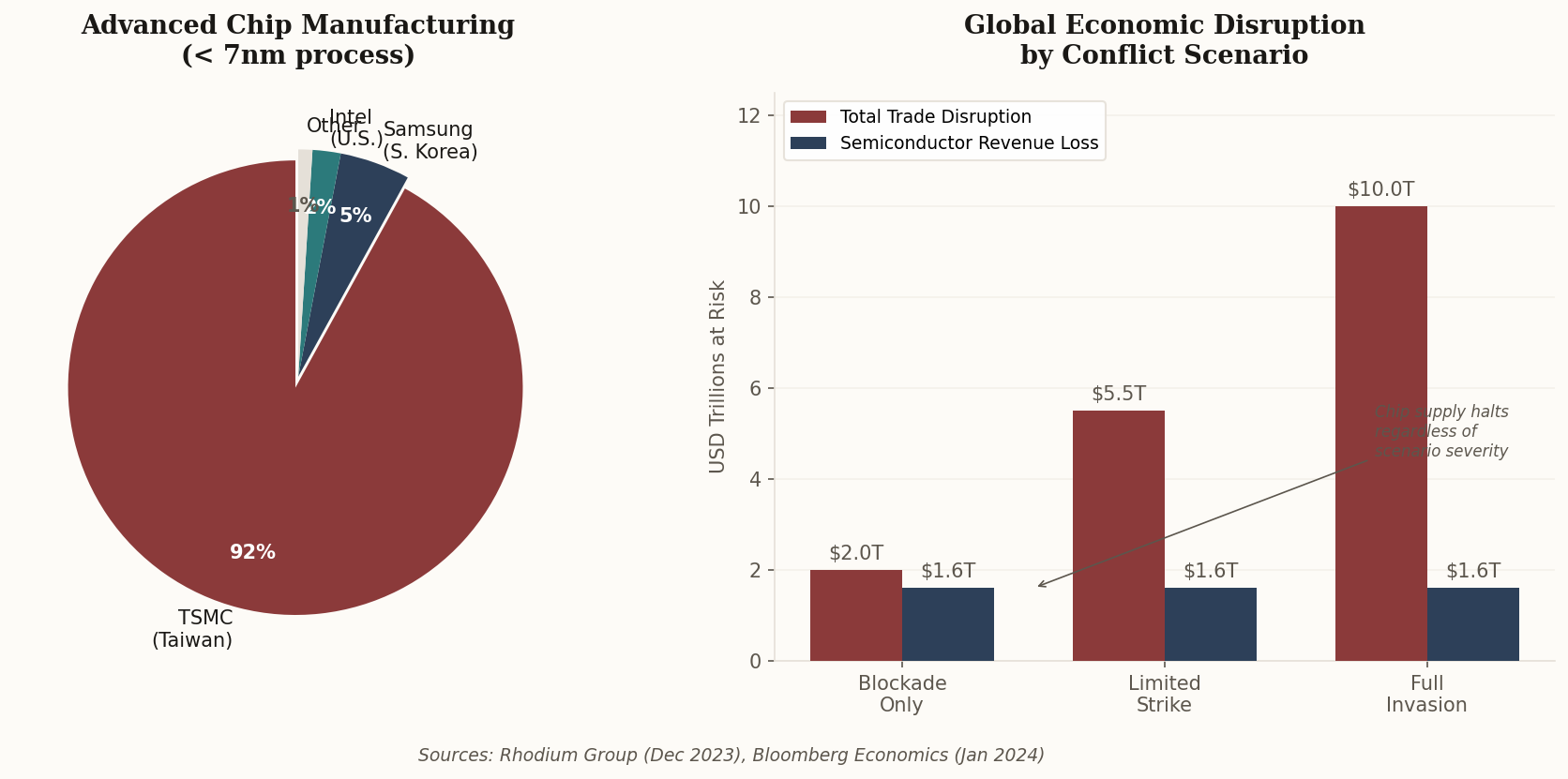
Two-panel chart showing TSMC's 92% share of advanced chip manufacturing and economic disruption estimates across blockade, limited strike, and full invasion scenarios
Left: TSMC's dominance in advanced chips (<7nm) means there is no substitute supplier. Right: Semiconductor revenue loss stays constant across all conflict scenarios because any disruption halts all exports.

TSMC manufactures 92% of the world's most advanced semiconductors. There is no backup. Intel's fabs won't be producing at comparable volumes until the late 2020s at the earliest. Samsung has 5%. The entire edifice of modern technology—your phone, your car, your hospital's MRI machine, the cloud servers running this newsletter—depends on a single cluster of fabrication plants in Hsinchu, Taiwan, sitting 100 miles from a hostile superpower.

Rhodium's analysis shows that even a "limited" confrontation—increased military exercises, a partial quarantine, cyberattacks on shipping logistics—would trigger panic hoarding, contract defaults, and cascading shutdowns across every major industry. Over $2 trillion in annual global economic activity sits in the blast radius. The chip crunch of 2021, when car factories idled for months, would look like a minor hiccup.

"Even in a scenario where conflict falls short of a military invasion, the economic impacts would be profound." — Rhodium Group

This is the analysis that should be framed on every CEO's wall. The question isn't whether your supply chain survives a Taiwan war. It doesn't. The question is whether you've built enough redundancy to survive the first six months of a new world without Taiwanese chips. Almost nobody has.

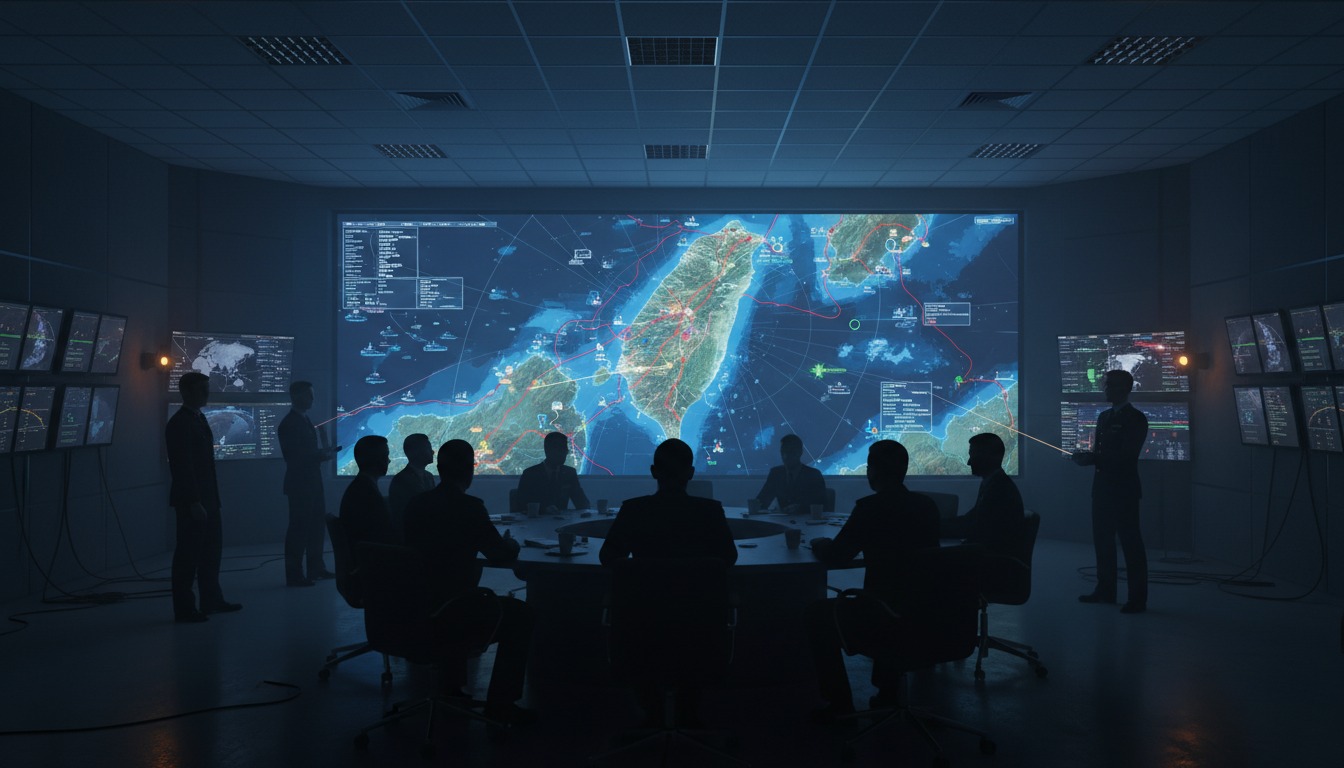
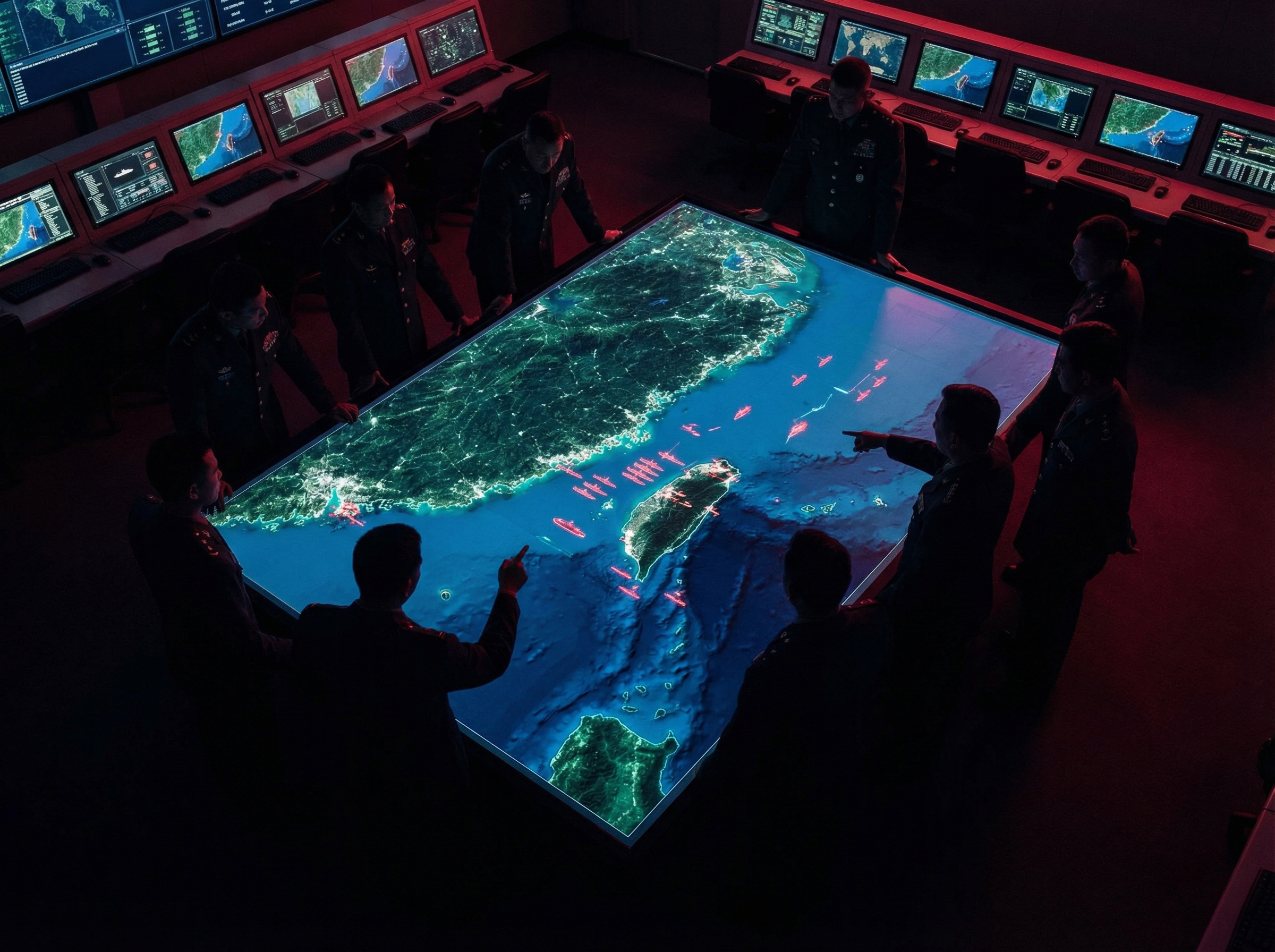
Military war room with digital strategic map of the Taiwan Strait illuminated on a screen, officers as silhouettes around a planning table
05

The Coalition Wins—and Nobody Celebrates

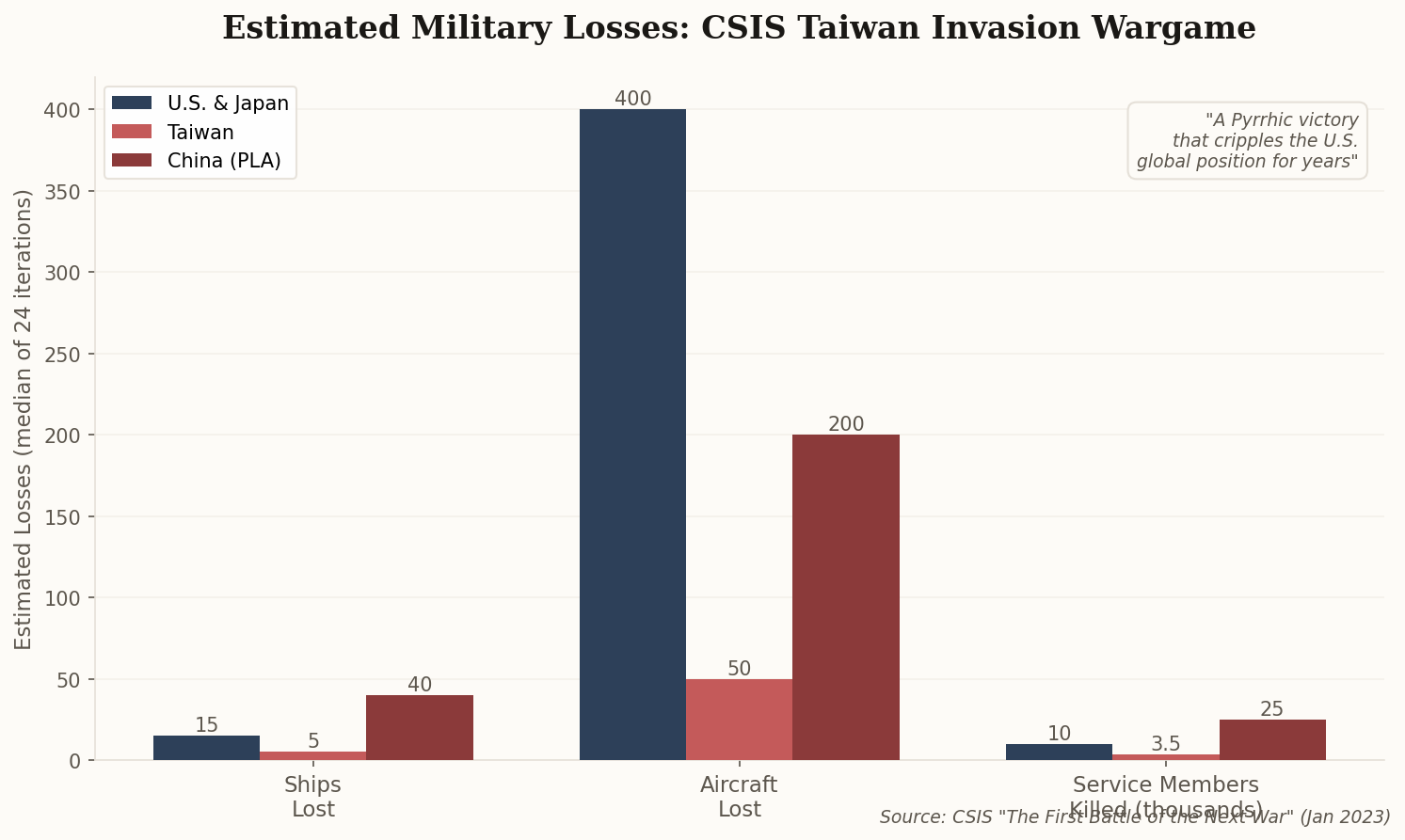
The most comprehensive unclassified wargame of a Taiwan invasion was run by the Center for Strategic and International Studies in 2023, and its conclusion is the geopolitical equivalent of "the operation was successful but the patient died." Across 24 iterations of a 2026 invasion scenario, the U.S.-Japan-Taiwan coalition defeated the Chinese assault in most cases. The cost was annihilation-level.

Grouped bar chart comparing military losses across U.S. and Japan, Taiwan, and China in the CSIS wargame: ships, aircraft, and service members killed
The CSIS wargame's median results across 24 iterations. China loses more in absolute terms, but the U.S. and Japan sacrifice a generation of naval power.

The U.S. and Japan lost dozens of ships—including, in most scenarios, two aircraft carriers. Hundreds of aircraft destroyed. Tens of thousands of American and Japanese service members killed in a conflict lasting just three weeks. Taiwan's economy was devastated, its infrastructure shattered. China's amphibious fleet was gutted and the CCP's hold on power destabilized—but at a cost that would reshape Beijing's calculus for a generation.

The CSIS team, led by Mark Cancian, was careful to note that "victory" in this context is a Pyrrhic concept. The U.S. Navy would be crippled for a decade. Japan's Self-Defense Forces would be shattered. Taiwan would be physically intact but economically ruined. And the global order that America has underwritten since 1945 would be permanently fractured—not by defeat, but by the cost of winning.

"The United States and its allies lost dozens of ships, hundreds of aircraft, and tens of thousands of service members. Taiwan saw its economy devastated." — CSIS Wargame Report

This is the analysis that keeps flag officers awake at night. Not the fear of losing—but the certainty that winning would be catastrophic. The CSIS wargame doesn't ask whether we can defend Taiwan. It asks whether we'd recognize the world that remains after we do.

The Calculus Nobody Wants to Do

Five analyses. Five different angles. One shared conclusion: there is no scenario in which a Taiwan conflict ends cleanly. The military assessments promise a Pyrrhic victory. The economists promise a depression. The strategists promise a stalemate. And the semiconductor analysts promise that modern civilization grinds to a halt regardless of who fires first. The hundred miles of water separating Taiwan from mainland China is simultaneously the most dangerous and most consequential geography on Earth. Every day it stays peaceful is a day the world's leaders should be working to ensure it stays that way—because every expert who has modeled the alternative has come back shaken.