
AI Agents & Personal Assistants

Your AI Just Got Hands

OpenAI didn't just hire a developer. It acquired the blueprint for an AI that can actually use your computer. Here's what the OpenClaw deal means for the future of personal assistants—and why Anthropic is kicking itself.

Listen
A robotic claw reaching through a glowing smartphone screen toward floating app icons, teal circuit patterns illuminating the scene
Translucent currency notes morphing into binary code, a golden handshake silhouette visible through the data cascade
01

Steinberger Walked Away From a Billion Dollars. That's the Point.

Here's the number that should make every VC-backed AI founder squirm: Meta reportedly offered up to $1 billion for OpenClaw. Peter Steinberger said no. Instead, he took an estimated $2–15 million acqui-hire from OpenAI and donated the code to an independent foundation.

Let that sink in. The creator of the most viral open-source AI agent in history chose community over cash by a factor of 100x. The Cline Foundation separately issued a $1 million grant to support third-party tool development, which tells you the ecosystem is already being treated as critical infrastructure, not a hobby project.
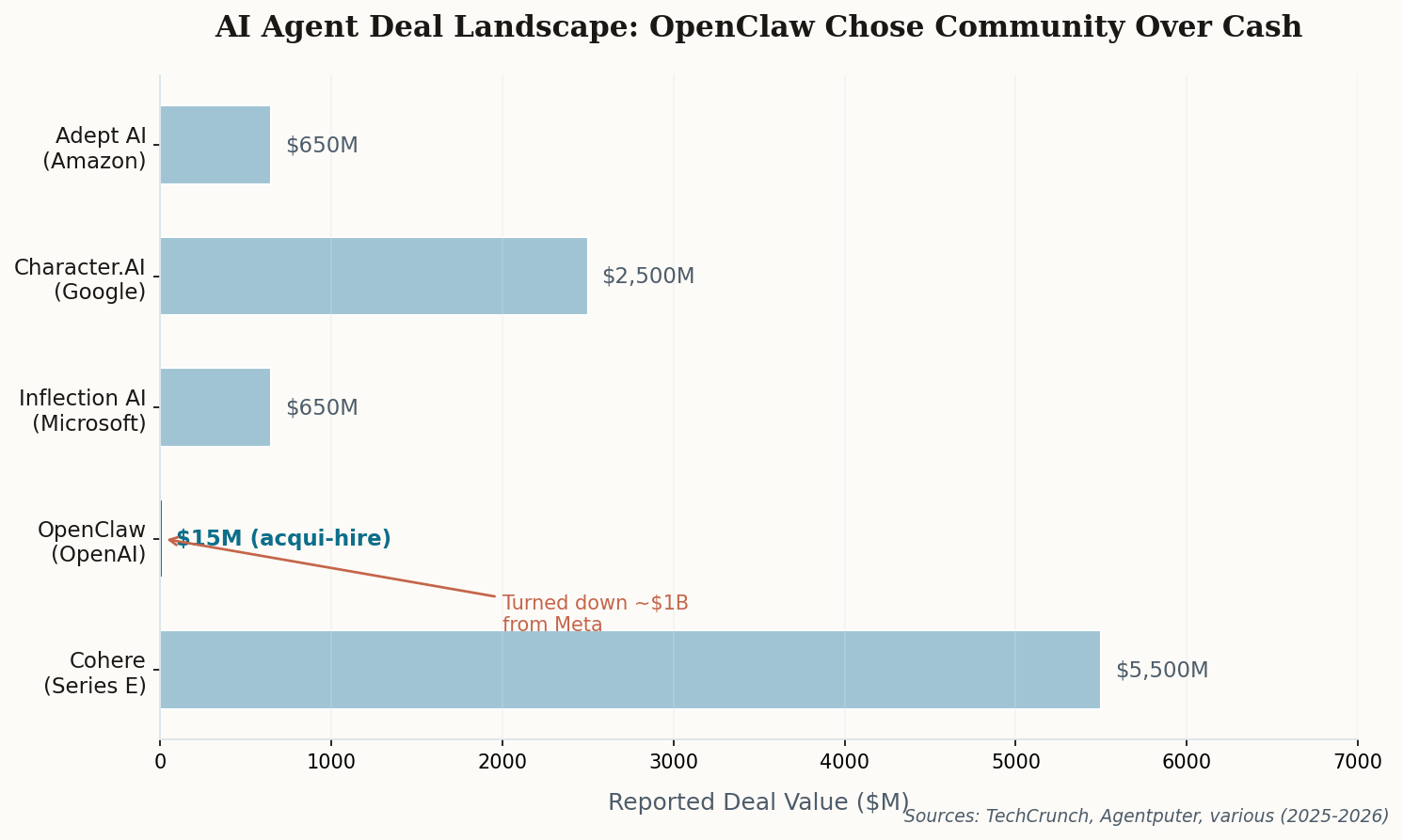
Bar chart comparing AI agent deal valuations: Character.AI at $2.5B, Cohere at $5.5B, and OpenClaw at just $15M
The OpenClaw deal is an outlier not because it's small, but because it prioritized open-source continuity over acquisition economics. Sources: TechCrunch, Agentputer (2025–2026).

This sets a precedent that matters. If you're building in open source, you don't have to sell your soul to find sustainability. You can sell your time instead—and keep the code free. Whether that precedent survives contact with the next founder staring at a nine-figure check is another question entirely.

Two chess kings facing off across a digital board, one teal and one violet, pieces dissolving into pixels
02

How a Cease & Desist Letter Handed OpenAI Its Biggest Win

The backstory here is almost too perfect. OpenClaw started life as "Clawdbot"—a scrappy autonomous agent built on Anthropic's Claude API. It was, in many ways, the best advertisement Claude ever had: a community-built tool proving the model's agentic capabilities to hundreds of thousands of developers.

Then Anthropic's legal team sent a trademark cease & desist over the name. They restricted API access. The developer community watched a company prioritize brand protection over the organic ecosystem growing around its own product.

"Anthropic prioritized brand protection over developer relations, and it cost them the biggest agent project of the year."

This is a masterclass in how not to manage a developer ecosystem. When your most enthusiastic users are building things that showcase your product, the correct response is to help them—even if they're playing fast and loose with your naming conventions. OpenAI saw the opening and walked right through it. Sam Altman reportedly reached out to Steinberger within 48 hours of the C&D going public. The speed tells you everything about how seriously OpenAI takes the agent race.

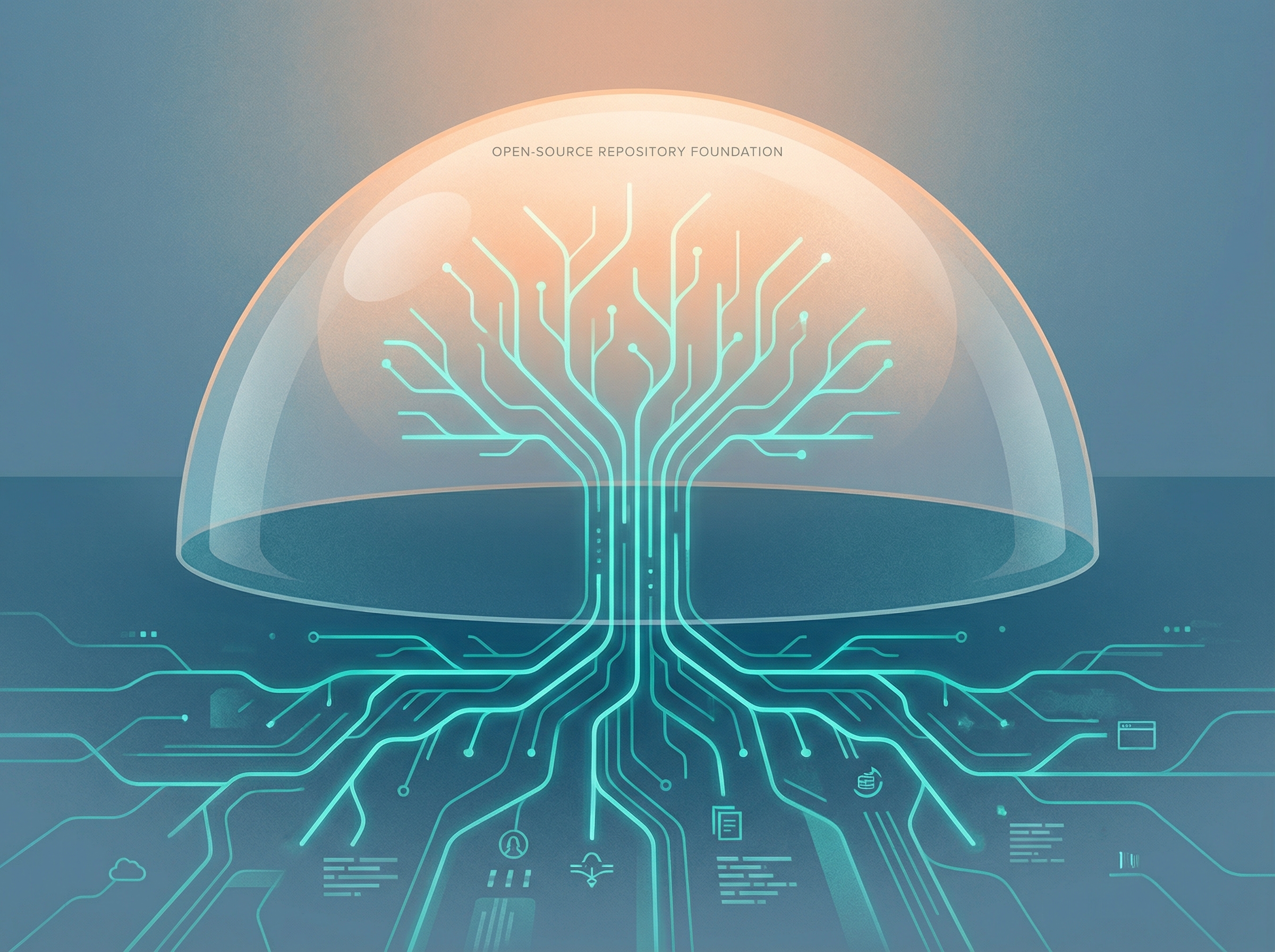
A glowing code tree with teal roots branching outward, surrounded by a transparent protective dome
03

The Cleverest Legal Structure in AI This Year

OpenAI didn't acquire OpenClaw. Not technically. Instead, they hired the founder, funded a non-profit foundation, and released the IP under Apache 2.0. On paper, the code belongs to no one. In practice, OpenAI just became the patron saint of the agentic web's most popular framework.

The structure is elegant because it solves three problems at once. First, it sidesteps antitrust scrutiny—you can't block a deal that technically isn't an acquisition. Second, it keeps the developer community on side, since the code stays open. Third, it lets OpenAI influence the project's roadmap through funding and Steinberger's new "Personal Agents" division without owning the IP directly.

"We are committed to an open ecosystem for agents. OpenClaw belongs to the community." — Sam Altman

Regulators aren't fooled—the FTC and EU are already asking whether this constitutes "effective control." But proving that in court is a much heavier lift than blocking a straightforward merger. As one legal analyst put it: "Acquire the brains, liberate the code, avoid the monopoly designation." Expect this playbook to be copied.

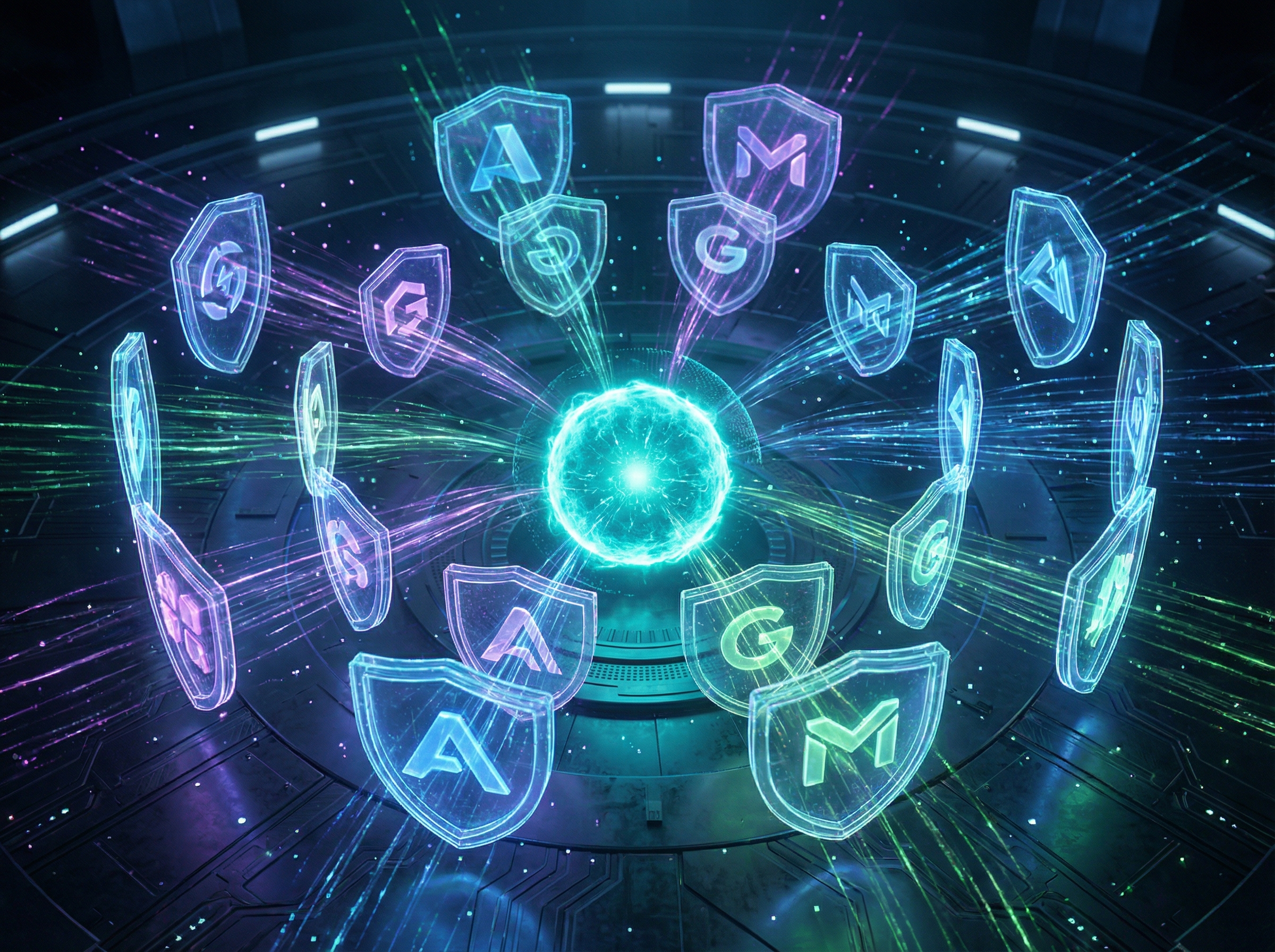
Holographic shields in an arena converging toward a central teal point of light, representing industry competition
04

OpenAI Just Bought the Operating System for the Agentic Web

The industry reaction has been swift and revealing. Google DeepMind published a blog post about their own agent framework within hours of the announcement. Apple reportedly accelerated hiring for its Siri agent team. When your competitors scramble that fast, you know you've changed the game.

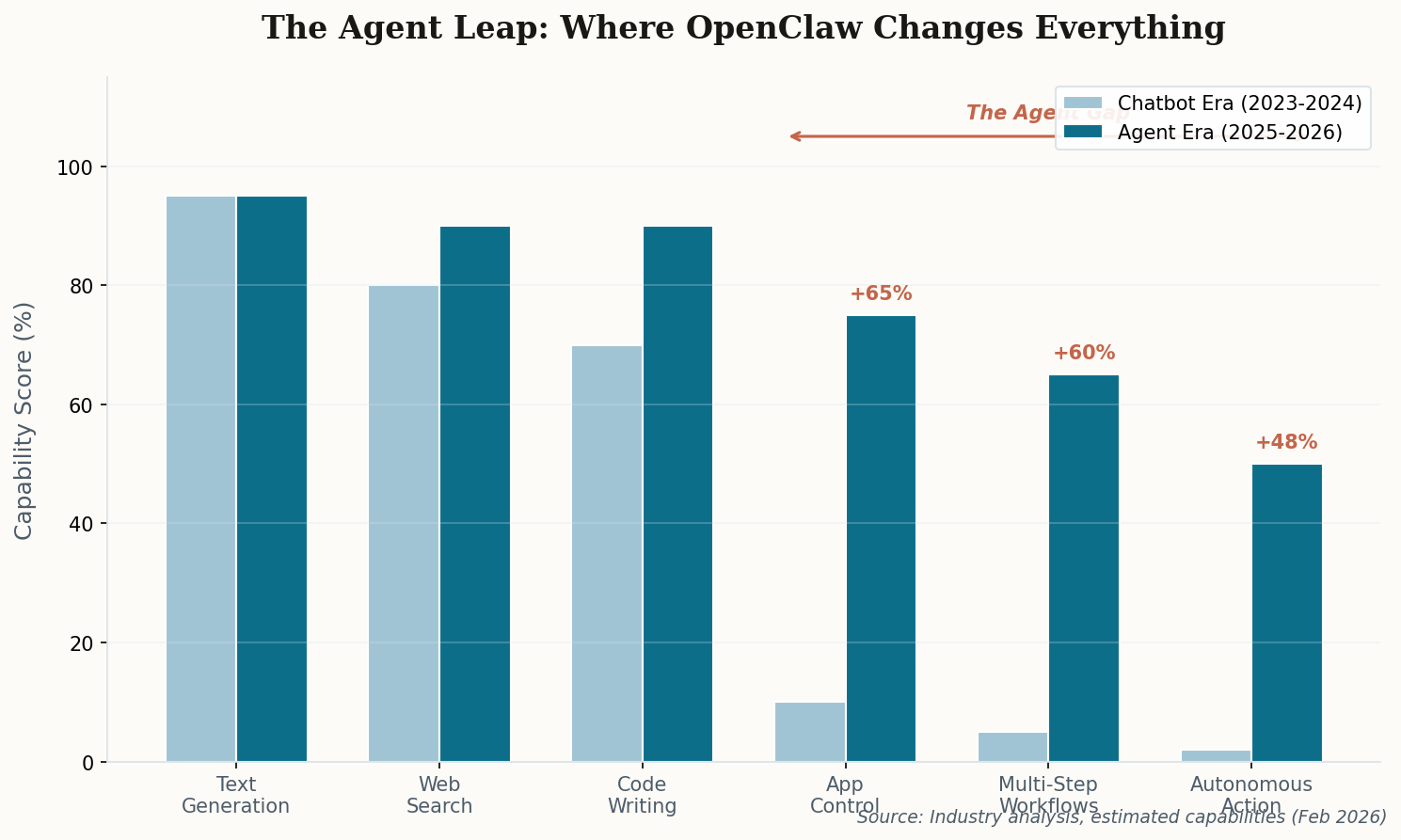
Grouped bar chart comparing chatbot-era vs agent-era AI capabilities, showing dramatic gains in app control, workflows, and autonomous action
The 'Agent Gap': where traditional chatbots plateau, agent-era AI leaps ahead. OpenClaw's integration with OpenAI closes this gap for consumer applications. Source: Industry analysis (Feb 2026).

Here's why this matters beyond the horse race: OpenClaw is already compatible with thousands of applications. It's not a research prototype that needs years of productization—it's a working agent with 2 million weekly active users and 200,000 GitHub stars. OpenAI didn't buy potential. They bought traction.

The real question is whether an open-source agent framework with one dominant corporate backer can remain truly open. Chromium is technically open source too. Ask Mozilla how that worked out for browser competition.

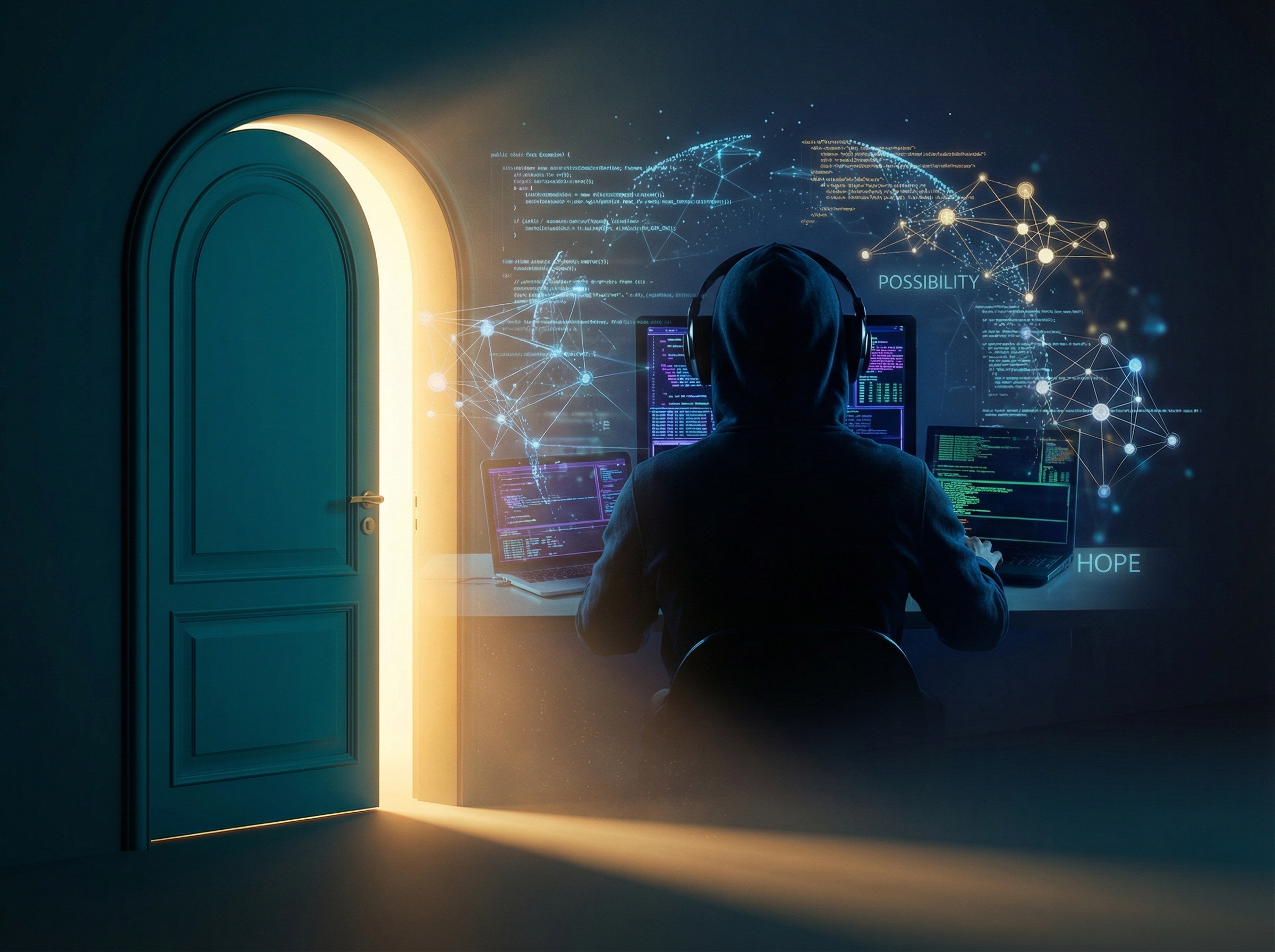
A developer's silhouette surrounded by floating code and neural networks, a large teal door opening before them
05

OpenAI Hires the Man Who Made AI Actually Do Things

Peter Steinberger is not your typical AI researcher. He's the founder of PSPDFKit, a document SDK company, which means he comes from the world of shipping products to actual customers. That pedigree matters. OpenClaw isn't an academic exercise—it's an engineering artifact designed for reliability and real-world use.

Steinberger will now lead OpenAI's new "Personal Agents" division. The framing is important: not "research," not "experimental"—personal agents. This is a consumer-facing bet. OpenAI is telling the market that the next phase of AI isn't better chatbots. It's software that acts on your behalf.

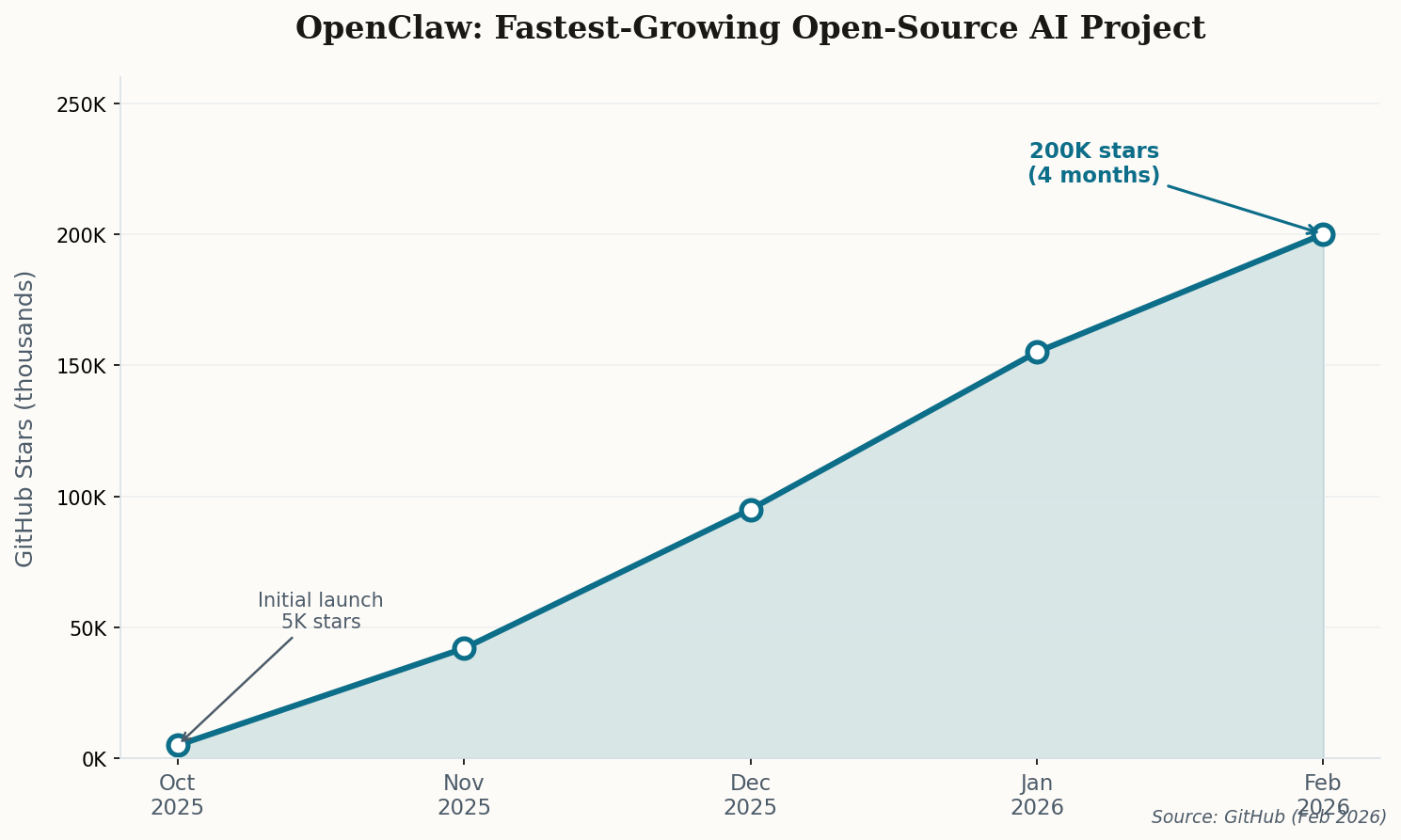
Line chart showing OpenClaw's GitHub stars growing from 5K in October 2025 to 200K in February 2026
OpenClaw's growth trajectory: from launch to 200K GitHub stars in four months, making it one of the fastest-growing open-source projects in history. Source: GitHub (Feb 2026).

"Sam Altman convinced me that the fastest way to change the world is to team up," Steinberger said. Notice he didn't say "the fastest way to get rich." When a founder frames a deal in terms of impact rather than economics, it's either genuine idealism or extremely good PR. With Steinberger's track record of building things that work, I'm inclined to believe it's the former.

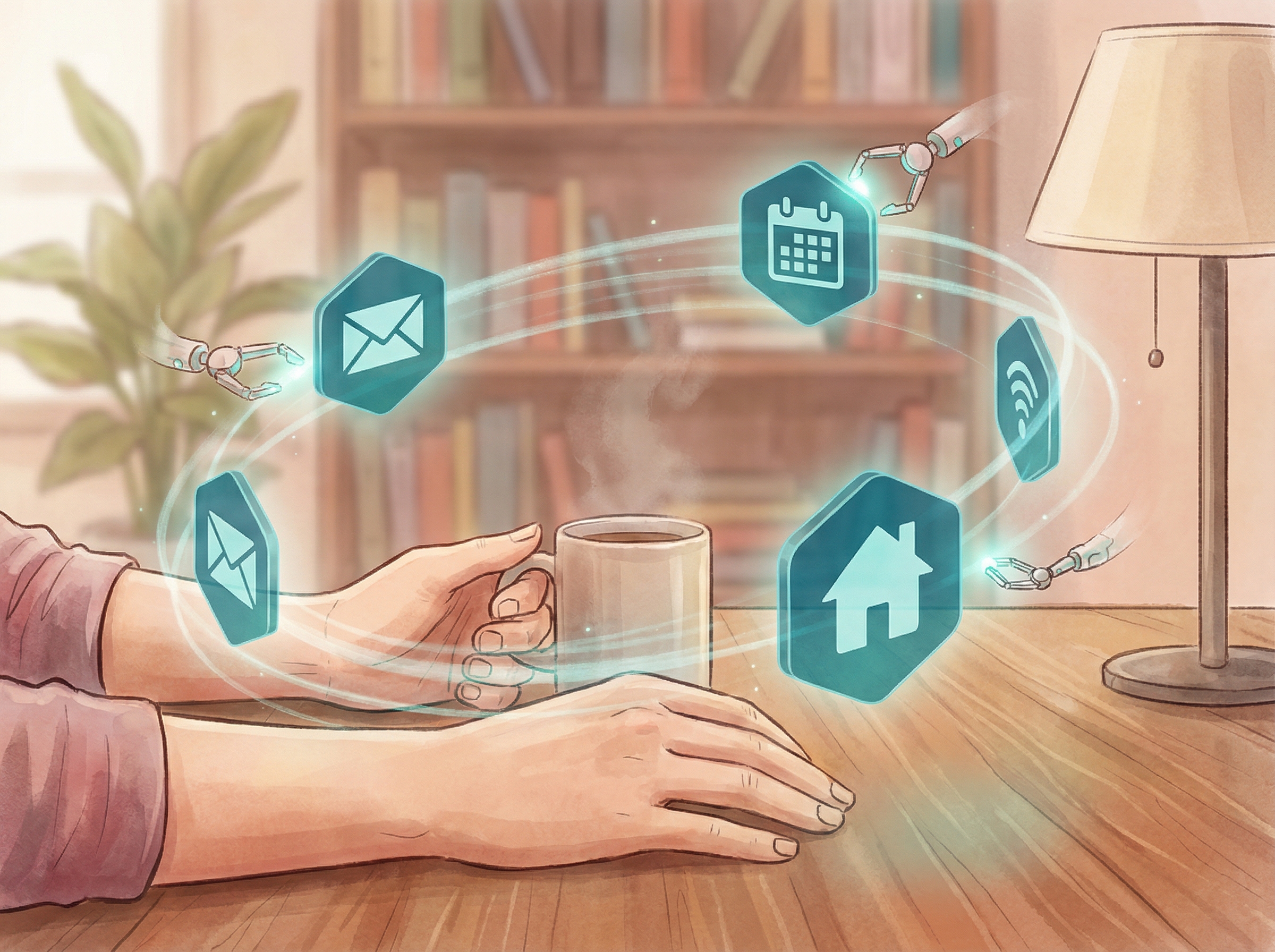
Hands resting while teal app icons orbit autonomously, robotic micro-hands completing tasks in a cozy home office
06

The End of "Let Me Google That For You"

For the average person, here's what this deal actually means: your AI assistant is about to stop being a search engine with a personality and start being something closer to a digital employee. OpenClaw can book flights, fill out forms, navigate apps, and chain together multi-step workflows—all running locally on your hardware.

That last part matters more than it sounds. Local execution means your data stays on your device. It means the agent works offline. It means OpenAI isn't seeing every keystroke. In a world where privacy anxiety runs high, an agent that acts locally but thinks with GPT-level intelligence is a compelling pitch.

"For the average user, this means your AI will finally be able to use your apps, not just explain them."

With 2 million weekly active users already running OpenClaw, we're past the "interesting demo" phase. People are using this daily. The OpenAI partnership accelerates integration into consumer products—expect OpenClaw capabilities baked into ChatGPT's desktop app within months. The era of "ask AI, then do the thing yourself" is ending. The era of "tell AI to do the thing" has arrived.

The Hands Have It

The OpenClaw deal isn't really about one acqui-hire or one open-source project. It's about the moment AI stopped being something you talk to and became something that works for you. The question that kept nagging me all week: when your AI can click buttons, fill forms, and navigate apps autonomously, what exactly are you doing? Not supervising—that's still a chatbot mindset. The answer, I think, is deciding. Choosing. Judging. The human in the loop doesn't operate the controls anymore. They set the destination. Whether that's liberation or obsolescence depends entirely on how well we build the guardrails. And right now, those guardrails are being written in an Apache 2.0 repo that just changed owners.