Procedural Generation

The Map Draws Itself

From Wave Function Collapse to simulated erosion, procedural map generation is having its most ambitious year yet. Here's what's shaping the terrain.

Listen
Topographic contour map dissolving into procedural noise patterns, where hand-drawn cartography meets algorithmic generation
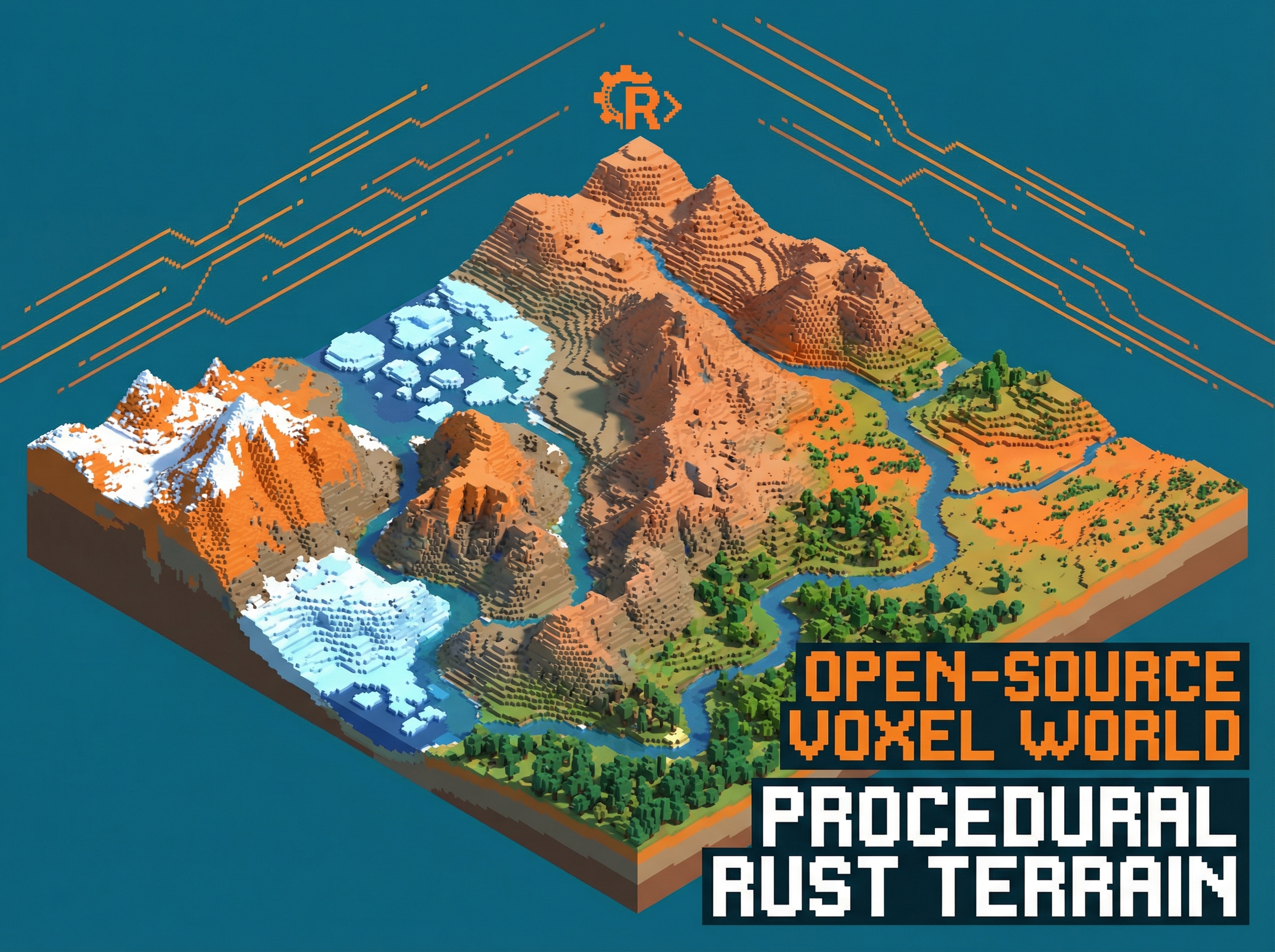
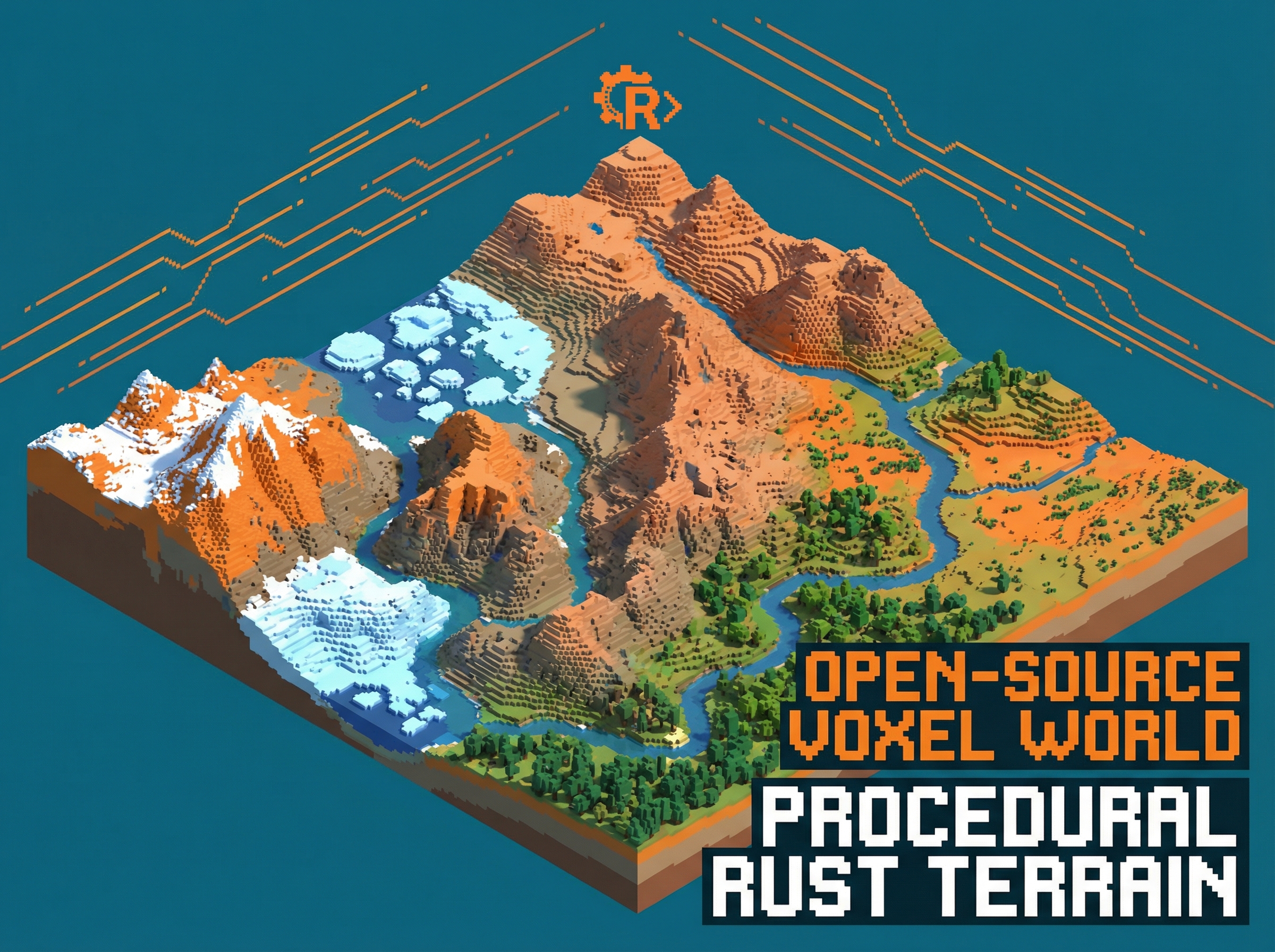
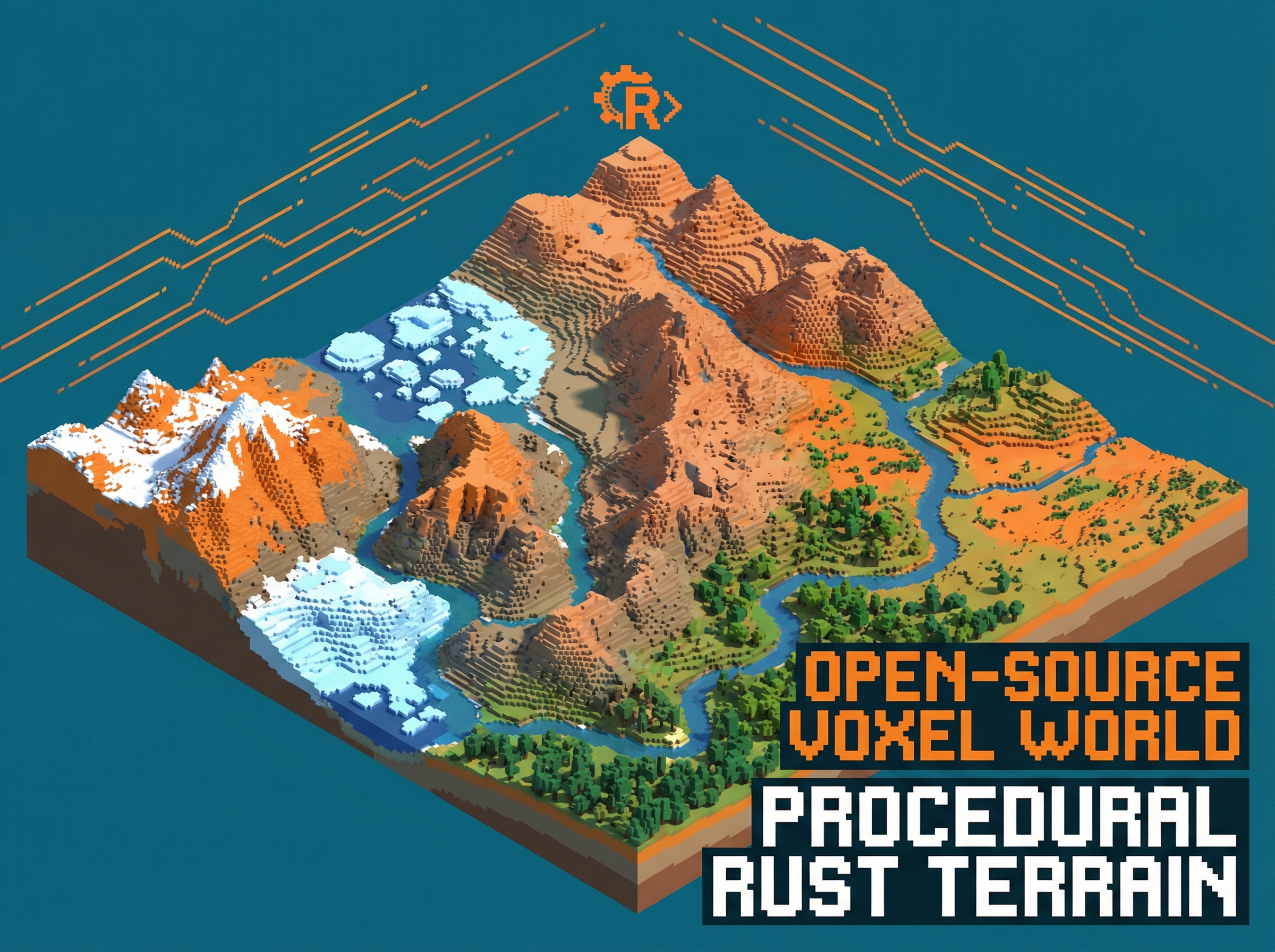
Voxel world with procedurally generated mountains shaped by simulated erosion
01

Veloren Wants to Simulate an Entire Civilization — One Voxel at a Time

Most procedural terrain generators treat landscapes as a rendering problem: pick some noise functions, layer them, call it a day. Veloren is doing something far more interesting. The open-source voxel RPG — written entirely in Rust — doesn't just generate terrain. It simulates it.

Their terrain pipeline runs erosion, humidity, and temperature simulations across the entire world before a single voxel renders. Rivers don't follow random paths — they carve downhill through accumulated water flow. Biomes emerge from the intersection of altitude, moisture, and latitude, not from hardcoded zone assignments. The 2026 roadmap pushes this further with dynamic trade routes and civilization growth, meaning the generated world won't just look lived-in — it'll actually be lived-in, with NPC settlements that respond to terrain accessibility and resource distribution.

For Rust developers interested in PCG, Veloren's open codebase is the single best reference implementation of large-scale procedural terrain available today. It proves that "open-source" and "production-quality" aren't contradictions — they're complements.
Wave Function Collapse algorithm visualization showing tiles collapsing into dungeon corridors
02

The WFC Library That Actually Ships: DeBroglie Hits 2.1

Wave Function Collapse is the algorithm everyone wants to use and almost nobody implements well. The gap between "I watched a YouTube explainer" and "I shipped a game with WFC" is enormous — debugging constraint propagation failures across thousands of tiles is the kind of thing that makes developers switch to BSP and never look back.

That's what makes DeBroglie so valuable. Boris the Brave's C# library just hit v2.1.0 with two critical additions: improved performance for non-local constraints (meaning your "every dungeon must have a reachable exit" rule no longer tanks generation time) and proper hexagonal grid support. If you're building procedural content in Unity or Godot with C#, this is the library that turns WFC from an academic curiosity into a shipping feature.

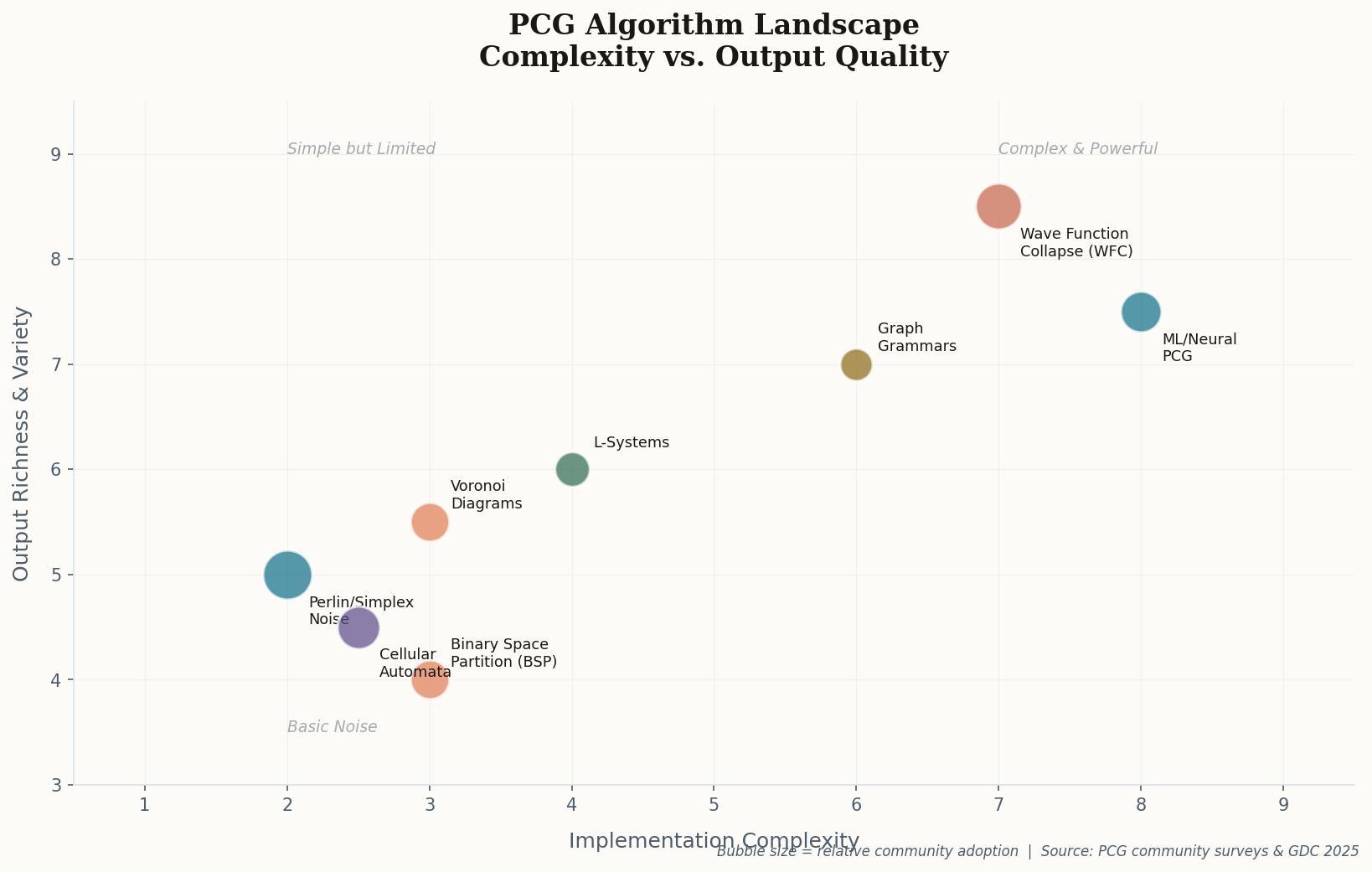
Scatter plot comparing PCG algorithms by implementation complexity vs output richness
PCG algorithm landscape: WFC sits in the high-complexity, high-output quadrant — libraries like DeBroglie are what make it accessible. Bubble size indicates relative community adoption.

The path constraint feature deserves special attention. It guarantees that generated levels are always solvable — a deceptively hard problem when your content is stochastic. For roguelike developers, this is the difference between "cool generation algorithm" and "game people actually finish."

Blueprint node graph generating a procedural 3D landscape with roads and buildings
03

Unreal 5.5 Turns PCG From Decoration Into Architecture

Until now, Unreal's PCG Framework was essentially a sophisticated asset scattering tool. You could place trees, rocks, and grass according to rules — useful, but not transformative. The 5.5 update changes the game entirely.

Three new capabilities stand out. First, Geometry Scripting inside the PCG graph means you can create, boolean, and bevel meshes at runtime — not just place pre-made ones. Second, Shape Grammar nodes let you define architectural rules ("this spline becomes a fence with posts every 3 meters and a gate at intersections") that procedurally generate structural elements. Third, and most ambitiously, Pathfinding nodes can automatically route roads and paths between points of interest across uneven terrain.

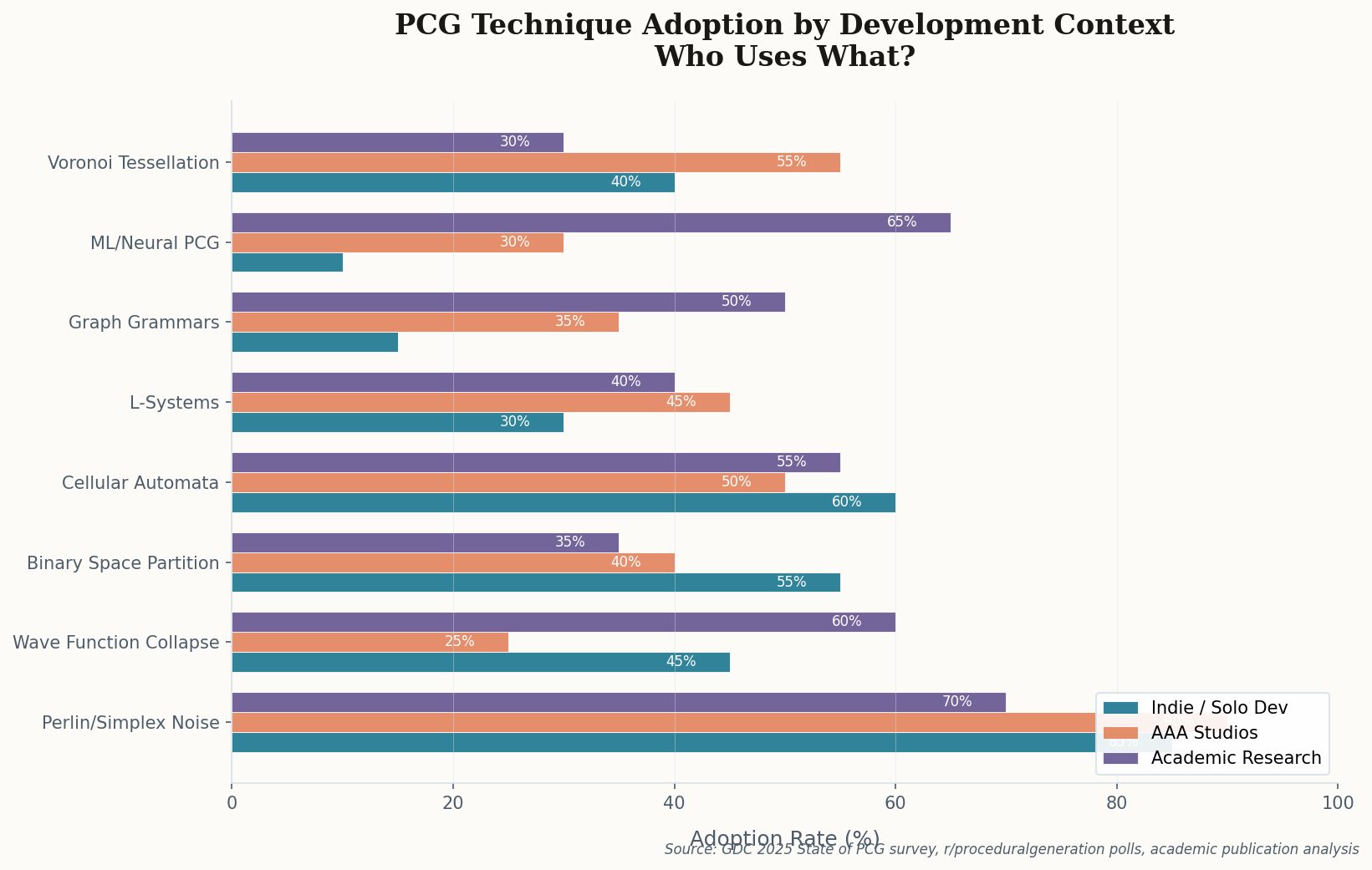
Horizontal bar chart showing PCG technique adoption rates across indie, AAA, and academic contexts
PCG technique adoption varies dramatically by context. Noise-based terrain dominates everywhere, but WFC and ML approaches see much higher adoption in academic research than in shipped games.

The implication is significant: PCG in Unreal is no longer about making forests look natural. It's about generating functional, traversable spaces — roads that follow topography, buildings that respect structural logic, cities that make spatial sense. For open-world developers, this is the difference between "procedural nature" and "procedural civilization."

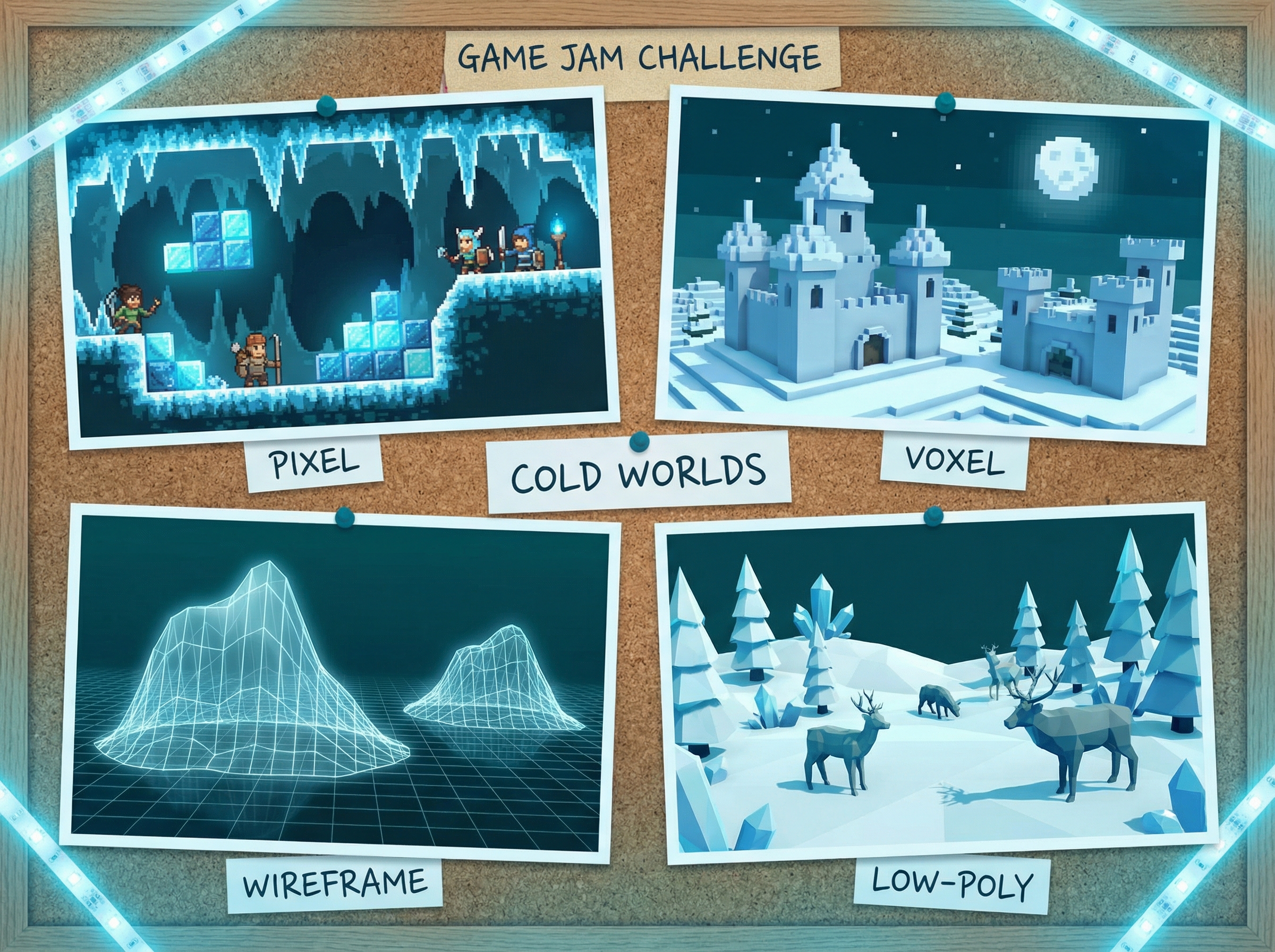
Collage of procedurally generated frozen landscapes in diverse art styles
04

ProcJam's "Cold Places" Prove the Community Isn't Cooling Off

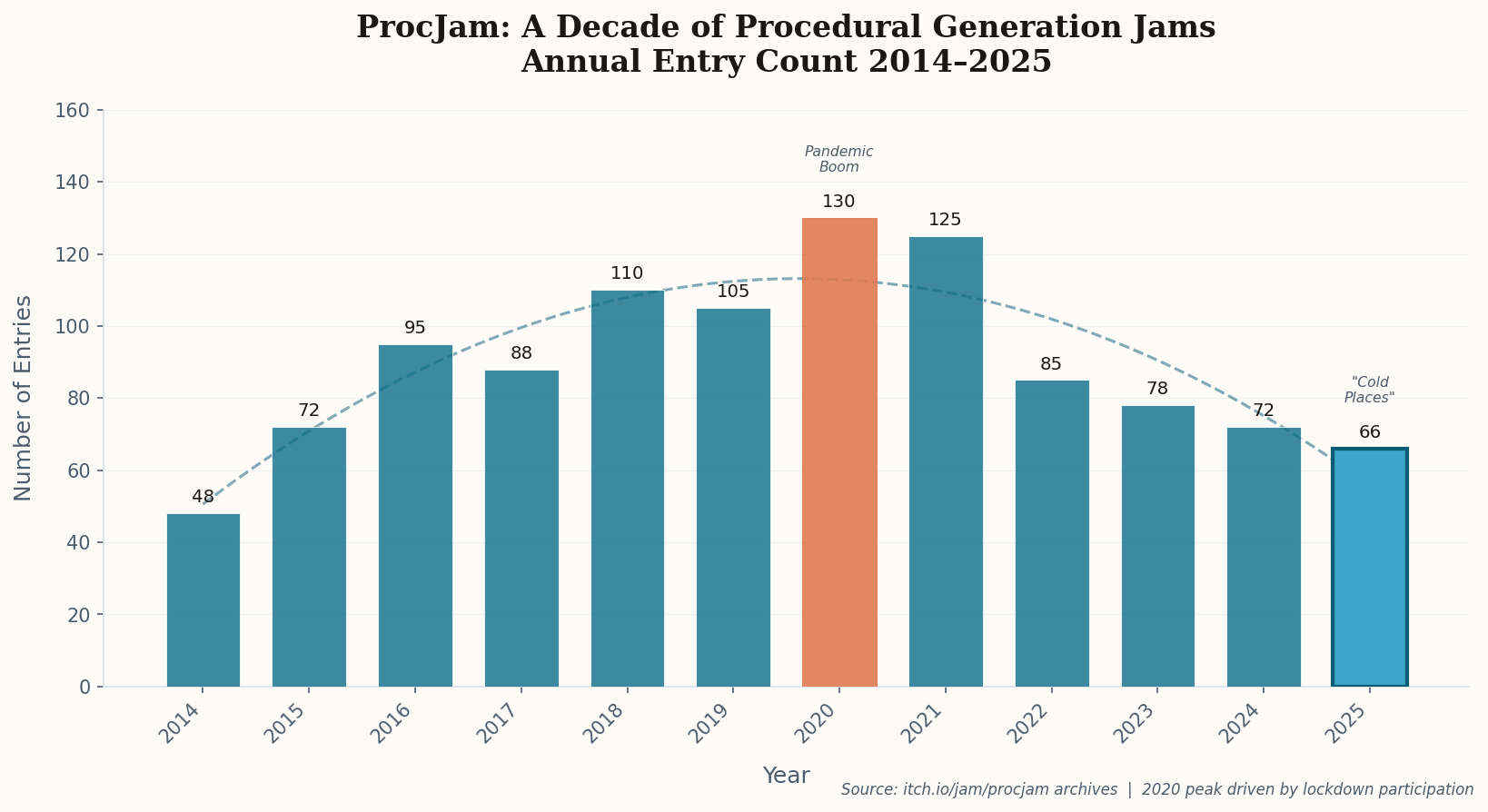
The annual procedural generation game jam might be the single best barometer of where indie PCG is headed. ProcJam 2025 drew 66 entries around the theme "Cold Places" — and while that's down from the pandemic-era peak of ~130, the technical ambition has never been higher.

Bar chart showing ProcJam entry count from 2014 to 2025
ProcJam entries peaked during lockdown (2020) and have stabilized around 66–85 entries annually — a mature community with deep technical chops rather than viral-driven participation.

Two entries caught my eye. Voxel Castle Generator by Ilya Belyy tackles the underexplored problem of procedural verticality — generating multi-story structures where each floor is both structurally sound and spatially interesting. And Last Voyage of the Tartarus procedurally generates not just environments but narrative logs, creating coherent "found story" experiences in algorithmically assembled arctic settings.

The theme constraint is what makes ProcJam entries so interesting. "Cold Places" forced developers to grapple with procedural weather systems, ice formation patterns, and the visual language of desolation — problems that don't have off-the-shelf solutions. That's where genuine innovation happens: not in comfortable territory, but at the edges where the algorithms have to invent.

Neon-lit procedural landscape mid-regeneration with designer intent visible as golden guide-lines
05

Heart Machine Coined "Directed Proceduralism" — And It Might Be the Future

The tension at the heart of procedural generation has always been the same: random worlds feel random. Hand-crafted worlds feel authored. Pick one. Heart Machine picked both.

Hyper Light Breaker's "Directed Proceduralism" starts with rough designer-authored layouts — the macro structure of a biome, the approximate placement of landmarks, the intended flow of player traversal. Then algorithms detail the space: filling in terrain, scattering enemies, connecting paths, adding environmental storytelling. The entire "Overgrowth" world regenerates after every player death, but it never feels arbitrary because the designer's skeleton persists beneath the procedural skin.

This is the most mature articulation yet of what the industry has been circling for years: hybrid PCG, where algorithms amplify human intent rather than replacing it. It's the difference between "the computer made this" and "a designer made this, and the computer gave it infinite variation." For studios evaluating procedural approaches, Hyper Light Breaker is now the case study to reference — proof that players can feel authorial intent even when no two runs share the same geography.

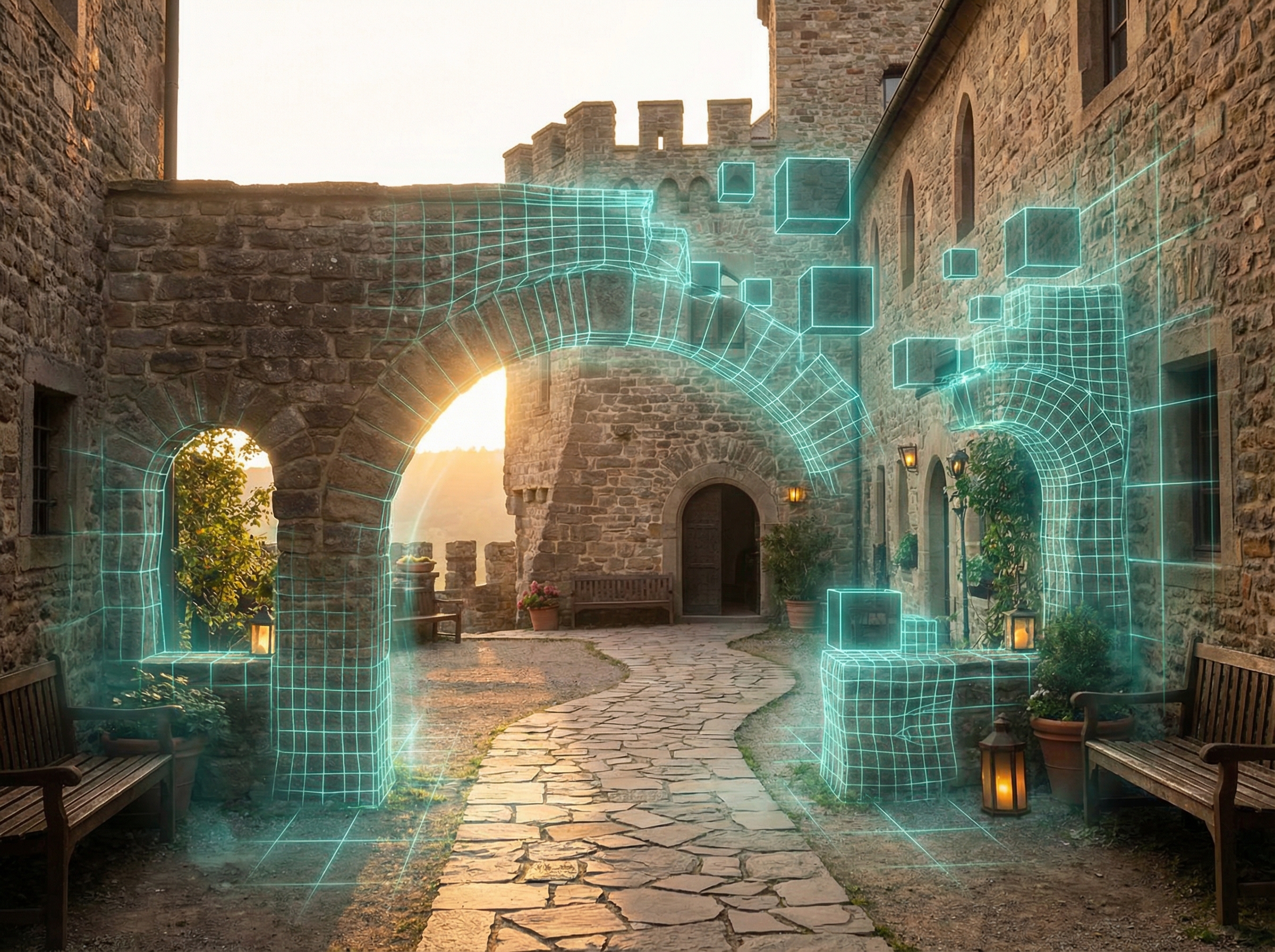
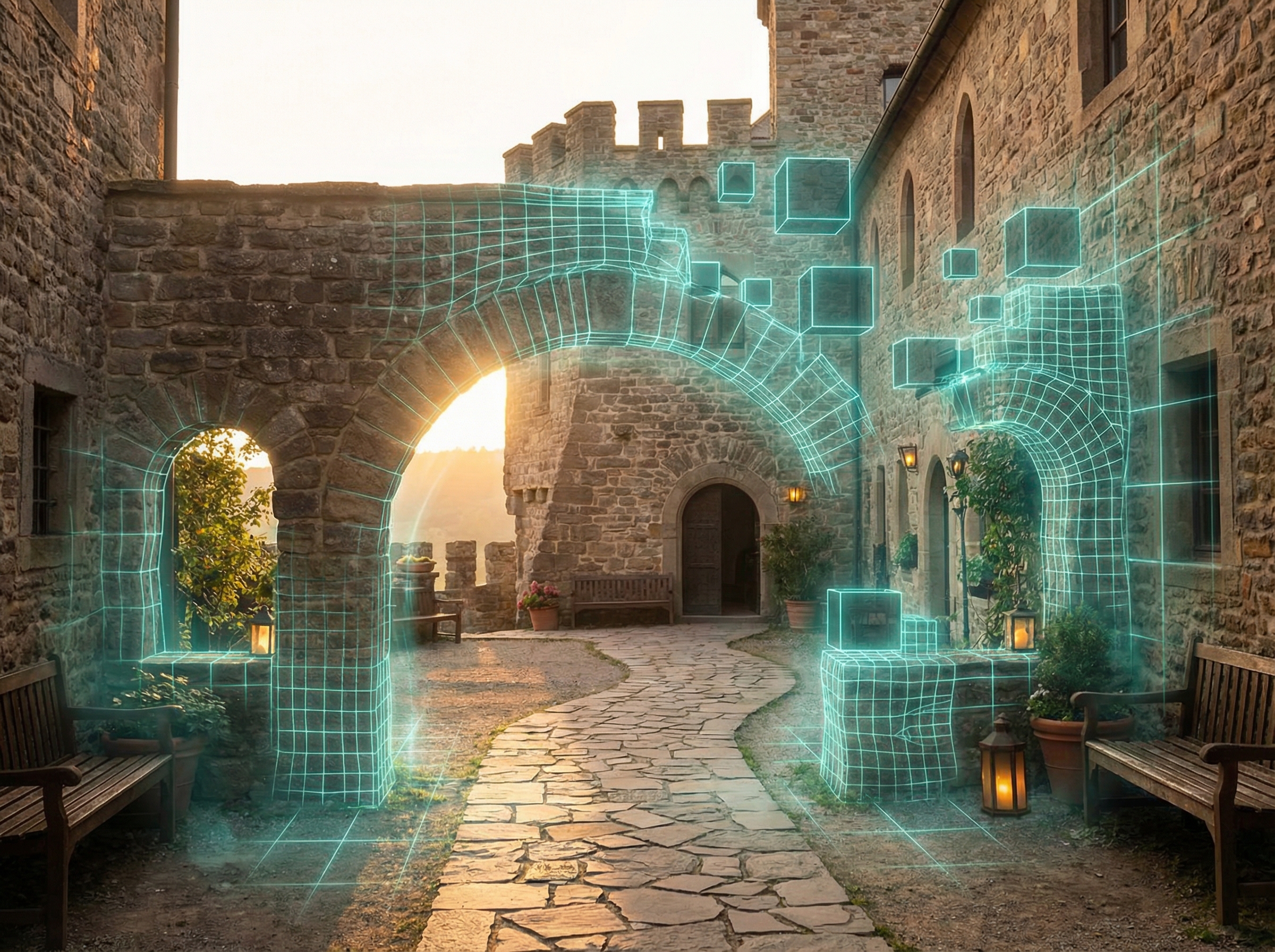
Cozy castle courtyard being sculpted procedurally with visible marching cubes mesh underneath stone surface
06

Tiny Glade Quietly Became the Gold Standard for "Juicy Proceduralism"

Released in late 2024 by Pounce Light, Tiny Glade kept generating technical discussion well into 2025 — and for good reason. Its custom Rust-based engine, built on the Bevy ECS framework, combines two algorithms that rarely coexist: Wave Function Collapse for structural logic and Marching Cubes for organic mesh generation.

The result is something genuinely new. Drag a wall through a path and it automatically becomes an archway. Place towers and the roofline adapts. Every modification triggers real-time GPU updates — the procedural mesh recalculates instantly as you sculpt. There's no "generate" button, no loading screen. The architecture just responds, as if the castle wants to be built.

Why this matters beyond games: Tiny Glade proved that procedural generation can be cozy, responsive, and beautiful — countering decades of "PCG = repetitive and soulless" stigma. It's the most compelling argument yet that algorithms and artistry aren't opposites.

Developer Anastasia Opara has been remarkably open about the technical architecture, and the ongoing community analysis remains one of the best resources for understanding how WFC and Marching Cubes can work in concert. If you're building any kind of creative tool with procedural elements, this is your required reading.

The Terrain Ahead

Procedural map generation is splitting into two clear trajectories: the simulation-first approach (Veloren, Unreal 5.5) that models physical processes to create emergent landscapes, and the design-first approach (Hyper Light Breaker, Tiny Glade) that uses algorithms to amplify human creative intent. The most exciting work is happening at the intersection — where simulated erosion meets authored narrative, where WFC constraints encode designer wisdom. The map is drawing itself. The question is whether we're teaching it to draw well.