Photography × AI

The Last Real Photograph

When any image can be prompted into existence, what does it mean to capture one? Six stories from a week that quietly rewrote the rules of seeing.

Listen
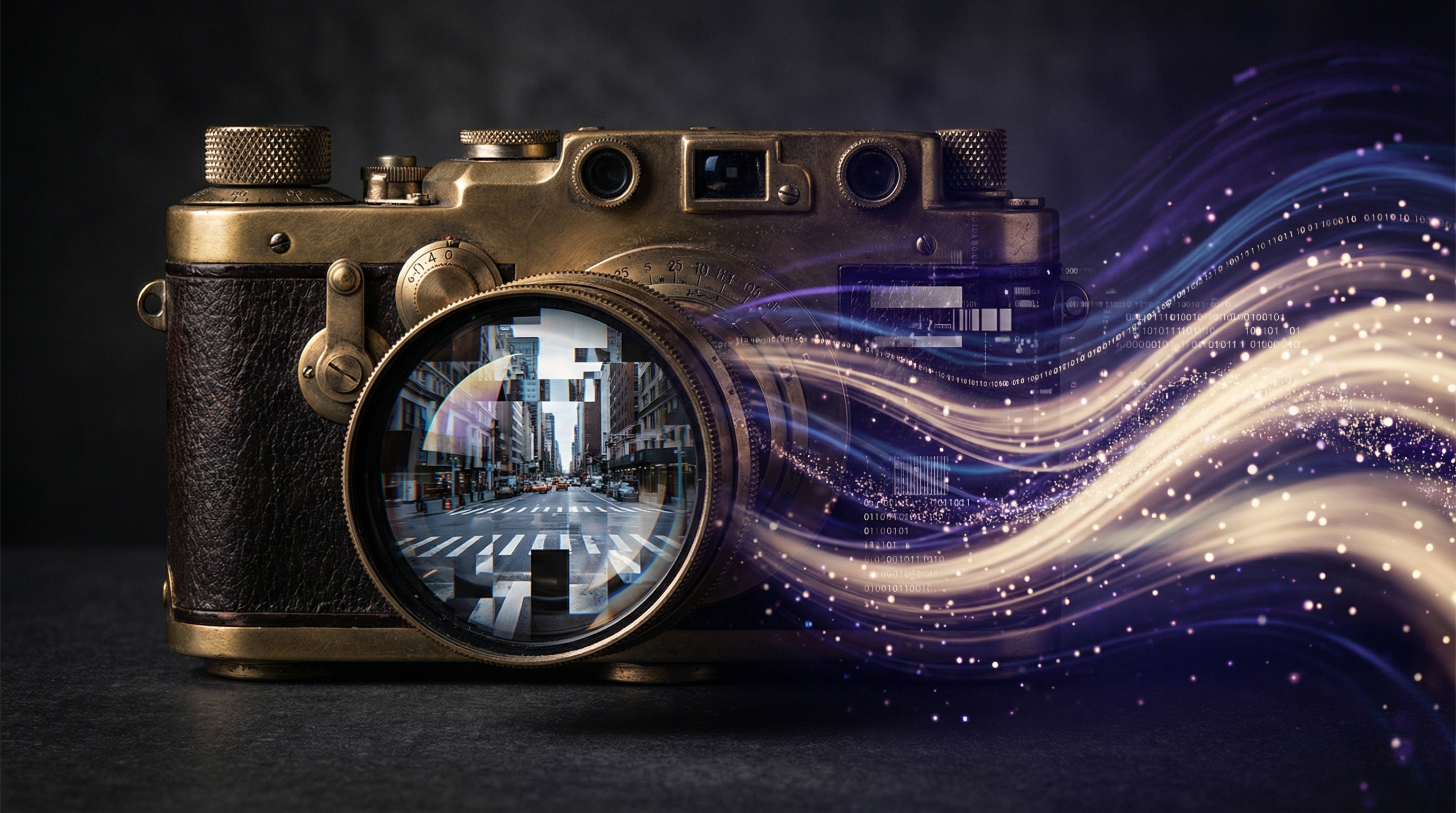
A vintage film camera dissolving into streams of luminous digital particles, half analog precision and half flowing data
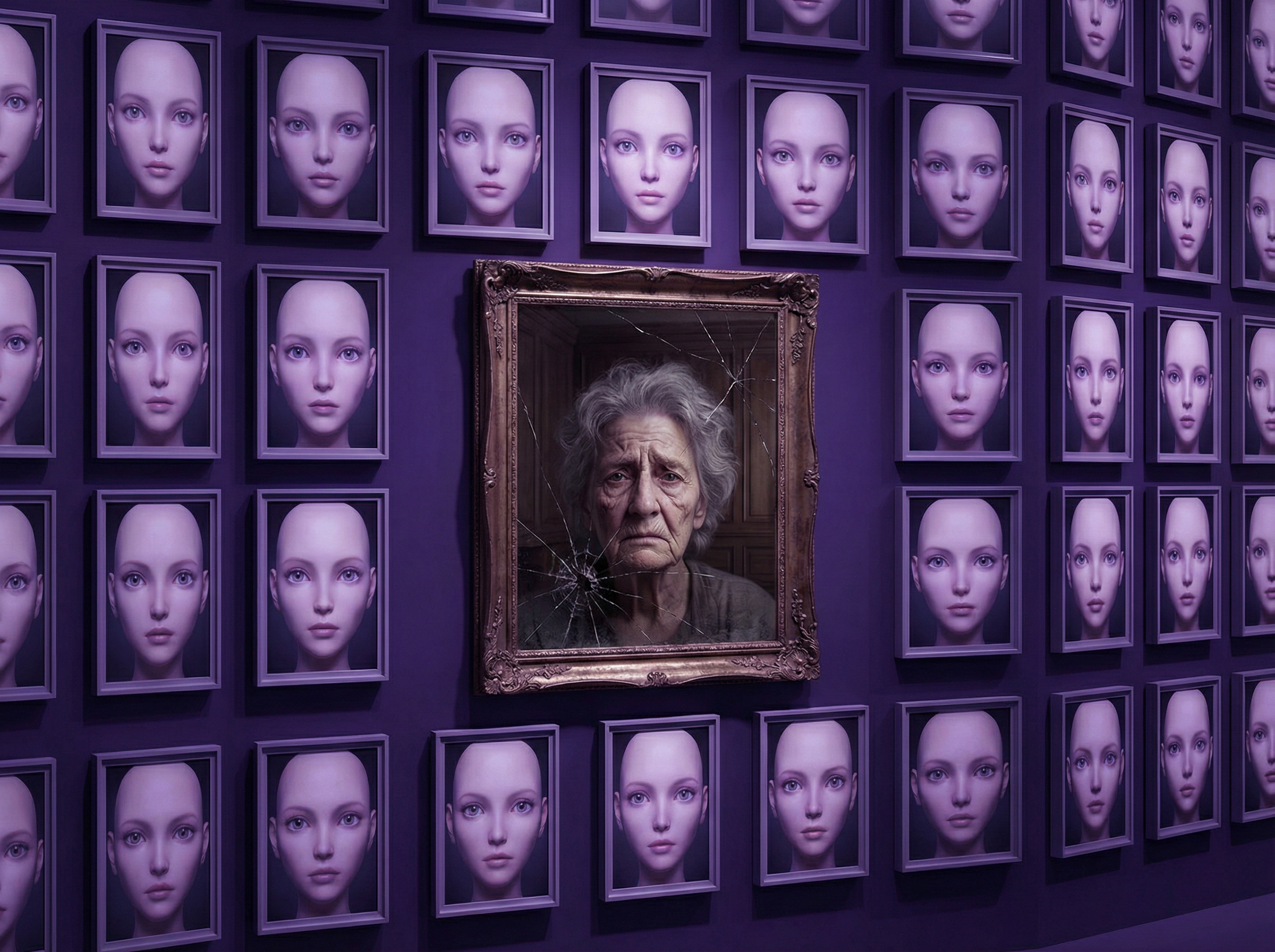
A gallery wall of identical AI-generated portraits with one cracked mirror showing a real, weathered face
01

The Beauty Vortex: AI's Narrowing Gaze

Here's a question that should unsettle anyone who's ever scrolled through a stock photo library: what happens when the machines that generate our images have a narrower definition of beauty than even the most airbrushed magazine cover?

Researchers at the University of Toronto just answered it. They prompted Midjourney, DALL-E, and Stable Diffusion to generate thousands of portraits. The results were staggering: zero images of women over 40 or bald men appeared without explicit prompts forcing those features. Over 90% of outputs featured symmetrical faces, porcelain skin, and thin bodies—regardless of what was actually asked for.

Dr. Delaney Thibodeau, who led the study, called it a "beauty vortex"—a feedback loop significantly narrower and more exclusionary than even the glossiest 2000s-era retouching. The implications compound fast. As AI-generated images replace traditional stock photography in advertising, editorial, and social media, the visual vocabulary of the public sphere is being homogenized by default. Not by malice. By training data.
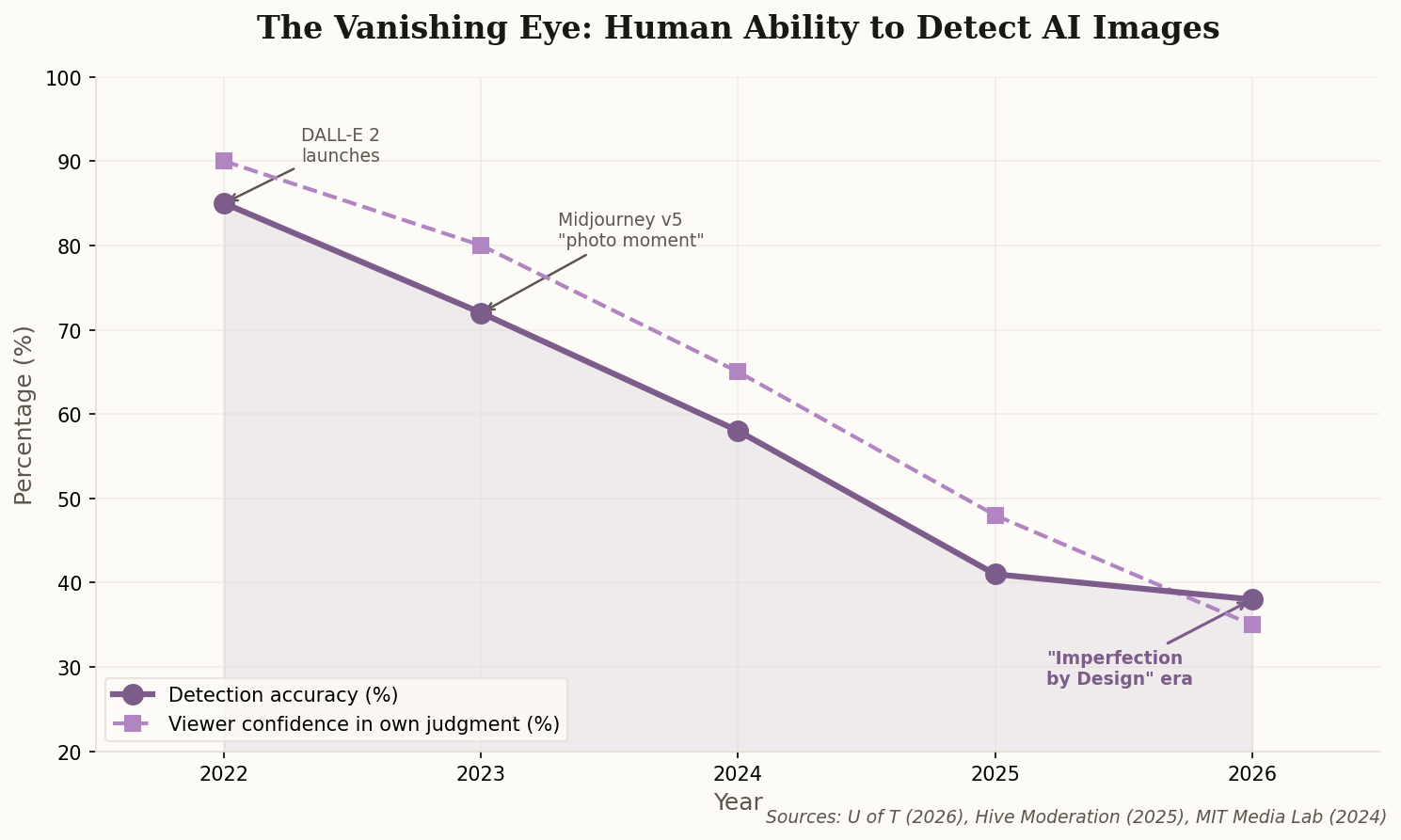
Line chart showing human ability to detect AI images declining from 85% in 2022 to 38% in 2026
The declining ability of human viewers to identify AI-generated images, compiled from multiple detection studies (2022–2026).

The cruelest irony: photography's historical power was in showing us the world as it is—messy, asymmetrical, aged, real. Now its algorithmic successor is showing us only the world as a training dataset imagines it should be. The vortex isn't just aesthetic. It's epistemic.
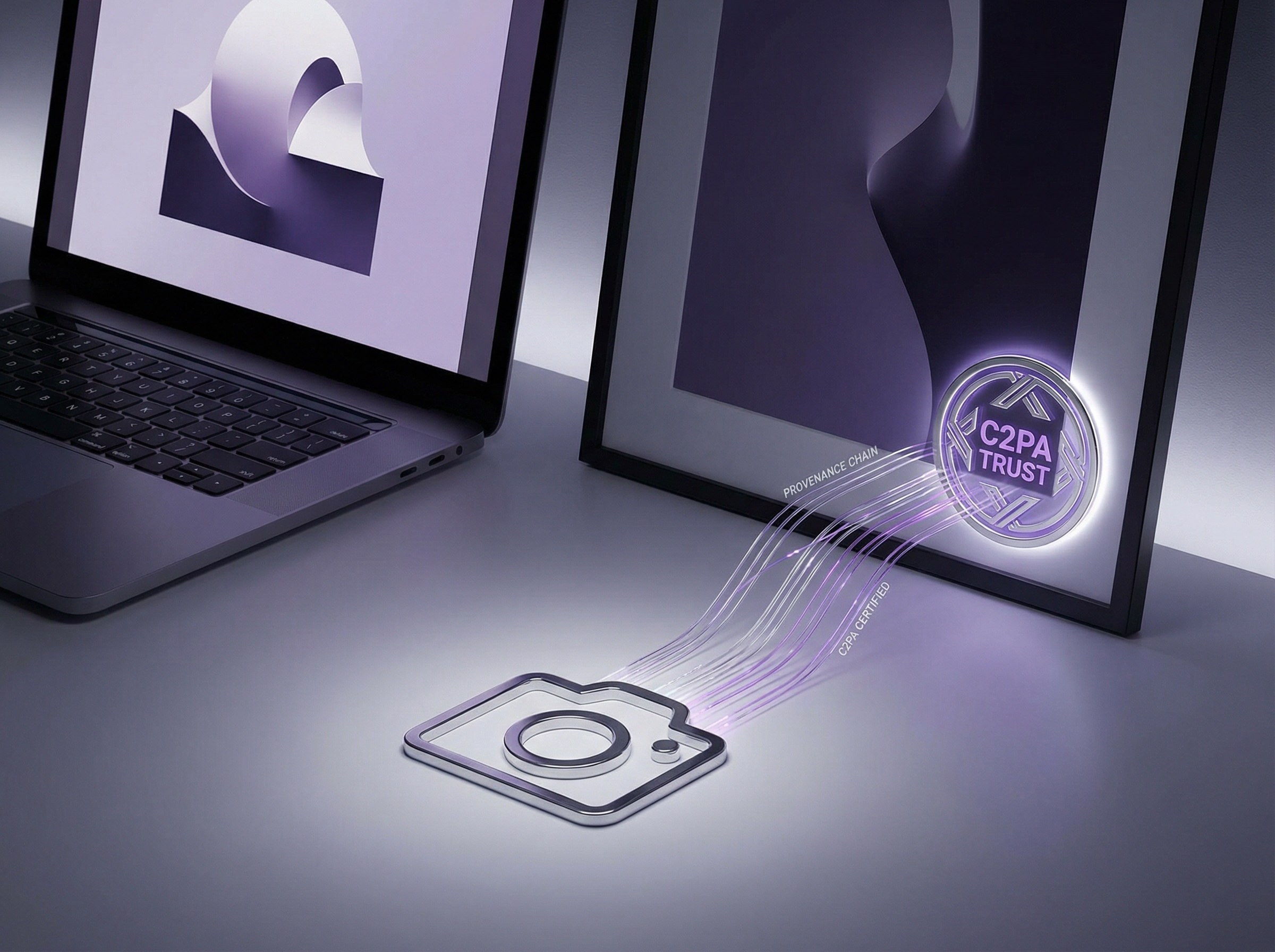
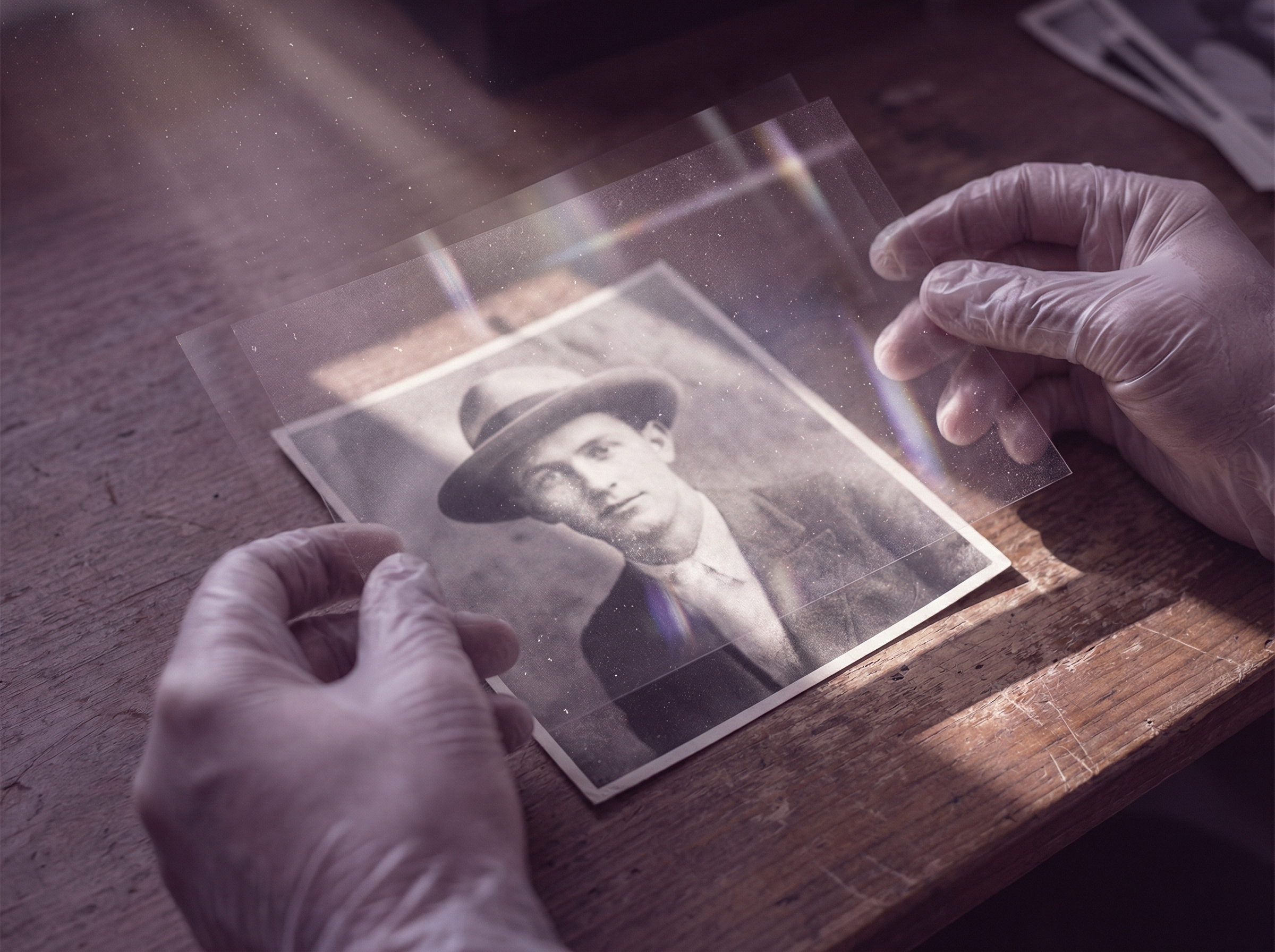
A photograph with a luminous holographic trust seal, digital provenance threads connecting it to a camera
02

The "Prove It" Internet Just Got Its Passport Office

For two years, the Coalition for Content Provenance and Authenticity has been the industry's answer to the question "how do we know what's real?" In practice, it's been a standard with no infrastructure—like building a highway system and forgetting to make cars.

That changed this week. SSL.com became the first Certificate Authority to issue production-ready C2PA certificates. This is the invisible plumbing that makes "Content Credentials" actually work: cryptographic signatures that chain an image back to the device that captured it, through every edit, all the way to publication. Nikon and Sony have firmware updates scheduled for mid-2026 that will support this standard in-camera.

The shift from a "trust me" internet to a "prove it" internet is no longer theoretical. It's infrastructure. But here's the tension: provenance only works if everyone adopts it, and adoption only works if the standard is frictionless. Right now, embedding C2PA metadata requires conscious effort. The real test comes when a journalist on deadline has to choose between publishing fast and publishing verified.

The bet is that within two years, unsigned images will carry the same implicit suspicion that unsigned emails do in corporate environments. We're not there yet. But the passport office is now open.

An AI-generated photograph deliberately marred with film grain and lens flare, imperfections floating like deliberate brushstrokes
03

Perfection Is the Tell

For about eighteen months, the conventional wisdom was simple: if an image looks too perfect, it's probably AI. Skin too smooth. Lighting too even. Composition too considered. Human imperfection was the last honest signal.

That heuristic just died. A new wave of AI creators and model fine-tuners are deliberately injecting flaws into their outputs—lens flare, motion blur, film grain, slightly blown highlights, the kind of "bad" lighting that used to mean someone forgot to check their aperture. The industry calls it "Imperfection by Design." In a blind test, 62% of consumers failed to identify these intentionally flawed AI images as synthetic.

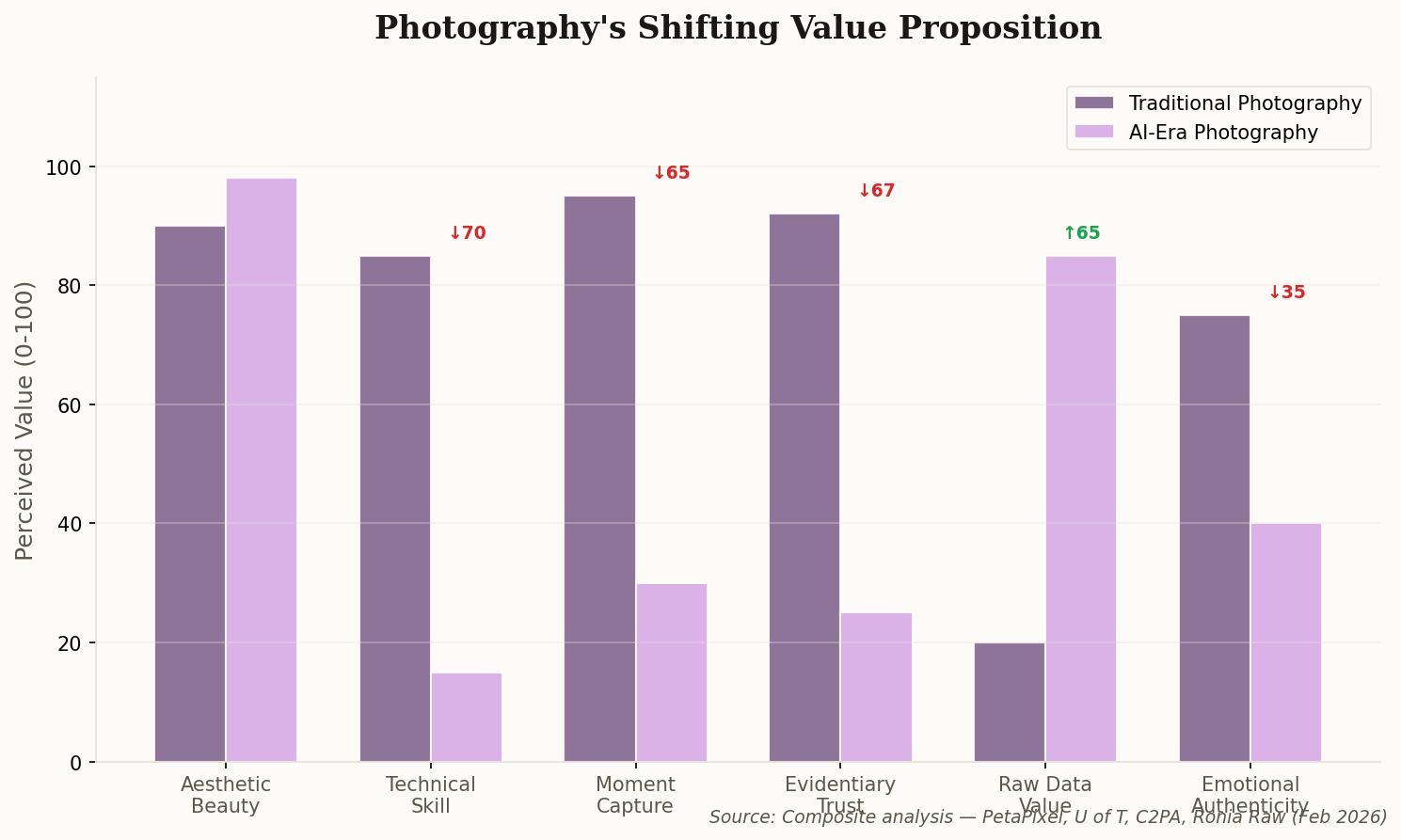
Bar chart comparing traditional photography's value proposition against AI-era photography across six dimensions
How photography's perceived value has shifted across six dimensions as AI-generated imagery has matured. Data synthesized from industry reports and academic surveys.

Think about what this means epistemologically. Flaws were our last fingerprint. The grain of the film, the chromatic aberration of a cheap lens, the slight motion blur of a hand-held shot—these were the signatures of physical reality impressing itself onto a sensor through an imperfect optical chain. Now those signatures can be simulated, sprinkled on like seasoning. The photographer's involuntary mark has become the AI's voluntary costume.

"To make an image feel real in 2026, you must break it," the report notes. The philosophical implications are dizzying: we've built machines so good at faking perfection that they now need to fake imperfection too.

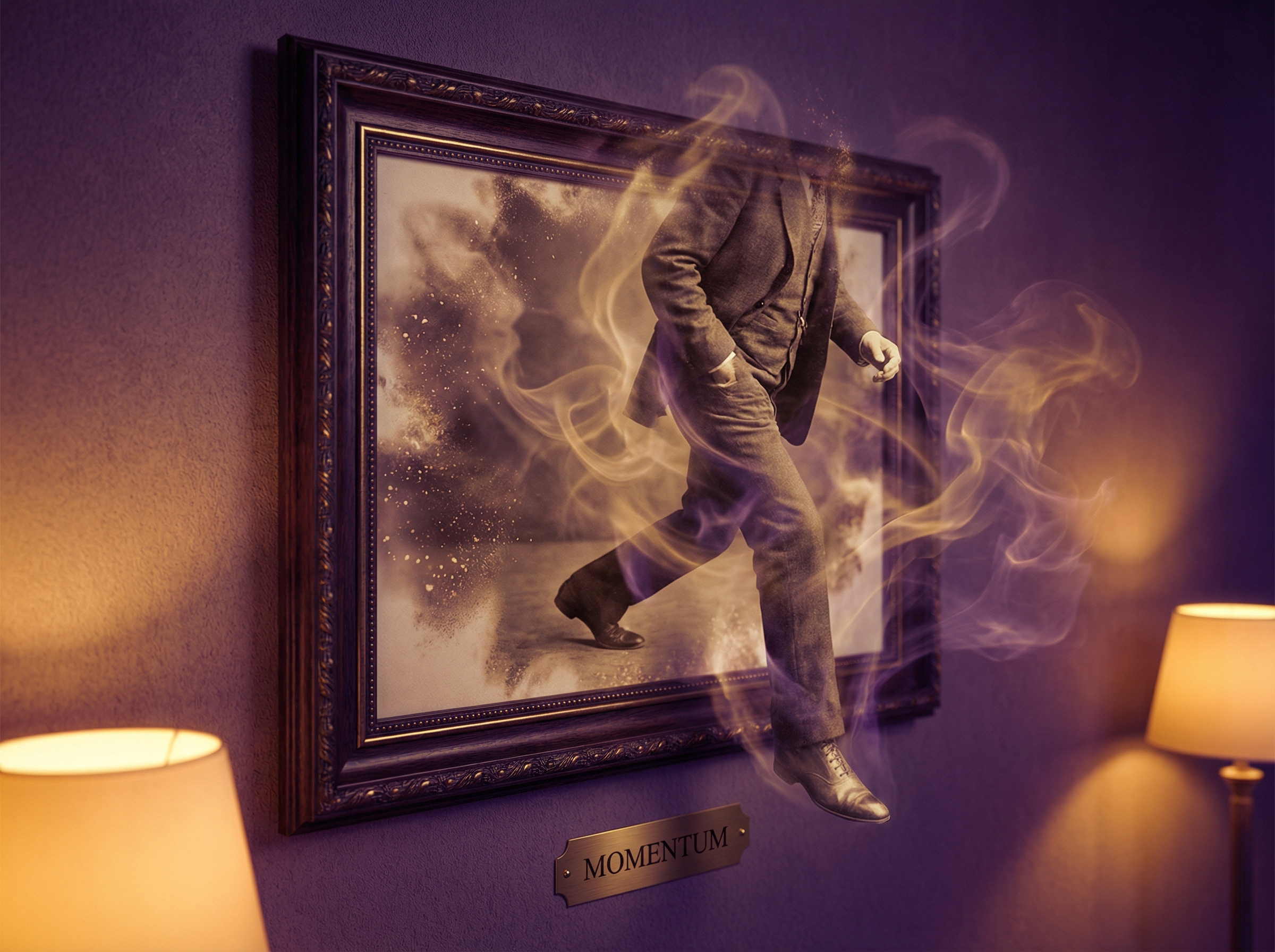
A framed photograph where the subject is stepping forward out of the still image into three-dimensional space
04

The Photograph Starts to Breathe

OpenAI shipped two Sora features this month that deserve more existential dread than they've received. On February 4th: "Image-to-Video" for photographs containing people, letting you animate a still portrait into motion. On the 9th: "Extensions," which lets you seamlessly extend existing video clips forward in time, maintaining character and scene consistency.

The company implemented guardrails—users must attest to having consent for human subjects, and outputs are watermarked. But let's be honest about what just happened: the boundary between a photograph (a frozen moment) and a video (a scene) has been technically dissolved. A photograph is no longer necessarily a single instant. It can be a seed that grows into motion.

This undermines something photographers have understood intuitively for 180 years: the decisive moment. Henri Cartier-Bresson built an entire philosophy around the idea that a photograph captures one irreproducible instant. Now that instant can be un-frozen, extended, interpolated. The decisive moment becomes the approximate starting point.

The question isn't whether this technology will be misused—it will. The question is whether the concept of a "still image" as a fundamentally different thing from a "moving image" survives the decade. Right now, the answer is unclear.

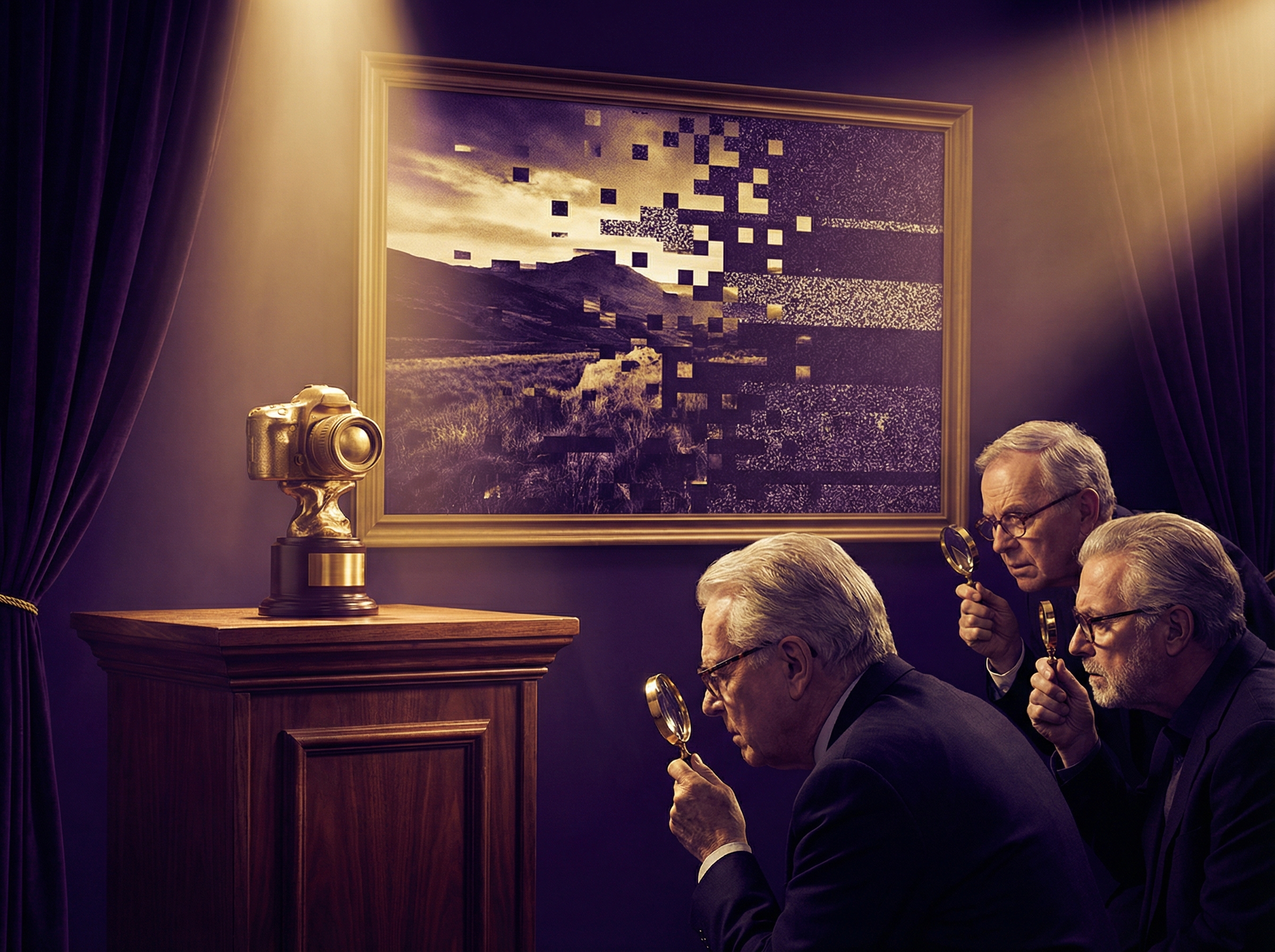
A golden photography trophy with the winning photograph behind it pixelating and dissolving, judges squinting through magnifying glasses
05

The Judges Can No Longer Tell

A prestigious photography contest in Shanghai awarded a top prize to an image that turned out to be AI-generated. The artist initially stayed silent. They admitted the method only after judges noticed inconsistent pixel structures in the background—a forensic tell, not a visual one. Their eyes couldn't see it. Their software could.

This isn't the first time. World Press Photo dealt with a similar controversy in 2023. But what's different now is the institutional response. The Shanghai incident triggered an immediate wave of policy changes across upcoming 2026 contests, with World Press Photo reaffirming its strict ban on AI-generated imagery and generative fill.

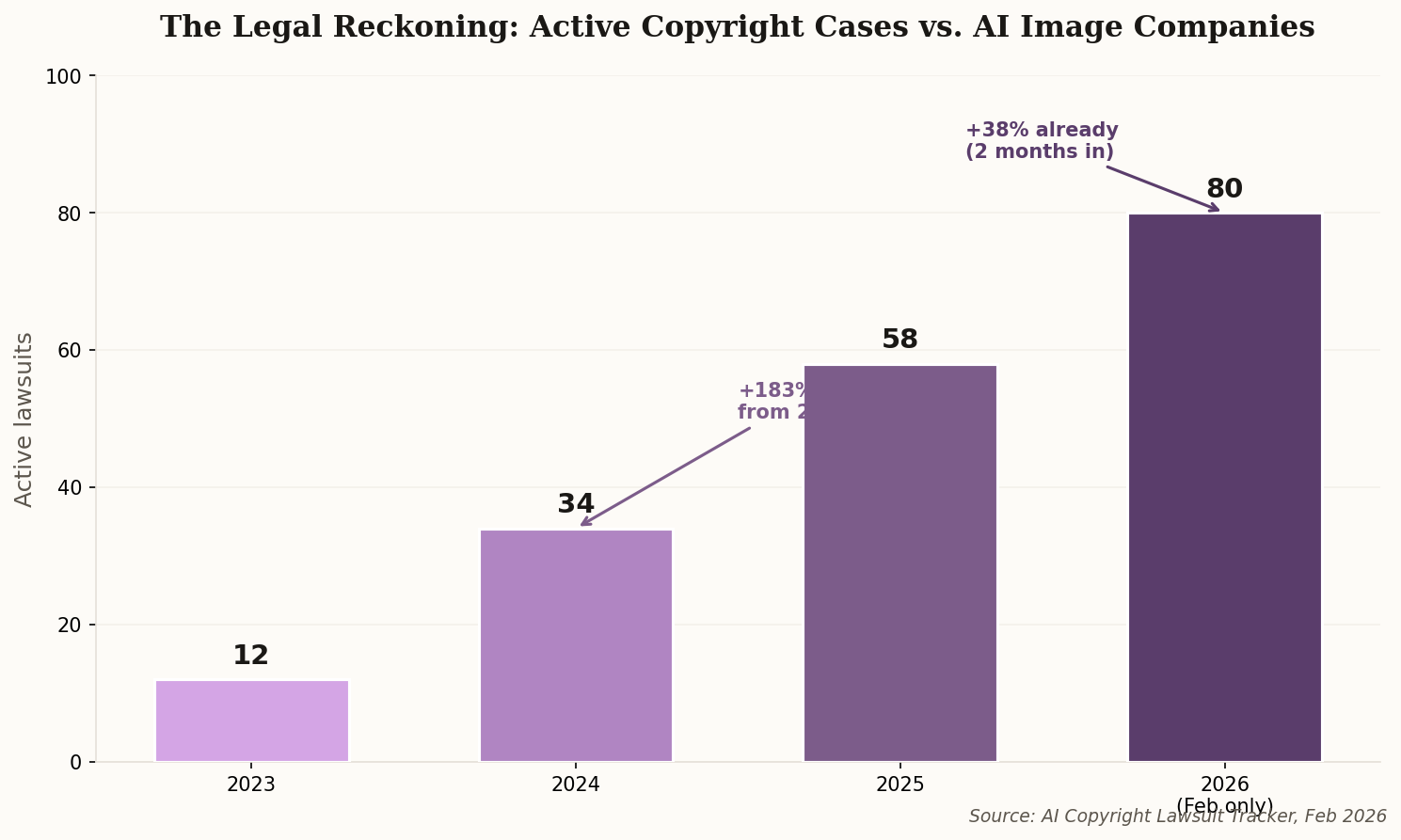
Bar chart showing active copyright lawsuits against AI image companies growing from 12 in 2023 to 80+ in February 2026
The accelerating legal reckoning: active copyright cases against AI image companies have grown nearly 7x since 2023.

One juror's quote captures the paradigm shift perfectly: "We are no longer looking for good photos; we are looking for human photos. The two are no longer synonymous." Read that again. The contest isn't evaluating aesthetics anymore. It's evaluating provenance. The question isn't "is this beautiful?" but "did a person actually stand somewhere and press a button?"

Photography contests once celebrated vision. Now they're being forced to verify humanity. That's not an evolution—it's a category collapse.

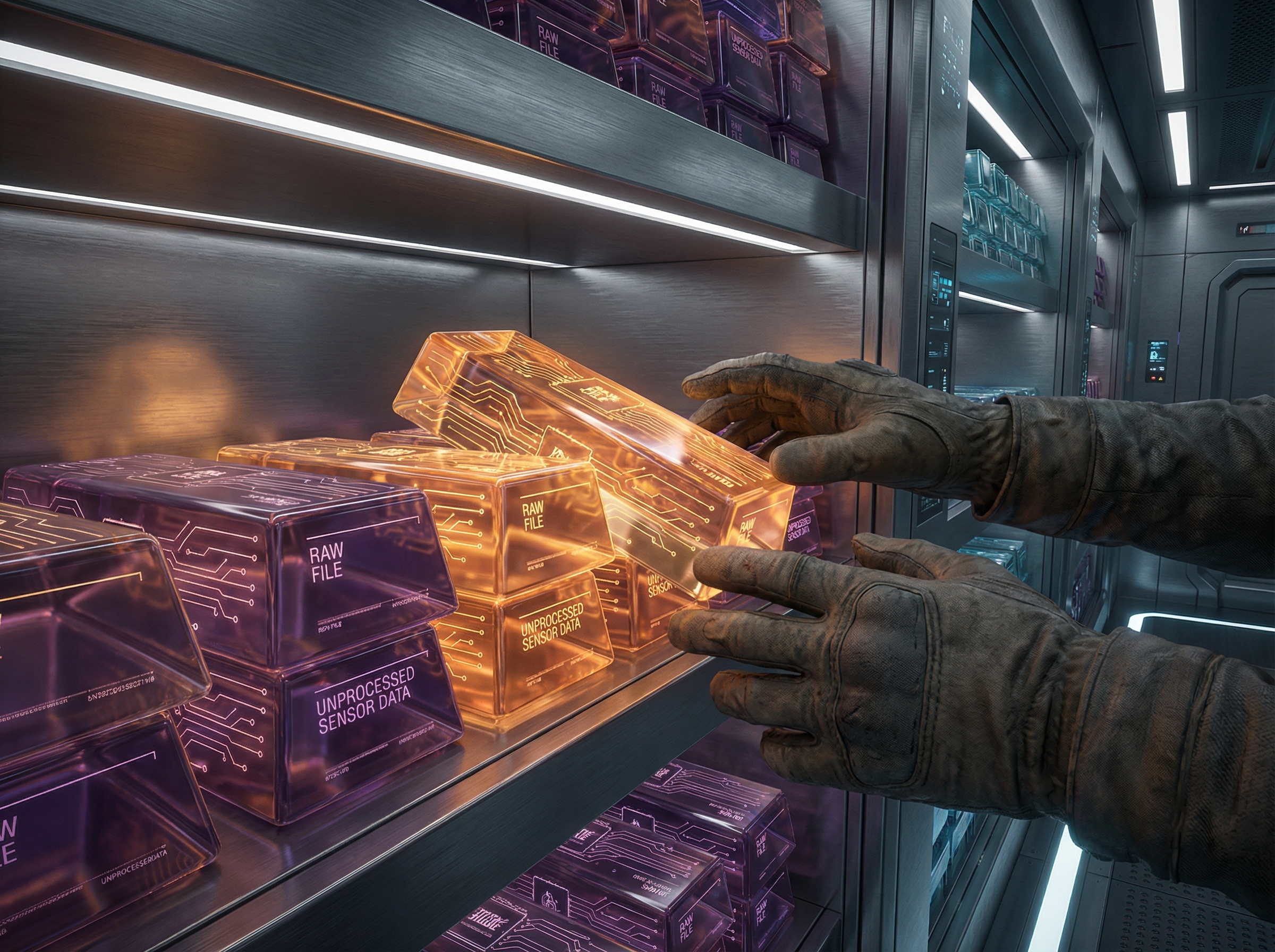
Stacks of glowing unprocessed RAW photo files arranged like gold bars in a vault, with a photographer's hands reaching toward them
06

When the Negative Is Worth More Than the Print

The Ronia Raw Photo Collection launched a marketplace this month with a proposition that would've sounded insane five years ago: instead of selling finished photographs for stock use, they're paying photographers upfront for their unedited RAW files—specifically to train AI models.

The economics reveal a tectonic shift. In the old world, a photographer's value lived in their eye—their ability to compose, light, time, and edit. The RAW file was a private intermediate artifact, never shown to anyone. Now it's becoming the product itself. Unaltered sensor data is a scarce commodity precisely because it represents something AI cannot generate: ground truth. The physical reality of photons hitting silicon at a specific place and time.

"The most valuable asset a photographer owns is no longer the final edit, but the raw data that proves reality exists," the marketplace's pitch reads. It's simultaneously depressing and empowering. Depressing because it reduces the photographer's art to a data acquisition function. Empowering because it gives photographers direct economic leverage over the AI companies that need their reality.

Photography is being forked. One branch leads to artistry—the human eye, the intentional frame, the decisive moment. The other leads to ground truth—photographers as the last reliable witnesses, their cameras as instruments of verification rather than expression. Both branches are photography. Neither looks like what Cartier-Bresson imagined.

The Frame Still Matters

Photography was never just about capturing light. It was about choosing what to point the camera at—and what to leave out. AI can generate any image, but it cannot stand in the rain at 4 AM waiting for the light to break over a mountain. It cannot feel the weight of a moment passing. The photograph may no longer prove that something happened. But it can still prove that someone cared enough to be there when it did. That's not nothing. That might be everything.