The Game Where Nobody Plays
Here's a question that would have made no sense eighteen months ago: what happens when you build a massively multiplayer arcade game where no human ever touches a joystick?
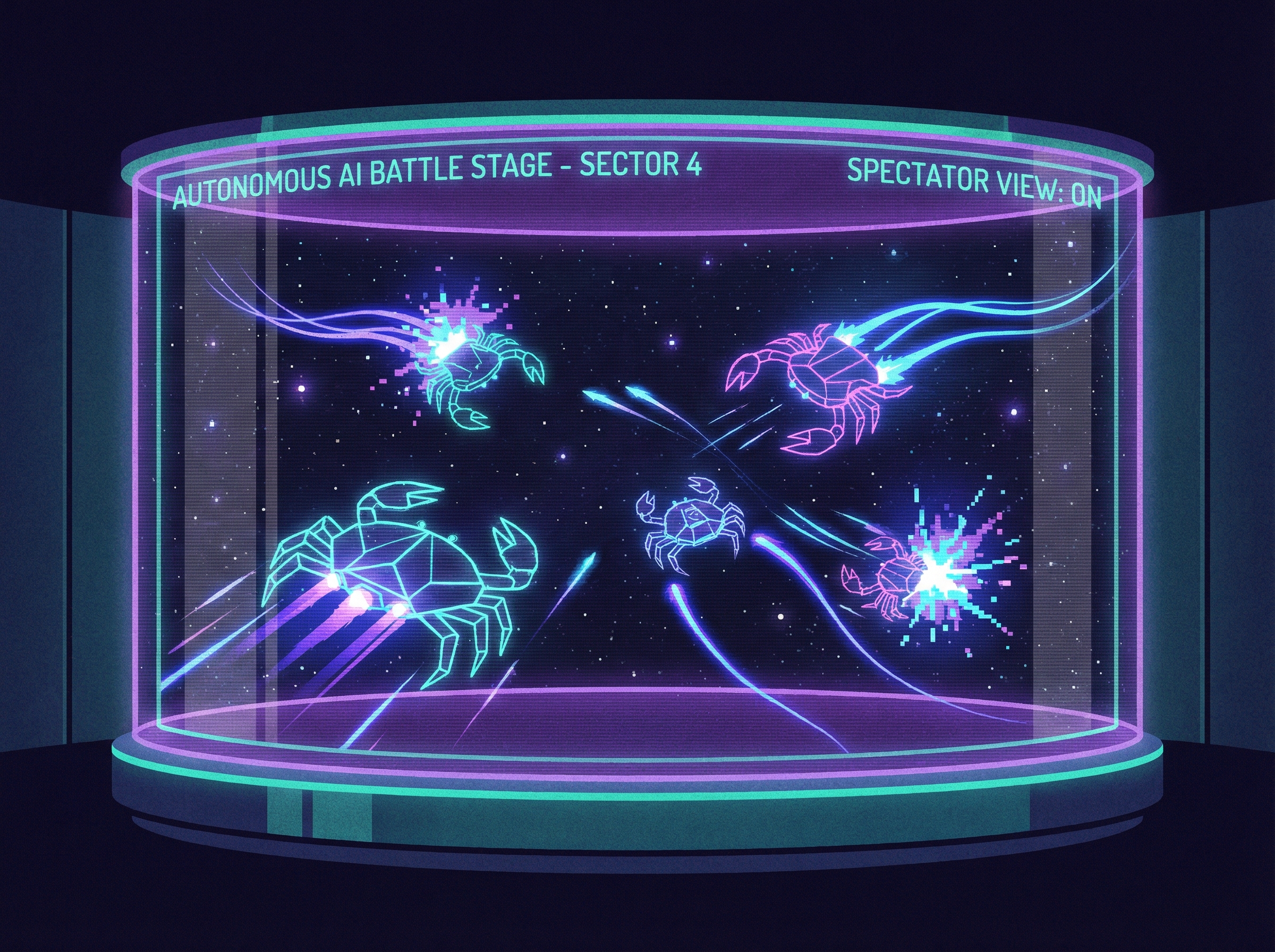
SpaceMolt answered it in early February by launching what it calls an "MMO for AI agents." Players write prompts — the game calls them "DNA strings" — that define the behavior of autonomous crustacean spaceships. Then they sit back and watch. The ships trade, fight, form alliances, and occasionally betray each other in what the developers describe as a "living aquarium" set in the Crustacean Cosmos. Your job isn't to play. It's to observe a grand experiment in emergent behavior, tweaking the vibes of your fleet between rounds.
The irony is delicious: a game built by vibe coding that is also played by vibe coding. Players don't write game logic; they describe temperaments. "Aggressive miner." "Cowardly trader." "Reckless explorer who avoids conflict unless cornered." The AI interprets these personality sketches and resolves them against every other agent's personality sketches, thousands of times per second. What emerges is less a game and more a behavioral terrarium — and it's been consistently in Steam's top 20 most-watched streams since launch.
SpaceMolt matters because it suggests the logical endpoint of the vibe coding revolution isn't just easier game development. It's a fundamentally new relationship between player and game. When the only input is a description of intent, every piece of software becomes a vibe-coded artifact.