
The Incumbents Aren't Dead. They're Just Expensive.
Before we bury Microsoft 365 and Google Workspace, let's be honest about the numbers: Microsoft still owns 58% of the global productivity market. That's 446 million paid seats. Google holds another 28-ish percent, dominant among startups and remote-first companies. Together, they control roughly 86% of how the world creates documents, sends emails, and builds spreadsheets.
That's not a market ripe for overnight disruption. That's a market with extraordinary inertia.
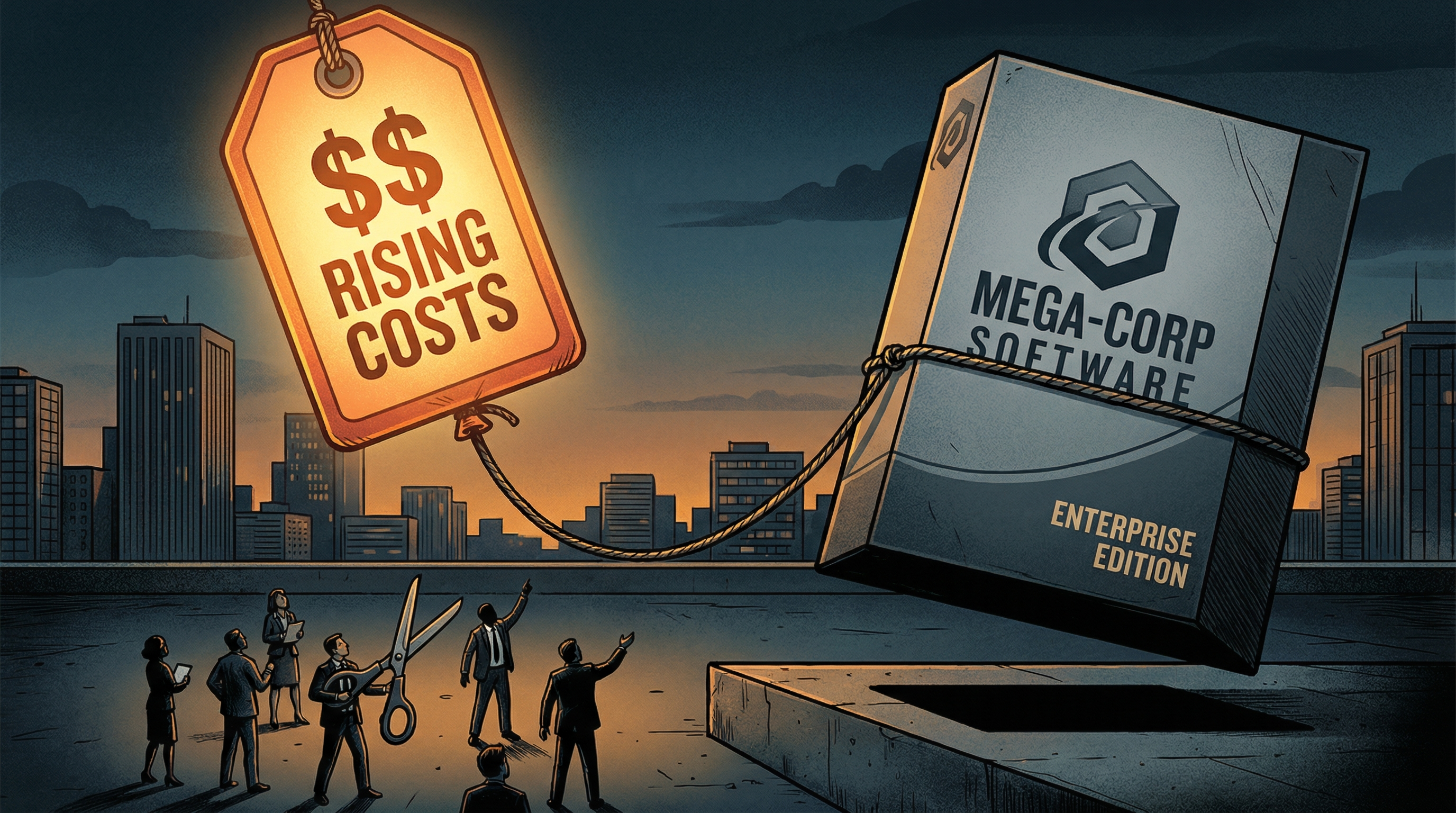
But here's what the market share numbers obscure: both Microsoft Copilot and Google Gemini are creating walled gardens that make it progressively harder for vertical apps to integrate deeply. The choice between Microsoft and Google in 2026 is no longer about features — it's about which AI ecosystem you want locked into. And that's the tell. When the selling point shifts from "what it does" to "what it prevents you from leaving," you're looking at a platform in defensive posture.
The incumbents will survive. The question is whether they'll survive as productivity tools or as AI distribution platforms that happen to include a word processor.