The Two Words That Launched the Invasion

Here is the thing about the most consequential military decision of the twentieth century: it came down to the weather. Not strategy. Not troop strength. Not intelligence. The weather.
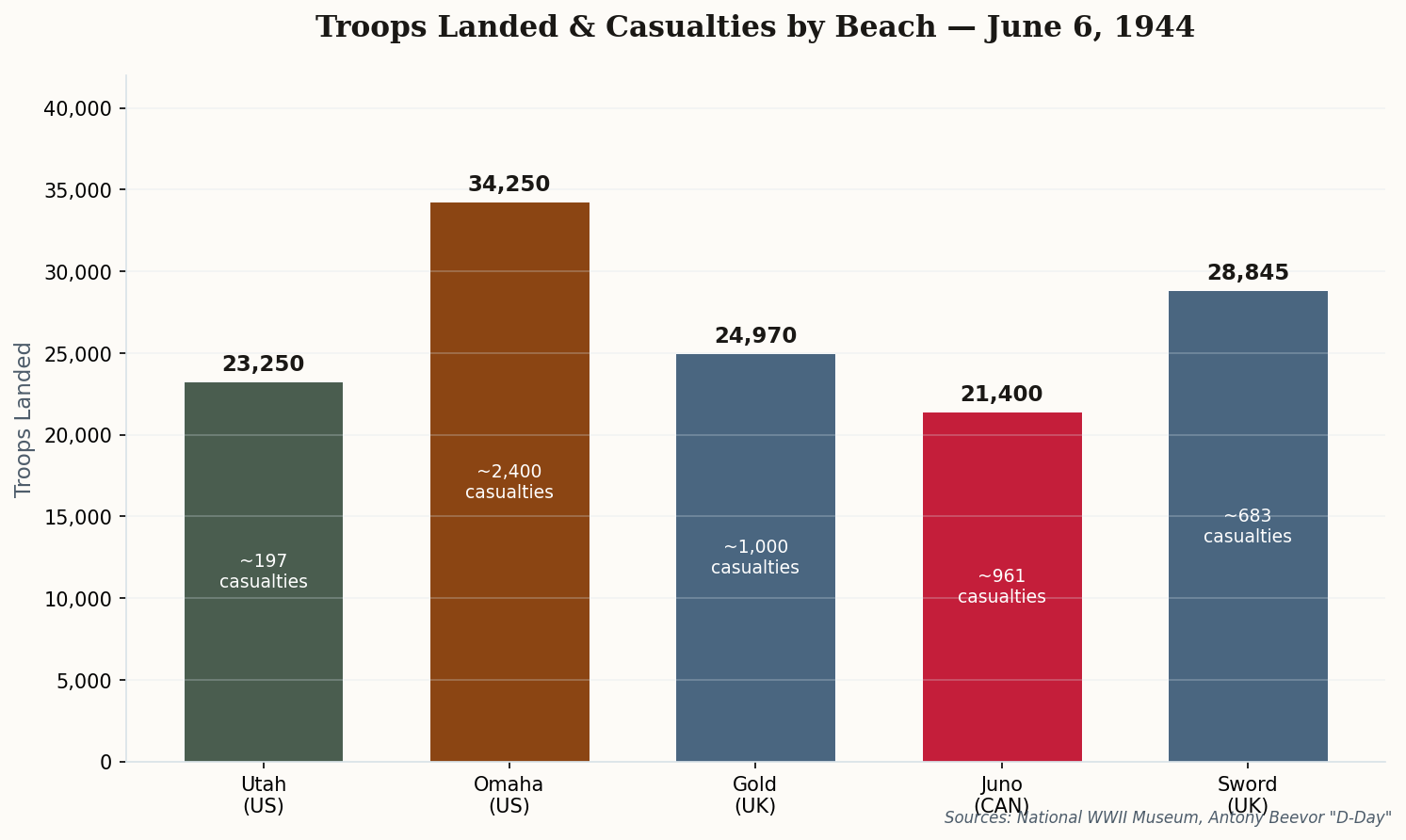
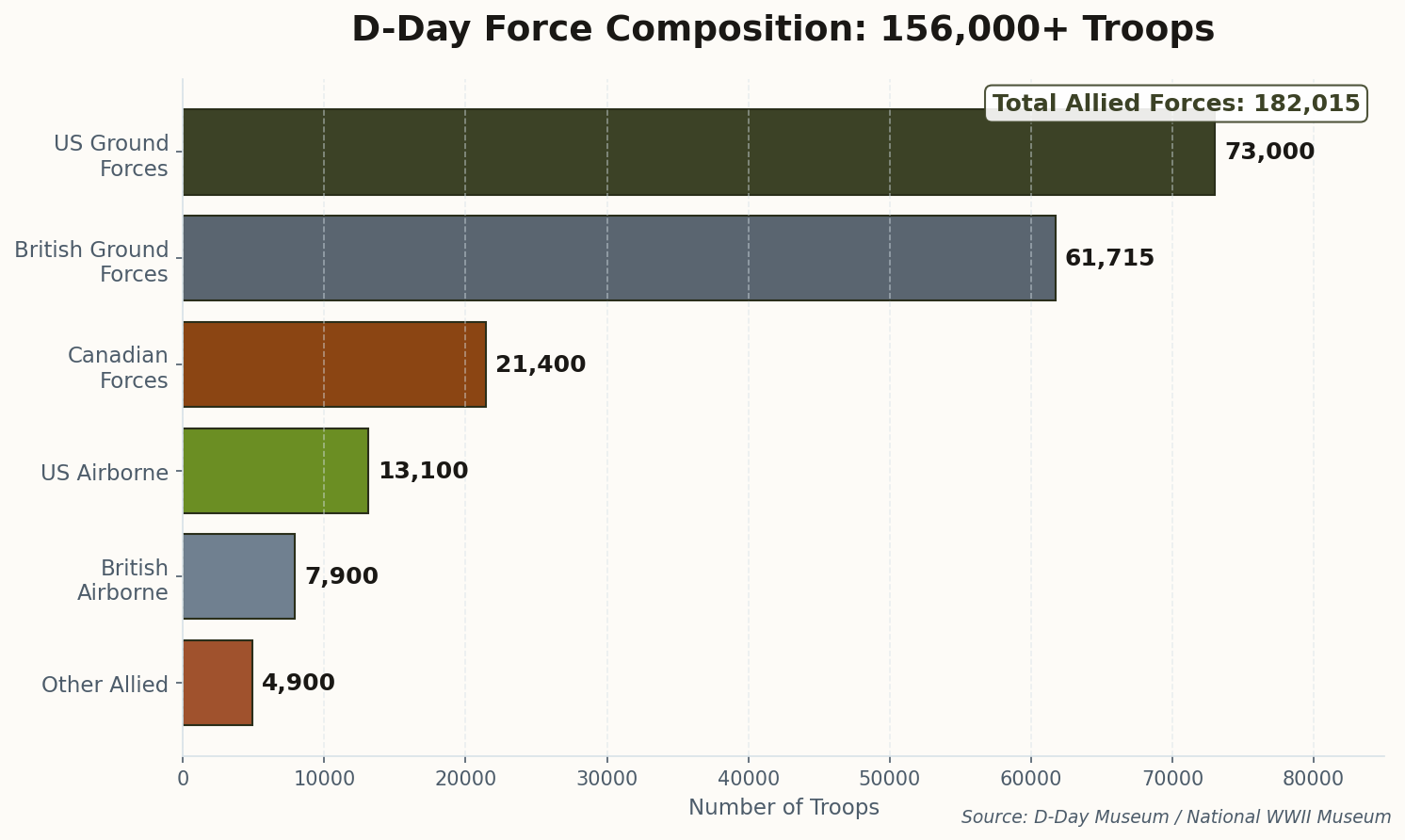
By June 4, 1944, Dwight D. Eisenhower had 156,000 men staged across southern England, 6,939 ships loaded and ready, and 11,590 aircraft waiting on runways from Cornwall to Kent. The original launch date was June 5. But a brutal Channel storm had rolled in — Force 6 winds, low cloud, heavy seas. The invasion fleet was already partially underway. Eisenhower ordered them back.
That night, in the library of Southwick House near Portsmouth, Group Captain James Stagg — the RAF meteorologist tasked with the most important weather forecast in history — told the Supreme Commander that a brief window of clearing would open on June 6. Perhaps 36 hours of tolerable conditions before the storms returned. "Tolerable" was the operative word. Not good. Tolerable.
"OK, let's go."
— General Dwight D. Eisenhower, 4:15 AM, June 5, 1944
What makes this moment extraordinary isn't just the decision itself — it's what Eisenhower did immediately afterward. He drafted a note accepting full personal responsibility in case of failure: "Our landings in the Cherbourg-Havre area have failed to gain a satisfactory foothold and I have withdrawn the troops. If any blame or fault attaches to the attempt it is mine alone." He misdated it "July 5" in his haste. He tucked it in his wallet. Leadership, distilled to its essence: you make the call, you own the outcome, and you prepare for the worst while committing fully to the best.
The Germans, using different meteorological models, concluded no invasion was possible in such conditions. Field Marshal Erwin Rommel left France on June 5 to celebrate his wife Lucie's birthday in Herrlingen. He was sleeping when the first paratroopers landed. One forecast. Two conclusions. History pivoted on the gap between them.