
AI & Employment

The Quiet Layoff

Sixty-six percent of CEOs plan to freeze or cut headcount this year. Amazon just axed 16,000 corporate roles. Goldman Sachs handed Claude to 12,000 developers. Six dispatches from a job market that stopped pretending this was theoretical.

Listen
A vast modern office floor with rows of empty desks, holographic AI interfaces hovering above each workstation casting a teal glow
Abstract visualization of software license seats dissolving into streams of autonomous AI agent code
01

The Per-Seat Model Just Got Its Expiration Date

Here's a thought experiment: if an AI agent can file your expense reports, update your CRM, and draft your Jira tickets, how many Salesforce seats does your company actually need? Goldman Sachs just put that question in writing, issuing a research note warning that "agentic AI" poses a structural threat to the entire SaaS business model. Hedge funds are already dumping software stocks.

The logic is almost insultingly simple. Enterprise software companies charge per seat. AI agents don't need seats. When one agent can do the work of three human users across ServiceNow, Salesforce, and Slack, the math doesn't favor the incumbents. Goldman's note suggests this isn't a 2030 problem—it's already showing up in pipeline forecasts.

What makes this significant isn't the prediction itself (plenty of people have said this), but who's saying it. When the same bank that just deployed AI to 12,000 of its own people tells investors to rethink software stocks, that's not speculation. That's a field report.

Wall Street trading floor bathed in blue light with code windows floating above terminals
02

Goldman Hands Claude the Keys to Production

The difference between "pilot" and "production" is the difference between curiosity and commitment. Goldman Sachs just crossed that line, rolling out Anthropic's Claude to over 12,000 developers and thousands of back-office staff. Initial pilots showed a 20% boost in developer productivity. That number was apparently convincing enough to bet the entire engineering org on it.

The use cases tell you where the jobs are changing: trade accounting, compliance checks, onboarding workflows. These aren't moonshot experiments. They're the repetitive, judgment-light tasks that employ hundreds of thousands of people at every major financial institution. When a regulated, risk-averse bank like Goldman goes all-in, the compliance objection—the last defense of "we can't use AI for that"—is effectively dead.

The harder question is what happens to the productivity surplus. A 20% boost in developer output can mean 20% more features—or 17% fewer developers. History suggests companies eventually choose door number two.

Insurance documents transforming into flowing data streams with golden light particles
03

McKinsey Puts a Price Tag on the Insurance Shakeout

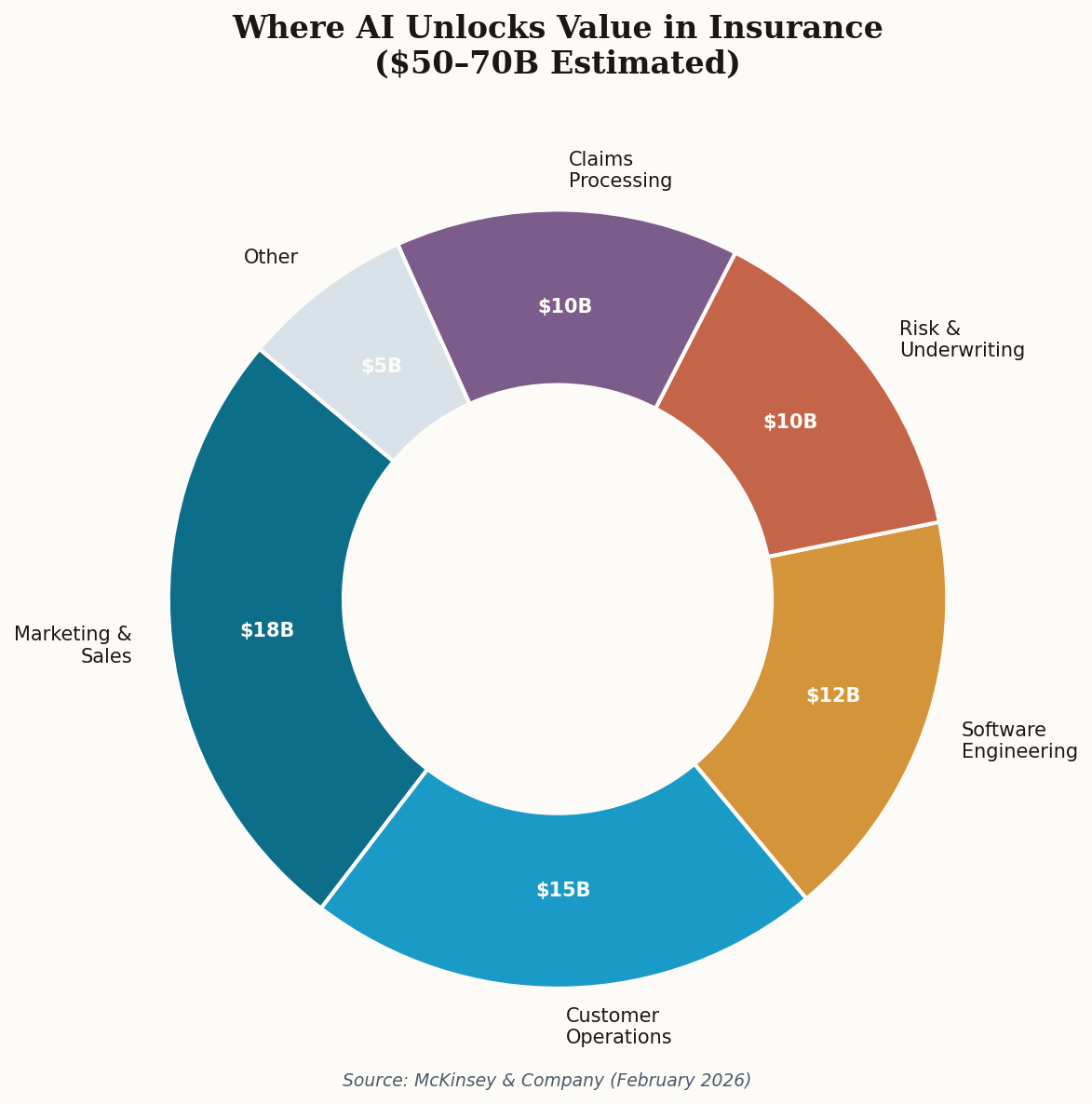
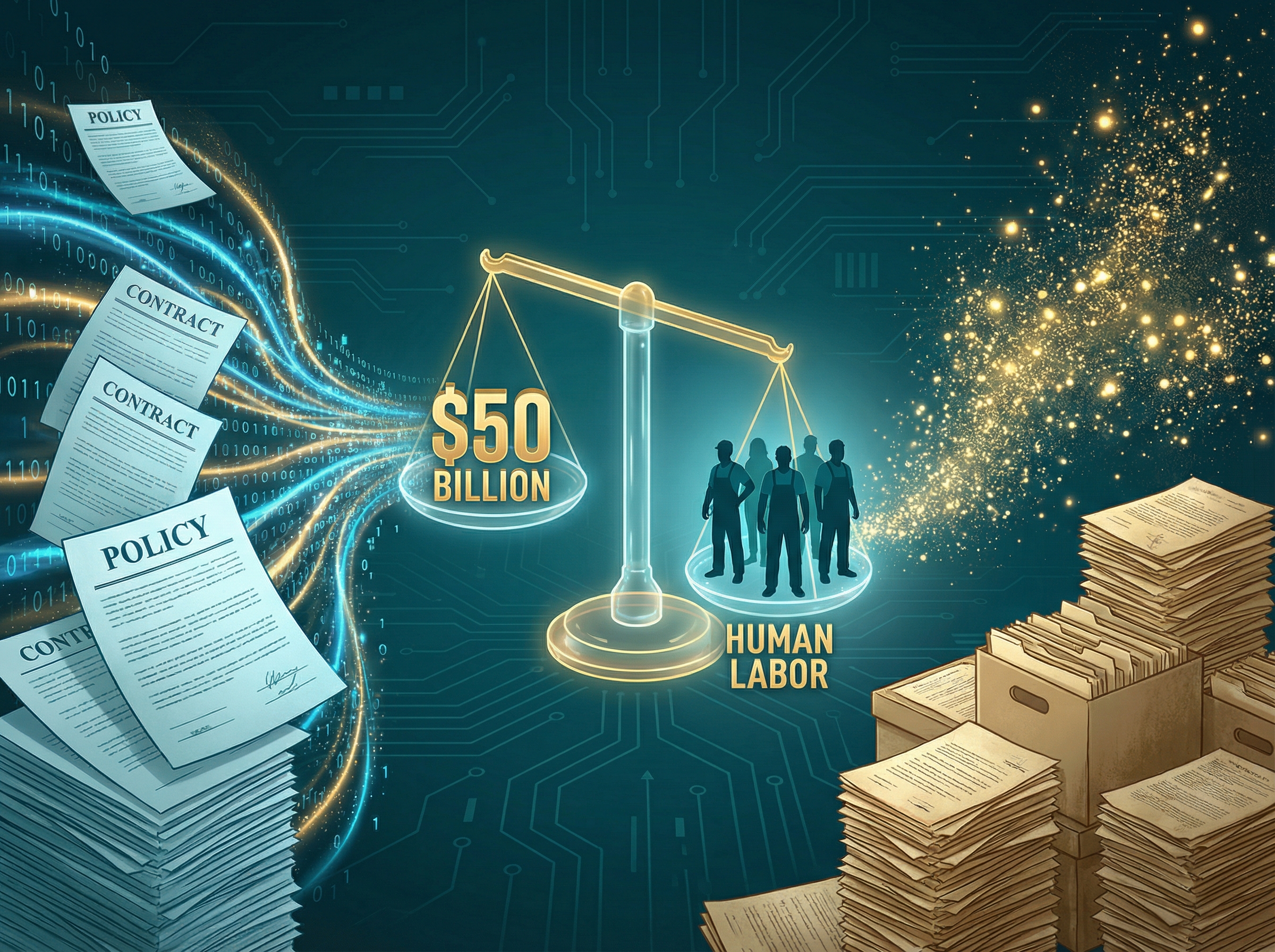
McKinsey has never met a transformation it couldn't quantify. This week's contribution: generative AI will unlock between $50 billion and $70 billion in value for the insurance industry. The primary impacted areas? Marketing, sales, customer operations, and software engineering. If you work in insurance and your job involves writing, reviewing, or processing anything, this report is about you.

Donut chart showing McKinsey's estimated AI value distribution across insurance functions: Marketing and Sales $18B, Customer Operations $15B, Software Engineering $12B, Risk and Underwriting $10B, Claims Processing $10B, Other $5B
McKinsey estimates AI will generate $50–70B in value across insurance, with marketing/sales and customer operations capturing the largest share. Source: McKinsey & Company (Feb 2026).

The report's real significance is in the language shift. McKinsey isn't advising firms to "explore" or "experiment." The recommendation is to move from pilot to scale. That's consulting-speak for "the decision has been made, you're just behind." When the industry's most influential advisory firm tells every insurer in the world to accelerate AI deployment, the job displacement timeline compresses from "eventually" to "actively."

Worth noting: $50–70 billion in "value" doesn't mean $50–70 billion in new revenue. Most of it comes from doing the same work with fewer people. The polite term is "efficiency gains." The blunt term is payroll reduction.

Amazon corporate headquarters with office chairs being wheeled out, dramatic sunset lighting
04

Amazon's 16,000-Person Restructuring Is a Template, Not an Anomaly

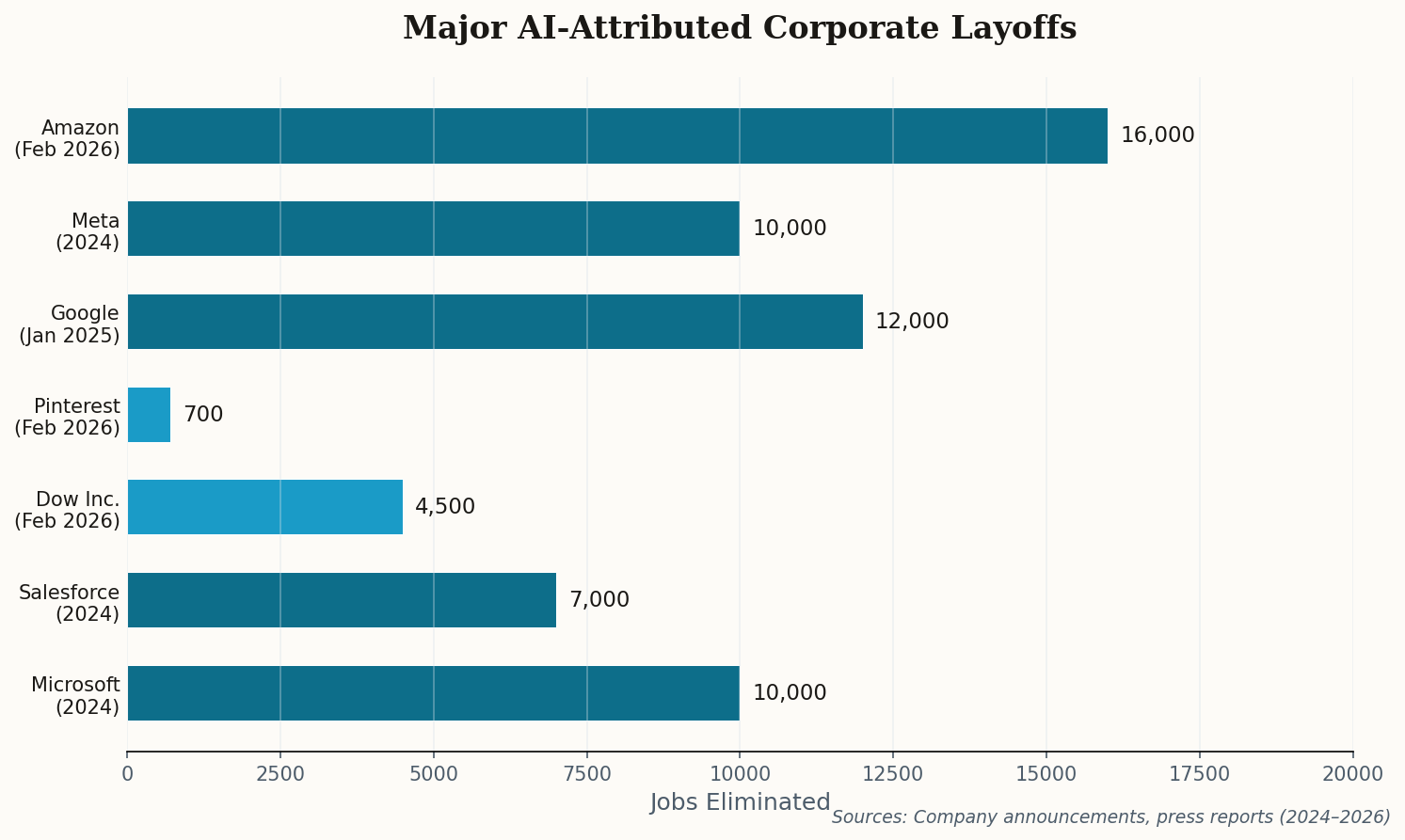
Amazon is eliminating approximately 16,000 corporate and tech-facing jobs globally. This is the second major round in three months, bringing recent totals to around 30,000. CEO Andy Jassy's internal memo was unusually direct: "We are flattening our structure to move faster and doubling down on our biggest growth areas, specifically generative AI."

Horizontal bar chart showing major AI-attributed corporate layoffs: Amazon 16,000, Google 12,000, Meta 10,000, Microsoft 10,000, Salesforce 7,000, Dow Inc 4,500, Pinterest 700
The scale of AI-attributed corporate layoffs across major companies, 2024–2026. Amazon's February 2026 cut alone exceeds Pinterest's entire workforce. Sources: Company announcements.

What's notable here isn't the size—Amazon cuts people regularly. It's the framing. Previous rounds were described as "right-sizing" or "post-pandemic corrections." This one explicitly names AI as the reason. The restructuring is "aimed at flattening management and reallocating resources toward artificial intelligence priorities." They're not hiding it anymore. They don't need to.

The template is now clear: flatten the middle, automate the routine, and redirect the savings to AI infrastructure. Every Fortune 500 CEO read that memo. The ones who haven't started their own version are writing theirs now.

Corporate HR dashboard with frozen job listings and empty cubicles visible through glass walls
05

The Bellwether Is Bleeding: Workday Warns of Structural Hiring Decline

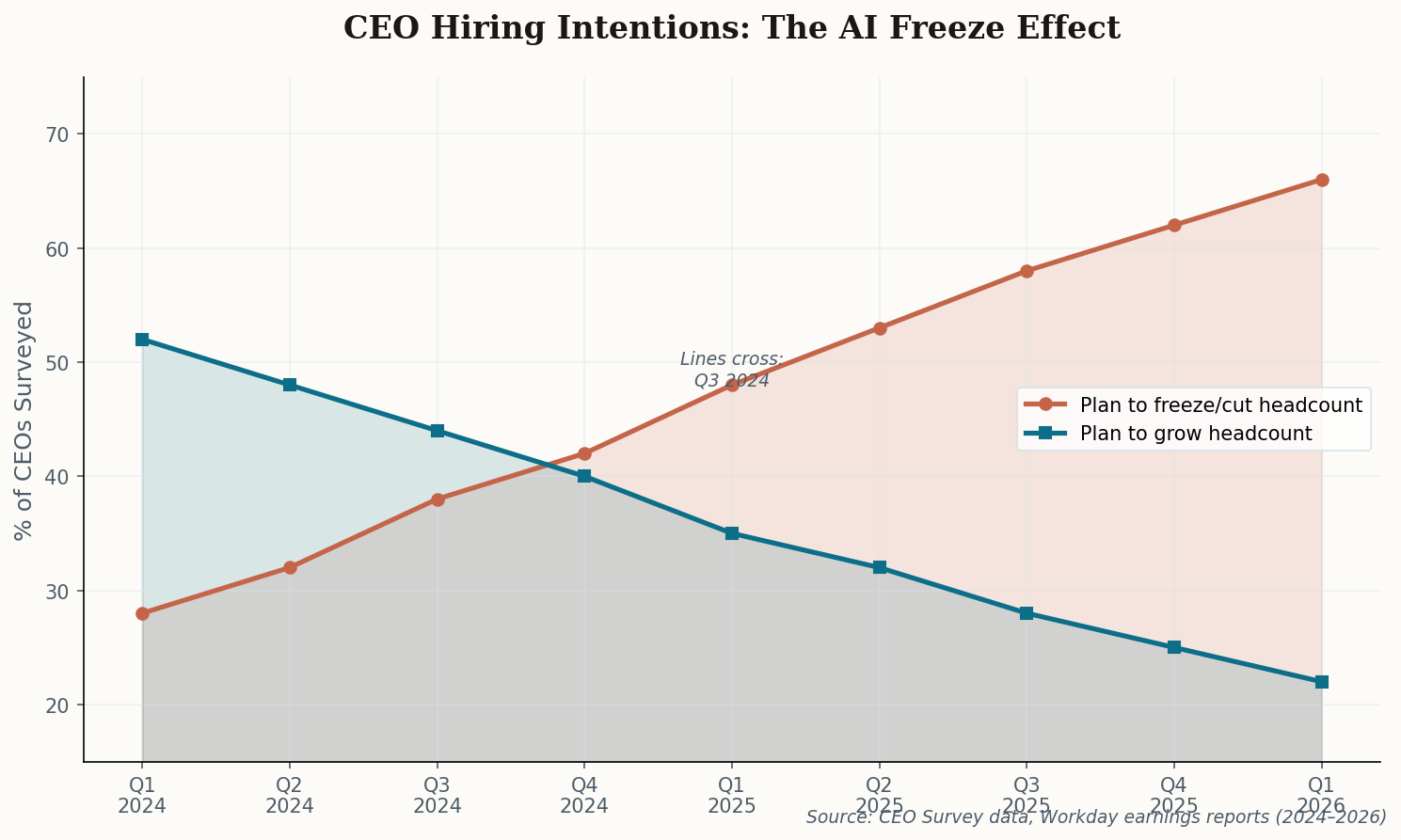
If you want to know whether companies are actually hiring, don't ask the companies. Ask Workday. The HR software giant processes hiring for a significant chunk of the Fortune 500, and their latest report is bleak: 66% of CEOs plan to cut or freeze staff levels in 2026 due to AI efficiency gains. Workday itself described this as an "existential threat" to its own growth model.

Line chart showing CEO hiring intentions from Q1 2024 to Q1 2026: freeze/cut intentions rising from 28% to 66%, while growth intentions fall from 52% to 22%
CEO hiring intentions have inverted since early 2024. The lines crossed in Q3 2024 and continue diverging. Source: CEO survey data, Workday earnings reports (2024–2026).

Think about what that number means. Two-thirds of chief executives are planning to maintain or shrink their workforce, not because of recession, not because of a demand shock, but because they believe AI can absorb the work. This is a structural shift in hiring philosophy, not a cyclical dip. The job market isn't weak—it's being deliberately compressed.

The irony runs deep. Workday's entire business exists because companies need software to manage large, complex workforces. If those workforces get permanently smaller, Workday's addressable market shrinks alongside them. The canary is choking on the same gas it's supposed to detect.

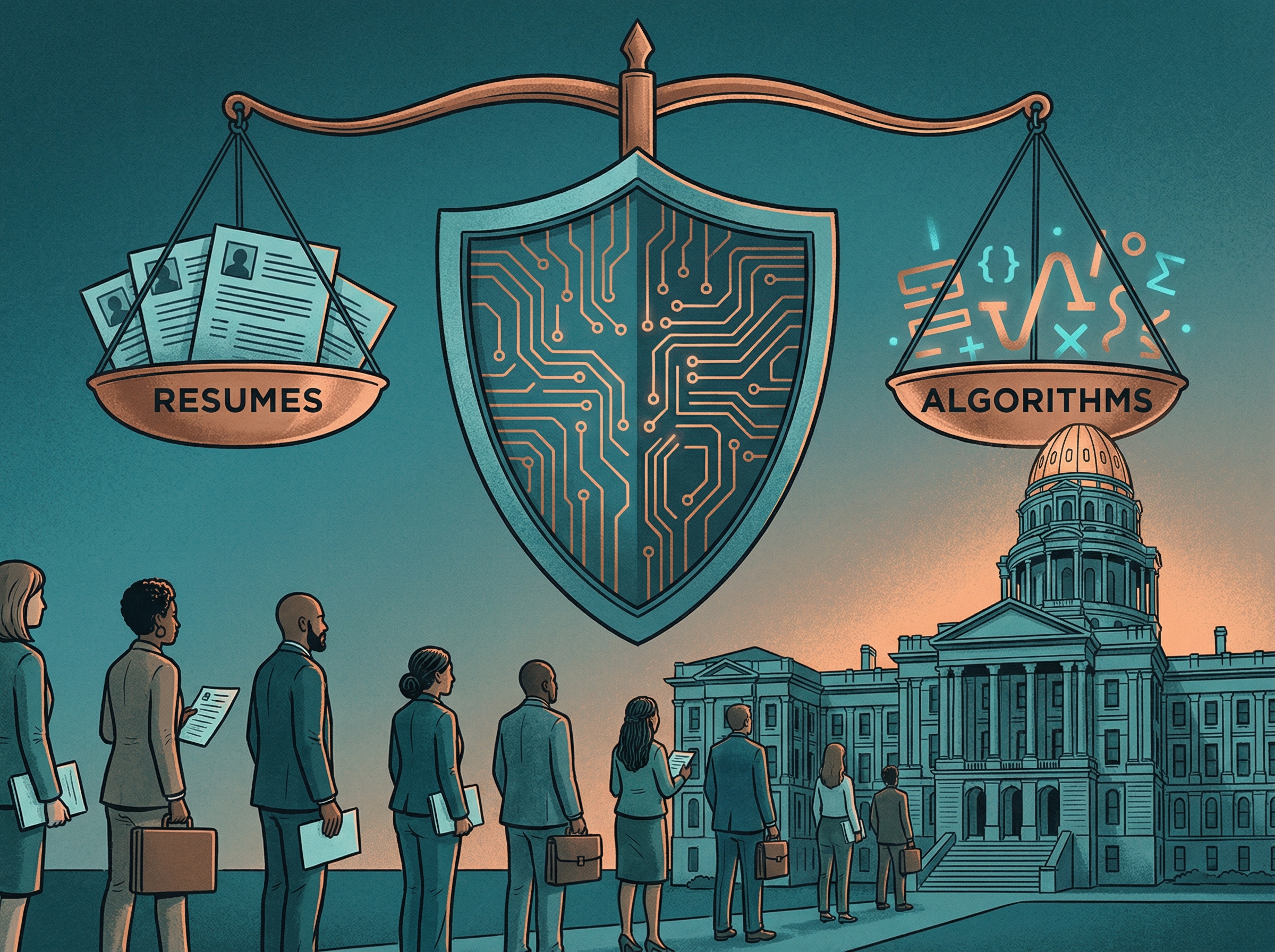
Colorado state capitol building with a massive shield bearing AI circuit board patterns hovering over job applicants
06

Colorado Draws the First Line: AI Hiring Gets a Rulebook

While the private sector races to replace workers with AI, one state has decided to regulate how AI replaces the replacements. Colorado's new law governing AI in hiring and employment decisions took effect on February 1, making it the first state to enforce strict rules on algorithmic decision-making in HR. Employers must now notify candidates when AI is used in screening, and conduct regular bias audits of their systems.

The law covers "high-risk" AI systems used for hiring, promotion, and performance evaluation. That's a broad net. If your company uses HireVue for video screening, Workday's AI for resume filtering, or any automated tool to rank candidates, you're now subject to disclosure and audit requirements in Colorado.

Here's the strategic implication: because the federal government hasn't acted, Colorado is setting the de facto national standard. Any employer hiring remotely (which is most of them now) needs to comply if a single applicant is in Colorado. The EU's AI Act took a similar path—one jurisdiction's rules became everyone's floor. The companies building AI hiring tools just got their first meaningful constraint. Whether it's enough to matter is another question entirely.

The Three-Year Window

The question isn't whether AI will reshape white-collar work—the layoff numbers already answer that. The real question is whether the next three years produce a gradual adaptation or a sudden cliff. Two-thirds of CEOs are planning to hire fewer people. The productivity tools are shipping. The regulatory framework is barely a sketch. If you're in a role that involves processing, reviewing, or summarizing information, the clock isn't starting. It started two years ago. The only variable left is how fast your industry moves—and this week's evidence suggests: faster than most of us expected.