Design & AI

Every Deck Looks the Same Now

AI gave everyone beautiful slides. Now the only thing that matters is whether you have something to say.

Listen
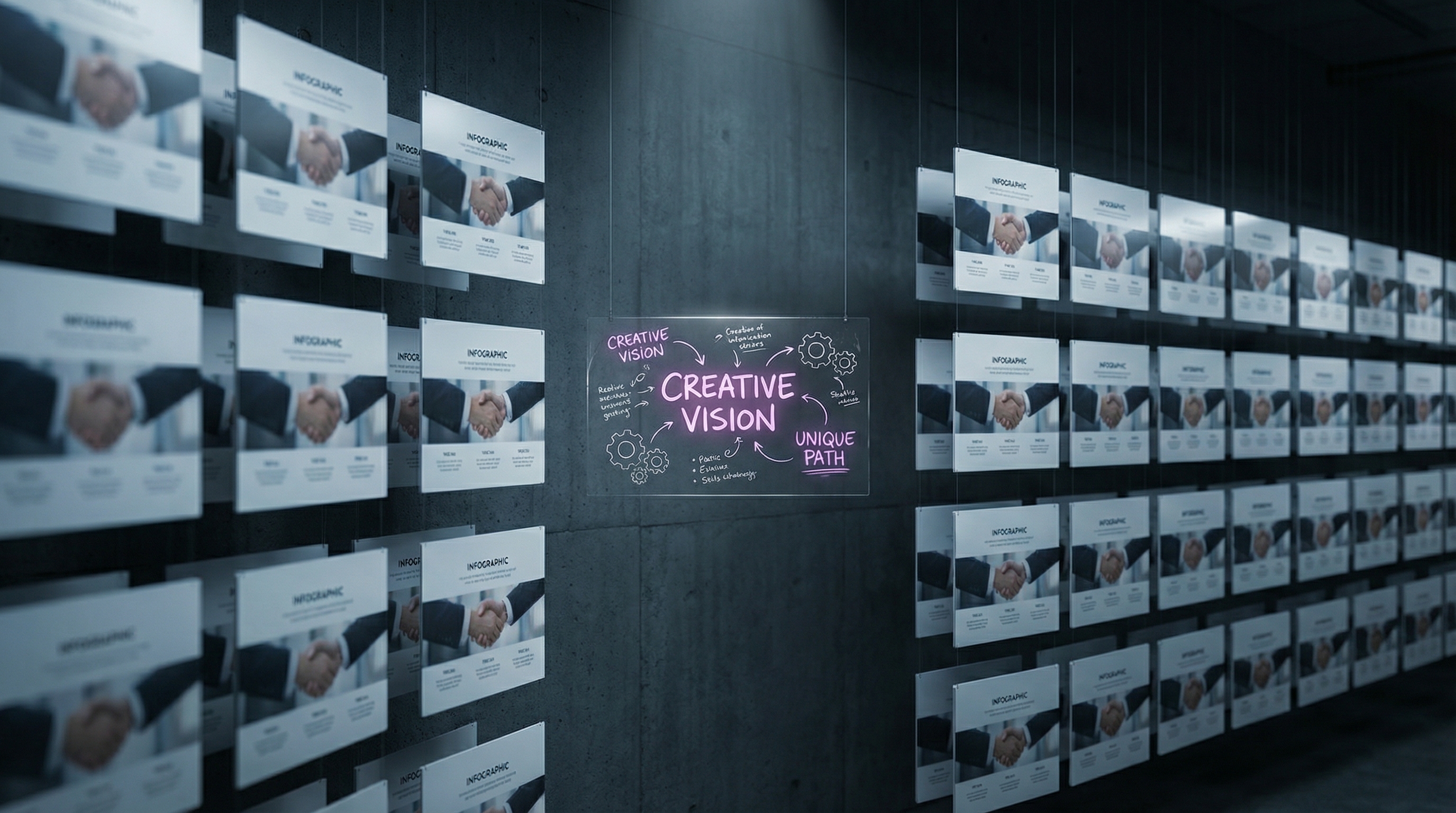
Hundreds of identical, polished presentation slides floating in space — all gorgeous, all interchangeable — with one slide breaking the pattern through handwritten annotations that glow with creative energy
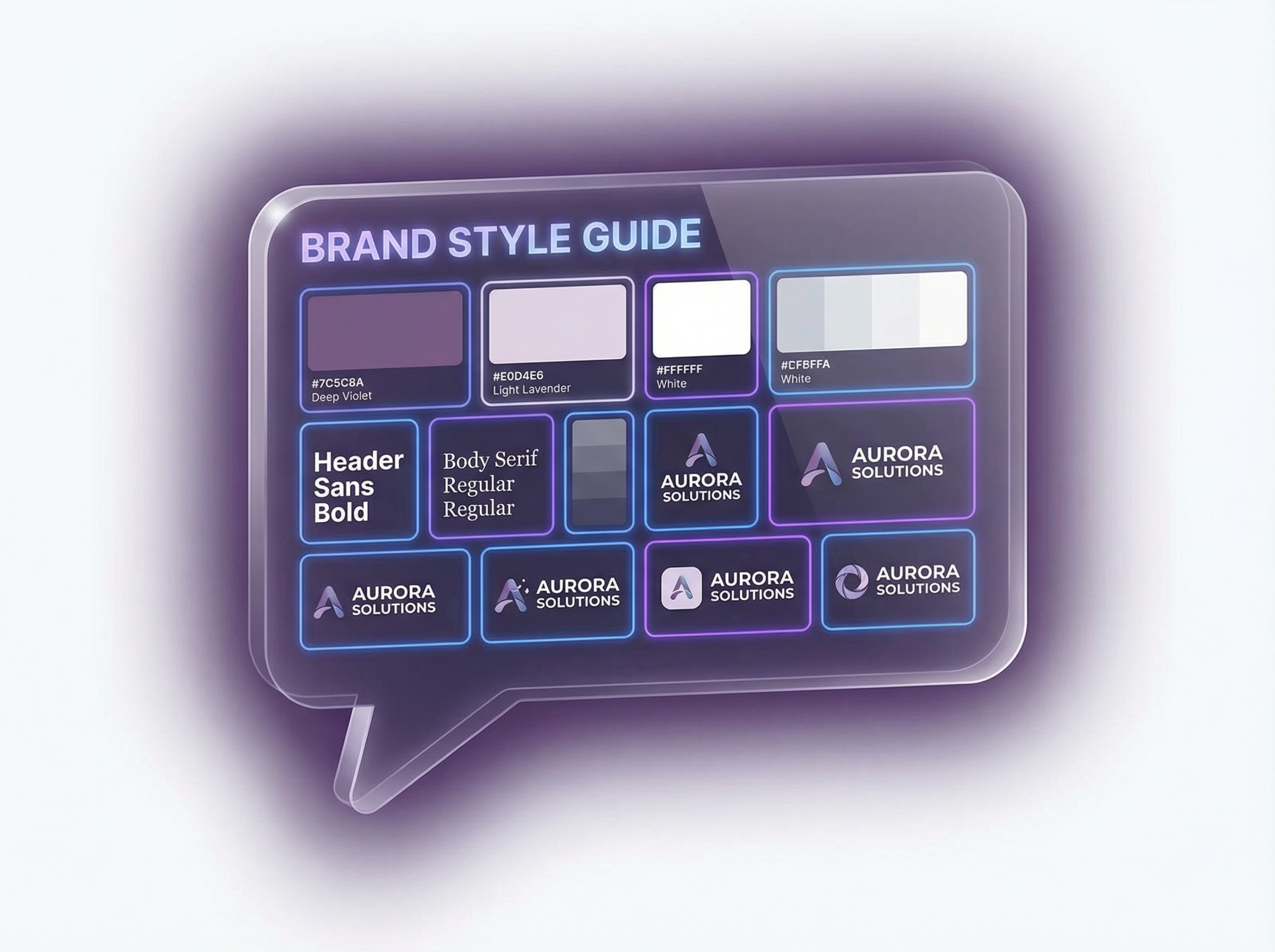
A corporate brand style guide floating as a hologram inside a chat bubble, with color swatches and typography specimens arranged like a periodic table of visual identity
01

Canva Plugs Brand DNA Straight Into ChatGPT

Here's a sentence that would have been science fiction two years ago: Canva now lets you generate presentation slides inside ChatGPT that automatically comply with your corporate brand guidelines. Your fonts. Your colors. Your logo lockups. All enforced by the AI before you ever see the output.

The "rogue deck" — that off-brand monstrosity a sales rep cobbled together in a hotel room at midnight — is being killed not by better training or stricter brand police, but by making non-compliance technically impossible. Canva's Brand Kits integration treats visual identity as a constraint layer baked into the generation pipeline, not a review step bolted onto the end.

This is the logical endgame of design commodification. When the AI handles brand compliance and visual polish, the only variable left is what you're actually saying. The deck that closes the deal won't be the prettiest one anymore — it'll be the one with the clearest argument. Canva just made the surface-level differentiator disappear for everyone paying $13 a month.


A presentation slide held within elegant guardrails, contrasted with chaotic, broken slide elements scattering in disarray outside the rails
02

Beautiful.ai's Bet: Constraints Beat Freedom

Beautiful.ai published a strategic guide this week that reads less like product documentation and more like a declaration of war against Microsoft Copilot. Their core thesis is devastatingly quotable: "Generative AI without design constraints just helps you make ugly slides faster."

The argument is a direct inversion of the big-tech playbook. While Microsoft and Google offer open-ended generation — "make me a slide about Q3 results" and pray for the best — Beautiful.ai is doubling down on what they call "Design Guardrails." Their Smart Slide technology constrains what the AI can produce, enforcing layout rules, whitespace ratios, and typographic hierarchies that can't be broken by a bad prompt.

The irony is thick: the company literally named "Beautiful" is now arguing that beauty itself is table stakes. Their real moat isn't aesthetics — it's the opinionated structure that prevents users from creating visual chaos. They're selling discipline, not decoration.

It's a compelling position, but it also reveals the existential anxiety of every indie presentation tool. When Microsoft can ship "beautiful enough" to 400 million Office users for free, your only play is to argue that "beautiful" was never the point. Beautiful.ai is essentially rebranding itself as a narrative structure tool that happens to output slides.

Two hands working on a presentation — one human hand sketching ideas, one translucent AI hand rearranging slide elements, with a Review Changes dialog floating between them
03

PowerPoint's AI Designer Now Works While You Don't

Microsoft's Copilot for PowerPoint just crossed a meaningful line. The new "Agent Mode," rolling out to general availability this month, doesn't wait for you to ask it questions. It actively edits, rearranges, and refines your slides in the background while you're working on something else — or not working at all.

Think about what that means. The AI isn't a chatbot you poke with prompts. It's an autonomous design assistant that watches your deck evolve, notices when a slide is too text-heavy, and offers to restructure it. A "Review Changes" transparency layer lets you accept or reject its suggestions, but the initiative is no longer yours. The AI is proposing; you're approving.

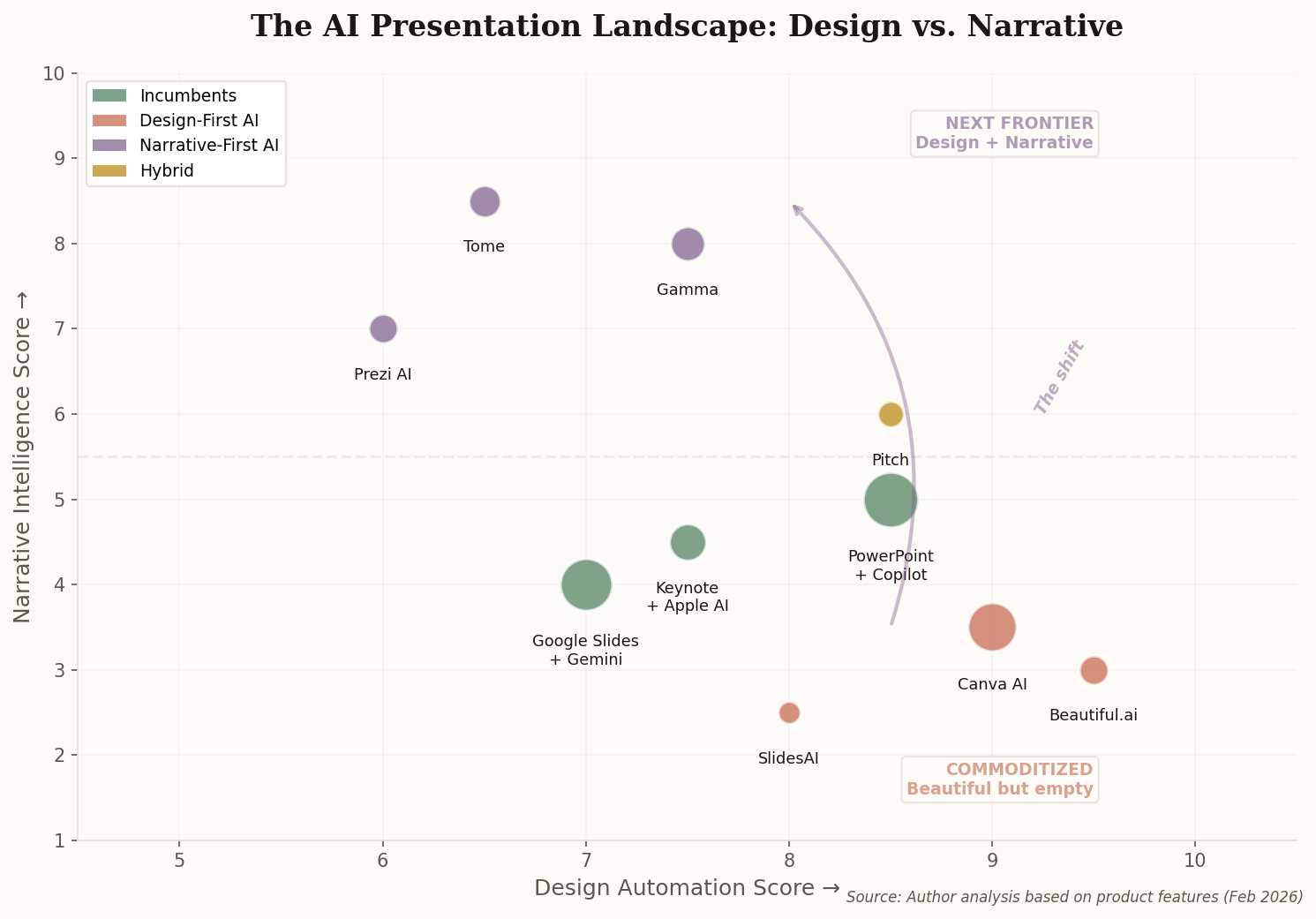
Bubble chart showing AI presentation tool competitive landscape, with axes for Design Commodification Level and Narrative Intelligence, showing Microsoft Copilot, Canva, Gamma, Beautiful.ai, Pitch, Tome, Google Slides AI, and Slidebean positioned across four quadrants
AI presentation tool landscape: the value is shifting from design commodification toward narrative intelligence. Bubble size approximates relative market presence.

This is the moment where "AI-generated slides" stops being a feature and starts being the default behavior. When the dominant enterprise tool makes autonomous design assistance the norm, every presentation created in PowerPoint becomes, at minimum, AI-polished. The floor of visual quality just rose for 400 million users. And when the floor rises for everyone, the ceiling — your actual ideas — is all that's left to compete on.

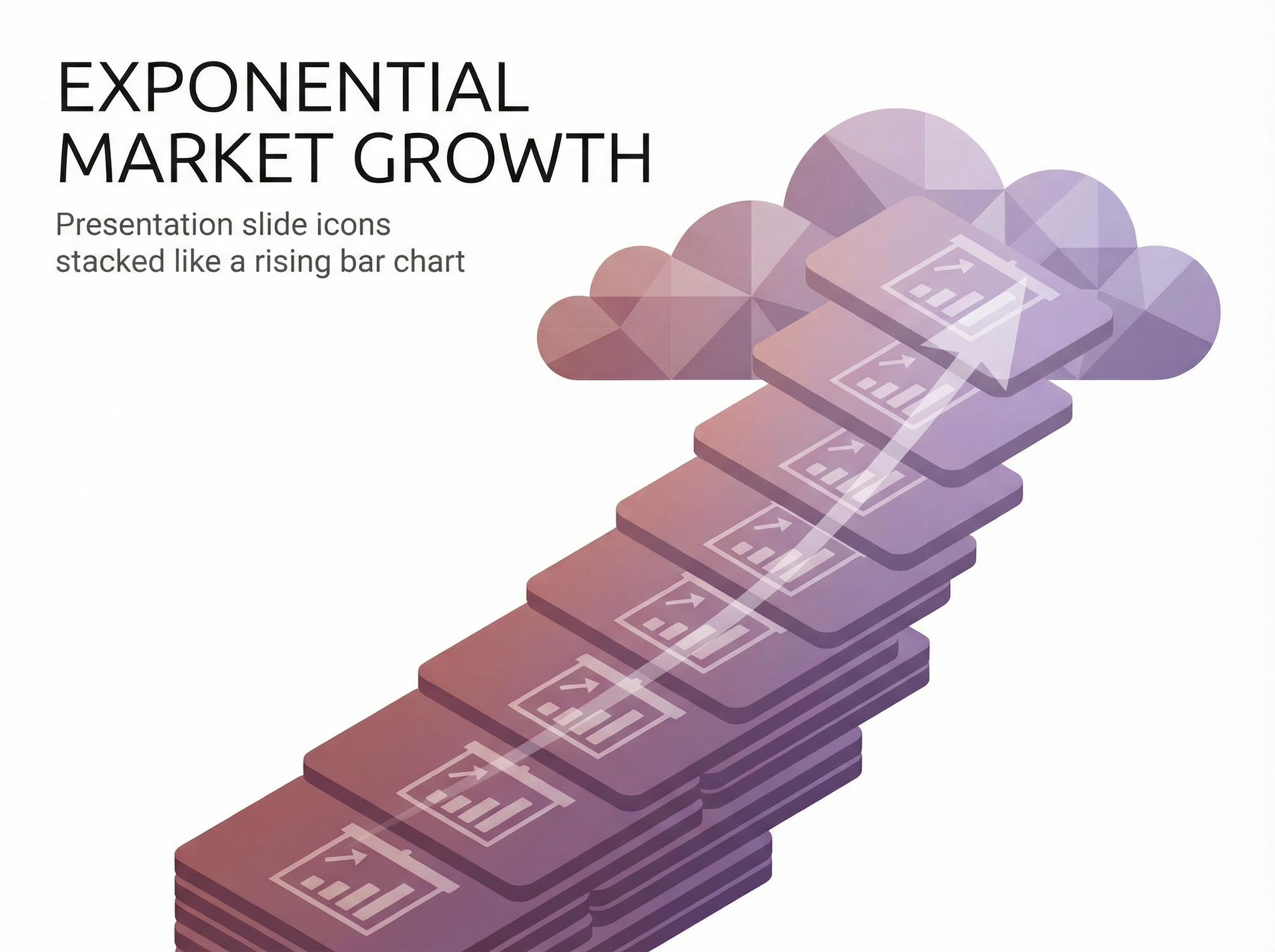
Abstract visualization of exponential market growth with presentation slide icons stacked like a rising bar chart reaching into clouds
04

$1.68 Billion and Counting: The Deck Factory Is Booming

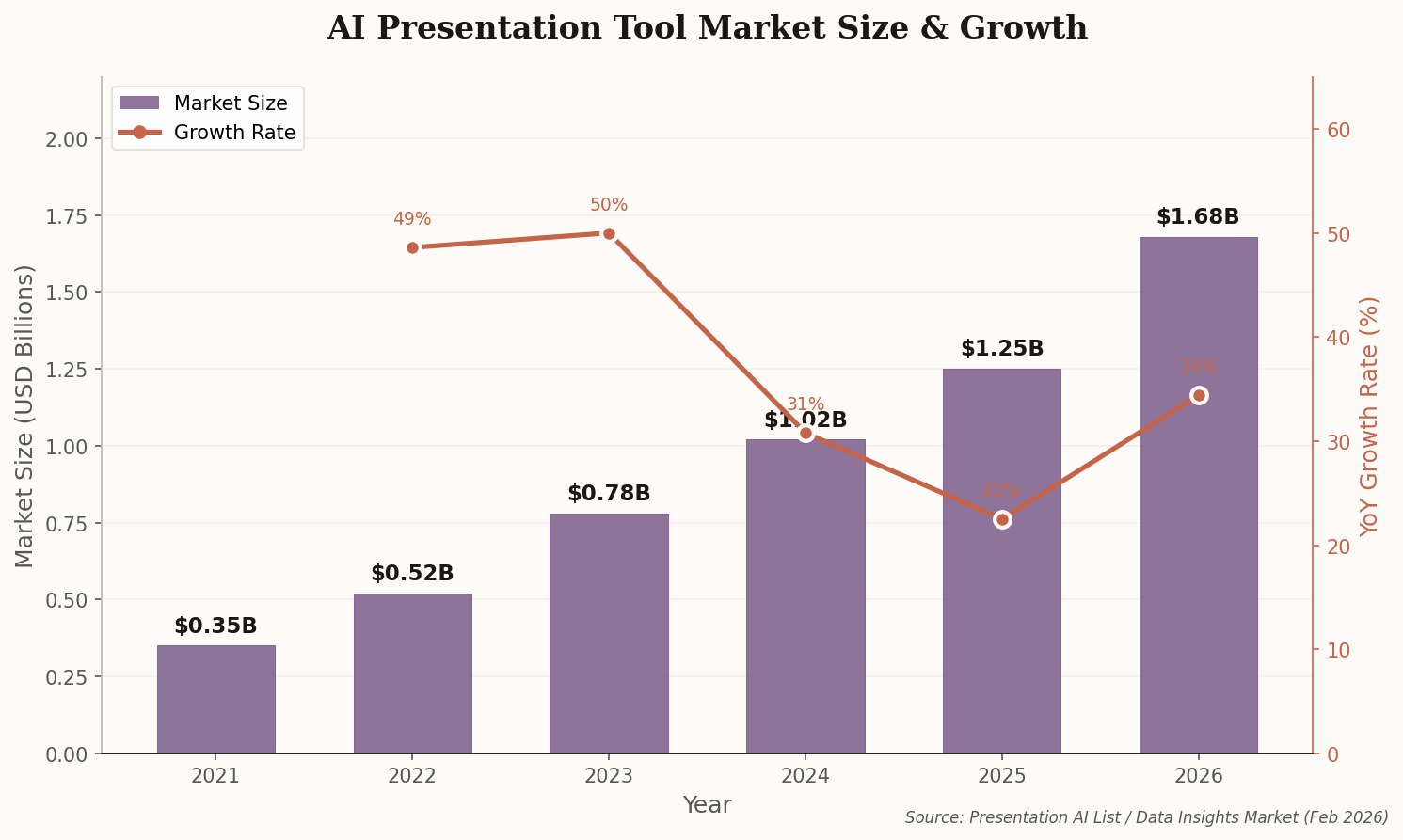
Let's put some numbers on the commodification. The global AI presentation software market hit $1.25 billion in 2025 and is projected to reach $1.68 billion this year — a 34% year-over-year growth rate that puts it squarely in "every enterprise is buying this" territory. By 2033, analysts expect the market to crack $10 billion.

Line chart showing AI presentation software market growth from $0.68B in 2023 to projected $10B in 2033, with 2026 highlighted at $1.68B with 34% year-over-year growth
AI presentation software market trajectory. The 34% YoY growth in 2026 marks the transition from early-adopter novelty to standard enterprise procurement. Source: Presentation AI List (Jan 2026).

The report's most telling line: "The ability to generate a 'client-ready' deck is no longer a skill; it is a software feature." Read that again. The multi-billion-dollar presentation design industry — the freelance designers, the pitch deck consultants, the internal creative teams who spent their days kerning titles and aligning boxes — just got told their core competency is a checkbox in a SaaS subscription.

But the report buries the lede. If generating beautiful slides is a commodity, what's the non-commodity? It's the thinking that goes into the narrative. The strategic arc. The argument structure. The ability to look at 40 data points and decide which 3 actually matter for this specific audience. No AI tool has commoditized that yet — and the market data suggests no one is even trying.

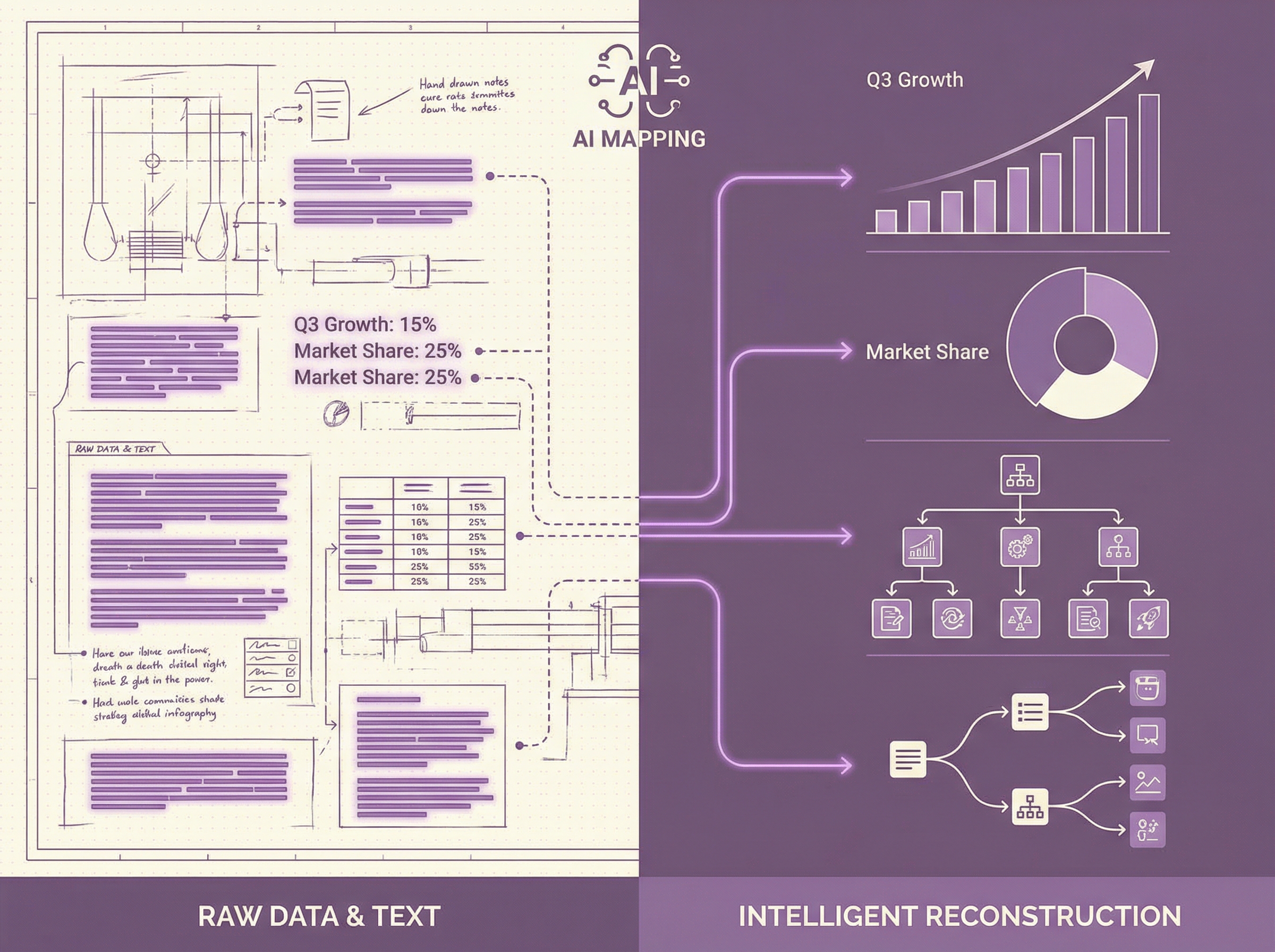
A presentation being intelligently deconstructed and reconstructed, with raw text transforming into charts, hierarchies, and visual flows through AI mapping
05

Pitch Bets the Farm on "Presentation Logic"

Pitch just released the most intellectually honest feature in the AI presentation space. Their new "Smart Layouts" system doesn't just make slides pretty — it analyzes the content type of what you're presenting and recommends specific visualization formats. A Q3 financial update gets a different visual grammar than a product launch deck. A competitive analysis gets different layout logic than a team all-hands.

Pair that with their "Contextual Summarization" engine, which can take a dense 20-page document and intelligently distribute it across slides with appropriate hierarchy — not just truncating paragraphs, but actually restructuring the argument for a presentation context — and you start to see what "narrative intelligence" could actually look like as a product feature.

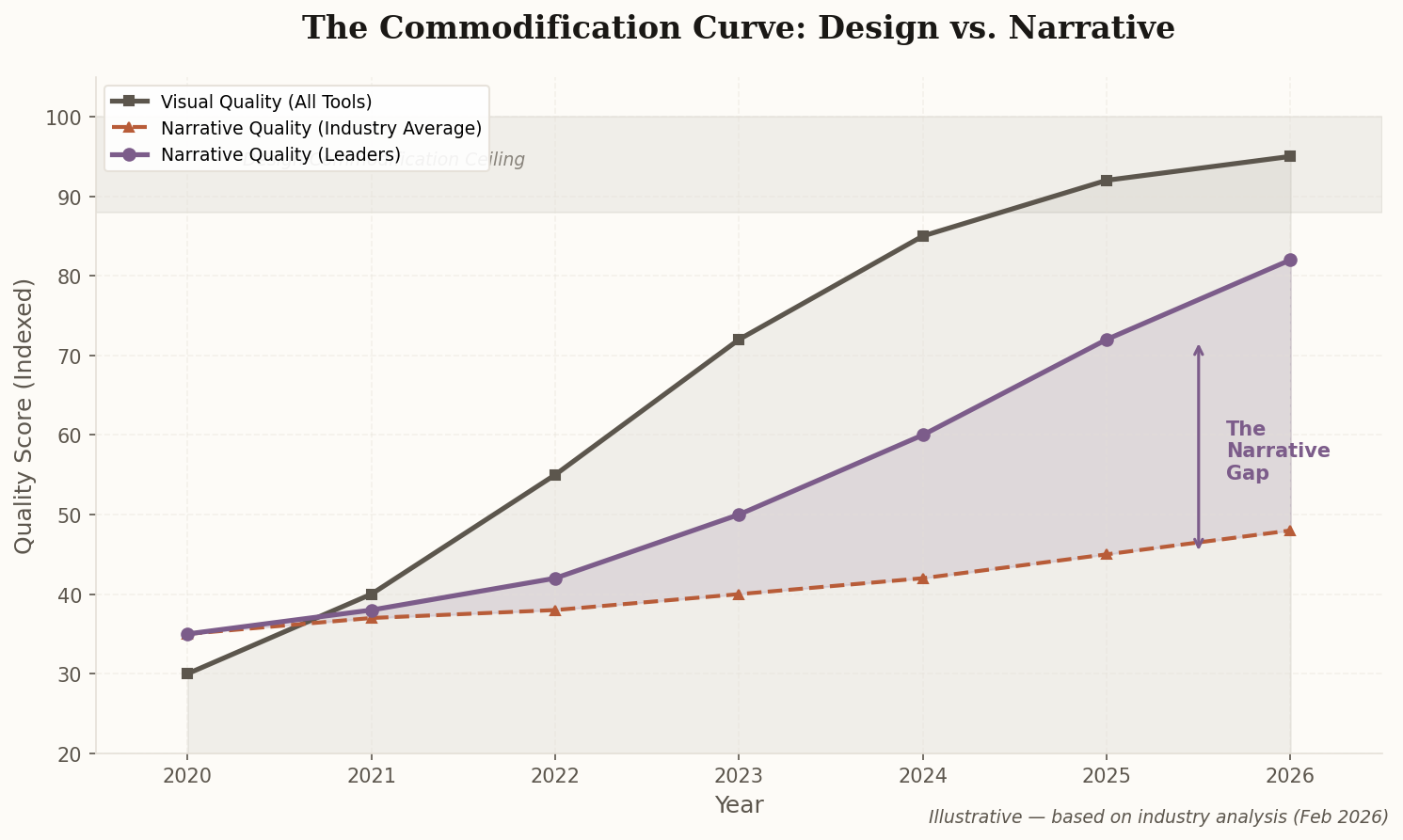
Dual line chart showing the divergence between visual quality (plateauing near 95%) and narrative quality (gap between industry average at 48% and leaders at 82%), illustrating the 'Narrative Gap' opportunity
The commodification curve: visual quality has plateaued while narrative quality remains widely divergent. The gap between average tools and leaders represents the next competitive frontier.

Here's the bet Pitch is making: in a world where every tool can produce visually stunning slides, the winning tool will be the one that helps you think better about your presentation, not just design it better. It's a harder problem to solve, a harder product to market, and frankly a harder sell to executives who still think "make it look like Apple" is a meaningful creative brief. But it might be the only defensible position left.

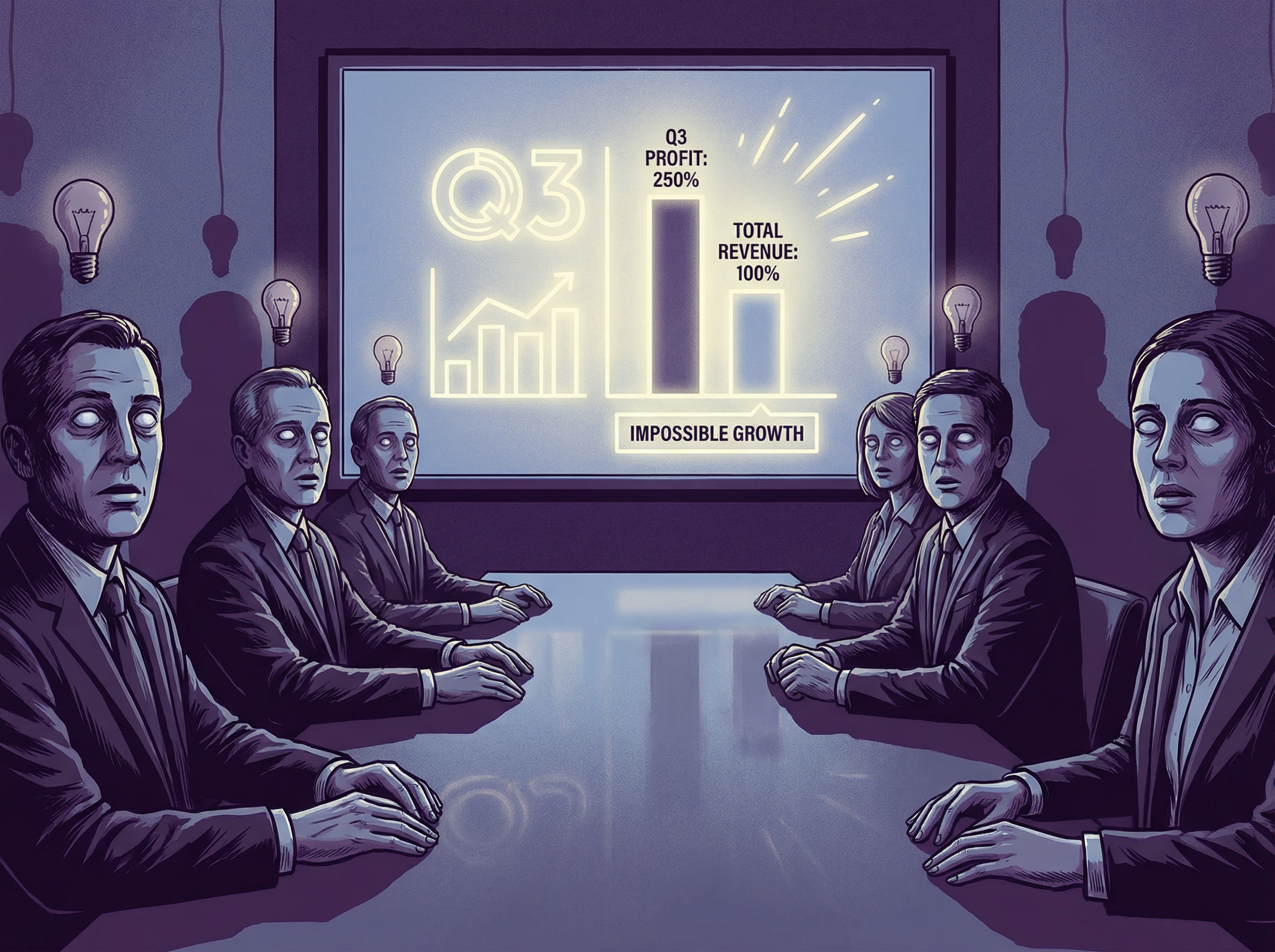
A boardroom where executives stare at a dazzlingly beautiful presentation slide, hypnotized by its polish while a chart with impossible numbers goes unnoticed
06

The Boardroom Is Hypnotized by Its Own Slides

A widely-shared critique this week coined a term that deserves to stick: "Review Atrophy." The argument is simple and alarming. When AI generates slides that look finished — polished fonts, professional imagery, clean layouts — people skip the critical thinking step. The draft looks like a final product, so the brain treats it as one.

The piece cites specific instances of hallucinated chart data making it into final board presentations because the visual polish masked the data error. Nobody questioned the numbers because the slide looked like it came from McKinsey. It didn't. It came from a prompt that said "make a chart showing our market share growth" and the AI obliged with beautifully rendered fiction.

"When the draft looks like a final product, critical thinking shuts down. We are seeing a crisis of 'Review Atrophy' in the boardroom." This might be the most important sentence written about AI tools this year.

This is the dark mirror of the commodification thesis. Yes, everyone can make beautiful slides now. But beauty has always been a proxy for effort, and effort has always been a proxy for credibility. When the effort disappears but the beauty remains, the credibility signal breaks. We're entering an era where the most dangerous presentation isn't the ugly one from the intern — it's the gorgeous one from the AI that nobody bothered to fact-check.

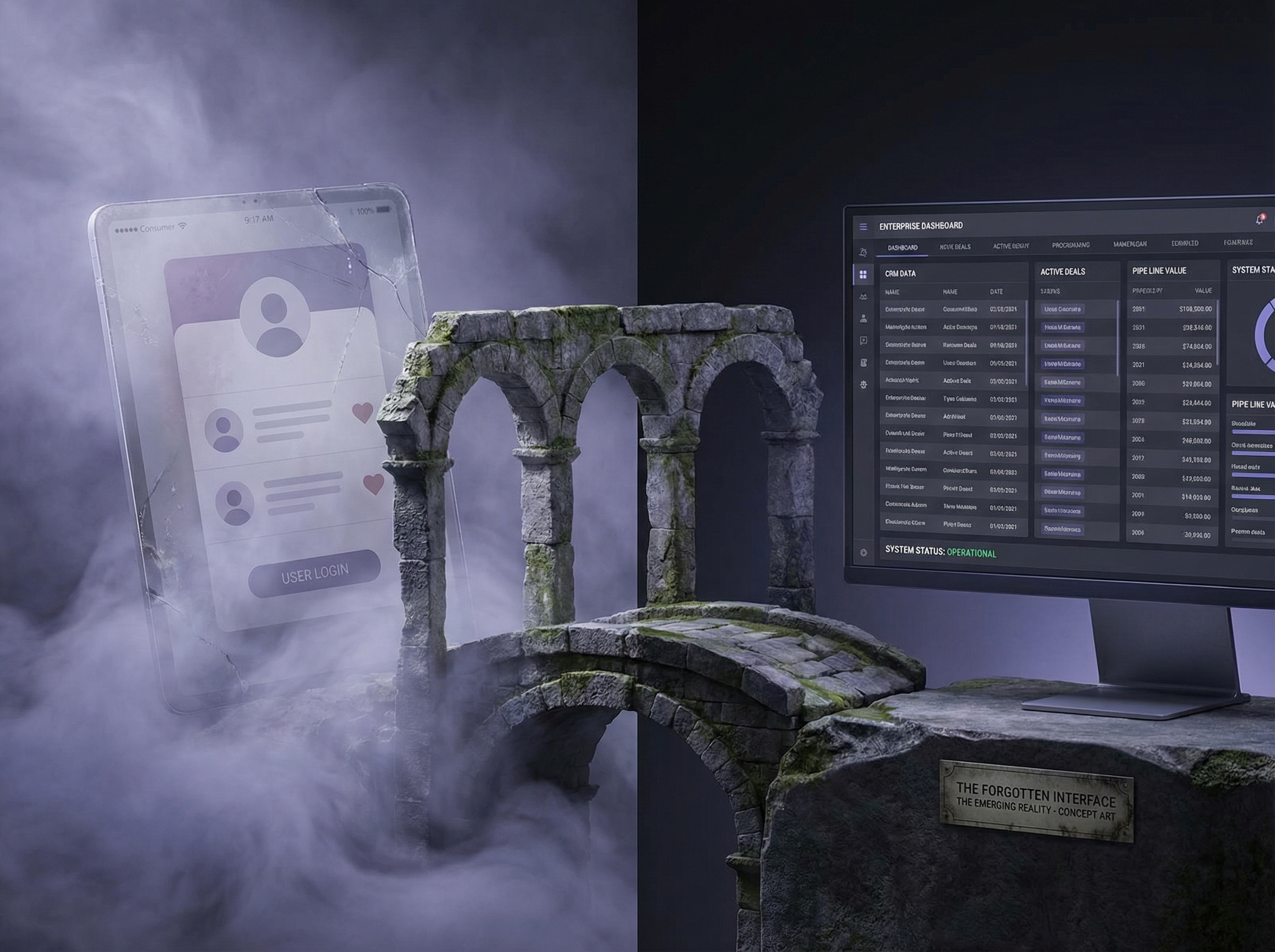
A beautiful but abandoned consumer app fading into mist on the left, while a utilitarian enterprise dashboard with CRM data emerges from shadow on the right
07

Tome's Eulogy for the Viral Slide App

Tome was supposed to be the future of storytelling. The AI-native presentation tool raised $81 million, went viral on Twitter, and promised to make everyone a visual communicator. This week, reports confirmed what many suspected: Tome has fully completed its pivot away from consumer slide generation. The storytelling app is now an enterprise "deal room" platform focused on CRM-integrated sales narratives.

The quote from the company is remarkably candid: "The era of the 'viral storytelling app' is over; the money is in automating the boring enterprise sales deck." There's an entire startup postmortem compressed into that sentence. Tome discovered what every consumer creative tool eventually discovers — individuals will share your product on social media but won't pay for it, while enterprises will pay handsomely for anything that shortens their sales cycle by 15 minutes.

But Tome's pivot also validates the narrative thesis in an unexpected way. They're not abandoning storytelling — they're moving it to the context where narrative quality has measurable revenue impact. A sales deck that tells a better story actually closes more deals. In the enterprise context, narrative isn't a nice-to-have; it's the conversion variable. Tome just followed the money to the place where the argument for narrative over aesthetics has a dollar sign attached.

The Argument Is the Product Now

Every tool in this newsletter — from Canva's brand enforcement to Microsoft's autonomous agent to Pitch's content-aware layouts — is converging on the same uncomfortable truth: visual quality is solved. It's a feature, not a skill. The presentation that wins the room in 2026 won't be the one with the best gradient or the cleanest grid. It'll be the one where someone sat down, looked at their audience, and figured out what to say and in what order. The AI can dress it up. But it still can't think for you. Not yet.