Cognition & Strategy

Your Brain's Oldest Rivalry

Chess and Go have consumed brilliant minds for millennia. But they don't consume the same parts of those minds. One game is a knife fight in a phone booth. The other is a land war on a continent. Here's what neuroscience, AI, and 4,000 years of history actually tell us about which is harder.

Listen
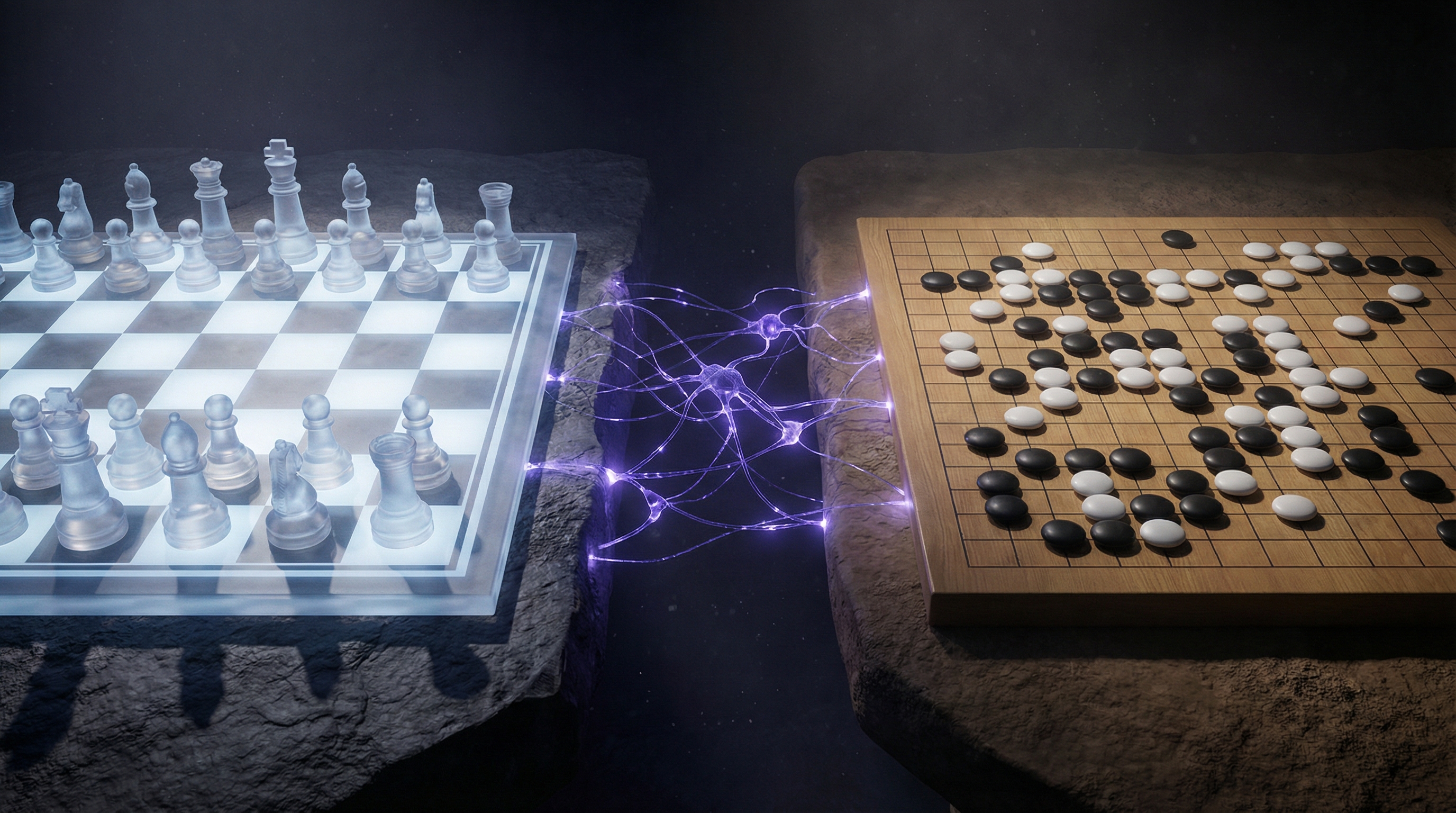
A dramatic split composition: a luminous chess board with crystalline pieces on the left meets a Go board with flowing stone patterns on the right, connected by glowing neural pathways in deep indigo
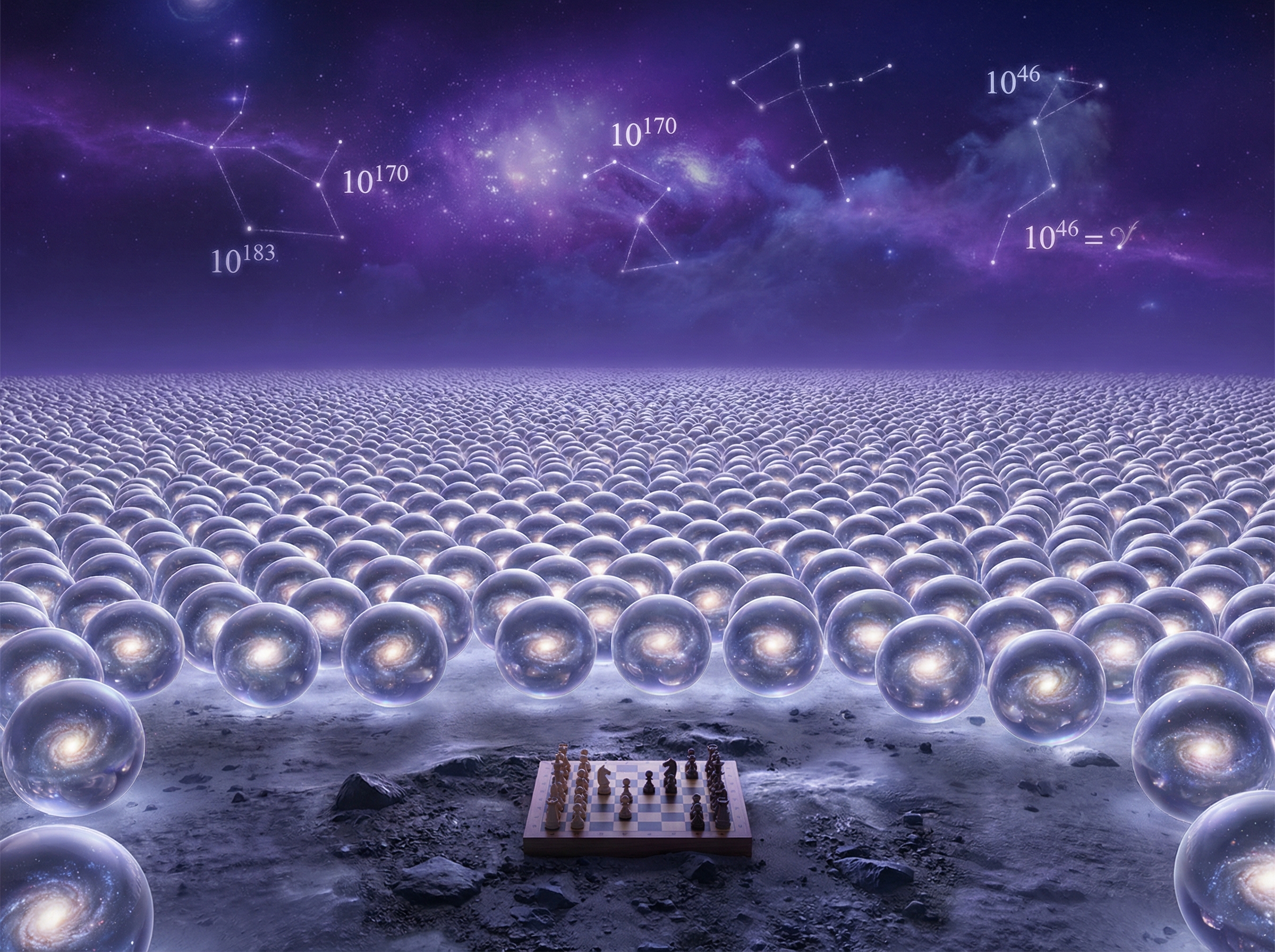
An infinite field of translucent Go stones stretching to the horizon, each containing a tiny galaxy, with a chess board sitting like a postage stamp in the foreground
01

The Numbers That Break Your Brain

Let's start with the math, because the math is absurd. Chess has roughly 1046 legal positions. That's a lot. It's more than the number of grains of sand on Earth. Go has 10170. That's not "more." That's a different universe of more. The number of legal Go positions exceeds the number of atoms in the observable universe—and then keeps going for another hundred orders of magnitude.

The branching factor tells the same story from a different angle. In any given chess position, you have about 35 legal moves to consider. In Go, you have about 250. And the game tree complexity—the total number of possible games from start to finish—is 10123 for chess versus 10360 for Go. DeepMind's David Silver put it memorably: "The search space in Go is vast... a number greater than the number of atoms in the universe."
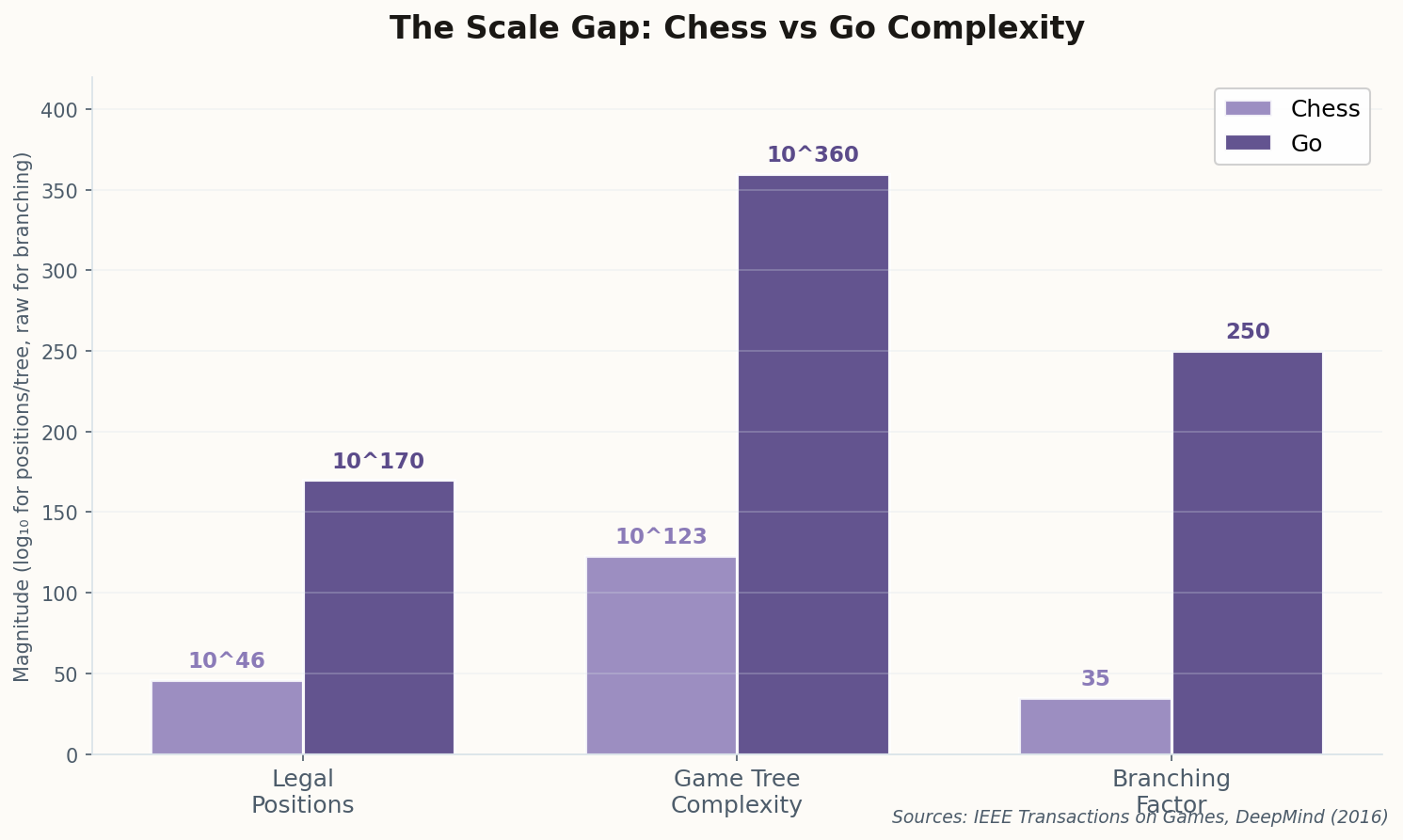
Bar chart comparing Chess vs Go across three dimensions: legal positions (10^46 vs 10^170), game tree complexity (10^123 vs 10^360), and branching factor (35 vs 250)
The scale gap between Chess and Go is not a difference of degree—it's a difference of kind. Data from IEEE Transactions on Games and DeepMind research.

But here's the critical judgment call: raw complexity doesn't automatically mean "harder for humans." Our brains don't brute-force search. We use heuristics, pattern recognition, and intuition. The question isn't how many positions exist—it's what kind of thinking each game demands. And that's where the story gets genuinely interesting.
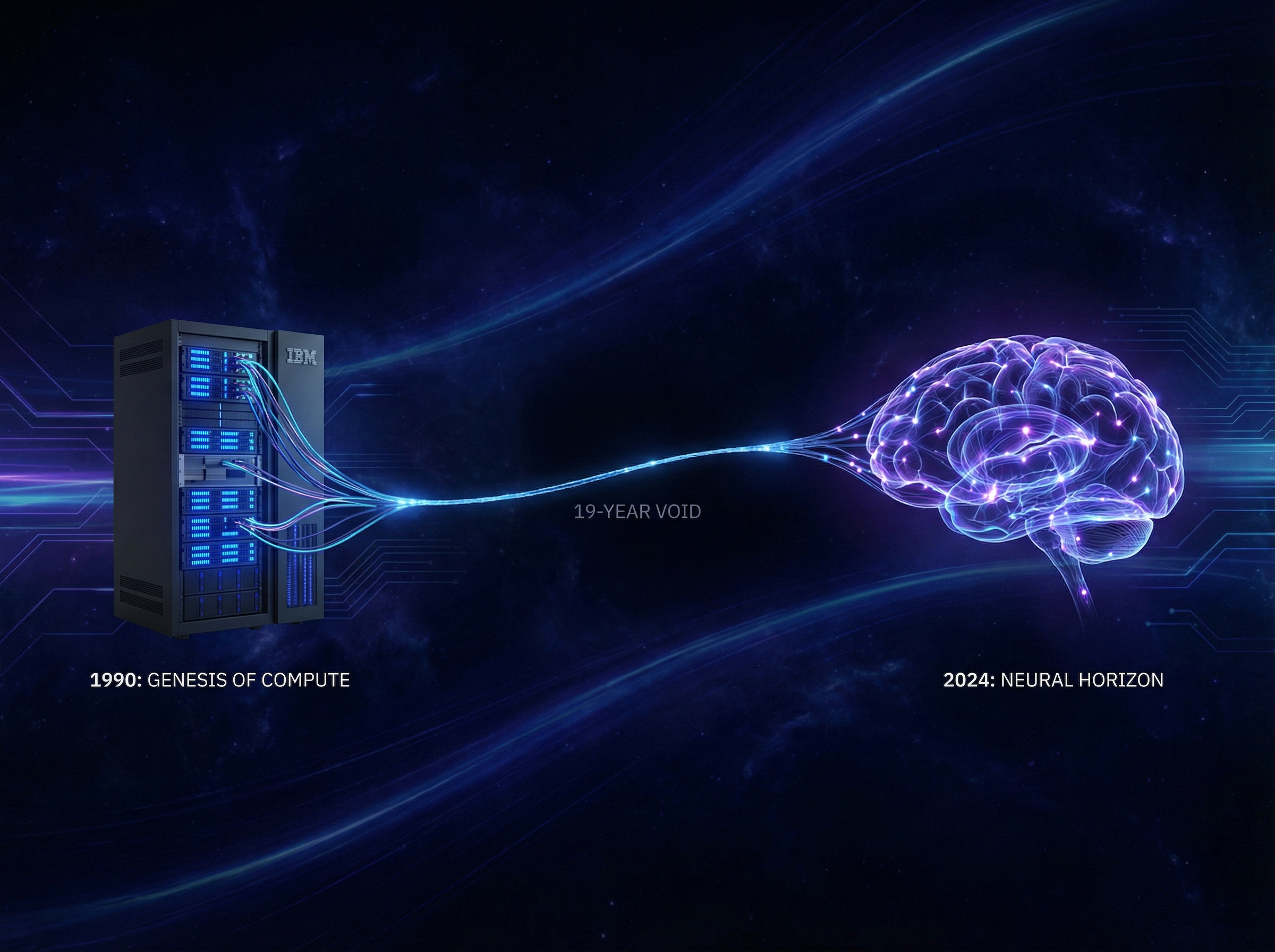
A timeline from 1990s IBM supercomputer glowing with blue LEDs to modern neural network visualization pulsing with purple light, bridged across 19 years of void
02

Nineteen Years of Machine Humility

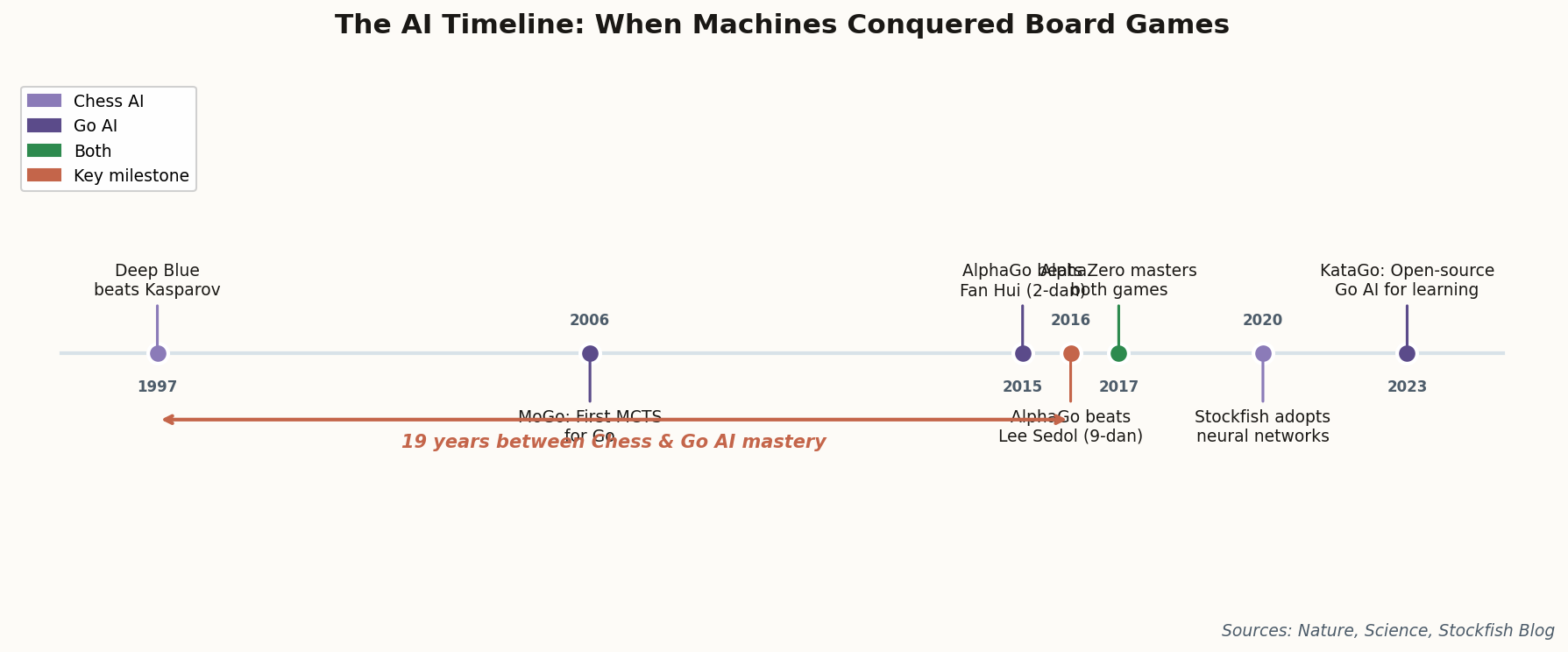
In 1997, IBM's Deep Blue defeated Garry Kasparov at chess by doing what computers do best: calculating 200 million positions per second, pruning bad branches, and grinding out advantages through sheer computational force. It was impressive, but conceptually simple. More hardware, more positions per second, better evaluation function. Done.

Go laughed at this approach for the next 19 years. Every attempt to apply brute-force search to Go failed catastrophically. The branching factor was too wide, the positions too ambiguous, the endgame too distant. The best Go programs in 2015 were still losing to strong amateurs. Then DeepMind's AlphaGo defeated Lee Sedol using deep neural networks and Monte Carlo Tree Search—an approach that doesn't calculate; it intuits.

Timeline showing key AI milestones in board games from 1997 to 2023, with a 19-year gap highlighted between Chess and Go AI mastery
The 19-year gap between Deep Blue (1997) and AlphaGo (2016) wasn't about compute power—it was about the fundamental inadequacy of calculation-based AI for Go.

Lee Sedol's reaction to AlphaGo's famous Move 37 in Game 2 says everything: "I thought AlphaGo was based on probability calculation and that it was merely a machine. But when I saw this move, I changed my mind. Surely, AlphaGo is creative." The machine couldn't beat Go by being a better calculator. It had to learn to think more like a human—and arguably, it ended up thinking in ways no human ever had.

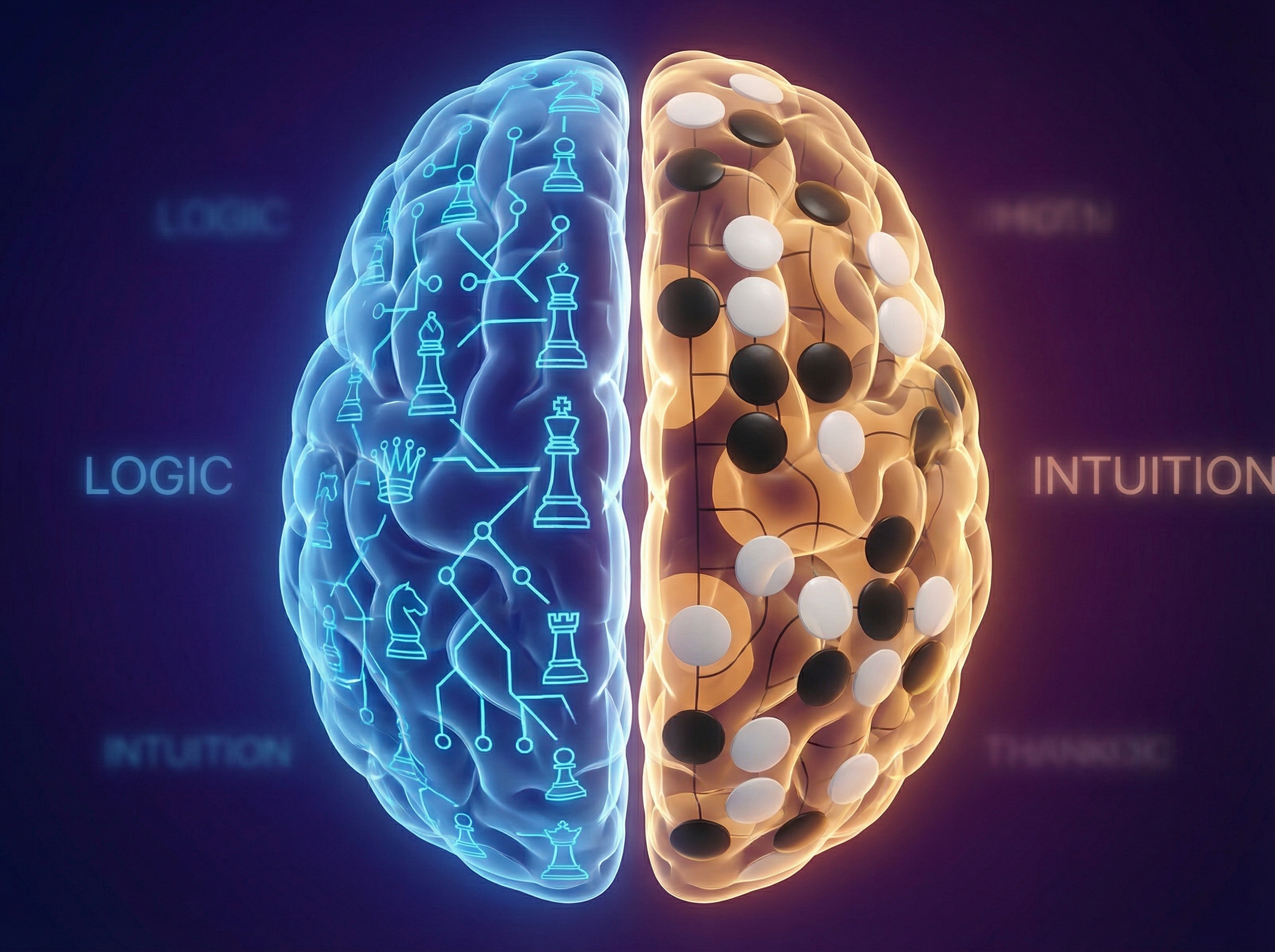
A translucent brain viewed from above, split down the middle: left hemisphere glows with geometric chess patterns in cool blue, right hemisphere pulses with organic Go patterns in warm amber
03

Your Left Brain Plays Chess. Your Right Brain Plays Go.

This isn't metaphor. fMRI studies of chess players show dominant activation in the left hemisphere—specifically the parietal and occipital lobes, the regions responsible for object recognition and sequential logic. Chess is, neurologically speaking, a series of "if-then" chains. If my knight goes here, their bishop goes there, then my rook... The brain processes it like a logical proof.

Go players light up the right parietal lobe, the region specialized for spatial processing and global pattern recognition. Expert Go players also show increased white matter connectivity in the frontal lobes, suggesting enhanced "whole-board integration"—the ability to process the entire 19×19 grid as a single gestalt rather than a collection of local fights.

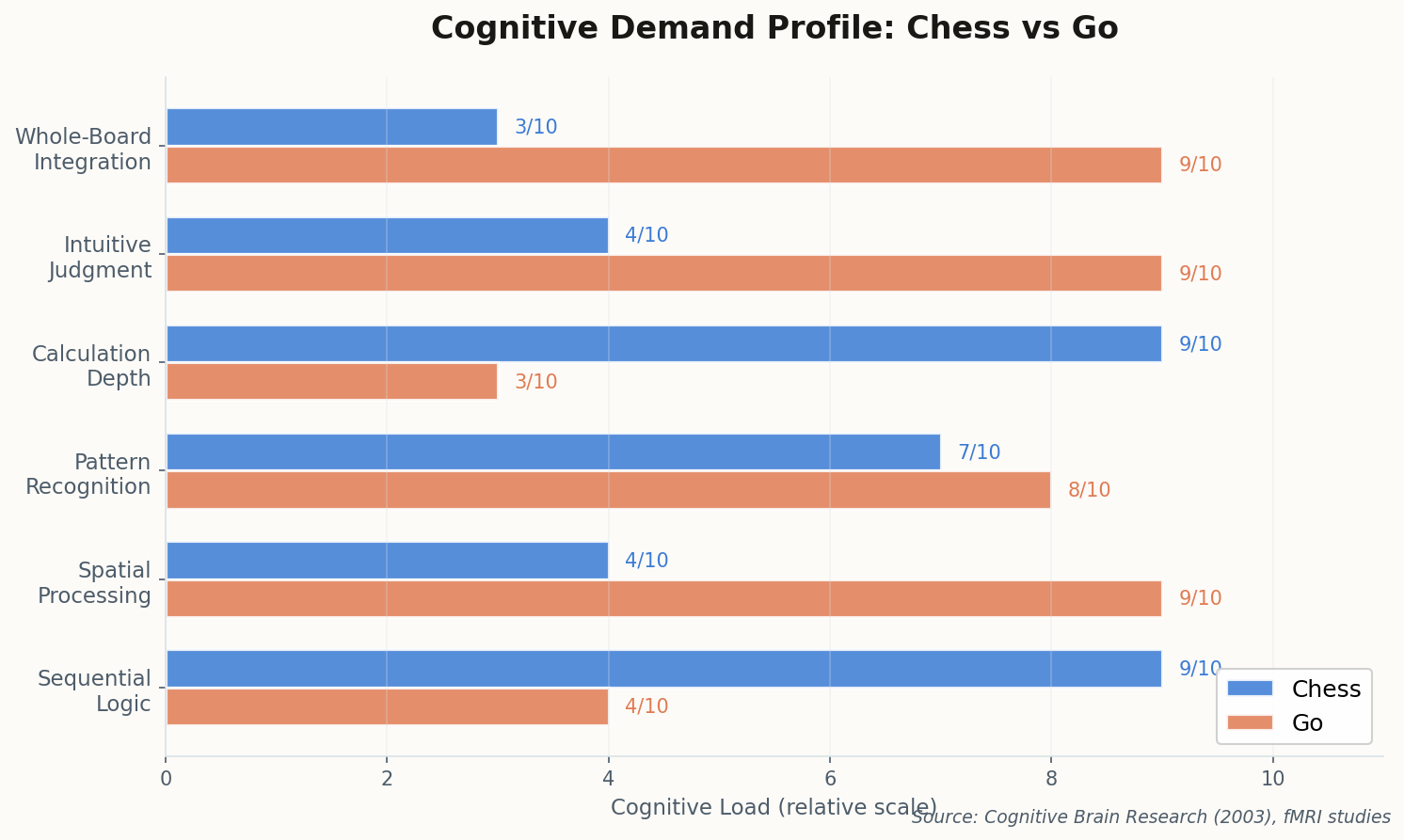
Horizontal bar chart comparing Chess and Go across six cognitive dimensions: Sequential Logic, Spatial Processing, Pattern Recognition, Calculation Depth, Intuitive Judgment, and Whole-Board Integration
Chess and Go don't just differ in difficulty—they stress fundamentally different cognitive systems. Based on fMRI research from Cognitive Brain Research (2003).

The implication is profound: these games aren't "harder" or "easier" in any simple sense. They're demanding different cognitive hardware. Asking which is more challenging is a bit like asking whether sprinting or swimming is more physically demanding—the answer depends on which muscles you're measuring. But if forced to pick a metric, Go's reliance on spatial intuition and whole-board judgment represents a cognitive task that's harder to articulate, harder to teach, and harder to automate. The brain scans don't lie.

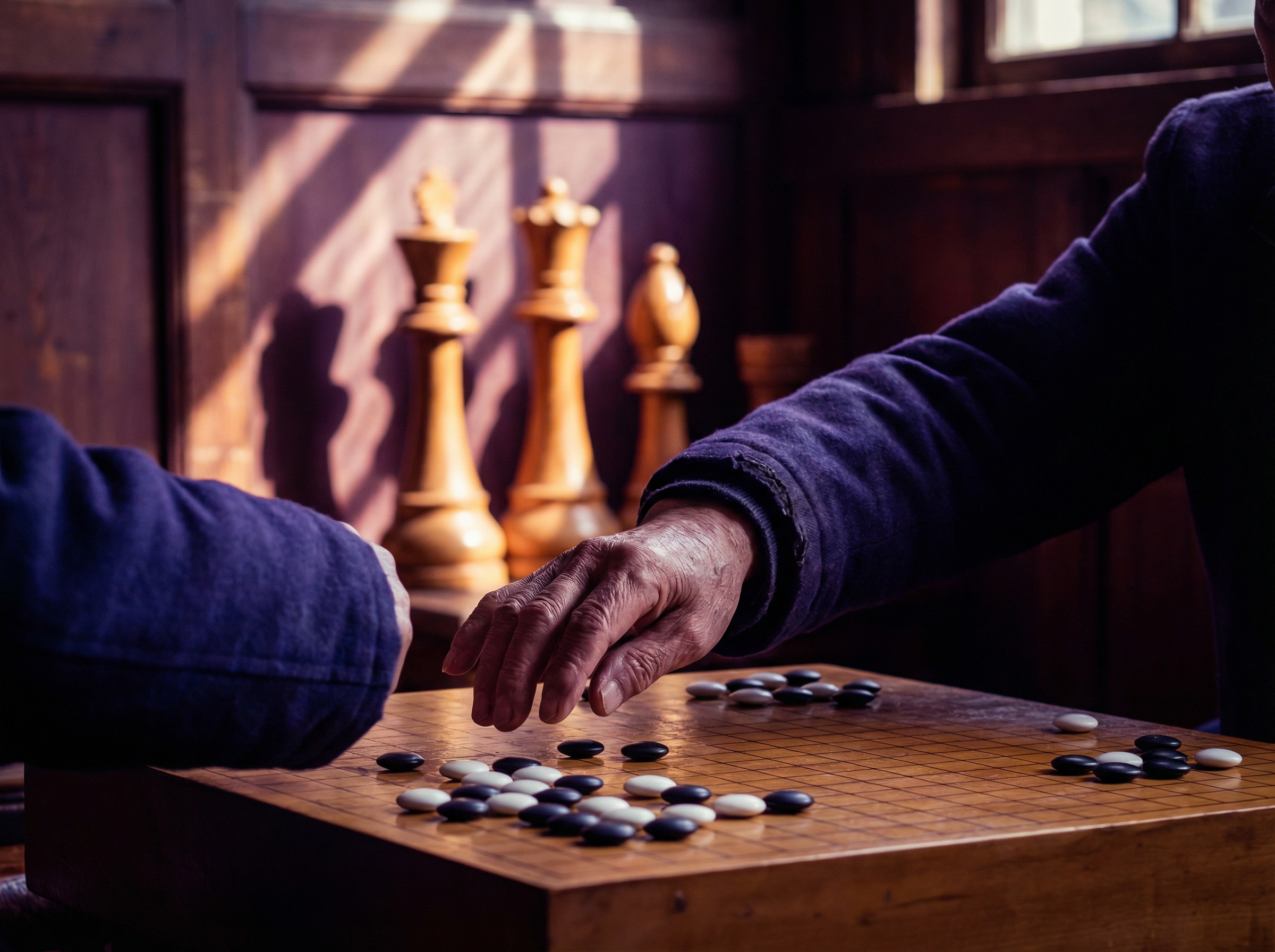
A chess master's hand hovering uncertainly over a Go board, chess pieces standing tall behind but simple Go stones radiating quiet power, Renaissance chiaroscuro lighting
04

When Chess Masters Met the Stones

Emanuel Lasker held the World Chess Championship for 27 years—the longest reign in history. He was, by any measure, one of the most brilliant strategic minds to ever sit across a chess board. When he encountered Go, he couldn't beat a master even with a massive handicap. The game's depth humbled him in a way that no chess opponent ever had.

His relative Edward Lasker, himself an International Chess Master and passionate Go advocate, captured the distinction in what remains the most quoted line in Go literature: "While the baroque rules of Chess could only have been created by humans, the rules of Go are so elegant, organic, and rigorously logical that if intelligent life forms exist elsewhere in the universe, they almost certainly play Go."

Modern Grandmaster Tiger Hillarp Persson, who plays both games seriously, notes that Go forces a fundamentally different kind of planning. In chess, you calculate specific variations. In Go, you develop a feeling for "structure" and "shape" that transcends any particular sequence of moves. The chess players who cross over consistently report the same experience: the tactical skills that made them elite at chess are almost useless at the Go board. They have to learn to see differently.

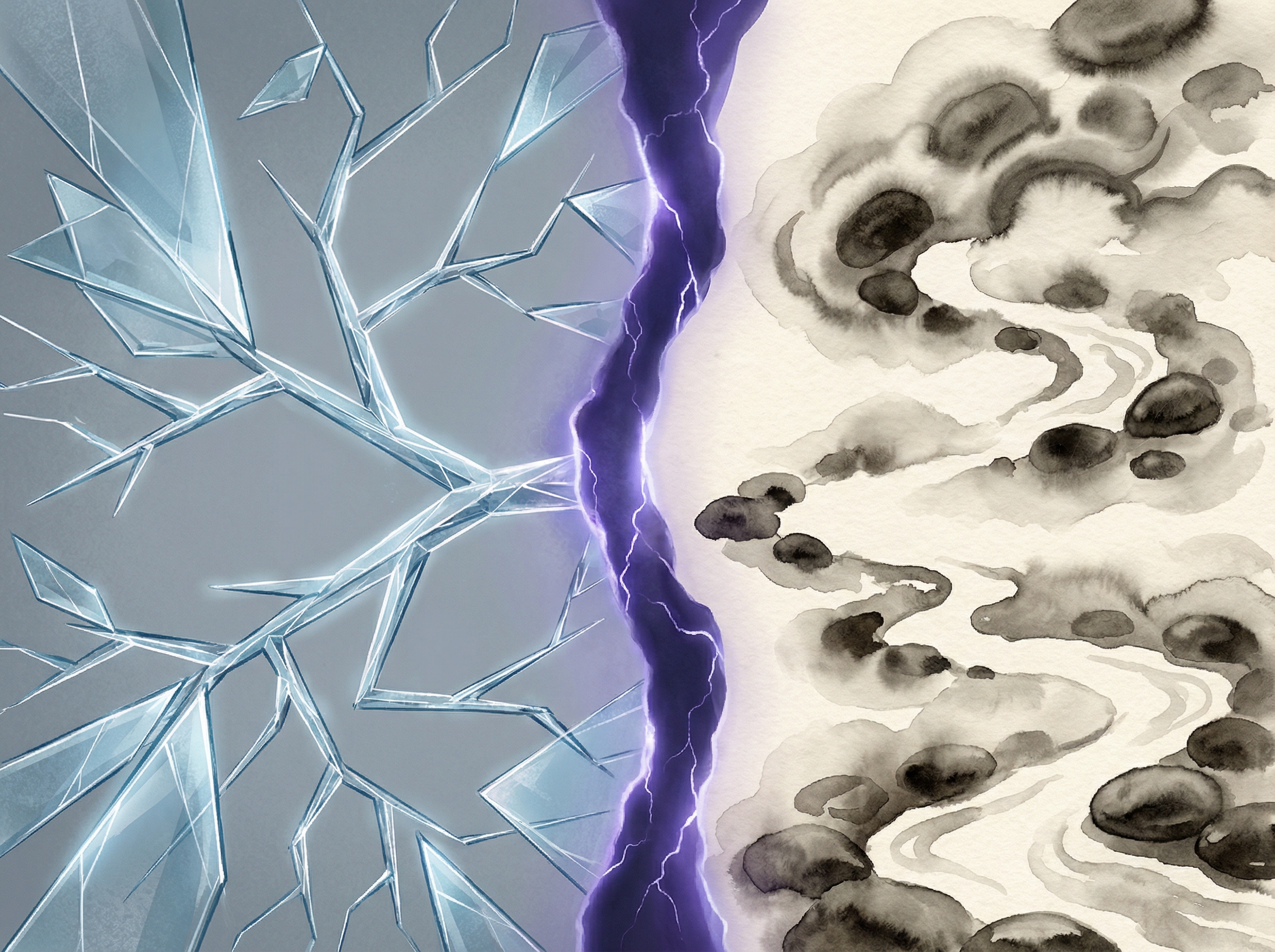
Split composition: left side shows a razor-sharp glass decision tree, cold and crystalline; right side shows flowing watercolor Go stones forming organic cloud shapes, warm and intuitive
05

The Knife Fight vs. the Land War

In chess, 99% of mistakes are tactical. You missed a fork, overlooked a pin, didn't see the back-rank mate. The game is sharp and brittle—one blunder and it's over. This makes chess exquisitely punishing but also legible: you can usually point to the exact moment things went wrong.

Go is elastic. A bad move doesn't end the game; it costs you a few points of territory, and you compensate elsewhere. The challenge isn't avoiding blunders—it's developing judgment about abstract positional concepts like thickness, influence, and aji (latent potential). Where chess evaluation is concrete ("White is up 1.5 pawns"), Go evaluation is fluid and aesthetic. The value of a wall of stones depends entirely on what happens across the board 50 moves later.

"In Chess, you are trying to kill the General. In Go, you are trying to share the land." This isn't just a metaphor—it describes fundamentally different cognitive demands. Chess rewards error-free calculation. Go rewards judgment under radical uncertainty.

The British Go Association notes an illuminating asymmetry in the learning curve: Go's rules can be taught in five minutes (place stones, surround territory), while chess has intricate rules (castling, en passant, piece-specific movement). But beginners often can't even tell when a Go game is over—the endpoint requires mutual agreement about which groups are alive or dead. Chess mastery is about depth of calculation. Go mastery is about knowing something you can't fully explain.

Two hands: one aggressively toppling a chess king, the other gently placing a Go stone to complete a harmonious pattern, with a yin-yang of black and white stones between them
06

Destruction vs. Construction

Chess is hierarchical. You have a King, a Queen, Pawns. The pieces have unequal power, and the goal is regicide. It mirrors a decisive battle: identify the enemy's weakness, concentrate force, deliver the killing blow. When pieces come off the board, the game simplifies. Entropy decreases.

Every Go stone is identical. There is no queen, no king, no hierarchy. The goal isn't destruction but construction—claiming more territory than your opponent. A game of Go gets more complex as it progresses, not less. Stones are added, relationships multiply, and the board fills with intertwined structures that can only be understood as a whole. Winning by a single point is as valid as winning by fifty. There is no checkmate, no knockout blow. Just the quiet accumulation of better decisions.

This philosophical dimension helps explain why Western players historically struggle with Go. They arrive at the board looking for a decisive tactical strike and find that the game doesn't reward aggression—it rewards patience, balance, and the willingness to accept a "shared" outcome. As one comparison puts it: "A Chess game gets simpler as pieces are removed. A Go game gets more complex as stones are added." The cognitive challenge of Go isn't just computational. It's existential. You have to change how you think about winning.

The Verdict, If You Insist

Go is almost certainly the more cognitively challenging game—not because it's "harder" in some absolute sense, but because it demands the kind of thinking that humans find most difficult to articulate, teach, and automate. Chess mastery is about seeing deeper. Go mastery is about seeing wider. Both are magnificent. But if an alien civilization landed tomorrow and wanted to test the full range of human strategic intelligence, you'd want both boards on the table. Start with chess for the warm-up. Then break out the stones.