History & Technology

The Lie Your Keyboard Tells

You've typed on QWERTY your entire life. The story you've been told about why — that it was designed to prevent jamming — is almost certainly wrong. The real history involves telegraph operators, patent wars, and one of economics' most famous fables.

Listen
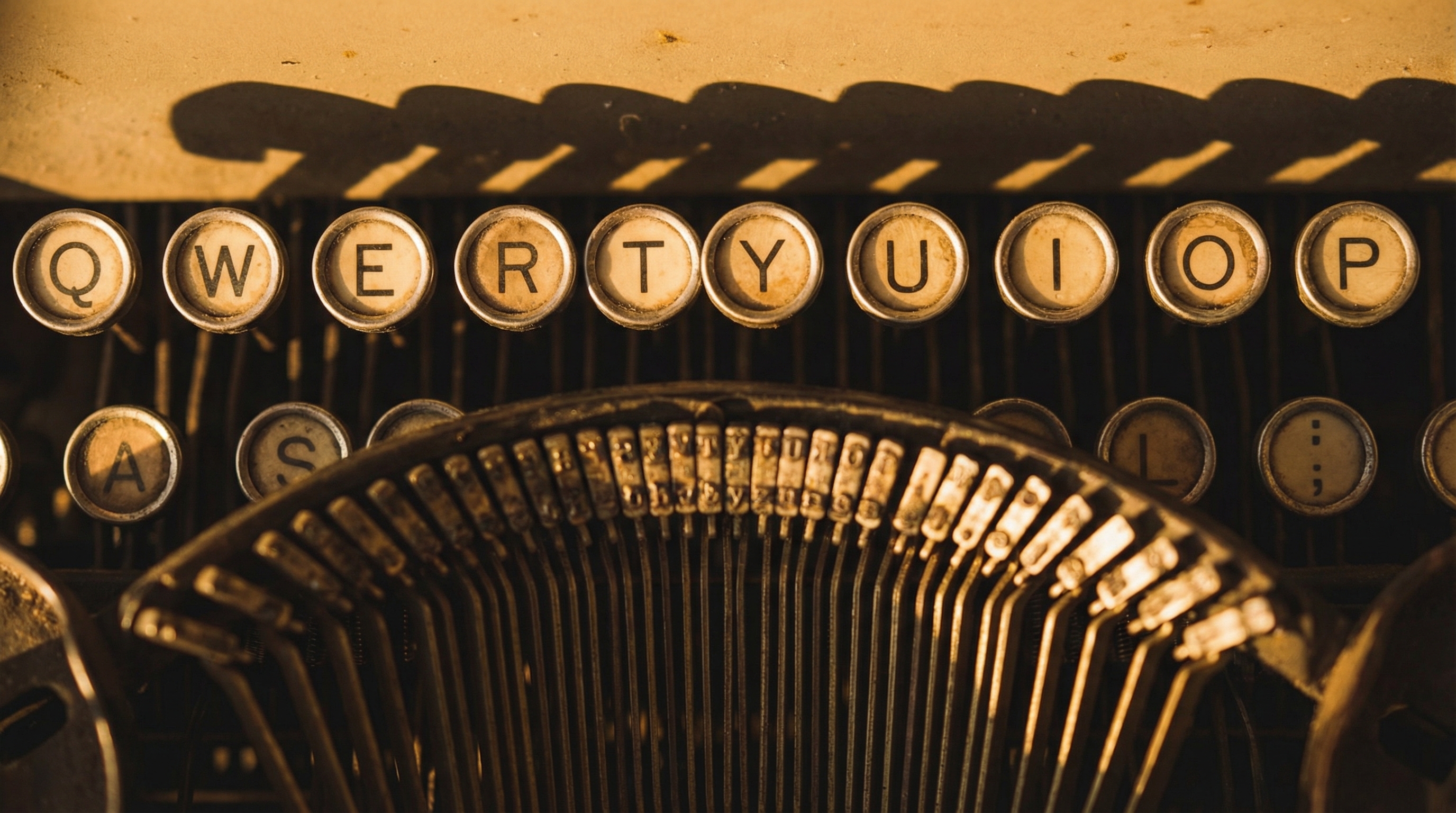
Vintage typewriter showing QWERTY key arrangement in warm sepia tones
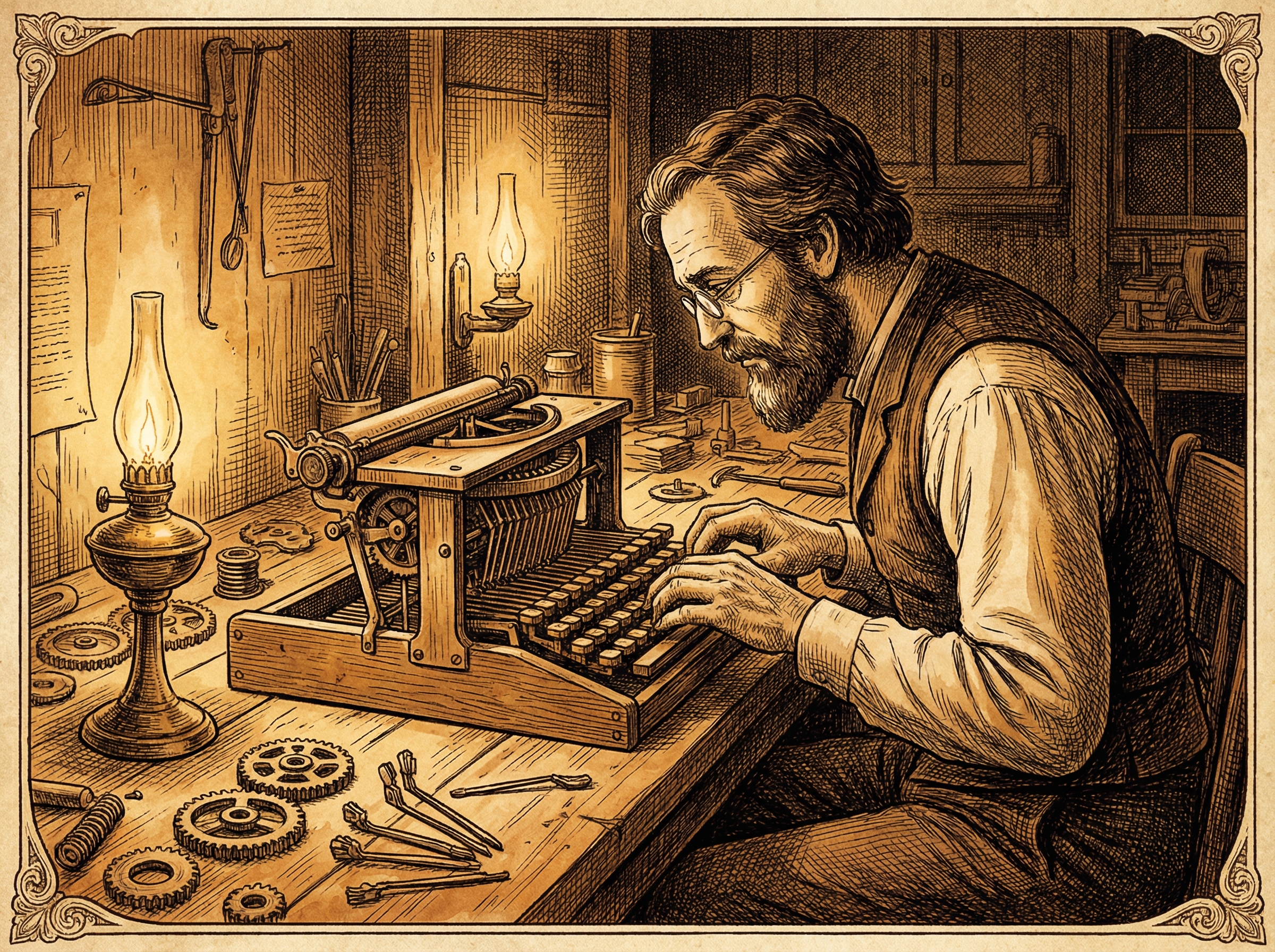
Victorian-era inventor Christopher Latham Sholes at his workshop with early typewriter prototype
01

A Newspaper Man, a Piano, and 28 Alphabetical Keys

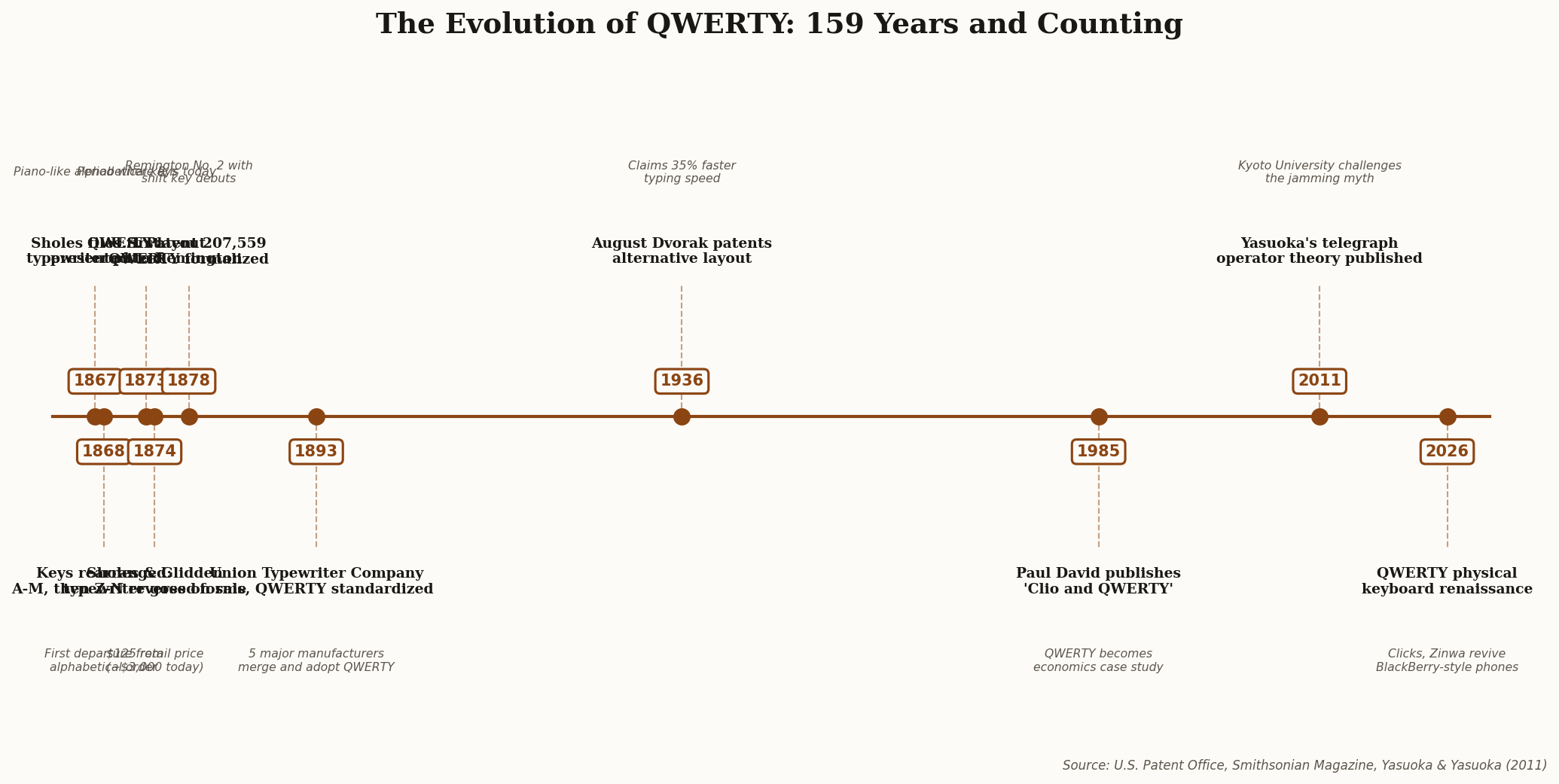
In 1867, Christopher Latham Sholes — a Milwaukee newspaper editor, politician, and serial tinkerer — filed a patent for a "writing machine" that looked more like a piano than anything you'd recognize as a keyboard today. It had two rows of keys, arranged alphabetically, because why wouldn't you? That's the obvious layout. A goes first. Z goes last. Simple.

It wasn't simple for long. By 1868, Sholes had reversed the second half of the alphabet (Z-N instead of N-Z). By 1870, he'd rearranged everything into four rows, with vowels on the second row and consonants below. By 1872, the layout had mutated into something called QWE.TY — yes, with a period where the R sits today. Each change was driven by testing with actual users and feedback from James Densmore, his impatient financial backer who kept pushing for improvements.

When Sholes pitched the typewriter to gun manufacturer E. Remington & Sons in 1873, the QWERTY layout was nearly finalized. The Sholes & Glidden typewriter went on sale in 1874 for $125 — about $3,000 in today's money. About 5,000 units sold before Remington launched the landmark Remington No. 2 in 1878, the first typewriter with both upper and lower case letters via a shift key. That same year, U.S. Patent 207,559 formally documented the QWERTY arrangement.

Here's the detail that should give you pause: Sholes himself wasn't satisfied. He spent the rest of his life inventing alternative layouts, filing a patent for an entirely different XPMCH keyboard in 1889, a year before he died. The man who created QWERTY didn't think it was the best answer. He just ran out of time to find a better one.
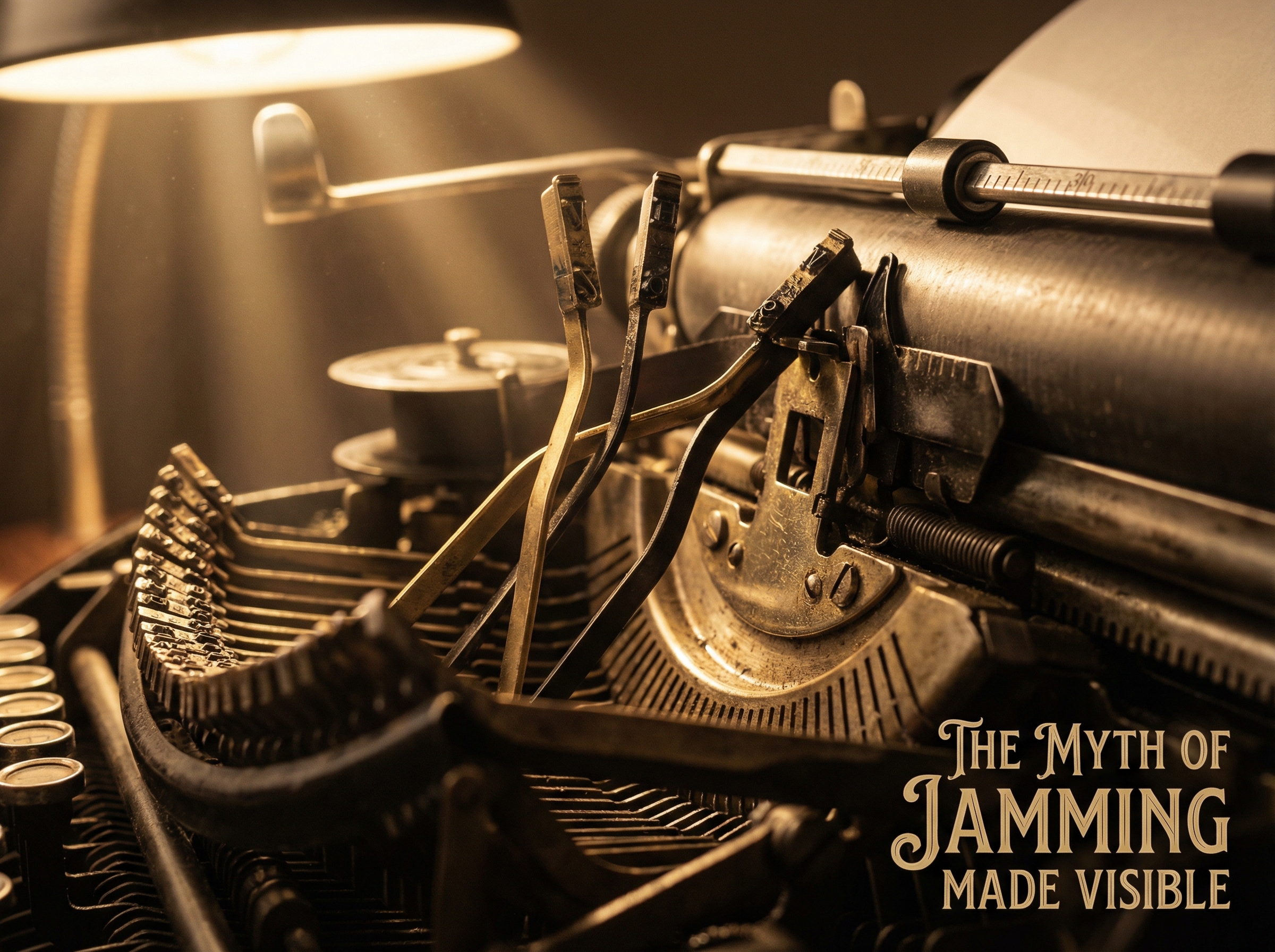
Close-up of vintage typewriter type-bars showing the mechanical jamming mechanism
02

The Jamming Story Is a Convenient Fiction

You've almost certainly heard this story: QWERTY was designed to slow typists down, or at least to separate frequently-used letter pairs, so the mechanical type-bars wouldn't jam together. It's a neat narrative — a designed inefficiency baked into every keyboard you've ever touched. It's also almost certainly wrong.

In 2011, Koichi Yasuoka and Motoko Yasuoka at Kyoto University published "On the Prehistory of QWERTY," a paper that systematically dismantled the jamming theory. Their conclusion was blunt: the mechanics of the typewriter did not drive the keyboard's design. The most frequently-asked question about the keyboard is "Why are the letters arranged the way they are?" and the answer "to slow down the operator" is, in their words, "nonsense."

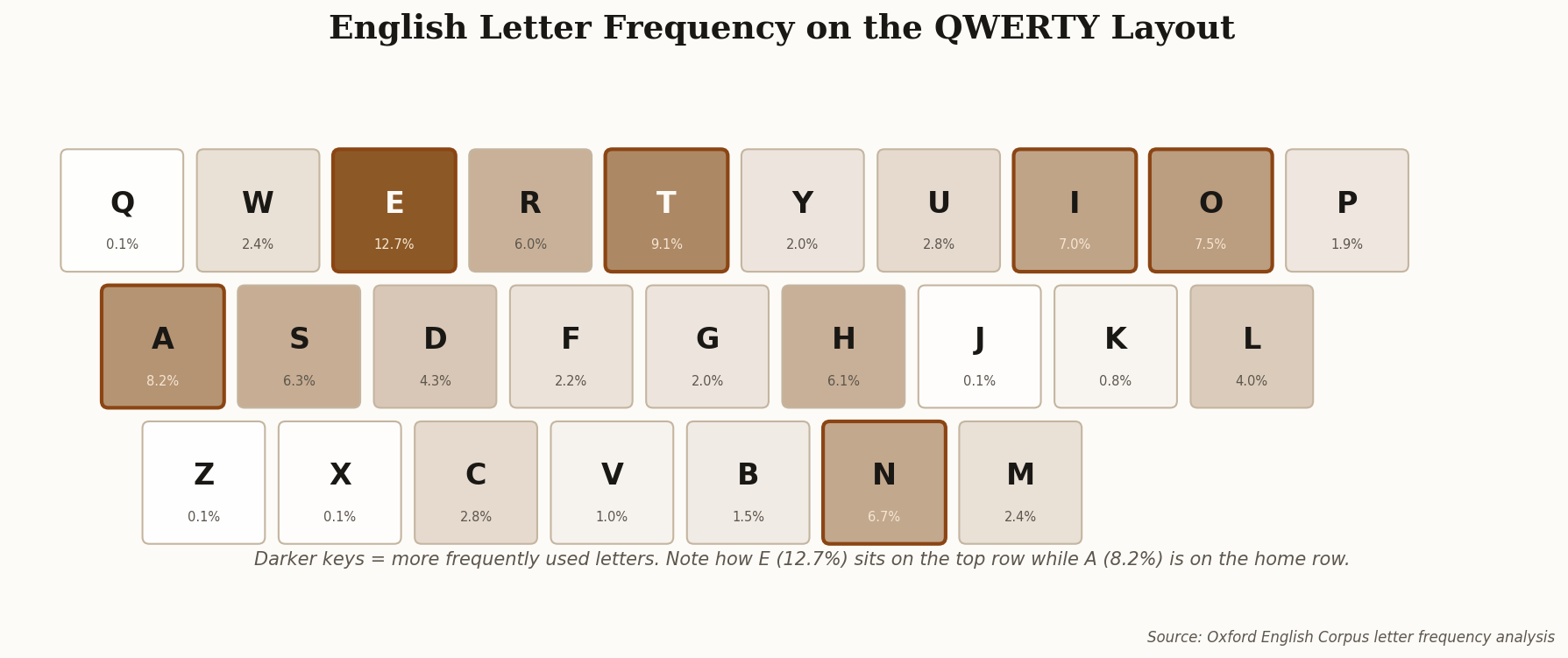
The evidence against the jamming theory is hiding in plain sight. Look at your keyboard right now: E and R sit directly adjacent. "ER" is the fourth most common letter pair in English. If the layout were truly optimized to separate frequent pairs, this would be an inexcusable failure. T and H — producing the most common digraph "TH" — are also neighbors. The layout that supposedly prevents jamming has the most jam-prone combinations sitting right next to each other.

Heat map showing English letter frequency on the QWERTY keyboard layout
Letter frequency heat map: the most-used letters (E at 12.7%, T at 9.1%) are scattered across rows rather than concentrated on the home row — undermining both the "slow down" and "optimal placement" theories.

So if it wasn't about jamming, what was it about? The Yasuokas found the answer in a different profession entirely — one that predates the typist by decades.

Victorian telegraph operator at desk with telegraph key and early typewriter
03

The Telegraph Operators Who Designed Your Keyboard

The first typewriter Sholes ever sold — before Remington, before QWERTY was finalized — went to Porter's Telegraph College in Chicago in 1868. This is not a coincidence. Telegraph operators were the original power users of the keyboard, and the Yasuoka research reveals they had an outsized influence on its evolution.

Here's the problem telegraph operators faced: Morse code is ambiguous. The code for Z (· · · ·) is easily confused with the sequence S-E. An operator receiving dots couldn't always tell if they were getting a Z or an SE until subsequent letters arrived. The Yasuokas argued that to serve these operators, S needed to be placed near both Z and E on the keyboard — which is exactly where it sits on QWERTY.

This theory explains other quirks too. T, the most frequently-used consonant in English, migrated to the center of the keyboard. W, a semivowel, moved to the upper row. Q, rarely used, was banished to the far edge. These placements make no sense if you're trying to prevent jamming, but they make perfect sense if you're optimizing for operators who need to transcribe Morse code at speed, often uncertain about which letter they're hearing until the next one arrives.

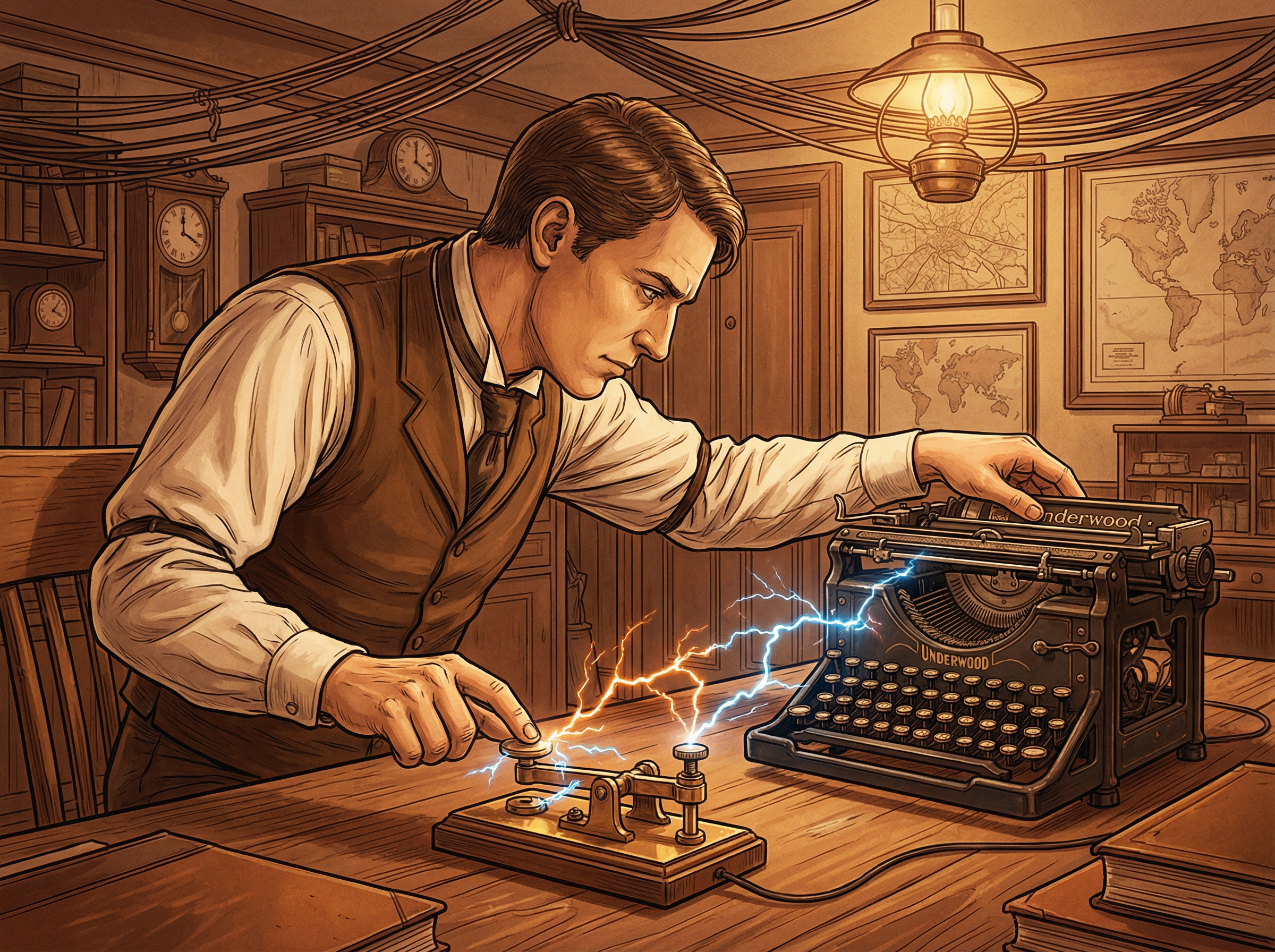
The overlooked connection: Sholes wasn't just selling to telegraph operators — he was actively collaborating with them. Early typewriter prototypes were tested by operators who provided feedback that directly shaped the layout's evolution from 1868 to 1873. QWERTY wasn't designed at a desk. It was designed at a telegraph wire.

The telegraph theory doesn't explain every key placement — no single theory does, because the layout evolved iteratively over six years of testing and revision. But it's a far more compelling explanation than "they wanted to slow people down." The operators wanted to speed up. And QWERTY was their tool for doing it.

Split image comparing QWERTY and Dvorak keyboard layouts with a naval officer's cap between them
04

The Dvorak Dream and the Navy Study That Wasn't

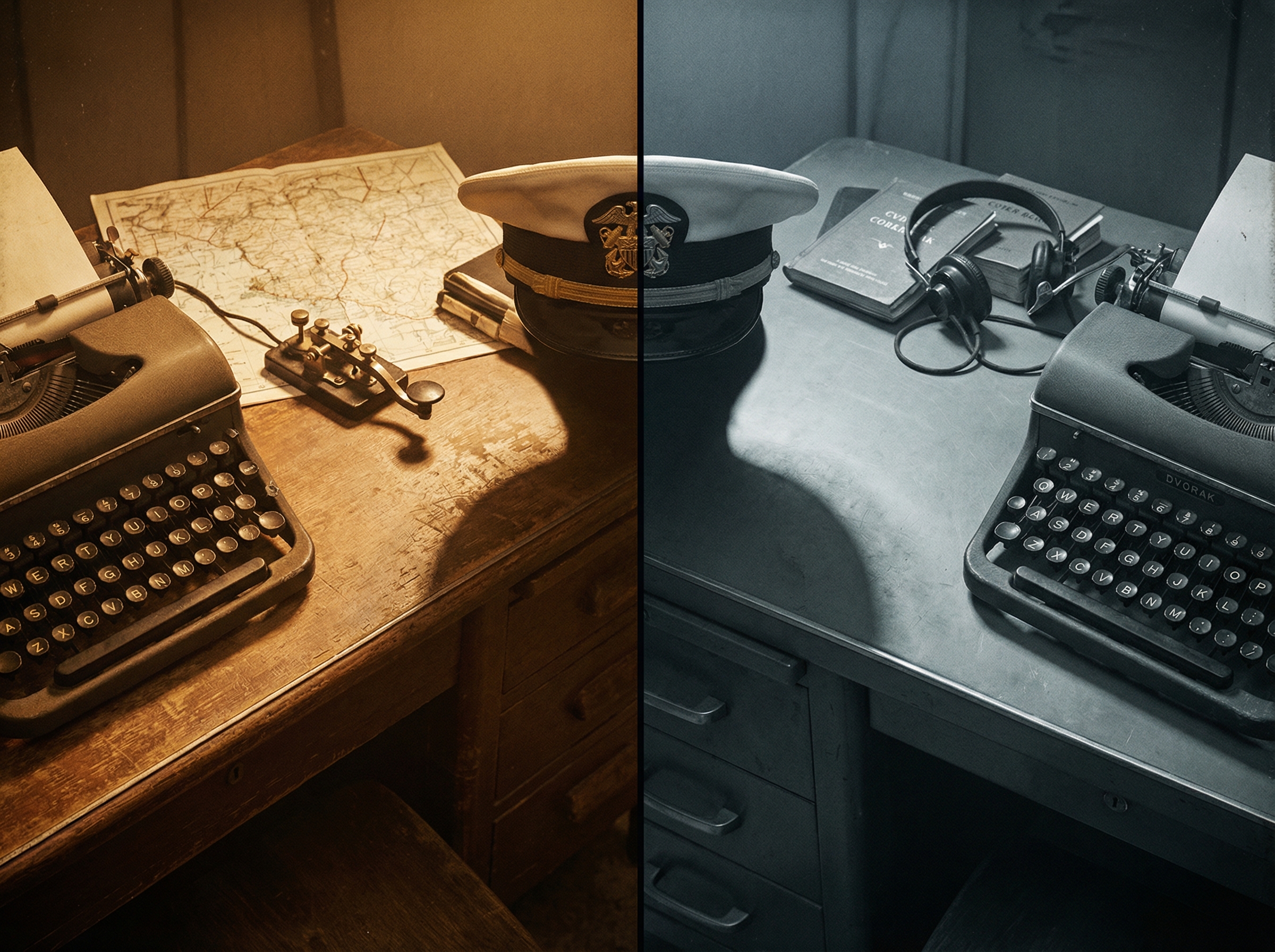
In 1936, August Dvorak, an educational psychologist at the University of Washington, patented an alternative keyboard layout that bore his name. His core insight was elegant: put the most-used letters on the home row, where your fingers naturally rest. All five vowels on the left, the most common consonants on the right. Dvorak claimed his layout was 35% faster than QWERTY. It should have been a revolution.

It wasn't. And the story of why involves one of the most questionable scientific studies in typing history.

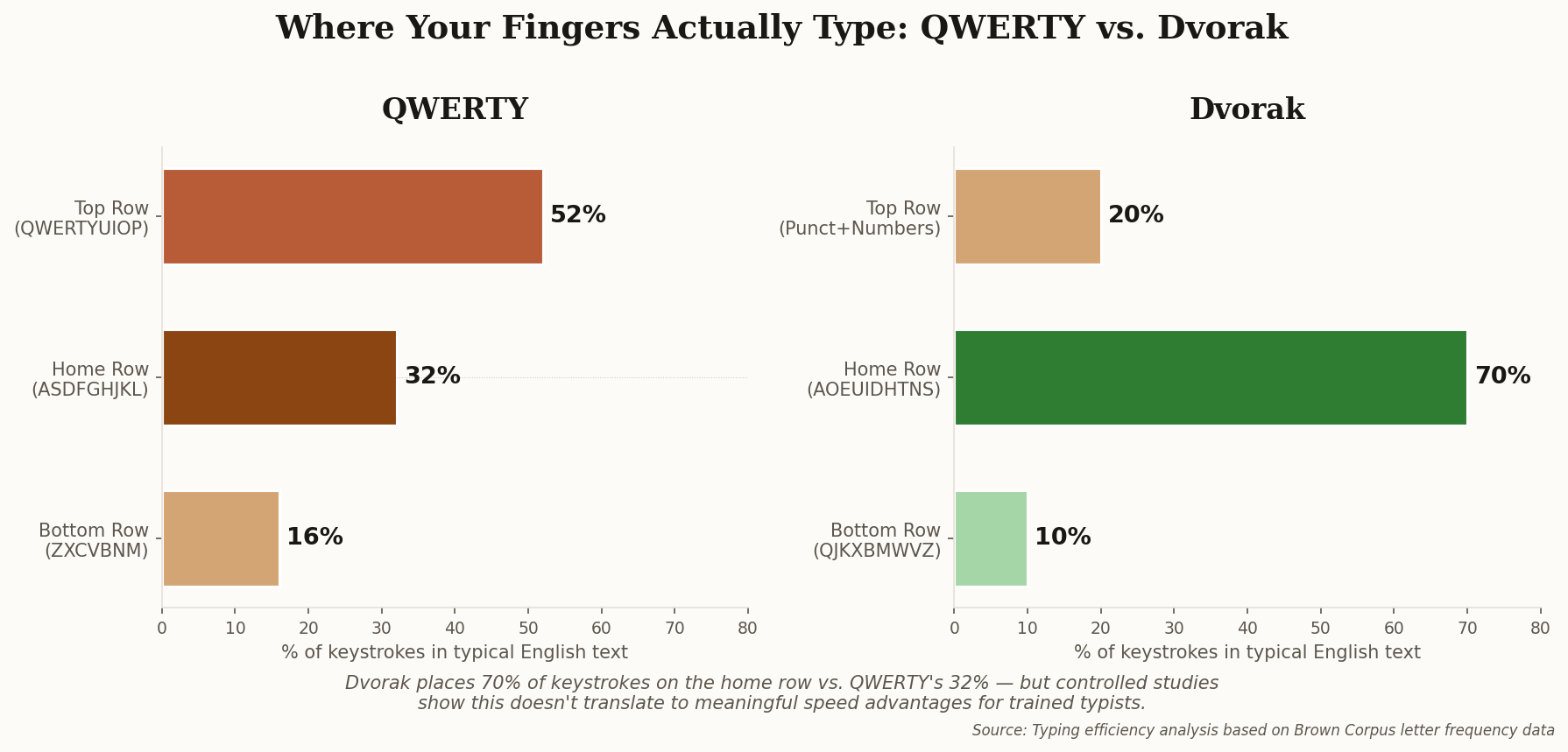
Comparison showing QWERTY puts 52% of keystrokes on the top row while Dvorak puts 70% on the home row
Dvorak's design places 70% of English keystrokes on the home row versus QWERTY's 32%. The ergonomic logic is compelling — but does it actually make you faster?

The primary evidence for Dvorak's superiority came from a 1944 U.S. Navy study that showed Dvorak typists dramatically outperforming QWERTY typists after retraining. For decades, this study was cited as proof that QWERTY was an inferior standard persisting only through inertia. There was just one problem: the study was conducted by Lieutenant-Commander August Dvorak — the Navy's top time-and-motion expert, and the patent holder of the layout being tested.

Economists Stan Liebowitz and Stephen Margolis at the University of Texas at Dallas dug into this in their landmark 1990 paper "The Fable of the Keys." They found the Navy study was riddled with methodological problems and possible biases. Later, properly controlled studies by the General Services Administration found no significant speed advantage for Dvorak. As Liebowitz and Margolis put it: "If you have learned to type on a QWERTY keyboard, the cost of retraining for Dvorak (however modest) is not worth paying."

The Dvorak story isn't really about keyboards. It's about how badly we want to believe that the systems we're stuck with are wrong — that somewhere out there, a better world was blocked by corporate inertia and historical accident. Sometimes that's true. But sometimes the thing that won is just... good enough.

Abstract visualization of diverging railroad tracks representing path dependency in economics
05

How a Keyboard Layout Became Economics' Favorite Parable

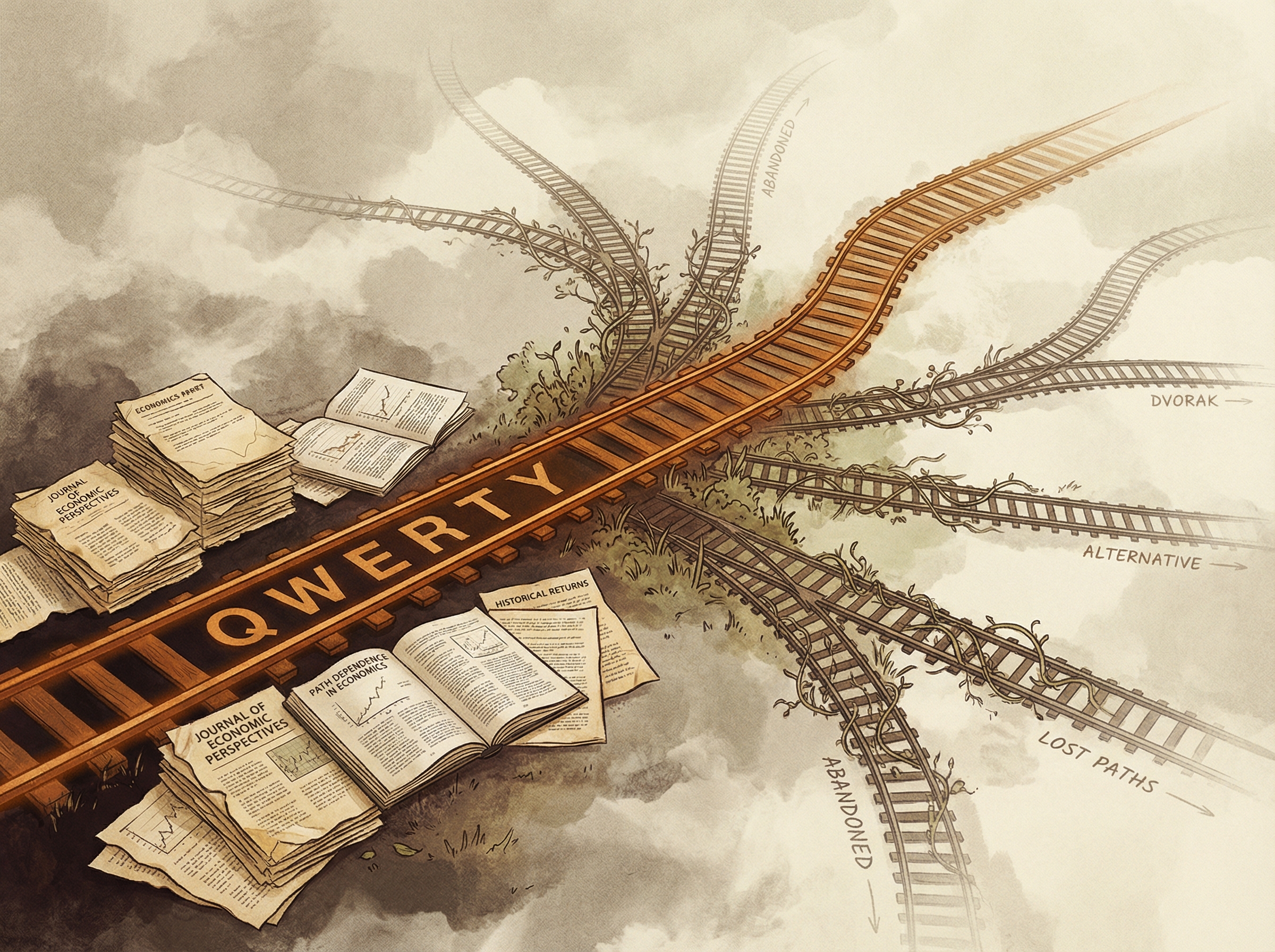
In 1985, Stanford economist Paul David published a five-page paper that would become one of the most cited in economics: "Clio and the Economics of QWERTY." His argument was seductive: QWERTY is an inferior technology that persists because of "path dependence" — early historical accidents that lock markets into suboptimal outcomes. Once typists learned QWERTY, machines were built for QWERTY typists. Once machines used QWERTY, new typists learned QWERTY. A self-reinforcing cycle that no amount of Dvorak superiority could break.

David's paper became the foundational case study for a generation of economists arguing that markets can fail spectacularly — that the wrong technology can win simply because it got there first. Brian Arthur at the Santa Fe Institute expanded the framework, showing how increasing returns and network effects can lock in arbitrary standards across technology markets.

Then Liebowitz and Margolis threw a grenade into the conversation. Their counter-argument, published across several papers from 1990 to 2002, was devastating: David's entire framework rested on the claim that Dvorak was superior — a claim supported only by the suspect Navy study. Remove that foundation and the parable collapses. "The example of the Dvorak keyboard," they wrote, "is what beehives and lighthouses were for earlier market-failure fables." Observable instances in which a dramatically inferior standard prevails "are likely to be short-lived, imposed by authority, or fictional."

Timeline showing the evolution of QWERTY from 1867 to 2026
159 years of QWERTY: from Sholes' Milwaukee workshop to the 2026 smartphone renaissance, the layout has survived every technological revolution thrown at it.

The irony is profound: QWERTY's most lasting contribution to intellectual history may not be to technology at all, but to economics. A keyboard layout designed for telegraph operators in the 1870s became the central battleground for one of the discipline's great debates — whether markets are efficient or whether history's accidents trap us in inferior worlds. Four decades later, the economists are still typing their arguments. On QWERTY keyboards, of course.

Modern smartphone with physical QWERTY keyboard alongside a touchscreen phone
06

159 Years Later, QWERTY Refuses to Die

In January 2026, something happened at CES that would have been unthinkable five years ago: two companies launched physical QWERTY keyboard phones to enthusiastic reception. Clicks Technology unveiled the Communicator — a full Android 16 phone with a built-in QWERTY keyboard, 5G, and a 4,000 mAh battery. Chinese manufacturer Zinwa launched the Q27, an unabashed BlackBerry spiritual successor. Clicks had already sold over 100,000 keyboard accessories in its first year, proving the demand wasn't nostalgia — it was real.

Meanwhile, in France, a different QWERTY-adjacent revolution is quietly unfolding. The French standards body AFNOR published NF Z71-300, a new national keyboard standard designed using algorithms from Aalto University and the Max Planck Institute. The optimized AZERTY 2.0 keeps the familiar letter positions but fixes decades of frustration — proper accented characters (É, œ, «), support for all EU Latin-based languages, and mathematical symbols. Windows 11 version 24H2 now includes it as a built-in option.

And then there's the AI angle. Gboard's Glide Typing and SwiftKey's Flow Typing have made physical key arrangement less important than ever on touchscreens — AI predicts your words from approximate swipe paths, so whether you're swiping over a QWERTY layout or a Dvorak one barely matters. AI keyboards in 2026 understand context at a level that seemed impossible just a year ago, adjusting tone automatically based on who you're messaging.

This is the final twist in the QWERTY story: the layout that was born to serve telegraph operators now survives in an era where the physical arrangement of keys is increasingly irrelevant. QWERTY persists not because it's optimal, not because we're locked in, but because it's become infrastructure — as invisible and ubiquitous as the alphabet itself. Your grandchildren will probably type on QWERTY keyboards. They just won't think about why.

The Keys We Inherited

Every technology carries the fingerprints of its creators' constraints. QWERTY was shaped by telegraph operators, patent negotiations, and the limits of 1870s metallurgy — not by a grand theory of optimal typing. The next time you sit down at a keyboard, remember: you're typing on a layout designed for a problem that no longer exists, by people who weren't trying to solve the problem you think they were. And somehow, 159 years later, it still works just fine.