
Wealth & Inequality

The One Percent Illusion

You've heard the number a thousand times. But do you actually know what it takes to get there—and what it means that you probably never will? A statistical reckoning with the American wealth machine.

Listen
Abstract visualization of wealth distribution showing towering golden structures dissolving into data streams against an emerald backdrop
A child reaching toward a ladder of neighborhoods ascending from modest to gleaming
01

The Ladder Is Real—But the Rungs Are Disappearing

Here's a paradox that should keep policymakers up at night. A landmark NBER study by Raj Chetty and colleagues proves that revitalizing public housing—specifically through the HOPE VI program—actually works. Children relocated to high-opportunity neighborhoods showed measurably higher college attendance rates and lower incarceration. The ladder exists. Climb it and your life genuinely changes.

But here's the problem: the broader data shows the ladder is getting shorter. Brookings research from 2025 confirms that intergenerational mobility is declining across the board, with wealth transfers increasingly determining economic status over merit or income. Translation: where you start matters more than what you do. The American Dream isn't dead—it's just becoming a hereditary privilege, passed down like silverware.

The tension: We know how to create upward mobility at the neighborhood level. But the structural forces pulling in the opposite direction—asset concentration, declining real wages, education costs—are overwhelming those interventions at scale. Policy works. It just can't keep up.

What this really means is that the 1% debate isn't about envy. It's about whether we're building a society where the destination is determined at birth. Chetty's data says we can intervene. Everything else says we're choosing not to.
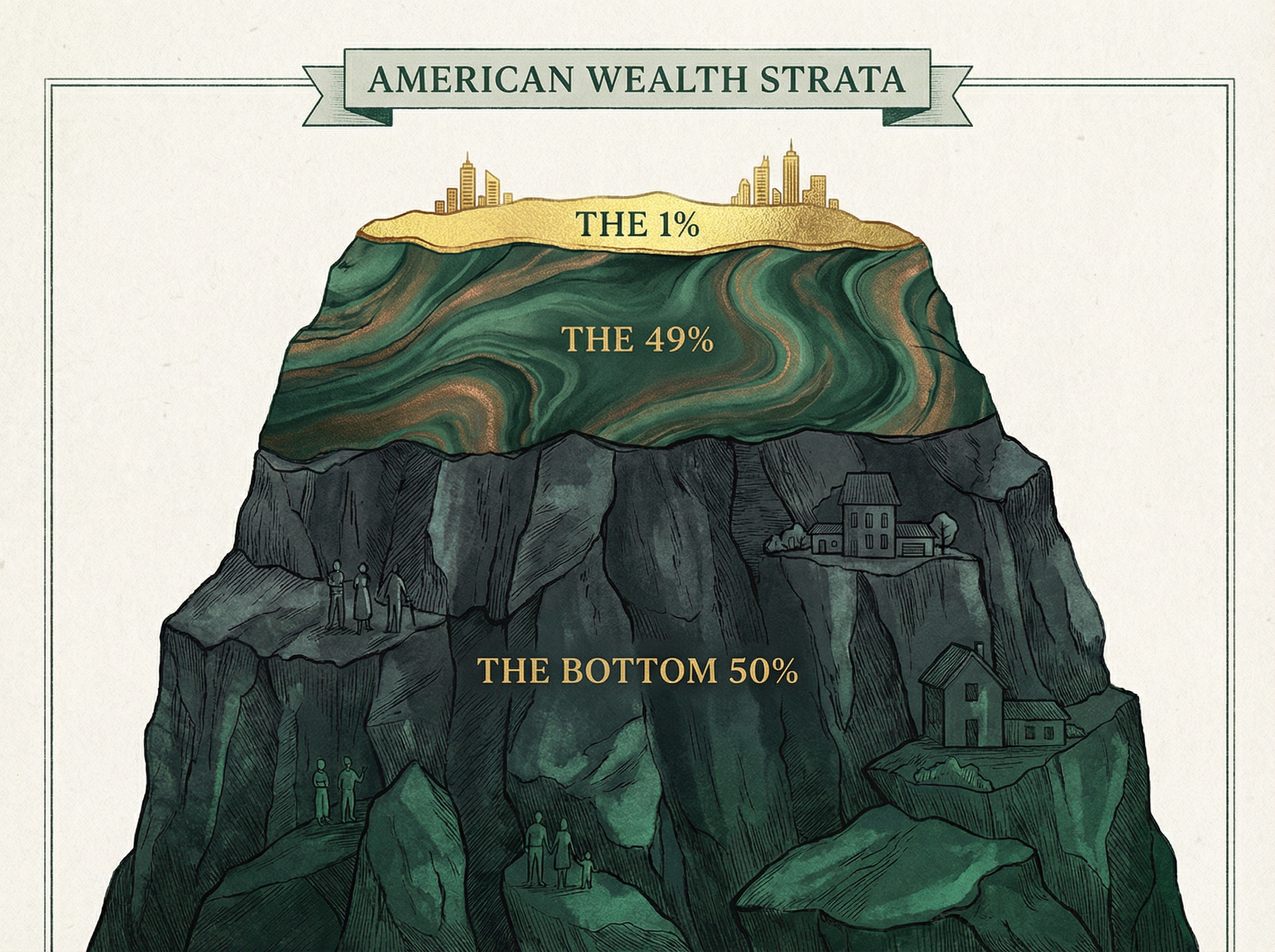
Geological strata visualization with thin gold layer at top and massive dark layers below
02

$192 Trillion, and You're Probably Not Invited

The Federal Reserve published its Q3 2025 Distributional Financial Accounts in December, and the numbers deserve to be read slowly. Total U.S. household wealth hit $192.64 trillion. That's not GDP—that's the net worth of every American household combined. Staggering. Now here's who actually holds it.

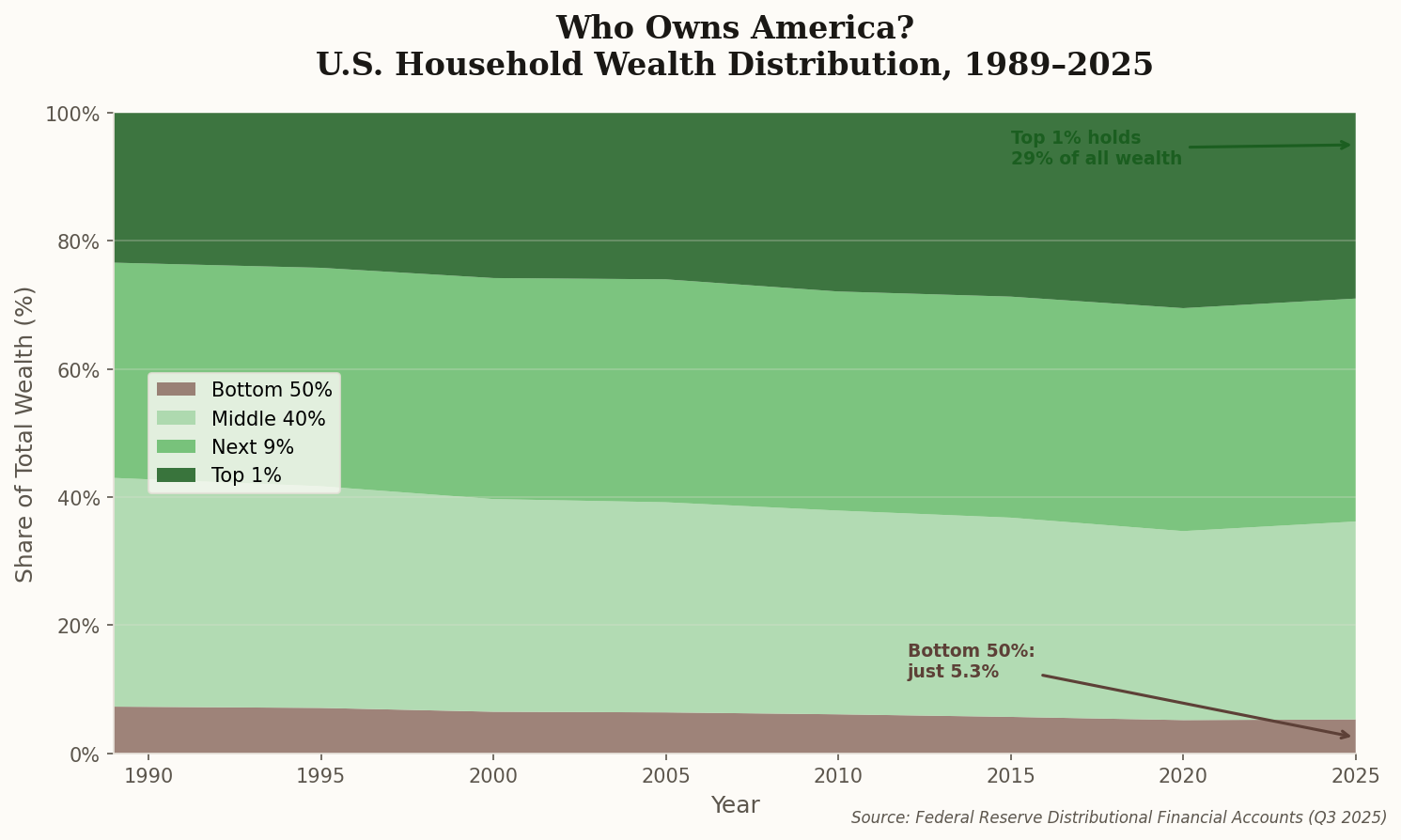
The top 1% own 28.98% of everything. The top 10% hold 63.77%. The bottom 50%—roughly 65 million households, 165 million human beings—share just 5.32%. Do the math: that's about $10.25 trillion split among half the country, versus $55.8 trillion held by a group that would fit in a midsize football stadium.

Stacked area chart showing U.S. wealth distribution from 1989 to 2025, with the top 1% share growing from 23% to 29%
U.S. household wealth distribution, 1989–2025. The bottom 50%'s share has shrunk from 7.3% to 5.3% over three decades. Source: Federal Reserve DFA.

The trend line is the real story. In 1989, the bottom 50% held 7.3%. That's already grim. But they've lost ground in every single decade since, while the top 1% climbed from 23.4% to nearly 29%. The middle 40%—what used to be the American middle class—has also steadily bled share, from 35.7% to 30.9%. The wealth isn't trickling down. It's gushing up.

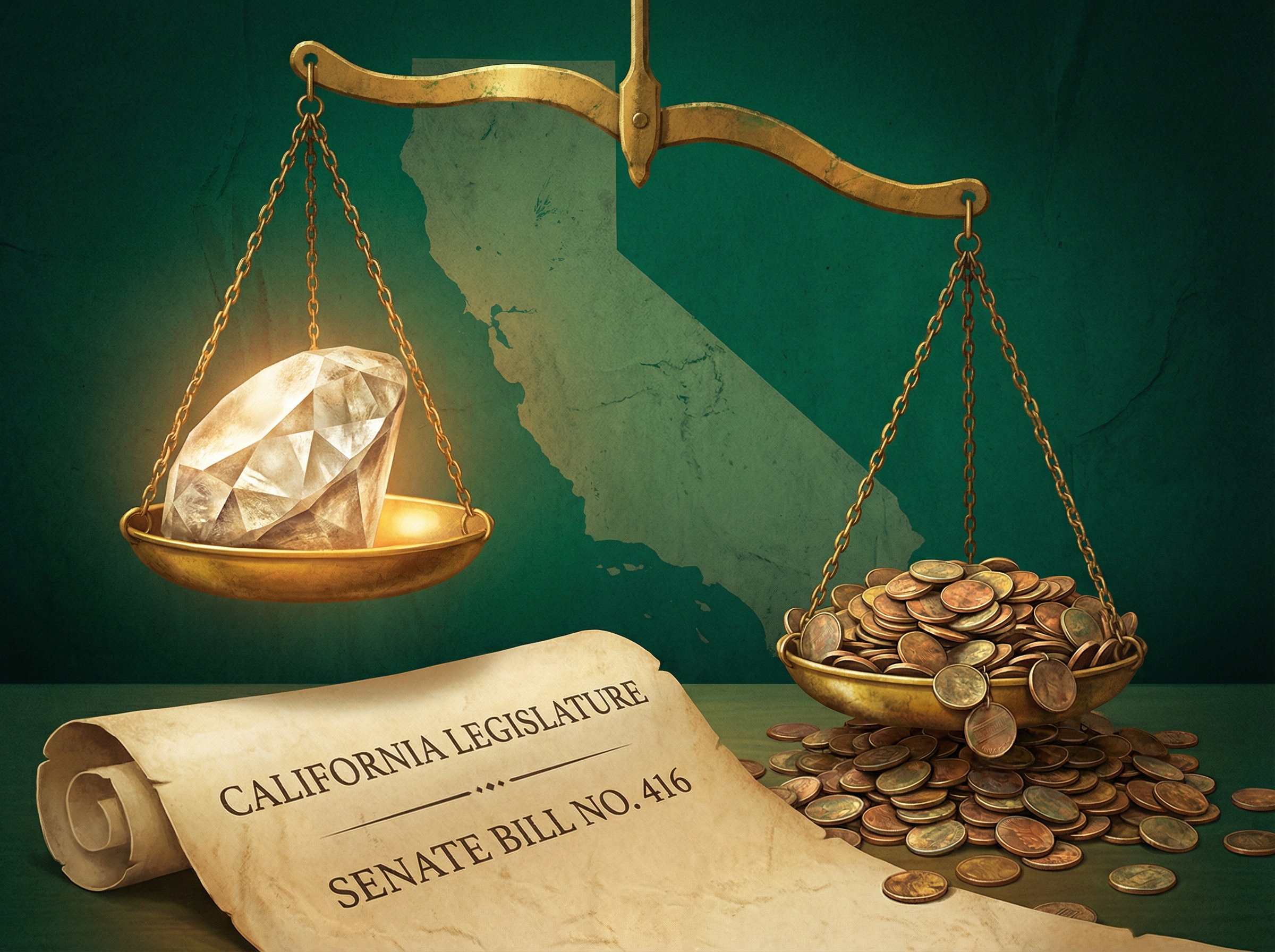
Golden scales of justice with a diamond on one side and overflowing coins on the other
03

California Comes for the Billionaires—Again

With federal wealth tax proposals stalled in Congress, California is going it alone. The "2026 Billionaire Tax Act" is a ballot initiative that would impose a one-time 5% tax on net worth above $1 billion. California residents would be taxed on 100% of their assets regardless of location. It's aggressive, it's unprecedented at the state level, and it's heading to voters.

At the federal level, the debate is no less charged. Proposals continue to circulate for a 25% minimum tax on total income—including unrealized capital gains—for those with wealth exceeding $100 million. There are also pushes to raise the long-term capital gains rate from 20% to 28% for earners above $1 million.

Why 2026 matters: The Tax Cuts and Jobs Act provisions begin expiring this year, creating a once-in-a-generation legislative window. Whether the country doubles down on low top-marginal rates or pivots toward wealth taxation will shape inequality trajectories for decades.

The constitutional questions are enormous. Taxing unrealized gains challenges the realization requirement that has underpinned tax law since Eisner v. Macomber (1920). But the political appetite is shifting. When 29% of the national wealth sits in 1% of households, "tax the rich" stops being a slogan and starts being a math problem.

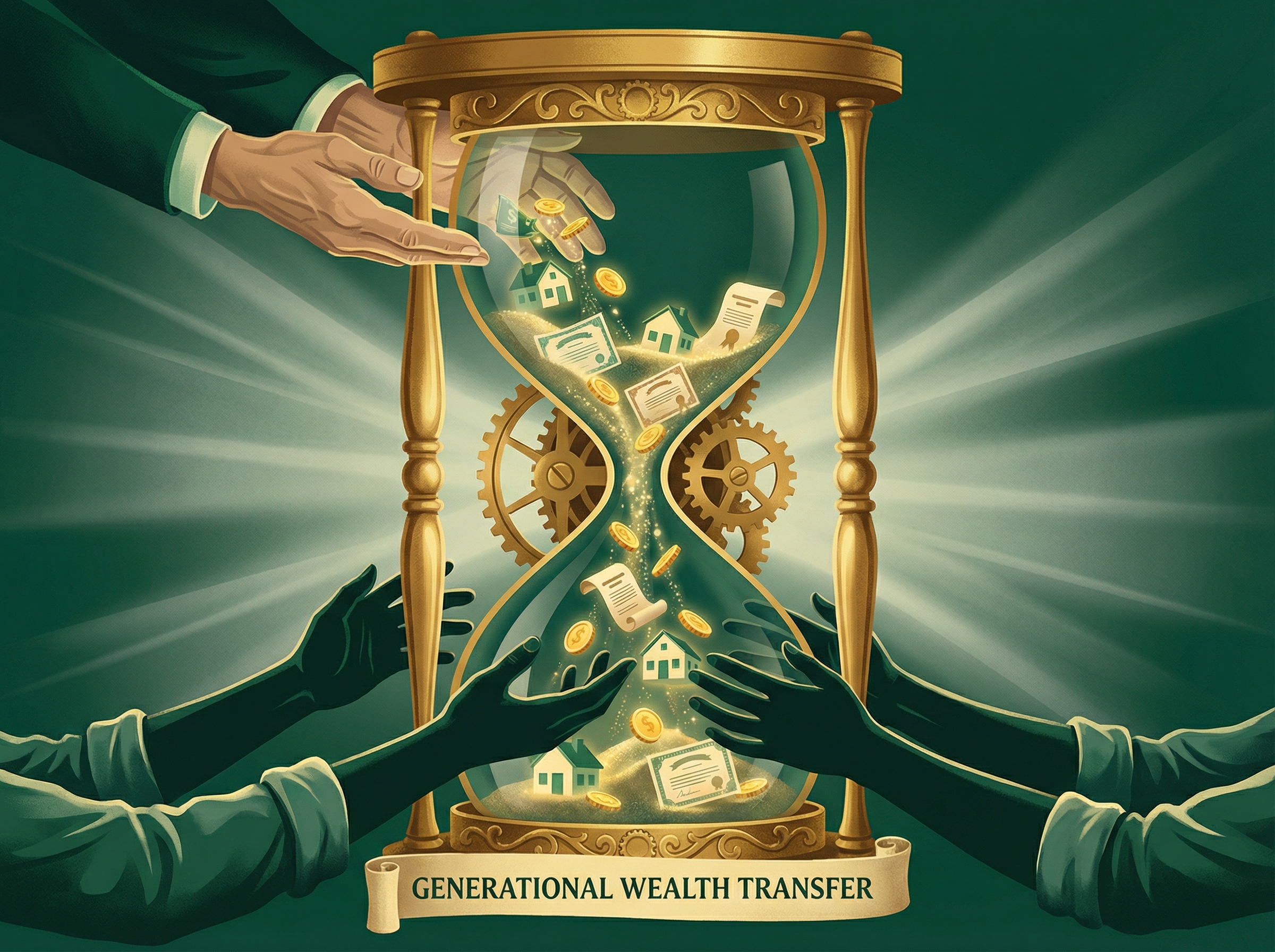
An ornate golden hourglass with wealth symbols flowing between generations
04

$124 Trillion Is About to Change Hands

Cerulli Associates updated their projections for what they call the "Great Wealth Transfer," and the number jumped from $84 trillion to $124 trillion. That's how much wealth will move from Baby Boomers and the Silent Generation to their heirs by 2048. Of that, $105 trillion goes directly to Gen X, Millennials, and Gen Z. Another $18 trillion will flow to philanthropy.

The revision happened because assets appreciated faster than anyone expected. Market gains, real estate booms, and inflation all pushed the total higher. But here's the critical question no one is asking loudly enough: who are the heirs?

The vast majority of this wealth will transfer within families already in the top quintile. The bottom half of American households hold barely $10 trillion combined—they have almost nothing to pass down. So this "transfer" isn't a redistribution. It's a consolidation. Gen X and Millennial children of the wealthy will become wealthier. Everyone else will inherit the same nothing their parents had.

The inheritance paradox: Wealth transfers are the single largest predictor of economic status for the next generation, yet the U.S. has systematically weakened estate taxes since 2001. The current estate tax exemption sits at $13.61 million per individual—meaning a married couple can pass $27.22 million tax-free. That covers roughly 99.9% of estates.

Stock ticker tape flowing as a river, reaching only penthouse apartments above while ordinary homes remain untouched
05

The Market Rallied. You Probably Didn't Notice.

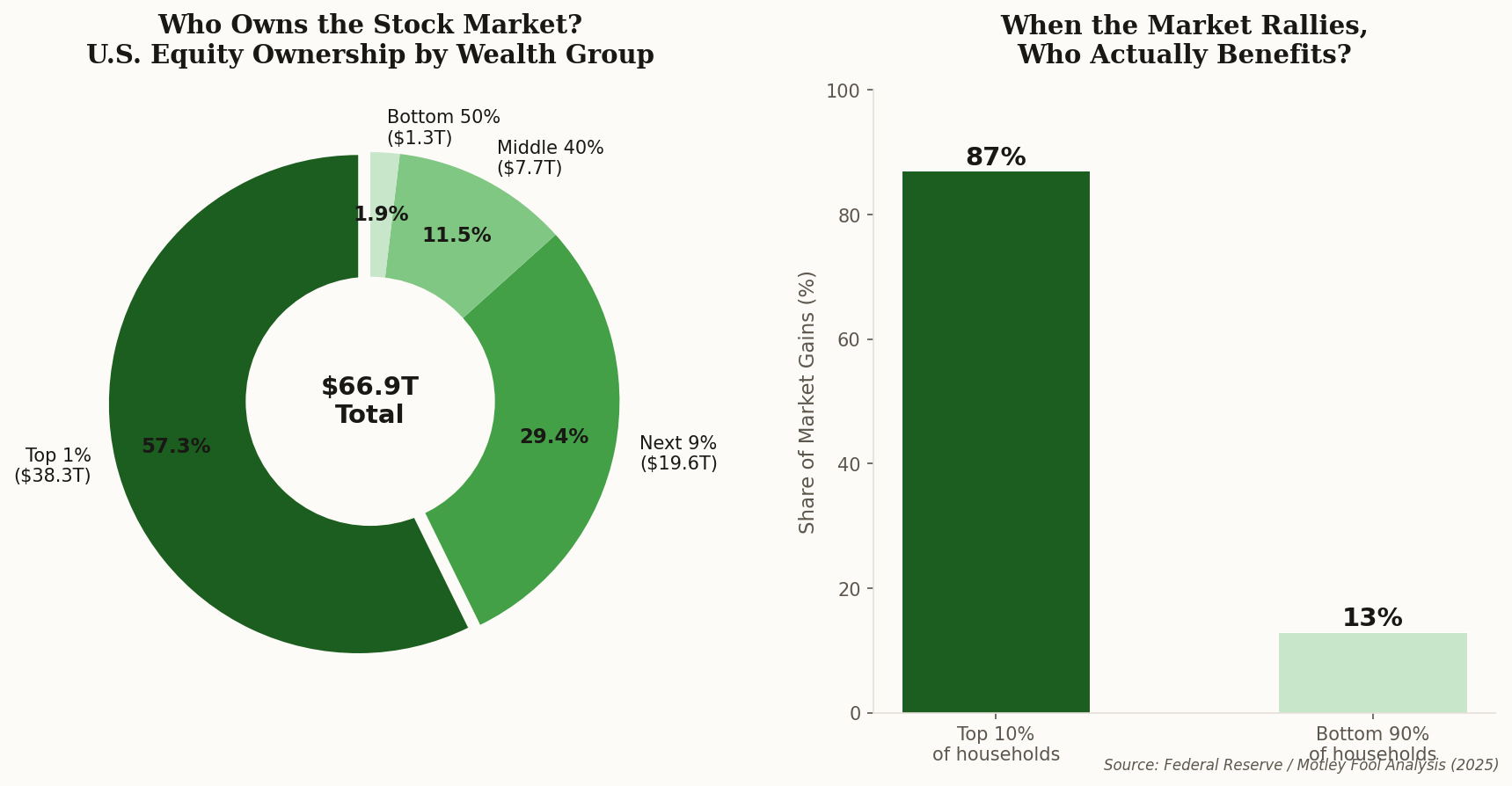
Every time the S&P 500 hits a new all-time high, cable news celebrates like it's a national holiday. But here's who's actually popping champagne: the top 10% of American households own 87% of all stocks and mutual funds, worth approximately $57.9 trillion. The bottom half of the country owns less than 2%.

Donut chart showing stock market ownership with 57.5% held by the top 1%, and bar chart showing 87% of market rally gains going to top 10%
Left: U.S. equity ownership by wealth group. Right: When the market rallies, the top 10% capture 87 cents of every dollar in gains. Source: Federal Reserve / Motley Fool.

This means that a 20% market rally—the kind that creates breathless headlines about "wealth creation"—delivers roughly 87 cents of every new dollar to the top decile. The median American household, which might have a modest 401(k), sees crumbs. And the bottom 30%, who own effectively zero equities? They see the same headline and wonder why their groceries cost more.

The policy implication is stark: monetary policy that boosts asset prices (like low interest rates and quantitative easing) is, by mathematical necessity, an inequality accelerant. The Fed isn't trying to make rich people richer. But the transmission mechanism of modern monetary policy runs through asset markets—and asset markets belong to the wealthy.

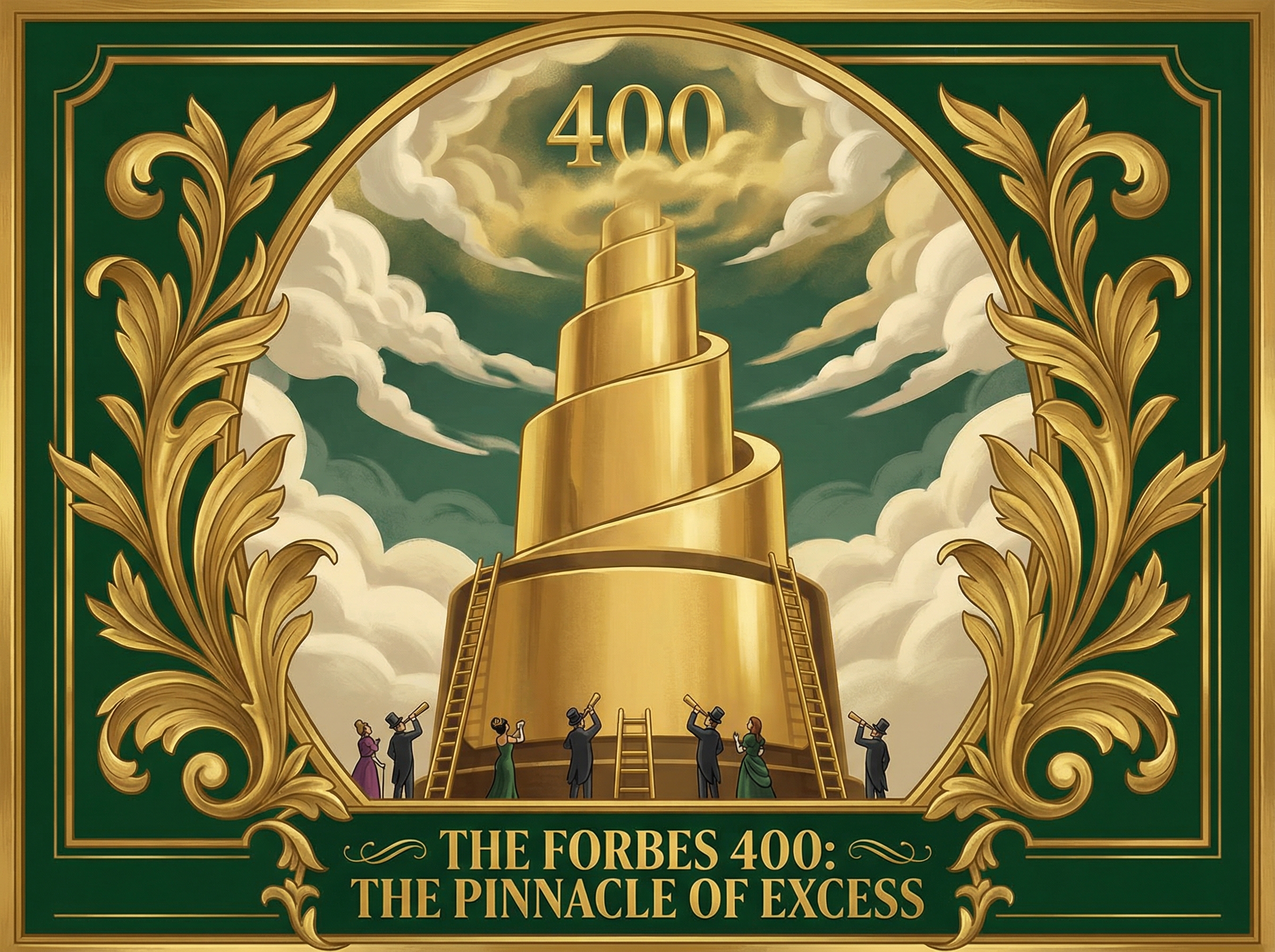
A golden trophy podium extending impossibly high into clouds with the number 400 etched at the top
06

The Forbes 400 Added $1 Trillion in a Year. Read That Again.

The 400 richest Americans are now worth a collective $6.6 trillion. That's up $1 trillion from 2024 alone. To make the list, you now need at least $3.8 billion—up $500 million from last year's minimum. Elon Musk sits at #1 with $428 billion, becoming the first person in history to cross the $400 billion mark.

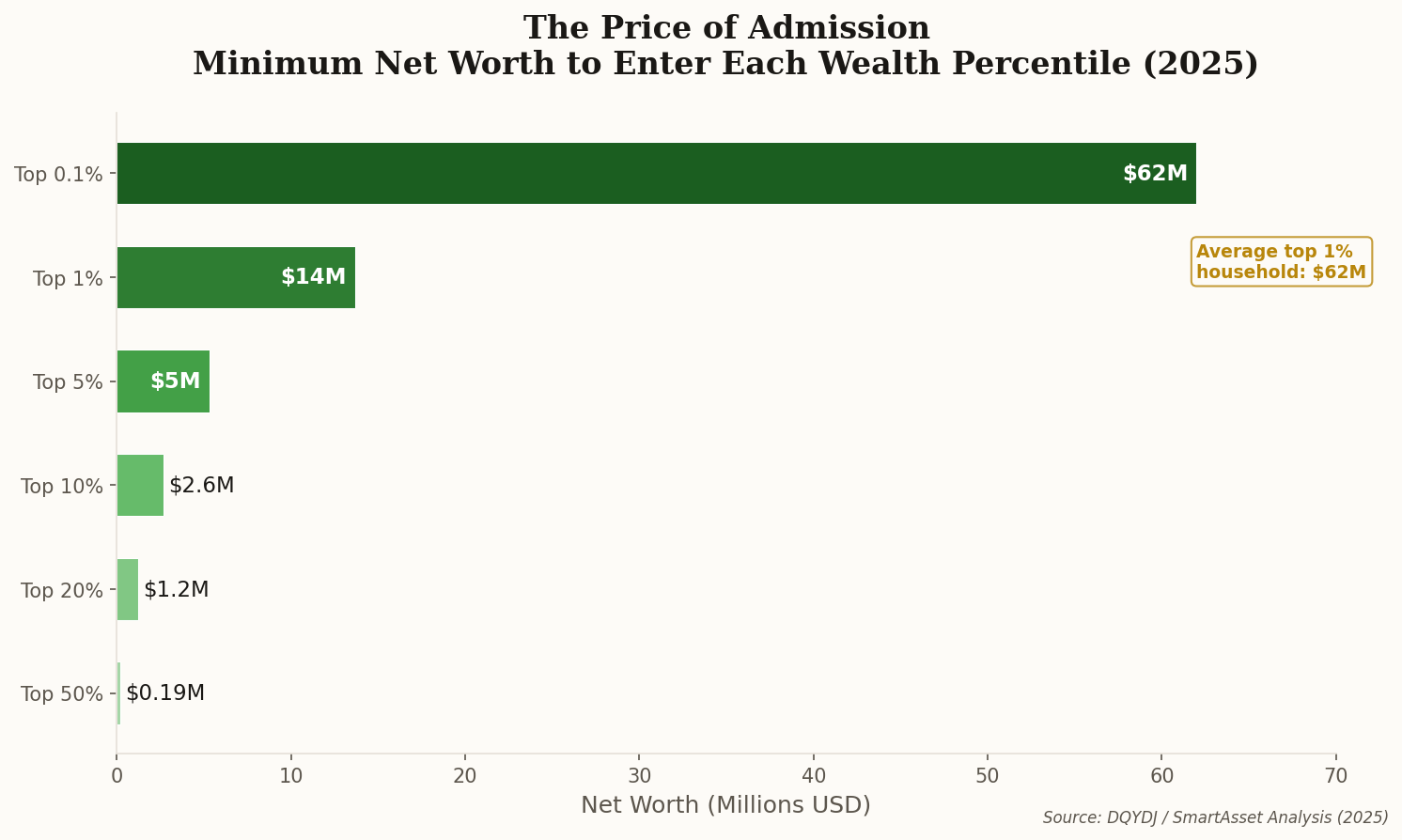
Horizontal bar chart showing minimum net worth thresholds for each wealth percentile, from $192K for top 50% to $62M for top 0.1%
The price of admission: minimum net worth to enter each wealth percentile in 2025. The gap between Top 1% ($13.7M) and Top 0.1% ($62M) reveals how extreme the concentration is even within the elite. Source: DQYDJ / SmartAsset.

Let's add some context. The U.S. federal government spent about $6.1 trillion in fiscal year 2023. So 400 people—you could seat them in a single movie theater—hold more wealth than the entire annual expenditure of the most powerful government on Earth. Fourteen newcomers joined the list this year, mostly riding the AI boom, which is creating billionaires at the fastest clip since the dot-com era.

The velocity of concentration is what's new here. It took the Forbes 400 decades to reach $3 trillion combined. They added the next $3.6 trillion in roughly seven years. Capital compounds. Wages don't. And that gap—between the return on capital and the return on labor—is the engine that drives every other number in this newsletter.

Two houses on the same street, one a grand mansion in golden light and the other modest in shadow, divided by a visible line
07

Same Street, Different Century

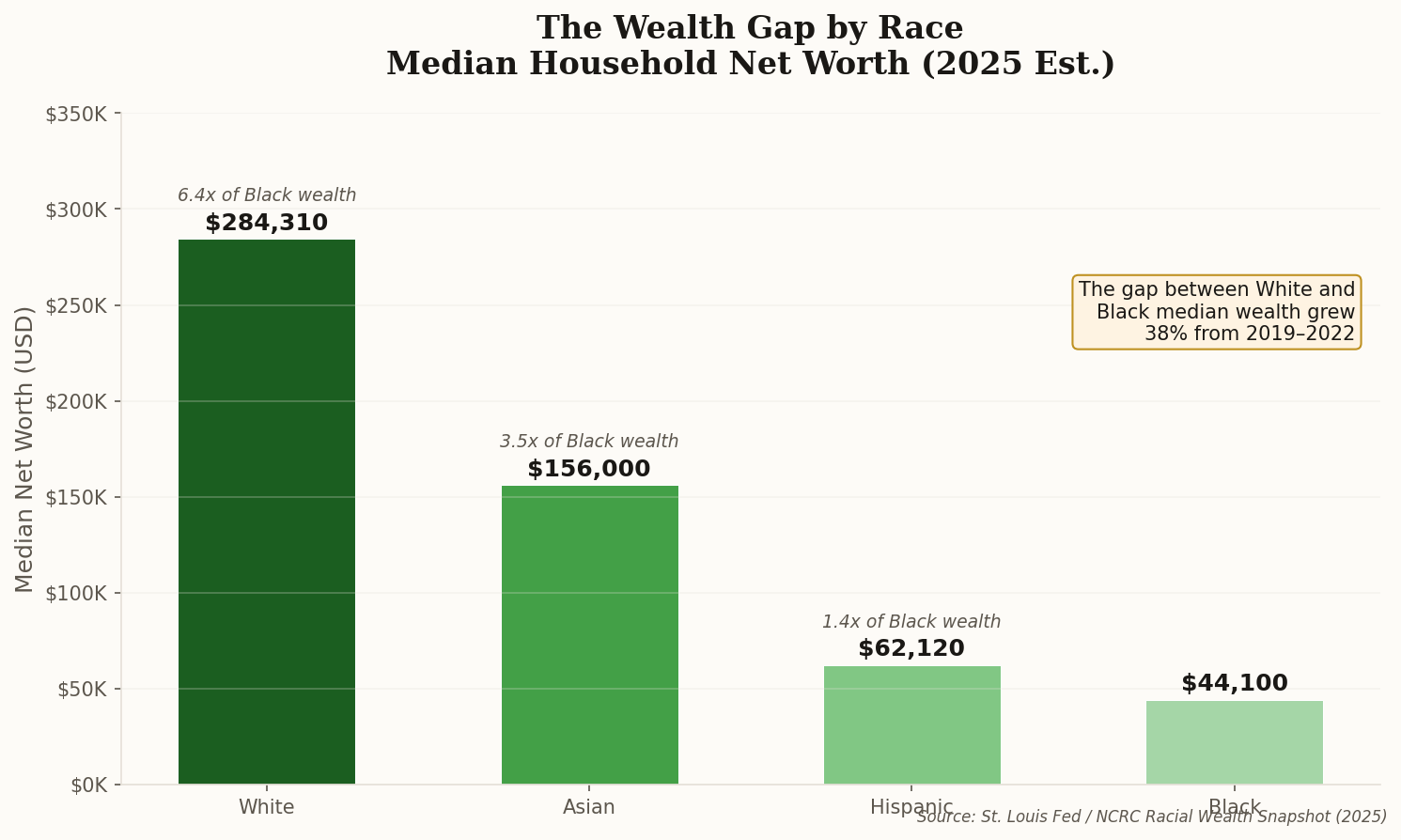
The racial wealth gap isn't just persisting—it's accelerating. The median White household holds $284,310 in net worth. The median Black household holds $44,100. That's a 6.4x multiple. Hispanic households land at $62,120. And between 2019 and 2022—a period that included both pandemic relief and economic recovery—the mean gap between Black and White households grew by 38%.

Bar chart showing median household net worth by race: White $284K, Asian $156K, Hispanic $62K, Black $44K
Median household net worth by race (2025 estimates). White households hold 6.4x the wealth of Black households, and the gap grew 38% from 2019–2022. Source: St. Louis Fed / NCRC.

The mechanisms are structural and self-reinforcing. Homeownership—the primary wealth vehicle for the middle class—remains dramatically unequal: White homeownership sits around 74%, Black homeownership around 45%. Home values in predominantly Black neighborhoods appreciate slower. Access to equity markets is tilted. Inheritance flows disproportionately to White families. Each generation starts further behind, and the compounding never stops.

This isn't a footnote to the wealth inequality story. It is the story. You can't understand American wealth concentration without understanding that it was built on, and continues to operate through, racial exclusion. The data doesn't lie, and it doesn't care about narratives of personal responsibility. A 6.4x gap isn't a character flaw. It's a system.

The Numbers Are the Argument

There's a reason wealth inequality discussions so often devolve into ideology. The numbers are uncomfortable regardless of where you sit politically. The top 1% isn't a conspiracy—it's a mathematical outcome of systems that reward capital over labor, inheritance over innovation, and assets over income. Whether that outcome is acceptable is the question that 2026's tax debates, ballot initiatives, and policy fights will attempt to answer. The data is in. The decisions are ours.