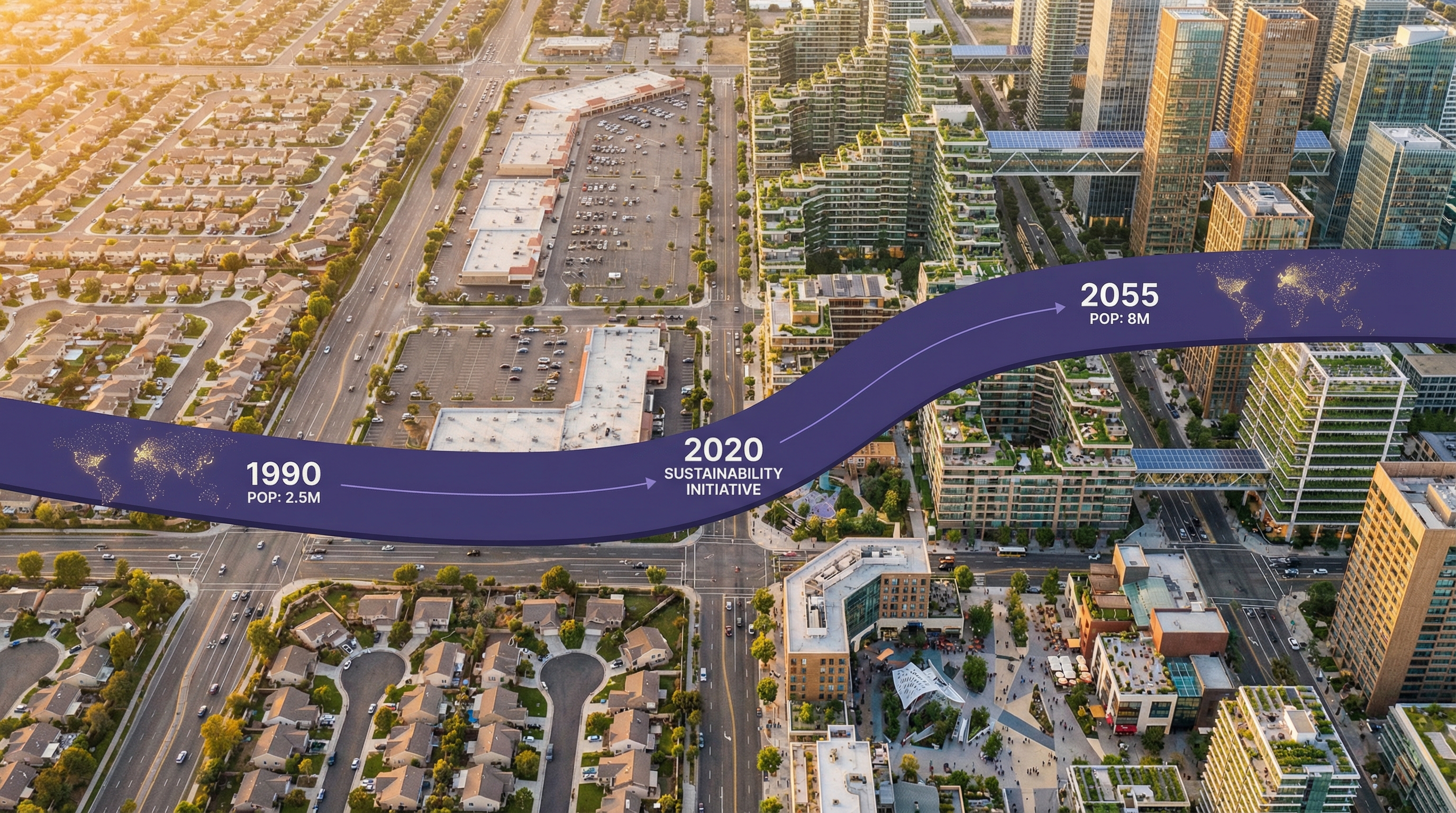

2038: The Year America Starts Shrinking From the Inside
Here's a number that should keep policy makers up at night: 2038. That's when the Census Bureau projects that deaths in America will exceed births for the first time in the nation's history. Not in some distant, sci-fi future. Twelve years from now.
From that point forward, every single person added to the U.S. population will be an immigrant. Not most people. Not the majority. Every single one. The organic growth engine that powered American expansion for 250 years — native-born citizens having more children than the generation before — will have switched off permanently.
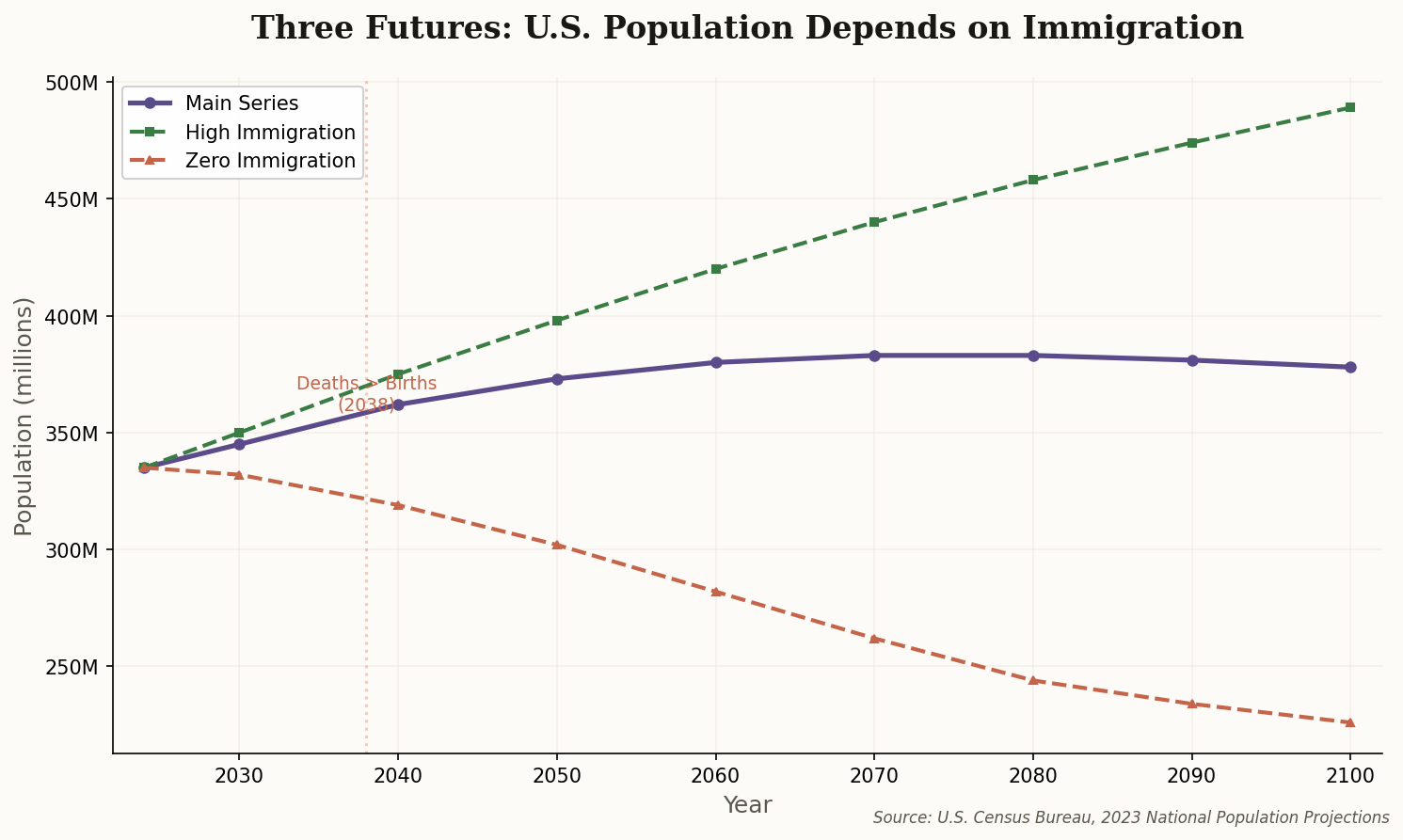
The math is blunt. Under the main series projection, annual growth drops to a threadbare 0.13% by century's end. But consider the alternative scenarios: with high immigration, America reaches 489 million by 2100. With zero immigration, it contracts to 226 million — a difference of 263 million people determined entirely by policy choices, not biology.
As Census demographer Sandra Johnson put it: "In an ever-changing world, understanding population dynamics is crucial for shaping policies and planning resources." That's bureaucrat-speak for: the decisions we make about immigration in the next decade will determine whether America in 2060 has the economic heft of a superpower or the demographic profile of Japan.