Defense & Land Warfare

Steel, Drones & the Fight for Survival

The $300-a-pop FPV drone has done to the main battle tank what the longbow did to mounted knights. The question isn't whether armored vehicles survive—it's what they become next.

Listen
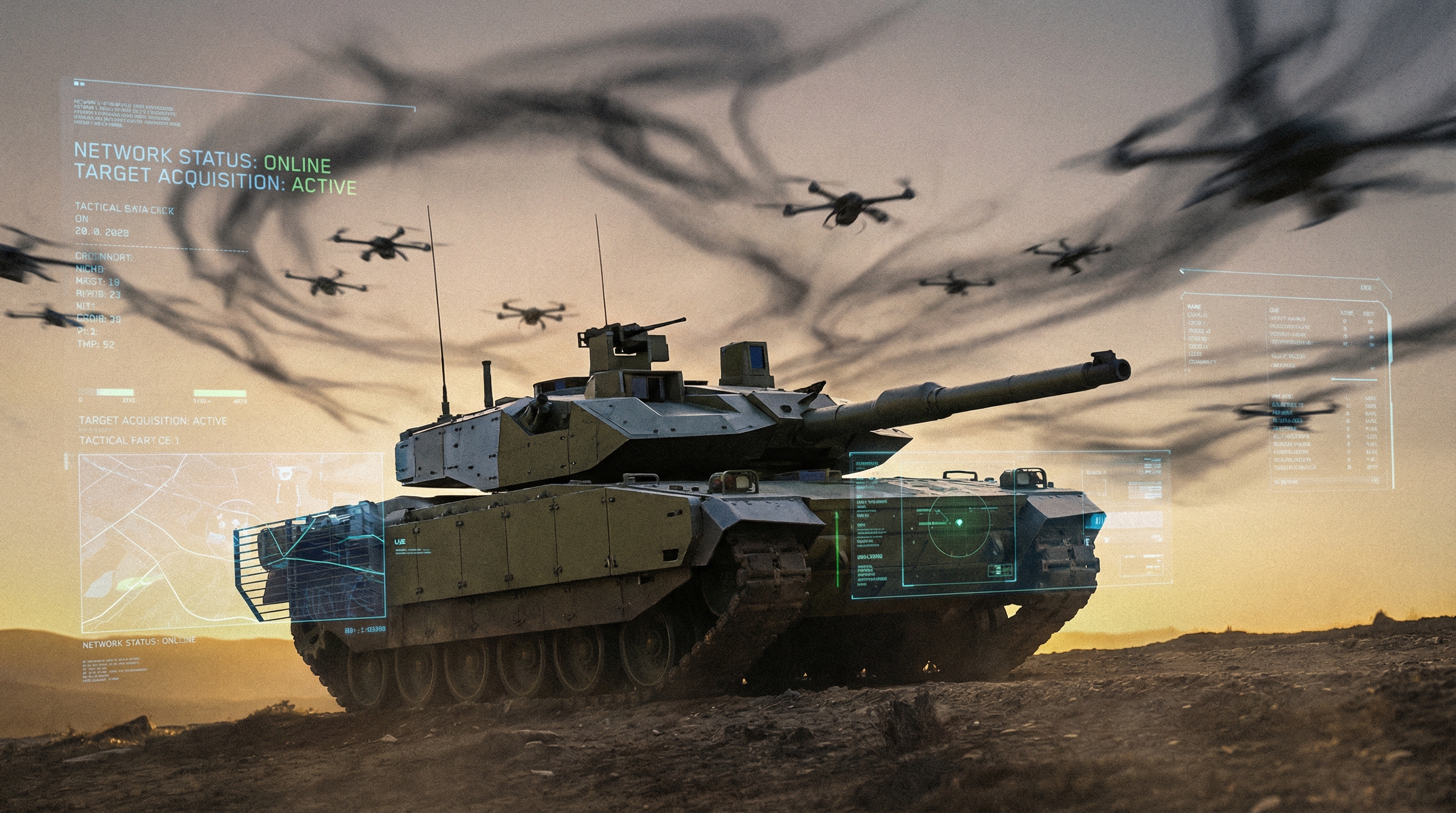
A next-generation main battle tank silhouetted against dawn, with drone swarm shadows and digital HUD overlay elements suggesting networked warfare
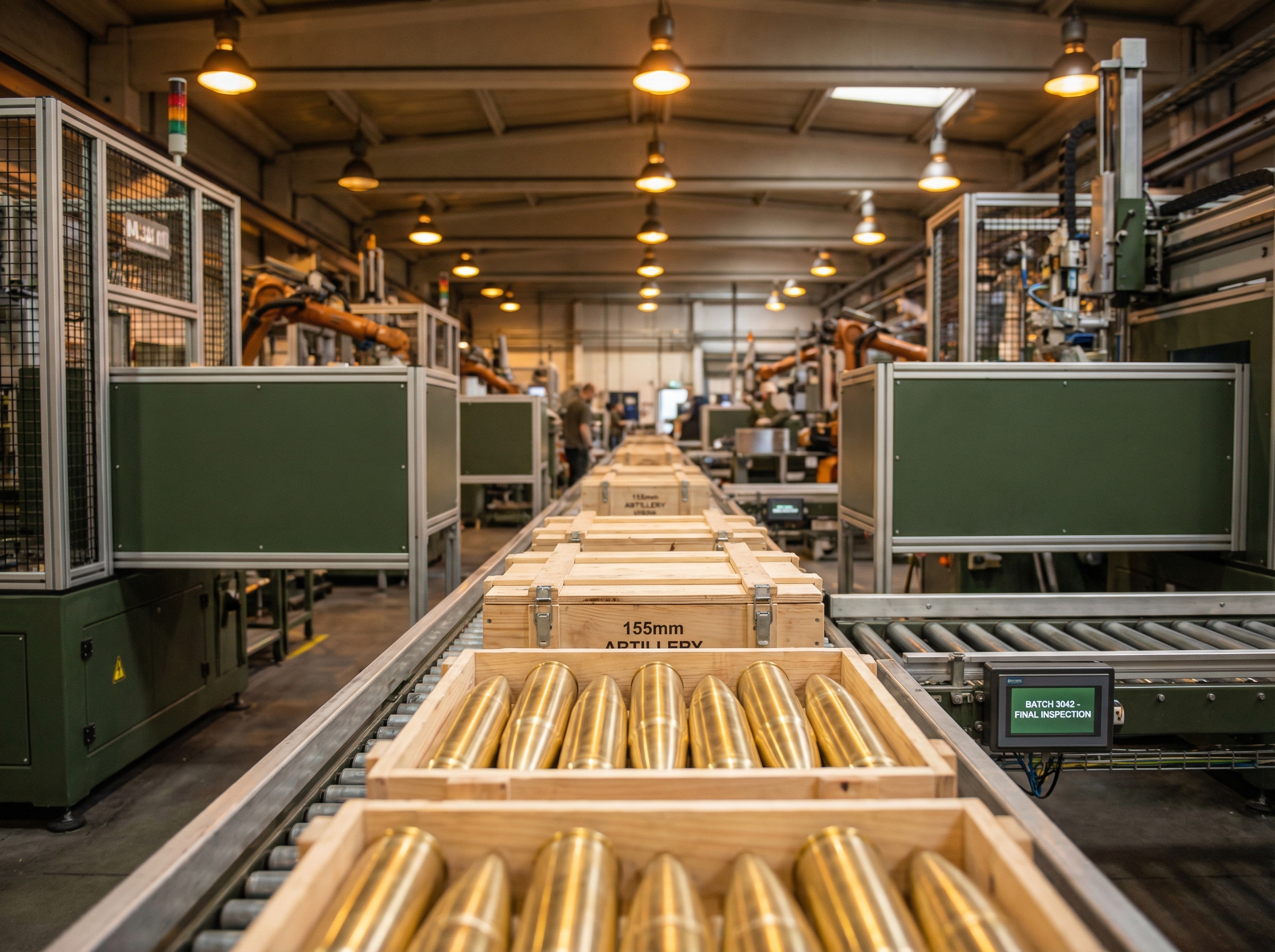
Brass artillery shells stacked in a modern ammunition factory under warm industrial lighting
01

The Ammunition Crisis Europe Saw Coming—and Is Finally Fixing

Here's a number that should keep defense planners awake at night: in a single month of high-intensity fighting, Ukrainian forces have burned through more 155mm shells than the entire European Union produced in a year pre-2022. Rheinmetall just signed a seven-year framework agreement with Denmark's DALO covering 120mm tank rounds, 30mm IFV ammunition, and 35mm air defense rounds. The initial orders sit in the "three-digit million euro range."

This isn't a one-off procurement. It's a structural admission that Europe's peacetime ammunition industrial base was built for an era that no longer exists. When you're watching Rheinmetall lock in seven-year supply contracts, you're watching a continent pivot from "just-in-time" to "just-in-case"—and the difference is measured in billions of euros and years of lead time.

The real tell? This deal doesn't just cover current calibers. It includes 35mm air defense rounds—anticipating a future where armored columns need dedicated short-range air defense against the drone swarms that have redefined the Ukrainian battlefield. Security of supply, as one official put it, "is now as critical as the platform itself." That's the post-2022 world in a single sentence.
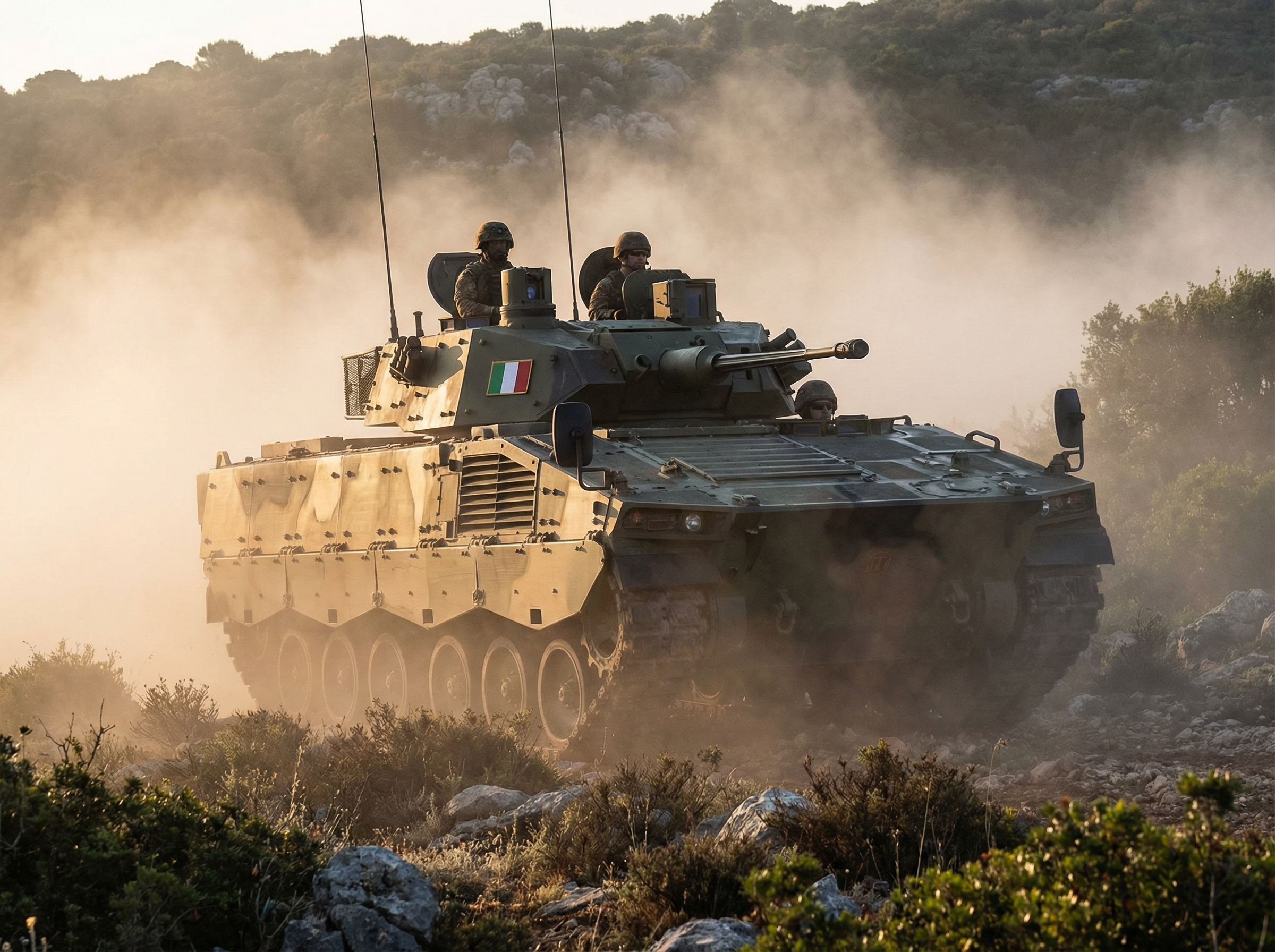
Infantry fighting vehicle emerging from mist on a Mediterranean training ground, angular modern armor with Italian military markings
02

Italy Bets €20 Billion on the Lynx—and a New European Defense Identity

Four vehicles. That's what Italy officially accepted last week from the Leonardo-Rheinmetall joint venture. But those four Lynx KF41 infantry fighting vehicles represent the tip of a €20 billion spear that will eventually replace the entire aging Dardo fleet with up to 1,050 tracked vehicles by 2040.

The scale here matters. This is the A2CS (Army Armoured Combat Systems) program—the largest Italian defense procurement in a generation. The initial batch mounts Rheinmetall's Lance 30mm turret, but future units will integrate Leonardo's Hitfist turret, ensuring Italian industrial sovereignty over weapon systems even as the chassis remains German. It's a clever split: buy the best platform available, but keep the teeth Italian.

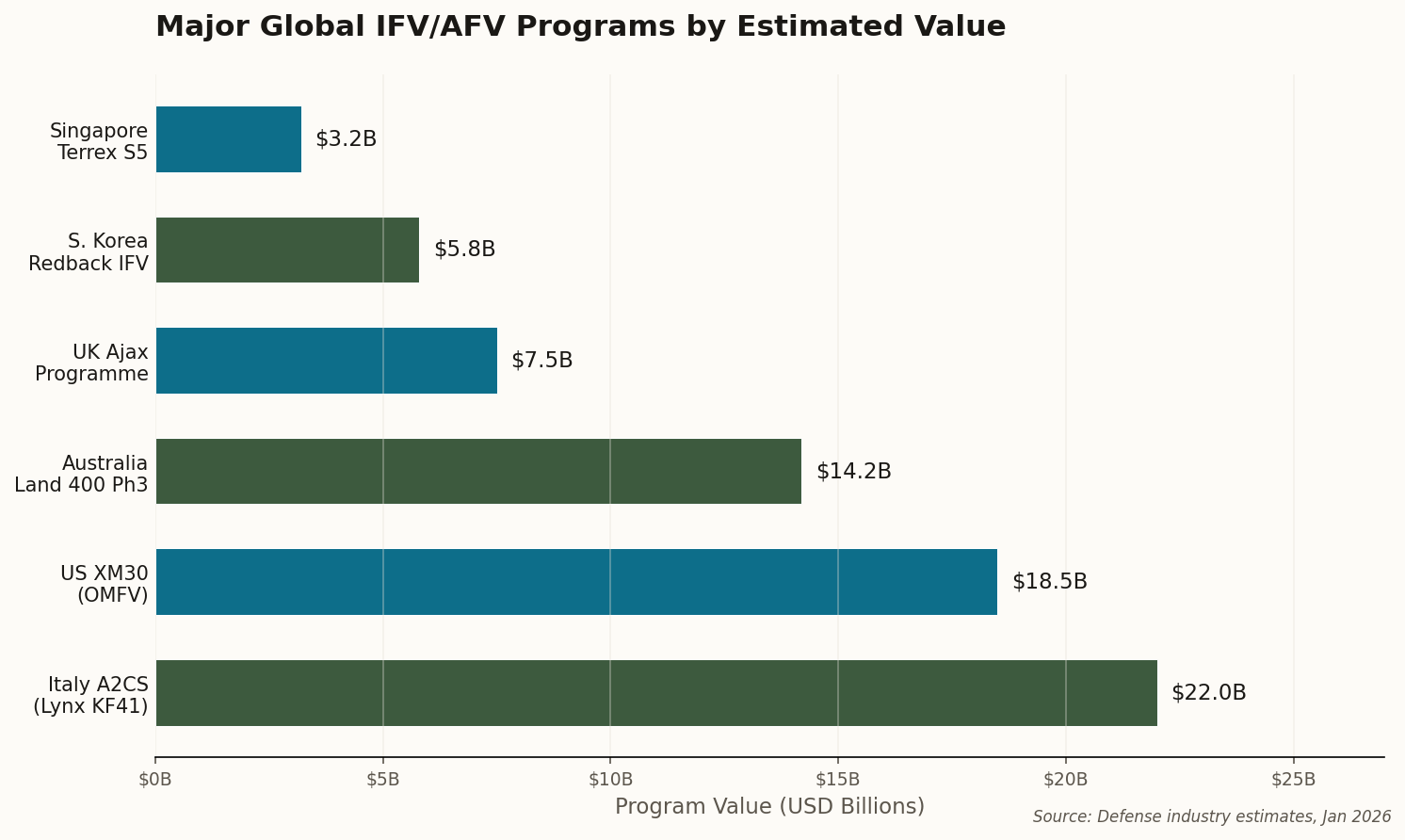
Horizontal bar chart comparing major global IFV/AFV program values, with Italy's A2CS program leading at $22 billion
Italy's A2CS is now the world's most expensive infantry fighting vehicle program, dwarfing even the US XM30 OMFV effort in total projected spending.

What's significant is the signal this sends to NATO. The Lynx KF41 is rapidly becoming the Continental European standard—Hungary, Italy, and potentially others are converging on the same chassis. Interoperability by default, not by negotiation. For an alliance that historically fielded a zoo of incompatible platforms, this convergence is quietly revolutionary.

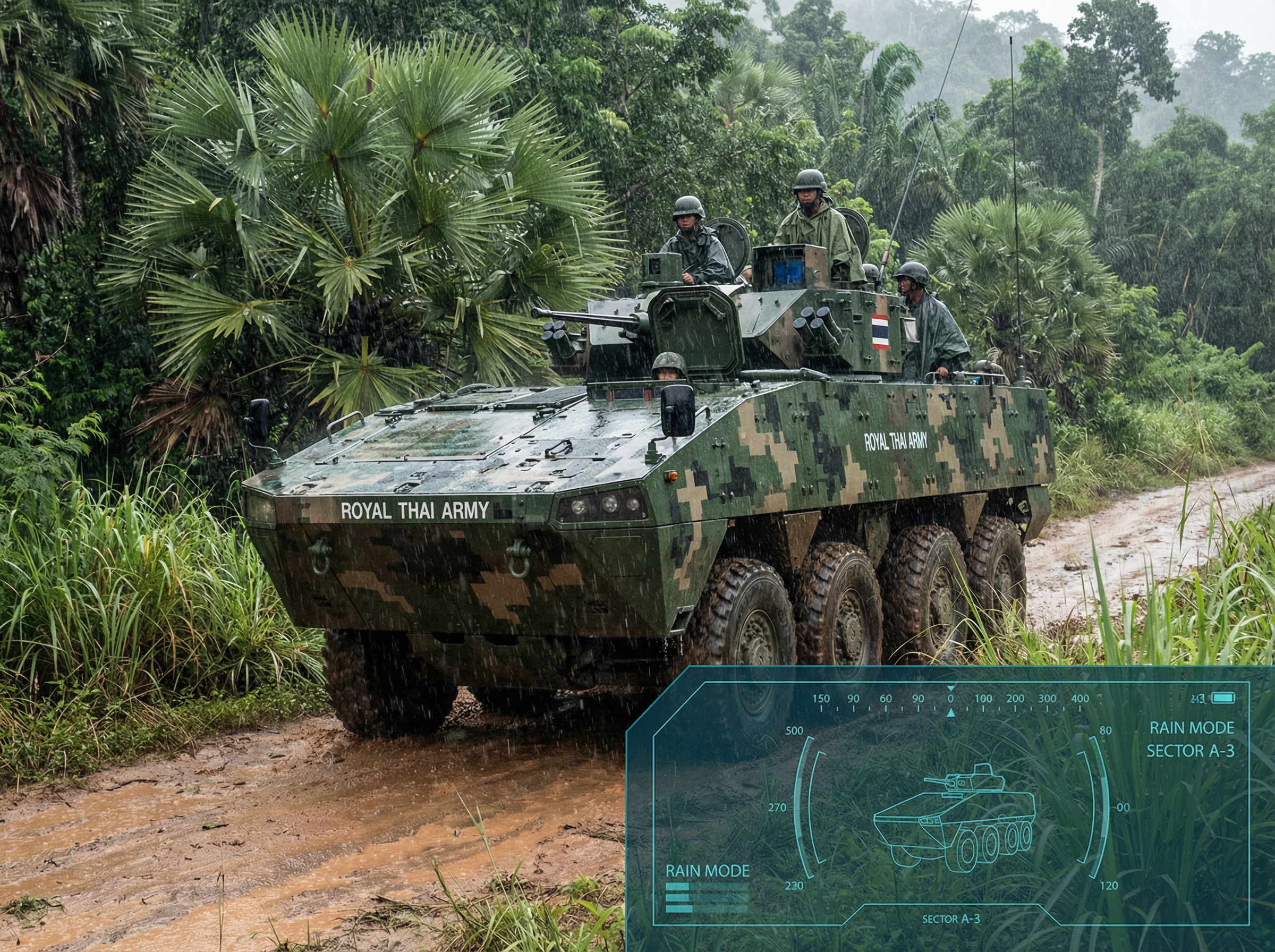
Modern 8x8 wheeled armored vehicle driving through tropical jungle terrain in Southeast Asian military setting
03

Singapore's Terrex S5 Signals a Global Shift to Manned-Unmanned Teaming

Singapore doesn't buy weapons for show. When the Ministry of Defence awards ST Engineering a contract for the Terrex S5—a next-generation 8x8 armored fighting vehicle with deliveries starting in 2028—it tells you something about where small, advanced militaries think land warfare is headed.

The headline feature isn't armor thickness or gun caliber. It's the "hybrid-ready" architecture and advanced vetronics designed specifically for controlling unmanned ground assets. The Terrex S5 is being built from the ground up as a node in a manned-unmanned team (MUM-T)—part command vehicle, part robotic mothership. The crew fights the network, not just the vehicle.

This tracks with a broader pattern. From the US Army's General Dynamics XM30 OMFV to South Korea's Hanwha Redback, every next-generation AFV program now assumes that robotic wingmen will handle the most dangerous tasks: route clearance, forward reconnaissance, initial breach. Singapore is simply saying the quiet part out loud—the future crew vehicle is the brain, not the brawn.

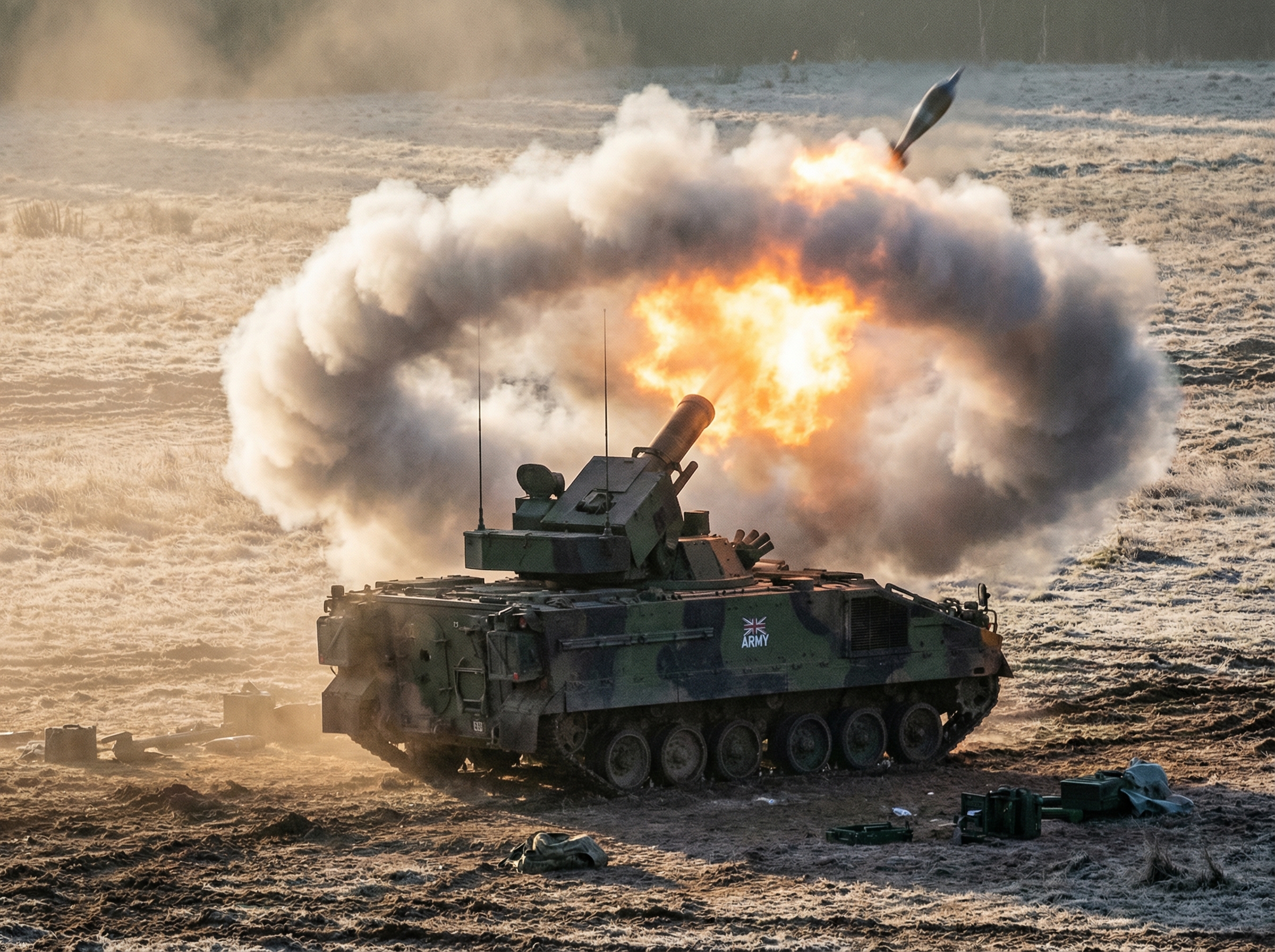
Armored vehicle firing a mortar round with dramatic muzzle flash and smoke, British Army setting at dawn
04

The Artillery Crunch Has a New Answer: 120mm Mortars on Tracks

Ukraine taught the world a brutal lesson about artillery: if you can't shoot and scoot, you're dead. Counter-battery radars have compressed the survival window for static fire positions from minutes to seconds. General Dynamics Land Systems UK and Finnish firm Patria think they have an answer—the Ajax chassis mounting Patria's NEMO 120mm turreted mortar system.

The combination is elegant. You get the protection, mobility, and logistics commonality of the Ajax platform married to a 120mm mortar that can fire precision-guided rounds on the move, then relocate before the first shell lands. For the British Army, which has watched the "artillery crunch" play out in real time on Ukrainian dashcam footage, this fills a critical gap in mobile indirect fire.

But here's the bigger picture: this is what modularity looks like in practice. A single chassis family—Ajax—now spans reconnaissance, infantry fighting, command, recovery, and fire support variants. That's not just tactical flexibility. It's a logistics officer's dream: one engine type, one track set, one training pipeline. The armies that learned from Ukraine are the ones building Swiss Army knives, not single-purpose hammers.

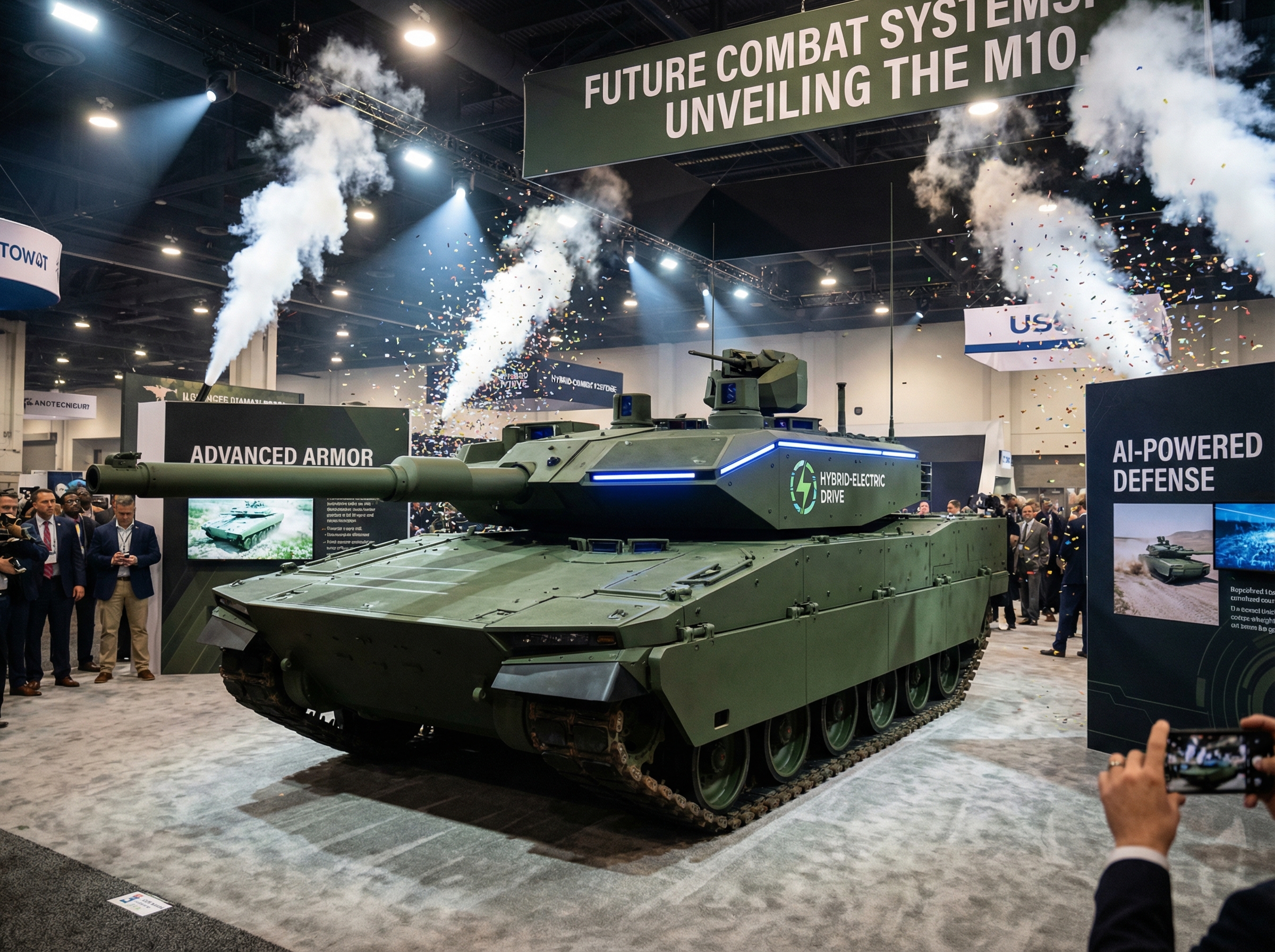
Next-generation American main battle tank at a dramatic military expo unveiling, sleek low-profile unmanned turret, hybrid-electric design
05

The M1E3 Abrams: America's 60-Ton Admission That the Old Way Is Over

When you design a vehicle explicitly to be 13 tons lighter than its predecessor, you're not tweaking—you're confessing. The US Army unveiled the M1E3 Abrams technology demonstrator at Detroit's auto show, and the numbers read like a manifesto: 60 tons (down from 73+), hybrid-electric powertrain replacing the legendary Honeywell gas turbine, unmanned turret with autoloader cutting crew from four to three.

This is the most radical Abrams redesign in 40 years. The hybrid drive isn't just about fuel efficiency—it enables a "silent watch" mode where the tank can sit on an overwatch position drawing almost zero thermal signature. In a battlespace where every heat source gets a drone sent its way, that's survival, not luxury.

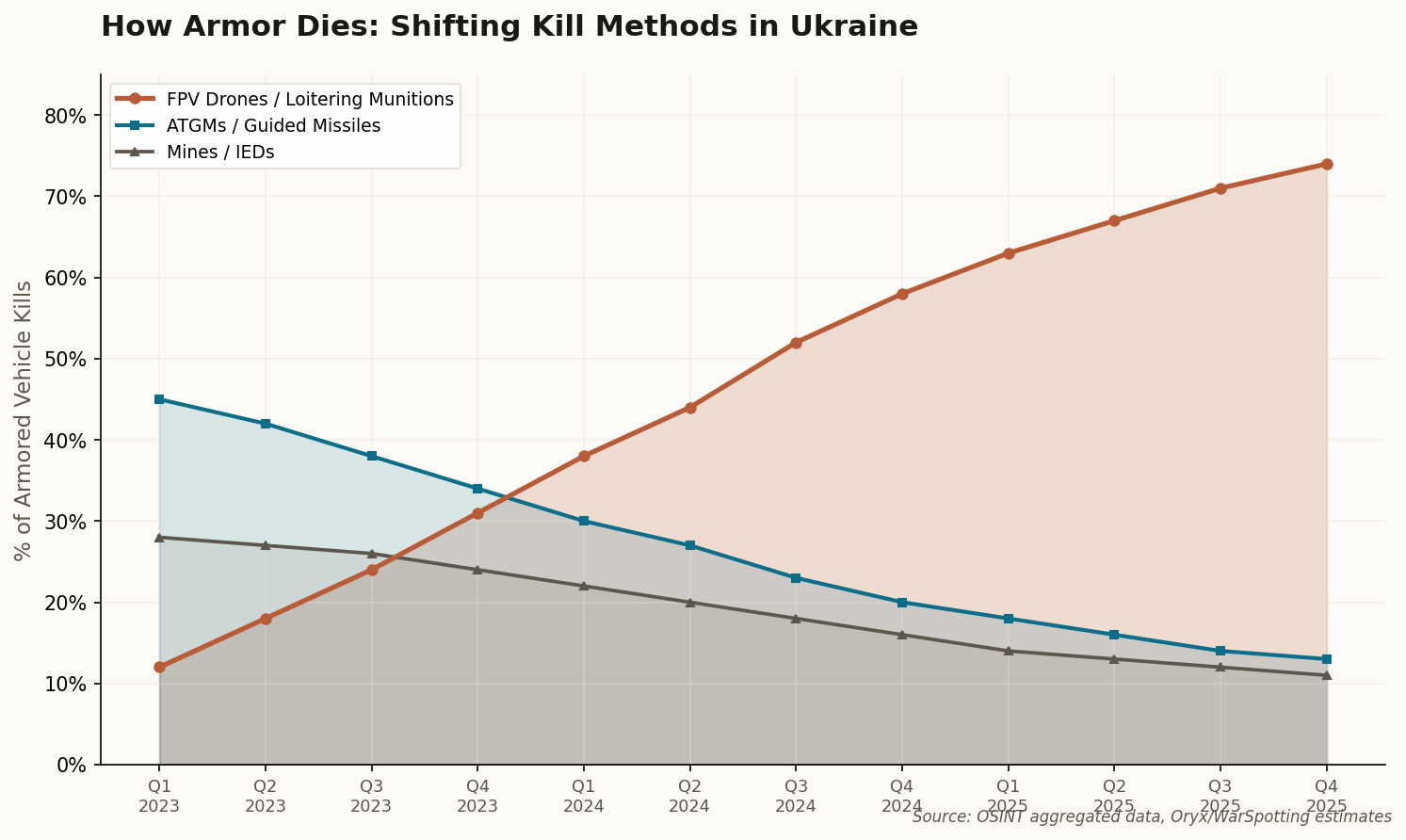
Line chart showing the dramatic rise of FPV drones as the primary killer of armored vehicles in Ukraine from 12% in Q1 2023 to 74% by Q4 2025
The data driving the M1E3's redesign: FPV drones and loitering munitions now account for roughly three-quarters of all armored vehicle kills in Ukraine, up from just 12% in early 2023.

The unmanned turret is equally telling. Removing a crew member isn't about cost—it's about volume. With no human in the turret, you can make it dramatically smaller, harder to hit, and pack in more ammunition. The Army acquisition executive put it plainly: "We are not just building a better tank; we are building a tank that can fight in a battlespace saturated by sensors and suicide drones." First operational units could arrive as early as 2027, years ahead of the original timeline. When the Pentagon accelerates, pay attention to what scared them.

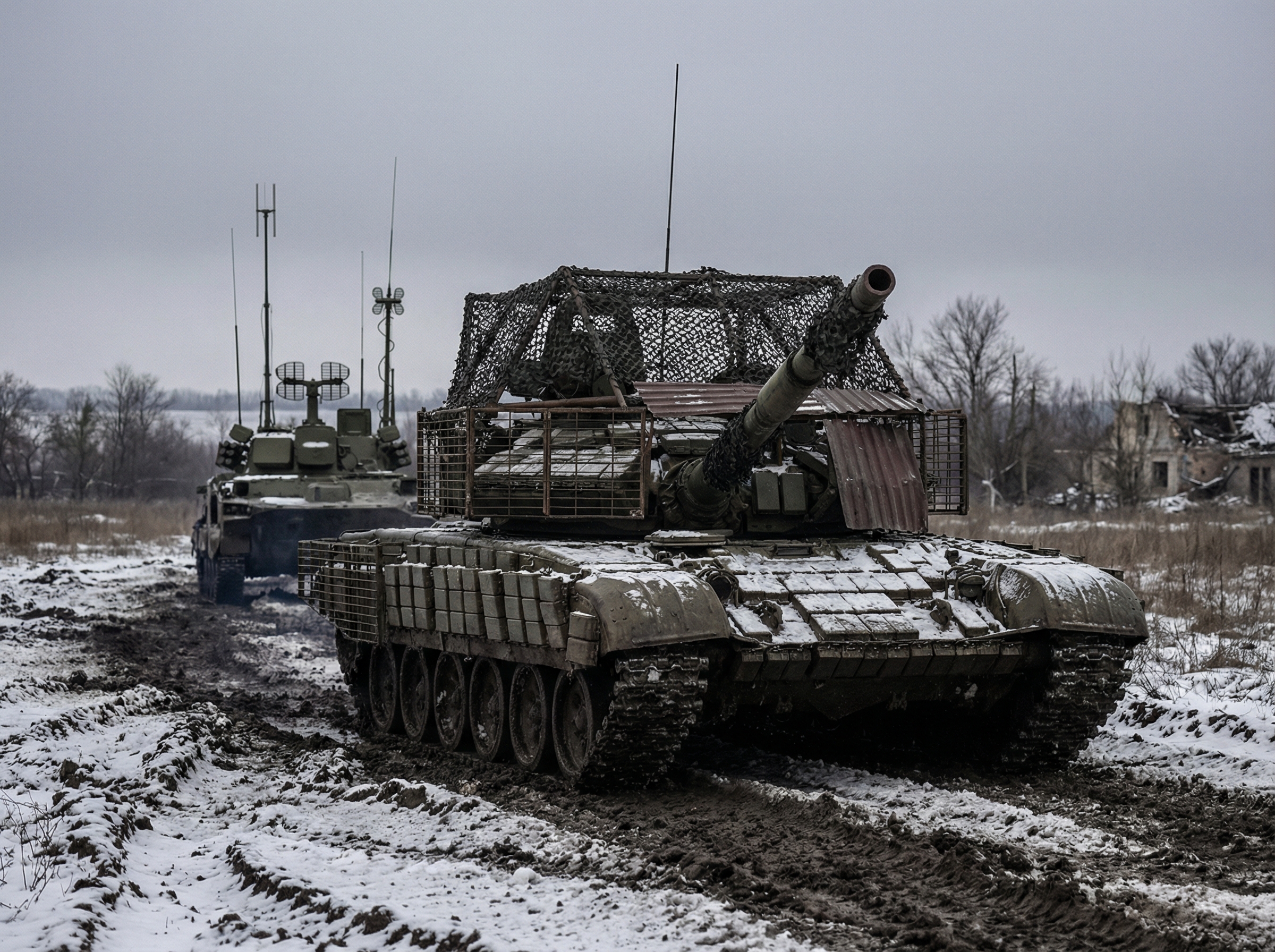
Russian tank with improvised armor cage and anti-drone mesh in muddy Ukrainian winter terrain, gritty war photojournalism style
06

The Turtle Tank Doctrine: When Survival Means Giving Up Everything Else

If the M1E3 represents the future that Western defense departments are spending billions to build, the "turtle tank" represents the present that front-line crews are building with welding torches and scrap metal. Reports from Ukraine in early 2026 confirm that fully enclosed anti-drone "coops"—improvised cages covering the entire vehicle—have become standard operating procedure, not improvisation.

Russian forces now deploy these modified tanks in pairs, each accompanied by a dedicated electronic warfare vehicle running drone-jamming systems. Tactics have shifted to "infantry-first" assaults during foggy or low-visibility conditions specifically to negate FPV drone optical targeting. The tank, once the armored spearhead that breaks through defensive lines, has become a mobile bunker providing fire support from behind the infantry it was designed to lead.

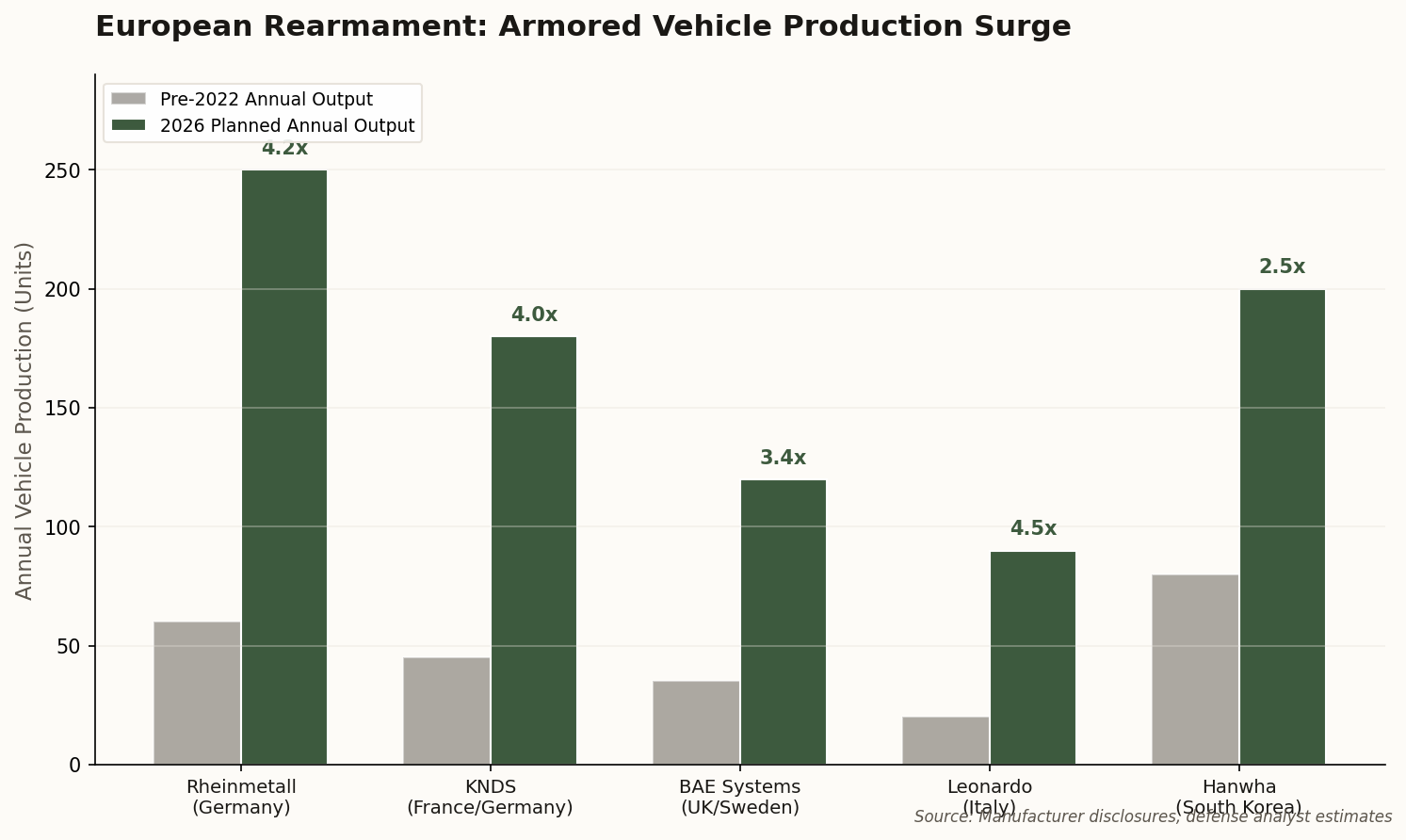
Bar chart comparing pre-2022 vs. 2026 planned armored vehicle annual production across five major manufacturers, showing 2.5x to 4.5x increases
The industry response to the drone threat: every major armored vehicle manufacturer is scaling production 2.5x to 4.5x above pre-2022 levels, anticipating that attrition rates in future conflicts will dwarf Cold War planning assumptions.

The quote from the front line tells the whole story: "Visibility is sacrificed for survival; the tank is becoming a mobile bunker rather than a breakthrough vehicle." That's a doctrinal regression with enormous implications. If the main battle tank can no longer lead the charge, who does? The answer emerging from Ukraine—small infantry teams guided by drone operators, supported by dispersed armor at standoff range—looks nothing like the armored warfare NATO has trained for since 1949. Every next-gen program covered in this newsletter is, in some way, a response to this photograph.

The Dialectic of Steel and Silicon

The armored vehicle isn't dying—it's metamorphosing. The M1E3 sheds 13 tons and gains a silent-watch mode. The Lynx KF41 becomes Europe's common chassis. Singapore's Terrex S5 reimagines the AFV as a robotic mothership. All of them are responses to the same photograph: a $70,000 Russian tank killed by a $300 Ukrainian drone. The future of armor belongs to whoever solves the equation first—not more steel, but smarter steel. Watch the factories. Watch the attrition data. Watch the fog of war, where turtle tanks crawl forward and doctrine is rewritten in welding sparks.